Prompt Patterns for Developers (Vibe Coding)
arigaram
Now is the era of development using AI. To create better, more accurate code and documents by better utilizing AI, methods are needed, so we propose suitable ones.
초급
prompt engineering
Explains the basic principles of large language models like ChatGPT, focusing on theory.
Fundamental Principles of Large Language Models (LLM)
LLM Development Process
My translated book "Deep Learning for Natural Language Processing" (by Stephan Raaijmakers, translated by Park Jin-su, published by Sigma Press, 2024) has been selected as a recommended book in the academic category of the Sejong Books. This is wonderful news following "Hands-On Generative Adversarial Networks with PyTorch 1.x" (Wikibooks) selected in 2020, and "Practical Electronics for Everyone" (J-Pub) selected as an excellent academic book by the National Academy of Sciences of the Republic of Korea in 2019. To share this joy together, we are holding a 25% discount event from November 5th to November 18th.
I am currently in the process of completing this course. I plan to gradually adjust the price as I complete the course. Therefore, those who purchase earlier can buy it at a relatively lower price, but there is a disadvantage that you will have to wait longer until the course is fully completed (although I will continuously add supplementary content). Please consider this when making your purchase decision.
September 27, 2025
"Section 17. 'Understanding the Complete LLM Development Process' Advanced", "
I have significantly expanded and reorganized the lesson outline for "Section 18. 'Understanding the Complete LLM Development Process' Hands-on Practice (Python + Google Colab)". I am preparing lecture content that aligns with the new outline.
September 18, 2025
I added the precautions to the detailed introduction page.
I have revised the table of contents for "Section 10, 'Transformer Architecture' Hands-on Practice." I am preparing lecture content that aligns with the new table of contents.
I have revised the table of contents for "Section 16, Understanding the Complete LLM Development Process." Accordingly, I am deleting the existing lectures and preparing new lecture content that aligns with the new table of contents.
September 1, 2025
I have categorized all classes with bullet points as [Basic], [Advanced], and [Practice]. The existing [Supplementary] classes correspond to [Advanced] classes, so I have labeled them with the '[Advanced]' bullet point.
To reduce confusion and make the learning process easier to understandI have divided all sections into general sections (sections that include [Basic] classes or [Advanced] classes), advanced sections (sections that only include [Advanced] classes), and practice sections (sections that only include [Practice] classes).
By reducing the possibility of confusion in this way, we have made all classes that were changed to private status on August 22, 2025, public again.
August 31, 2025
I have released the practice table of contents for Section 1 through Section 10. I plan to release the content gradually over time.
I have re-published the [Supplementary] and [Advanced] class syllabi for Sections 1 through 10. This is to help students understand the connection with the practical exercise syllabus.
August 22, 2025
We have changed the lessons in the [Advanced] and [Supplementary] courses that are not yet completed to private status. We plan to make each section public as they are completed in the future. This measure is to reduce confusion for students, so we would appreciate your understanding.
August 17, 2025
We are currently adding advanced course classes and dividing classes with long lecture times. Therefore, the section numbers in the course materials and the section numbers shown in the table of contents may differ.
A foundational course for growing into a full-stack practical AI expert to understand and apply the latest LLMs such as GPT, Claude, LLaMA, etc.
Engineers/Data Scientists who want to develop and deploy AI models
Startup/corporate personnel planning new services based on generative AI
AI ethics and legal risk-aware policy planners and legal affairs personnel
Researchers and graduate/doctoral students who want to know the latest AI trends
A developer who wants to learn prompt engineering and LangChain, etc.
Anyone interested in LLM, NLP, GPT, ChatGPT, generative artificial intelligence (AI), etc.
"Today's learning becomes tomorrow's competitive edge! The most practical course to build AI expertise that will shine even 10 years from now."
"Worth more than 100,000 won? No. This is an investment in AI capabilities that will protect your career even 10 years from now."
"Stop with superficial knowledge! Through bonus lectures, you can learn deep into LLM technology."
"It's different from other courses. It covers everything from the latest research trends to future AI."
"Grow as an AI expert while developing responsible AI development capabilities! Learn ethics, regulations, and safety all at once."
I take notes based on key content and explain with a theory-focused approach.
[Added September 1, 2025] However, we have added practical exercises using Python code to help with understanding.
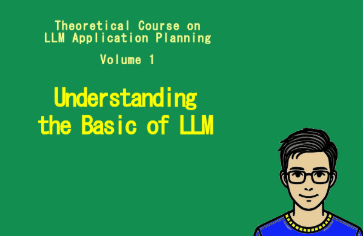
A scene explaining methods for selecting an appropriate LLM
A scene that provides a detailed explanation of RLHF (Reinforcement Learning from Human Feedback).
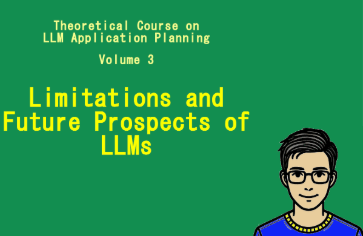
A scene explaining neural network quantization methods.
You will be able to clearly explain the fundamentals of the technology based on a deep understanding of the definition and characteristics of generative artificial intelligence, as well as the principles of language models.
You can understand the entire LLM development process from data collection to preprocessing, model selection, training, evaluation, and maintenance.
You will be able to understand the process of creating language models in a theory-focused manner, enabling you to solve specific problems using pre-training, transfer learning, fine-tuning, and RLHF (Reinforcement Learning from Human Feedback) technologies.
Since this is a theory-focused lecture, no separate practice environment is required.
[Added Content] However, if you want to practice on your own with the content from the additional practical lessons, you can prepare Google Colab. Google Colab can be used for free immediately if you have a Google account (however, in special cases among the practice content, server performance provided only in paid plans may be required).
I will attach the lecture materials in PDF file format.
Having background knowledge in natural language processing, artificial intelligence, deep learning, and reinforcement learning will help you better understand the content.
[Added Content] If you want to practice on your own with the content from the additional practical lessons, it would be very helpful to know Python programming and machine learning/deep learning programming.
In the era of LLM-centered artificial intelligence, properly understanding and applying it in practice is a essential competency for next-generation AI experts.
This course is not just about delivering knowledge, but provides the deep knowledge truly needed to handle and build LLMs.
Who is this course right for?
Someone wishing to learn LLM principles with a theoretical focus.
Those who want to understand the LLM creation process
Need to know before starting?
Deep Learning
Reinforcement Learning
Natural Language Processing
528
Learners
28
Reviews
2
Answers
4.5
Rating
17
Courses
IT가 취미이자 직업인 사람입니다.
다양한 저술, 번역, 자문, 개발, 강의 경력이 있습니다.
All
196 lectures ∙ (32hr 31min)
Course Materials:
All
2 reviews
Limited time deal ends in 5 days
$58.30
24%
$77.00
Check out other courses by the instructor!
Explore other courses in the same field!