inflearn logo

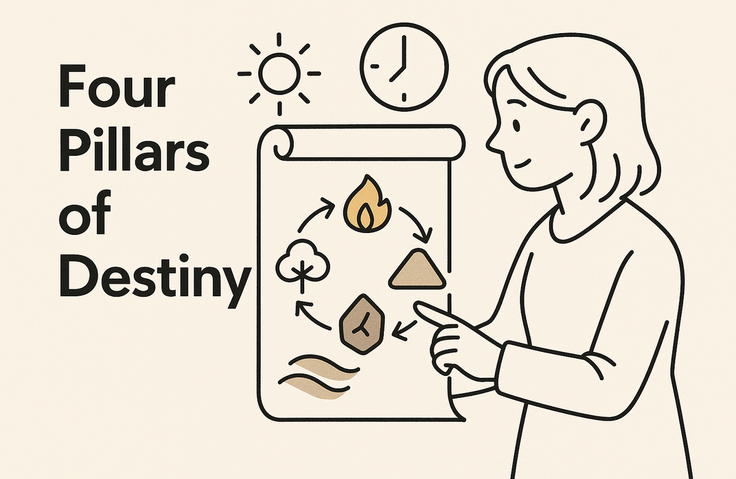
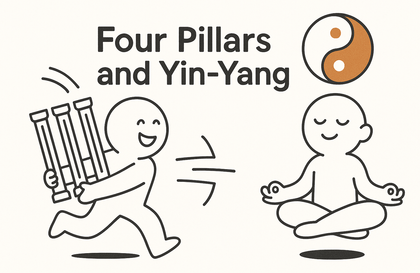
Introduction to Saju Myeongni: Understanding the Relationships Among the Five Elements, Including Generation and Control

Understand the Five Elements relationships at the core of Saju Myeongri as rules rather than through memorization. Learn the principles of mutual generation and restraint by condensing them into two simple rules, and apply the interactions of the Five Elements in practice through a logical approach that excludes superstitious interpretations. Learn how to analyze the Five Elements composition of your Saju and interpret the characteristics of each element in a balanced way.

1 learners are taking this course

Level Beginner

Course period Unlimited

Regex
Regex
reflection
reflection
logic
logic
spring5
spring5
sast
sast
Regex
Regex
reflection
reflection
logic
logic
spring5
spring5
sast
sast

What you will gain after the course

  • How to derive the mutual generation and restriction relationships using two rules: the order rule and the skipping rule

  • A perspective that interprets excesses and deficiencies in the Five Elements as traits rather than deficiencies

  • Analysis of the Number of the Five Elements in Your Saju and Interpretation of Interactions Among the Major Elements

A tree must meet an ax to become a pillar

In saju, what restrains me is not necessarily a bad thing. Without control, there is no form.


Lesson 3. The Five Elements · Wood, Fire, Earth, Metal, and Water, and Their Generating and Controlling Cycles

Mok, Fire, Earth, Metal, and Water are not five substances but five kinds of movement: extending, spreading, nurturing, cutting, and gathering. These five verbs are the entirety of the Five Elements.

The core of this lesson is relationships. The Five Elements sometimes support one another and sometimes suppress one another. These are called mutual generation and mutual overcoming, but there is no need to memorize all ten relationships. Move in order for mutual generation, and skip one for mutual overcoming. Two rules give you everything.

If Lessons 1 and 2 were about classifying characters, from Lesson 3 onward we examine the relationships between the characters. This is where saju moves from words to sentences.


We cover topics like these

  • Definition of the Five Elements · Summarizing Wood, Fire, Earth, Metal, and Water with one verb each

  • Connection to the seasons · spring, summer, autumn, and winter, and why earth represents the transitional seasons

  • Three Common Misconceptions · Correcting the Error of Understanding Them as Material Substances

  • The Five Elements of the Heavenly Stems and Earthly Branches · Including why four of the twelve Earthly Branches belong to Earth

  • Five Types of Mutual Generation · Their Order and a Mnemonic Analogy

  • When Mutual Generation Becomes a Burden · Help Is Not Always a Good Thing

  • The five controlling relationships · Derived using the rule of skipping one each time

  • Why the Controlling Cycle Is Necessary · Perspectives on Brakes, Form, and Discipline

  • The Strength of the Five Elements in My Saju · Four Steps from Counting to Understanding Relationships

Recommended for
these people

Who is this course right for?

  • Learners who have studied the basics of Saju Myeongni but struggle with the relationships among the Five Elements

  • Beginners who want to understand saju through a logical system rather than rote memorization

  • Adult learners seeking practical Four Pillars analysis without superstitious interpretations

Need to know before starting?

  • Understanding the Basic Classification System of the Heavenly Stems and Earthly Branches

  • Familiarity with the basic concepts of yin-yang and the five elements

  • Basic knowledge of the overall structure of a saju chart

Hello
This is jjangkbg7719

Career Verified

883

Learners

67

Reviews

6

Answers

4.7

Rating

47

Courses

Hello, I'm Frank.

I am an infrastructure engineer who has been wrestling with servers for over 20 years. Starting with Linux server operations, I am now in charge of the cloud infrastructure for a large-scale payment service. My daily life involves migrating from data centers to AWS, managing hundreds of instances, and tracing the causes of failures in the early hours of the morning.

The reason I created this course is simple.

I often received questions like these from those around me: "I managed to connect to the server, but I don't know what to do next." "There are so many instance types; which one should I choose?" These are the exact same points where I got stuck at first. However, when I looked for resources, I found that most of them were written for people who already knew what they were doing.

So I decided to create the course I wish I had when I first started learning.

My lectures are based on three principles.

First, I help you understand rather than memorize. Instead of just listing commands, I explain why we use them in the first place.

Second, I boldly omit unnecessary content. I do not increase the volume by including information that is useless to beginners right now.

Third, I also talk about what doesn't work. Instead of just listing the pros, I clearly point out cases where it might not be a good fit. For someone who has to make decisions in the field, that is more important.

If you feel a sense of "Ah, I should start from here" after listening to the lecture, then my goal has been achieved.

Please feel free to leave any questions you may have at any time.

More

Curriculum

All

18 lectures ∙ (22min)

Course Materials:

Lecture resources
Published: 
Last updated: 

Reviews

Not enough reviews.
Please write a valuable review that helps everyone!

jjangkbg7719's other courses

Check out other courses by the instructor!

Similar courses

Explore other courses in the same field!

Limited time deal

$2.20

50%

$4.40