inflearn logo

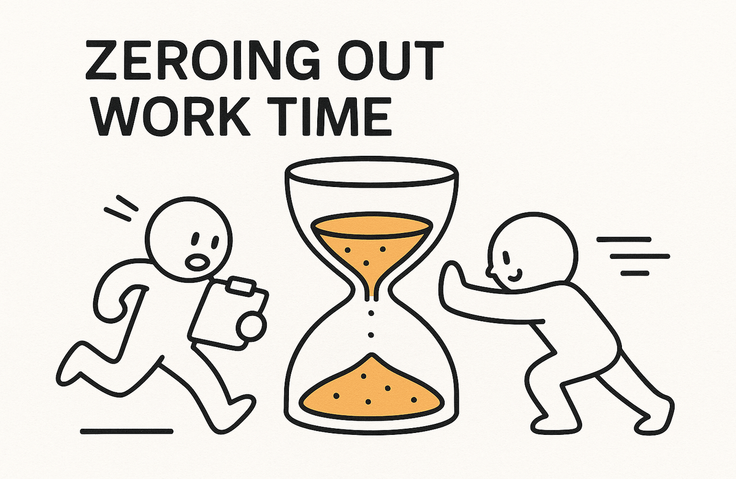
Zero Wait Time for Work: A Parallel Execution Strategy That Keeps Work Flowing Without Stopping

Analyze why a task that takes three hours of actual work requires two days to complete, and learn how to overlap waiting time with working time. By rearranging the order of requests and using a default-plan strategy, eliminate delays caused by others, the system, and yourself to create a workflow where work keeps flowing without stopping.

1 learners are taking this course

Level Basic

Course period Unlimited

Parallel Processing
Parallel Processing
optimizing
optimizing
requests
requests
task-scheduling
task-scheduling
Parallel Processing
Parallel Processing
optimizing
optimizing
requests
requests
task-scheduling
task-scheduling

What you will gain after the course

  • Classify waiting into three types—others, the system, and yourself—and identify them in your own work to pinpoint bottlenecks.

  • Parallel execution design that overlaps wait time with work time through request reordering and a baseline-plan attachment strategy

  • Build an execution system that transforms your day's work from a sequential to a parallel structure with a 10-minute morning routine


Eliminating waiting
Parallel work


Why is the pace of work fast, yet completion always late?
The moment you send a request and stop, waiting stretches the schedule more than the actual work does.

For over 20 years, I have operated servers and tackled bottlenecks in large-scale payment services and cloud infrastructure.
Distinguish between waiting caused by others, systems, and yourself,

and change the request order and default plan to create a structure where work flows.
Use a 10-minute morning routine to shift today’s work from sequential to parallel.


What you can take away from this course

When you overlap waiting periods, work that used to take two days starts flowing.

Divide waiting into people, systems, and yourself to identify where work comes to a halt. Instead of focusing on processing speed, change the location of the bottleneck to make the reasons for delays visible.

I change the order of requests, send a baseline proposal along with them, and move up the points of confirmation. I reduce back-and-forth and design a parallel workflow structure that lets the next task proceed while waiting for a response.

From data centers to cloud infrastructure, drawing on over 20 years of experience addressing failures and bottlenecks, this course offers practical criteria for shifting your day from sequential to parallel work within 10 minutes each morning.

After the course, instead of stopping to wait, you will naturally move on to the next task.
We will work with you to refine a workflow you can assess and apply immediately in the field.


The longer you wait, the more work comes to a halt.

While tracking overnight incidents, I learned firsthand the costs created by waiting.


For over 20 years, I have operated Linux servers and migrated environments from data centers to the cloud.

Handling hundreds of instances and large-scale payment services, and tracing the causes of incidents every night, I confirmed one thing: the actual work is short, but completion is delayed because the waiting takes longer than the work.

If you wait separately for others’ responses, system processing, and your own decisions, work can easily become serialized. By changing the order of requests and sending a preliminary draft first, you can move on to the next task while you wait.

Now, use 10 minutes in the morning to identify points of waiting and design a workflow for a day that keeps moving.


When you identify waiting time, bottlenecks become visible. When you change the order of requests, tasks overlap and flow together. Sending a basic draft reduces the time spent waiting for a response. Rework the sequence of one task today.


Curriculum

Work Without Waiting

Section 1

Lecture Materials and Learning Guide

Review the lecture materials and understand the overall learning direction for reducing waiting time and executing tasks in parallel.

Section 2

Understanding the Time When Work Stops

Examine why the completion time is later than the actual work time, and analyze the time spent waiting during work for others’ responses or system processing.

Section 3

Types of Waiting and Reordering the Request Sequence

Learn how to classify waiting into waits caused by others, the system, or yourself, and reduce bottlenecks by changing the order of work requests. First, learn the principle of parallel execution: throw the ball first and perform other tasks while waiting for the other party’s response.

Section 4

Efficient Request and Preemptive Waiting Design

Learn the key elements to include in a request, pre-fill the tasks needed during waiting time, and apply strategies to bring confirmation points forward. This reduces rework and unnecessary back-and-forth while maintaining workflow.

Section 5

Minimizing Back-and-Forth and Designing Your Daily Workflow

Learn how to reduce the number of back-and-forth exchanges between requests and confirmations, and design the day’s work sequence in a parallel structure during the first 10 minutes of the morning. Compare the workflow before and after applying it to verify the effect of reducing waiting time.

Section 6

Precautions During Execution and Practice Summary

Review common mistakes that are likely to occur when applying parallel execution strategies, and apply them to your own work through today’s exercises. Organize the key principles to build a workflow system where work flows without waiting.


Who This Course Is Recommended For

Recommended for the following people

Practitioners whose work completion is delayed while waiting for responses

Planners and project managers whose schedules are delayed due to missed requests and confirmations


Things to Note Before Taking the Course


Practice environment

  • The exercises are conducted on Windows or Linux.
    They can also be completed on macOS.

  • We use a request tool in the request-processing exercises.
    The latest web browser and a computer with basic specifications are sufficient.

Prerequisites and Notes

  • It is helpful to understand basic business workflows.
    Experience in planning or project management is also beneficial.

  • Advanced programming knowledge is not required.
    Please prepare an example from your own work.

Learning materials

  • We provide lecture slide materials.
    We also use a checklist summarizing the types of waits.

  • We provide practice materials for rearranging the order of requests.
    We use a morning work plan and before-and-after examples of applying it.


Recommended for
these people

Who is this course right for?

  • A practitioner who works quickly but takes a long time to complete tasks

  • Planners and PMs whose work often comes to a halt while waiting for others’ responses

  • Office workers whose schedules are delayed because they put off decisions or miss the timing to check.

Need to know before starting?

  • Experience working in an environment where collaboration requests and feedback occur on a daily basis

  • The basic ability to list and analyze one’s work process step by step

  • Interest in and commitment to improving work efficiency

Hello
This is jjangkbg7719

Career Verified

880

Learners

67

Reviews

6

Answers

4.7

Rating

46

Courses

Hello, I'm Frank.

I am an infrastructure engineer who has been wrestling with servers for over 20 years. Starting with Linux server operations, I am now in charge of the cloud infrastructure for a large-scale payment service. My daily life involves migrating from data centers to AWS, managing hundreds of instances, and tracing the causes of failures in the early hours of the morning.

The reason I created this course is simple.

I often received questions like these from those around me: "I managed to connect to the server, but I don't know what to do next." "There are so many instance types; which one should I choose?" These are the exact same points where I got stuck at first. However, when I looked for resources, I found that most of them were written for people who already knew what they were doing.

So I decided to create the course I wish I had when I first started learning.

My lectures are based on three principles.

First, I help you understand rather than memorize. Instead of just listing commands, I explain why we use them in the first place.

Second, I boldly omit unnecessary content. I do not increase the volume by including information that is useless to beginners right now.

Third, I also talk about what doesn't work. Instead of just listing the pros, I clearly point out cases where it might not be a good fit. For someone who has to make decisions in the field, that is more important.

If you feel a sense of "Ah, I should start from here" after listening to the lecture, then my goal has been achieved.

Please feel free to leave any questions you may have at any time.

More

Curriculum

All

16 lectures ∙ (12min)

Course Materials:

Lecture resources
Published: 
Last updated: 

Reviews

Not enough reviews.
Please write a valuable review that helps everyone!

jjangkbg7719's other courses

Check out other courses by the instructor!

Similar courses

Explore other courses in the same field!

Limited time deal

$2.20

50%

$4.40