

강의

멘토링

커뮤니티

NEW
Game Dev

/

Game Programming

[Technologies Supporting Game Development in the AI Era] Hong Sabu's Diablo 1 PCG Dungeon Generation Algorithm

Learn the principles of Diablo 1-style PCG dungeon generation by implementing its structure in the console, with the theme 'Technology Supporting Game Development in the AI Era'. Expand this to 3D in Unity to complete a generation pipeline equipped with seed-based dungeon generation, mesh placement rules, and debug tooling. Through sample code and hands-on practice, connect to AI-assisted art production workflows, enabling you to create immediately applicable dungeon crawler prototypes.

32 learners are taking this course

  • Rookiss
  • hongssabuu
실습 중심
AI 활용법
토이프로젝트
AI 코딩
C#
Unity
Algorithm
Unity6

What you will gain after the course

  • # Diablo 1 Cathedral-Style Dungeon Generation Algorithm

  • # Designing Content Based on Random Data

  • # Understanding of PCG Algorithm <budget:token_budget>199987</budget:token_budget>

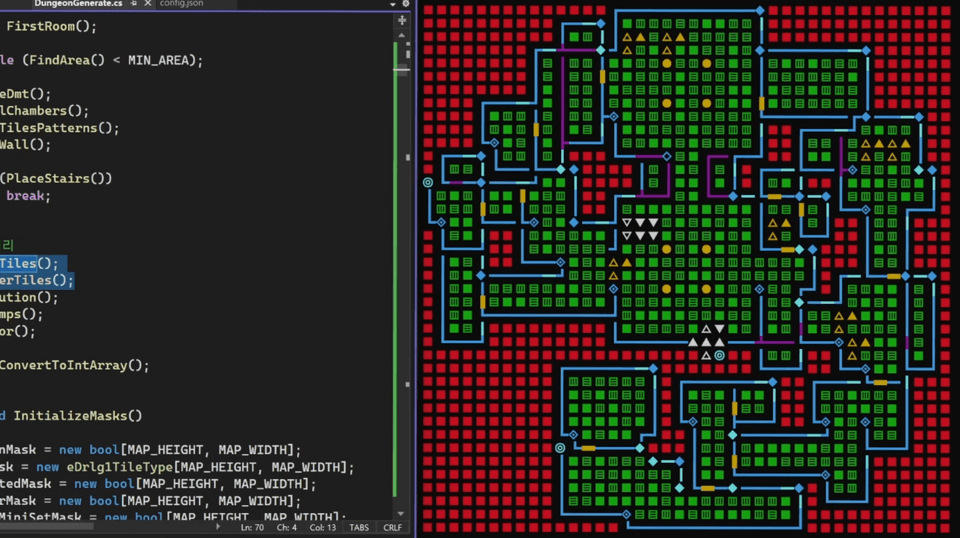
Dungeon Generation Process

[Technologies Supporting Game Development in the AI Era] Hong Sabu's Diablo 1 PCG Dungeon Generation Algorithm

This is a hands-on course where you directly implement and understand procedural dungeon generation (PCG) in the style of Diablo 1. You'll gain understanding by implementing Diablo 1's dungeon generation algorithm in a console project, then build upon that knowledge to develop the dungeon generation process to a production-game level in Unity3D.


First, through a console project, you'll visually confirm the rules by which dungeons are created, and systematically organize how core algorithms like FirstRoom, MakeDmt, FillChambers, AddWalls, and Miniset operate in sequence. Since you'll re-implement the structure in Unity after thoroughly understanding it at the console stage, you'll be able to follow even complex PCG logic without difficulty.


In the Unity part, you'll experience the entire process of building an actual dungeon in a 3D environment, from creating floor tiles to placing walls, generating arches and doors, positioning obstacles, and dividing SubTiles. You'll also implement elements necessary for gameplay, such as player movement, pathfinding, camera, and interactions, so by the end of the course, you'll have completed a playable dungeon crawler prototype.


In the LookDev stage, you'll learn how to enhance overall game completeness by working with visual elements such as general feature improvements, Light Object placement, Poisson sampling, and minimaps. There are many tips that can be immediately applied to real projects, making this especially helpful for solo developers.


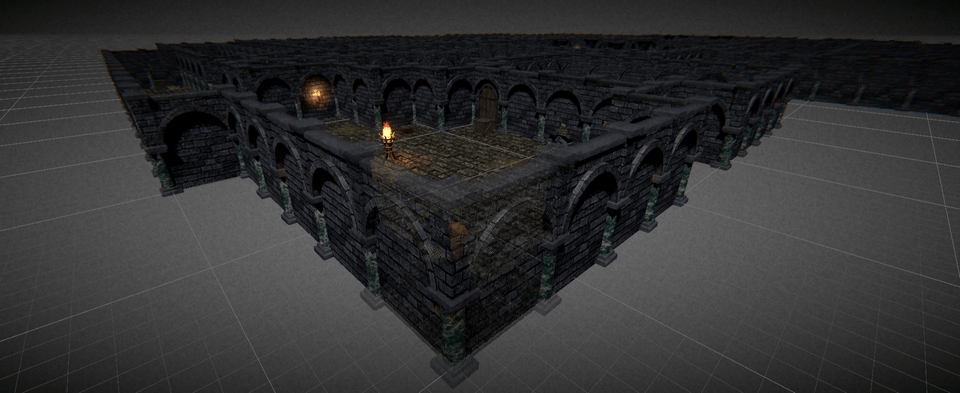
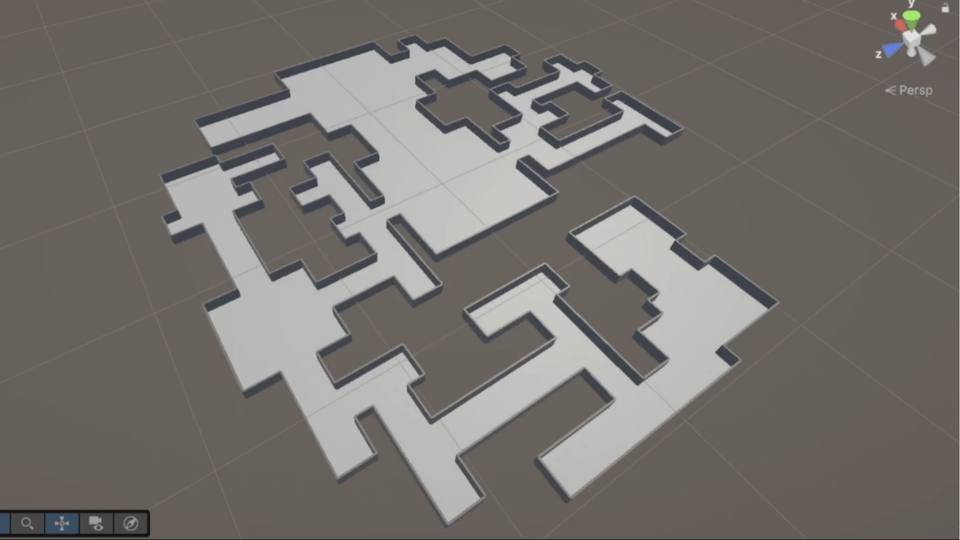
Dungeon Generation View & Dithered Wall


The project built in the course goes beyond learning purposes and is designed with a structure that works well as a starting point for actual game development. With organized generation rules and 3D placement logic, you can easily expand it into your own dungeon game by simply adding the features you want. When the course ends, you'll gain more than just understanding—you'll have a solid codebase that can immediately carry over to your next project.


  • Learning Diablo 1 Style Dungeon PCG Structure

  • A practical implementation pipeline from console to Unity3D

  • Complete playable dungeon content and systems

  • Unity Fundamentals and Shader, Post-Processing Learning


  • Poisson Disk Sampling, learning game algorithms like A*

After completing this course, you'll be able to create results like these

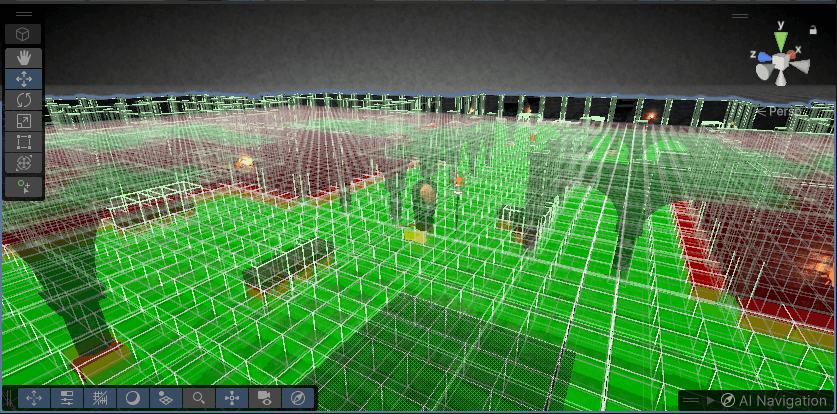
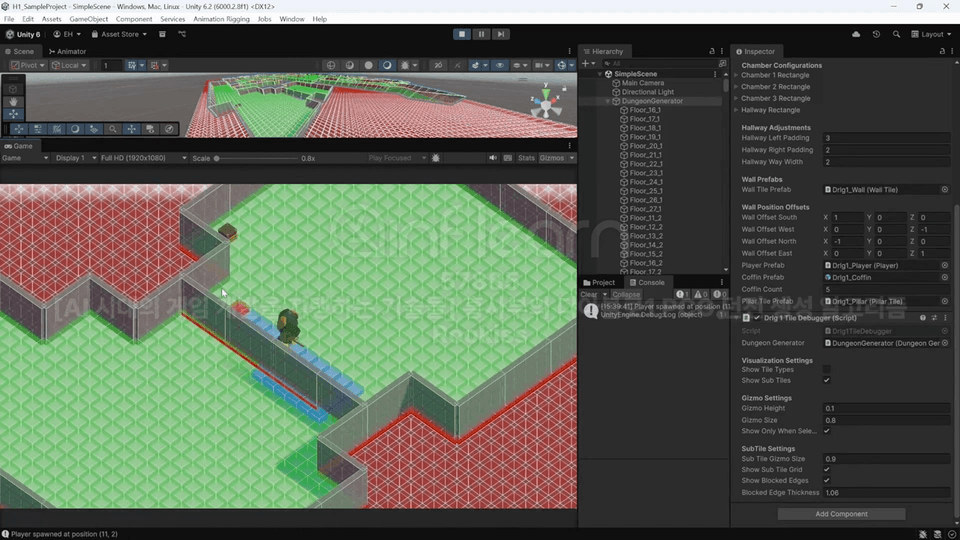
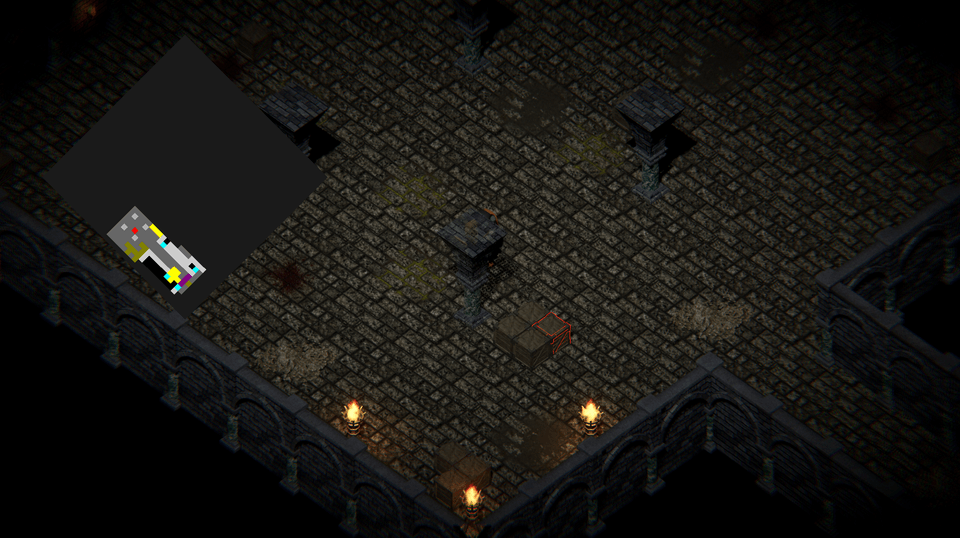
Dungeon Generation View and Sub-tile Debugger

  • Diablo 1 Cathedral-Style Dungeon Generation Algorithm

  • # Designing Content Based on Random Data

  • Understanding of PCG Algorithms

  • Methods for Applying Diablo 1 Style Resources and Visual Effects

Learning Content

  • Please tell me what I will learn in the course. It would be helpful if you could explain what content is covered in each section.

  • If you have example images of what students will learn in each section, you can create a much more appealing course introduction.

Post-processing lecture screenshot

Section 2. Console Project Analysis

  • You can immediately see the dungeon generation in text format in the console environment, making it easy to understand complex PCG rules.

  • We learn the basic principles step by step by analyzing the main flow one by one, including room creation, wall processing, and decoration placement.

Section 3. Unity Project

  • Integrate the core logic written in the console into the Unity pipeline and design a 2D→3D conversion structure.

  • In the AddWall step, we implement wall direction detection, mesh rotation, and adjacent tile inspection to transform the PCG structure into 3D.

  • We build a PCG system that applies SubTile subdivision to consider even the content placement and pathfinding structure.


Add3DWall lecture screenshot

Wall Edge Detection

Section 4. Dungeon Content

  • As characters and cameras are added to the dungeon, it evolves into a playable scene where you can walk around directly.

  • Movement, animation, and camera setup are carefully configured step by step to complete the basic framework of a top-down game.


  • You'll organize your code to achieve a solid content structure that's easy to utilize in future projects.

Section 5. Look Dev & Polishing

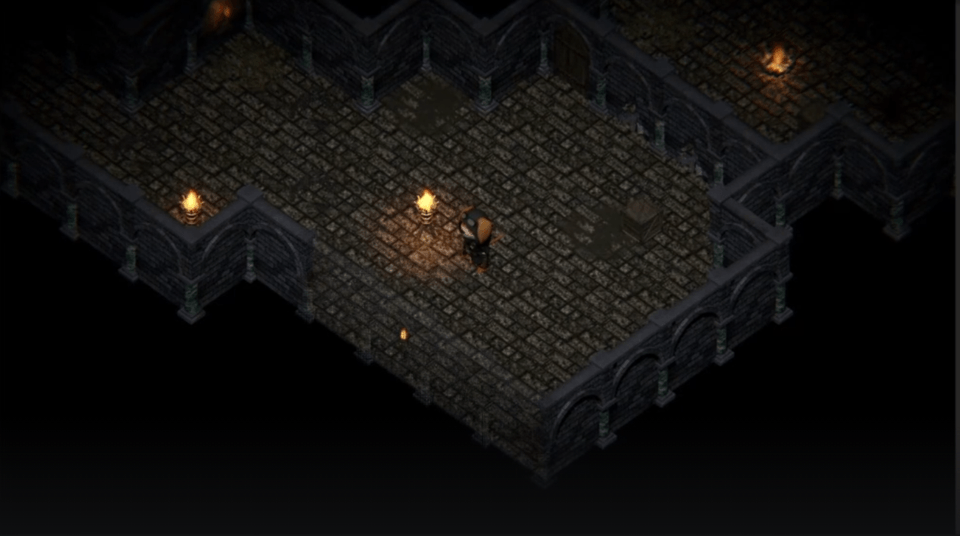
  • You can directly observe how the overall atmosphere changes as you replace art resources.

  • You will learn how to apply Unity's shaders and materials by implementing Outline and Dithered Transparency Shaders.

  • We will conduct advanced learning of game algorithms, including pathfinding algorithm improvements and Poisson disk sampling.

  • We proceed with post-processing through URP Volume.

Final Lighting and Post-Processing (URP Volume)


Learning Objectives

1. Understanding Procedural Generation Principles and Implementing Seed-Based Reproducibility

2. Tile-Based Map System Design

3. A* Pathfinding and Subtile-Based Movement

4. Unity Practical Techniques - Input System, Animator, URP Shader, URP Volume, Debugging Tool Creation


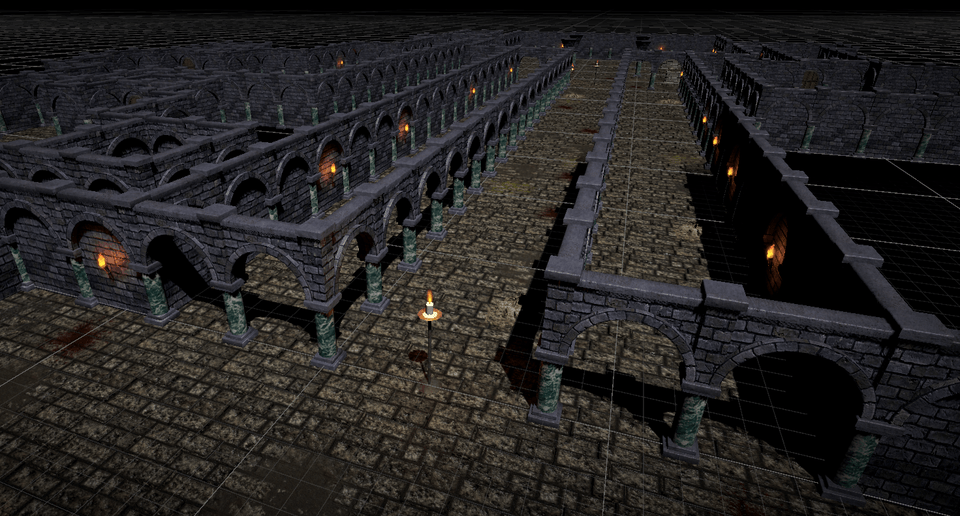
Cathedral corridor structures


Important Notes Before Enrollment

Practice Environment

  • Operating System and Version (OS): Windows

  • Tool used: Unity 6.2


Learning Materials

  • Step-by-Step Unity Project Files

  • PPT files used for concept learning

Prerequisites and Important Notes

  • Basic Unity usage. I recommend learning the overall content of [C# and Unity MMORPG Game Development Series] Part3: Unity Engine before watching this.


  • Basic C# syntax. I recommend learning the overall content of [MMORPG Game Development Series with C# and Unity] Part1: Introduction to C# Basic Programming before watching this.


#C# #Unity #Algorithm #Unity6

Final Project Completion Screen


  • The 3D models, textures, images, and other art resources provided in this course are for learning purposes only.
    Use or redistribution in commercial projects is not permitted.

  • The code and scripts provided in the course can be freely modified, utilized, and used commercially.


Recommended for
these people

Who is this course right for?

  • Anyone who wants to implement a Diablo 1-style PCG dungeon generation system for a dungeon crawler game

  • For those who want to implement practical algorithms like procedural map generation, tile placement, and automatic dungeon structure composition

  • Those who want to create a finished, playable product running in a game engine to use as a portfolio piece

Need to know before starting?

  • Basic Programming Knowledge

  • Unity Basic Skills

  • C# Programming

Hello
This is

80,173

Learners

3,733

Reviews

5,440

Answers

4.9

Rating

47

Courses

학력

- Condorcet Prépa MPSI 수료 (프랑스)
- 칭화대학교 소프트웨어공학 학사 (중국)
- 고려대학교 정보보호대학원 석사 (한국)

경력

- 前 크래프톤 (테라 서버팀)
- 前 엔씨소프트 (Blade&Soul2 컨텐츠 프로그래밍팀)

관심 분야

- 리버싱 및 취약점 분석
- MMORPG 게임 개발 (C++, C#)
- 외국어 (영어, 프랑스어, 중국어, 일본어)

소개

해킹 공부를 위해 순전히 호기심으로 시작한 게임 개발인데...
시간이 흘러 어느덧 10년차 게임 개발자가 되었습니다.
"이래서 언제 게임을 만들지~?"
한숨 나오는 기초 문법부터 시작해서,
차츰 만들어가는 나만의 게임 세상.
그리고 그 세상에 접속한 다수의 플레이어를 볼 때의 뿌듯함.
공부를 할 수록, MMORPG의 매력에는 헤어나올 수가 없습니다.
제가 느낀 감동을 여러분도 느낄 수 있으면 좋겠네요.


Curriculum

All

59 lectures ∙ (9hr 9min)

Course Materials:

Lecture resources
Published: 
Last updated: 

Reviews

Not enough reviews.
Please write a valuable review that helps everyone!

Limited time deal

$19,059.00

29%

$169.40

Rookiss's other courses

Check out other courses by the instructor!

Similar courses

Explore other courses in the same field!