[The Era of AI Clicks] Breaking Through with Principles: Node.js and CS Part 3: TCP/UDP Sockets and Network Core

In an era where AI writes code for us, the value of a "true architect" who can see through and control the macroscopic framework of a system becomes overwhelmingly higher. This course digs into the essence of low-level networks and TCP/UDP sockets hidden behind frameworks, cultivating the ability to design robust core engines that never crash even in the face of millions of traffic hits and large-scale data. Go beyond being a coder who blindly repeats copy-pasting, and leap forward to become an irreplaceable master who directs and controls AI with clear, system-level solutions.

1 learners are taking this course

Level Basic

Course period Unlimited

JavaScript
JavaScript
Node.js
Node.js
Computer Architecture
frontend
frontend
backend
backend
JavaScript
JavaScript
Node.js
Node.js
Computer Architecture
frontend
frontend
backend
backend

What you will gain after the course

  • Advanced AI Prompting: Instead of simply begging the AI for error fixes, you will gain system control to direct architecture-level solutions using precise CS terminology.

  • Securing framework independence: Strip away the shells of Express or NestJS and gain "real backend" skills by building high-performance servers using only pure Node.js built-in modules.

  • Memory Out-of-Memory (OOM) Defense: Identify the causes of server crashes that occur when handling large-scale data in gigabytes (GB) and minimize RAM usage.

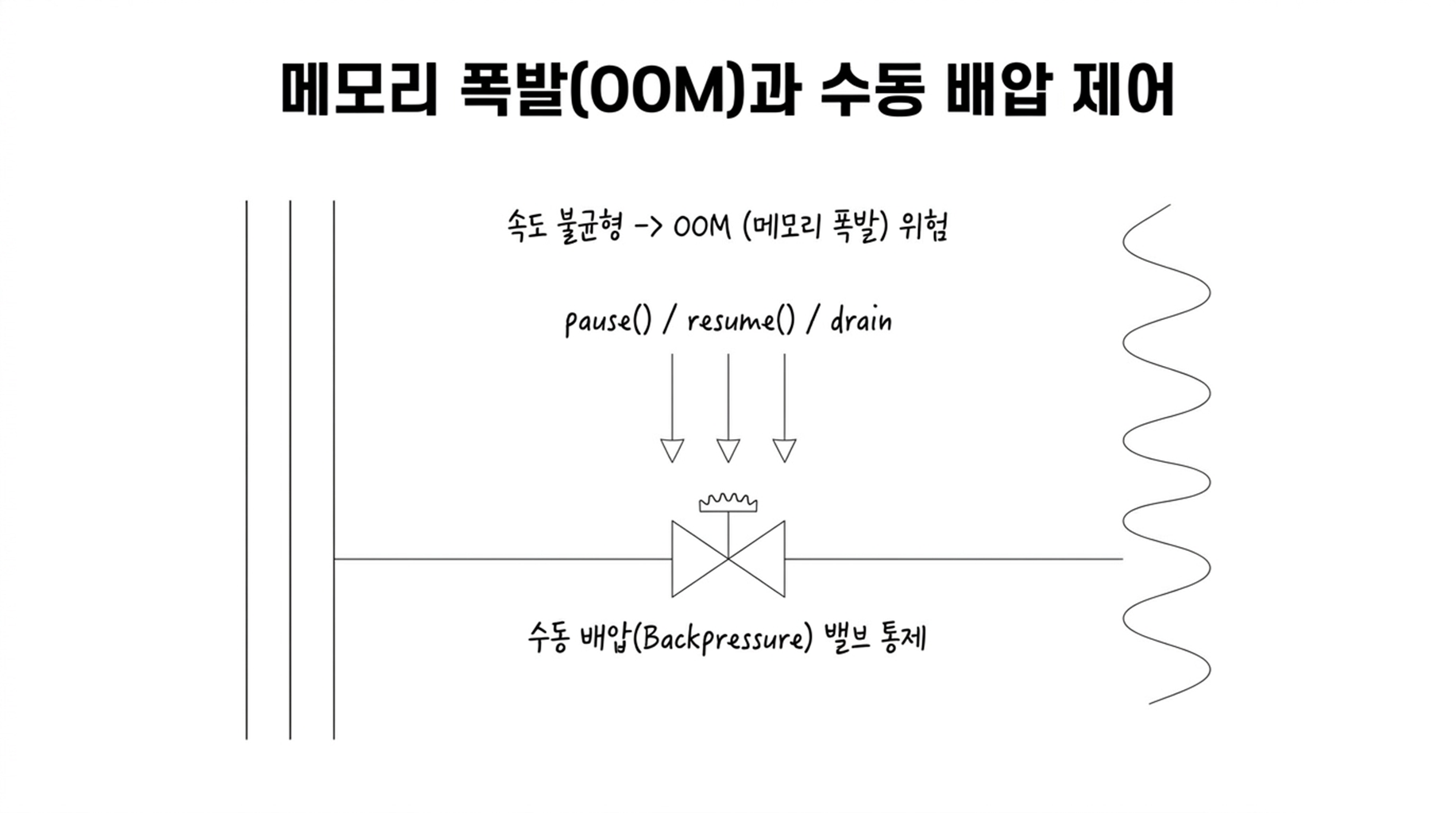
  • Manual Backpressure Control: Gracefully resolves the I/O speed imbalance between disk and network through OS-level valve controls (pause, resume, drain).

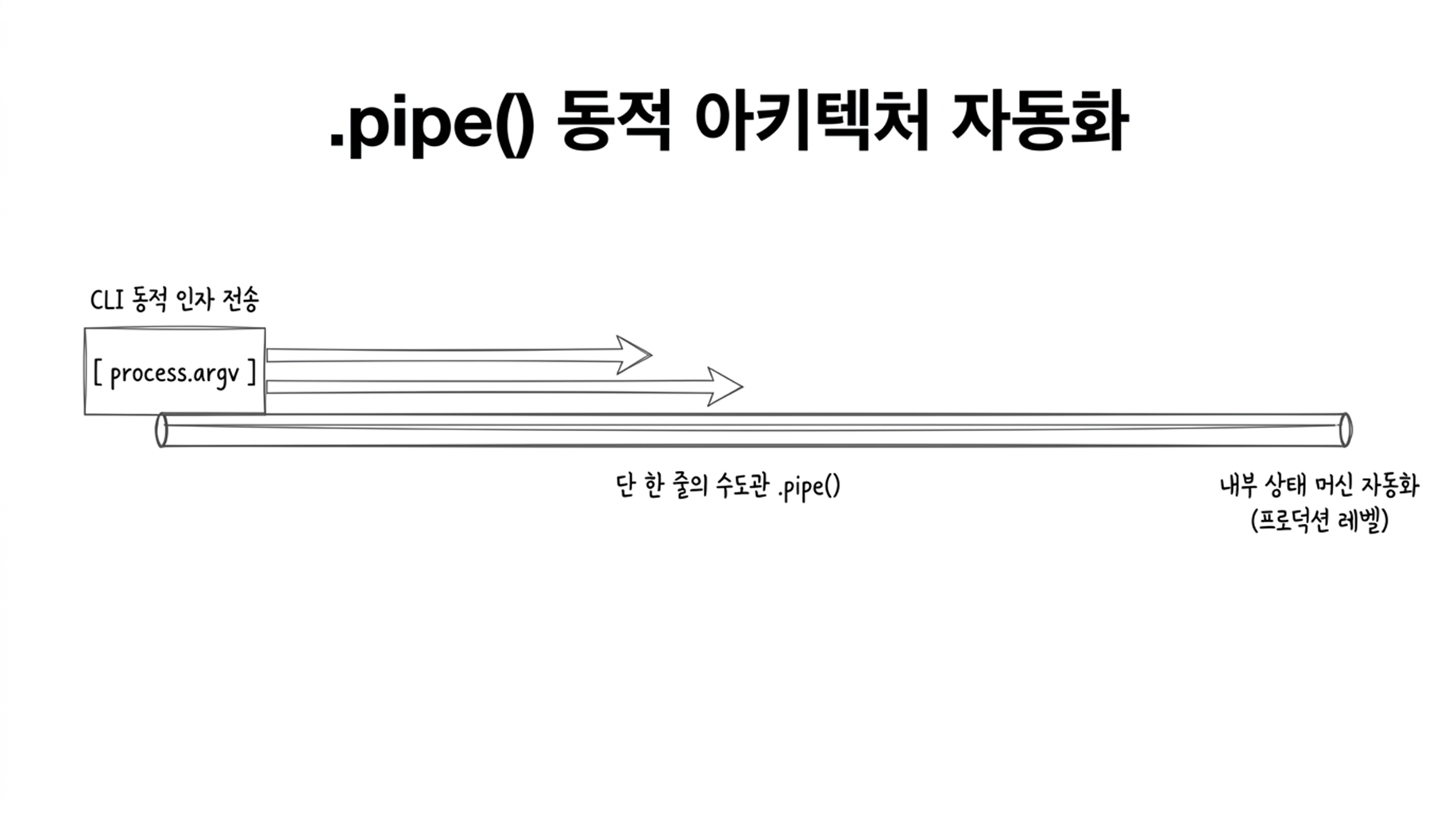
  • Stream Pipeline Automation: Master the internal state machine principles of the .pipe() method and implement advanced streams that automatically regulate data flow and backpressure.

  • Custom Communication Protocol Design: Creating my own communication standard from scratch, without relying on HTTP, by directly assembling and parsing metadata at the very front of the packet.

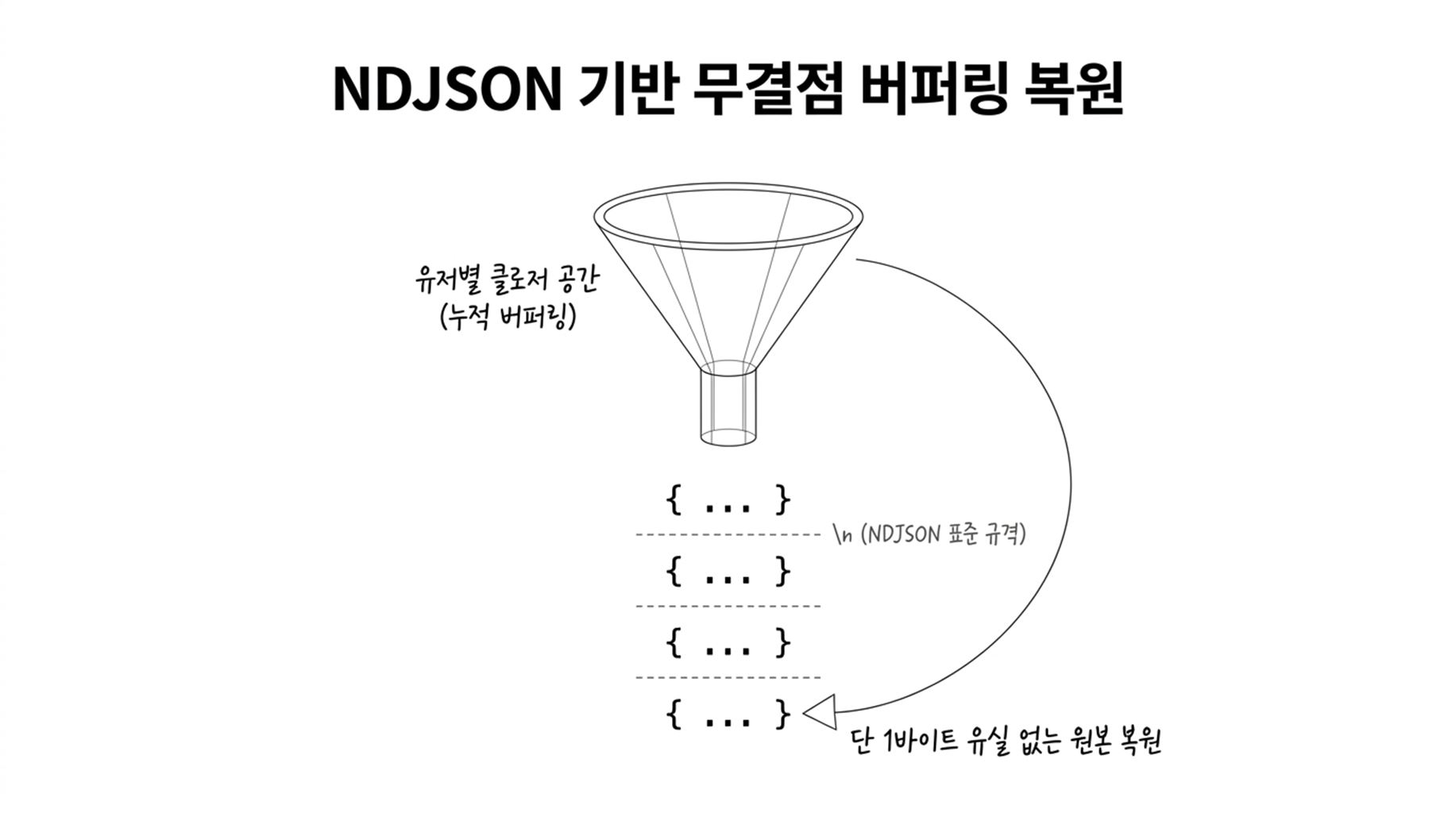
  • TCP Fragmentation and Merging Control: In the constantly flowing wave of TCP, data that arrives fragmented or merged is restored without loss using 'Cumulative Buffering' and 'NDJSON' techniques.

  • O(1) Data Structure Optimization: Identify the bottleneck of linear search and refactor the architecture into one that controls tens of thousands of concurrent users without delay by introducing a hash table (Map).

  • Implementing a multi-connection routing system: Go beyond isolated 1:1 socket environments to create a relay server that broadcasts data to numerous clients simultaneously.

  • Zombie Sockets and Exception Handling: Maximize server survivability by defending against kernel resource exhaustion caused by forced client terminations or network failures.

  • Realizing the OSI 7 Layers: Gain a transparent view of the network by mapping the layer model—which was previously only memorized as theory—1:1 with actual code (buffers, packets, serialization).

  • Clear practical application of TCP and UDP: Distinguish between areas requiring integrity (TCP) and real-time servers requiring extreme speed (UDP), and handle sockets freely according to each characteristic.

  • Network Infrastructure Core Diagnosis: Self-diagnose infrastructure issues occurring during server deployment through IPv4, subnet mask bitwise operations, and the port forwarding principles of NAT (routers).

  • Mastering Next-Generation Infrastructure IPv6: Understand the new standards of cloud environments, including the 128-bit addressing system that surpasses the 4.3 billion limit and the SLAAC autonomous routing mechanism.

  • Understanding Global Distributed Architecture and Completing Your Portfolio: You will understand the big picture of DNS lookups and GSLB systems, and based on this, you will directly complete a 'Multiplayer CLI Chat Server' and an 'OOM-free Large-capacity Uploader.'

  • Anatomy of a Network Core Engine: A 6-stage pipeline where data flows from physical electrical signals through MAC, IP, and Port, directly into the memory buffer of the Node.js V8 engine.

  • TCP/UDP Socket Mastery: Internal implementation of 3-Way Handshake communication for guaranteed reliability and Datagram communication for extreme speed with an 8-byte header.

  • Computer Engineering Infrastructure Theory: Subnet mask bitwise operations, NAT's private/public IP masquerading, DNS distributed architecture, and IPv6 Scope.

  • Production-level security/exception handling: Identifying the risks of spoofing and sniffing, and backend optimization logic to prevent server crashes.

🎓 "The Era of AI Clicks": Breaking Through with Principles - Node.js and CS Part 3: TCP/UDP Sockets and Network Core

In an era where AI pours out code, what is a backend developer's true weapon?

It is the power to go beyond simply 'churning out' APIs with frameworks and to control the 'network core engine' from the ground up where millions of traffic flows in. We are in an era where a decent server can be created with just a few "clicks" of a prompt.

But what about those dizzying moments when tens of thousands of users flock in, causing sessions to tangle, and data surges in units of 10GB lead to OOM (Out Of Memory) errors on the server? Simply copying error logs and asking an AI for the answer can never save a real production system. If we don't understand the principles of the black box hidden by the framework, we will eventually hit a wall, remaining dependent on code written by AI.

This course completely opens up the hoods of Express and NestJS, and is a high-end architecture class where you will directly navigate the Low-level pipeline where the OS kernel memory and the network interface card (NIC) communicate.

We start from the fundamental computer science question: "How do packets physically move at the lowest level of the network, and how is memory defended?"

  • Hardware-level control over the integrity of TCP and the extreme speed of UDP

  • Perfect restoration of the TCP Stream Fragmentation trap

  • Manual control of Backpressure to prevent memory explosions and .pipe() automation

  • Creating your own custom communication protocol (NDJSON) from scratch

  • IPv6 autonomous routing and DNS/GSLB based global distributed infrastructure mapping

Perfectly master the massive framework of networks and systems, and gain hands-on experience through two real-world projects (Building a Multiplayer CLI Chat Server and a 10GB Video Uploader), establishing flawless defense logic that allows for not a single byte of loss or a single server crash.

Beyond passively relying on code written by AI, it is now time to instruct and control AI with a clear 'system architecture' based on deep computer science principles. Let's begin the journey to leap forward as an irreplaceable top 1% engine architect right now.


🧱 Core Philosophy of the Course Structure

📌 Do not rely on the magic of frameworks; control the skeleton of the system yourself.

→ AI can churn out boilerplate code for high-level frameworks like Express or NestJS in seconds. However, if you cannot control the black box hidden behind the framework, you will be rendered helpless in the face of infrastructure bottlenecks. Boldly discard the habit of memorizing library usage and seize the control of an 'engine architect' that AI can never imitate by directly building low-level pipelines where the operating system (OS) kernel and network interface card (NIC) communicate using only pure Node.js built-in modules.

📌 Data is not a static lump, but a runaway wave.

→ When handling several gigabytes (GB) of data, naive code that attempts to load the entire file into memory at once will immediately drive the server to its death (OOM). You must recognize the speed imbalance as data passes through memory to the network, and understand 'Backpressure' control—monitoring the internal buffers of a Stream to open and close the floodgates—as well as the .pipe() automation flow. Only by mastering this macroscopic flow can you design a robust server that never crashes, no matter how much large-scale data rushes in.

📌 Not every transmission requires a meticulous delivery receipt.

→ We dissect the philosophical differences between TCP, where thorough integrity is vital, and UDP, where extreme speed is essential, at the hardware level. You will realize how fatal TCP's acknowledgment responses can be in real-time game servers or streaming environments where character positions change hundreds of times per second, and experience the true value of a UDP socket architecture that sheds its burden and sprints forward with a light 8-byte header and DMA (Direct Memory Access) technology.

📌 Network protocols are not given; they are designed.

→ When faced with the dilemma of fragmentation and merging, where packets split or clump together within the constantly flowing TCP waves, you do not hide behind HTTP protocols created by others. Instead, you assemble file name tags (headers) directly at the very front of the data, and by combining cumulative buffering with the global standard NDJSON protocol, you create your own custom communication protocol from the ground up.

📌 Draw a map of the moment your code meets the physical world.

→ The software we write does not fly through the air like magic. We completely master the physical flow of infrastructure where data pierces through routers and expands across the globe—from subnet mask bitwise operations, the private/public IP transformation of NAT, and the relay systems of ARP / MAC addresses, to the autonomous driving (SLAAC) mechanisms of next-generation IPv6 that completely innovate private networks.

📌 Go beyond the limits of a single server and look toward a global distributed architecture.

→ To design commercial services that never stop operating even in the face of tens of millions of traffic, you will master the 5-step relay process of DNS lookup. Beyond a simple machine that returns IPs, you will imprint a massive blueprint of GSLB, CDN, and session clustering in your mind—technologies that pinpoint the optimal path by identifying the user's physical location and automatically performing disaster recovery (DR).

📌 The true competitiveness in the AI era is not code production, but the debugging ability to dismantle the black box.

→ We are in an era where AI is better at simply outputting code quickly. However, when a subtle socket leak occurs in AI-generated network code, or when asynchronous backpressure control fails and servers crash simultaneously, only a human engineer who understands low-level principles can find the cause and perform the necessary surgery. The power to see through the internal workings of a system is the only absolute competency that prevents one from becoming obsolete in the AI era.

📌 Don't beg AI for code; instruct the system architecture.

→ Fragmented questions like "Fix this error" only waste meaningless tokens and costs. By engraving the deep principles of computer science into your core, you will evolve into a top 1% 'high-context architect' who can instruct and verify clear system-level solutions using precise CS terminology, such as "Design a NDJSON buffering logic and backpressure control code to prevent TCP fragmentation."


✨ Features of this course

  • Complete control of pure Node.js network core modules → Strip away the abstracted wrappers of external packages and frameworks to safely build L4 layer socket communication from scratch using only net, dgram, and fs modules.

  • Zero OOM, Stream Backpressure Automation → Master the essence of large-scale data transfer, from sophisticated manual valve control using pause, resume, and drain to the automatic draining mechanism of the .pipe() internal state machine.

  • Design and Implementation of Your Own Custom Network Protocol → To control TCP streams with no packet boundaries, you will complete an independent protocol that directly embeds unique delimiters (-----BOF-----) into binary buffers and parses them dynamically.

  • Equipped with 'High-Context' language that dominates AI → By defining the system with sophisticated computer science terminology instead of vague descriptions, you gain top-tier control to extract perfect architecture code from AI with just a single prompt.

  • Optimize O(N) linear search bottlenecks to the O(1) domain → Completely overhaul the fatal inefficiency of array-based ledgers into a Hash Table (Map) data structure to manage sessions at ultra-high speeds with a single operation, whether there are a hundred or a million users.

  • Hardware and Runtime Standard I/O Control → Perfectly control process.stdin / process.stdout standard streams and file descriptors (FD), and build a CLI environment based on process.argv and ANSI escape codes for terminal cursor manipulation.

  • Mastering Next-Generation Infrastructure and Global Distributed Maps → Go beyond the principles of IPv4 / IPv6, Subnet, and NAT to gain insight into DNS distributed architecture, GSLB, CDN, and the modern HTTP/3 (QUIC) paradigm that builds reliability on top of lightweight UDP sockets instead of heavy TCP.

  • Directly building two core engines at a production level → You will personally complete a 'Real-time Multiplayer CLI Chat Server' integrated with hash table session management, and a 'Flawless Large-scale TCP File Uploader Program' that perfectly streams 10GB videos without memory spikes.

  • Designing a Dual Defense System Against Zombie Sockets and Server Crashes → Learn exception defense strategies to fundamentally block memory leaks and resource exhaustion, ensuring the server never goes down even in the face of abnormal client terminations (ECONNRESET) and malicious junk data attacks.


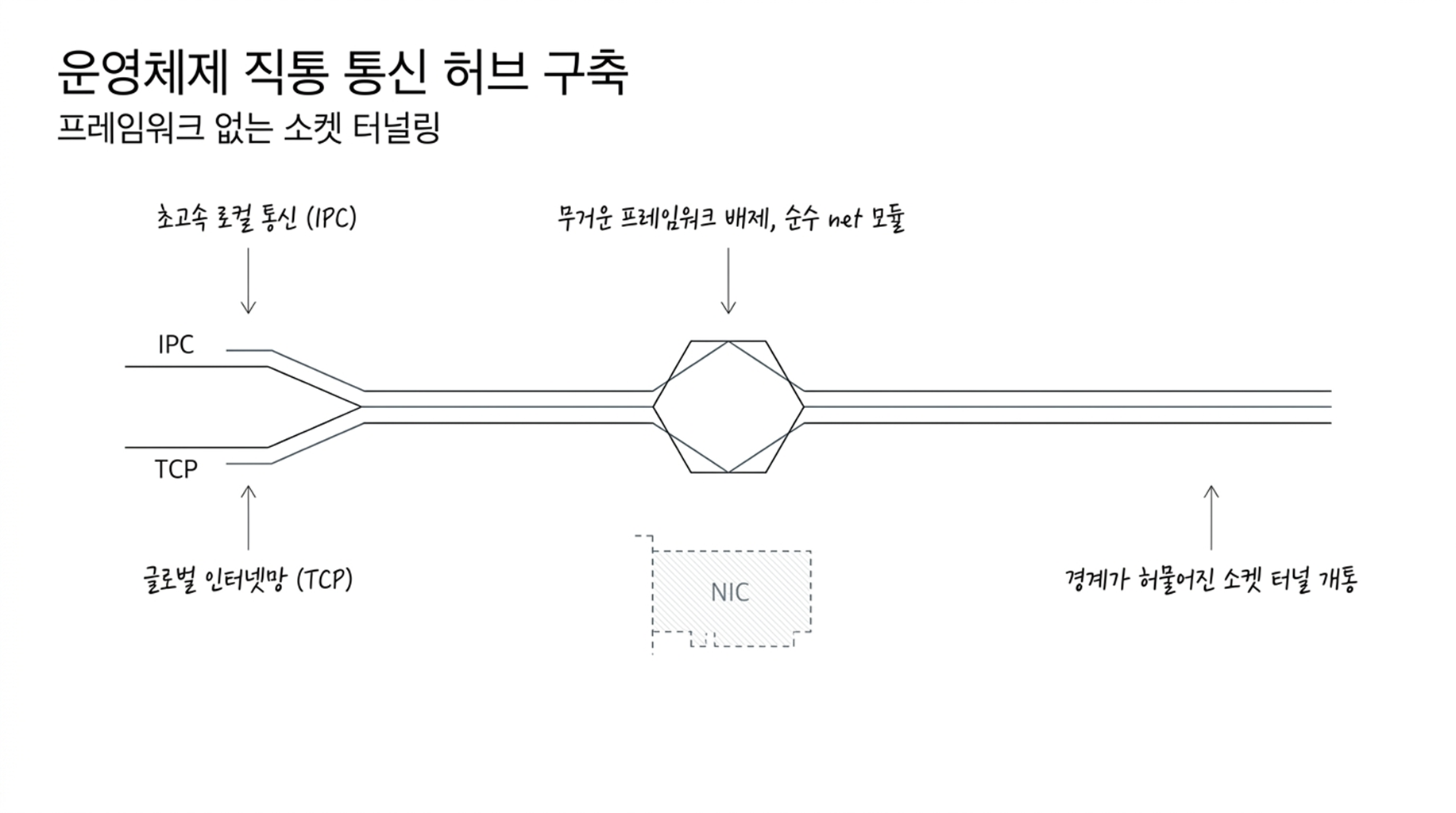
1️⃣ Building a Direct OS Communication Hub:
Dissolve the boundaries between high-speed local communication (IPC) that bypasses external hardware (NIC) and global TCP communication over the internet, and open socket tunnels using only the net module without any frameworks.

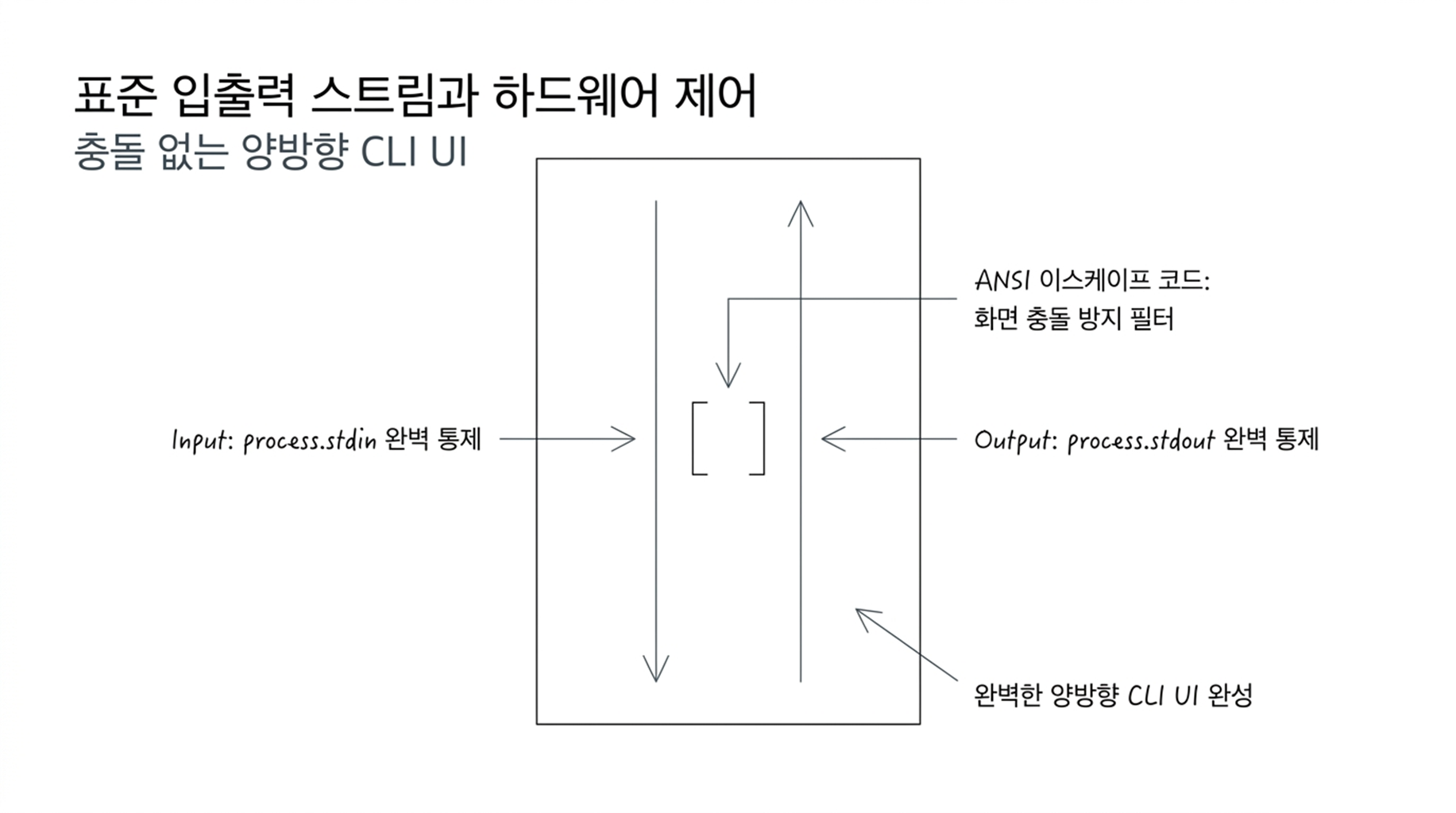
2️⃣ Standard I/O Streams and Hardware Control:
It perfectly controls the process.stdin and process.stdout standard streams and utilizes ANSI escape codes to complete a bidirectional CLI UI without terminal screen conflicts.

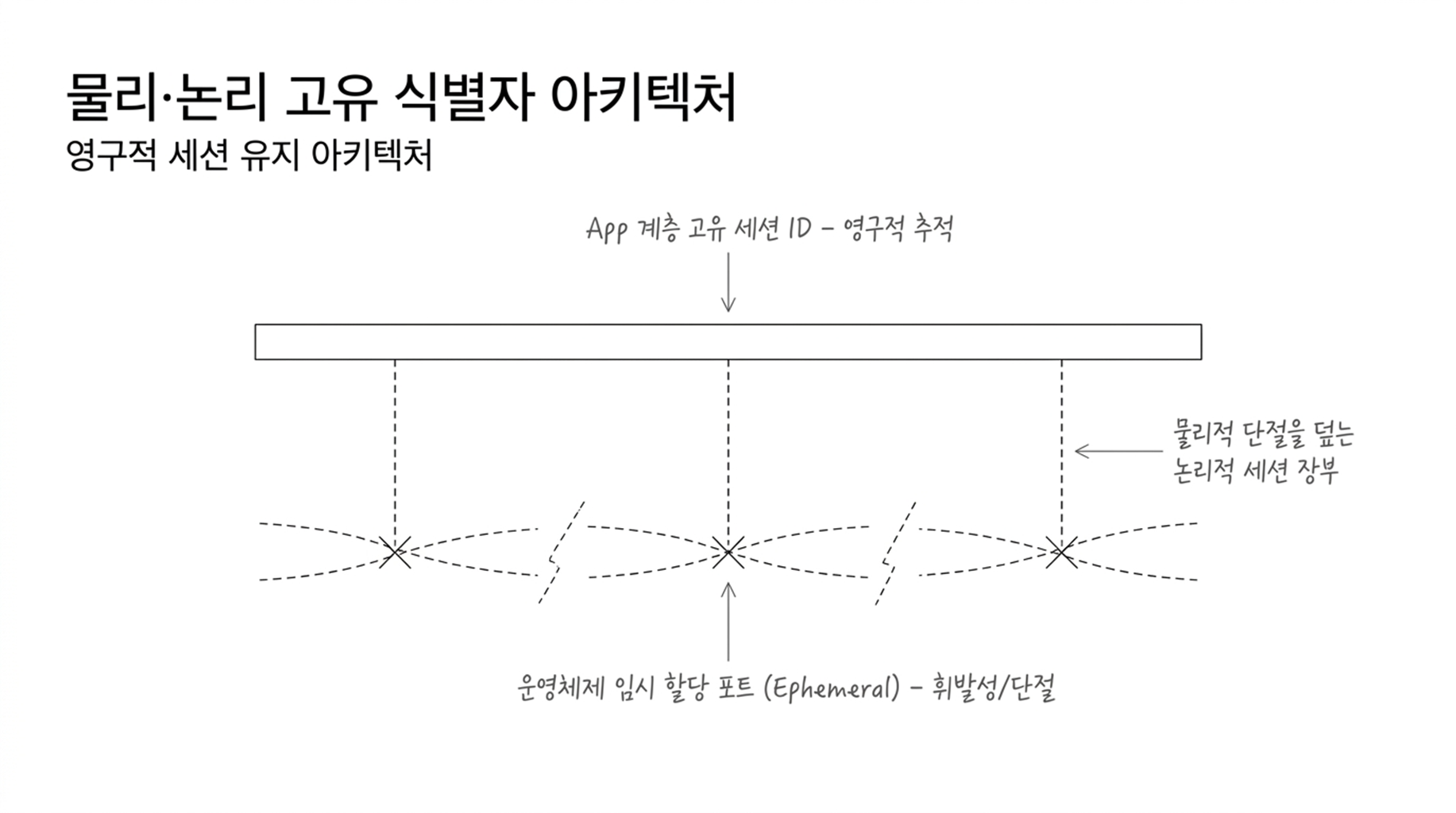
3️⃣ Physical/Logical Unique Identifier Architecture:
Overcome the limitations of temporary physical ports (Ephemeral Ports) randomly assigned by the operating system, and design an application-layer session ledger that securely tracks users even if the socket connection is lost.


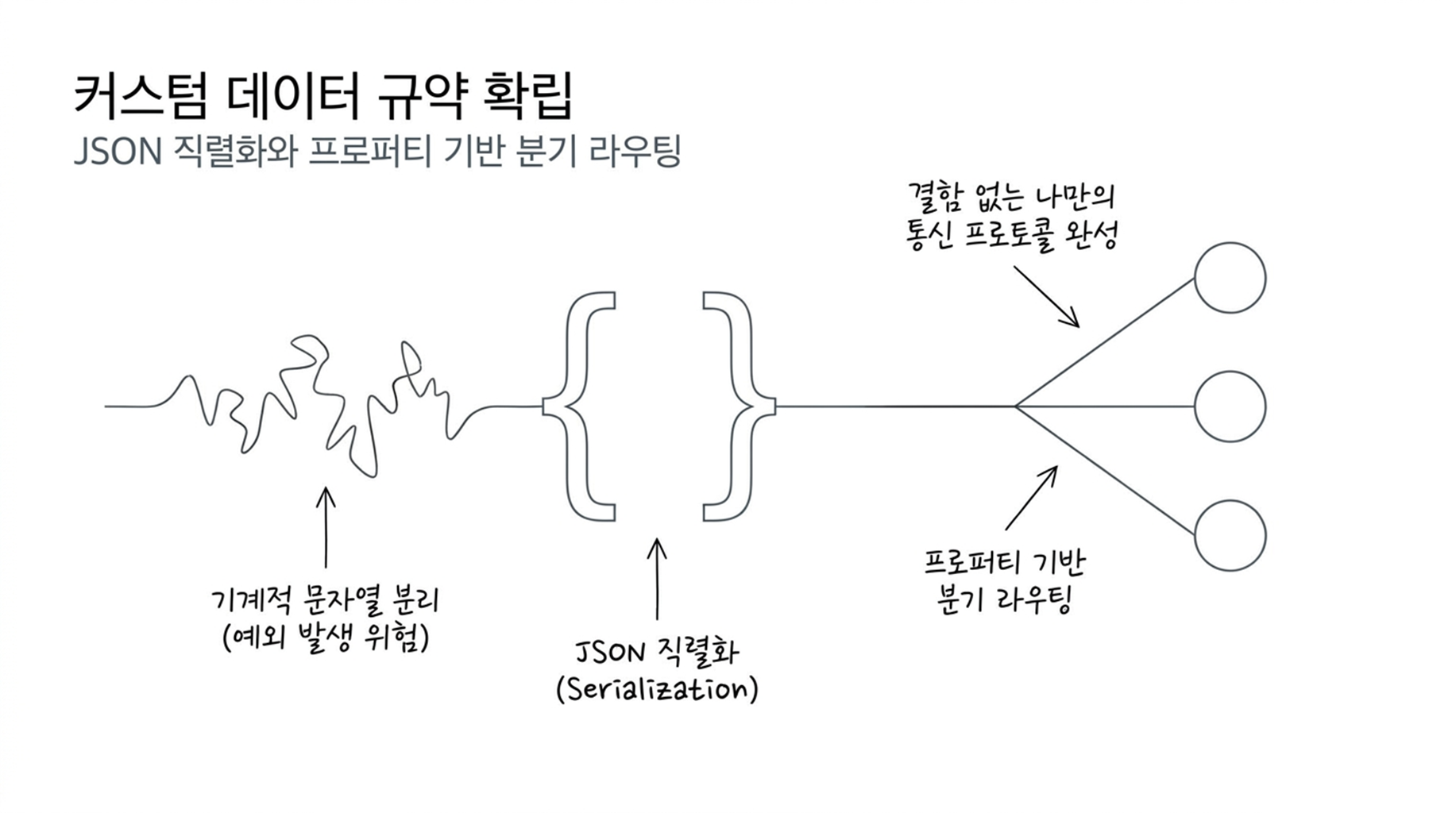
5️⃣ Establishing Custom Data Protocols:
Abandoning the risky method of mechanically slicing strings, we introduce JSON serialization of data objects and property-based branch routing to create a personal communication protocol that does not collapse under exceptional circumstances.


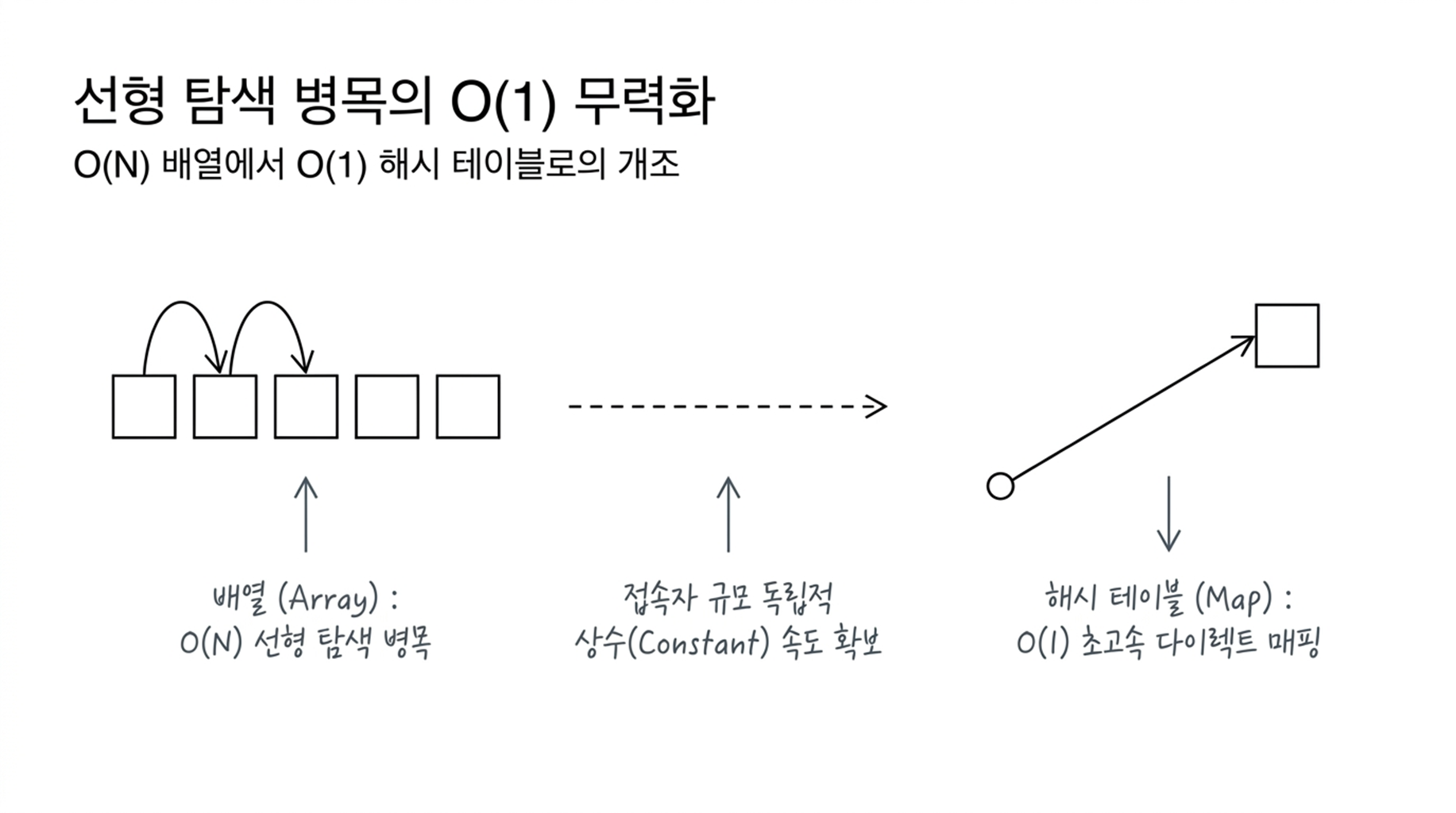
4️⃣ Neutralizing Linear Search Bottlenecks with O(1):
By completely overhauling the destructive O(N) search of array ledgers with the hash table (Map), the crown jewel of computer science, sessions are managed at ultra-high speeds with O(1) constant time complexity, regardless of the number of concurrent users.


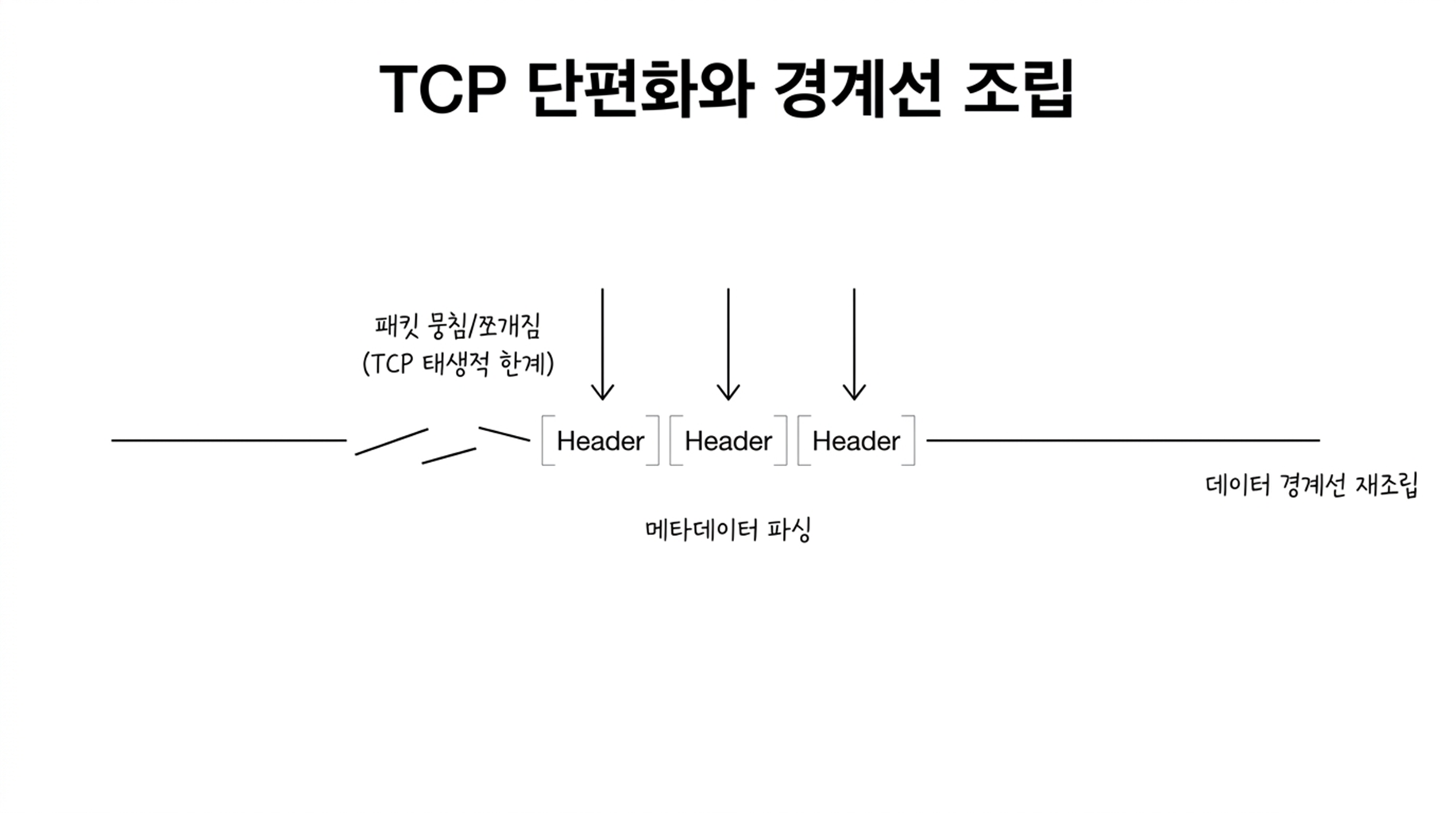
6️⃣ TCP Stream Fragmentation Dilemma: Facing the inherent limitations of TCP streams where packets arrive bundled or split due to network efficiency issues, we establish a metadata (header) parsing strategy to manually assemble data boundaries.

7️⃣ Flawless Buffering Restoration Based on NDJSON:
By combining cumulative buffering technology utilizing user-specific closure spaces with the global streaming standard NDJSON, original data is seamlessly restored without the loss of even a single byte.

8️⃣Speed Imbalance and Manual Backpressure Control:
Analyze how bottlenecks between ultra-fast disks and slow networks cause memory explosions (OOM), and internalize manual backpressure control by directly regulating pause(), resume(), and drain valves.

9️⃣ .pipe() Automation and Dynamic Header Architecture:
Automate manual valve control using the internal state machine of .pipe(), a single-line water pipe, and combine it with process.argv-based CLI dynamic argument transmission techniques to complete a production-level file uploader.


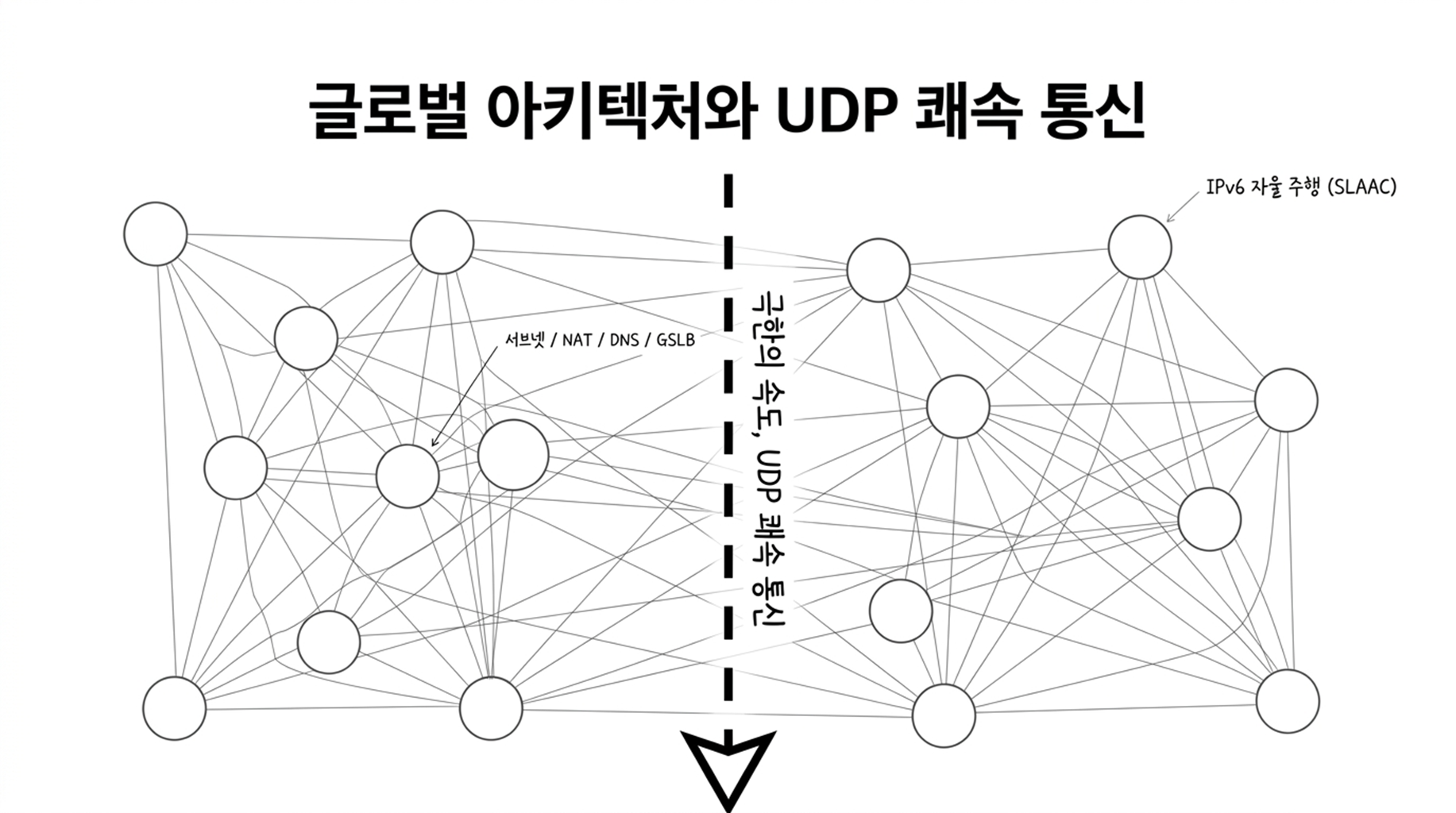
🔟 Mastering Global Infrastructure and High-Speed UDP Communication:
From subnet masks, NAT, and IPv6 stateless address autoconfiguration (SLAAC) mechanisms to designing DNS lookups and GSLB blueprints, you will completely conquer global distributed architecture, including ultra-high-speed UDP socket communication.

Backend developers whose growth is stalled by logic expansion and traffic bottlenecks after relying on AI code copy-pasting

Engineers who want to identify and directly control low-level bottlenecks behind frameworks (TCP fragmentation, backpressure control, etc.)

Architects who want to design global-scale traffic distribution systems, including DNS, GSLB, and CDN, and draw blueprints for next-generation infrastructure

Those who want to proactively control AI using accurate CS terminology and architectural principles to save time and costs

Developers who have stayed up all night due to Out of Memory (OOM) issues occurring while processing large files and real-time communications


Those who want to implement CS knowledge such as TCP, UDP, and Sockets, which they only learned in theory, into actual code

Those who want to leap beyond being a simple coder to become an irreplaceable architect who draws the big picture of the entire system

Those who want to go beyond Express and NestJS usage to deeply explore Node.js streams and operating system/hardware-level principles

Those who want to clearly understand why a local server won't open to external networks and the physical meaning of 0.0.0.0 binding

👥 Recommended for these people

  • "Junior developers who don't know where to fix when an error occurs, so they copy and paste the entire code into AI and engage in 'prayer-based' coding."

  • "Engineers who can somehow implement features but don't know why the server crashes when millions of traffic or gigabyte-sized files come in during real-world operations, and thus give up on system scaling."

  • "Those who lack a big-picture view of the overall system architecture and end up wasting token costs by asking AI vague questions like 'optimize the structure' only to receive irrelevant results."

  • "A junior developer whose growth has stalled after feeling painful limitations because they are unable to expand or maintain the code written by AI."

  • "Developers who have realized that 'system architecture design capabilities to see the big picture' have become more important than code production speed."

  • "Those who want to peel back the layers of frameworks like Express and NestJS to directly control the internal operating principles of network communication."

  • "A backend developer who has stayed up for several nights due to large file upload issues causing Out of Memory (OOM) errors."

  • "TCP, UDP, Socket, Port, etc. Majors who want to implement CS knowledge learned through rote memorization in college into living, breathing code."

  • "A job seeker who is a non-major and wants to overcome the interviewer's pressure questions (architecture, network depth) with overwhelming skill."

  • "Those who want to know the real-time multiplayer game server or the underlying communication structure of video conferencing systems (WebRTC)."

  • "Those who feel that the concepts of Stream and Buffer, the core of Node.js, are vague and have not been able to properly apply them to practical code."

  • "Those who are unskilled in designing zombie socket handling logic that occurs during network line failures or forced client terminations."

  • "Those who didn't know why the local server they launched works fine on localhost but doesn't open on external networks, or the true meaning of 0.0.0.0 binding."

  • "Those who want to intuitively master the backbone of cloud infrastructure, such as IPv4, Subnet, NAT, and IPv6, in a short period of time."

  • "Those who want to go beyond simple server development and design global-scale traffic distribution system blueprints including DNS, GSLB, and CDN."

  • "Those who want to explore at a low level how familiar built-in functions like indexOf and substring operate at the memory and CPU level."

  • "Those who want to build their own CLI tools (process.argv, ANSI Escape Codes) that handle terminal commands."

  • "Middle-level engineers who are ready to leap beyond fragmented coding skills and become 'system architects' who will dominate the AI era."


🎓 After taking the course

  • Advanced AI Prompting: Instead of simply begging AI for error fixes, you will gain system control to command architecture-level solutions using precise CS terminology.

  • Achieving Framework Independence: Strip away the shells of Express or NestJS and gain "real backend" skills by building high-performance servers using only pure Node.js built-in modules.

  • Defending against Memory Explosion (OOM): Identify the causes of server crashes that occur when handling gigabyte (GB) scale large-capacity data and minimize RAM usage.

  • Manual Backpressure Control: Elegantly resolve I/O speed imbalances between disk and network using OS-level valve controls (pause, resume, drain).

  • Stream Pipeline Automation: Master the internal state machine principles of the .pipe() method and implement advanced streams that automatically regulate data flow and backpressure.

  • Custom Communication Protocol Design: Instead of relying on HTTP, create your own communication protocol from scratch by directly assembling and parsing metadata at the very front of the packet.

  • TCP Fragmentation and Merging Control: Restore data that arrives split or merged within the constant flow of TCP streams without loss, using 'cumulative buffering' and 'NDJSON' techniques.

  • O(1) Data Structure Optimization: Identify bottlenecks in linear searches and refactor the architecture to control tens of thousands of concurrent users without latency by introducing hash tables (Map).

  • Implementation of a Multi-Connection Routing System: Go beyond isolated 1:1 socket environments to create a relay server that broadcasts data to numerous clients simultaneously.

  • Defending Against Zombie Sockets and Exception Scenarios: Maximize server survivability by defending against kernel resource exhaustion that occurs during forced client terminations or line failures.

  • Materializing the OSI 7 Layers: Map the layer model, which was previously only memorized as theory, 1:1 with actual code (buffers, packets, serialization) to gain a perspective that looks transparently into the network.

  • Clear Practical Application of TCP and UDP: Distinguish between areas requiring integrity (TCP) and real-time servers requiring extreme speed (UDP), and freely handle sockets according to each characteristic.

  • Network Infrastructure Core Diagnosis: Diagnose infrastructure issues that occur during server deployment through IPv4, subnet mask bitwise operations, and NAT (router) port forwarding principles.

  • Next-Generation Infrastructure IPv6 Master: Understand the new standards of cloud environments, including the 128-bit addressing system that overcomes the 4.3 billion limit and the SLAAC autonomous configuration mechanism.

  • Understanding Global Distributed Architecture and Completing Your Portfolio: You will understand the big picture of DNS lookup and GSLB systems, and based on this, you will directly complete a 'Multiplayer CLI Chat Server' and an 'OOM-free Large-capacity Uploader.'

💻 Notes before taking the course

🔗 [Previous series (Part 1, 2) highly recommended]

This course is the final chapter (Part 3) of a massive system design curriculum. The understanding of the V8 engine and local memory control (Part 1), as well as large-scale streams and pipeline architecture (Part 2), leads directly into network sockets (Part 3). Since all chapters are organically connected, it is strongly recommended that you complete Part 1 and Part 2 before moving on to this course.

(※ However, if you are a senior professional with a solid foundation in Node.js core modules and CS basics, you may take this course independently.)

I have refined the content to enhance readability and ensure the core messages hit home intuitively, using perfectly suited emojis while maintaining the heavy tone and manner of high-end engineering.

⌨️ [Don't just watch with your eyes; internalize it with your fingertips]

Don't just stop at watching videos and observing code written by others. I recommend the process of actually opening server and client terminals, exchanging packets, and typing out the pouring logs and errors line by line yourself. Real architecture is completed not in the head, but through the muscle memory of your fingertips.

🔍 [Persistently ask "Why?"]

Persistent skepticism about principles, such as "Why is memory exploding here?" or "Why is this packet being split upon arrival?", is the most reliable weapon for leaping from a mere coder to an 'engine designer.' If you encounter infrastructure-related questions or unfamiliar CS concepts that remain unresolved during your studies, do not struggle alone; feel free to leave a question at any time. I will provide clear answers from an architect's perspective.

🗺️ [Make 100% use of the 'Lecture Notes' with overwhelming detail]

It is difficult to visualize the invisible flow of a network in one's mind. To help you intuitively grasp complex infrastructure structures—from TCP fragmentation and backpressure valve control to subnet mask operations—I provide detailed advanced manuals (lecture notes) for every single lesson, elaborately visualizing everything from the physical level of 0s and 1s to global architecture. Please make sure to read them thoroughly after watching each video.

Recommended for
these people

Who is this course right for?

  • A junior developer whose growth has stalled after hitting a painful limit, unable to expand or maintain the code written by AI.

  • A developer who realized that 'system architecture design skills for the big picture' have become more important than the speed of code production.

  • Those who want to strip away the shells of frameworks like Express and NestJS to directly control the internal operating principles of network communication.

  • A backend developer who has stayed up for several nights due to Out of Memory (OOM) issues occurring during large file uploads.

  • Computer science majors who want to implement CS knowledge—such as TCP, UDP, Sockets, and Ports, which were learned through rote memorization in university—into living, breathing code.

  • A middle-level engineer ready to leap beyond fragmented coding skills and become a 'system architect' who will dominate the AI era.

  • A job seeker who, as a non-major, wants to overcome intense interview questions (architecture, network depth) with overwhelming skill.

  • Developers who have realized the limitations of simple 'click-and-go' development and want to drastically save token costs and time by providing AI with precise system design directions using accurate terminology and principles.

  • Engineers who want to go beyond simply copying and pasting code generated by AI tools (Claude, ChatGPT, etc.) to clearly analyze internal operating principles and take the lead in modifying architecture.

  • Those who want to survive as irreplaceable architects who draw the 'big picture of the entire system'—controlling massive traffic and OOM—rather than remaining as meaningless coders in the race for AI code production speed.

  • Those who feel that the concepts of Stream and Buffer, the core of Node.js, are too vague and haven't been able to properly apply them to practical code.

  • Those who are unskilled in designing zombie socket handling logic that occurs during network line failures or forced client terminations.

  • For those who didn't know the true meaning of 0.0.0.0 binding—why the local server you launched works fine on localhost but won't open from an external network.

  • Those who want to intuitively master the backbone of cloud infrastructure—such as IPv4, Subnet, NAT, and IPv6—in a short period of time.

  • Those who want to go beyond simple server development and design blueprints for global-scale traffic distribution systems, including DNS, GSLB, and CDN.

  • Those who want to explore at a low level how familiar built-in functions such as indexOf and substring operate at the memory and CPU level.

  • Those who want to try building their own CLI tools that handle terminal commands (process.argv, ANSI Escape Codes).

  • A backend architect who wants to develop the power to see through and control the root causes of low-level bottlenecks that AI cannot solve (such as TCP fragmentation, backpressure control, etc.) from an architectural perspective.

Need to know before starting?

  • JavaScript Basics Review

  • Node.js Installation (v20 or higher recommended): Please pre-install the LTS (stable version) from the official Node.js website. In this course, we will learn how to interact with the operating system based on this environment.

  • Code Editor (VS Code): Please prepare Visual Studio Code to write the practice code.

  • Letting go of vague fears: Instead of worrying, "Won't it be difficult?", just bring a sense of joyful curiosity to open the black box of technology with your own hands.

  • (Recommended) Taking "The Era of AI Clicking" Breaking Through with Node.js and CS Part 1 - V8 and Core Deconstruction

  • (Recommended) "The Era of AI Clicks" Breaking Through with Node.js and CS Part 2 - Stream Architecture and Hardware Controllers

Hello
This is nhcodingstudio

Inflearn Verified

Career Verified

2,423

Learners

142

Reviews

55

Answers

4.8

Rating

20

Courses

Hello, welcome to Our Neighborhood Coding Studio!

Our Neighborhood Coding Studio is an educational group founded by developers who majored in Computer Science at leading North American universities such as Carnegie Mellon, Washington, Toronto, and Waterloo, and gained practical experience at global IT companies like Google, Microsoft, and Meta.

It originally began as a study group created by computer science majors in the U.S. and Canada to study and grow together. Although we were at different universities and in different time zones, the time we spent solving problems together and learning from one another was very special, which naturally led to this thought.

"What if we pass on this exact way we studied to others?"

That question was the starting point for Our Neighborhood Coding Studio.

Currently, approximately 30 incumbent developers and computer science students are in charge of their respective fields of expertise, directly designing and teaching a curriculum that spans from introductory to practical levels. Beyond simple knowledge transfer, we provide an environment where you can learn from the perspective of a real developer and grow together.

“Real developers must learn from real developers.”

We systematically cover the entire process of web development from start to finish, but we don't stop at theory; we help you build your skills through practice and practical, real-world feedback.
Our philosophy is to care about and lead the growth of each and every student.

🎯 Our philosophy is clear.
"True learning comes from practice, and growth is completed when we are together."

From beginners starting development for the first time to job seekers looking to enhance their practical skills and teenagers exploring their career paths,
Neighborhood Coding Studio aims to be the starting point for everyone and a reliable companion walking right beside you.

Now, don't struggle alone.
Neighborhood Coding Studio will be there for your growth.


Welcome to Neighborhood Coding Studio!

Neighborhood Coding Studio was founded by a team of developers who studied computer science at top North American universities such as Carnegie Mellon, the University of Washington, the University of Toronto, and the University of Waterloo, and went on to gain hands-on experience at global tech companies like Google, Microsoft, and Meta.

It all began as a study group formed by computer science students across the U.S. and Canada, created to grow together by sharing knowledge, solving problems, and learning from one another.
Though we were attending different schools in different time zones, the experience was so meaningful that it led us to one simple thought:

"What if we shared this way of learning with others?"

That thought became the foundation of Neighborhood Coding Studio.

Today, we are a team of around 30 active developers and computer science students, each taking responsibility for their area of expertise—designing and delivering a curriculum that spans from foundational knowledge to real-world development.
We’re not just here to teach—we’re here to help you see through the lens of real developers and grow together.

“To become a real developer, you must learn from real developers.”

Our courses take you through the entire web development journey—from start to finish—focused on hands-on practice, real-world projects, and practical feedback.
We care deeply about each learner’s growth and are committed to supporting your path every step of the way.

🎯 Our philosophy is simple but powerful:
"True learning comes from doing, and true growth happens together."

Whether you're just getting started, preparing for your first job, or exploring your future in tech,
Neighborhood Coding Studio is here to be your launchpad—and your trusted companion on the journey.

You don’t have to do it alone.
Let Neighborhood Coding Studio walk with you toward your future in development.

More

Curriculum

All

46 lectures ∙ (6hr 9min)

Course Materials:

Lecture resources
Published: 
Last updated: 

Reviews

Not enough reviews.
Please write a valuable review that helps everyone!

nhcodingstudio's other courses

Check out other courses by the instructor!

Similar courses

Explore other courses in the same field!

Limited time deal

$33,000.00

70%

$84.70