inflearn logo

"The Era of AI Clicks" Breaking Through with Principles: Node.js and CS Part 1: V8 and Core Deconstruction

The days of feeling relieved by black-box code spat out by AI are over. By piercing through the physical limitations of computers and the inner workings of the Node.js core engine, we provide you with the engineering control to remain unshakable in the face of any traffic surge.

17 learners are taking this course

Level Basic

Course period Unlimited

JavaScript
JavaScript
Node.js
Node.js
Computer Architecture
frontend
frontend
backend
backend
JavaScript
JavaScript
Node.js
Node.js
Computer Architecture
frontend
frontend
backend
backend

What you will gain after the course

  • Unlocking the black box: You will face the reality of technology as you realize that what once seemed like magic is actually a combination of simple principles.

  • Technical Independence: You can diagnose and resolve the root causes of problems on your own, without relying on answers from AI or search engines.

  • Powerful control: Predict and dominate the physical impact that a single line of my code has on computer hardware and memory.

  • Mastering the Essence of Data: You will gain the insight to see through the flow of real data (binary and bytes) hidden behind the screen.

  • The Order of Asynchrony: You can enforce and optimize the perfect execution order among asynchronous tasks that run unpredictably.

  • Interacting with the Operating System: Understand the principles of requesting and returning system resources to learn how to communicate accurately with the operating system.

  • Master of Environment: Build a stable development and deployment environment yourself that operates identically on any PC or server.

  • The Habit of Defensive Coding: Predicting system bottlenecks and failure points in advance to build a robust shield before an incident occurs.

  • Self-driven learning ability: You will develop the power to find answers on your own by interpreting official documentation based on fundamental principles, even when faced with unfamiliar technologies.

  • Evolution into a true engineer: Going beyond a mere 'coder' who simply writes code, to becoming an 'architect' who designs the value of the entire system.


🎓The Era of AI Clicks: Breaking Through with Principles - Node.js and CS Part 1: V8 and Core Deconstruction

In an era where AI pours out code like assembling a machine with just a few lines of prompts,
a developer's value no longer lies in producing code quickly.

Serious practical failure situations where servers go down due to a surge in traffic from a large-scale promotion, or the entire cluster crashes due to a memory leak while handling high-capacity video streams. In these moments, we urgently ask AI for the answer.

However, if you don't understand the skeleton of the system, you can't even ask the AI the right questions.

You must be able to diagnose the 'root cause'—whether a heavy operation blocked the event loop or the garbage collector missed heap memory—to derive an accurate solution using AI. In other words, to become a designer who perfectly commands AI, rather than a passive coder who merely copies and pastes error logs, a human engineer must have a deep understanding of the essence of Computer Science (CS).

This course is not simply a place that teaches Node.js syntax or how to use frameworks.

Node.js is merely our most familiar and sharpest 'dissection tool'. Through this tool, we thoroughly uncover the hidden depths of the system, including V8 engine memory allocation, the limitations of a single thread, and interactions with the OS.

The first step toward evolving beyond a simple coder into an Architect who commands AI and maintains unwavering control amidst unpredictable system changes. That journey to breaking through your limits begins now. 🚀


🏛️ Core Philosophy of the Course Structure

📌 Do not be a slave to the framework; be the master of the system.
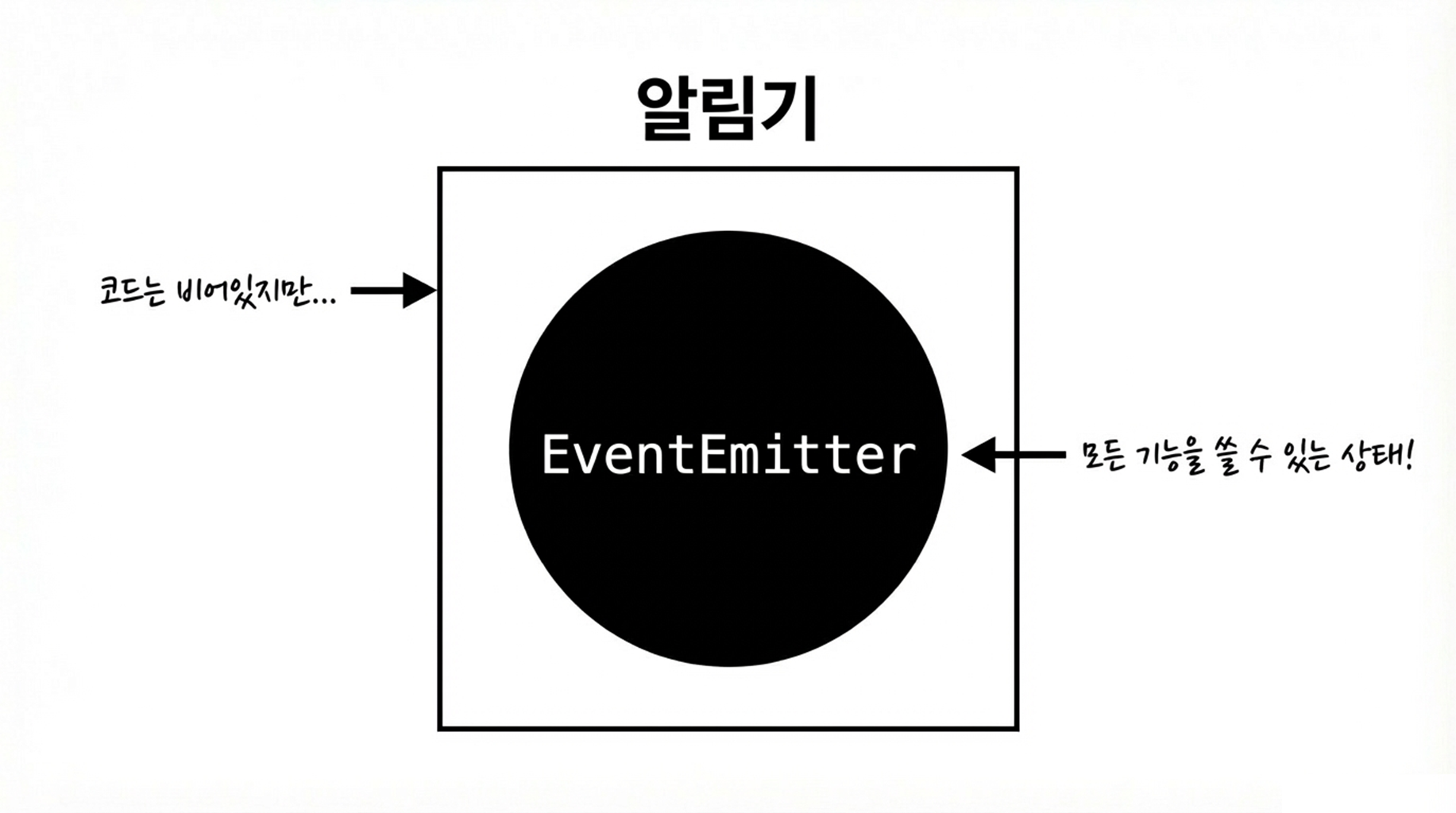
→ If you rely on someone else's code that seems convenient on the surface or on magical latest frameworks, you will lose your way in the face of unexpected errors. We start with the fundamental question, 'Why was this technology born?', and reassemble core systems that felt like black boxes (such as EventEmitter) from scratch using pure language. We cultivate perfect control that grips and shakes the skeleton, not just the shell.

📌 Every line of code carries physical weight.
→ The complacent assumption that "it will just work on its own" leads to catastrophes in production servers. We will see through the physical reality of how a single line of code we carelessly write creates a butterfly effect on the computer's CPU and RAM (memory). You will gain a hardware-level perspective to predict and defend against memory leaks and server crashes (OOM) at the data level.

📌 The true form of data lies not in abstracted objects, but at the 'bottom.'
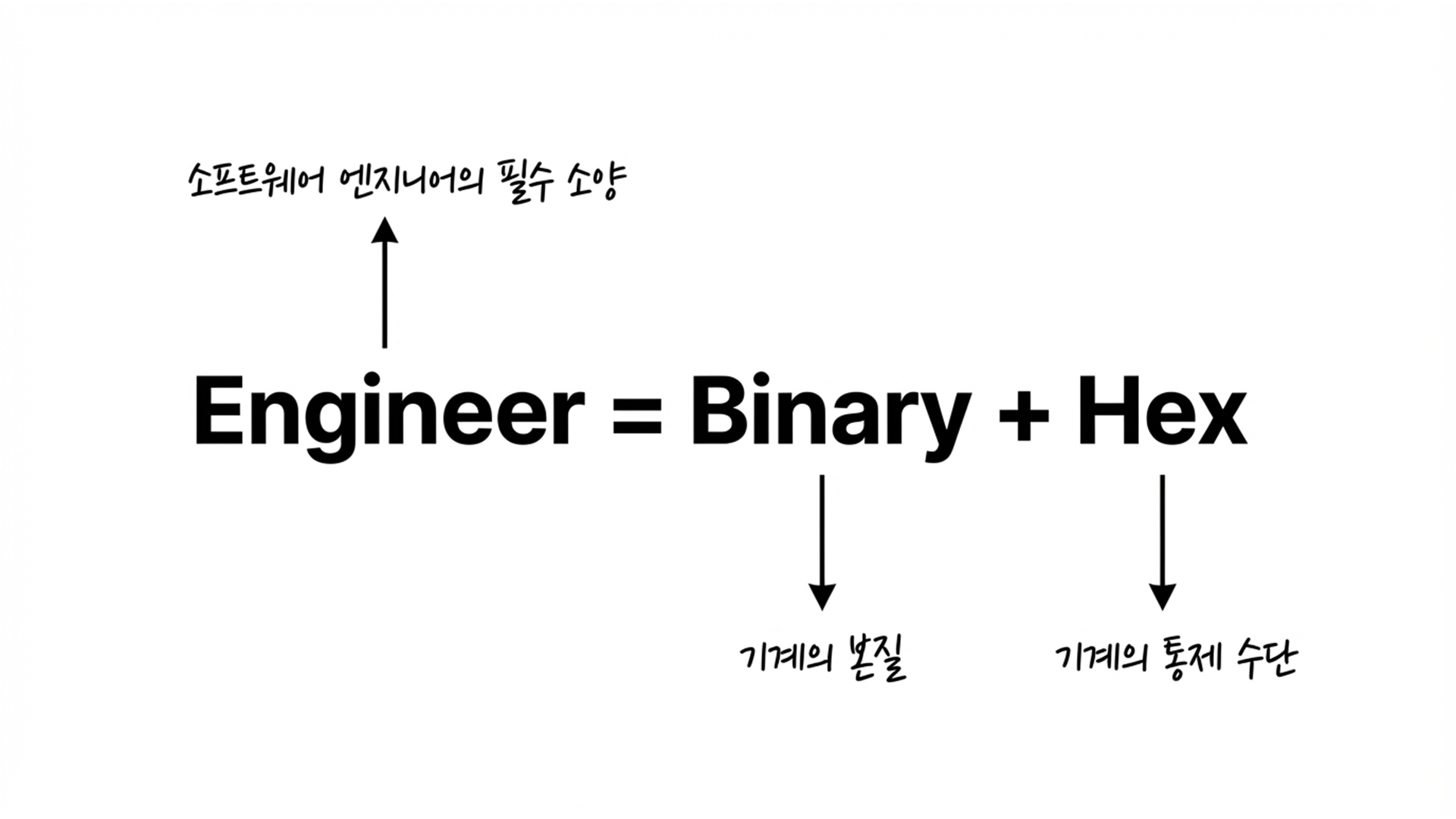
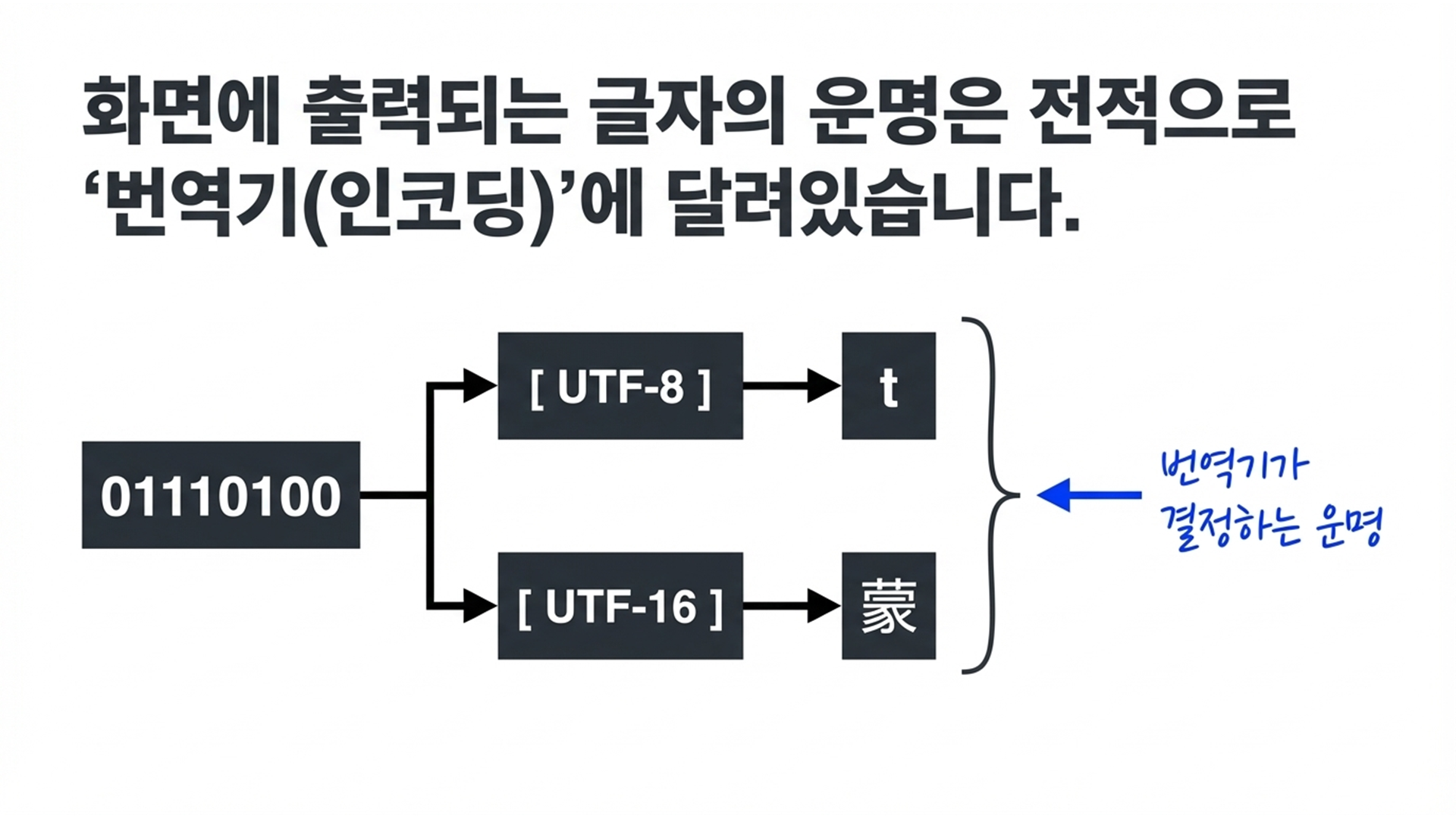
→ Behind the pretty text on the screen lies the cold and heavy world of binary data—hexadecimal and binary. By directly confronting 0 and 1, the only language computers understand, you will master low-level engineering to prevent data corruption and loss caused by encoding limitations and unlock 200% of the system's potential.

📌 Impose perfect order upon the chaos of disordered asynchrony.
→ Starting first does not mean finishing first. You must not leave results to chance amidst the unpredictable influx of tens of thousands of connections and data surges. Through Task Queues and sophisticated time control (Debouncing), you will physically isolate asynchronous flows and design a robust architecture that defends data integrity under any circumstances.

📌 Trending technologies fade, but the foundation is eternal.
→ Do not waste your time memorizing manuals for the flood of new libraries released every year. We project the essence of Computer Science (CS) that hasn't changed for decades—such as communication with the Operating System (OS), hardware interrupts, and thread management—onto Node.js. Those with a solid foundation can grasp the principles of any new era and make them their own in a short period of time.


✨ Features of this course

Precise Dissection of the V8 Engine and Runtime Environment

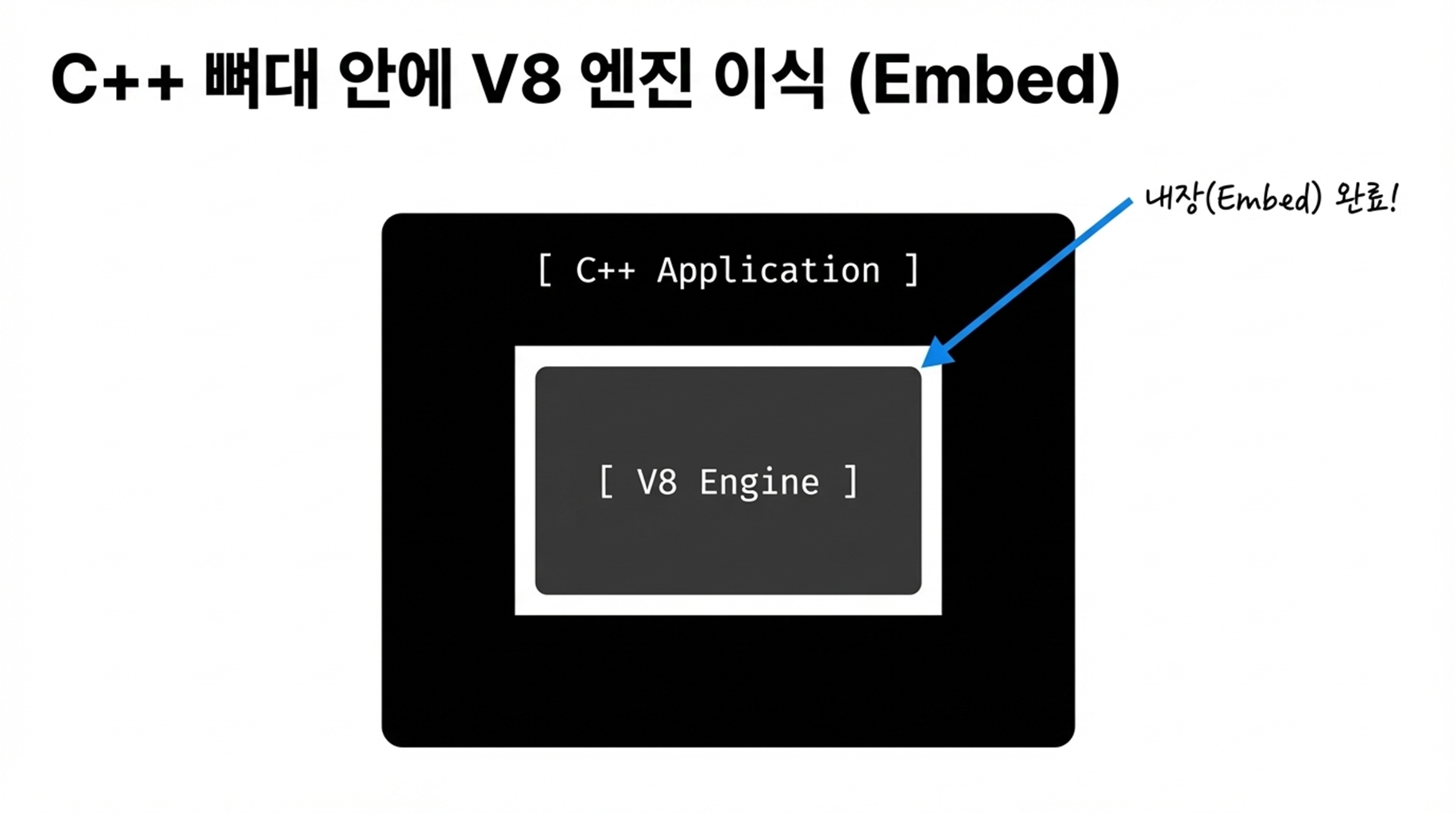
→ We will dissect the heart of the runtime where JavaScript, having escaped the browser sandbox, controls the system through C++ bindings and libuv, and clearly define both the limitations and the potential of the Single Thread.

Mastering the 6 Phases of the Event Loop and Asynchronous Architecture

→ Master perfect asynchronous scheduling capabilities to prevent system bottlenecks and starvation by controlling the strict priorities of the call stack, thread pool, and microtask queue (the VIP inbox).

The Real Language of Computers: The Aesthetics of Binary and Hexadecimal Compression

→ Go beyond abstract high-level code to fearlessly face raw data through the physical world of 0s and 1s where the CPU and RAM process data, and the principles of hexadecimal conversion at the nibble level.

The Magic of UTF-8 Encoding and Data Decoding

→ From ASCII to the Unicode encyclopedia, understand the 'packing strategy' of variable-length encoding and develop the eyes of an interpreter to fundamentally block character corruption (Mojibake) occurring in networks or databases.

Off-Heap beyond V8, Low-Level Buffer Surgery

→ Directly allocate external physical memory that is not subject to Garbage Collector (GC) interference, and precisely manipulate binary data at the bit level using Two's Complement mechanisms and offsets.

The Trade-off Between Performance and Security, Extreme Memory Optimization

→ Through allocUnsafe and Buffer Pooling, you will internalize senior-level tuning techniques that squeeze out ultra-high performance at the C++ level while perfectly defending against memory exposure (Heartbleed) vulnerabilities.

System Threshold Testing and Out of Memory (OOM) Crash Experience

→ By allocating a massive 1GB buffer, you will witness firsthand the process of the operating system's OOM Killer terminating a process, gaining the insight to control the butterfly effect that a single line of carelessly written code can have on physical hardware.

The Root of Asynchronous Philosophy: Hardware Interrupts and OS System Calls

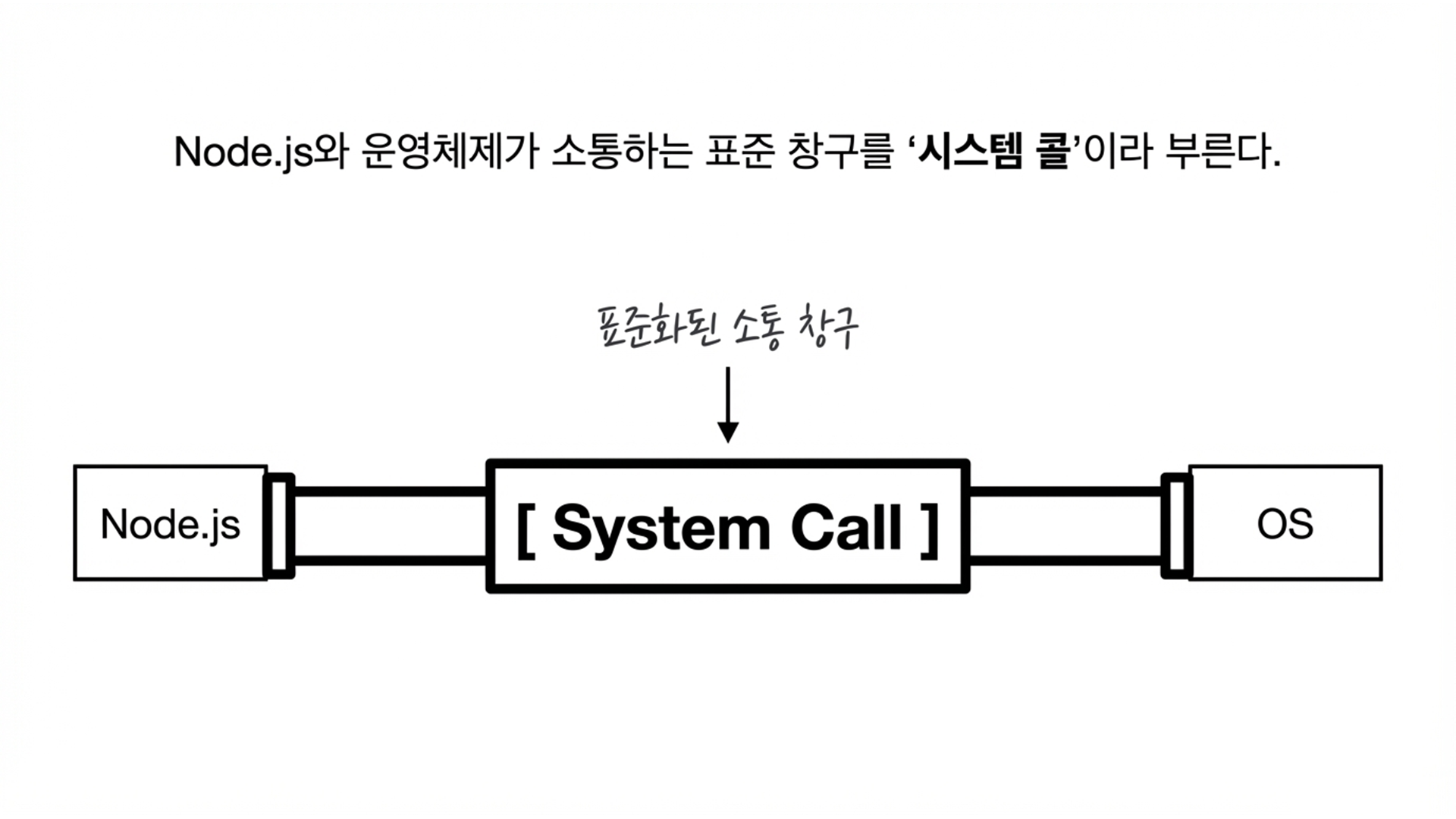
→ Abandon meaningless polling and gain a complete understanding of the operating system's event-driven approach. Prevent I/O bottlenecks by calculating the cost of system calls that transition between user mode and kernel mode.

Core Module Reverse Engineering (Pure JavaScript Implementation)

→ Equip yourself with the perspective of a framework designer by implementing the seemingly magical EventEmitter from scratch, combining hash maps (O(1)), the observer pattern, closures, and reverse loops.

Complete control over the three paths of asynchronous I/O (Promise, Callback, Sync)

→ Establish clear criteria for which APIs to use in practice and build the foundation of an uninterrupted server by safely protecting the main thread from the fear of blocking.

Mastering the Modern Ecosystem (NPM & ESM) and Dependency Architecture

→ You will learn everything from adopting ESM (type: module), the 2026 industry standard, to the caching/linking principles of npx and pnpm to avoid package dependency hell, and the technology to replicate unbreakable identical environments through Semantic Versioning (SemVer) and package-lock.json.

Build your own enterprise-grade 'File Automation Command Center'

→ Complete a powerful parser that controls the low-level file system by combining OS kernel event monitoring (fs.watch), asynchronous iterators (for await...of), and regular expression (Regex) capture groups.

Breaking Limits: Implementing Task Queues and Debouncing

→ Achieve perfect practical optimization by designing a Queue to prevent Race Conditions caused by asynchronous disorder, implementing Debouncing to filter out meaningless OS events, and utilizing O(1) performance Log Tailing.


1️⃣ Deconstructing the V8 Engine and Runtime

Escape the browser and take control of the heart of the runtime, directly commanding hardware through C++ bindings and OS system calls.


2️⃣ Event Loop Architecture

By controlling the priorities of the 6 phases and the Microtask Queue, you will perfectly defend against server bottlenecks and starvation.

3️⃣ Encapsulation and the Modern Module Ecosystem

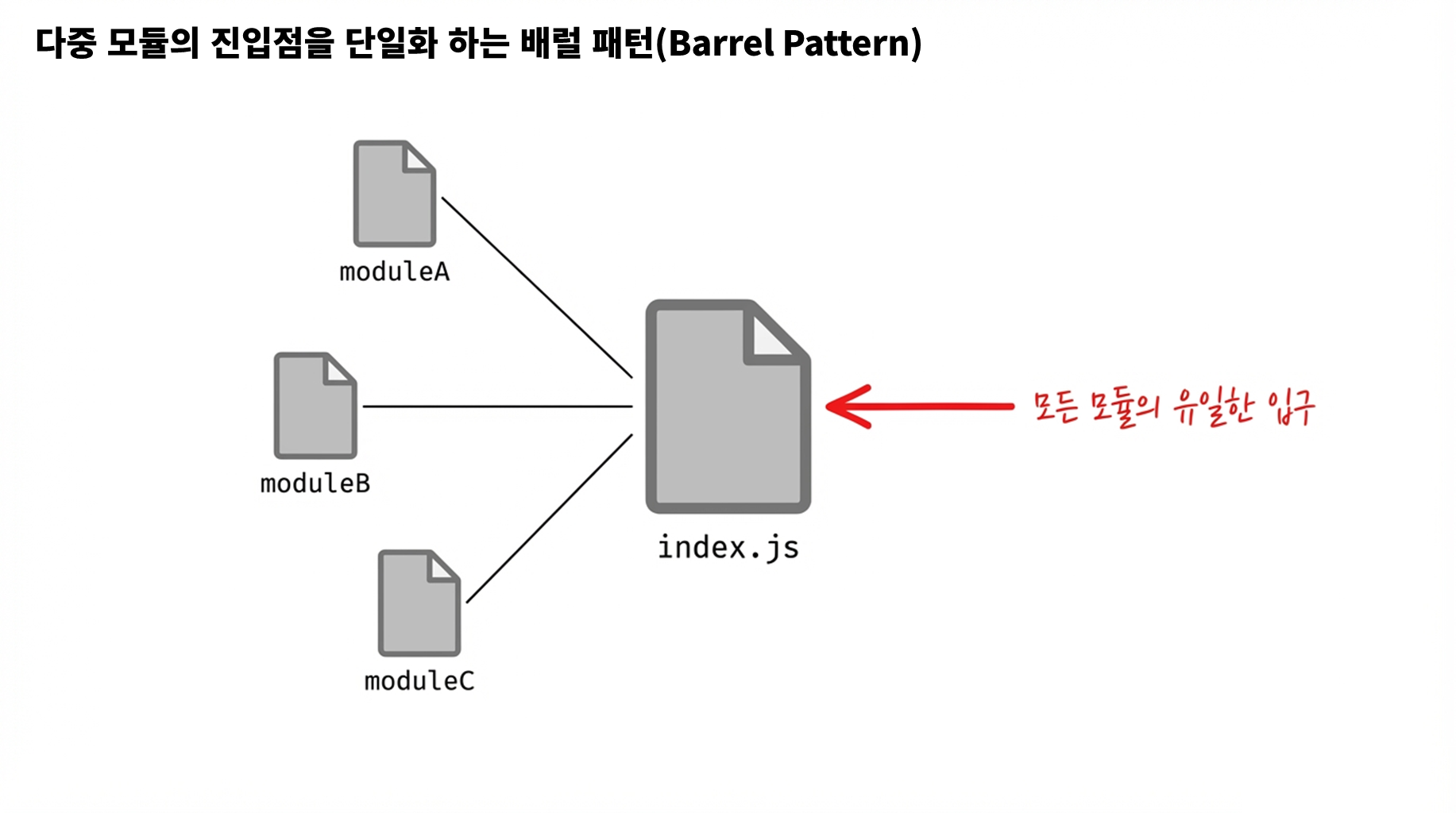
From the principles of IIFE in the past to the 2026 industry standards of ESM and the Barrel pattern, we implement perfect data isolation.

5️⃣ The Computer's True Language, Controlling Binary Data:

Strip away the abstractions and face the physical world of 0s and 1s, dissecting raw binary data through hexadecimal (Hex) conversion.


4️⃣ Hardware Interrupts and EventEmitter

Discard meaningless polling and design the heart of Node.js from scratch using Hash Maps (O(1)) and Closures.

6️⃣ Secrets of Encoders/Decoders and Character Sets:

By mastering the principles of UTF-8 variable-length encoding, you will fundamentally prevent character corruption (Mojibake) occurring in networks and databases. xảy ra trong mạng và DB.


7️⃣ V8 Off-Heap and Buffer Surgery:

Directly allocate physical memory that bypasses the Garbage Collector (GC), and squeeze out extreme performance using allocUnsafe and Buffer Pooling.

8️⃣ Operating System (OS) System Calls and File Control:

Calculate the cost of user/kernel mode switching and control file descriptors (FD) and thread pools to break through OOM (Out of Memory) limits.

9️⃣ Mastering the NPM Ecosystem and Dependency Architecture:

Through the cache principles of npx and the control of Semantic Versioning (SemVer), we perfectly defend against the tangled Dependency Hell. đầy rắc rối.

🔟 Enterprise-grade Automation Command Center:

By combining OS event monitoring (fs.watch), Task Queues, and debouncing, we complete an integrity system with zero Race Conditions.

Those who want to go beyond simple feature implementation and engineeringly analyze "why my app is slow"

Those who want to immediately apply React 18's concurrency model and the latest features of Router v7 to real-world projects


Those who aim for high-end UI that does not tolerate even a 0.1-second visual defect

Those who suffer from Props Drilling and are contemplating the correct architecture for global state

Those who want to master the browser's rendering pipeline (Render-Commit-Paint)


Those who want to elegantly exchange necessary control while maintaining independence between components

Those who wonder why re-rendering still occurs despite using useMemo and useCallback


Those who want to learn a 'scalable folder structure' that doesn't collapse even in large-scale projects


Developers who want to take the next step from being a "simple coder" to becoming a "React Architect"

👥 Recommended for these people

  • Those who suddenly feel afraid while looking at code written by AI, thinking, "This doesn't feel like my skill, but the AI's skill."

  • Those who have a desire to become a truly skilled engineer, going beyond simply making code work.

  • Those who feel like they are constantly pouring water into a leaking pot every time they learn a new technology because they feel their foundations are lacking

  • Those who were busy roughly fixing errors with Googling and copy-pasting rather than finding the root cause when they occurred

  • Those who want to know the real answer instead of just hearing rumors like "I heard Node.js is like this."

  • Those who are curious about the physical reality of how their code actually moves inside the computer

  • Those who are experiencing a plateau because their years of experience are increasing, but the depth of their knowledge seems to remain the same

  • Those who don't want to panic in unexpected situations such as text corruption or server crashes

  • Those who want to grow from someone who simply uses tools made by others into someone who penetrates the principles of the tools

  • Those who want to learn how to establish their own order within a complex bundle of code

  • Those who want to confidently answer the question, "Why should I use this technology?"

  • Those who want to build their own solid foundation instead of just mimicking appearances through 'clone coding'

  • Those who want to learn how to communicate deeply with computers, regardless of their major.

  • Those who want to design a sturdy system that does not collapse even when flooded with massive amounts of data

  • Those who want to personally open the black box that hinders growth

  • Those who want to stop making the excuse, "It works on my machine," and want to write perfect code that works anywhere

  • Those who dream of becoming an architect who orchestrates the entire flow, going beyond simply being someone who builds features.

  • Those who are buried in countless packages and are unable to find the core focus of their own project

  • Those who want to conquer computer knowledge that felt vaguely difficult using the easiest analogies

  • Anyone who wants to properly start "real development," regardless of age, experience, or major!


🎓 After completing the course

  • Unlocking the Black Box: You will realize that technologies that once seemed like magic are actually combinations of simple principles.

  • Technical Independence: You will be able to diagnose and solve problems on your own without relying on AI or search engines.

  • Integration of Knowledge: Scattered fragments of knowledge are connected into one massive map.

  • Powerful Control: Predict and dominate the impact that a single line of your code has on computer hardware.

  • Mastering the Essence of Data: You will gain the insight to see through the real flow of data hidden behind the screen.

  • Architectural Vision: You will shift from a position of borrowing others' code to having a perspective of designing systems yourself.

  • The Order of Asynchrony: You can enforce a perfect execution order among complex, tangled tasks.

  • Communion with the Operating System: You will know how to communicate politely and accurately with the operating system, the master of the computer.

  • Modern Standard Adaptation: Freely handling the latest standards on top of the timeless fundamentals of technology.

  • Master of the Environment: Build a stable environment that operates identically on any PC or server.

  • Open Source Producer: You gain the courage to not just remain a consumer, but to share your own knowledge with the world.

  • Defensive coding habits: Before an incident occurs, predict bottlenecks and failures in advance to build a protective shield.

  • Maximizing Efficiency: Instead of code that uses brute force, choose the elegant way that computers love most.

  • Precise data processing: Master the technique of extracting exactly what you want from complex information.

  • Liberation from blocking: Safely protect yourself and the system from fatal mistakes that cause the server to stop.

  • Master of Flow Control: You will develop the insight to handle only as much as needed without wasting memory, even amidst infinite data.

  • Understanding the Essence of Optimization: You will create "performance with purpose" rather than just "fast code."

  • Hardware-friendly thinking: You'll learn to consider structures that allow computer components to work most comfortably.

  • Self-directed learning ability: You will develop the power to find answers on your own based on fundamental principles, even when faced with unfamiliar documentation.

  • Evolution into a true engineer: Go beyond a 'coder' who simply writes code and be reborn as an 'architect' who designs value.

💡 Pre-course Notes and Provided Materials

[Notes Before Taking the Course]

  • Learn by typing it yourself: Rather than just watching, we recommend the process of writing code line by line while understanding the principles.

  • Enjoy asking questions: The question "Why?" is the surest way to grow into an architect. Please feel free to share any questions you have during your studies.

  • Detailed lecture notes provided for every session (PDF): We provide carefully crafted visualization materials for every hour so that you can understand complex system structures, memory maps, and data flows at a glance.


Recommended for
these people

Who is this course right for?

  • Those who want to directly control the operating principles of AI code

  • Those who want to build a solid CS foundation instead of fragmented knowledge

  • Those who want to use AI as a tool, but keep full control over the code.

  • Those who want to organize the vague field of computer science in the easiest and clearest way.

  • Those who want to deeply understand the weight and value contained in a single line of code

  • Those who want to fill the knowledge gaps they felt during self-study or bootcamps

  • Those who want to peel back the layers of technology created by others with their own hands.

  • Those who want to see the reality of code moving on hardware

  • Those who want to confidently explain the reasoning behind their code to anyone

  • Anyone who is ready to grow into a true 'engineer' regardless of their background

  • Those who want to respond calmly in unexpected situations such as server crashes

  • Those who want to go beyond clone coding and build their own system architecture.

  • Those who want to invest time in the essence of technology that does not go out of style

Need to know before starting?

  • JavaScript Basics Review

  • Node.js Installation (v20 or higher recommended): Please install the **LTS (Stable Version)** from the official Node.js website in advance. In this course, we will learn how to interact with the operating system based on this environment.

  • Code Editor (VS Code): Please prepare Visual Studio Code to write the practice code.

  • Letting go of vague fears: Instead of worrying, "Won't it be difficult?", just bring a sense of joyful curiosity to open the black box of technology with your own hands.

Hello
This is nhcodingstudio

1,682

Learners

105

Reviews

42

Answers

4.8

Rating

18

Courses

Hello, welcome to Our Neighborhood Coding Studio!

Our Neighborhood Coding Studio is an educational group founded by developers who majored in Computer Science at leading North American universities such as Carnegie Mellon, Washington, Toronto, and Waterloo, and gained practical experience at global IT companies like Google, Microsoft, and Meta.

It originally began as a study group created by computer science majors in the U.S. and Canada to study and grow together. Although we were at different universities and in different time zones, the time we spent solving problems together and learning from one another was very special, which naturally led to this thought.

"What if we pass on this exact way we studied to others?"

That question was the starting point for Our Neighborhood Coding Studio.

Currently, approximately 30 incumbent developers and computer science students are in charge of their respective fields of expertise, directly designing and teaching a curriculum that spans from introductory to practical levels. Beyond simple knowledge transfer, we provide an environment where you can learn from the perspective of a real developer and grow together.

“Real developers must learn from real developers.”

We systematically cover the entire process of web development from start to finish, but we don't stop at theory; we help you build your skills through practice and practical, real-world feedback.
Our philosophy is to care about and lead the growth of each and every student.

🎯 Our philosophy is clear.
"True learning comes from practice, and growth is completed when we are together."

From beginners starting development for the first time to job seekers looking to enhance their practical skills and teenagers exploring their career paths,
Neighborhood Coding Studio aims to be the starting point for everyone and a reliable companion walking right beside you.

Now, don't struggle alone.
Neighborhood Coding Studio will be there for your growth.


Welcome to Neighborhood Coding Studio!

Neighborhood Coding Studio was founded by a team of developers who studied computer science at top North American universities such as Carnegie Mellon, the University of Washington, the University of Toronto, and the University of Waterloo, and went on to gain hands-on experience at global tech companies like Google, Microsoft, and Meta.

It all began as a study group formed by computer science students across the U.S. and Canada, created to grow together by sharing knowledge, solving problems, and learning from one another.
Though we were attending different schools in different time zones, the experience was so meaningful that it led us to one simple thought:

"What if we shared this way of learning with others?"

That thought became the foundation of Neighborhood Coding Studio.

Today, we are a team of around 30 active developers and computer science students, each taking responsibility for their area of expertise—designing and delivering a curriculum that spans from foundational knowledge to real-world development.
We’re not just here to teach—we’re here to help you see through the lens of real developers and grow together.

“To become a real developer, you must learn from real developers.”

Our courses take you through the entire web development journey—from start to finish—focused on hands-on practice, real-world projects, and practical feedback.
We care deeply about each learner’s growth and are committed to supporting your path every step of the way.

🎯 Our philosophy is simple but powerful:
"True learning comes from doing, and true growth happens together."

Whether you're just getting started, preparing for your first job, or exploring your future in tech,
Neighborhood Coding Studio is here to be your launchpad—and your trusted companion on the journey.

You don’t have to do it alone.
Let Neighborhood Coding Studio walk with you toward your future in development.

More

Curriculum

All

85 lectures ∙ (7hr 5min)

Course Materials:

Lecture resources
Published: 
Last updated: 

Reviews

Not enough reviews.
Please write a valuable review that helps everyone!

nhcodingstudio's other courses

Check out other courses by the instructor!

Similar courses

Explore other courses in the same field!

Limited time deal

$29,700.00

70%

$77.00