Next.js Master Class: Part 3 - Completing Real-World Architecture (Server-Client Synchronization, Extreme Optimization, Full-Stack Security)

"Next.js Master Class: Part 3 - Completing Real-World Architecture" goes beyond tutorial-level projects that only run locally; it is a guide to designing "real production" architectures capable of handling massive traffic. It covers all the core technologies used in the industry, from flawless state synchronization combining TanStack Query and Zustand, to Turbopack-based bundle optimization under 100KB, advanced SEO injection, and building ironclad full-stack security networks using proxies and JWT sessions. I strongly recommend this course to those who want to overcome tedious hydration errors and CORS barriers on their own, moving beyond being a simple coder to becoming a "Senior Architect" who commands the entire frontend system.

(5.0) 2 reviews

50 learners

Level Basic

Course period Unlimited

Next.js
Next.js
React
React
TypeScript
TypeScript
JavaScript
JavaScript
frontend
frontend
Next.js
Next.js
React
React
TypeScript
TypeScript
JavaScript
JavaScript
frontend
frontend

What you will gain after the course

  • The ability to design optimized components without manual memoization (useMemo, useCallback) by utilizing the React 19 Compiler

  • Completed the construction of a 'Central Kitchen System' that caches and synchronizes server data to the client using TanStack Query v5

  • Network optimization skills to completely block unnecessary API calls by finely controlling staleTime and gcTime

  • Complete form submission logic that responds instantly without latency by combining Server Actions and Optimistic UI.

  • The ability to design Zustand Provider patterns to prevent state leakage between users in a Server-Side Rendering (SSR) environment.

  • Completed a persistent shopping cart store using Persist middleware so that data is not lost even after a browser refresh or shutdown.

  • The ability to perfectly understand the causes of Hydration Mismatch errors—the arch-nemesis of Next.js developers—and implement logic to elegantly defend against them.

  • Completed an ultra-fast initial rendering system that doesn't allow for even a 0.1-second loading spinner by combining prefetchQuery and Dehydration.

  • Implementing Modern Modal Architecture Using App Router's Parallel and Intercepting Routes

  • The ability to design industry-standard directory structures and naming conventions that remain robust even in large-scale projects.

  • The ability to reduce bundle size and maintain initial JavaScript load under 100KB by utilizing bundle analyzers (experimental-analyze).

  • Optimization techniques for asynchronous lazy loading of heavy third-party libraries using next/dynamic and the Facade pattern

  • Complete rich snippets that maximize search engine optimization (SEO) by injecting generateMetadata and JSON-LD structured data.

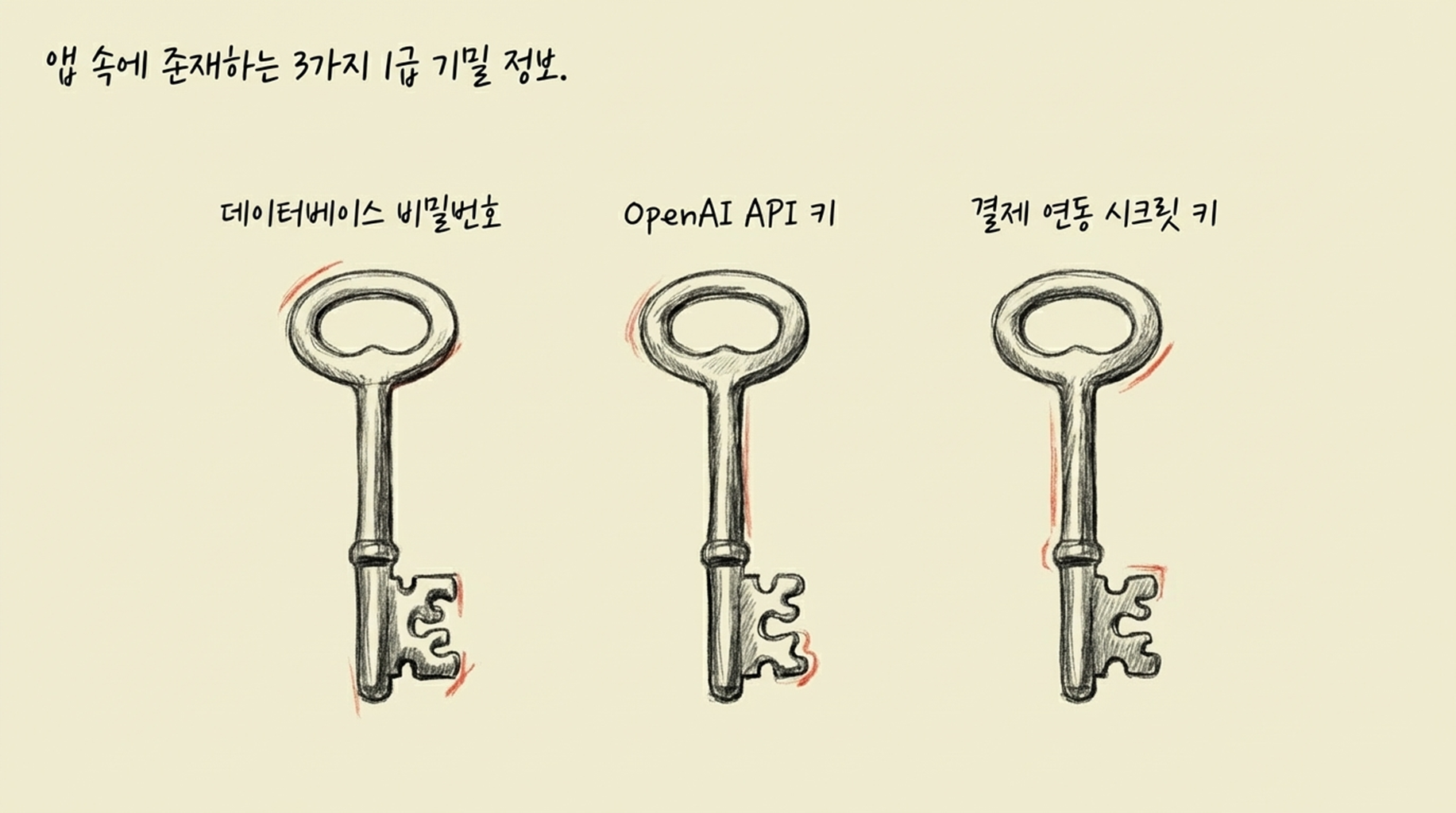
  • Building a network boundary that bypasses CORS errors and completely hides API keys by separating the global proxy (proxy.ts) and the internal proxy (route.ts)

  • Completed a bulletproof security system that prevents XSS and clickjacking by directly setting up JWT session encryption and HTTP Security Headers.


🎓Next.js Master Class: Part 3 - Completing Real-World Architecture (Server-Client Synchronization, Extreme Optimization, Full-Stack Security)

This course goes beyond simply implementing features, starting with the construction of an 'Integrated Status Engine' that combines TanStack Query v5 and Zustand to control data between the server and the browser without a 0.1-second margin of error. We open the lecture by establishing a practical standard folder structure that ensures you won't get lost even in large-scale projects, and by placing server and client components in the right places to complete the framework of a robust architecture free of hydration errors.

In the subsequent performance optimization stage, we will undergo an extreme "diet" to reduce the initial JavaScript load size to under 100KB, using Turbopack and bundle analyzers as our tools. We will mobilize a full range of technical solutions to elevate web speed and marketing efficiency to a top-tier senior level—from utilizing the next-generation image format AVIF and controlling third-party scripts with the Facade pattern, to injecting JSON-LD structured data that feeds the exact essence of our service to Google bots.

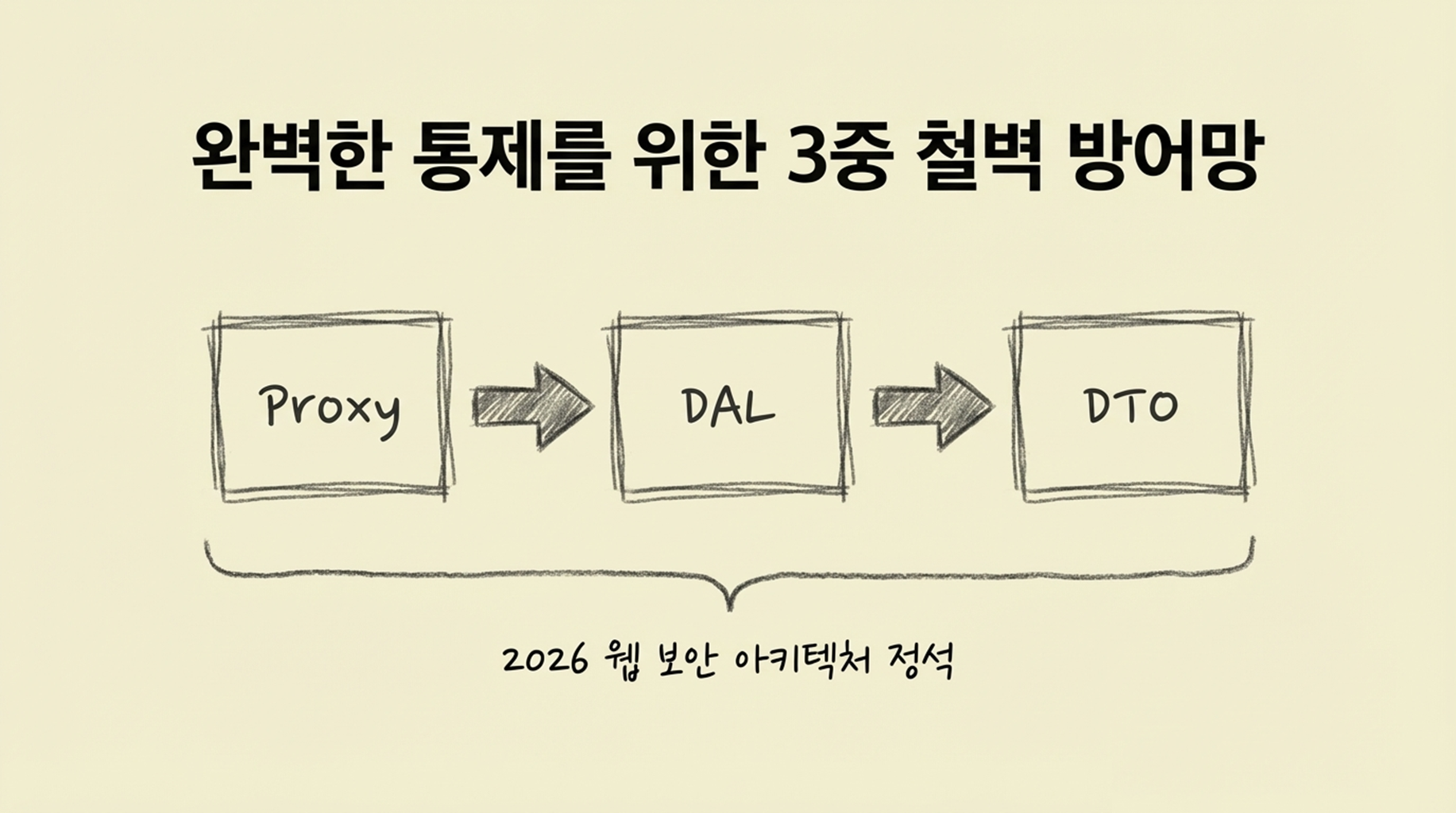
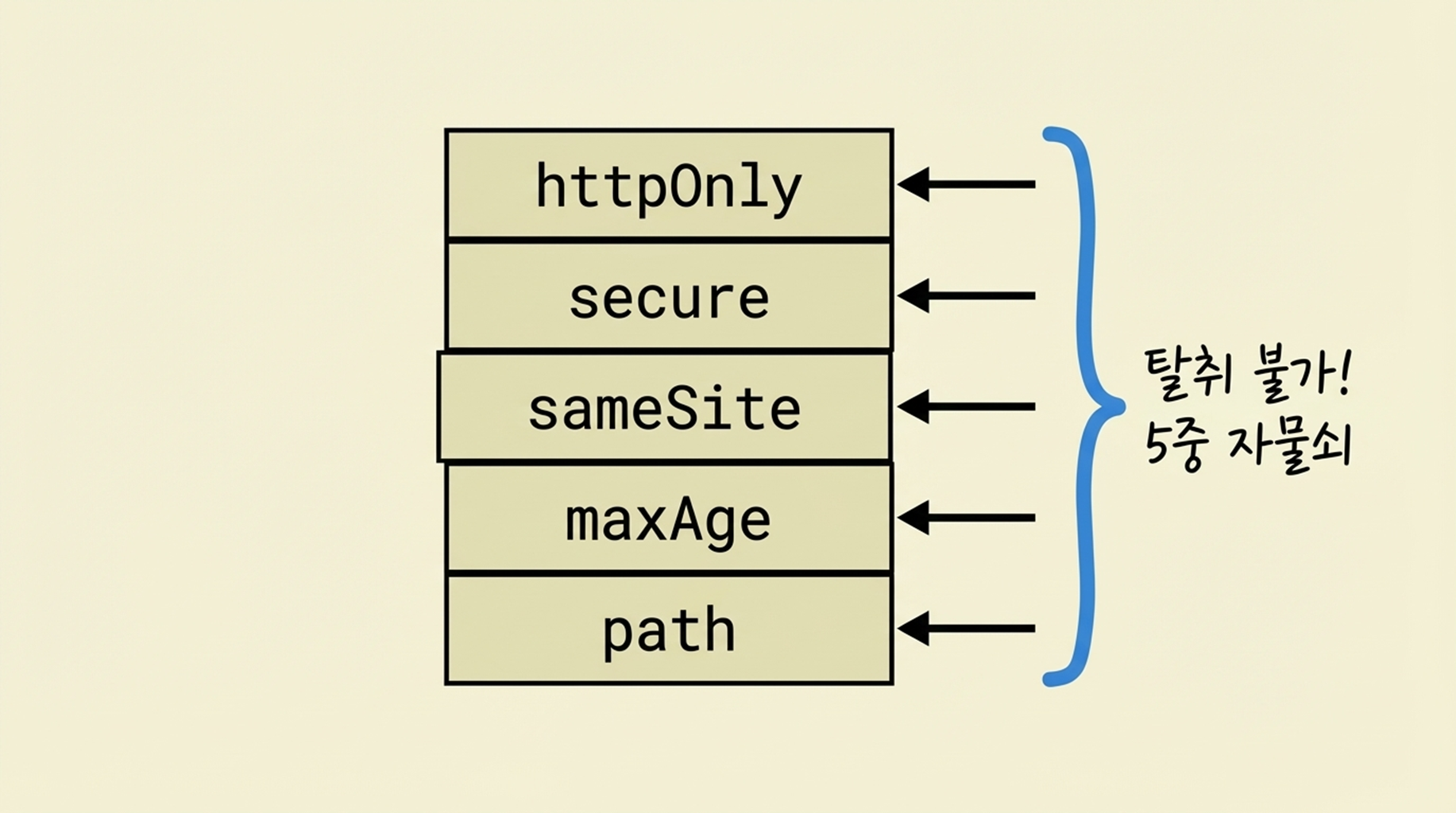
Finally, we reach the pinnacle of the course by establishing a line of defense at the network's front line with middleware and global proxies, fundamentally blocking tedious CORS errors and API key leaks. By protecting the vault deep within the server through five-fold lock cookies, JWT session management, Data Access Layers (DAL), and DTO patterns, and preparing for flawless deployment with environment variable control, you will put the finishing touches on a 'genuine commercial service' that remains unshakable against any attack.


🧱 The Core Philosophy of the Course Structure (The 6 Pillars)

📌 The server and the client are two different kitchens.
→ Logic fragmented with useState becomes a breeding ground for bugs. We strictly separate the server cache (TanStack Query) from the client's global state (Zustand) and build a flawless architecture where data synchronization works seamlessly without even a 0.1-second error through a 'dual-cache synchronization' strategy that organically links the two.

📌 A bundle size of 100KB is the last line of defense for performance.
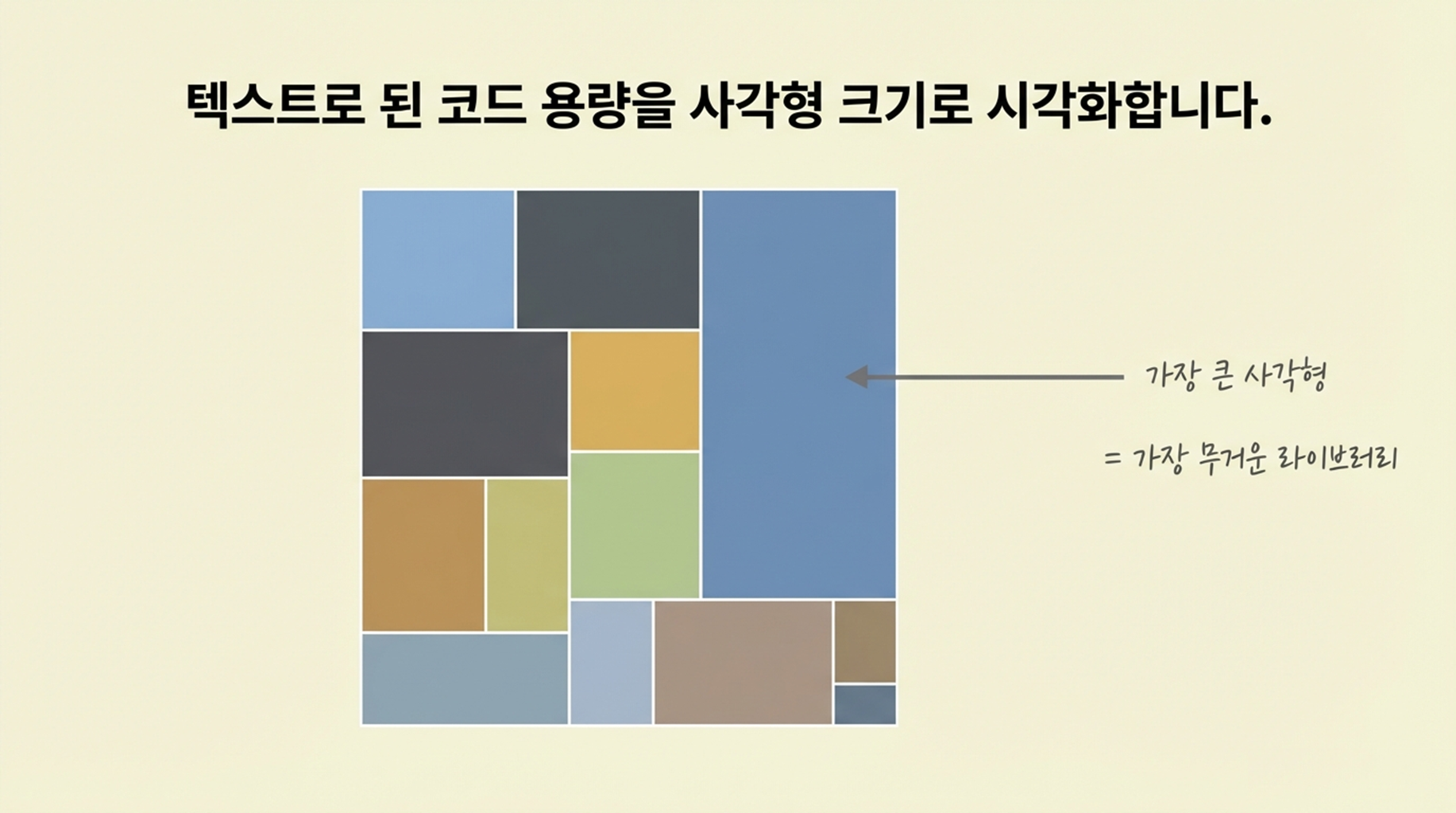
→ Abandon the subjective feeling of "it seems fast" and visualize the weight of JavaScript through a bundle analyzer. By performing 'surgical optimization'—pushing heavy libraries to the server or excising them with dynamic imports—we defend a high-end interface that maintains 60fps smoothness in any environment.

📌 Security starts at the gate (Edge) and ends at the vault (DB).
→ Authentication is not just about creating a login button. It completes a triple-layered defense system that performs the first inspection at the network boundaries, Middleware and Global Proxy (proxy.ts), and packages the final data through the internal server's Data Access Layer (DAL) and DTO patterns.

📌 Unstoppable user experience, interruptible rendering.
→ React 18's Concurrency model is a game changer for the modern web. Moving away from the past where every task was treated as 'urgent,' we design high-end interfaces that never freeze under any circumstances through 'priority orchestration,' which pushes heavy computations to the background and prioritizes responding to user input.

📌 The search engine is the most demanding first guest of your service.
→ SEO is not a field of marketing, but a field of data engineering. We inject JSON-LD structured data that directly feeds the essence of our service to Google bots and explosively increase the click-through rate of search results (Rich Snippets) through dynamic metadata streaming. How you handle invisible data determines the class of your service.

📌 Environment variables are the glass wall of security separating the server and the client.
→ A single glass wall named NEXT_PUBLIC_ determines the life or death of a service. We will perfectly control the lifecycle of environment variables that change according to each environment from development to operation, and design by distinguishing between server-side runtime values and build-time fixed values. We establish a flawless deployment strategy that operates flexibly and safely in any hosting environment.


✨ Features of this course

  1. 'Integrated State Engine' architecture combining server and client states
    → Organically synchronize TanStack Query v5 and Zustand to perfectly settle server data into the browser without hydration errors.


  2. 'Extreme Diet' breaking the 100KB bundle size barrier
    → Minimizes initial JavaScript load capacity using Turbopack and bundle analyzers to maintain overwhelming speeds that react within 0.1 seconds in any network environment.

  3. ‘Global Proxy and Middleware’ Guarding the Network Frontline
    → By centrally controlling external API communication through proxy.ts, CORS errors are resolved independently without backend modifications, and exposure of sensitive API keys is fundamentally blocked.


  4. Building a Commercial-Grade 'Triple-Layer Security Pipeline'
    → Thoroughly isolates the server's core data from client-side errors through a five-fold lock cookie-based JWT session, Data Access Layer (DAL), and DTO patterns.


  5. 'Data-Driven SEO Engineering' that captivates Google bots
    → We perform business optimization that goes beyond simple meta tag settings to explosively increase click-through rates (CTR) in search results using JSON-LD structured data and streaming metadata.


  6. 'Practical Standard Folder Architecture' that dominates large-scale projects
    → Through FSD-oriented design, find logic within seconds even among tens of thousands of lines of code, and clearly define the physical boundaries between server and client components.


  7. Next-generation media strategy and application of the 'Facade Pattern'
    → By utilizing AVIF format optimization and third-party script lazy loading techniques, we strictly control heavy libraries to prevent them from occupying the browser's main thread.


  8. Transferring 'Architect's Decision-Making' for Commercial Service Launch
    → Through an intensive journey of 35 lectures, you will move beyond simply typing code and gain the senior-level perspective required to design the data flow, security, and deployment environments of an entire system.


1️⃣ Server State Engine Mastery: Delve into the hydration principles of TanStack Query v5 to implement initial rendering without loading spinners and conquer cache invalidation strategies.

2️⃣ Dual Cache Synchronization Architecture: Interlock Zustand and server state like gears to build an integrated state engine that reduces the data gap between the server and browser to 0ms.

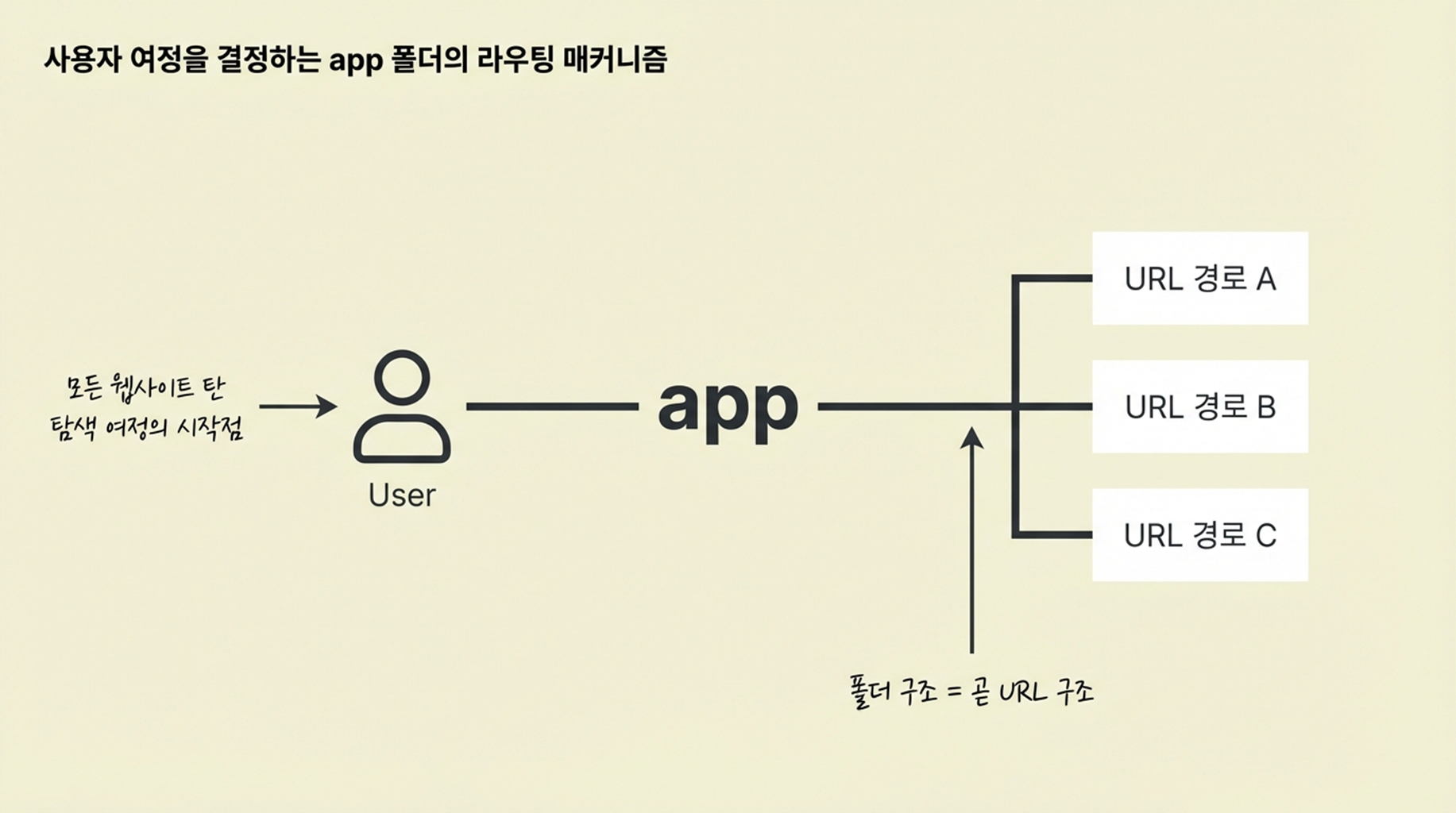
3️⃣ Enterprise Folder Structure: Establish an FSD-oriented convention to ensure you never get lost even in large-scale projects, and clearly design the physical boundaries between server and client components.

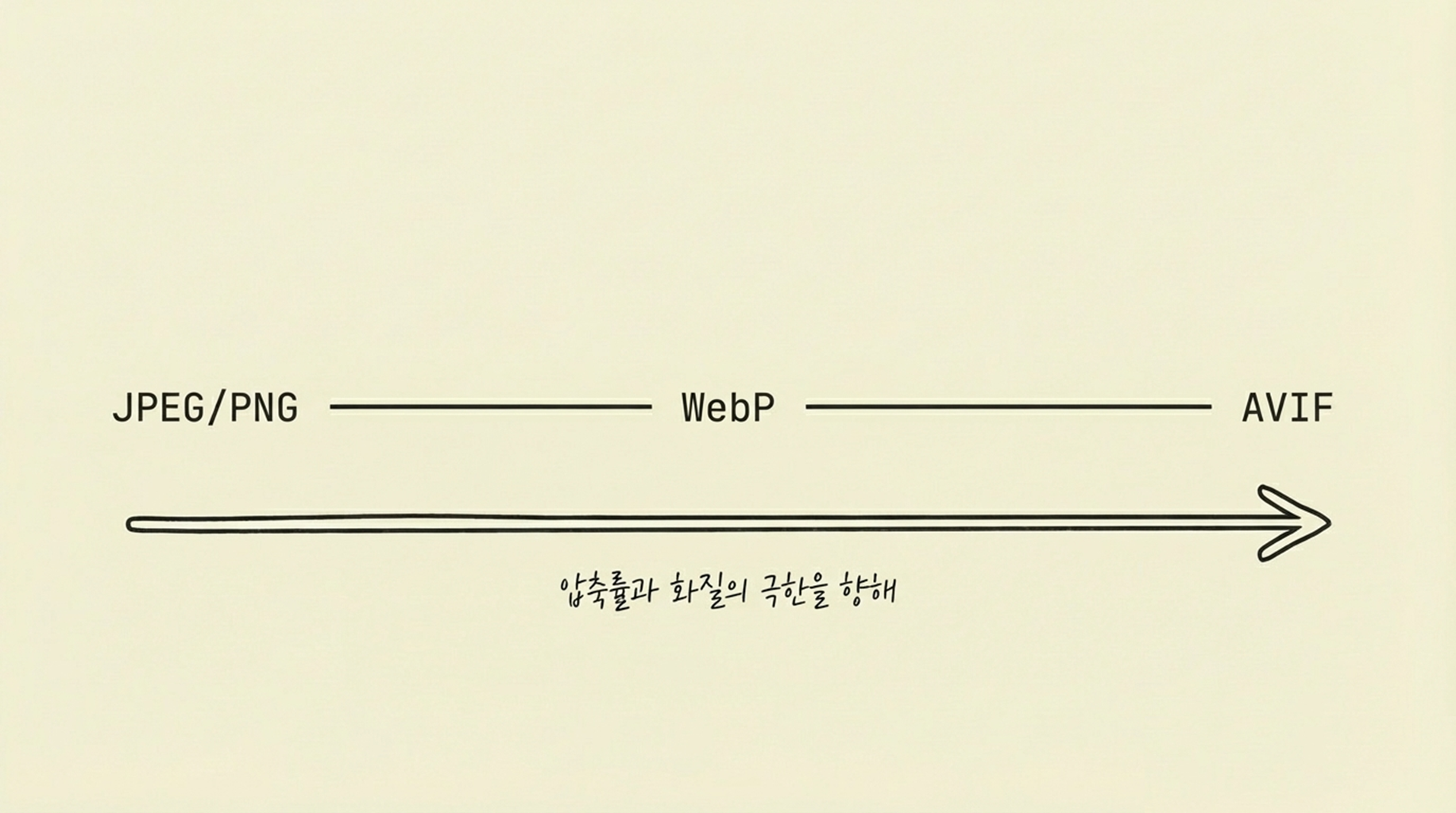
5️⃣ High-end Media Strategy: We perform optimizations that extremely conserve user bandwidth and browser CPU resources by utilizing next-generation image formats (AVIF) and the Facade pattern.

4️⃣ Extreme Bundle Optimization: Visualize JavaScript weight with bundle analyzers and break through the 100KB initial load capacity barrier through dynamic imports and surgical code splitting.

6️⃣ Data Engineering SEO: Master marketing technology for top search engine rankings with JSON-LD injection and rich snippet strategies that feed data directly to Google bots.

7️⃣ Network Perimeter Security: Design a global proxy (proxy.ts) to solve tedious CORS errors on your own and fundamentally block API key leaks to the client.

8️⃣ Ironclad Authentication Pipeline: By combining 5-layer security cookies with JWT sessions, we complete a commercial-grade secure authentication system that hackers can never steal.

9️⃣ Data Hiding and Authorization Systems: Isolate sensitive internal server information like a vault through the Data Access Layer (DAL) and DTO patterns, and control strict authorization based on user permissions.

🔟 Environment Control and Full-Stack Security Boundaries: Explore the security glass wall principle of environment variables that separate server and client, and complete the final line of defense that perfectly controls system-wide entry points and permissions through middleware.

Those who want to synchronize server (Query) and client (Zustand) states without even a 0.1-second margin of error

Those who want to dominate the top of search engine results by injecting structured data (JSON-LD)


Those who want to learn a 'practical standard folder structure' that is easy to maintain even in large-scale projects

Those who want to uncover the causes of tedious hydration errors and defend against them perfectly

Those who want to solve tedious CORS errors themselves by building their own proxy server


Those who want to perfectly control the physical boundaries between Server Components and Client Components

Those who want to reduce JavaScript size to under 100KB based on bundle analysis data


Those who want to create an ironclad authentication network that hackers cannot penetrate using JWT and secure cookies


Developers who want to take the next step from being a "simple coder" to a "full-stack architect"

👥 Recommended for the following people

  • Data Loss and State Inconsistency: Those suffering from shopping cart data disappearing upon refresh and data sync issues between the server and client


  • Mastering Hydration: Those who are wasting hours on Google and trial-and-error because they don't know the root cause of frustrating hydration errors


  • State Management Design Standards: Those who need a clear design philosophy on when and how to combine server state (TanStack Query) and global state (Zustand)


  • Large-scale Project Architecture: Those who feel lost in complex folder structures and are unsure how to refactor unmaintainable spaghetti code


  • Establishing Component Boundaries: Developers who are compromising by indiscriminately using 'use client' because they don't understand the difference between Server and Client Components


  • Performance Data-Driven Surgery: For those who want to pinpoint and improve performance bottlenecks based on profiler data, rather than just guessing that it "feels slow."


  • Extreme Bundle Diet: Those who want to shave down the initial JavaScript load size to under 100KB using Turbopack and dynamic imports


  • Engineering-based SEO: Those who want to dominate search engine rankings by directly injecting JSON-LD structured data rather than just setting simple meta tags


  • Securing Network Control: Those whose development has come to a standstill while desperately waiting for a backend developer to fix an API because they are blocked by the wall of CORS errors


  • Building a secure authentication system: Those who need practical answers on where to store JWT tokens and sessions to be most secure against hacking (XSS, CSRF)


  • Ironclad Security Network Design: Those who want to build an enterprise-grade security network that communicates with external servers without exposing API keys by utilizing global proxies and middleware.


  • Data Access Layer (DAL) Design: Those who want to design a thick security layer to prevent sensitive internal server information from leaking to the client.


  • Advanced Practical UI Implementation: Those who want to seamlessly implement complex features such as infinite scroll or Optimistic UI without loading delays.


  • A Leap as an Architect: Those who want to go beyond being a coder who implements simple functions and become an architect who designs the data flow and security of the entire system


  • Commercial-grade results: Those who want to prove their ability to deliver 'real-world commercial service' quality using the latest features of Next.js 16 and React 19.


🎓 After completing the course

  1. Building an Integrated Status Engine: You can design a flawless data architecture that synchronizes data between the server and the browser without a 0.1-second margin of error by combining TanStack Query v5 and Zustand.

  2. Mastering Hydration: Analyze the fundamental causes of Next.js's persistent hydration errors and implement a perfect rendering system that aligns server and client identities.

  3. Industry-Standard Folder Design: Establish an FSD-oriented folder structure that is easy to maintain even in large-scale projects, and physically isolate server-only modules to prevent leakage.

  4. 100KB Bundle Diet: Immediately apply extreme performance optimization techniques to shave down the initial JavaScript load capacity to under 100KB using a bundle analyzer (experimental-analyze).

  5. Rich Snippet SEO: Go beyond simple metadata by injecting JSON-LD structured data to perform high-end marketing engineering that displays star ratings and prices in Google search results.

  6. Building a custom proxy server: By building a global proxy (proxy.ts) without modifying the backend, you can resolve CORS errors on your own and gain network control to securely hide sensitive API keys.

  7. Ironclad Security Session Management: Build a secure authentication system that hackers can never steal by combining JWT sessions with 5-layer security cookies (httpOnly, SameSite, etc.).

  8. DAL/DTO Security Patterns: By applying Data Access Layer (DAL) and Data Transfer Object (DTO) patterns, we fundamentally block sensitive internal server information from leaking to the client.

  9. High-end UX Implementation: Through Optimistic UI linked with Server Actions, we provide an interface that gives immediate feedback to users even during network latency.

  10. Build Pipeline Tuning: By fully understanding the characteristics of the next-generation bundler Turbopack and configuring an optimized build environment, we drastically improve development productivity.

  11. Media and Script Control: Design systems using next-generation image formats (AVIF) and the Facade pattern to prevent heavy third-party libraries from occupying the browser's main thread.

  12. Intelligent Middleware Design: Complete a dynamic control system that utilizes middleware to branch routing in real-time and apply security filters based on the connecting device or permissions.

  13. Flawless Deployment Strategy: Understand the principles of the security glass wall for environment variables (NEXT_PUBLIC_) to ensure secure deployment without secret key leaks in any hosting environment.

  14. Permanent State Preservation: Synchronize browser storage with global state to establish a robust state maintenance system where data is not lost even after a refresh or browser closure.

  15. Securing an Architect's Vision: Go beyond simple "working code" and evolve into a senior-level 'React Engineer' who presents performance metrics and security architecture based on engineering principles.

💻 Notes before taking the course

Hands-on Environment

  • 1. Operating System (OS)

    • Windows 10/11, macOS (Intel/Apple Silicon), and Linux are all supported.

    • To practice network security and proxies, you must be comfortable using a terminal environment (Git Bash, Zsh, PowerShell, etc.).

    2. Runtime and Package Manager

    • Node.js: v22.x (LTS) or higher recommended (to fully support Next.js 16 and React 19 features)

    • Package Manager: pnpm strongly recommended (used for fast installation speeds and efficient disk space management, though npm/yarn can also be used.)

    3. Development Tools (IDE)

    • VS Code (Visual Studio Code): Latest version recommended

    • Required Extensions: ESLint, Prettier, Tailwind CSS IntelliSense, Prism themes for distinguishing between Client-side/Server-side, etc.

    4. Core Tech Stack

    • Framework: Next.js 16 (App Router)

    • Library: React 19, TypeScript

    • State Management: TanStack Query v5+, Zustand

    • Styling: Tailwind CSS

    5. Browser and Debugging

    • Google Chrome: Used as the main browser for performance measurement (Profiler), network tab analysis, and running the bundle analyzer.

    • React DevTools & TanStack Query DevTools: Installation is required to track state flow within the lecture.

    6. Recommended Knowledge Before Taking the Course

    • Recommended completion of Part 1 and 2: You should understand the basic rendering principles of Next.js and the basic structure of the App Router for a smooth learning experience.

    • JavaScript/TypeScript: You should be familiar with basic syntax such as arrow functions, destructuring assignment, asynchronous processing (Async/Await), and interface definitions.


Recommended for
these people

Who is this course right for?

  • Those who have moved to Next.js but are still suffering from race condition bugs while calling APIs using useEffect and useState

  • Those whose hearts sink at the mere sight of a red Hydration Mismatch error window and spend hours Googling because they don't know the cause.

  • A frontend developer having a mental breakdown because all the items they painstakingly added to the shopping cart disappear every time they refresh the page.

  • Those who indiscriminately use 'use client' at the very top because they don't know where or how to separate Server Components and Client Components.

  • Those who are tired of Redux's heavy boilerplate code and want to switch to the lightweight and powerful Zustand, but don't know how to apply SSR.

  • For those who want to implement Optimistic UI, where the screen changes immediately without a loading spinner when a user clicks a button.

  • A developer under pressure to optimize because Lighthouse performance scores are hitting rock bottom and initial loading speeds are disastrous due to heavy bundle sizes.

  • Those who have implemented infinite scroll but feel uneasy because it seems like the browser DOM memory is about to explode as they scroll down.

  • Those who are attempting to inject JSON-LD after being criticized by the marketing team because the service is not appearing in search engines (SEO).

  • Those who are blocked by the red wall of CORS errors, giving up on external API integration and anxiously waiting only for the backend developer.

  • Those who want to use middleware (proxy.ts) to bounce non-logged-in users and branch dynamic routing by access device (mobile/PC).

  • Those who have been agonizing over architecture for days because they don't know where and how to store JWT tokens to keep them safe from hacking (XSS, CSRF).

  • Those who have read the official documentation on App Router's Parallel and Intercepting Routes ten times but still can't get a feel for how to weave them into a shopping cart modal in practice.

  • A leader who wants to refactor a project that is turning into spaghetti code as the team grows, organizing it into a clean, industry-standard folder structure.

  • Those who want to go beyond simply making 'code that works' and learn enterprise-grade design with commercial-level performance and security

Need to know before starting?

  • Basic understanding of core React concepts (Hooks, state management flow, component lifecycle)

  • Next.js App Router Basics (For those who have completed Part 1 and Part 2 of this course, or those who understand the basic differences between Server/Client Components)

  • Basic knowledge of asynchronous programming (async/await, Promise, fetch API)

Hello
This is nhcodingstudio

1,508

Learners

81

Reviews

34

Answers

4.8

Rating

17

Courses

Hello, welcome to Our Neighborhood Coding Studio!

Our Neighborhood Coding Studio is an educational group founded by developers who majored in Computer Science at leading North American universities such as Carnegie Mellon, Washington, Toronto, and Waterloo, and gained practical experience at global IT companies like Google, Microsoft, and Meta.

It originally began as a study group created by computer science majors in the U.S. and Canada to study and grow together. Although we were at different universities and in different time zones, the time we spent solving problems together and learning from one another was very special, which naturally led to this thought.

"What if we pass on this exact way we studied to others?"

That question was the starting point for Our Neighborhood Coding Studio.

Currently, approximately 30 incumbent developers and computer science students are in charge of their respective fields of expertise, directly designing and teaching a curriculum that spans from introductory to practical levels. Beyond simple knowledge transfer, we provide an environment where you can learn from the perspective of a real developer and grow together.

“Real developers must learn from real developers.”

We systematically cover the entire process of web development from start to finish, but we don't stop at theory; we help you build your skills through practice and practical, real-world feedback.
Our philosophy is to care about and lead the growth of each and every student.

🎯 Our philosophy is clear.
"True learning comes from practice, and growth is completed when we are together."

From beginners starting development for the first time to job seekers looking to enhance their practical skills and teenagers exploring their career paths,
Neighborhood Coding Studio aims to be the starting point for everyone and a reliable companion walking right beside you.

Now, don't struggle alone.
Neighborhood Coding Studio will be there for your growth.


Welcome to Neighborhood Coding Studio!

Neighborhood Coding Studio was founded by a team of developers who studied computer science at top North American universities such as Carnegie Mellon, the University of Washington, the University of Toronto, and the University of Waterloo, and went on to gain hands-on experience at global tech companies like Google, Microsoft, and Meta.

It all began as a study group formed by computer science students across the U.S. and Canada, created to grow together by sharing knowledge, solving problems, and learning from one another.
Though we were attending different schools in different time zones, the experience was so meaningful that it led us to one simple thought:

"What if we shared this way of learning with others?"

That thought became the foundation of Neighborhood Coding Studio.

Today, we are a team of around 30 active developers and computer science students, each taking responsibility for their area of expertise—designing and delivering a curriculum that spans from foundational knowledge to real-world development.
We’re not just here to teach—we’re here to help you see through the lens of real developers and grow together.

“To become a real developer, you must learn from real developers.”

Our courses take you through the entire web development journey—from start to finish—focused on hands-on practice, real-world projects, and practical feedback.
We care deeply about each learner’s growth and are committed to supporting your path every step of the way.

🎯 Our philosophy is simple but powerful:
"True learning comes from doing, and true growth happens together."

Whether you're just getting started, preparing for your first job, or exploring your future in tech,
Neighborhood Coding Studio is here to be your launchpad—and your trusted companion on the journey.

You don’t have to do it alone.
Let Neighborhood Coding Studio walk with you toward your future in development.

More

Curriculum

All

78 lectures ∙ (5hr 38min)

Course Materials:

Lecture resources
Published: 
Last updated: 

Reviews

All

2 reviews

5.0

2 reviews

  • tkyoun12409907님의 프로필 이미지
    tkyoun12409907

    Reviews 6

    Average Rating 5.0

    Edited

    5

    93% enrolled

    Thanks to you, I was able to learn a lot about how to use Next.js and some advanced tips. Is this perhaps the last chapter?

    • nhcodingstudio
      Instructor

      Hello, Gwantae! I'm the knowledge sharer :D First of all, I would like to express my sincere gratitude for completing 93% of the <Next.js Master Class> and being so close to finishing the course, as well as for leaving such a precious review. The feedback you provided is a huge source of strength for me. I truly hope that the Next.js usage methods and advanced tips you learned through this lecture will be of practical help in taking your front-end development skills to the next level. Regarding your question about the next chapter, I am currently working hard on a new series! I will soon be presenting more advanced practical lectures, such as the <[Next.js Master Class] Practical Authentication/Authorization System with Better Auth> series and projects, as well as projects utilizing Claude Code, so please look forward to them. To show my appreciation for your passionate learning, I would like to offer you a small benefit. If there are any additional courses you wish to take among our curriculum, please feel free to contact me at the email address below. I will send you a discount coupon immediately after checking. Inquiry Email: jeony0535@naver.com Thank you once again for taking the time to leave such warm words. I will sincerely cheer for your growth! :D

    • Ah.. thank you for the reply. You've given me a great opportunity, but ㅠㅠ I have already purchased all of the Master courses. If a new course is released, I will be sure to check it out. Thank you for the great lectures!

  • nhcodingstudio님의 프로필 이미지
    nhcodingstudio

    Reviews 2

    Average Rating 5.0

    5

    31% enrolled

    nhcodingstudio's other courses

    Check out other courses by the instructor!

    Similar courses

    Explore other courses in the same field!

    Limited time deal

    $24,750.00

    75%

    $77.00