inflearn logo

Hands-On Embedded Project with an Electric Kick Scooter

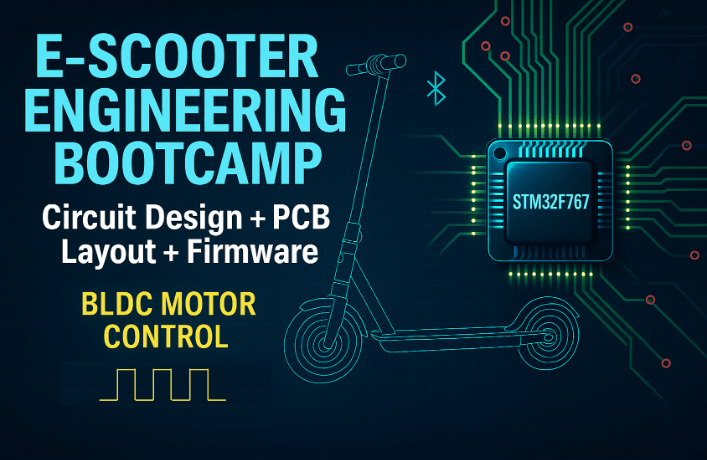
This course teaches circuit/PCB design, STM32 firmware, and BLDC motor control all at once. You will design a three-phase inverter yourself and use it to drive an electric kick scooter.

(4.9) 82 reviews

600 learners

Level Intermediate

Course period Unlimited

Embedded
Embedded
stm32
stm32
hardware
hardware
motordriver
motordriver
artwork
artwork
Embedded
Embedded
stm32
stm32
hardware
hardware
motordriver
motordriver
artwork
artwork

Reviews from Early Learners

4.9

5.0

장재영

96% enrolled

I have decided to pursue a career in the field of power conversion control thanks to this lecture. Thank you for this excellent lecture where I could learn both theory and practice. The posts and videos on YouTube were also incredibly valuable pieces of information. I will do my best to digest everything and strive to become an engineer.

5.0

허태욱

100% enrolled

I took the course during the Chuseok holiday with a strategy of listening through the entire content once, then repeatedly reviewing it. The overall course structure was well-organized with explanations and hands-on practice. It was very helpful for understanding motor control from a practical perspective. I hope that power conversion courses on BMS or inverters (ESS, UPS, etc.) will be offered in the future. Thank you for your hard work.

5.0

sunny75

100% enrolled

(25/06/22/Sun 13:59) Thank you for the great lecture. I have now deeply understood the meaning of "embedded." I gained a lot of understanding because you explained HW/SW very thoroughly. Thank you.

What you will gain after the course

  • Designing and building a 3-phase inverter for a 36V/350W-class electric kick scooter from start to finish

  • Developed by applying an embedded development process used in the field.

  • Firmware Challenge: Configuring STM32 Registers Directly

  • Learn BLDC motor drive algorithms --> theory and code implementation

  • Gate driver, current sensor, MOSFET/Gate driver IC component selection and circuit design

  • Training on Circuit Noise and Countermeasures

  • Conduct PCB design theory training and hands-on practice.

  • 4-Layer PCB Multilayer Design

Special 20% Off Coupon!

Link: https://bit.ly/4yZ3rMc

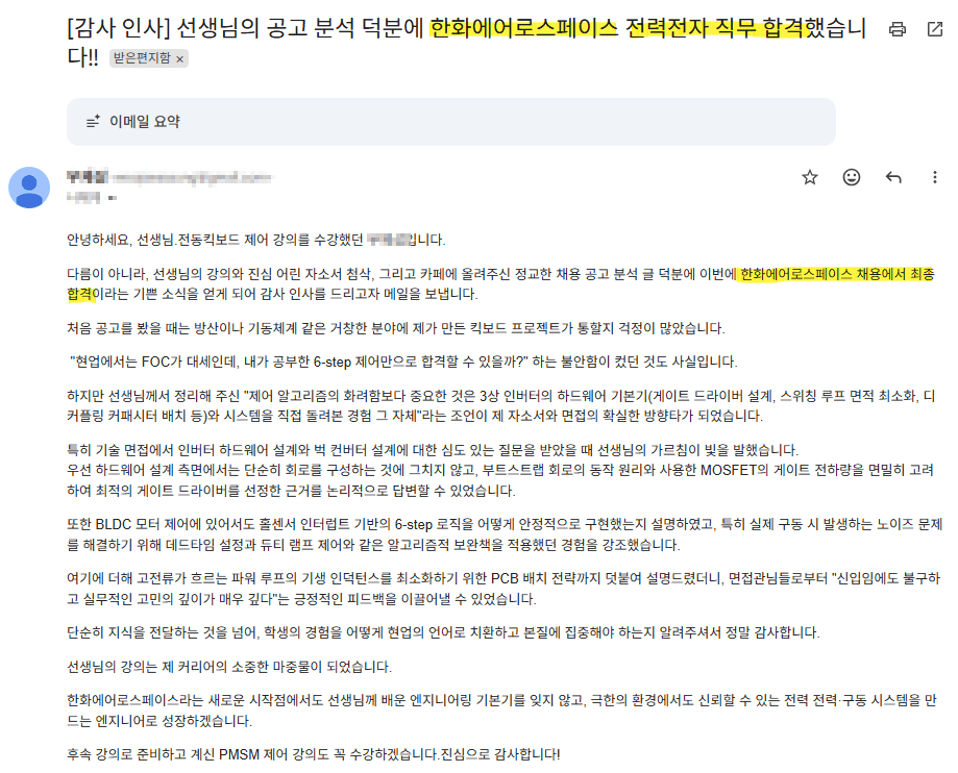
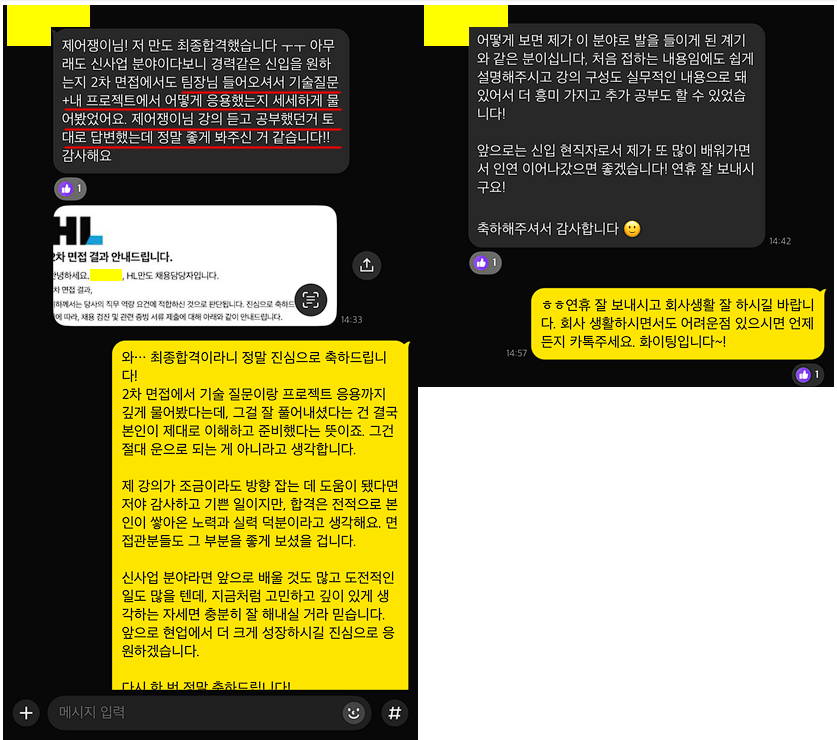
Success stories from graduates hired by Hanwha Aerospace and HL Mando!


We sincerely congratulate all the students who achieved success and were hired despite the challenging job market as they embark on a new beginning.

Summary of the Electric Kickboard Development Process (Inside Embedded YouTube)

Why did I create this course?

During my college years, I sought out and took a variety of courses in addition to my major classes. Of course, some of them were useful, but most were limited to simply implementing basic features.

I was always told that if I wanted to improve my skills quickly, I should “work on a project.” However, when I actually tried to start a project, even choosing a topic, organizing the necessary knowledge, and finding information proved difficult. Of course, I did grow through this process, but I always wished I could reduce the unnecessary trial and error.

That’s why this course is structured so that you can learn everything from circuit design and STM32 firmware to BLDC motor control as one connected process.

Many courses on the market focus primarily on basic functions such as turning LEDs on and off, generating PWM waveforms, and implementing button interrupts using simple kits like Arduino or Nucleo boards.

​This type of learning can be helpful at the introductory stage, but we believe that the most effective way to truly develop your skills as an embedded developer is to experience a well-rounded project firsthand.


Haven’t you had these concerns?

  • Circuitry, firmware, PCB… learning them separately means they don’t come together in practice

  • I studied my major subjects diligently, but my knowledge is fragmented, and I can’t see the big picture.

  • I'm preparing for a job or career change, but I have no portfolio projects to prove my skills.

  • I want to do a project, but I have no idea where or how to start.

This course is different.

Experience the actual embedded development process firsthand..

  • Hardware: Circuit design, component selection, 4-layer PCB

  • Firmware: Direct STM32 register control, BLDC drive algorithms

  • Integrated validation: Electric scooter assembly & driving tests

Deliverables: 36V/350W-class three-phase inverter + BLDC motor control firmware + completed scooter
Materials provided: Schematics, PCB (Gerber), firmware source code, and BOM 100% disclosed
Support: Dedicated course GPT + close support through completion via Q&A

Learn everything about embedded engineering through hands-on design
and development.

Does getting the motor to run mean the product is complete?
Simply testing the motor’s operation does not provide real-world development experience.

"Having the motor run" is only the beginning.
An embedded developer designs everything from the circuit and firmware to the system as an integrated whole.
•••

You can become a real developer by building an electric kick scooter that can actually be ridden.

Based on experience with various real-world projects, including those for the three major global automakers, we have included only the core skills needed in practice.

✅A real-world project that holds up in the workplace

Design and build a fully functional electric kick scooter that can actually be ridden. Follow the same process used in real-world projects, from defining requirements to designing the circuitry and firmware, to create a high-quality final product.

✅ Course-specific GPTs provided

We provide course-exclusive GPTs for students. By asking the GPT chatbot, trained on the course content, questions that arise during class, you can learn more quickly and efficiently.

✅Master Practical Hardware & Firmware Skills

We cover all the practical skills, from 4-layer PCB design and BLDC control algorithms to STM32 firmware. Developers who understand both circuits and software are stronger in the workplace.

✅100% provided, from schematics to source code

Schematic, PCB design files, and complete firmware source code provided! Even students designing for the first time can follow along with the hands-on exercises and create high-quality results without trial and error.

To become a proper embedded developer,

Why do you need to understand
both hardware and firmware?

In real-world development, problems do not simply occur in one areaalone.
An issue that seems like it could be solved with a single firmware setting may actually stem from the circuit design, while phenomena that appear to be hardware problems are often caused by firmware, such as timing or sampling logic.

For example, situations like these often occur in practice:

1⃣ Motor vibration issue? → It seemed like a firmware setting, but PCB noise interference was the cause
2⃣ Board overheating issue? → It seemed like a circuit design problem, but an error in the firmware current settings was the cause
3⃣ Sensor value fluctuations? → It seemed like hardware noise, but the issue was sampling timing

In this way, although it may appear on the surface to be a problem with either the firmware or the hardware, you must examine both sides to accurately identify the cause and resolve it quickly. Ultimately, to improve product quality, the ability to design and make decisions across both domains in an integrated manneris essential.

Many companies already require
integrated expertise.

Various companies require integrated hardware and software (firmware) design capabilities.

You can learn things like this.

① An embedded development process that follows the real-world workflow

You will experience the actual product development process used in the field, from requirements definition and HSI document creation to circuit design and firmware. You will comprehensively cover 3-phase inverter circuit design, 4-Layer PCB implementation, and firmware logic, acquiring core embedded technologies that encompass the entire process from design to implementation.

② Learn the criteria for selecting appropriate circuit components and parts

Rather than simply listing components, you will learn how to select and design with the appropriate circuit elements based on product requirements. You will also learn how to choose and design components suited to specific purposes, focusing on key components such as MCUs, MOSFETs, gate drivers, buck converters, and NTCs.

③ Practical PCB Design Know-How

Learn design methods that consider actual current flow and noise characteristics, rather than simple wiring. Develop PCB design skills that can be applied directly in practice, including high-current design, routing of sensitive signals, and ground separation.

④ STM32F7 MCU Firmware Learning Through Direct Control Without HAL

By directly controlling the registers of the STM32F767 to build the firmware, you gain a deep understanding of the MCU’s internal structure and operating principles beyond simply using APIs. By analyzing configuration options based on the MCU manufacturer’s reference manual and implementing them in code, you can significantly improve your firmware development skills.

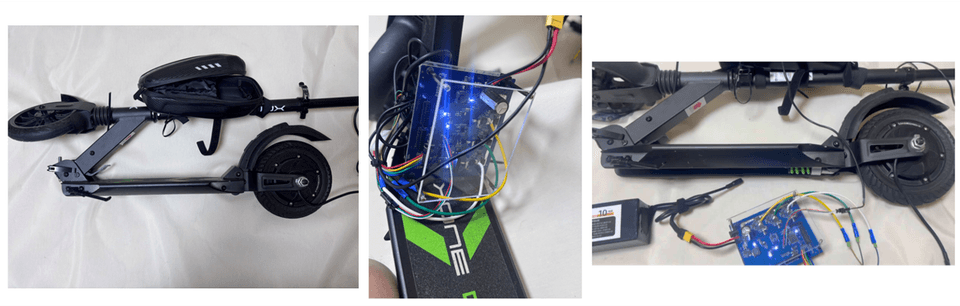
Electric Scooter Assembly Process

Why You Should Take This Course

📌 Motor technology is essential across various industries (automobiles, home appliances, ships, defense, medical devices, etc.).

📌 Learn BLDC motor/inverter theory and how to control motors through actual programming, acquiring a skill you can use for a lifetime.

📌 3-phase inverter circuit design & motor control technology are highly advanced skills, and if you search for motor controller design commissions on sites like 크x, you can see that outsourcing fees range from several million to tens of millions of won. (In highly complex cases, the price can rise to hundreds of millions of won)

📌 Additionally, if you search job posting sites using keywords such as motor control and inverter, you can find a great many job postings.

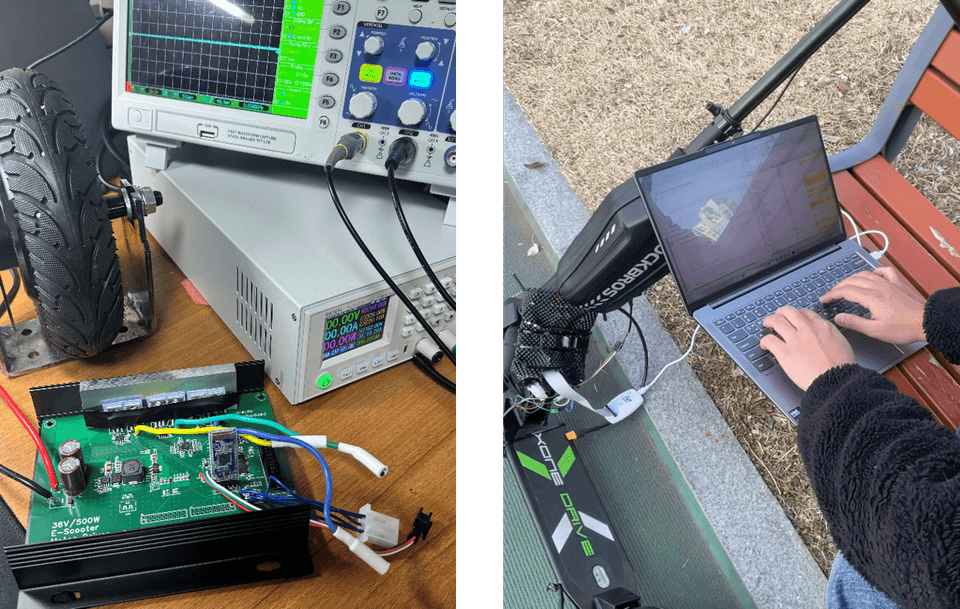
Functional Testing & Electric Scooter Road Testing

스크린샷 2025-06-07 205156

Please click to read.

Notes Before Enrolling

💡Practice Environment

  • Operating systems and versions (OS): Windows, macOS


  • Tools used: STM32CubeIDE, EasyEDA

📚Learning Materials

  • Provision of approximately 500 pages of PDF lecture materials

  • STM32 practice code and electric scooter drive code provided

  • Circuit diagram and PCB files provided


📌Kit used in the course

  • The educational kit is currently on sale for 200,000 won.


    Smart Store link:


    https://smartstore.naver.com/inside_embedded/products/12165875635

  • You can use the circuit diagram and PCB files we provide to make and use the board yourself without purchasing the kit.

  • However, aside from the board, you will need to purchase components such as the throttle, three-phase & Hall sensor windings, UART module, ST-Link v2, and connectors separately.

🤷‍♂Can non-majors and beginners do it?

  • It is possible if you have some knowledge of circuit theory and electronic circuits.

  • Some of the current students are humanities majors, yet they are still following the course well.

  • If you get stuck along the way, we’ll help you resolve the issue through dedicated GPTs and community question posts.

❓Do I have to use an in-wheel motor?

  • Additional expenses can be significant when building an electric scooter.

  • The 36V battery, kickboard, and motor alone cost over 400,000 won.

  • For those who find the cost burdensome, we designed an inverter that allows hands-on practice using a 24V small BLDC motor.

  • The method of driving a BLDC motor is the same for in-wheel motors and small motors, so they can be driven using the same firmware.

  • Detailed information is provided in the course introduction video and on the blog.

    https://blog.naver.com/sw_engineer-/223964894712


<Small BLDC Motor Drive Practice>

To provide more information, I have opened a Naver Cafe and an open KakaoTalk chat room. Both enrolled and non-enrolled students are welcome to ask questions freely (about the course, career paths, study methods, etc.).

Naver Cafe: https://cafe.naver.com/insideembedded?iframe_url_utf8=%2FArticleRead.nhn%253Fclubid%3D31273003%2526articleid%3D5%2526referrerAllArticles%3Dtrue

Open chat room: https://open.kakao.com/o/gsUVs3Uh

Recommended for
these people

Who is this course right for?

  • Job seekers or entry-level employees in the automotive industry

  • People who want to learn motor control technology they can use for a lifetime

  • Electrical, electronics, and robotics engineering students who need a power electronics and motor control portfolio

  • Practitioners with limited experience integrating MCU, power semiconductor, and PCB hardware and software systems

  • People who want to learn how to design three-phase inverters and MCU peripheral circuits

  • People who want to learn PCB design and gain the ability to bring their designs to life as physical products.

Need to know before starting?

  • Undergraduate-level knowledge of circuit theory, C language, electronic circuits, and control engineering is required.

  • Having taken a course in electrical machinery would be a great help (not required).

Hello
This is insid2embedded

Inflearn Verified

Career Verified

874

Learners

111

Reviews

221

Answers

4.9

Rating

4

Courses

Hello, I am Control Guy.

I am a working engineer currently developing electrification (motor/inverter) systems at a major corporation.

Based on my experience directly handling everything from circuits, PCBs, and firmware to control algorithms in mass-production projects, I am creating educational content for embedded developers while running the YouTube/Naver blog "Inside Embedded".

I aim to explain the practical aspects actually used in the field that are rarely covered in books or classrooms :)

  • Collaboration with global automotive OEMs

  • 3-Phase Inverter Hardware Development (Circuit / PCB)

  • BLDC · PMSM · WFSM (Wound Field Synchronous Motor) control algorithm development

  • Overall electrification system development / verification process

  • Experience in vehicle and bench-based evaluation


Cafe : https://cafe.naver.com/insideembedded?iframe_url=/MyCafeIntro.nhn%3Fclubid=31273003

Blog : https://blog.naver.com/sw_engineer-

YouTube : https://www.youtube.com/@Inside_Embedded

Open Chat Room: https://open.kakao.com/o/gsUVs3Uh

More

Curriculum

All

159 lectures ∙ (16hr 56min)

Course Materials:

Lecture resources
Published: 
Last updated: 

Reviews

All

82 reviews

4.9

82 reviews

  • asdfgalal195162님의 프로필 이미지
    asdfgalal195162

    Reviews 1

    ∙

    Average Rating 5.0

    5

    42% enrolled

    My goal is to get a job in the automotive industry, so I wanted to try related projects. Thanks to Jeeojaeng-nim, I was able to try controlling a BLDC and learn circuit design for things like inverters and buck converters, and I'm grateful. It's good that I have more content to include in my self-introduction. Please be sure to notify me when the kit is released!

    • insid2embedded
      Instructor

      Thank you very much for taking the course, Giwoong! I believe you will achieve good results if you effectively integrate what you learned in the lecture into your self-introduction. I will continue to share good content related to embedded systems, so please feel free to ask if you have any questions..! Thank you~!

  • jungssooo님의 프로필 이미지
    jungssooo

    Reviews 1

    ∙

    Average Rating 5.0

    5

    72% enrolled

    Because it was urgent, I quickly studied only the BLDC motor firmware section and immediately applied it to my work…! I really needed this kind of course, thank you for creating it. I'll finish all the remaining lectures this weekend!!👍

    • insid2embedded
      Instructor

      A review already... Thank you so much! And that you applied it to your company right away is amazing. Please be sure to complete the remaining lectures, and if you have any questions, feel free to ask anytime. Thank you very much!👍

  • jamaica님의 프로필 이미지
    jamaica

    Reviews 1

    ∙

    Average Rating 5.0

    5

    99% enrolled

    Paid for vacation study, I found it excellent. Will take again before new semester. Thanks for great lecture.

    • insid2embedded
      Instructor

      Thank you very much for taking this course! If you have any questions while studying, please feel free to ask anytime.

  • leesanghooo1237196님의 프로필 이미지
    leesanghooo1237196

    Reviews 1

    ∙

    Average Rating 5.0

    5

    33% enrolled

    I'm preparing for my graduation project as I'm graduating soon, and this lecture seems like it will be a great help. Designing buck converters and inverters was very difficult, so it was good to be able to learn it here. And thank you for teaching about BLDC motors, including theory and firmware driving! Oh, and ChatGPT is really convenient! Great idea, instructor!!

    • insid2embedded
      Instructor

      I'm happy the lecture was helpful~😊😊 It's good to hear you're using ChatGPT well! However, if there's anything you can't solve with ChatGPT or areas you're confused about, please feel free to ask on the forum anytime! Thank you👍

  • okj70083799님의 프로필 이미지
    okj70083799

    Reviews 1

    ∙

    Average Rating 5.0

    5

    31% enrolled

    I've been a fan since you first started your blog. It's the process of doing a project from start to finish, exactly as I wanted, so it's really interesting. I'll try to complete the course. Thank you.

    • insid2embedded
      Instructor

      Thank you so much for taking the course! Please make sure to finish the remaining lectures and feel free to ask any questions you have!

insid2embedded's other courses

Check out other courses by the instructor!

Similar courses

Explore other courses in the same field!

25% off for new members

$313.50

25%

$423.50