▶ Watch the video: https://youtu.be/L2TPUExlMTU
Hello, this is Control Guy.
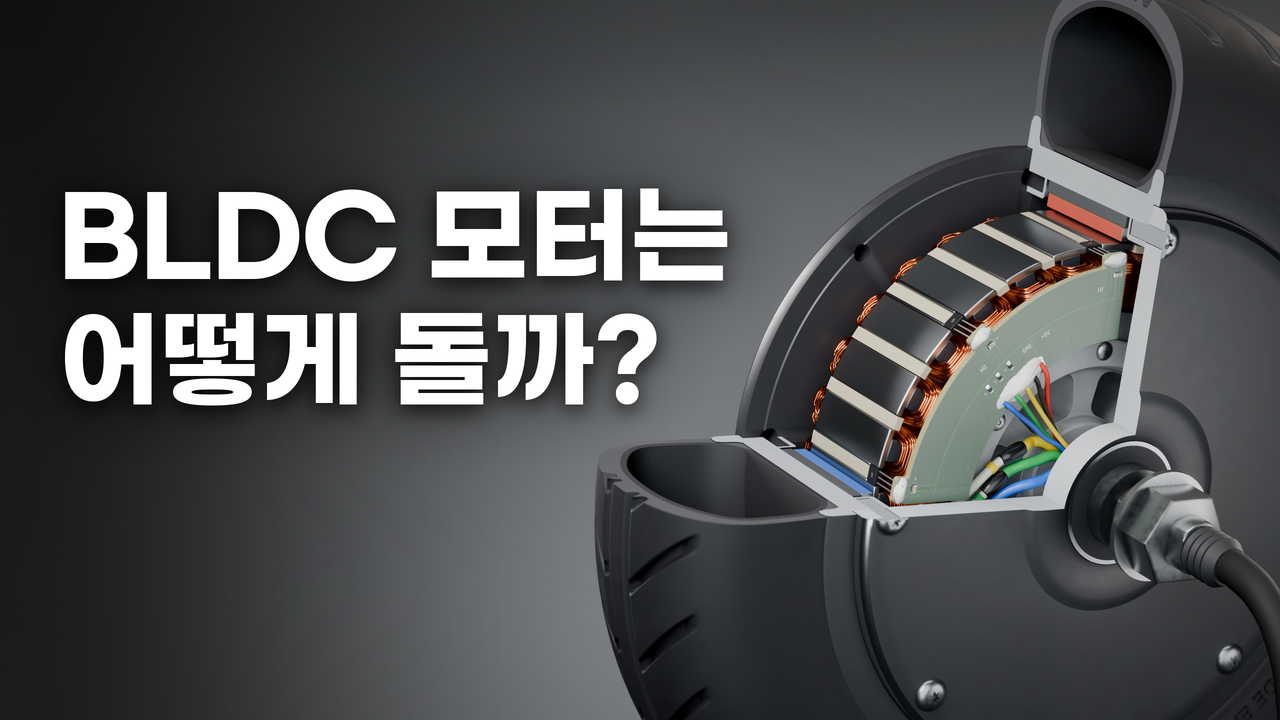
I uploaded a video to YouTube that summarizes the BLDC motor operating principles covered in the lecture through 3D animation. I made it so that you can directly see the internal operation of the motor that you had been imagining in your mind while listening to the lecture.
The video covers the following topics.
- Difference between DC motors and BLDC motors: why a three-phase inverter changes the direction of the current instead of using brushes and a commutator
- BLDC motor structure: stator, permanent-magnet rotor, inrunner and outrunner
- Six-step control: the principle of pulling the rotor along with a resultant magnetic flux vector created by supplying current to two phases, and why torque ripple occurs
- Three-phase inverter and dead time
- Reading Rotor Position with Hall Sensors: the 6 Hall states, and why 000·111 indicate a fault
- Sensorless control: back-EMF zero crossing, why electric scooters use Hall sensors while drones use sensorless control
- PWM speed control (bipolar and unipolar), M-method and T-method speed measurement, PI speed control
It will help you review once more, with diagrams, the Hall sensor–based six-step control and PI speed control implemented directly in the lecture. In particular, if you were confused about the Hall sensor sequence or the resultant flux vector, be sure to take a look.
In the next video, we will cover PMSM and FOC (vector control) for reducing torque ripple in six-step control.
If you have any questions while watching the lecture, please feel free to leave them anytime. Thank you!
▶ Watch the video: https://youtu.be/L2TPUExlMTU
Hello, this is Control Geek.
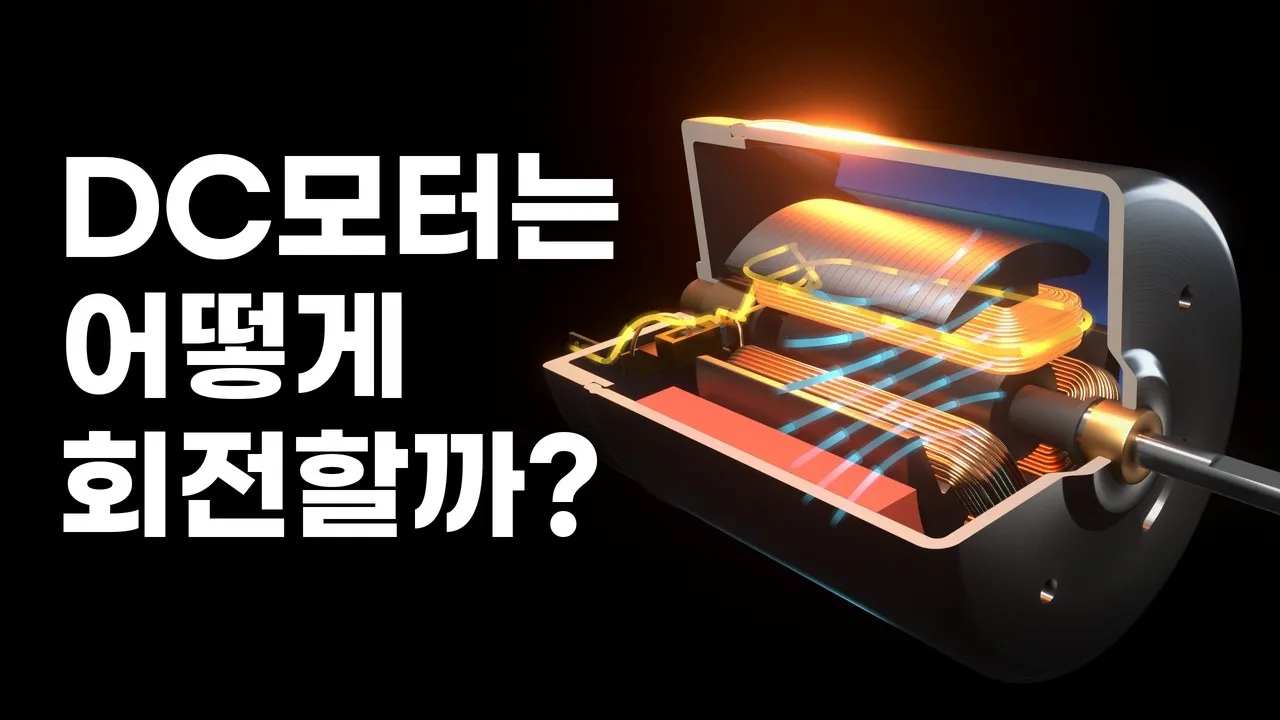
I’ve uploaded a new video covering the structure and operating principles of DC motors.
When first studying DC motors, many people connect an MCU to a driver like the L298N and practice
forward, reverse, and PWM control first.However, if you later want to study BLDC or PMSM control,
it is important to first understand how current and magnetic fields inside a motor generate force and why rotation occurs.In this video,
Basic Structure of a DC Motor
The Role of Brushes and the Commutator
The Principle Behind Torque Generation by Current and Magnetic Fields
Why a motor can keep rotating in one direction
I’ve organized it as intuitively as possible, together with animations.
Those of you taking the course may also find it helpful to watch this casually as a way to review the most basic principles of motor control.
Please give the new video lots of views as well!
Link: https://youtu.be/sS8JdLBVoOo
Hello.
I'm a control enthusiast.
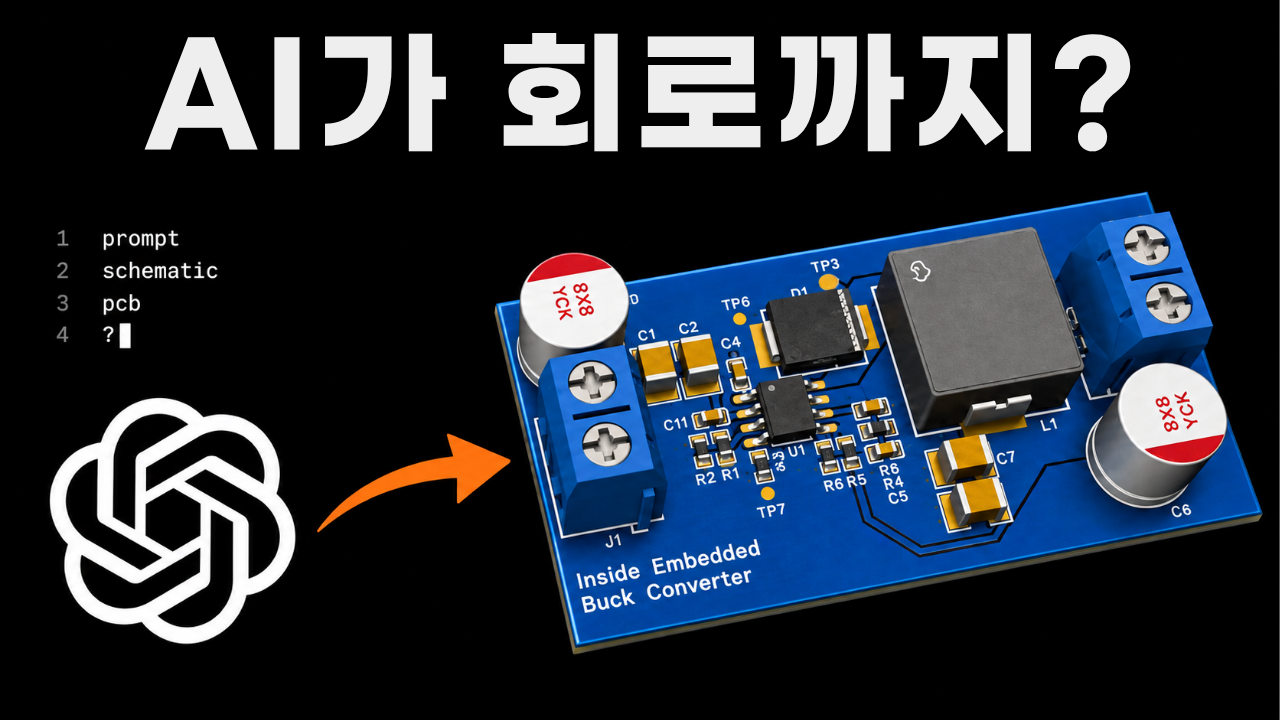
This time, rather than simply asking, “Draw a circuit for me,”
I followed the actual development process: defining the requirements, selecting components, and even running PSpice simulations.And finally, I had the AI handle everything from circuit design to PCB design.
After seeing it through to the end,
there were parts that made me think, “Wow, it can even do this?”
but on the other hand, it also became quite clear that some aspects are risky unless an engineer makes the judgment directly.The results were quite interesting.
If you’ve been wondering how much of the actual embedded development work AI can handle,
I recommend watching this video.Link: https://youtu.be/b_6T7NIZh1A?si=4S8e21JDtdRSSVS4
Hello, this is Je-eo-jaeng-i.
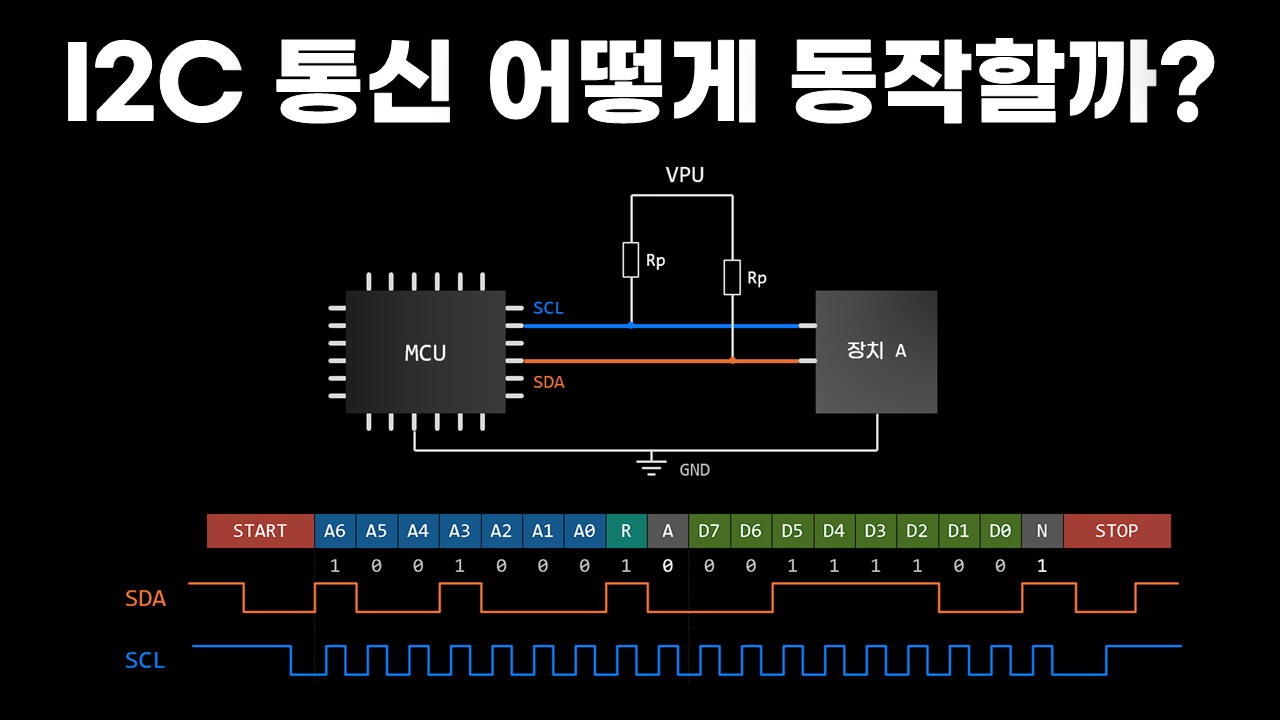
I uploaded a new I2C communication video to YouTube.
When first studying I2C, many people roughly understand the concepts and then simply copy and use example code.
In this video,
The roles of SDA / SCL
Slave Address
Open Drain and Pull-up Resistor
Start / Stop
ACK / NACK
The process of exchanging data with an actual temperature sensor
We’ve carefully covered, from the beginning, the actual sequence of how I2C communication works.
If you’re studying STM32 or have wanted to properly get a handle on I2C, I highly recommend watching this video.
Please check it out on YouTube!
Video link: https://youtu.be/0wAlqeQB8wQ
Hello, this is Control Geek.
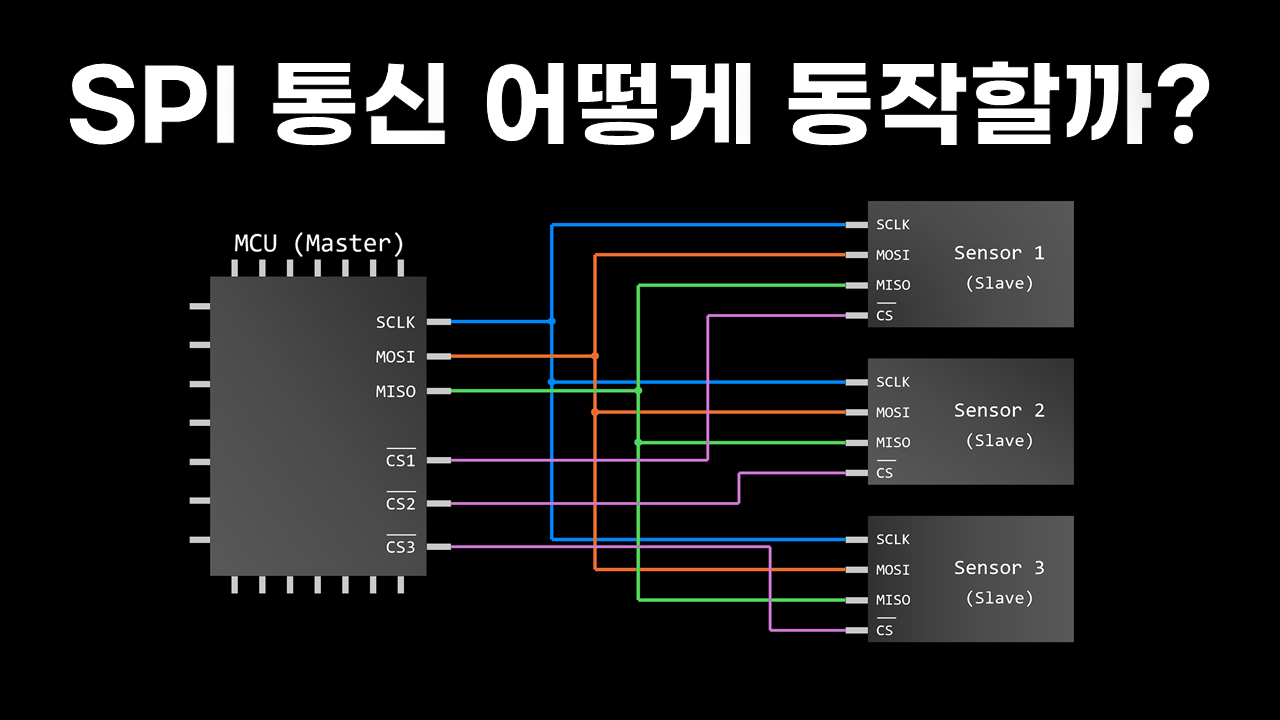
I’ve uploaded a separate video summarizing SPI communication, which I wasn’t able to cover in detail in the electric kickboard course due to the overall flow of the hands-on exercises.
In this video, I cover the key concepts of SPI communication, starting with its basic structure, the roles of the SCLK, MOSI, MISO, and CS signals, the principles of data transmission and reception using shift registers, and the often-confusing CPOL/CPHA and SPI modes.
I will continue uploading supplementary videos like this on topics that could not be covered in detail during the lecture due to time constraints.
Link: https://youtu.be/n8gf-UeDVX0
Thank you.
Hello, this is Je어쟁이.
I’ve just uploaded a new video summarizing the basic principles of UART communication.
Those of you who are already taking the course have probably used UART at least once. In this video, rather than simply following along with the code, we’ll go back and examine the form in which UART actually transmits data.
We explained step by step how TX/RX are connected, why the Start Bit and Stop Bit are needed, how a single character is converted into actual bit data and transmitted, and what the relationship is between the Baud Rate and Bit Time.
Especially at the end, we transmit actual data from an STM32 and directly measure the UART waveform with an oscilloscope to see how the bit structure learned in theory appears in a real signal.
Even for those already taking the course, it may be useful to review the UART section or to gain a clearer understanding of how serial communication works.
Even UART, which you may have used comfortably when writing code in the course, will be much more helpful for debugging later if you understand how the actual signals are generated and received.
The video has been uploaded to the YouTube channel.
Please check it out whenever you have time!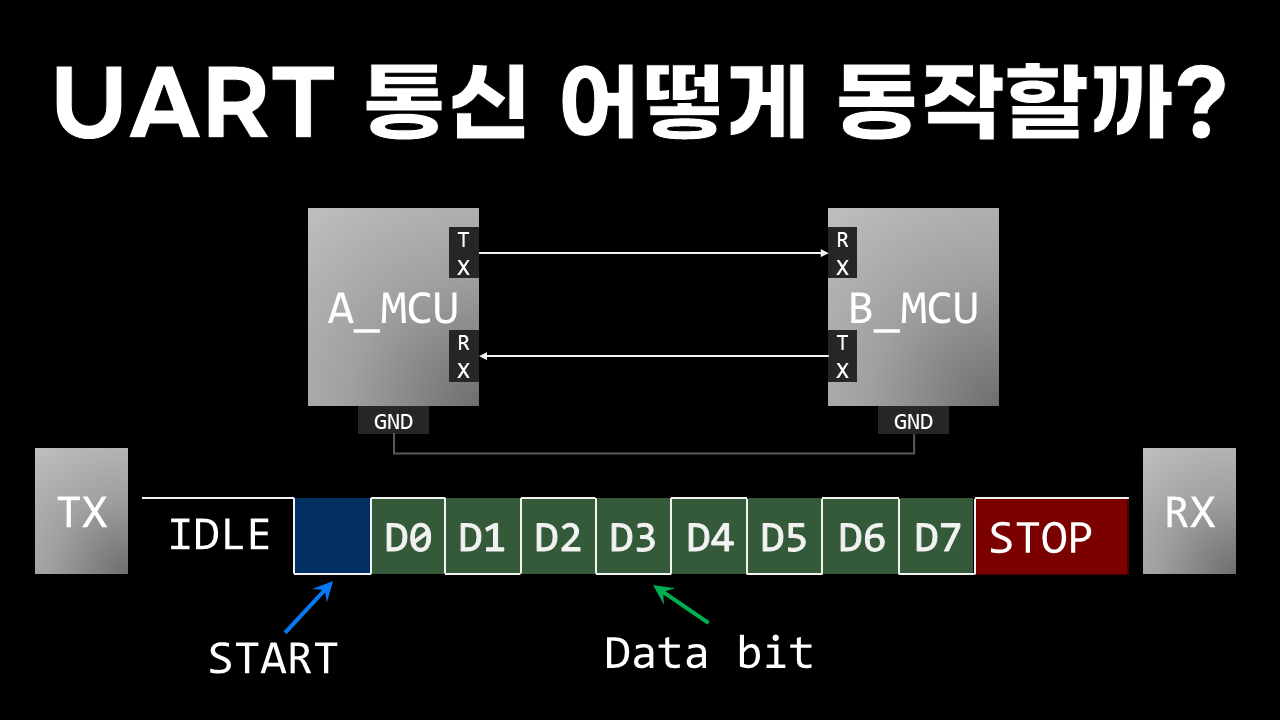
Hello, this is Control Engineer.
Hyundai Motor Company’s September new graduate recruitment announcement has been released, so I uploaded an analysis video focusing on positions that may be of particular interest to those majoring in electrical engineering, electronics, or embedded systems.
In this video,
Vehicle Control Software Development
Electrification PT/PE Development
SDV Integration Verification
Electrification Energy Development (BMS)
I’ve organized what the actual work involves for each position and how to interpret the preferred qualifications listed in the job postings.
In particular, there are many areas that directly connect to the topics currently covered in the course, including MATLAB/Simulink-based vehicle control, motors/inverters and power electronics, embedded SW, HIL/SIL validation, and BMS HW.
If you are preparing for a career not only at Hyundai Motor Company but also in the automotive and electrification fields, this should help you see how what you are studying is actually applied in real job positions.
Students currently preparing for employment, please be sure to check it out, and if you find a position that suits you, we encourage you to actively apply for this recruitment opportunity as well.
Video link: https://youtu.be/gVsC-6OsfqA
Hello, students.
Based on this LG Electronics entry-level job posting, I uploaded a video analyzing the key positions worth applying for in the electrical and electronics field.
This recruitment includes positions that are closely related to what you are currently learning in the course. We have organized the content around the actual work involved, what the technologies listed in the posting mean, and which areas you should prepare before applying.
In particular, while taking the course, it may help you determine how to prepare for employment by seeing which job roles the content you learned are connected to in actual companies.
If you are considering applying to LG Electronics, I highly recommend watching the video and actively applying if you find a position that suits you.
I hope everyone preparing for this recruitment achieves great results.
▶️Watch the video: https://youtu.be/uUICldhWMfU