inflearn logo

My Own MCP Built with Antigravity in Just 30 Minutes

Learn the entire process of building AI-callable business tools, from the concept of MCP (Model Context Protocol) to implementing a TypeScript-based custom server using Antigravity. Through a brand copy review example, you’ll develop practical MCP skills that can be applied immediately to automating repetitive tasks, integrating internal company data, and connecting APIs.

3 learners are taking this course

Level Basic

Course period Unlimited

TypeScript
TypeScript
AI
AI
Model Context Protocol
AX(Agent Experience)
antigravity
antigravity
TypeScript
TypeScript
AI
AI
Model Context Protocol
AX(Agent Experience)
antigravity
antigravity
Thumbnail

What you will gain after the course

  • Implementation of a TypeScript-based MCP server and Antigravity integration

  • AI Tool Design and Input/Output Schema Definition

  • AI Tool Transformation and Permission Design for Business Rules

TypeScript, Artificial intelligence (AI), MCP, AX (agent experience), Antigravity

Shall we turn repetitive tasks into AI tools?

To have AI execute tasks on your behalf, you need to design the structure and rules of the tools it will call, beyond simply entering commands.
In this course, you will build a custom MCP server with TypeScript, define input and output schemas and permissions, and connect it to Antigravity.


Implement repetitive business rules, such as brand copy proofreading, as tools that AI can call.

Use the MCP Inspector to directly verify that the server and tools are working as intended.

Use the completed custom MCP in Antigravity to build the foundation for integrating internal data and APIs.

At first, it may seem daunting to figure out how to connect AI with your work systems.
However, by designing the core workflow step by step, you can begin transforming repetitive tasks into AI tools that can be called directly.

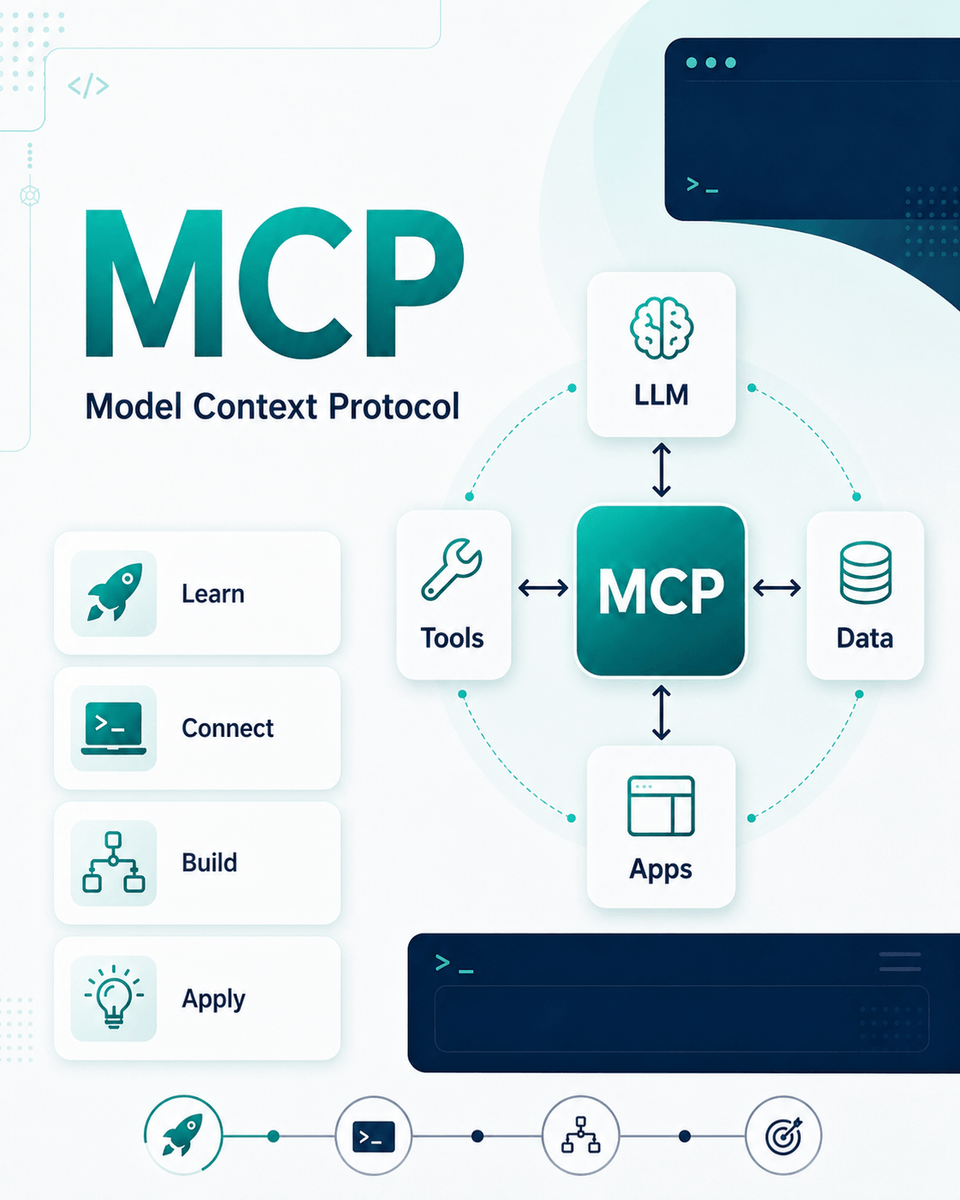
MCP Workflow


Learn everything from the core principles of MCP
to implementing custom TypeScript servers,
as well as validation and Antigravity integration.

Transform repetitive tasks into rule-based tools,
your own work tools that AI can call, and
design and connect them yourself.


By the end of this course, you will be able to


Build your own AI tools that can be called to handle repetitive tasks.

  • Build tasks with clear rules, such as reviewing brand copy, into a TypeScript-based MCP server and connect them as tools that AI can execute directly when needed. Instead of copying and sending materials or repeating the same review process every time, you can create automation workflows tailored to your internal operations yourself.


✔️

How to connect repetitive tasks so that AI can handle them directly

Turn business rules
into tools that AI can call

From understanding the need for MCP to implementing a custom TypeScript-based server and integrating it with Antigravity, learn step by step how to build a structure in which AI calls actual business functions. Design clear business rules, such as brand copy review, as input and output schemas to establish a foundation for connecting internal data and APIs.

Designing AI Tools Through Brand Copy Review

After checking a self-built MCP server with MCP Inspector, call it from Antigravity to understand the entire flow of AI using work tools. In the process of automating tasks such as repetitive copy review, you will also cover input validation, result formats, and permission design.

Materials for implementing a TypeScript MCP server yourself

Based on the TypeScript-based custom MCP server implemented in the course and the input/output schemas of AI Tools, you can extend your own business rules into new tools. Using the MCP Inspector verification process and the Antigravity integration flow as a reference, you can design the next steps for connecting internal systems or APIs.


📚

A hands-on curriculum for turning work rules into tools that AI can call

Section 1

Setting Up the Development Environment and Getting Started with Antigravity

Review the course’s overall goals and direction, and prepare the basic environment for developing AI-powered work tools using Antigravity.


Section 2

Understanding the Core Concepts of MCP

Understand the need for MCP, which standardizes the connection between AI and external tools and data, and learn the role MCP plays in tool calls and task automation.


Section 3

Implementing a Custom MCP Server

Based on TypeScript, implement a custom MCP server that transforms business rules into AI tools and defines input and output schemas.


Section 4

Testing the MCP Server

Use the MCP Inspector to verify the connection status and tool calls of the implemented server in advance, and confirm that the inputs and returned results work as intended.


Section 5

Using MCP in Antigravity

Integrate the completed MCP server with Antigravity so that the AI can directly call work tools, and execute practical automation workflows such as reviewing brand copy.


Section 6

Course Wrap-Up and Practical Application

We summarize everything covered and explore how to extend and apply custom MCPs across various work environments, including integration with internal company data and API integration.


We can address the concerns of people like this!


📌

Junior frontend developers

If you are familiar with implementing screen features but
lack experience designing the input values and result formats of business tools that artificial intelligence can call

📌

Business automation planners and project managers

If you want to automate repetitive brand copy reviews and document verification tasks but
are unsure how to convert business rules into AI tools and define safe permission boundaries

📌

Engineers preparing to integrate internal systems

You want to connect internal data and external services to AI, but
you are unfamiliar with the process of building a custom TypeScript-based MCP server and verifying its behavior with inspection tools.


Notes Before Taking the Course


Practice Environment

  • We will practice on Windows, macOS, and Linux.

  • We use Antigravity and TypeScript.
    At least 8 GB of memory is recommended.

Prerequisites and Important Notes

  • Basic programming concepts are required.
    Experience with TypeScript is preferred.

  • It is suitable for those who want to connect AI agents and APIs
    to their work.

Learning materials

  • We provide materials on MCP concepts and server implementation.
    We also cover tool input and output design.

  • We use examples for reviewing brand copy.
    We also provide hands-on MCP Inspector practice materials.


Recommended for
these people

Who is this course right for?

  • A developer who wants to use AI agents for work

  • Planners and PMs looking to automate repetitive tasks

  • An engineer who wants to connect internal systems with AI

Need to know before starting?

  • Understanding the basic syntax of TypeScript or JavaScript

  • Basic knowledge of APIs and JSON data structures

  • Experience using AI chatbots or LLMs

Career Verified

2,033

Learners

127

Reviews

4.3

Rating

4

Courses

At the early-stage startup I was previously part of, I learned more than just how to write code; I learned the structure of how technology functions as a service.

Although my primary focus was on web frontend development, I took responsibility for the core service paths by designing backends and data flows whenever necessary. In particular, I built and operated a pipeline to stably collect, refine, and manage over 1 million fashion product data points using FTP/SFTP and web-based architectures.

Through this experience, I have become convinced that what matters more than any specific language or framework is the ability to understand the overall system flow and responsibility structure.

Currently, I am designing AI-based systems in web environments, focusing on defining structures and control models before execution. Rather than simply adding features, my work is closer to designing state transitions and validation flows.

Starting as a non-major and getting to this point through self-study, I am well aware of the roadblocks and realistic constraints. That is why in my lectures, I focus on "why we design this way" and "how to make decisions" rather than showing off technical skills.

A structure that leaves only the essentials,
instead of increasing complexity.

That is the development philosophy I strive for.

More

Curriculum

All

6 lectures ∙ (30min)

Published: 
Last updated: 

Reviews

Not enough reviews.
Please write a valuable review that helps everyone!

wonyoungchoiseou4177's other courses

Check out other courses by the instructor!

Similar courses

Explore other courses in the same field!

Free