
LLM-OS & Compund AI Systems Engineering(LLM-OS & Compound AI Systems Engineering: Context Orchestration, Deterministic Harness Control, and Autonomous Resilience)

We invite you to become a ‘Top-Tier Enterprise AI Systems Architect’ Do not remain a micro-level technician (Prompt Writer) who merely assembles libraries created by others or polishes prompt sentences. From mathematical first principles to runtime control-loop kernels and autonomous recovery infrastructure — through 40 years of practical engineering insight that has driven industrial operations in South Korea, I will firmly guide you to become a top-level ‘Enterprise AI Systems Architect’ who protects your company’s business and digital sovereignty. Now, begin the great journey of transforming uncontrollable AI into a perfect industrial core. “Why does an AI that ran perfectly in a demo start spouting strange nonsense or bring the pipeline to a halt as soon as it is deployed to production?” “Why do AI projects that so many companies launch with great enthusiasm ultimately fail to escape the ‘PoC (Proof of Concept) swamp’ and get abandoned?” These are the most desperate questions that countless developers and systems architects I have met in the field have asked me. Hello. I am Hongjip Kim, who spent more than 40 years in the powertrain R&D division of the South Korean automotive industry (including 17 years as an executive in Hyundai Motor Group R&D), led the export of engine and drivetrain technologies worth 130 billion won, and commanded operations as the CEO/CTO of a listed mid-sized manufacturing company. From the perspective of an engineer who has spent decades in mechanical engineering and precision-control environments, a ‘risk of fatal uncertainty’ lurks behind today’s frenzy to adopt generative AI. In mission-critical industrial environments where even a mere 0.1% error or mistake can directly result in the destruction of physical equipment worth hundreds of millions of won and an enterprise-wide shutdown, integrating a probabilistic chatbot that simply relies on probability to generate plausible text directly into a service is like carrying a ticking time bomb into a fire. This course was designed to impart the “practical engineering methodology for training uncontrollable probabilistic AI into the most robust industrial control core, one that allows not even 0.000% of syntax errors.” 1. The 3 Major Fatal Bottlenecks You Face in the Field (Problem) Many engineers attempt to challenge production environments using an approach limited to one-off prompt tuning (Vibe Prompting), only to become frustrated when they encounter the following 3 structural defects: Finite Context and ‘Lost in the Middle’: As conversations or multistep executions grow longer, critical system instructions are pushed aside and the context window is exhausted, causing the system to lose its memory and amplifying hallucinations. Nondeterministic Outputs and Cascading Pipeline Collapse: Tiny probabilistic fluctuations, such as one missing closing bracket in JSON or an incorrect type, can paralyze legacy ERP/CRM API calls and destroy data integrity. Untrusted Code Execution and Infrastructure Security Bankruptcy: When scripts autonomously generated by an agent run in a non-isolated host OS environment, they create risks such as kernel escapes and sensitive-data leakage. As such, AI malfunctions in industrial environments are not merely quantitative accuracy problems; they become a massive financial disaster in the form of asymmetric business loss (Asymmetric Business Loss). 2. ‘How’ to Solve These Problems Perfectly (Solution) This course differs fundamentally from commercial courses that teach only how to use fragmented off-the-shelf tools. By combining 40 years of hands-on field expertise with computer systems engineering, it delivers 3 hardcore architectures for vertically integrated, system-level control of probabilistic AI: ① Move Beyond Prompting to ‘LLM-OS & Context Orchestration’ Following Andrej Karpathy’s paradigm, redefine the LLM not as a conversational respondent but as the central computational core (CPU) of a computer. Systematically organize the context window as ultra-low-latency volatile RAM, the internal vector DB as Disk, and external APIs as an I/O bus. Through MemGPT hierarchical virtual-memory paging, preserve critical state without saturation even during infinite conversations, while scaling a dynamic agent network through MCP-based Liquid Swarm MAS, minimizing token costs. ② ‘Deterministic Harness Engineering’ That Constrains Probabilistic Hallucinations to 0.000% Leave the language model’s creative flexibility open only during the Reasoning phase, while firmly confining the physical output layer that interacts with external systems using mathematical Boolean algebra and compilers. Apply EBNF / XGrammar-based CUDA logit masking to forcibly block the generation probability of invalid tokens at P = 0.000%. Form a physical security isolation ring so that code generated by agents runs only once inside a Firecracker MicroVM micro-virtualization sandbox with 5ms snapshot restoration capability. ③ ‘High-Reliability MLOps·LLMOps Autonomous Recovery Infrastructure’ Without Wasting GPU Resources Build vLLM PagedAttention and S-LoRA hot-swapping to suppress idle VRAM waste to below 4%. When a multi-agent API fails, restore data consistency 100% through SagaLLM reverse compensation transactions. Through an OpenTelemetry/Langfuse distributed observability network, defend system availability by executing an unmanned automatic canary rollback whenever a decline in the RAGAS faithfulness score (Data Drift) is detected. 3. Practical Value That Drives Spiral Growth (Pedagogy & ROI) This course is systematically designed according to the 5 levels of Bloom's Taxonomy. Starting from simple theoretical recall (Remember), learners directly code and validate a 5-stage debugging pipeline (analyzing deceptive baseline trap source code ➔ deconstructing adversarial engineering ➔ establishing a Robust integrity pipeline ➔ calculating the TEI ROI formula ➔ SOTIF/ISO 42001 governance). Going beyond the intuitive satisfaction of simply “working well,” I will apply the Forrester TEI (Total Economic Impact) financial model to visualize, from an executive perspective, how much the AI system you build reduces your company’s rework cost (Rework Cost), avoids failure risks worth hundreds of millions of won, and proves an ROI of more than 200%.

3 learners are taking this course

Level Intermediate

Course period Unlimited

Python
Python
AI Agent
AI Agent
React
React
AWS
AWS
Business Productivity
Python
Python
AI Agent
AI Agent
React
React
AWS
AWS
Business Productivity

What you will gain after the course

  • 5 Concrete Capabilities Definitively Acquired After Completing the Course (Capabilities) **LLM-OS Hierarchical Virtual Memory Paging and Orchestration Capability** Designs a three-tier virtual memory structure based on MemGPT (Core Working Context, Recall Storage, Archival Storage), and autonomously controls memory eviction and recursive summary paging when tokens reach saturation. Utilizes the Model Context Protocol (MCP) to expand a dynamic agent network without context fragmentation between external tools and knowledge storage. **Deterministic Harness Control Capability with a Guaranteed Syntax Error Rate of 0.000%** Integrates EBNF specifications with the XGrammar compiler and, through C++/CUDA-based bitmask kernels and a pushdown automaton (PDA), physically forces the syntax error rate of JSON/API outputs from nondeterministic LLMs to converge to \(P = 0.000%\). Combines an 8-stage finite state machine (FSM) with a ReAct reasoning loop to guarantee the integrity of system state transitions. **Hardware-Level MicroVM Security-Isolated Sandboxing Capability** Builds AWS Firecracker MicroVMs (cgroup v2, seccomp-bpf, Jailer) and AF_VSOCK socket communication to execute untrusted code generated by agents in complete hardware-level isolation within an ultra-low-latency environment based on 5ms snapshot restoration. **SagaLLM Distributed Transaction and Idempotent Self-Healing Capability** When failures occur during multistage external API calls, automatically initiates reverse-order compensating transactions using the SagaExecutionCoordinator (SEC) and IETF Idempotency Keys, preventing data orphans and corruption by 100%. **vLLM PagedAttention Serving and OpenTelemetry Autonomous Canary Rollback Capability** Integrates vLLM PagedAttention with continuous batching to control GPU memory waste to below 4%, and configures a standard distributed tracing network using OpenTelemetry (gen_ai.*) / Langfuse. When a real-time decline in the RAGAS Faithfulness metric is detected, it autonomously activates an unattended canary rollback pipeline that hot-swaps prompts to Safe Mode without service interruption.

  • Four Complete Portfolio Deliverables You Can Hold in Your Hands (Finished Deliverables) A runtime control-loop codebase integrating MemGPT + XGrammar + Firecracker (Python/CUDA/MicroVM). This is FSM control-loop source code combining an EBNF logit-masking compiler with a 5ms Firecracker AF_VSOCK sandbox to guarantee \(0.000%\) syntax errors. A SagaLLM distributed transaction & OpenTelemetry/Langfuse autonomous recovery observability pipeline. This is real-time monitoring source code that executes a Saga idempotent compensating rollback engine, automatically hot-swaps canaries within 3 seconds when RAGAS metrics decline, and integrates with PagerDuty. A five-step comprehensive debugging validation report (Full Debugging Log). This is a standard debugging validation report progressing through Step 1 (environment setup) ==> Step 2 (diagnosis of Deceptive Baseline trap code) ==> Step 3 (adversarial engineering dismantling) ==> Step 4 (Robust integrity pipeline & TEI ROI) ==> Step 5 (XAI & SOTIF/ISO 42001 governance). A Forrester TEI (Total Economic Impact) financial feasibility validation model. This C-level financial feasibility validation report formulates the reduction in rework costs and the benefits of preventing failures relative to total cost of ownership (TCO), quantitatively calculating an ROI of 200% or more and the payback period.

[Detailed Course Introduction] 

LLM-OS & Compound AI Systems Engineering


1. Course Overview

  1. Main Title: LLM-OS & Compound AI Systems Engineering

  2. Subtitle: Mastering Context Orchestration, Deterministic Harness Control, and Autonomic Resilience

  3. Standard Korean title: LLM-OS & Compound AI Systems Engineering: Mastering Context Orchestration, Deterministic Harness Control, and Autonomic Resilience


  4. Course tags: #LLM-OS #CompositeAISystems #HarnessEngineering #LLMOps #AIAgents

  5. Related skill stack: Python, vLLM, MemGPT, XGrammar, AWS Firecracker, OpenTelemetry, MCP (Model Context Protocol)


2. Instructor Profile

  1. Kim Hong-jip | Enterprise AI Systems Architect

  2. 40-year industry expert: Led the overseas export of proprietary engines and drivetrain technologies worth approximately KRW 130 billion as a powertrain R&D executive at Hyundai Motor Group for 17 years.

  3. Listed company CEO / CTO: Served as CEO/CTO of a publicly traded mid-sized manufacturing company (INZI Controls).

  4. Author's message:
    "From the perspective of mission-critical industrial sites where even a 0.1% error or mistake can directly result in hundreds of millions of won in physical equipment damage and an enterprise-wide shutdown, deploying single-shot, chatbot-level probabilistic AI directly into a production environment is like walking into a fire carrying a ticking time bomb. This course passes on 40 years of hands-on engineering methodology for training uncontrollable AI into the most robust industrial control core—one that does not tolerate even a single syntax error."


3. The three major structural bottlenecks to solve (Problem Statement)

  1. We directly solve the three structural flaws that cause countless engineers and companies to fall into the PoC (Proof of Concept) quagmire when attempting to move to production with nothing more than simple prompt tuning (Vibe Prompting):

  2. Context exhaustion and 'Lost in the Middle': As conversations or mult turn executions grow longer, key system instructions get pushed out, exhausting the context window and amplifying hallucinations.

  3. Nondeterministic output and cascading pipeline failures: Minor probabilistic variations, such as missing closing brackets in JSON or type errors, can cripple calls to legacy system APIs and compromise data integrity.

  4. Untrusted code execution and infrastructure security collapse: Agent autonomously generated scripts running in an unisolated host OS environment create risks of kernel escape and sensitive data leakage.


4. Three Core Architectural Solutions (Core Solutions)

LLM-OS & Context Orchestration:

  1. Redefine the LLM as the central processing core (CPU), the context window as RAM, the vector DB as Disk, and external APIs as the I/O bus, following Andrej Karpathy's paradigm.

  2. Build MemGPT hierarchical virtual memory paging and Model Context Protocol (MCP)-based orchestration.

Deterministic Harness Engineering:

  1. Force the syntax error rate to converge using EBNF/XGrammar-based CUDA logit masking.

  2. Deploy a hardware-level security-isolated sandbox for snapshot restoration using AWS Firecracker MicroVM (AF_VSOCK socket).

Highly Reliable MLOps·LLMOps Self-Healing Infrastructure:

  1. Keep VRAM idle waste below the target threshold using vLLM PagedAttention and S-LoRA hot-swapping.

  2. SagaLLM’s idempotent compensating transactions restore data consistency, while unattended canary auto-rollback runs autonomously through integration with the OpenTelemetry/Langfuse observability network.


5. Skills Acquired and Completed Deliverables After the Course (Outcomes & Deliverables)

<Five Concrete Skills You Will Definitely Gain>

  1. MemGPT hierarchical virtual memory paging orchestration skills

  2. EBNF / XGrammar CUDA Logit Masking Control (Error Rate ) Skills

  3. AWS Firecracker MicroVM AF_VSOCK ultra-low-latency secure sandboxing skills

  4. SagaLLM distributed transaction and idempotent self-healing capabilities

  5. vLLM PagedAttention serving and OpenTelemetry-based autonomous canary rollback skills

<4 Major Portfolio Deliverables You’ll Have in Hand>

  1. MemGPT + XGrammar + Firecracker integrated runtime control loop codebase (Python/CUDA/MicroVM)

  2. SagaLLM distributed transaction & OpenTelemetry/Langfuse self-healing observability network pipeline source code and dashboard

  3. Steps 1–5 Comprehensive Standard Debugging Verification Report (Full Debugging Log)

  4. Forrester TEI (Total Economic Impact) Financial Feasibility Validation Report (Quantitative Proof of ROI)


6. Audience & Prerequisites

  1. Target audience: AI engineers, LLM developers, system architects, MLOps/SRE engineers, Tech Leads & CTOs.

  2. Required prerequisites: Basic Python 3 syntax and fundamental computer science data structures and algorithms concepts.

  3. Recommended Prerequisites (Optional): Basic PyTorch tensor operations, basic experience with Docker/Linux CLI, and fundamental linear algebra concepts

(All formulas and architectures are provided so that you can internalize them step by step through completed Jupyter notebooks and five-stage debugging logs).


7. Curriculum Overview (Section 1 ~ Section 5) 


SECTION 1: (Orientation) LLM-OS & Compound AI Systems Engineering (LLM-OS Compound AI Systems Engineering)

<Topic> Course orientation, the enterprise AI paradigm shift, and an integrated learning framework
<Key Topics>
  1. Paradigm shift from a single monolithic model (Monolithic LLM) to compound AI systems (Compound AI Systems)

  2. Andrej Karpathy’s 'LLM-as-OS' (CPU-RAM-Disk-I/O) architecture mapping and mathematical–physical system structure

  3. PoC Purgatory and the Three Major Structural Flaws of Autoregressive Neural Networks: A Deep Dive

  4. Asymmetric Business Loss and the Technical Responsibilities of the Chief Judgment Officer (CJO)

  5. Anderson & Krathwohl’s Revised Bloom’s Taxonomy 5-Level Competency Roadmap and AEGIS Guardian Network Architecture Guide


SECTION 2: Section2 Mathematical Foundations & Geometric Semantics of LLMs (Mathematical Foundations and Geometric Semantics)

<Topic> Mathematical Foundations of Modern AI, High-Dimensional Manifolds, and Geometric Semantics

<Key Topics>

  1. Manifold Hypothesis of High-Dimensional Embedding Spaces and Derivation of Cosine Similarity Normalization Formulas: Matrix Operation Structure of Scaled Dot-Product Attention and KV Cache Memory Optimization:

  2. Mathematical Derivation of Softmax Scaling, Temperature/Top-\(p\) Logit Manipulation, and Adam Optimizer Dynamics


SECTION 3: LLM Engineering A Practical Guide to Modern Application Techniques (A Practical Guide to the Latest Application Techniques in LLM Engineering)

Topics: In-context learning, advanced prompt design, RAG, and sequential chain workflows

Key topics:

  1. Master Prompt multi-component framework (persona, context, task, format, examples) and Zero-/Few-Shot control

  2. Modular RAG, HyDE hypothetical embeddings, RRF reciprocal rank fusion, and Cross-Encoder re-ranking:

  3. Performance comparison of Vector RAG and GraphRAG, and a hierarchical Parent-Child structure chunking pipeline


SECTION 4: Advanced Prompt, Context and Harness Engineering

<Topic> Nonlinear Reasoning (ToT/GoT), FSM Automata, Hierarchical Memory Paging, and Deterministic Harness Kernel

<Key Topics>

  1. CoT (Chain of Thought), ToT (Tree of Thought BFS/DFS), and GoT (Graph of Thought DAG) nonlinear reasoning exploration

  2. ReAct reasoning loop (thought-action-observation) and 8-step finite-state machine (FSM) automaton modeling:

  3. MemGPT hierarchical virtual memory paging loop (Core Working Context / Recall Storage / Archival Storage)

  4. CUDA in-place bitmask logit masking based on EBNF / XGrammar 

  5. AWS Firecracker MicroVM (\(5\text{ms}\) snapshot restoration) KVM/AF_VSOCK hardware-level security-isolated sandboxing

  6. Dynamic tool retrieval based on the Model Context Protocol (MCP / CA-MCP / CE-MCP)

  7. Bloom's Taxonomy Six-Level Q&A Formative Assessment Framework and Cognitive Misconception Deconstruction


SECTION 5: High-Reliability Enterprise Infrastructure & Autonomic Resilience (High-Reliability Enterprise Infrastructure and Autonomic Resilience)

<Topic> Integrated MLOps·LLMOps Observability, Autonomic Resilience Architecture, and Enterprise Hands-On Capstone Project

<Key Topics>

  1. vLLM PagedAttention and Continuous Batching / S-LoRA serving (VRAM idle waste rate (<4%))

  2. Set up distributed tracing and observability with OpenTelemetry GenAI (gen_ai.*) / Langfuse

  3. Real-time Data Drift detection based on RAGAS quality metrics (Faithfulness, Answer Relevancy, Context Precision/Recall)

  4. SagaLLM Distributed Transactions and Reverse-Compensation Rollback Loop Based on IETF Idempotency Keys

  5. MicroVM Snapshot Restore-integrated unattended canary automatic rollback pipeline

  6. Forrester TEI (Total Economic Impact) ROI model simulation and ISO/IEC 42001 / SOTIF governance

  7. Enterprise hands-on capstone practice assignments (U5-1, U5-2, U5-3):


B2B Technical Sales Integrity Q&A Chatbot (Sales Enablement AI)

HR Company Policy Assistant Integrity Pipeline

Legal Contract Poisonous Clause RAG Integrity Pipeline and ROI Validation


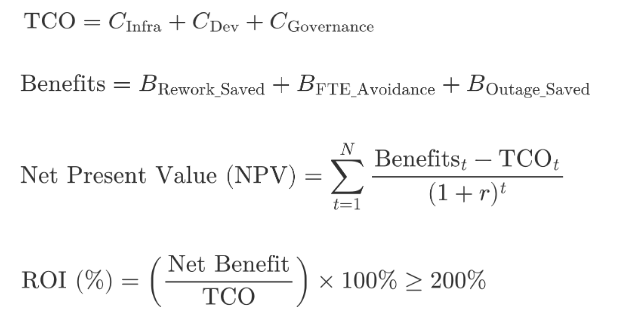
8. TEI (Total Economic Impact) Financial Feasibility Simulation Model

This is the Forrester TEI formula framework that demonstrates the financial value created by the system you will learn in this course:


Recommended for
these people

Who is this course right for?

  • After completing the course, learners will move beyond being mere prompt writers and advance into elite AI system architects who constrain nondeterministic AI with an impeccable runtime harness boasting a 0.000% syntax error rate and autonomous recovery infrastructure, enabling them to prove ROI to enterprises in financial terms. 1. Five Core Engineering Capabilities You Will Definitively Acquire **LLM-OS Virtual Memory Orchestration** You will be able to build a MemGPT-based, three-tier hierarchical virtual memory system (Core Working Context, Recall Storage, and Archival Storage), enabling memory eviction and recursive summarization paging control when token utilization reaches 70%/100% saturation during conversations and task execution. Based on MCP (Model Context Protocol) and CA-MCP/CE-MCP, you will be able to expand dynamic agent networks without context fragmentation between external tools and knowledge storage. **Deterministic Harness Control with a Guaranteed 0.000% Syntax Error Rate** By integrating the EBNF specification and XGrammar compiler with the vLLM serving engine, you will be able to force the JSON/API output syntax error rate to converge to \( P = 0.000\% \) through a byte-level pushdown automaton (PDA) and CUDA bitmask kernel. You will be able to control nondeterministic language model inference using an eight-stage finite-state machine (FSM) and a ReAct closed loop, thereby guaranteeing the integrity of system state transitions. **Hardware-Level Security-Isolated Sandboxing** To isolate scripts autonomously generated by AI agents from the host OS, you will be able to build AWS Firecracker MicroVMs (cgroup v2, seccomp-bpf, Jailer) and AF_VSOCK socket communication, enabling the operation of an ultra-low-latency code execution sandbox based on snapshot restoration within 5ms. **SagaLLM Distributed Transactions and Idempotent Self-Healing** When an agent calls multistep external APIs (payments, inventory, shipping, etc.), you will be able to manage Idempotency Keys through SagaExecutionCoordinator (SEC) and automatically initiate reverse-order compensating transactions when failures occur, preventing data orphans and corruption 100%. **OpenTelemetry Observability and Unattended Canary Rollback Operations** You will be able to build ultra-low-latency serving based on vLLM PagedAttention and a distributed tracing span network compliant with OpenTelemetry GenAI (gen_ai.*) / Langfuse standards. When a real-time decline in RAGAS Faithfulness (Data Drift) is detected, you will be able to autonomously execute a canary rollback by hot-swapping the prompt into Safe Mode without service interruption, while simultaneously sending a PagerDuty alert.

  • 2. Four Core Finished Portfolio Deliverables You Will Hold in Your Hands (Finished Deliverables) Rather than merely watching code, participants will own four fully completed core assets ready for real-world deployment and executive reporting: [Deliverable 1] MemGPT + XGrammar + Firecracker Integrated Runtime Control Loop System (Python / CUDA / MicroVM Codebase) Source code for an EBNF logit-masking compiler guaranteeing \( 0.000\% \) syntax errors, along with an FSM controller integrated with a 5ms Firecracker AF_VSOCK sandbox. [Deliverable 2] SagaLLM Distributed Transaction & OpenTelemetry/Langfuse Self-Recovery Pipeline Source code and a real-time Trace dashboard for the SagaCoordinator idempotent compensating rollback engine, automated canary hot-swapping based on RAGAS metric detection, and PagerDuty-integrated monitoring. [Deliverable 3] Five-Stage Comprehensive Debugging Verification Report (Full Debugging Log) A standard verification report progressing through Step 1 (Environment Setup) ==> Step 2 (Diagnosing Deceptive Baseline Trap Code) ==> Step 3 (Adversarial Deconstruction) ==> Step 4 (Robust Integrity Implementation & TEI ROI) ==> Step 5 (XAI & SOTIF/ISO 42001 Governance). [Deliverable 4] Forrester TEI (Total Economic Impact) Financial Feasibility Validation Model A financial report that quantitatively proves an ROI of 200% or more and the capital recovery period (Payback Period) by substituting the reduction in rework costs from avoiding syntax errors and the benefits of avoiding failures, relative to TCO (infrastructure/development costs), into mathematical discount-rate formulas.

Need to know before starting?

  • This course goes beyond simple prompt writing (Vibe Prompting) and is an advanced program for building an LLM-OS from the perspectives of mathematical first principles and computer systems engineering. However, it is systematically structured step by step so that anyone with basic Python programming knowledge can take it and grow into an enterprise AI systems architect. <Essential and Recommended Prerequisite Knowledge (Prerequisites)> Programming and Computer Science (CS) Python 3 Basics: An understanding of the basic syntax of Python programming, including variables, control flow, and basic function structure. Basic Data Structures and CS Concepts: A foundational grasp of tree/graph traversal (BFS, DFS), the concept of state transitions in finite-state machines (FSMs), and the asymptotic complexity (\mathcal{O}) of algorithms. PyTorch and Linux/Docker Basics (Optional): Basic experience with PyTorch tensor operations or Docker and the Linux CLI will be even more helpful for fully internalizing the hands-on exercises.

  • Mathematical Fundamentals Linear algebra: Basic concepts such as inner products of high-dimensional vectors (w · x), matrix multiplication, and the Euclidean norm (||x||). Calculus and probability/statistics: A basic understanding of partial derivatives, the Chain Rule, conditional probability, and entropy formulas. Note: There is no need to mechanically memorize the formulas. The geometric meaning of mappings between high-dimensional manifolds and cosine similarity will be explained through intuitive diagrams and board-style lectures, and complete, immediately runnable Jupyter notebooks along with five-step debugging logs will be provided, so you can follow along step by step.

Hello
This is khjyhy100

Career Verified

Hong-Jip Kim

"Based on over 40 years of experience in technology development and corporate management, I am now joining you, the readers, through knowledge sharing."

Introduction

I am a retiree who completed a 40-year career in major Korean conglomerates and mid-sized enterprises from January 1984 to May 2024. Out of my 40-year tenure, I served 18 years as an executive in the field of powertrain and propulsion system technology. During my final five years, I led overall corporate management as Vice President and CEO at a mid-sized company. While at Hyundai Motor Group, I achieved the remarkable feat of generating approximately 130 billion KRW in overseas technology transfer revenue through the development of proprietary technologies such as mid-sized gasoline engines, turbochargers, and AWD (All-Wheel Drive). I also have a track record of successfully executing numerous government-funded R&D projects. Currently, I have begun writing in earnest with the aim of sharing the valuable knowledge and experience gained in the field throughout my career. I ask for your interest and warm encouragement.

Major Career Highlights

● Hyundai Motor Group R&D (Hyundai Motor Company, Hyundai WIA) | 1984.1 ~ 2018.1

○ Served as a powertrain and propulsion systems engineer and executive (18 years)

○ Led the development of mid-sized gasoline engines, turbochargers, and AWD, and achieved revenue through overseas technology transfers

● INZI Controls Co., Ltd. | 2019.1 ~ 2024. 5.

○ Served as Vice President and CEO (last 5 years)

○ General Manager of Corporate Innovation Management I Director of R&D Center and led numerous government-funded R&D projects Education & Training

● Education: Graduated from Hanyang University, College of Engineering, Department of Mechanical Engineering (1984)

● Education & Training: Completed the KAIST AI Executive Program (Feb. 2025 – Jun. 2025)

Major Awards & Achievements

● Presidential Award: Jang Young-shil Award (Development of mid-sized gasoline engine, Ministry of Commerce, Industry and Energy, 2005)

● Selected as one of Korea's Top 100 Technologies and its Key Figures: (National Academy of Engineering of Korea, Ministry of Commerce, Industry and Energy, 2010)

● Academic Papers: Domestic and international expertise related to powertrains and propulsion systems in the field of automotive engineering

Presented 13 papers at technical societies

● Patent Performance: Filed and disclosed multiple job-related invention patents

Publications & Lectures

● Publication Guide: https://khjyhy.upaper.kr/new or the e-Book section of domestic bookstores

● MOOC Educational Video Lectures:

https://www.inflearn.com/users/1716175/@khjyhy100

● YouTube Channel : https://www.youtube.com/@KimHJ-m3b

● Web Address: Knowledge Sharing Hub: https://www.deepdivehub.co.kr

Communication Channels & Contact: Email Address: khjyhy100@gmail.com

● LinkedIn Address: https://www.linkedin.com/in/kimhongjip/

More

Curriculum

All

73 lectures

Course Materials:

Lecture resources
Published: 
Last updated: 

Reviews

Not enough reviews.
Please write a valuable review that helps everyone!

khjyhy100's other courses

Check out other courses by the instructor!

Similar courses

Explore other courses in the same field!

Limited time deal

$16,500.00

70%

$42.90