



Me too! I can do AI with Spring (Inflearn Part 1)
bitcocom
Developing AI Applications with Spring Boot and Spring AI: Mastering OpenAI for Real-World Solutions
Basic
Java, Spring, Spring Boot
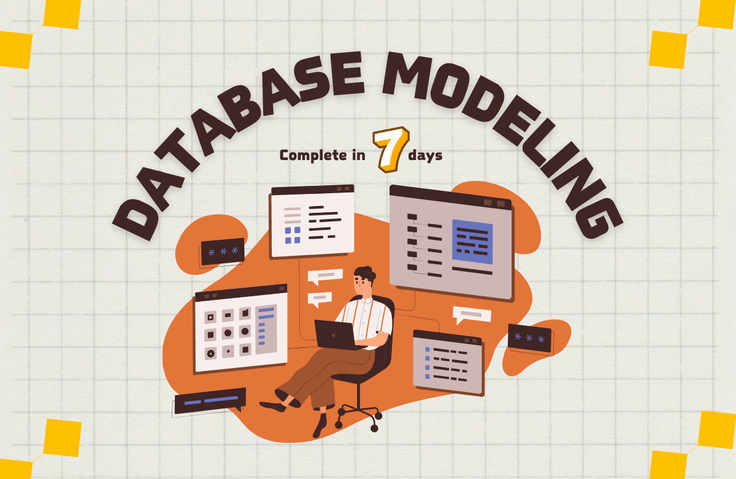
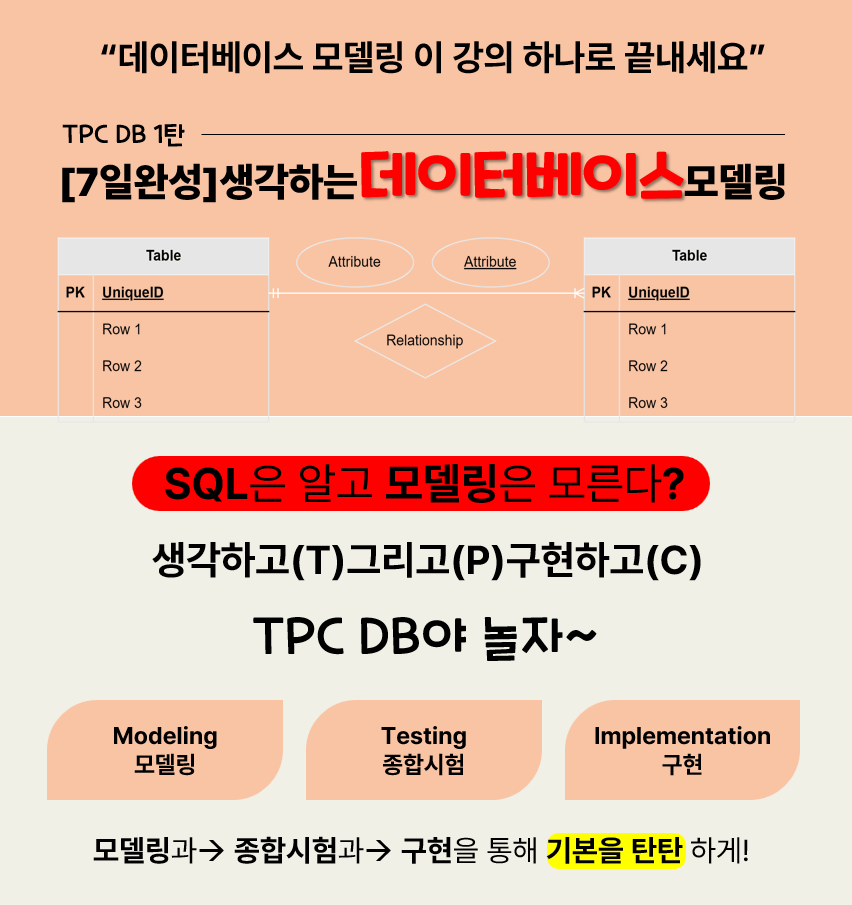
[TPC DB!] A course that allows you to learn database modeling while thinking, learn database modeling step by step, and master everything from database modeling to web programming implementation all at once.
583 learners
Level Basic
Course period Unlimited


Reviews from Early Learners
5.0
조준용
Perfect! I understood it very well. Thank you so much.
5.0
blueday
Thank you for your hard work.
5.0
yongtaek.lee
Thank you for the detailed explanation.
How to model a database and what the procedure is
Creating various outputs through modeling
How to use SQL statements (MySQL)
How to use modeled data in your programs
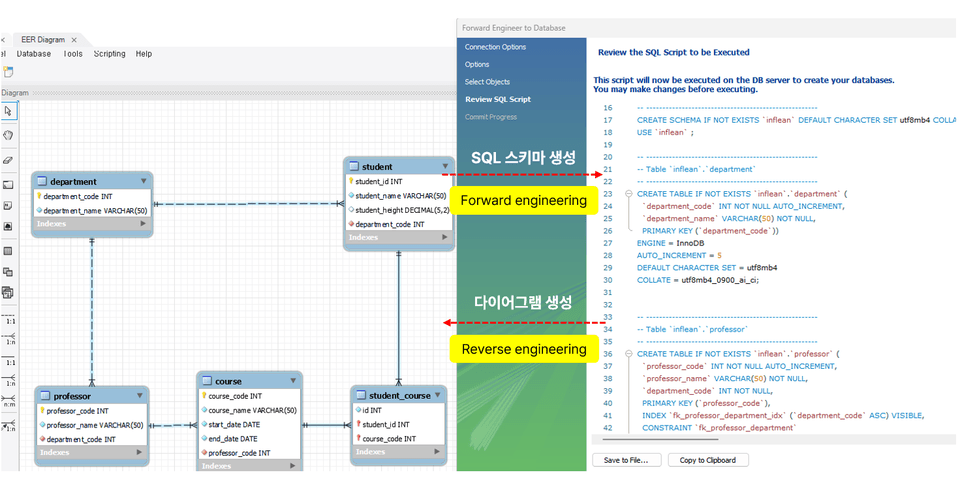
Reverse engineering, forward engineering
IntelliJ web development environment (Java, Tomcat)

Through this course, you can learn database modeling step by step and learn how to apply and utilize the models produced step by step to DBMS. You can test your individual learning ability through a comprehensive exam and learn the technologies used in database (modeling, SQL) and backend development through program implementation .
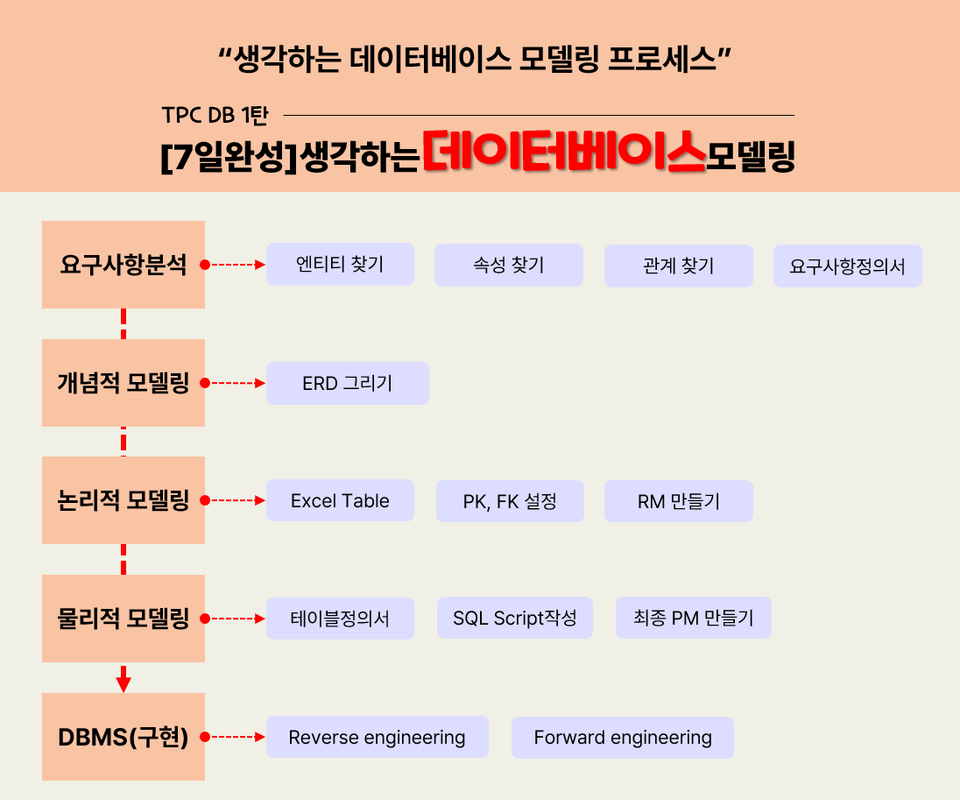
Thinking Database Modeling Process

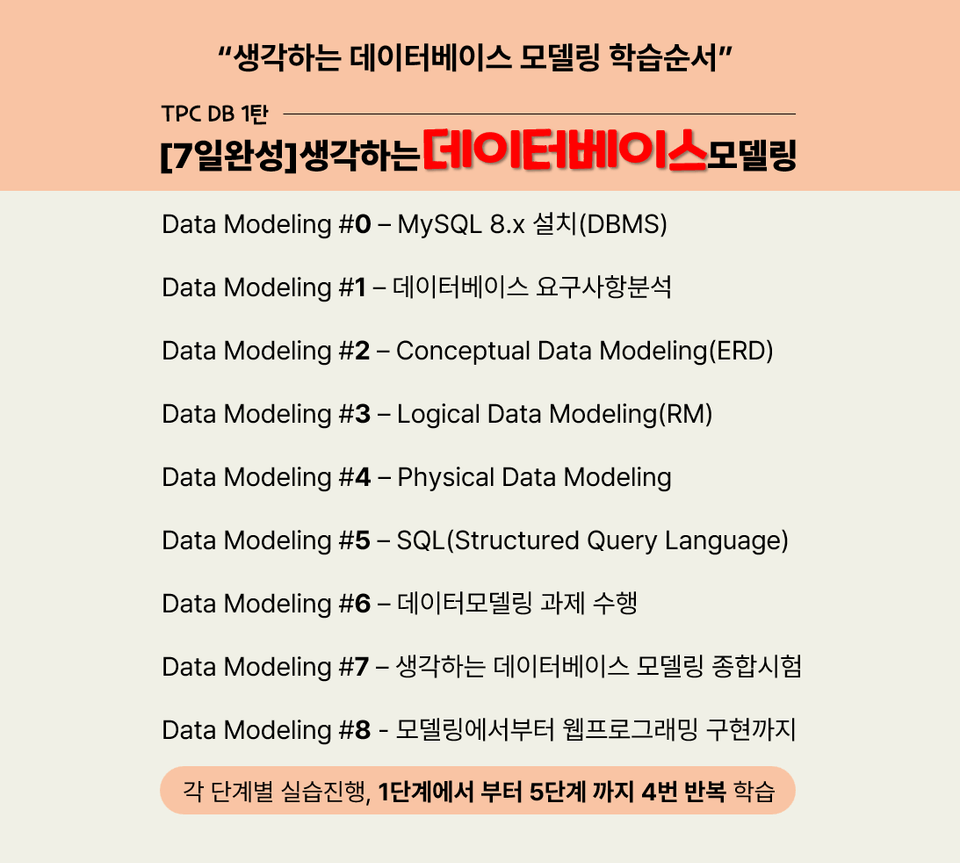
Thinking Database Modeling Learning Sequence


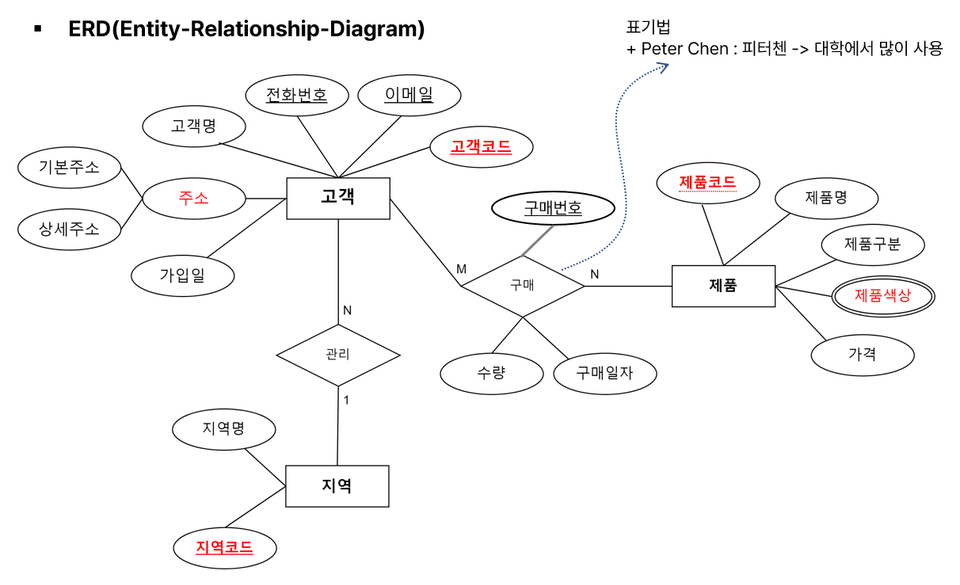
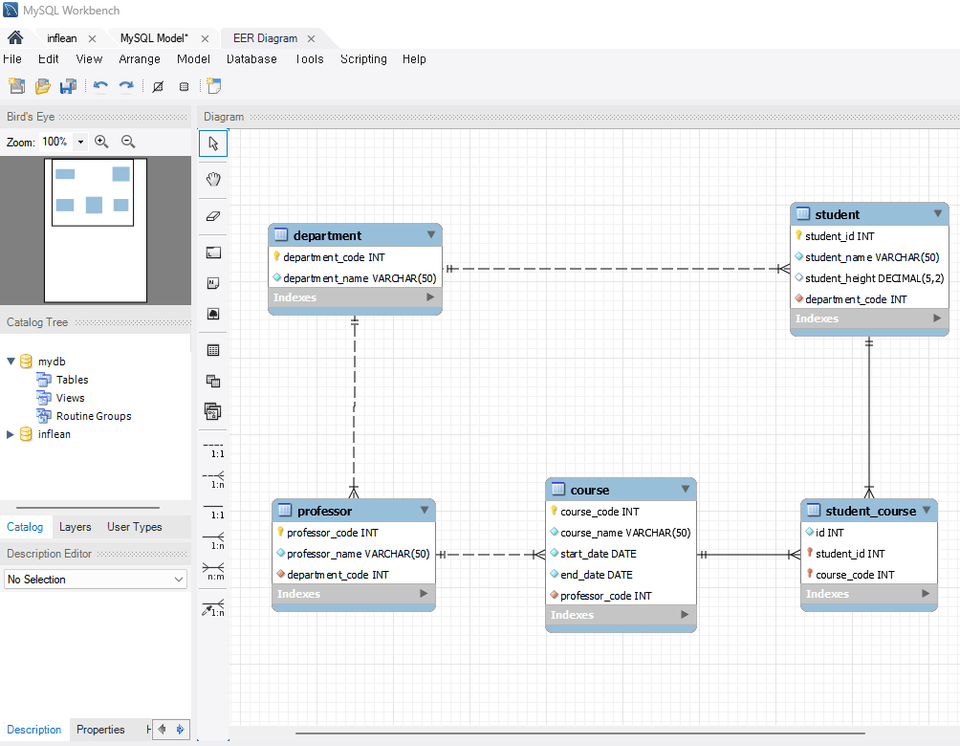
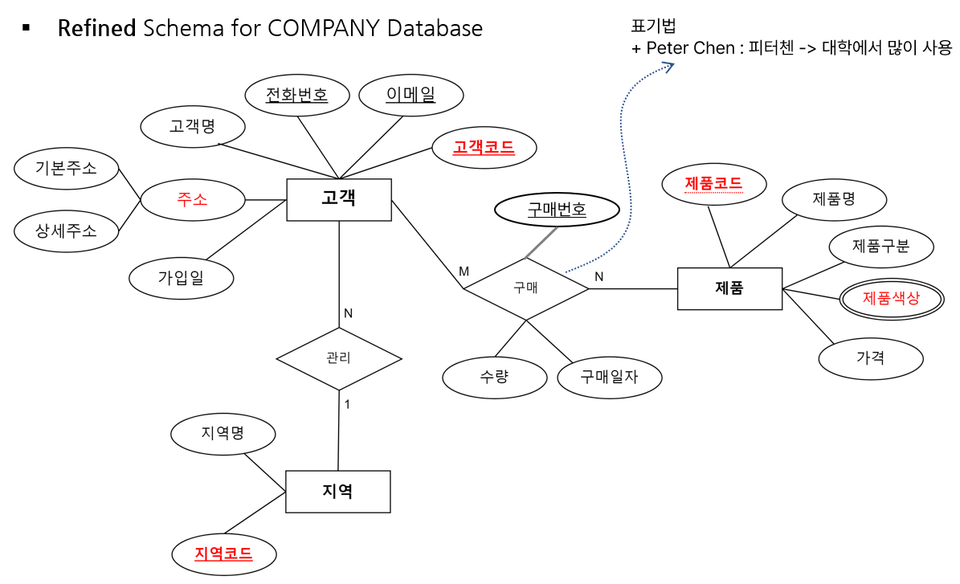
Outputs from conceptual modeling (ERD)

You can use the TOOL to create a model.

You can use data created through modeling.
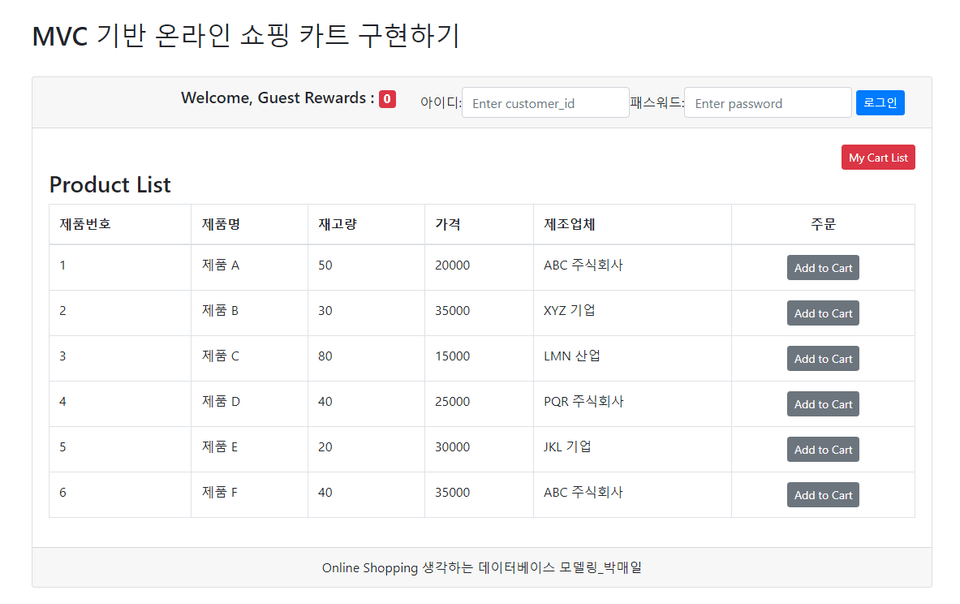
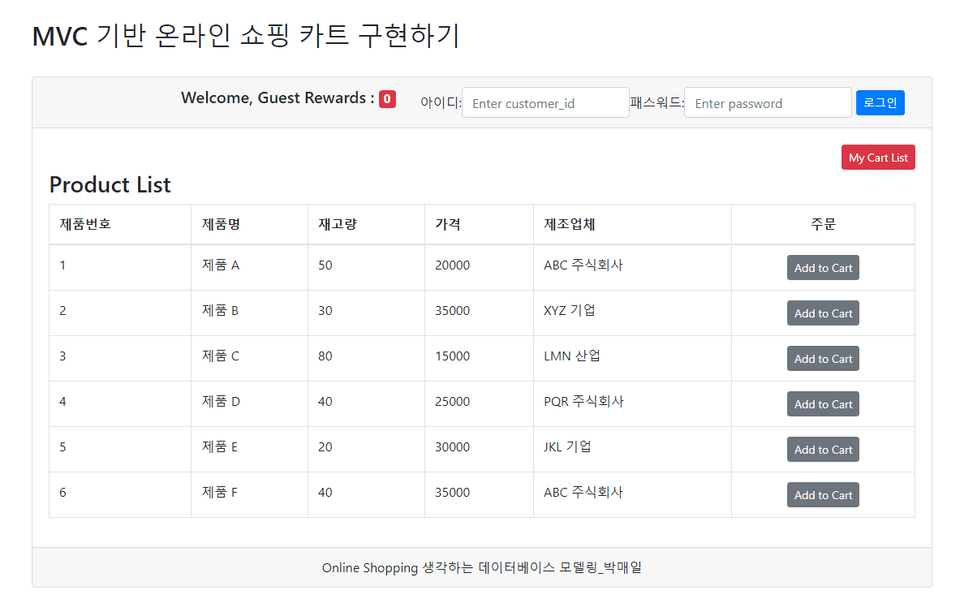
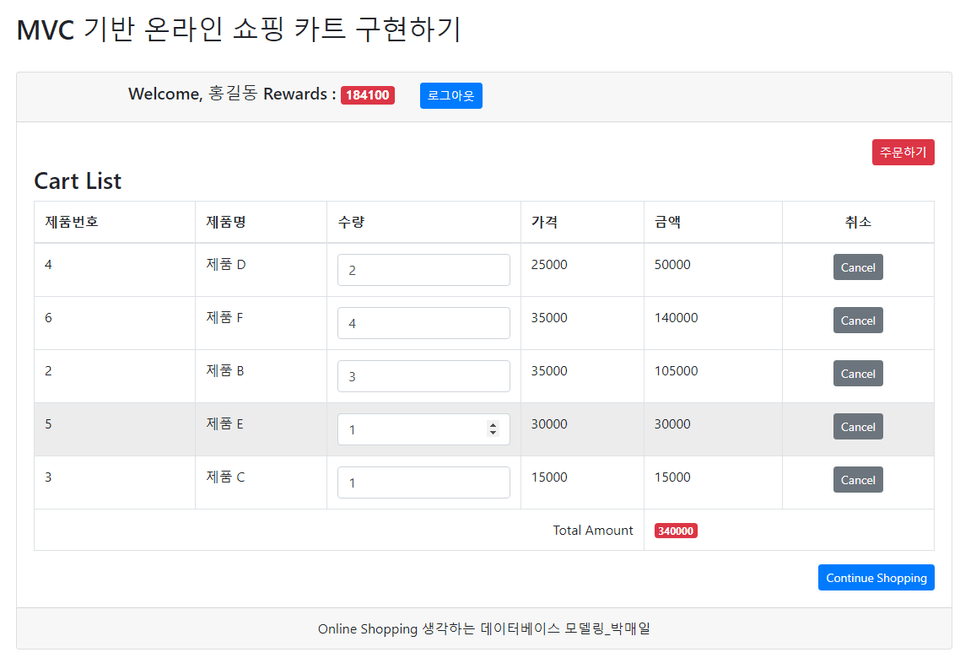
You can implement an MVC-based online shopping cart.

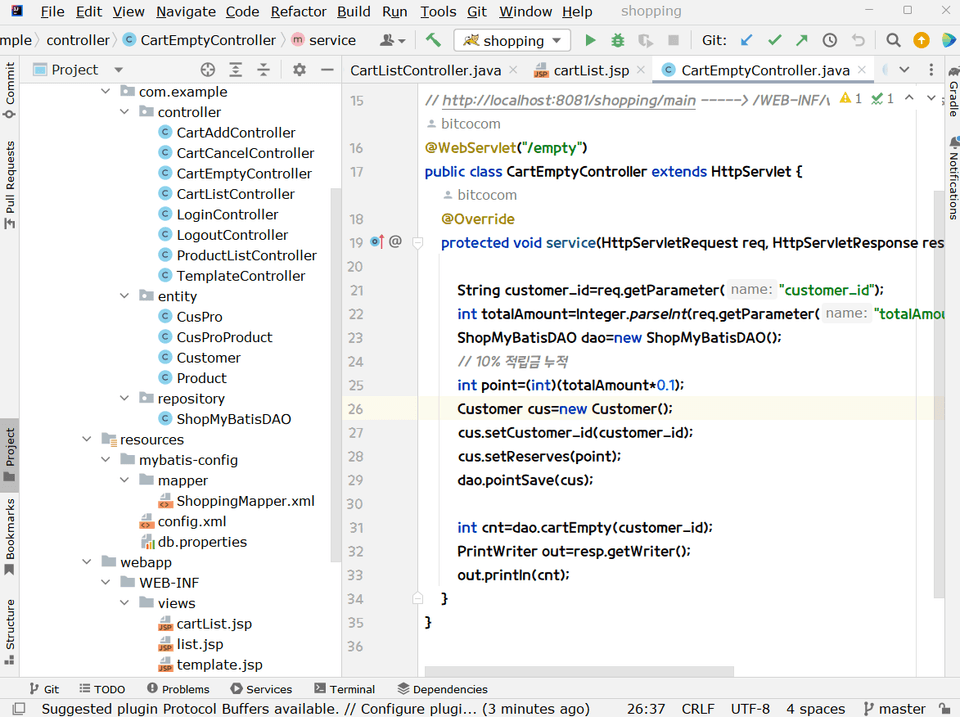
You can understand the IntelliJ-based Java web development environment.
After taking this course, you will be able to model databases, easily analyze SQL statements, and understand the overall structure of a database ( DBMS) .
You can develop practical skills through hands-on training, from database modeling to web programming implementation.
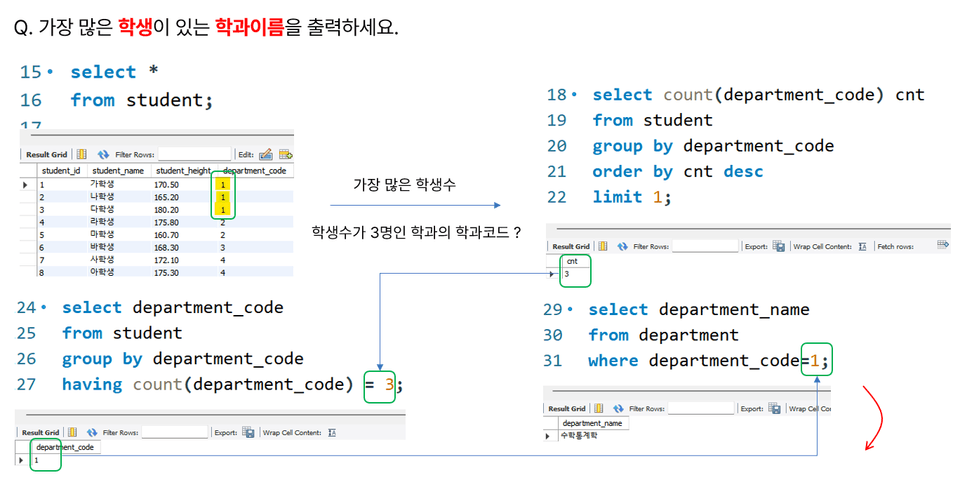
You can go beyond simple SQL statements to analyze SQL statements and use advanced SQL.
Database modeling improves program analysis capabilities and backend development capabilities.

0 -
Installing MySQL 8.x (DBMS)
1 -
Database Requirements Analysis
Understand the requirements and requirements of a database system.
2 -
Conceptual Data Modeling (ERD)
Create an entity-relationship diagram (ERD) to visualize the data structure.
3 -
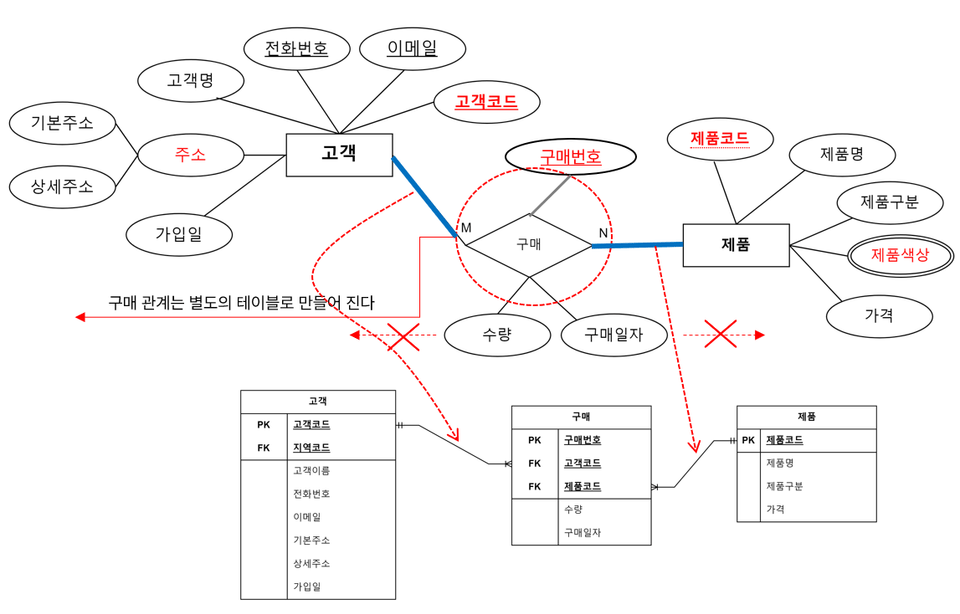
Logical Data Modeling (RM)
Develop a relational model that represents data relationships and constraints.
4 -
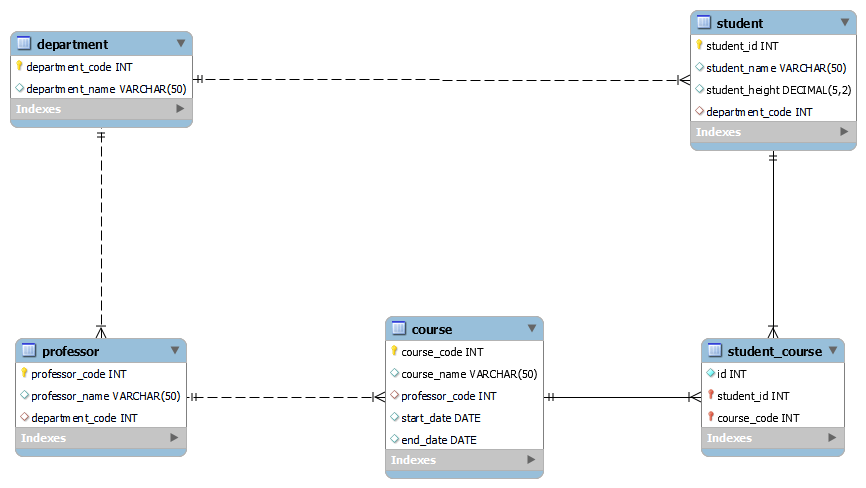
Physical Data Modeling (PM) Designing a practical database schema for a database management system.
5 -
Structured Query Language (SQL)
Learn SQL to interact with databases and perform CRUD operations.
6 -
Perform data modeling tasks
Practice implementing data modeling concepts using real-world scenarios .
7 -
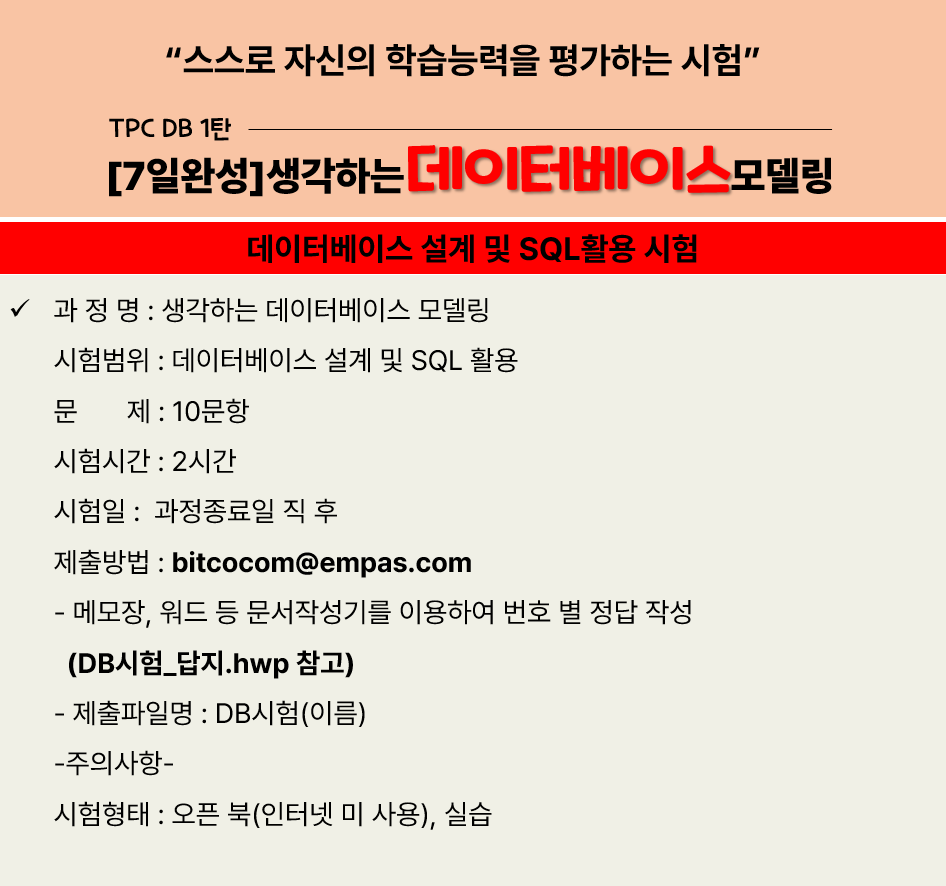
Thinking Database Modeling Comprehensive Exam
8 - Web Programming
From database modeling to web programming implementation.


(1) Requirements analysis
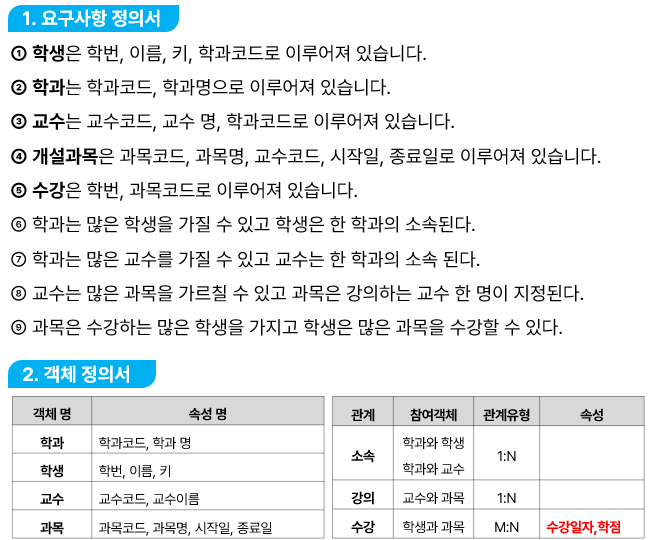
After analyzing the client's requirements, learn how to create a requirements definition document and object definition document (entities, attributes, relationships).
(2) Conceptual modeling
Learn the process of creating a model using a visual tool called ERD, which is derived from entities, attributes, and relationships through requirements.


(3) Logical modeling
Learn how to create a logical relational model (RM) structured in a table format using a model created through ERD.
(4) Physical modeling
Learn the process of creating a table definition (type, length, constraints, etc.) using a logical model and then creating a physical model by looking at the table definition.


(5) Generate SQL script
Create a table in the database by creating a SQL schema using forward engineering using the created physical model.
(6) SQL practice
Learn SQL to interact with databases, query data, and perform CRUD operations.


(7) Comprehensive database modeling exam
A comprehensive exam designed to test your understanding and application of database modeling concepts.
(8) From modeling to web programming
From database modeling to web programming implementation. IntelliJ IDEA Community Edition, Tomcat 9, MVC Framework.


Operating System and Version (OS): Window
Tools used: MySQL 8.x, Workbench 8, IntelliJ IDEA Community Edition,
JDK 11 or higher,
Tomcat 9,
Servlet, JSP,
MyBatis 3.x,
Bootstrap 4.x,
MVC Framework
To learn the MVC-based online shopping cart web programming implementation, you need to know the basic concepts of Java, Servlet, JSP, and MyBatis .
Lecture notes provided in PDF format, 135 pages
Web practice source code available on GitHub
Files required during the lecture are attached separately to the video.
Lecture: 02_Thinking Database Modeling_Table of Contents (Lecture materials, GitHub link attached)
Who is this course right for?
Database beginner
Beginner to programming (coding)
People interested in database modeling
People who want to learn SQL statements
People who need to understand the IntelliJ web development environment
Need to know before starting?
DB modeling part (SQL basics)
Web programming part (understanding Java, Servlet, JSP, MVC)
Inflearn Verified
Career Verified
8,793
Learners
675
Reviews
670
Answers
4.9
Rating
14
Courses
Hello, I am instructor Park Mae-il.
I run an SW education center and provide consulting and commissioned SW training for universities, government offices, and corporations.
📄 Major teaching experience and many others
- Goorm Specialized High School Major Camp Lectures (Full Stack Course)
- Software Meister High School Industry-Academic Cooperation Teacher
- Gwangju Artificial Intelligence Academy Lectures
- Fast Campus Backend Bootcamp Lectures
- Smart Human Resources Development Center Education Director and Lecturer
- Korea Electric Power Corporation (KEPCO) In-House Coding Entrusted Education
- Hanyang University ERICA Online Lectures
- Bit Software Education Center Operation (Overseas Employment, Government-funded Education)
- SW Recruitment Training Project (Ministry of Science, ICT and Future Planning)
- Vocational Skills Development Training Teacher for AI, IT Development, etc.
* Education Inquiries and Partnerships (KakaoTalk Channel)
* Ongoing Lectures: https://itscoding.kr
🎤 Online Educational Content Provider
Inflearn: Java, DB, MVC, Spring, Spring AI & Agent, IoT
Fast Campus: Java, Spring Boot
email : bitcocom@empas.com
All
47 lectures ∙ (17hr 17min)
Course Materials:
All
31 reviews
4.7
31 reviews
Reviews 1
∙
Average Rating 5.0
5
Thank you for the detailed explanation.
I hope the detailed explanation was helpful. Good luck until the end. Thank you!
Reviews 1
∙
Average Rating 5.0
5
Perfect! I understood it very well. Thank you so much.
I'm glad you understood it well. Fighting to complete it all the way to the end. Thank you~~
Reviews 3
∙
Average Rating 5.0
Reviews 11
∙
Average Rating 4.9
Reviews 92
∙
Average Rating 4.4
1
1. There was a lot of coughing during the lecture. I hope you pay more attention to your health, such as coughing. Don't you think that students prioritize their health over your lecture? 2. I felt that the explanation was too roundabout and loose. For example, if the = of the where clause returns more than two results, the single row subquery returned more than two rows. I wish you had pointed out the error accurately, but you said that it would be better to use the in clause. 3. Since it is a modeling lecture, I hope you make the criteria for naming tables and determining columns more clear, and that it is a lecture that allows you to think about more complex situations that are used in practice. For example, it is clearly a DB table, but 't_' is added for no reason, or it is a college student's academic management system, but key information is included (does a key really need to be included when it is college student information) If the instructor's criteria for determining the table name were clear, I think the listeners would have thought, "Oh, this instructor made this choice based on this criteria." 4. If it is database modeling, why do we need to do modeling, why do we set these columns in practice instead of "This is how it is in practice," and if we had a detailed explanation of the column size based on A and the column type based on B, and what service and environment it is modeling for, it would have given the students more room to think about problem solving, so I hoped for more skill improvement. - Still, I listened carefully, thinking that I was learning a major class again, since it was taught from a beginner's perspective on database modeling. - It was also good that you taught us the solution approach when solving SQL problems. - I also enjoyed learning about the commerce domain examples. Thank you for the great lecture.
Thank you for your honest answer. I think I had a sore throat while recording. ~ Thank you even more for taking care of my health. I will try to give a more detailed explanation from the perspective of the student.
Check out other courses by the instructor!
Explore other courses in the same field!