강의

멘토링

커뮤니티

NEW
AI Technology

/

AI Agent Development

[Spring AI in Action] Building Your Own 24/7 Code Reviewer & Auto-Grading Agent

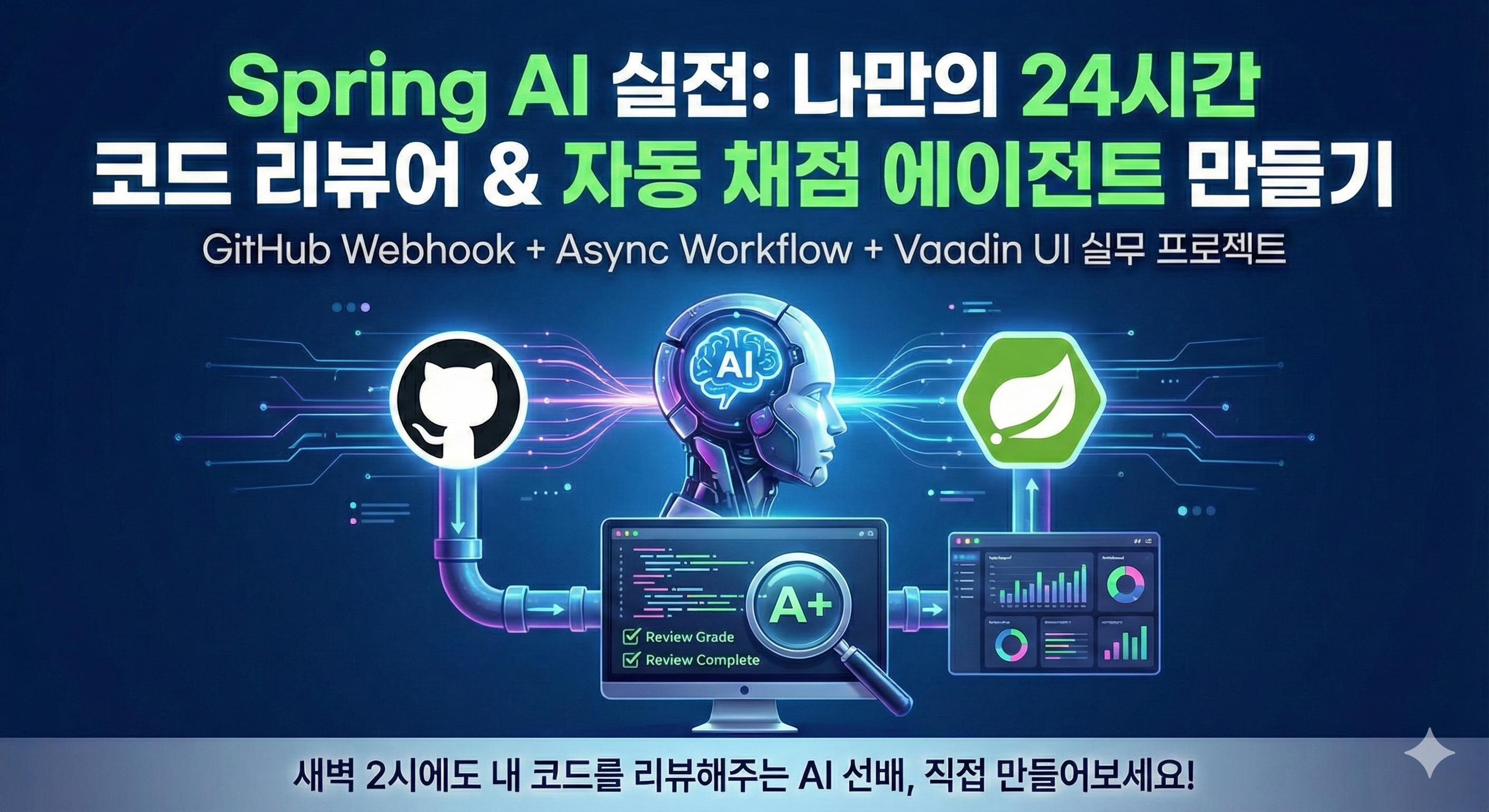
An AI system that grades and reviews your code in 5 seconds - imagination becomes reality. This course is an all-in-one project that builds a **'GitHub PR Automatic Analysis and Grading Bot'** using Spring AI. When a student submits an assignment (Pull Request), the server detects it and AI analyzes the code changes (Diff). The grading results are then stored in the database, feedback is automatically posted as GitHub comments, and students can check their results on a dedicated dashboard. From backend to AI integration and frontend (Vaadin) - all with Java! This is the ultimate introductory guide for all developers who want to complete their own AI service from A to Z.

11 learners are taking this course

Level Basic

Course period Unlimited

  • bitcocom
Agent
Agent
AI
AI
backend
backend
SpringBoot
SpringBoot
multi-agent
multi-agent
Java
Java
AI Agent
AI Agent
Spring AI
Spring AI
Agent
Agent
AI
AI
backend
backend
SpringBoot
SpringBoot
multi-agent
multi-agent
Java
Java
AI Agent
AI Agent
Spring AI
Spring AI

What you will gain after the course

  • Handling Webhooks: Building a Server to Detect GitHub Events in Real-Time

  • Spring AI Prompt Engineering: Persona Configuration and Precise JSON Output Control

  • Asynchronous Performance Optimization: Designing a Parallel Workflow for Simultaneous Grading and Review

  • Data Visualization: Implementing a Real-time Score Dashboard with Vaadin

"Leave repetitive code grading and reviews
to Spring AI now."

Your Own AI Code Reviewer
Automatic GitHub PR Analysis and Grading

Complete a 24/7 Code Review Agent with Spring AI!

With just Java, detect GitHub PRs (Pull Requests) and have AI analyze and grade the code.
From student assignment submissions to DB storage, GitHub comment feedback, and dashboard verification
Build practical system architecture design capabilities through the experience of building an AI-based code review system.

🎬 [Scenario] 24/7 Coding Classroom with AI Teaching Assistant

1. 📢 Assignment Creation (Professor)

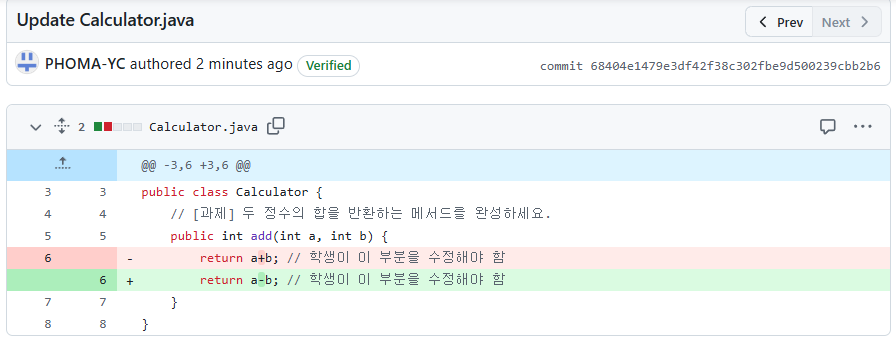
The professor writes skeleton code for a Java assignment (Calculator.java) that students need to complete and uploads it to the GitHub repository (main branch).

"Alright, this week's assignment is to complete a calculator that finds the sum of two numbers. Variable names must be clear, and there should be no unnecessary code to get a perfect score!"

2. 👨‍💻 Working on the Assignment (Student)

The student brings the professor's repository to their own space (Sync Fork), creates a new branch (homework-1), and solves the problem.

"Hmm, a + bI just need to return that, right? All done! Time to submit it to the professor for review." The student creates a Pull Request (PR) to submit the assignment.

3. 🤖 AI Agent Activation (System)

The moment the student clicks the "Create PR" button (Click), the dormant Spring Boot server detects GitHub's signal (Webhook) and wakes up.

  • Step 1 (Analysis): The server extracts only the code changes (Diff) made by the student and passes them to the AI agent.

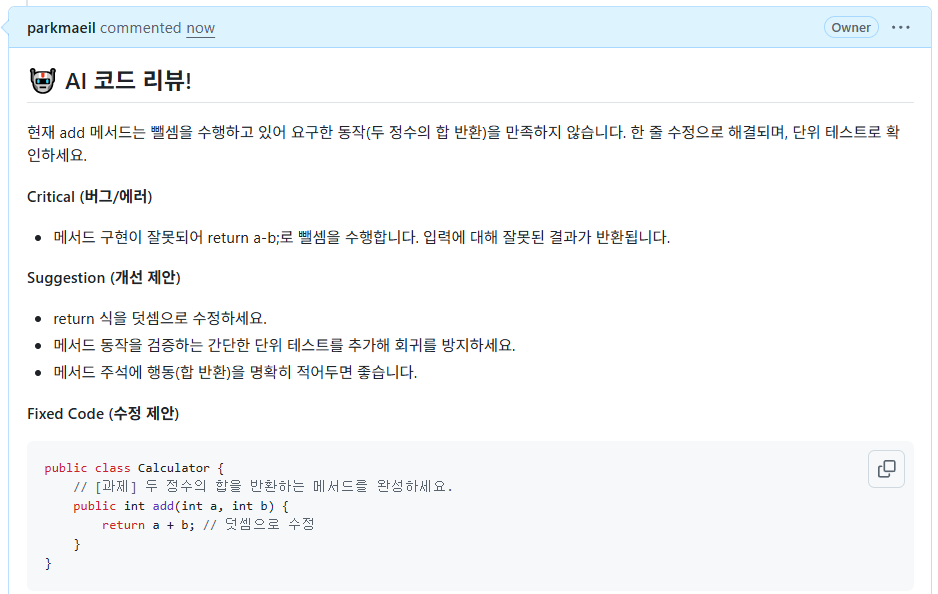
  • Step 2 (Grading): "Hmm, the functionality is correct, but the temp variable is unnecessary. The score is 90 points!" The AI grades rigorously according to its pre-trained persona.

  • Step 3 (Save): The grading result (90 points) and feedback content are securely stored in the database (DB).

  • Step 4 (Feedback): At the same time, the AI leaves a comment on the student's PR. "The functionality is perfect! However, unnecessary variable declarations can waste memory."

4. 📊 Check Results (Student)

The student receives a notification just 5 seconds after submitting the PR.

"The grading is already done?"

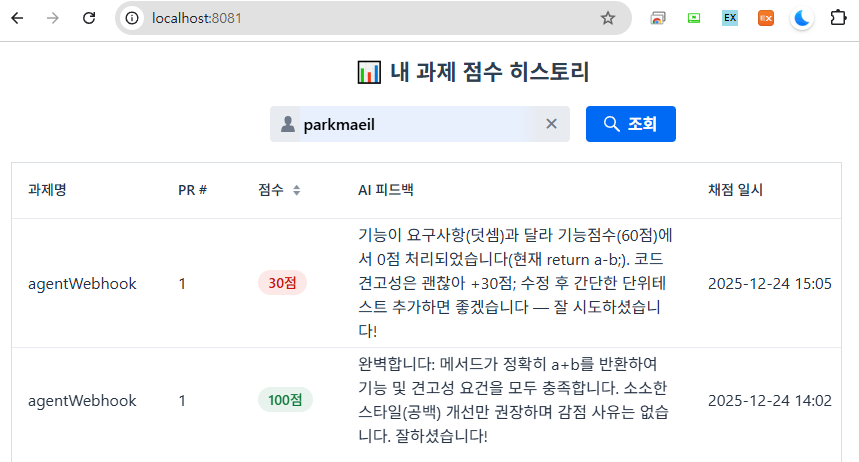
The student accesses a dedicated dashboard (web page) and enters their GitHub ID. The screen displays the score (90 points) of the assignment they just submitted and the AI's feedback, neatly organized in tables and badges.

Spring AI in Action is
a process of building your own AI Code Review & Grading Agent.

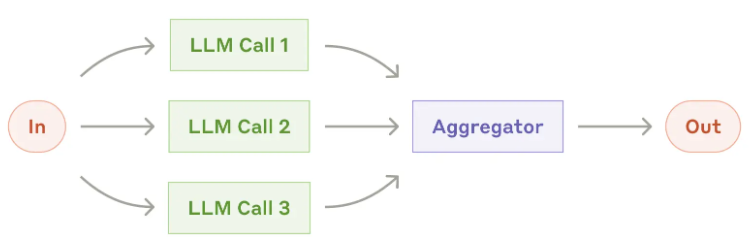
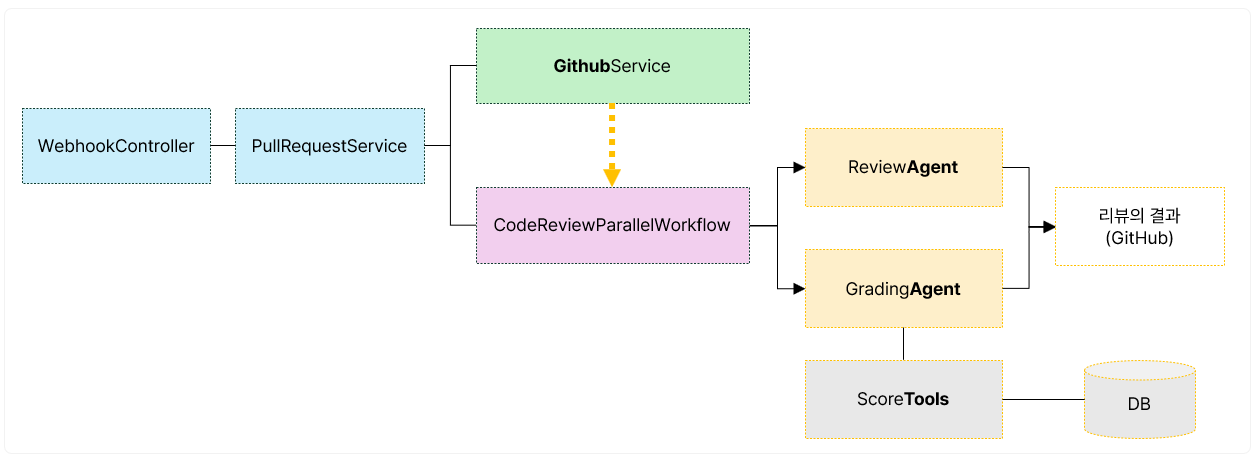
Agentic Systems(Parallelization Workflow)

LLMs can process multiple tasks simultaneously and aggregate the results programmatically.

Based on Spring AI, Spring Boot, and Java, you'll gain real service development experience including GitHub Webhooks, AI prompt engineering, asynchronous processing, and dashboard implementation using Vaadin..

Dashboard Implementation Using Vaadin

Beyond simple lectures, build a practical AI code review system from start to finish that detects student assignment submissions, analyzes and grades code with AI, and automatically posts feedback to GitHub.

AI Automated Code Review

GitHub API integration, AI agent design, parallel workflow implementation, MySQL data storage, Vaadin-based dashboard development, and GitHub Webhooks integration—strengthen your full-stack development capabilities.

AI Agent Design, Parallel Workflow Implementation

GitHub Webhook Detection

AI Automated Grading

Break free from repetitive code grading and review tasks,
Take your AI development skills to the next level.

Section 1 - Project Overview and AI Agent Introduction

This section introduces the overall overview of a project that creates your own 24/7 code reviewer and automatic grading agent using Spring AI. It explains the basic concepts of AI agents, how to build agents using only Spring Boot-based backend Java technology, and the necessity of code review and grading automation.

Section 2 - Development Environment Setup and External Integration

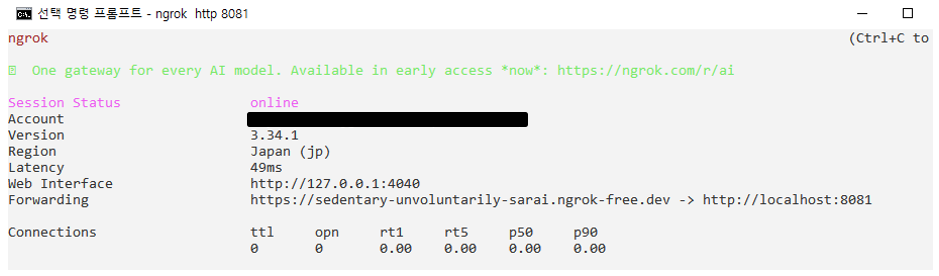
This section covers the essential steps for setting up the practice environment. You will learn how to configure external access using ngrok, issue a GitHub Personal Access Token, and register GitHub Webhooks. Additionally, the integration process is verified through GitHub assignment distribution and practical simulation from both instructor and student perspectives.

Section 3 - Project Creation and Webhook Integration Testing

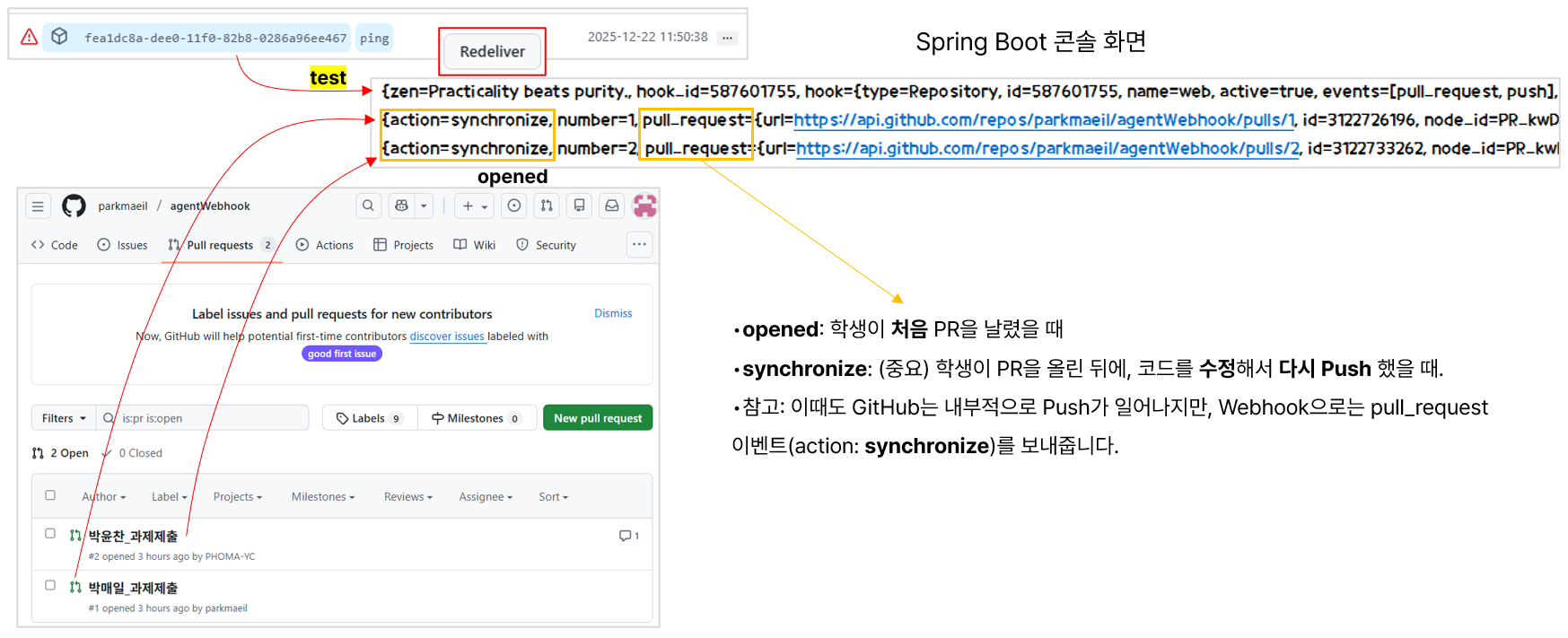
Create a Spring Boot project and perform initial environment setup. Implement a controller to receive GitHub Webhook events, and verify the integration status by performing Webhook tests for 'opened' and 'synchronized' events when Pull Requests occur.

Section 4 - Core Business Domain Design

Design and implement the domain layer for the project's core business logic. Establish the foundation for data management by defining the domain layer including Entities and DTOs, and the Repository layer for data access.

Section 5 - GitHub API Integration and Tool Implementation

Prepare RestClient configuration for communication with the GitHub API, and implement functionality to fetch changed code (Diff) from Pull Requests and post review comments on Pull Requests. Develop Tools that AI agents can invoke to strengthen integration with external systems.

Section 6 - Implementing Agents Based on Spring AI

We will develop core agents using the Spring AI framework. We will theoretically explain the ReviewAgent responsible for code reviews and the GradingAgent that performs grading logic, and implement them with actual code to complete the AI agent operations.

Section 7 - Implementing Parallel Processing and Integrated Service Logic

To enhance the efficiency of AI agents, we design and implement parallel workflows. We apply asynchronous logic to process review and grading tasks simultaneously, and develop a PullRequestService that manages them in an integrated manner to complete the overall business flow.

Section 8 - Implementing Web Controllers and Data Visualization

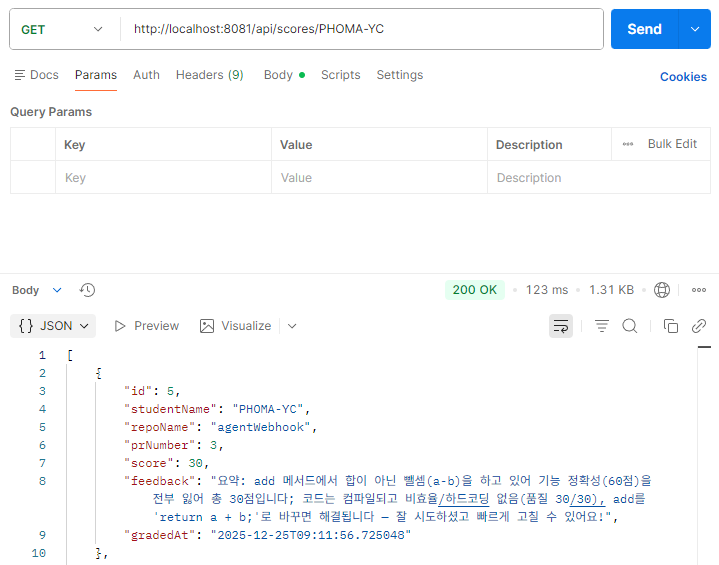
We develop web controllers to expose the implemented service logic externally. We implement controllers for webhooks and grading verification, and provide a visualized view using the Vaadin framework where students' grading results can be checked.

Section 9 - Project Extension and Wrap-up

Explore additional expansion possibilities for the developed AI agent and wrap up the project. Provide guidance on all materials and source code used in the course, and comprehensively summarize the learning content.

The journey to create your own AI code reviewer,
This course was made for people just like you.

✔️ Java developers who want to experience AI agent development based on Spring AI

  • Those who want to build AI services in a Spring Boot environment without Python

  • Those who want to build an agent that automatically analyzes and grades GitHub Pull Requests

  • Those who want to apply AI prompt engineering and tool utilization techniques to real-world projects

✔️ Job seekers who want to create a differentiated backend portfolio

  • Those who need project experience that goes beyond simple CRUD development and includes system architecture and asynchronous processing

  • Those who want to develop full-stack capabilities from AI agent development to dashboard implementation using Vaadin

  • Those who want to gain experience building GitHub integration and automation systems that can be immediately applied in real-world work

✔️ Developers and educators who want to increase productivity through automation of code review and assignment grading tasks

  • Those who want to solve the burden of repetitive code reviews with AI agents

  • Those who want to design automated workflows such as saving grading results to DB and automatic feedback via GitHub comments

  • Those who want to efficiently manage grading status through a real-time dashboard based on Vaadin

Things to Note Before Enrollment

Practice Environment

  • IDE: IntelliJ IDEA Community Edition.

  • Language: Java 17 or 21.

  • Framework: Spring Boot 3.5.8 (Latest Stable).

  • Library: Spring AI 1.1.2 (or 1.1.0 Snapshot).

  • Database: MySQL8

  • AI Model: OpenAI (gpt-4o-mini or gpt-5-mini).


Prerequisites and Important Notes

  • Java web development experience is required.

  • You need to understand the basic concepts of Spring Boot.

  • If you have experience using GitHub, it will be helpful for learning.

Learning Materials

  • Lecture slide PDF files are provided.

  • All source code needed for the exercises will be provided.

  • Please refer to related materials such as GitHub Webhook and Spring AI official documentation.

  • Learning materials are provided in Lecture 30 at the end of the video course.


✏Questions & Inquiries

If there are any parts you don't understand while studying, please feel free to ask right away through the Q&A board or 1:1 open chat room

👩‍🎓Spring AI Practical (1:1 Open Chat) : https://open.kakao.com/o/sXXxSI5h

Recommended for
these people

Who is this course right for?

  • Java developers who want to adopt AI but find Python unfamiliar and want to implement AI services within the existing Spring ecosystem

  • Job seekers tired of building simple CRUD bulletin boards who need a differentiated portfolio that incorporates 'system architecture' and 'asynchronous processing'

  • Team leaders and educators who want to maximize productivity by automating repetitive code review and assignment grading tasks

  • A full-stack oriented developer who wants to quickly implement not only backend logic but also data visualization (dashboards) independently

Need to know before starting?

  • Basic knowledge of the Java programming language is required.

  • It would be good to have a basic understanding of the Spring Boot framework.

  • It would be helpful to have basic knowledge of databases and SQL.

Hello
This is

8,284

Learners

638

Reviews

665

Answers

4.9

Rating

13

Courses

안녕하세요 박매일 강사입니다.
SW교육센터를 운영중이며 대학, 관공서, 기업체에 컨설팅 및 SW위탁교육을 진행하고 있습니다.


📄 주요 강의경력외 다수

- 구름 특성화고 전공캠프 강의(Full Stack 과정)
- 소프트웨어마이스터고등학교 산학협력교사
- 광주인공지능사관학교 강의
- 패스트캠퍼스 백엔드 부트캠프 강의
- 스마트인재개발원 교육부장 및 강의
- 한국전력공사 In-House 코딩 위탁 교육
- 한양대학교 ERICA 온라인 강의
- 비트소프트웨어교육센터운영(해외취업,국비교육)
- SW채용연수사업(미래창조과학부)

🎤 온라인 교육콘텐츠 제공

인프런 : Java,DB,MVC,Spring,Spring AI,IoT
패스트캠퍼스 : Java, Spring Boot

email : bitcocom@empas.com

Curriculum

All

30 lectures ∙ (7hr 14min)

Course Materials:

Lecture resources
Published: 
Last updated: 

Reviews

Not enough reviews.
Please write a valuable review that helps everyone!

Limited time deal

$11,000.00

50%

$17.60

bitcocom's other courses

Check out other courses by the instructor!

Similar courses

Explore other courses in the same field!