10-Week Completion C++ Coding Test | Algorithm Coding Test
kundol

The best coding test lecture that helped students pass Naver, Kakao, and Samsung coding tests in just 10 weeks!

Basic
Coding Test, C++

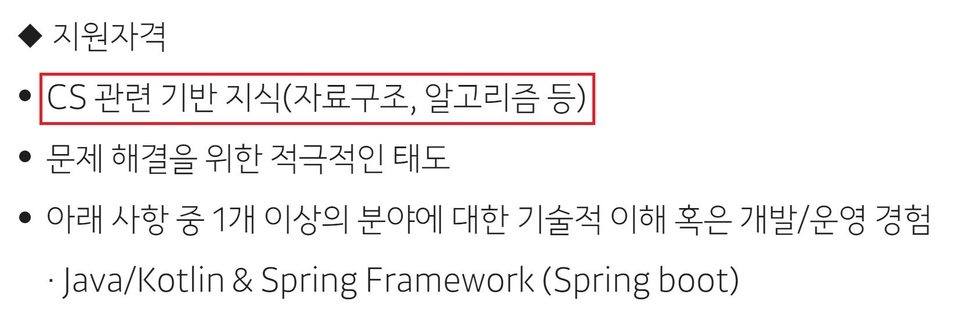
[From an actual Kakao internship job posting]
CS knowledge refers to design patterns, networks, operating systems, databases, and data structures. The problem was that studying these through academic textbooks was overwhelming due to the sheer volume, while studying through the internet often led to confusion due to incorrect information.

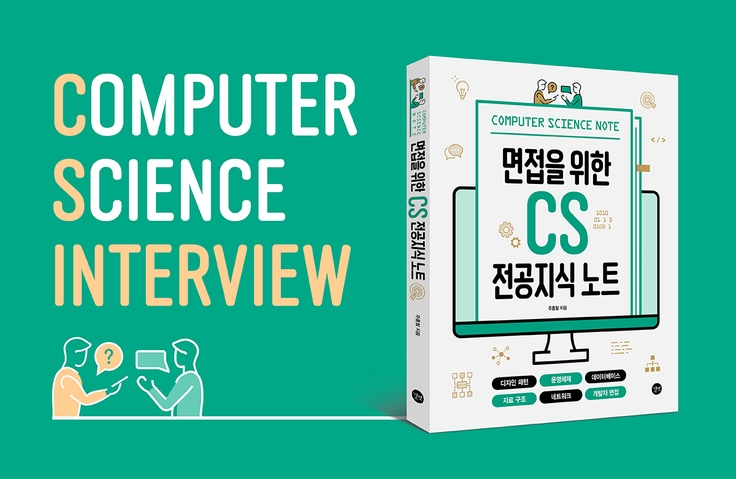
To solve these problems, I wrote a book called "CS Knowledge Notes for Interviews" and created a course that covers all CS knowledge at once based on the content of this book and important topics not included in the book.
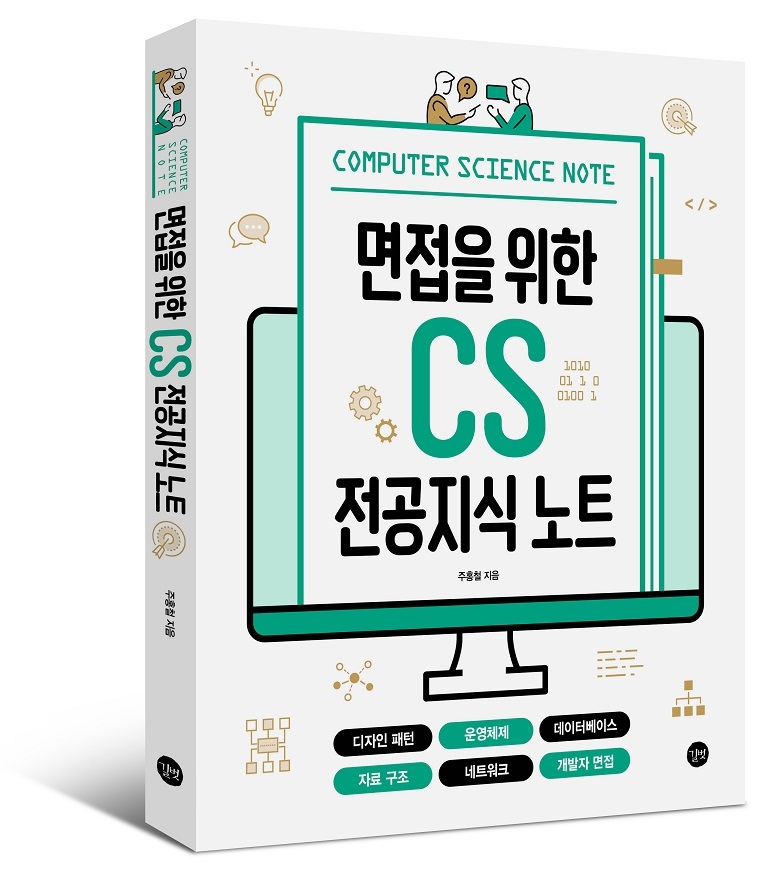

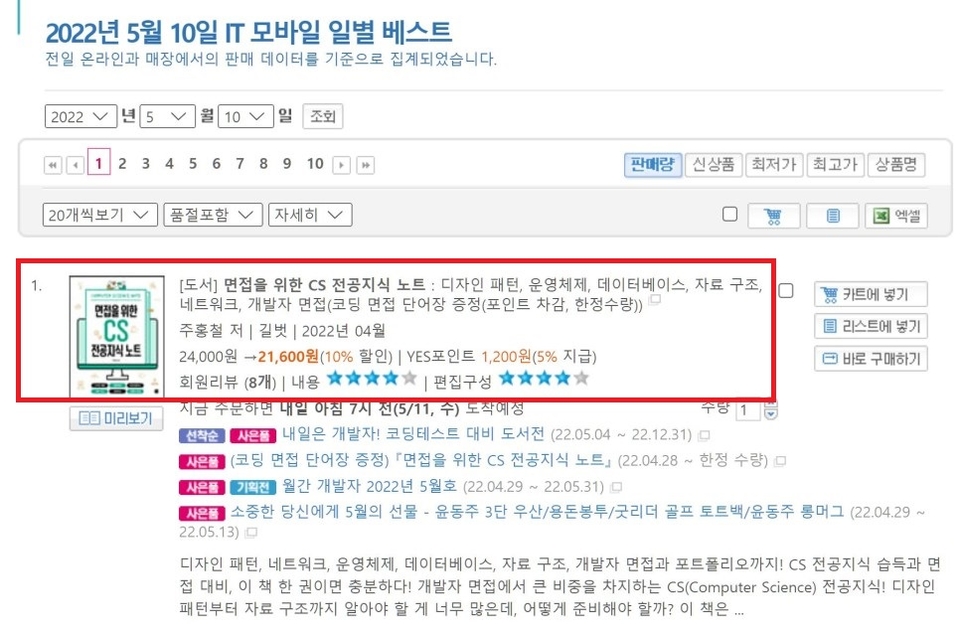

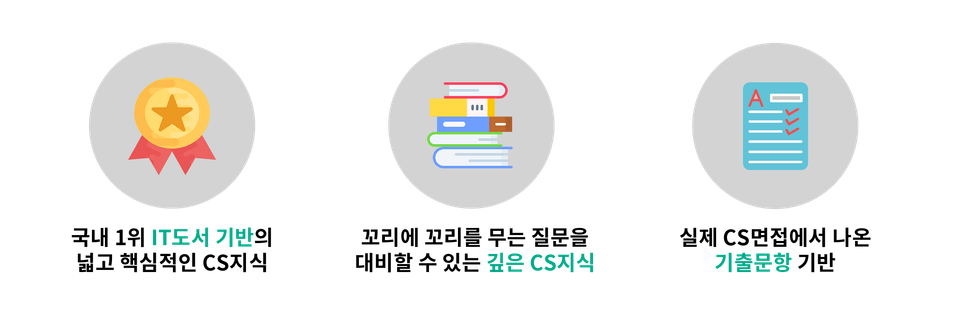
This course contains the essential CS knowledge from the nation's #1 highest quality CS knowledge book, "CS Fundamentals for Interviews," as well as core CS knowledge not included in the book, in-depth CS knowledge to prepare for follow-up questions that lead to more questions, and knowledge to prepare for actual interview questions derived from the real interview experiences of the author, readers, and students.

The image shows how to explain solutions for server overload caused by large-scale traffic through DEEP DIVE content, which was an actual interview question.
I want to complete everything related to "CS knowledge" with just this one course. I'm sorry, but you cannot prepare 100% for CS interviews by only studying past questions. I don't just study past questions, but the core fundamental concepts of CS, and even deep knowledge to prepare for questions that lead to more questions. I want to say that this is the right way to study CS knowledge.
Starting from essential developer knowledge to databases, operating systems, and interview tips, we provide a total of 500 pages of teaching materials that incorporate all the essential elements of CS knowledge. Through this, we've worked hard to ensure that this single course can cover the overall content of CS knowledge.
The content of the lesson plan is as follows.
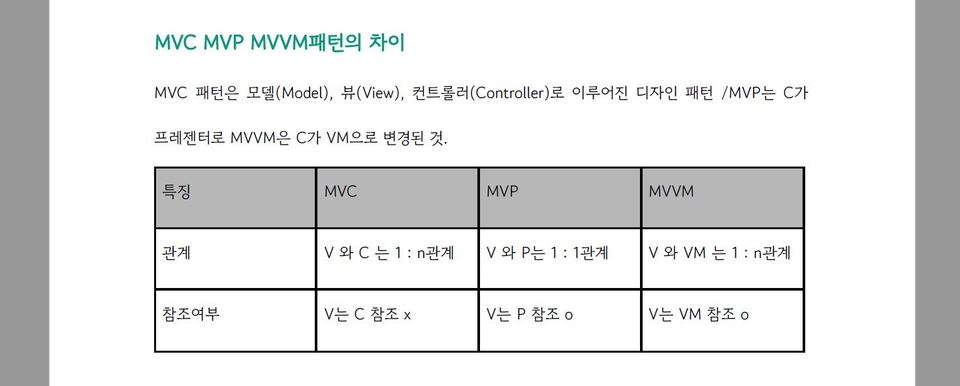
# Differences Frequently Asked in Interviews - Organized in Clean Tables ## 1. == vs === | Aspect | == (Loose Equality) | === (Strict Equality) | |--------|---------------------|----------------------| | Type Conversion | Performs type coercion | No type coercion | | Comparison | Compares values after converting types | Compares both value and type | | Example | `'5' == 5` → true | `'5' === 5` → false | | Recommended Use | Generally avoid | Recommended for most cases | ## 2. null vs undefined |
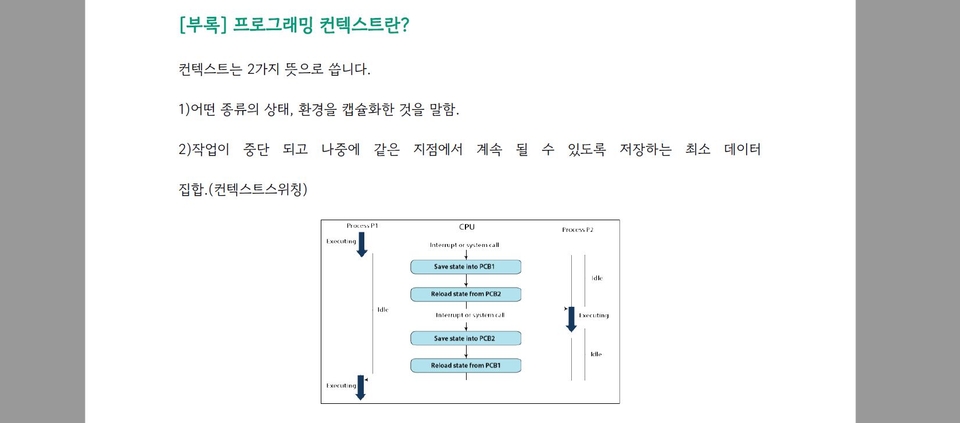
Terms that might be confusing or need additional explanation are organized in the [Appendix]
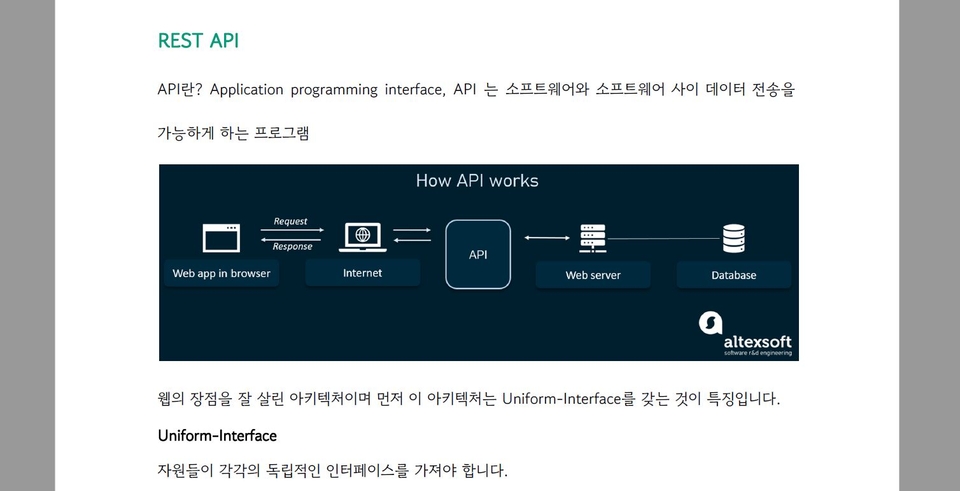
A precise explanation of the often confusing REST API.
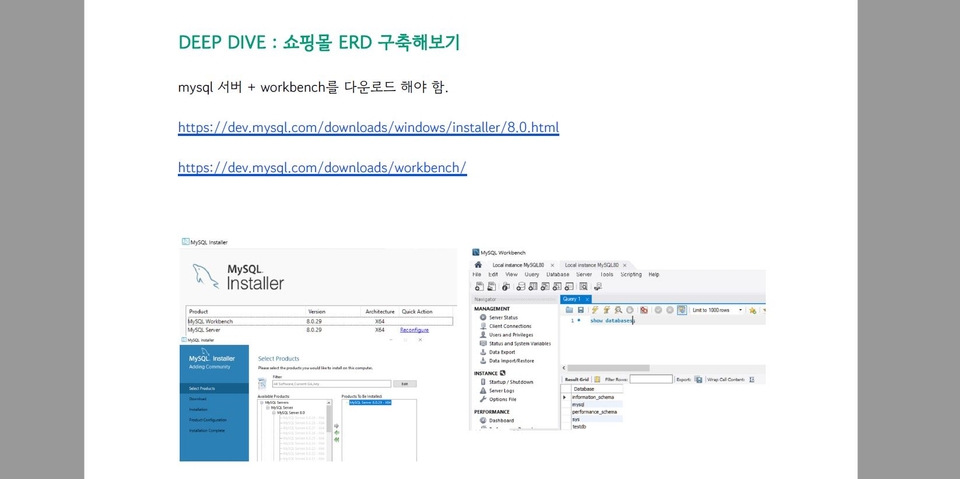
A frequently asked question and a demonstration of building a shopping mall ERD, which is deep knowledge
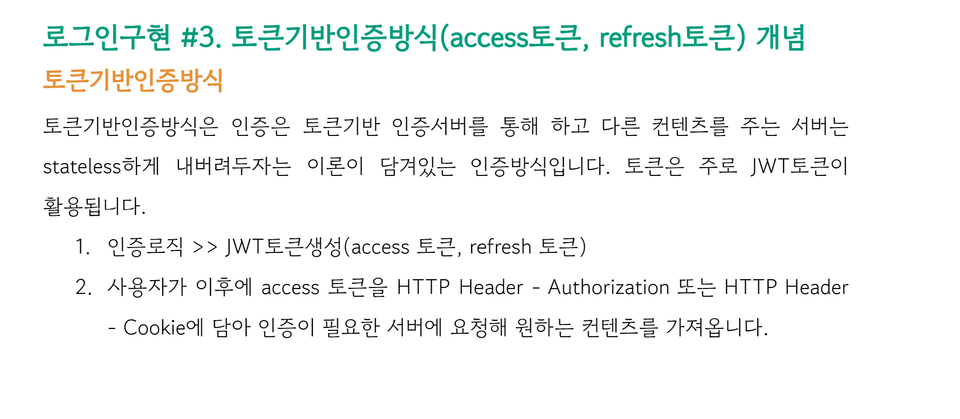
When explaining JWT tokens in lectures, typically only a single JWT token is covered, but in actual practice when using JWT, authentication logic is performed based on two tokens: an access token and a refresh token. This is the most accurate way to explain it.
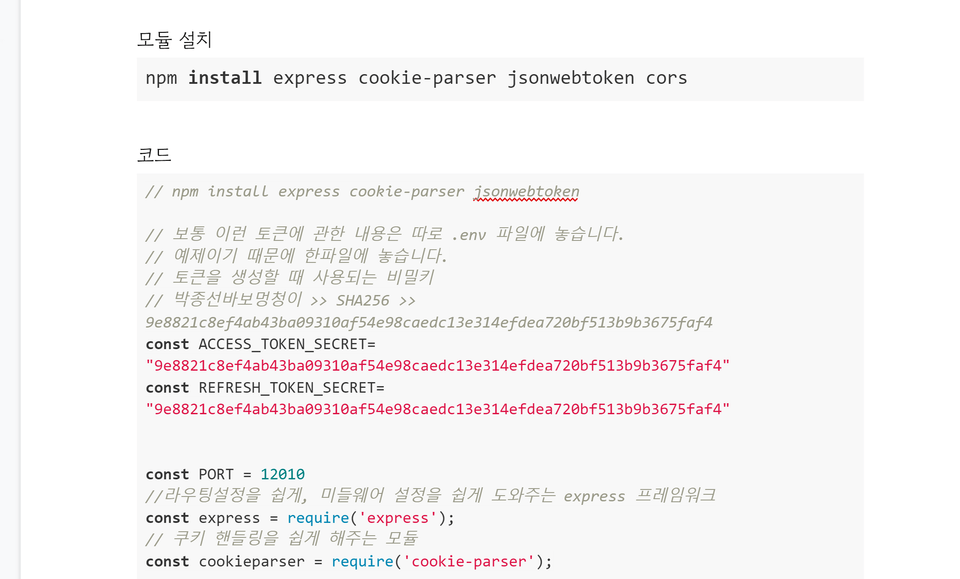
A demonstration of practicing JWT token authentication logic with simpler yet production-quality code suitable for real-world use.

A scene showing explanations with fun illustrations that remain in memory for a long, long time.

If you don't have time, you can just watch the high-priority lectures! While it's best to watch all the lectures... I've set the importance levels based on stars for those who are cramming.

No more studying countless major textbooks and
I want to eliminate the need to scour the internet while studying.
Don't waste your time
I hope you can finish your "CS knowledge" interviews with just this one course.
Design patterns, networks, operating systems, databases, data structures - learn CS fundamentals based on actual interview questions.
Essential knowledge that developers must know and frequently appears in interviews - this course provides detailed explanations of prerequisite knowledge needed by developers, including JSON, API, XML, Docker, containers, and more.
Libraries and frameworks fundamentally incorporate design patterns. Perhaps because of this, interviews sometimes ask about design patterns as a way to gauge whether you know libraries well. This course covers not only the concepts of design patterns but also shows how they are actually implemented in real libraries.
It explains important concepts in networking such as IP, HTTP, and REST API, and uses follow-up questions to cover topics like solving large-scale traffic issues - explaining important parts in depth while covering less critical parts with just the essentials.
It provides an overview of operating systems and explains processes, system calls, kernels, memory structures, and more in detail.
Starting with the fundamentals of databases like entities, this course focuses on explaining the important aspects of databases including transactions, indexing, isolation, normalization processes, and database deadlocks.
First, we'll explore the fundamentals of data structures by explaining time complexity and space complexity, then cover all essential data structures including queues, stacks, and more.
If we've covered CS interviews so far, I'll share insights based on the "model answers" I actually gave during personality interviews and technical interviews I've experienced.
* Note: All course code is available at https://github.com/wnghdcjfe/csnote!
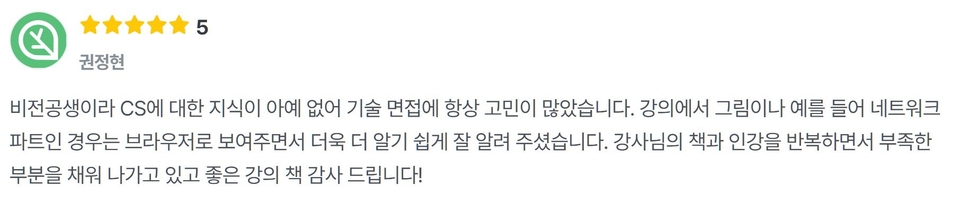
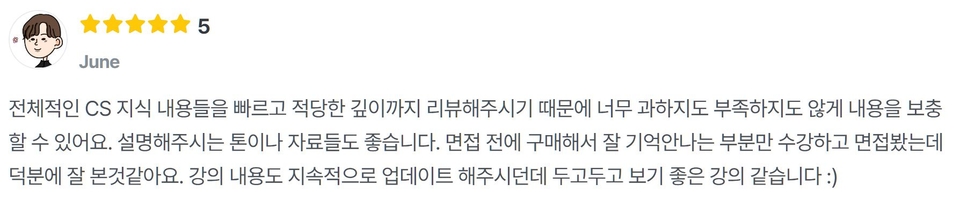


I believe that a course that is continuously updated is the best course. Proving this, in 2022, it was selected as the most updated course among all courses on Inflearn. I will always strive to quickly reflect feedback from students and areas that need improvement so that you can take the best course possible.
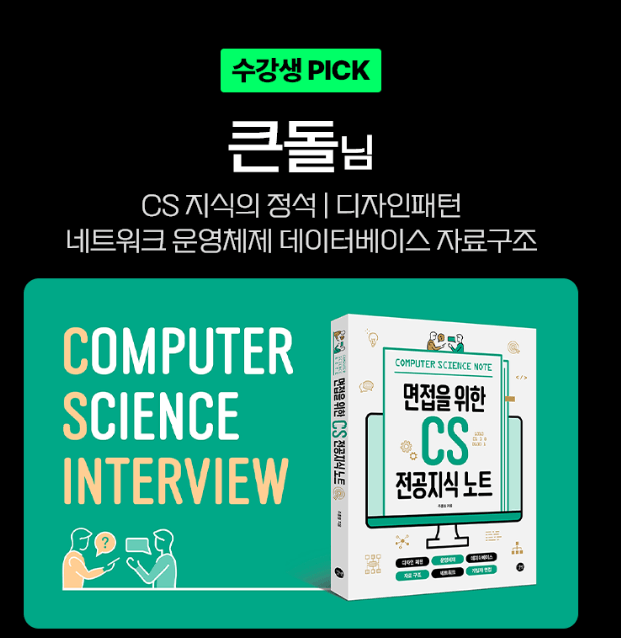
2023. It was selected as the course that received the most reviews among all courses on Inflearn. It has received such a great response from many students, and I am confident that it is a course that greatly helps students with their CS interviews.
Q. Who would you recommend this course to?
I would recommend this to those who have some programming experience and are now preparing for interviews to get into their desired companies but don't know what to prepare, as well as non-majors or majors who want to build solid CS knowledge.
Q. Can I prepare for all CS interviews with this course?
Yes, it is possible. First, most of the content in this course is prepared based on concepts from actual CS interview questions. In other words, this course is prepared based on questions from real major IT companies. Second, I believe it is more solid because it is prepared based not only on my experience but also on the interview experiences of my developer acquaintances. Third, we prepare not only for past questions but also for core CS knowledge concepts that are likely to appear. Furthermore, if students suggest that certain concepts are needed, we review and create content to prepare for "the latest questions" as well. Therefore, I believe you can prepare for CS interviews with this course alone.
Q. How long does it take to receive a response to a question?
You can receive a response as quickly as within 1 hour, but typically you should expect it within 1 to 3 days. (Excluding weekends and holidays)
Q. What's the best way to study with this course?
Well... actually, I would like you to study by memorizing all the content of this course. This is because this course covers comprehensive and core CS content + deep knowledge + interview questions, so if you memorize everything in this course, I believe you'll be perfectly prepared for CS interviews. That's why you need to study slowly. I think it's best to spend about 30 minutes to 1 hour a day watching the lectures, understanding and memorizing them, and taking about 2 months to study step by step.
Q. It seems like the practice sessions are mainly focused on Java or JavaScript. I primarily work with Go or Python - will I be able to understand?
If you know at least one programming language, I've explained it in a way that's easy to understand and prepared the code at that level of difficulty.





![Developer Interview Preparation with Previous Questions [CS Complete Conquest]Course Thumbnail](https://cdn.inflearn.com/public/courses/328355/cover/27e0ac74-bab8-4561-a18a-eeb11101027d/328355-eng-resize.png?w=420)
![[Backend/Exception Handling Scenario/Aggregation Optimization] Backend Portfolio and Practical Experience Enhancement Strategy. All-in-One PART1Course Thumbnail](https://cdn.inflearn.com/public/courses/335091/cover/1a19a4de-ec2e-4e26-a84e-28691e777020/335091.jpg?w=420)

![[MMORPG Game Development with C++ and Unreal Engine Series] Part 3: Data Structures and AlgorithmsCourse Thumbnail](https://cdn.inflearn.com/public/courses/327229/cover/1d63c1a1-99cd-492b-8bbf-2564843ba805/327229-eng.png?w=420)
![[Interview Speech] Speak confidently in your interview and pass with flying colors!Course Thumbnail](https://cdn.inflearn.com/public/courses/328102/cover/327500b6-3b5b-4b1e-9146-e97a776f9d85/328102-eng.png?w=420)