[CS Technical Interview 4] Database that gets you talking
yiyj10305235
A course that helps you understand core database concepts and trains you to explain them verbally in interviews.

Beginner
SQL, DBMS/RDBMS, Tech Interview
A course where you can understand core network concepts and train to explain them verbally for interviews.
669 learners
Level Beginner
Course period Unlimited
Reviews from Early Learners
5.0
이정훈
I'm working through the series roadmap with the goal of switching jobs this year. It seems great for building foundational knowledge and preparing for interviews. Thank you!!
5.0
공부하자
Thank you for the great lecture. I'm really grateful that I was able to quickly learn network principles.!!
5.0
junghyun
The detailed explanations and abundant visual materials are really very helpful. Please create many more great lectures. Thank you.
Understanding Core Network Concepts
The ability to explain verbally in technical interviews
Practical Workbook PDF for Preparing for Follow-up Questions
1. When answering with confused concepts
❓Interviewer What are the characteristics of object-oriented programming?
💬 Candidate It's the SOLID principles. First, S stands for......(omitted)...This is a situation where the characteristics of object-oriented programming (abstraction, encapsulation, inheritance, polymorphism) are confused with
object-oriented design principles (SOLID).
This can give the impression that the framework of basic concepts has not been established.
❓Interviewer What are the characteristics of TCP?
💬 Candidate It is a protocol that guarantees reliability.
❓ Interviewer What are the mechanisms that guarantee reliability?
💬 Candidate Uh... well... it's like... making sure it's transmitted safely... that kind of...This is a state where you only know the superficial definition and are not prepared to explain the principles.
If the 3-way handshake, sequence numbers, ACK, retransmission, flow control, and congestion control
are not connected as a single flow, you will inevitably get stuck on follow-up questions.
❓Interviewer: What is HTTP?
💬 Candidate: Uh… it's for… sending and receiving data on the web…?It is a very familiar concept, but when you actually try to explain it in a single sentence, the words don't come out.
This is not a lack of knowledge, but a lack of experience in organizing and speaking it out.
1⃣ CS notes organized specifically for interview preparation
Concepts and principles that must be checked before an interview are gathered together and provided as lecture materials.
It is structured so that you can fill in the basics while also being able to pull it out and review it right up until the interview.
It is not a simple summary, but includes diagrams and easy explanations so that even non-majors can fully understand it.
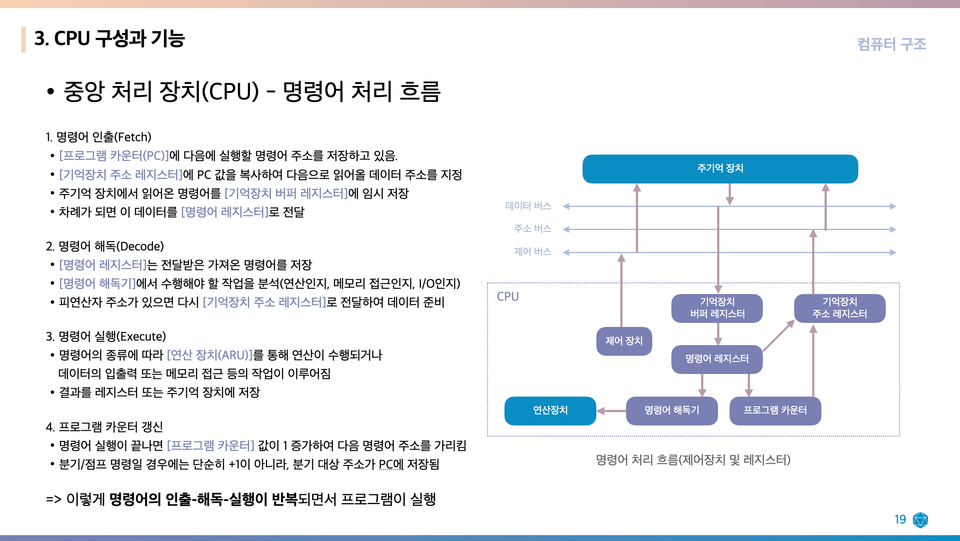
Computer Architecture Lecture Material Example
2⃣ Appendix | Interview Practice Materials Provided
In an interview, the ability to explain clearly is much more important than simply knowing the information.
However, organizing and practicing on your own is a difficult and tedious task.
At the end of the lecture materials, we have included "answering in one or two sentences" training to save you the trouble of organizing it yourself.
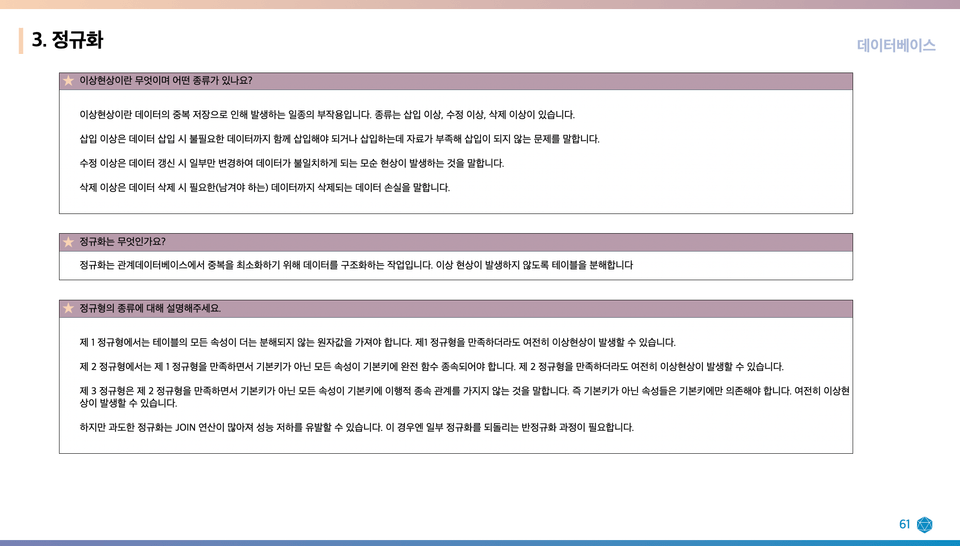
Example of Database Lecture Appendix
3⃣ Preparing for follow-up questions Technical Interview Practice Workbook PDF provided
"Will this lecture alone really be enough for speaking practice?"
After much deliberation over this concern,
I have created a technical interview practical workbook.
It is designed so that you can practice speaking just like a real interview on your own.
You can find detailed information on the structure and usage of the workbook in the workbook introduction video at the beginning of the lecture.
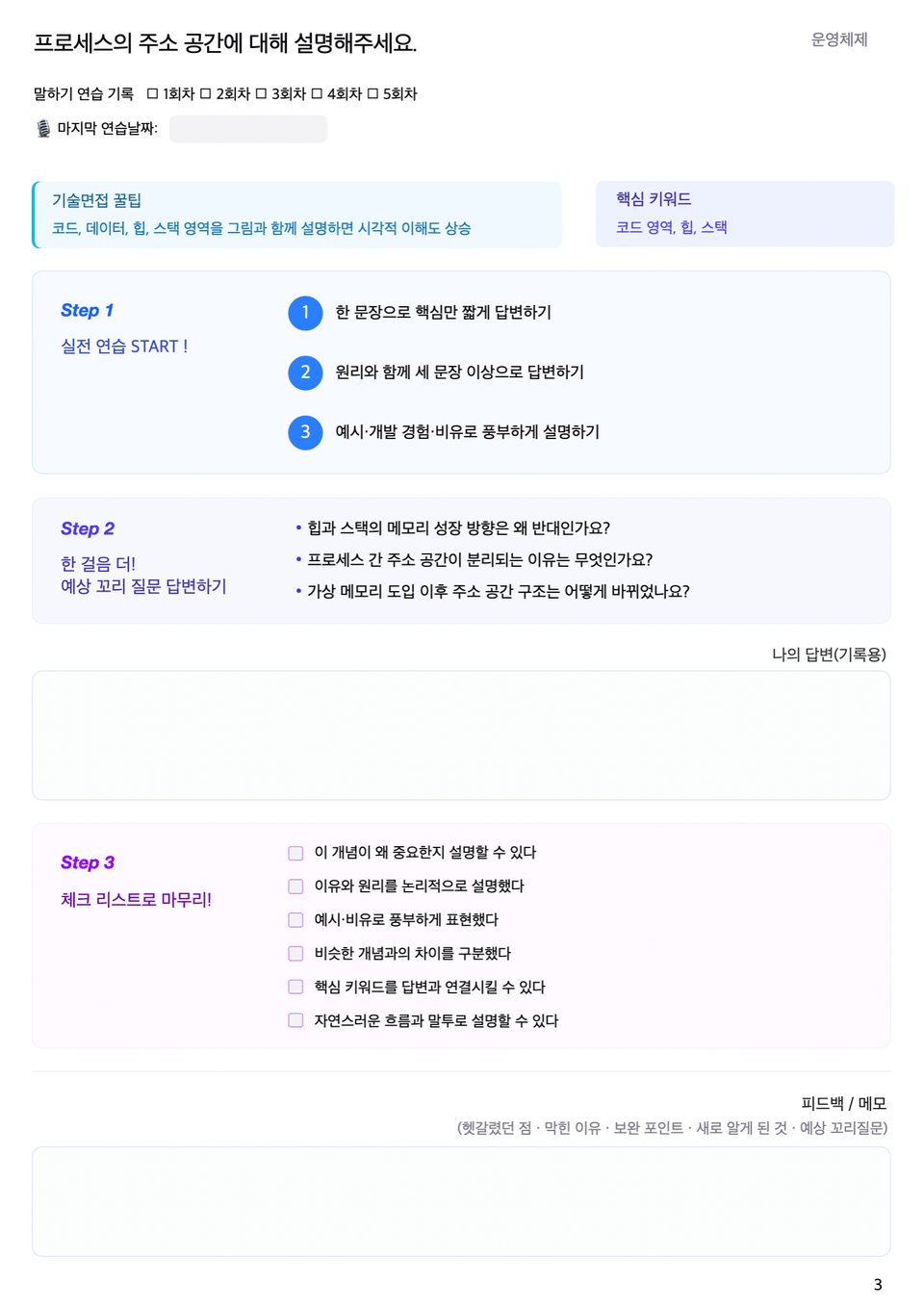
Operating System Workbook Example
4⃣ CS learning app for reviewing anytime, anywhere
To ensure you don't forget the core concepts learned in the lecture,
a dedicated mobile learning app is provided.
You can naturally review by repeatedly studying quizzes and core concepts during your commute or even during short breaks
.
1⃣ Download the materials and learn the core concepts while listening to the lectures.
2⃣ Take your own notes on important parts to create your own CS interview notes.
3⃣ Save them on your phone and review them briefly whenever you have a spare moment.
If you are facing an interview,
if you are short on time → Quickly sharpen your interview instincts with the Appendix [Interview Practice] in the lecture materials.
If you have enough time → Complete your speaking practice like a real interview with the Technical Interview Practical Workbook and Mobile App.
Non-majors, job seekers, career changers, etc., who are preparing for technical interviews and need to be able to explain CS fundamentals verbally
CS majors who need to organize their knowledge again

I've studied it before, but
I don't even know where to start organizing all that CS knowledge again
Don't open those thick textbooks
ever again.
We will organize only the core essentials clearly.
Non-majors who feel overwhelmed by CS

I'm preparing for a technical interview for the
first time, and I'm at a loss
as to where to start
By following the roadmap,
you can focus on learning
only the key CS core concepts.
Job seekers looking to change careers with limited time

Forget it, I don't have time.
I need to
quickly summarize only the CS topics that appear in interviews.
There are lecture materials and interview chapters that allow for
quick review
even on your own.
A truly helpful lecture.
Already proven by 5,000+ students.
⭐️⭐️⭐️⭐️⭐️
1. A lecture where you can see how much the author has thought and agonized from the student's perspective (it seems the learner's flow of understanding was well-considered)
2. Understanding is easy due to the variety of visual materials and examples
3. When learning new knowledge, previously learned content is mentioned and recalled to connect the information. As the knowledge connects, the big picture is formed.
4. The depth of knowledge is not shallow. I am taking the Operating Systems course right after Computer Architecture, and the synergy is great.
5. It perfectly scratches the itch of wondering "why" & "why we use it."
ps. I feel sorry for the author, but.. it's a lecture I want to keep all to myself.
- 'Operating Systems' Course Review
⭐️⭐️⭐️⭐️⭐️
Even with a short lecture time, it's great how you clearly explain only the important parts. Since it's focused on theory, I didn't expect you to cover SQL queries, but I really liked how you showed examples for basic syntax and writing queries one by one. After that, the sections on joins, normalization, transactions, indexes, data optimization, and security were excellent. Although I haven't taken other paid courses yet, the last lecture appendix titled "Interview Practice" was great for self-study and practice as it provided actual questions and answers. The lecture time isn't long if you focus, so I think I'll watch it a few more times. Thank you.
-'Database' Course Review
⭐️⭐️⭐️⭐️⭐️
The core content was explained so clearly and with such a logical flow that it helped me organize data structures quickly. Thank you for the great lecture.
-'Data Structures' Course Review
⭐️⭐️⭐️⭐️⭐️
Wow... this is seriously so good...;;;; I need to save up and buy the entire roadmap.. I'm curious if you have any plans to teach Spring as well.. I'll buy it immediately..
-'Java and Object-Orientation' Course Review
⭐️⭐️⭐️⭐️⭐️
This is a lecture where you can set aside about a day to organize the key concepts of JavaScript all at once! It's great for a quick reminder before an interview👍
-'JavaScript' Course Review
⭐️⭐️⭐️⭐️⭐️
As a non-CS major, I was worried about how to study CS knowledge, especially computer architecture and operating systems, but the content was a manageable amount so I could learn without feeling overwhelmed, and it was great because it felt like getting private tutoring from an expert. I'm planning to take the operating systems lecture as well, and I'm looking forward to it. Thank you!
-'Computer Architecture' Course Review
As a non-major, I initially focused solely on algorithms and coding tests while preparing for my first developer job.
I gained some confidence and started passing most coding tests, but I continued to fail at the next hurdle: the technical interview. What was the problem? It was the lack of CS (Computer Science) knowledge.
I understand the thirst for fundamental skills (CS knowledge, programming languages, etc.) better than anyone. I built my own know-how by digging through countless materials on my own, and eventually, after graduating from Seoul National University, I am working as a 🧑🏻💻 Kakao Developer.
Since I was young, I have been more confident than anyone else in combining and restructuring various materials to create my own 'consolidated notes.' This lecture is the secret notebook that contains all of that know-how and passion.
If you feel overwhelmed trying to explain exactly what happens when you enter a URL into a browser during an interview?
TCP connection is a 3-way handshake, but why is termination a 4-way handshake?
This is the table of contents and key keywords you will learn in this lecture.
If there are any unfamiliar keywords, take this opportunity to master them once and for all.
Network Fundamentals
Definition and composition of a network, LAN and WAN,
Data transmission methods,
OSI 7 Layer and TCP/IP Layer
Application Layer
HTTP,
DNS
Transport Layer
TCP and UDP, 3-Way Handshake,
RDT protocol,
TCP Flow Control / Congestion Control
Network Layer
Router, IP, Subnet Mask,
NAT,
DHCP
Data Link Layer
Ethernet, CSMA/CD,
Switch,
MAC address,
ARP
Overall Network Flow
The process of data transmission and reception between client and server
Network Security and Practice
The three elements of security,
Symmetric and Asymmetric Keys,
HTTPS, SSL/TLS,
Firewall, VPN, Proxy, CDN, CORS
[Appendix] Interview Practice
Reviewing key concepts once more in a Q&A format
Organizing concepts by layer according to the OSI 7-layer model
Learn based on the actual flow of data moving from the client to the server
Understand when key concepts such as LAN/WAN, DNS, HTTP, TCP, IP, and NAT appear.
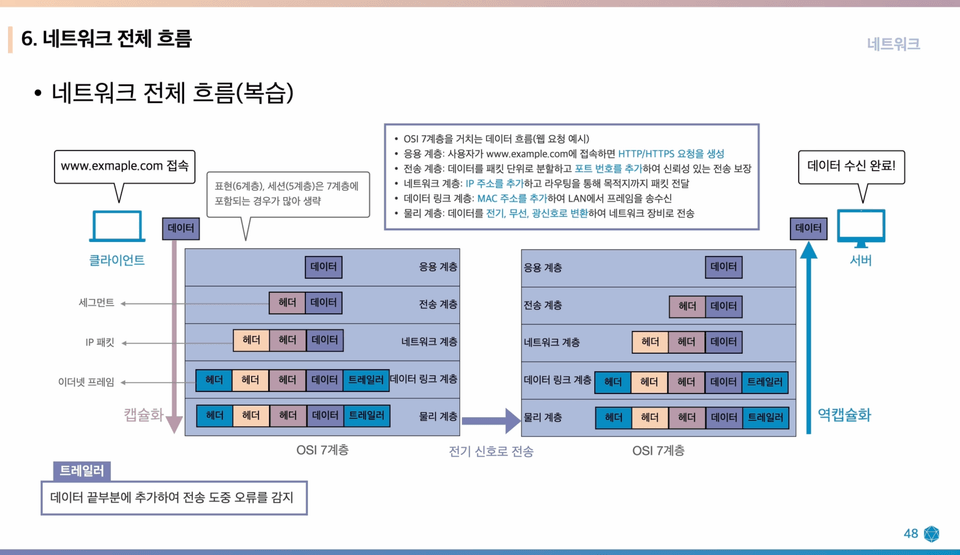
Explanation of the overall network flow
Instead of simple memorization, we help you easily understand and remember complex and unfamiliar network terms for a long time through intuitive diagrams and visual materials.
You can clearly grasp the core principles of concepts such as the TCP 3-way handshake, 4-way handshake, NAT operation methods, and TLS handshake through diagrams.
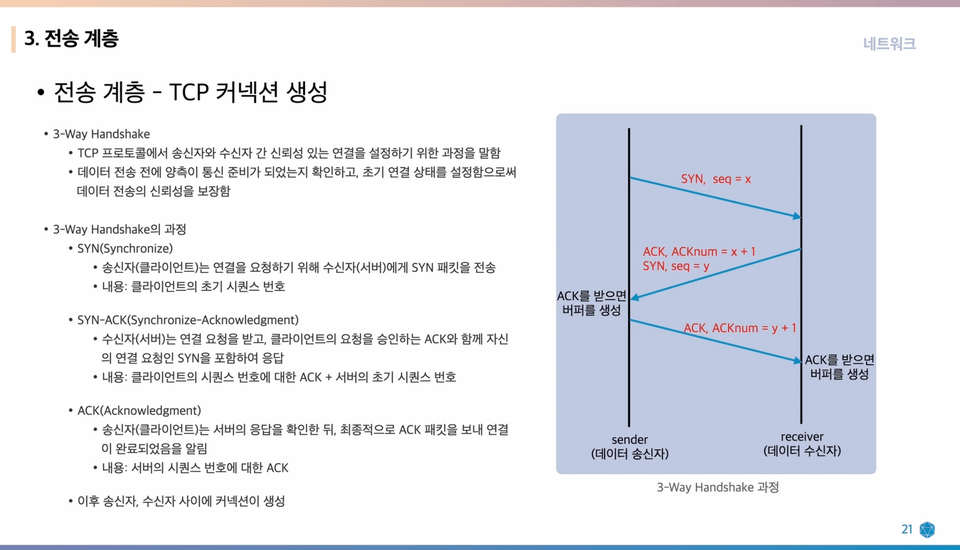
TCP 3-way handshake process

NAT Concepts and Principles
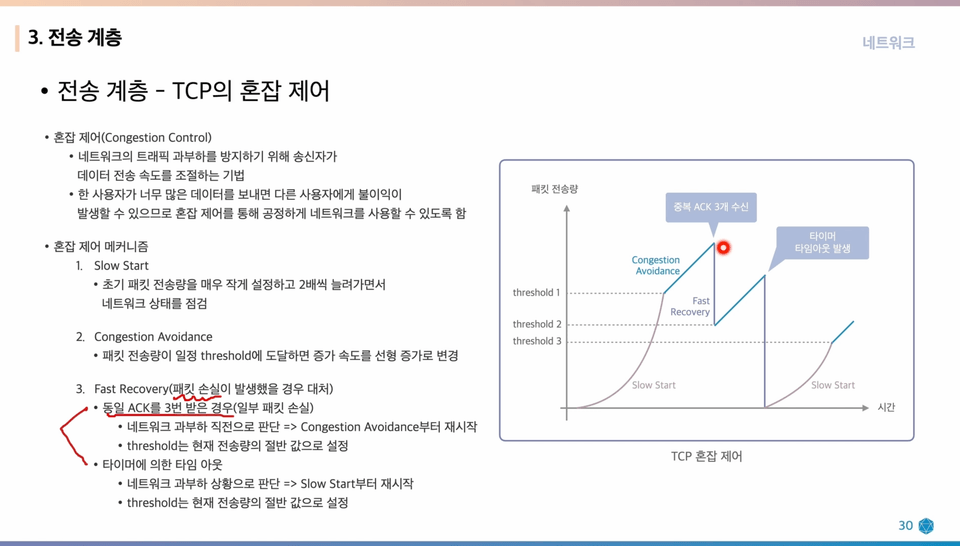
TCP Congestion Control Algorithms
It covers in depth the core network concepts that developers encounter and must understand most frequently when developing web services and applications, such as HTTP/HTTPS, symmetric/asymmetric keys, IP, DNS, and TCP. khi phát triển các dịch vụ web và ứng dụng.
It explains how each concept works in the actual communication process and what roles and importance they hold along with practical examples, strengthening professional capabilities beyond mere theory.
Through this, you can build a solid foundation of basic knowledge necessary to identify causes and seek solutions when network-related problems occur.
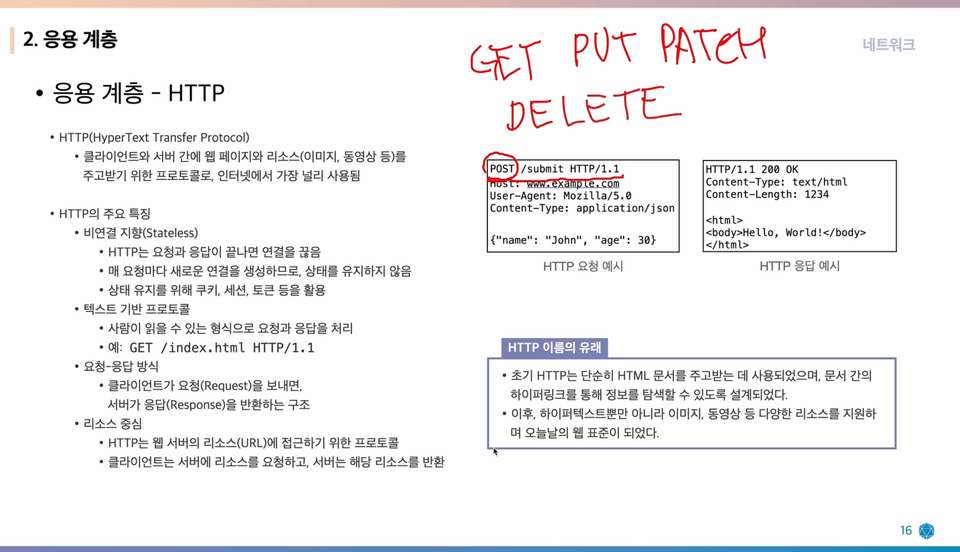
Explanation of HTTP
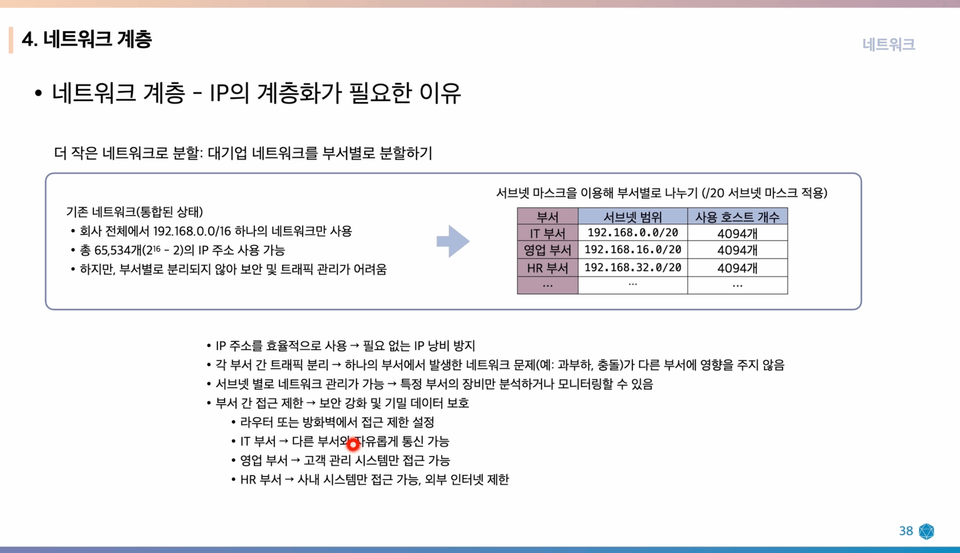
Why IP layering is necessary
If the video is frozen, please refresh the page :)
Explanation of the overall network flow
Explanation of TCP's RDT
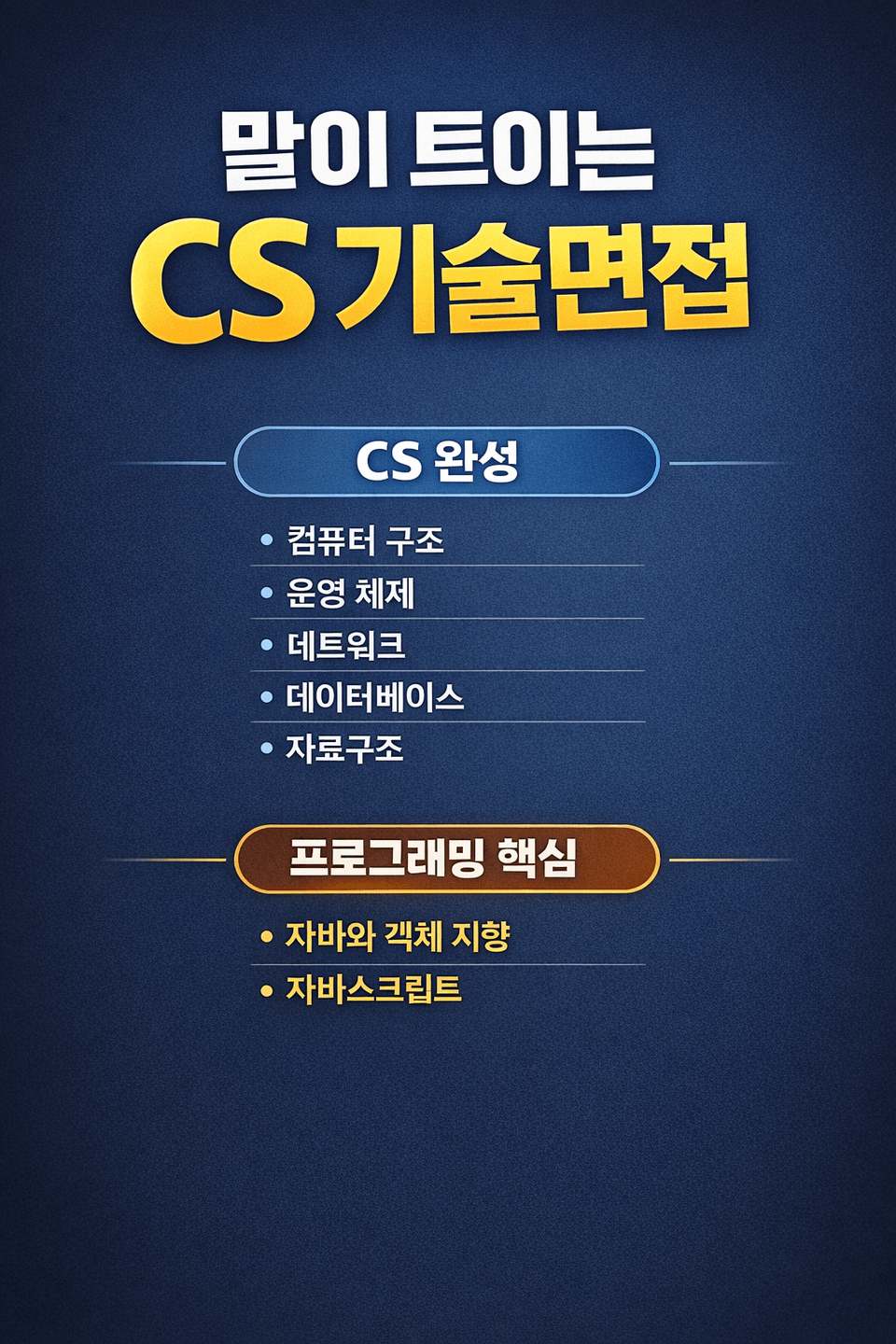
Provided learning material format: PDF
Who is this course right for?
A non-major who feels overwhelmed because it's their first time studying CS.
CS majors who need to organize CS concepts before a technical interview
A job seeker preparing for a career move who is short on time ahead of a technical interview.

Career Verified
6,192
Learners
258
Reviews
32
Answers
4.9
Rating
7
Courses
Education and Experience
Graduate of Seoul National University
Current Kakao Server Developer
Course Introduction I am creating the "Fluent CS" series to help you articulate CS concepts during interviews. Course Philosophy Having started development as a non-computer science major, I understand the importance of CS...
Course Introduction I am creating the "CS for Speaking" series to help you articulate CS concepts during interviews. Course Philosophy Having started development as a non-computer science major, I...
Course Introduction
I am creating the
CS Speaking series to help you articulate CS concepts during interviews.
Teaching Philosophy
I started my development career as a non-CS major and went through a lot of trial and error while personally organizing everything from CS fundamentals to technical interviews. Based on the learning methods and conceptual organization know-how accumulated through that process, I create content that makes core concepts encountered in practice and interviews easy to understand through illustrations.
"I am creating the lectures that I needed back then."
Blog yiyj1030.tistory.com → Running a tech blog that simplifies CS, algorithms, and practical concepts. Contact yiyj1030@gmail.com
Blog
yiyj1030.tistory.com
→ Running a tech blog that simplifies and organizes CS, algorithms, and practical concepts
Contact
yiyj1030@gmail.com
All
41 lectures ∙ (3hr 50min)
Course Materials:
All
28 reviews
4.9
28 reviews

Reviews 5
∙
Average Rating 5.0
5
I'm working through the series roadmap with the goal of switching jobs this year. It seems great for building foundational knowledge and preparing for interviews. Thank you!!
Thank you. I'm rooting for you to achieve everything you want!
Reviews 3
∙
Average Rating 5.0
5
I’ve finally completed the entire Network course! I purchased it at a discount through the roadmap, and I’m extremely satisfied with my purchase! I’ve now finished both the Network and Database courses, and they’re truly great for building a solid foundation and preparing for interviews. Even if you’re not preparing for interviews on basic CS knowledge, I still recommend them because they cover topics everyone should know at a fundamental level!

Reviews 27
∙
Average Rating 5.0

Reviews 9
∙
Average Rating 5.0
Reviews 4
∙
Average Rating 5.0
Check out other courses by the instructor!
Explore other courses in the same field!








![A Senior Interviewer's Guide to Solving Developer Employment and Career Moves in One Go [Practical Edition]Course Thumbnail](https://cdn.inflearn.com/public/courses/334899/cover/aa860a68-f4f2-4554-91bb-2dd48b47f14d/334899.png?w=420)
![[Backend/Exception Handling Scenario/Aggregation Optimization] Backend Portfolio and Practical Experience Enhancement Strategy. All-in-One PART1Course Thumbnail](https://cdn.inflearn.com/public/courses/335091/cover/1a19a4de-ec2e-4e26-a84e-28691e777020/335091.jpg?w=420)