Rhino 6 for Beginners Product Design Part.2
usefulit
This is a lecture on Rhino 3D, which is a basic tool for product design.
초급
Rhino
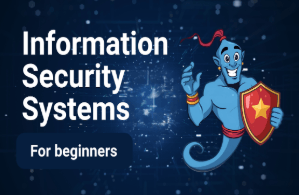
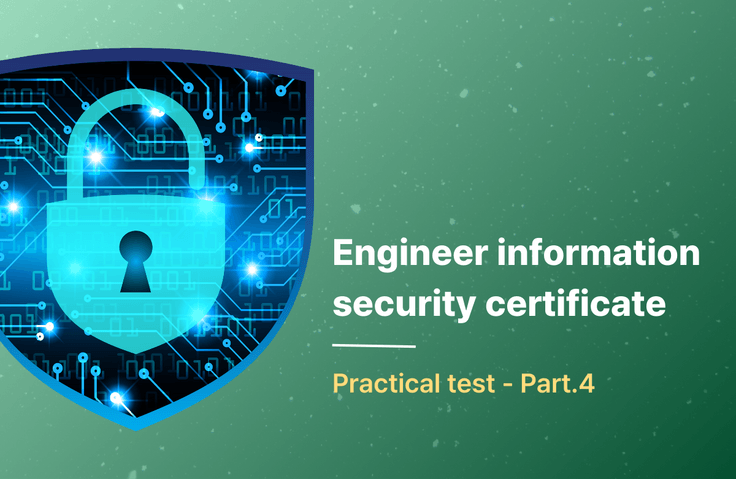
You can effectively study the contents of the Information Security Engineer practical exam questions and obtain the Information Security Engineer practical qualification.
147 learners
Level Basic
Course period 12 months


Reviews from Early Learners
5.0
Derickun
I had a hard time finding reliable information security articles and lectures, but I finally found a really good one. However, it was a bit disappointing that some lectures contained incorrect information or had uneven sound quality.
5.0
Android두
Thank you for the great lecture. It helped me a lot in my studies.
5.0
강덕현
It was a great help that you explained many past exam questions in an easy-to-understand manner.
System Security
Information Security Engineer Practical Exam Questions
.png?w=960)
The Information Security Engineer (IS) certification is a national qualification exam administered by the Ministry of Science and ICT (MSIT) and the Korea Communications Commission (KCCA). Based on theoretical and practical knowledge of IT and information and communications technology, candidates are required to develop information security systems and solutions; operate and manage major operating systems, network equipment, and information security devices; formulate and manage organizational information security policies and countermeasures; and apply information protection-related laws and regulations . This qualification exam verifies expertise in digital asset protection through risk assessment, threat detection, and mitigation strategies.

This course delves deeply into the theory and practical problems of the Information Security Engineer practical exam, focusing on questions with a high hit rate on the actual exam. The course facilitates understanding through practical examples and emphasizes security techniques that students can apply in real-world settings. Furthermore, to enhance learner understanding, each topic is presented with detailed explanations and a hands-on approach.
System Security (Nos. 317-327): Understanding the basic concepts and principles of system security and practicing problem solving.
System Security (Nos. 317-327): Understanding the operating system's scheduling algorithm and system security concepts.
System Security (Nos. 317-327): Understanding system security principles and memory management techniques.
System Security (Nos. 317-327): Understanding disk access times, disk scheduling, RAID, malware, and system security concepts.
System Security (Nos. 317-327): Understanding system security concepts and techniques and practicing real-world problem solving.
System Security (Nos. 317-327): Understanding system security concepts and tools, cookies, proxies, HAL, NTFS, registry, DDE, pass-hash attacks, and Windows Firewall.
System Security (Nos. 317-327): Understanding system security concepts and practices, including log file management and UNIX system commands.
System Security (Nos. 317-327): Understanding system security measures such as the NDD command, ICMP flooding attacks, TCP-SYN flooding attacks, log file management, SIEM, and PAM Linux.
System Security (Nos. 317-327): Understanding the use of crontab, the structure of shadow files, and the purpose of Linux system security.
System Security (Nos. 317-327): Learn about Linux system security concepts such as SetUID, SetGID, and Sticky Bit, as well as how to use the find and tcpdump commands.
System Security (Nos. 317-327): Learn about system security concepts and practices, backup script management, file permission settings, system call tracing, and web server security settings.
System Security (Nos. 317-327): Understanding various system security vulnerabilities and their corresponding defense mechanisms.
System Security (Nos. 317-327): Understanding system security tools and rules, vulnerability assessment tools, network access control tools, and intrusion detection and prevention systems.
System Security (Nos. 317-327): Understanding system security concepts and techniques and practicing real-world problem solving.
Through this course, students will gain in-depth knowledge of system security and improve their problem-solving skills required for actual exams. They will gain hands-on experience in security measurement and management techniques for Linux and Unix systems. Furthermore, they will gain practical experience analyzing and responding to various security threats, strengthening their professional credentials.
Who is this course right for?
Those who have passed the written exam for the Information Security Engineer and are preparing for the practical exam
A non-major but interested in information security
Those who wish to obtain the Information Security Engineer qualification
Need to know before starting?
Passed the Information Security Engineer Written Exam
8,278,679
Learners
6,372
Reviews
4.6
Rating
309
Courses
I will help you grow through useful IT lectures.
All
15 lectures ∙ (6hr 43min)
Course Materials:
All
13 reviews
4.8
13 reviews
Reviews 327
∙
Average Rating 5.0
Edited
Reviews 4
∙
Average Rating 5.0
Reviews 13
∙
Average Rating 5.0
Reviews 20
∙
Average Rating 5.0
Reviews 1
∙
Average Rating 5.0
$22.00
Check out other courses by the instructor!
Explore other courses in the same field!