Report Structures That Speed Up Your Clock-out – Decision Edition: Documents Written Fast and Approved Instantly

Most office workers work hard on their reports. The data is sufficient, and the logic is sound. Yet, the results are always the same: - “Let’s review this.” - “Let’s supplement this a bit more.” - “Let’s discuss this again at the next meeting.” The problem isn't that you can't write. It's because the document is not designed to trigger a decision. This lecture is not just about how to write a report; it covers how to design a document according to the structure of how decision-making actually happens. Over 26 years of reviewing countless reports in major corporations and investment fields, I found one commonality from the perspective of someone who actually "makes the decisions": [Decisions come from the structure of the report, not just the content!] In this lecture, we will: Analyze where executives stop their judgment Identify what must be present for a decision to begin through real-life cases, and provide methods to transform your documents into a structure that is written quickly and approved immediately.

2 learners are taking this course

Level Basic

Course period Unlimited

Planning Document
Planning Document
writing
writing
Business Productivity
Self Improvement
Self Improvement
Business Plan
Business Plan
Planning Document
Planning Document
writing
writing
Business Productivity
Self Improvement
Self Improvement
Business Plan
Business Plan

What you will gain after the course

  • Report design skills that get the boss's approval

  • Analytical ability to identify the point where an executive stops making decisions

  • Report improvement results that can be applied immediately to actual work

  • Applying FOCE-based practical decision-making structures

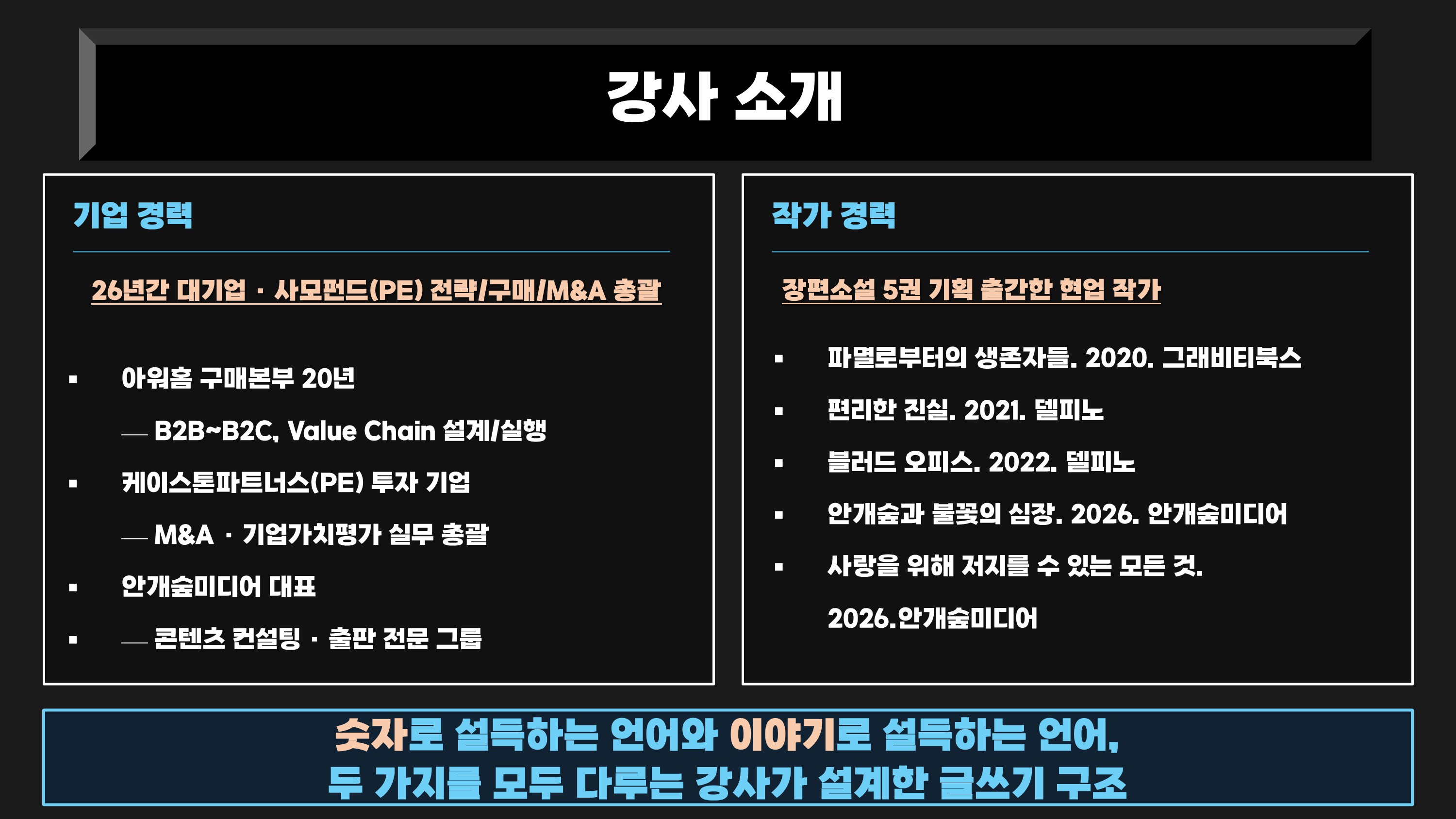
■ Instructor Introduction

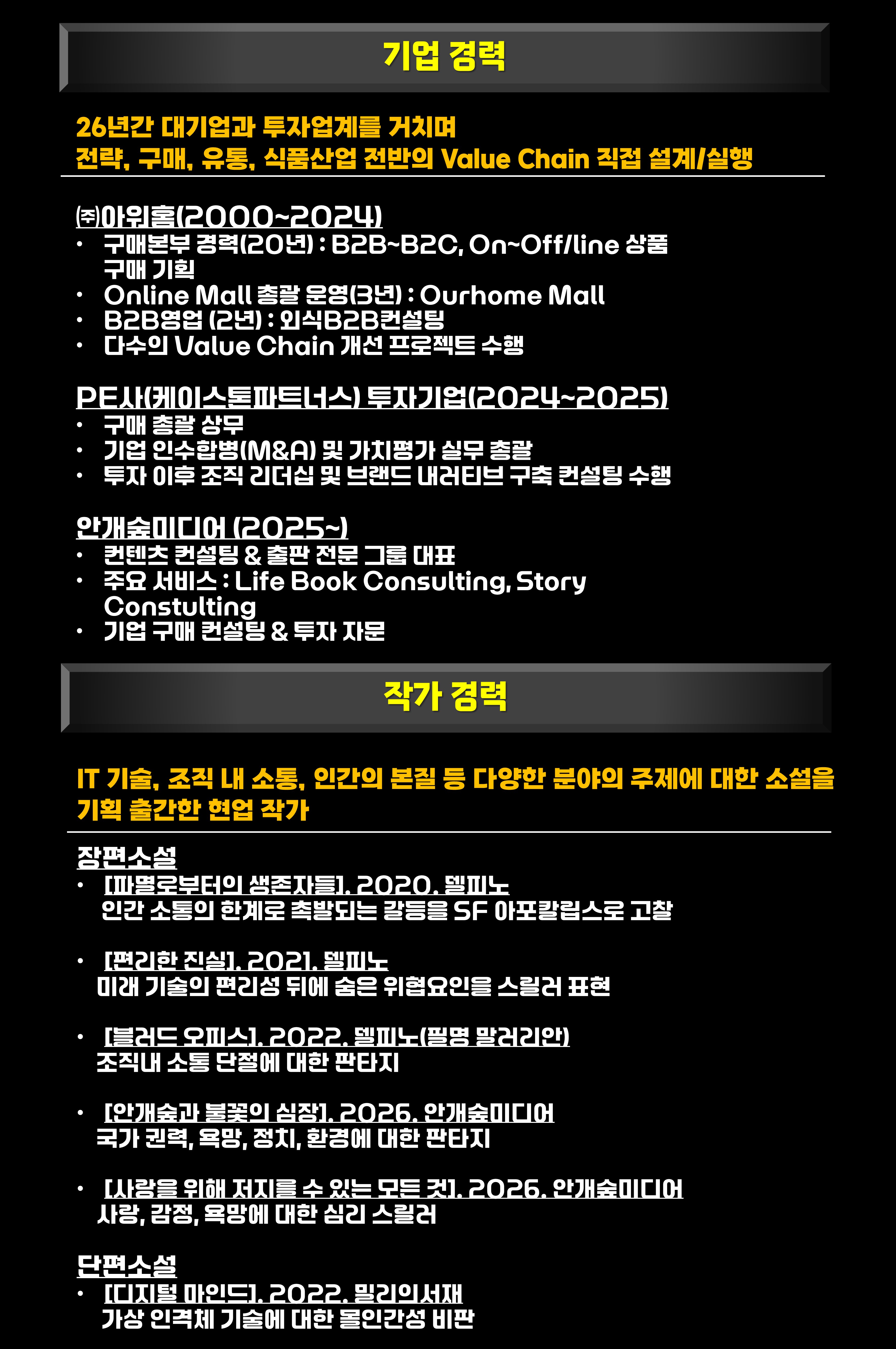
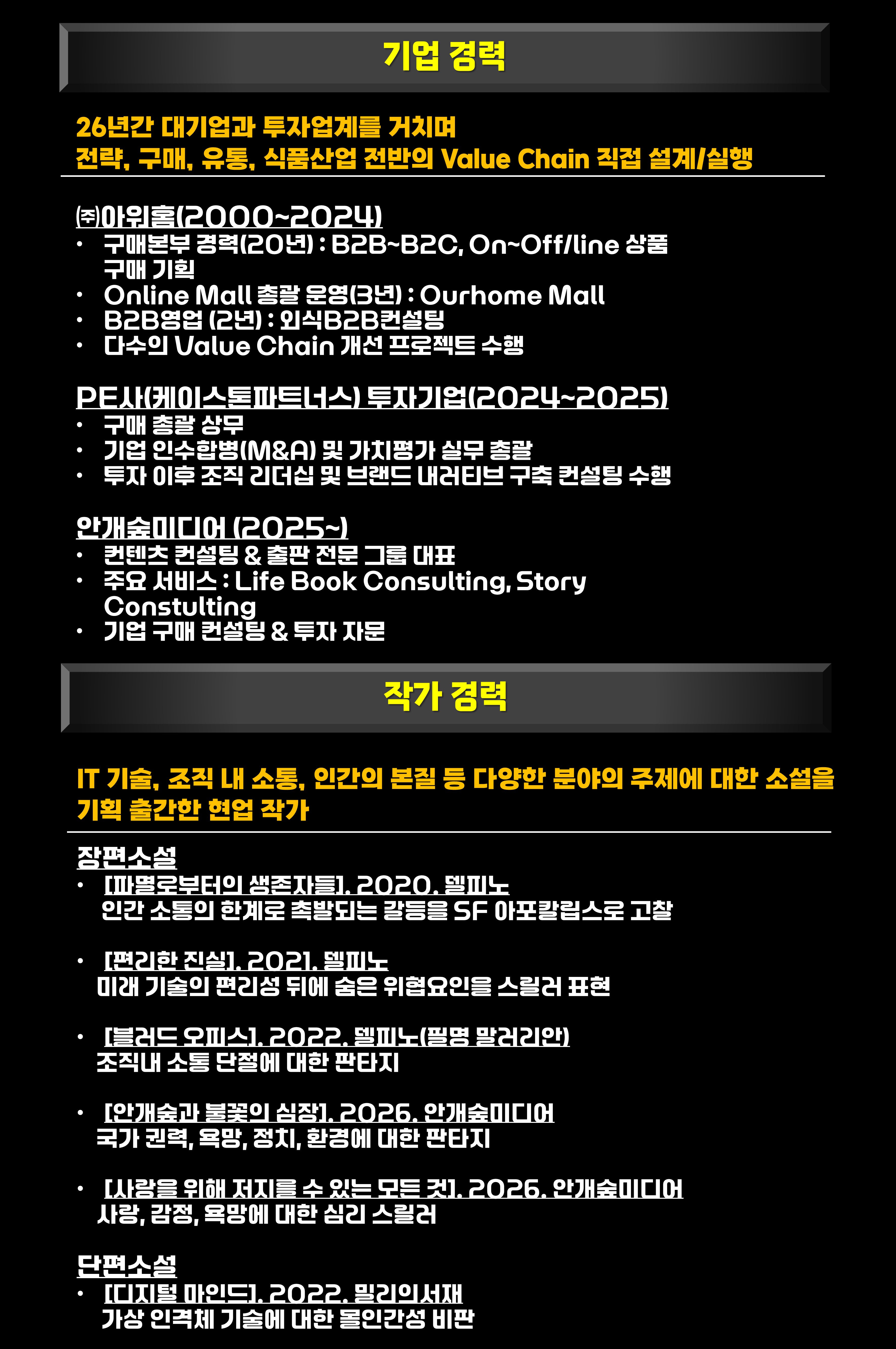
A career spanning 26 years in business and an author's background of planning and publishing four full-length novels


Why your reports fail to get a decision

The logic is sound and the data is sufficient, so why isn't the boss making a decision?

Hasn't this situation repeated every time you submit a report? The information is sufficient. The logic is sound. You even delivered the presentation well. Yet, the response you always get is, "It's good, but let's look into it a bit more." It gets pushed to the next meeting, and then the one after that. A decision is never made.

In this situation, most people think like this: "Was the explanation insufficient?" "Did I need more data?" So they write longer and in more detail. Still, nothing changes.

The problem is not the content. It is the structure. This course is not about how to write well, but about the structure that drives decisions. If you want to increase work productivity and end the exhaustion caused by reports, start right now.


The difference between the conventional method and this course

From explanation-oriented to decision-oriented

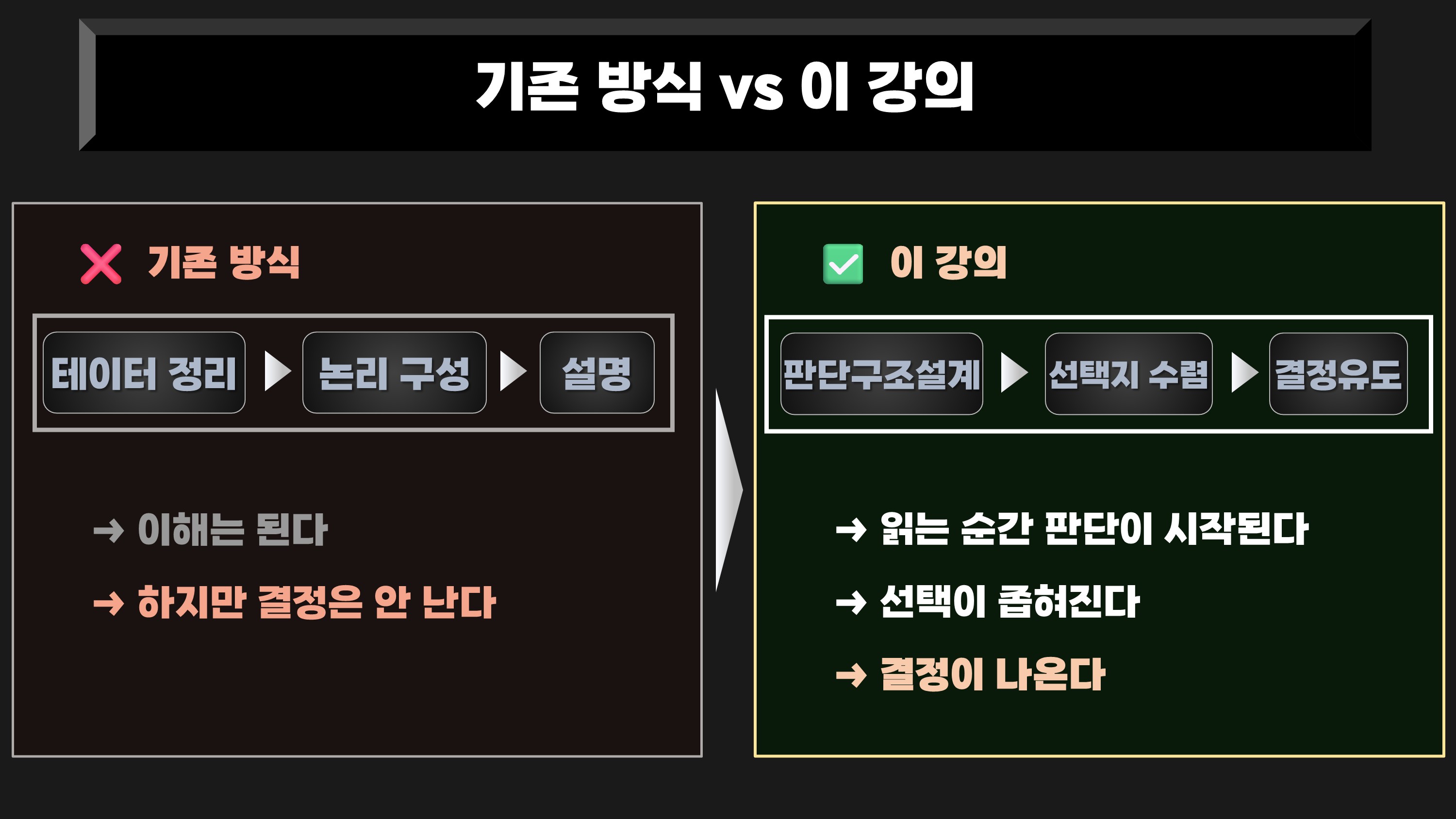
Traditional report writing follows a sequence of organizing data, building logic, and providing explanations. It is understandable when read, but it doesn't lead to a decision. This is because, from the decision-maker's perspective, they grasp the content but cannot see what exactly needs to be judged.

The approach covered in this lecture is different. You create a report in an order that first designs the judgment structure, converges the options, and then induces a decision. The moment it is read, judgment begins, choices are narrowed down, and a decision is reached.

It is not a matter of writing skill, but a difference in structural design ability. In terms of self-development, this single skill completely transforms your influence within the workplace.


Structural writing changes the approval rate of reports

Writing well and writing structurally are different.

Structural writing is writing designed to let the reader begin making judgments the moment they start reading. While general writing focuses on conveying information, structural writing arranges content to align with the decision-maker's flow of judgment. The conclusion comes first, followed by the supporting evidence, and the execution becomes clear.

There is only one reason why structural writing is important in reports: your boss doesn't want to read the report; they want to make a decision. If the structure is correct, a decision can be made immediately upon reading. Without structure, no matter how good the content is, no decision will be reached.

This course covers how to apply structural writing to reports. You will learn structures applicable to any document that needs to persuade a decision-maker, such as proposals, business plans, and execution reports. For professionals looking to increase work productivity, structural writing is the fastest solution.


5 moments when decision-making stops

If even one of these is present, the report will be put on hold.

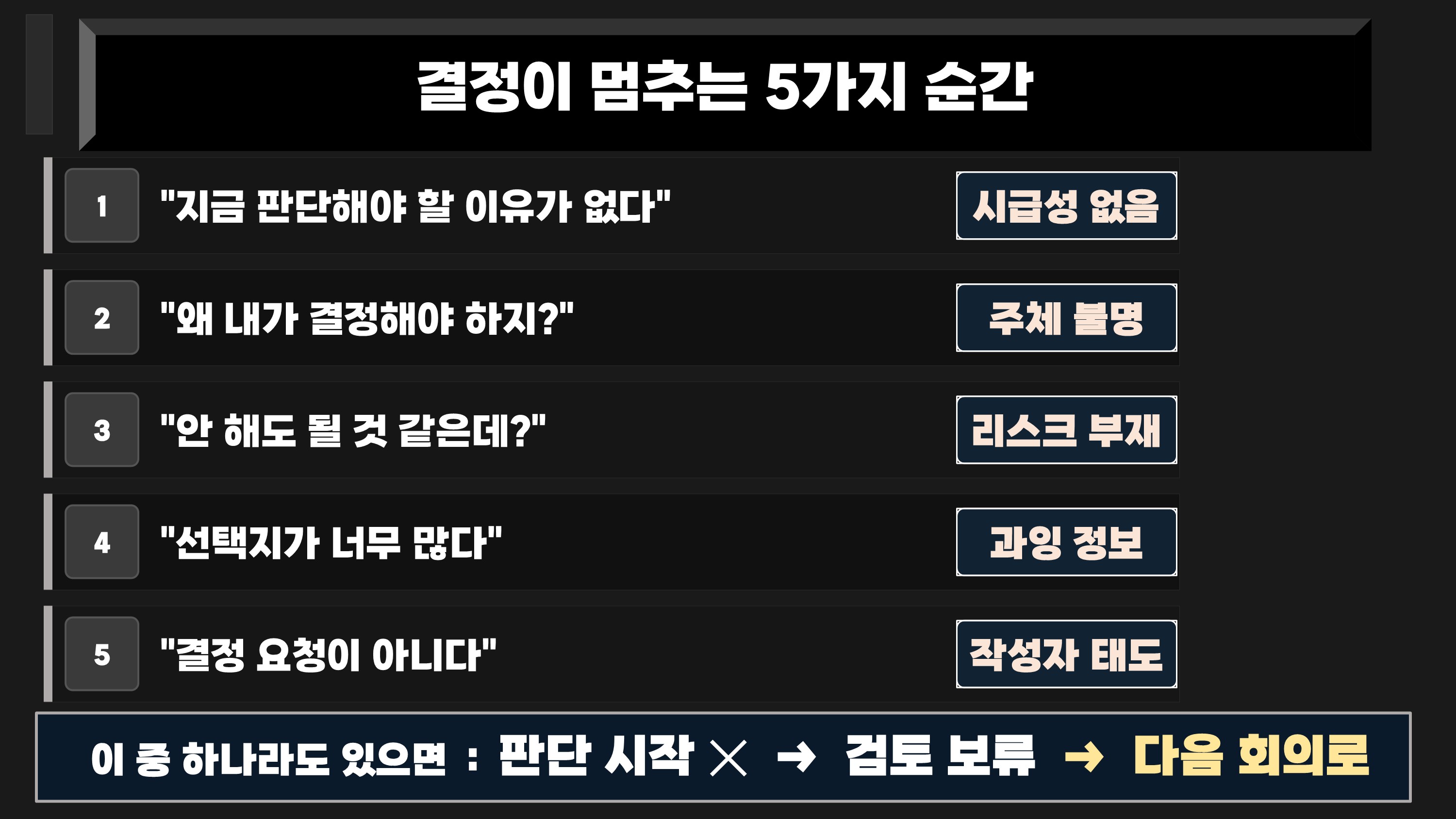
There is a common pattern in the moments when a decision-maker stops their judgment after reading a report. Understanding these five patterns is the core of this lecture.

First, lack of urgency. This is a report that gives the impression that "there is no reason to make a judgment right now." If it is not clear why a decision must be made now, the judgment is postponed until later.

Second, unclear ownership. This is when the reaction is, "Why should I be the one to decide?" It is a report where it is unclear who should be making the decision.

Third, absence of risk. This is the reaction of "I don't think we need to do this." If the loss from not making a decision is not visible, the judgment stops.

Fourth, excessive information. This is a situation where there are "too many options." The more information there is, the harder it becomes to make a decision. It is the writer's role to narrow down the choices.

Fifth, the author's attitude. This is when the report reads as a simple briefing rather than a request for a decision. If there is no structure requesting a judgment, there will be no approval.

If even one of these is present, the decision-making process will not begin. It will lead to a hold on the review, a deferral to the next meeting, or a rejection.


The structure of a document that leads to a superior's decision

FOCE Frame — When these 4 elements are in place, judgment begins the moment it is read

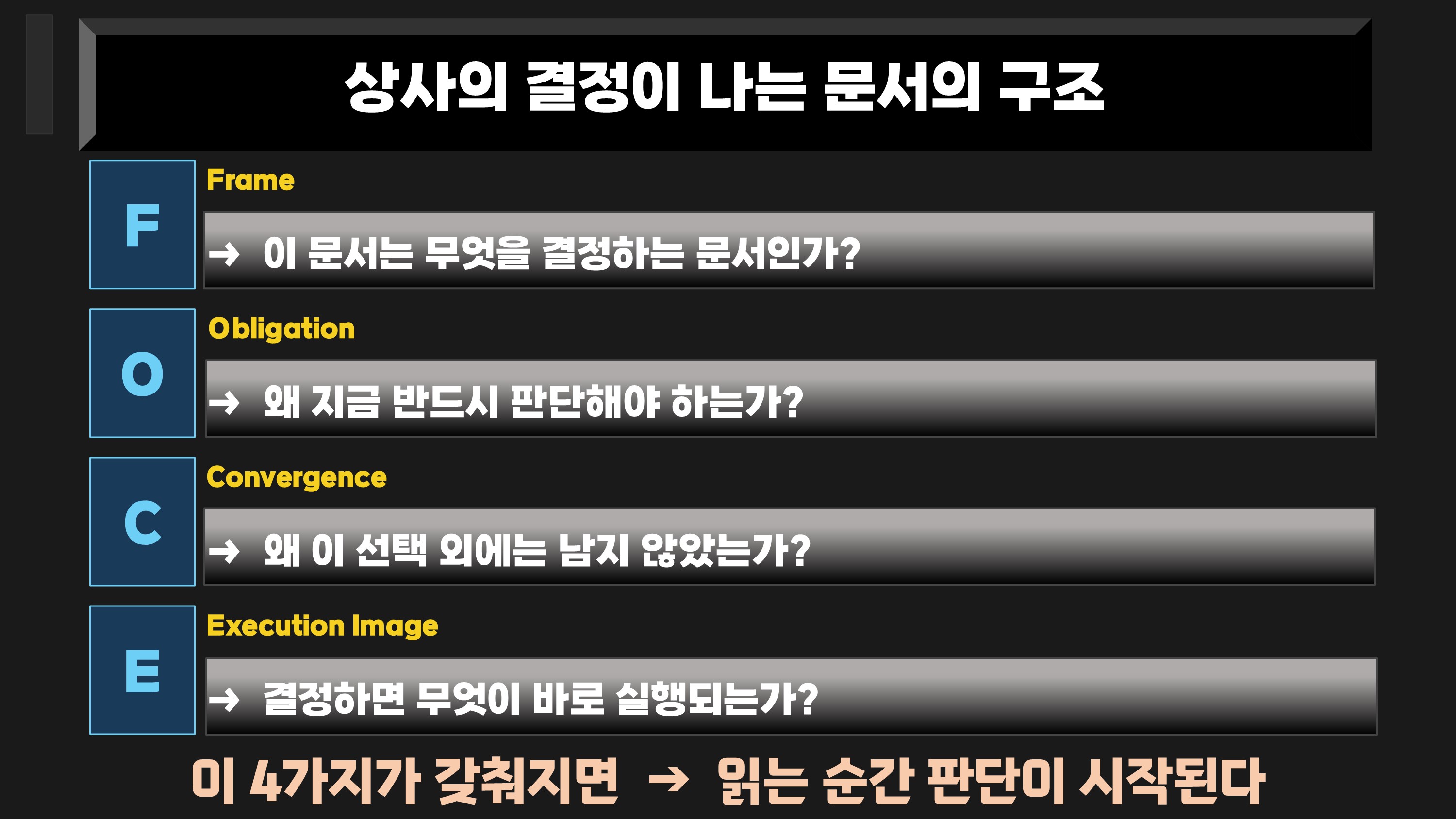
The core focus of this lecture is the FOCE frame. It organizes the structural differences between approved and rejected reports into four key elements.

F — Frame. What decision is this document for? The purpose of the report must be clear from the very first sentence. The decision-maker must be able to immediately recognize what they need to judge.

O — Obligation. Why must a decision be made right now? Structure the urgency and necessity. You must clearly show what kind of loss will occur if a decision is not made now.

C — Convergence. Why is this the only remaining choice? Narrow down the options to reduce the burden of decision-making. This is a particularly important element in proposals or business plans.

E — Execution Image. What will be executed immediately upon making the decision? It shows the picture following the decision. Reports designed up to the execution stage have a higher probability of approval.

A report equipped with these four elements triggers decision-making the moment it is read.


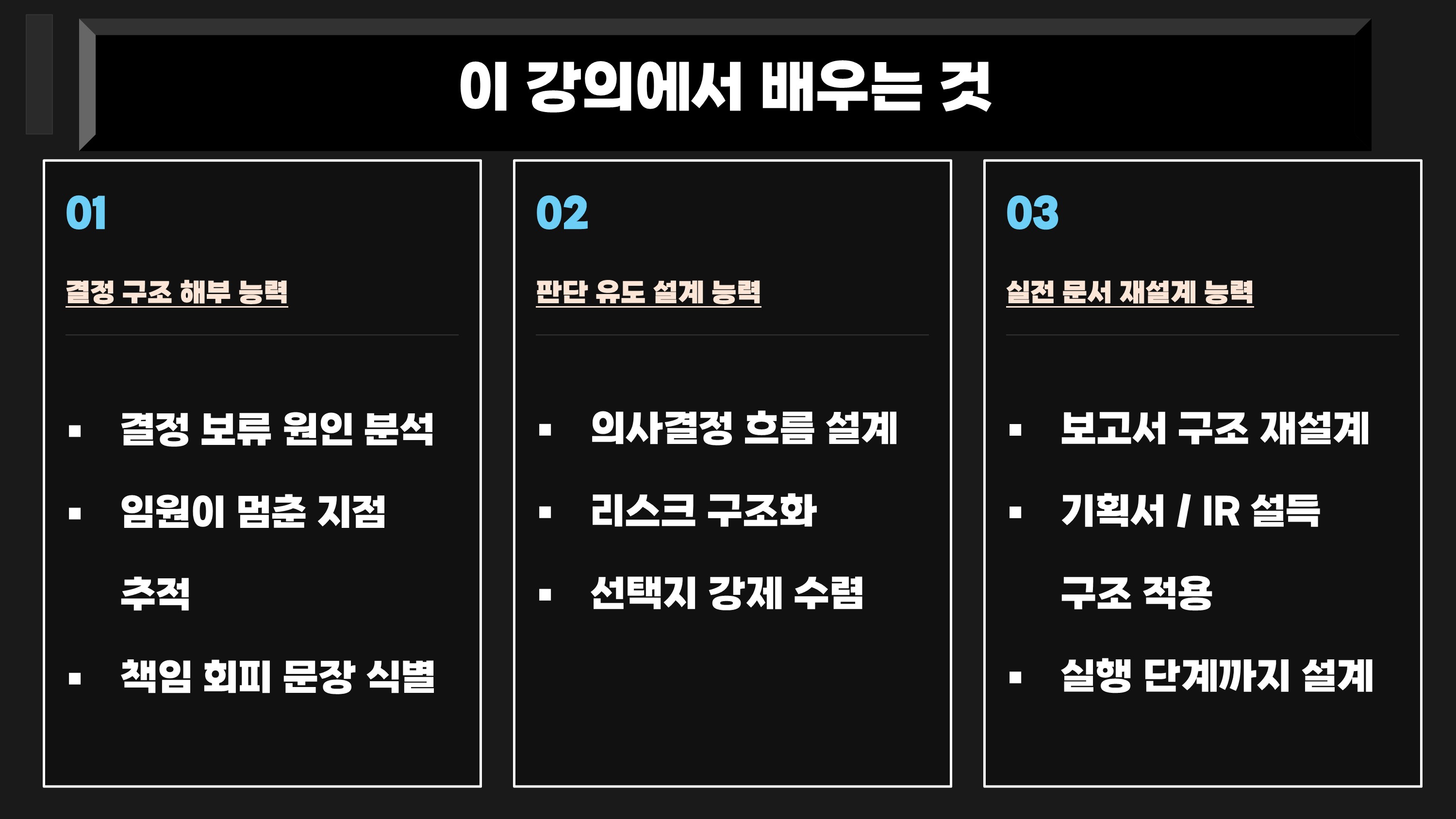
What you will learn in this course

From dissecting decision structures to redesigning practical documents

This course covers three core skills.

Decision structure dissection skills. You will learn how to design decision-making flows, structure risks, and force options to converge. You will be able to accurately diagnose why decisions are being delayed.

Judgment-inducing design skills. We track the points where executives stop while reading a report and cover how to identify and remove sentences that evade responsibility. You will learn to create reports at the level of judgment design, rather than just writing.

Practical document redesign skills. Redesign existing reports into the FOCE structure. Apply proposal and IR persuasion structures to complete documents designed up to the execution stage. Your work productivity will fundamentally change.


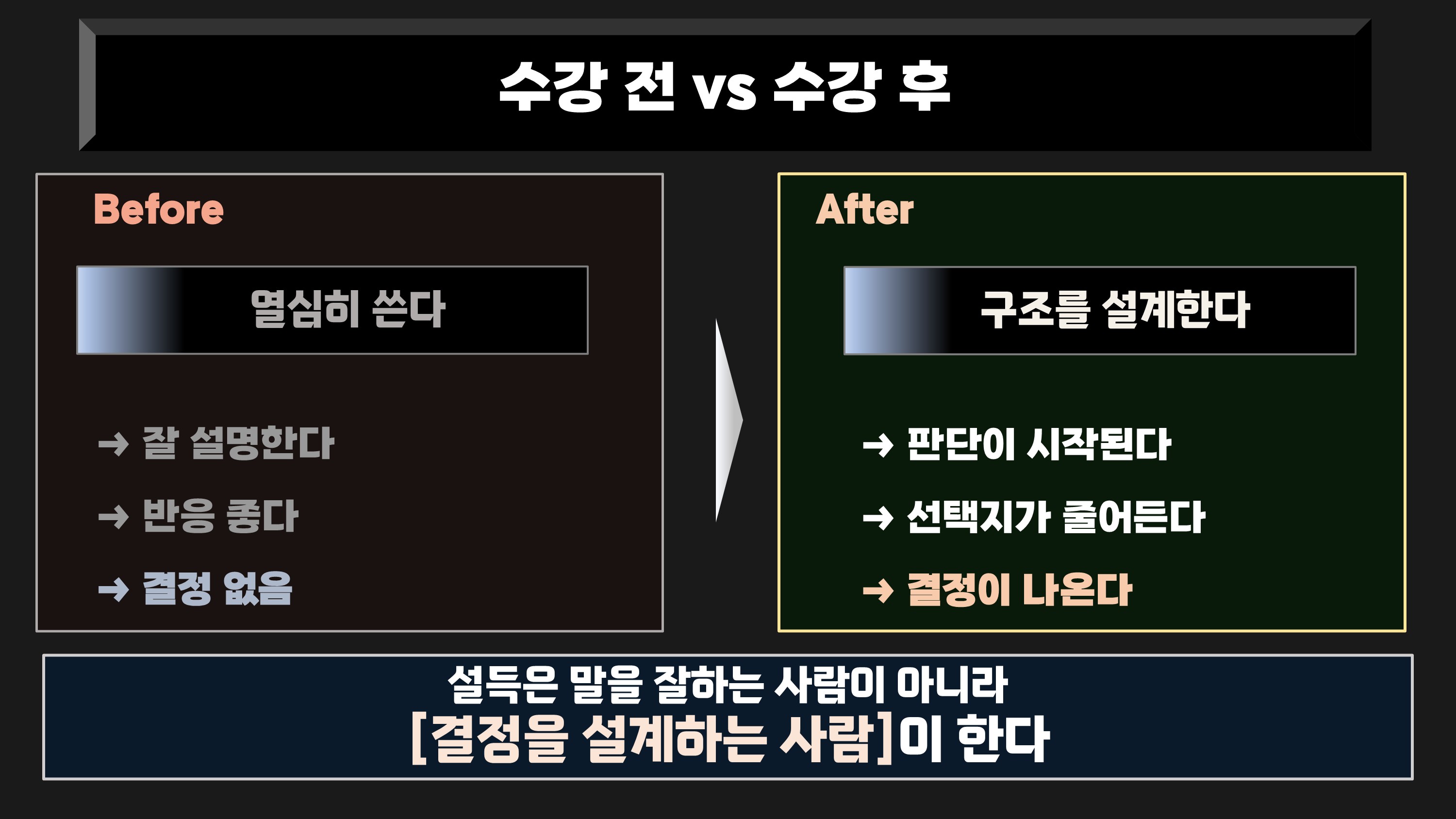
Before vs. After taking the course

The fundamental way you approach reports will change.

Before taking the course, you write diligently. You explain well and receive good reactions, but no decision is made. After taking the course, you design the structure. Judgment begins, options are narrowed down, and decisions are reached.

Persuasion is not done by those who speak well. It is done by those who design decisions. This lecture covers that design capability.


If you are one of these people, this is absolutely necessary.

If you are being worn out by reports and proposals

This lecture is necessary for those whose reports always end in endless reviews, those whose logic is sound but fail to get approval, professionals who need to persuade executives, those working in planning and strategic consulting, and those who write IR materials and business plans.

If you don't change, the same patterns will repeat. If you want to reduce the time and energy wasted on reports, start now.


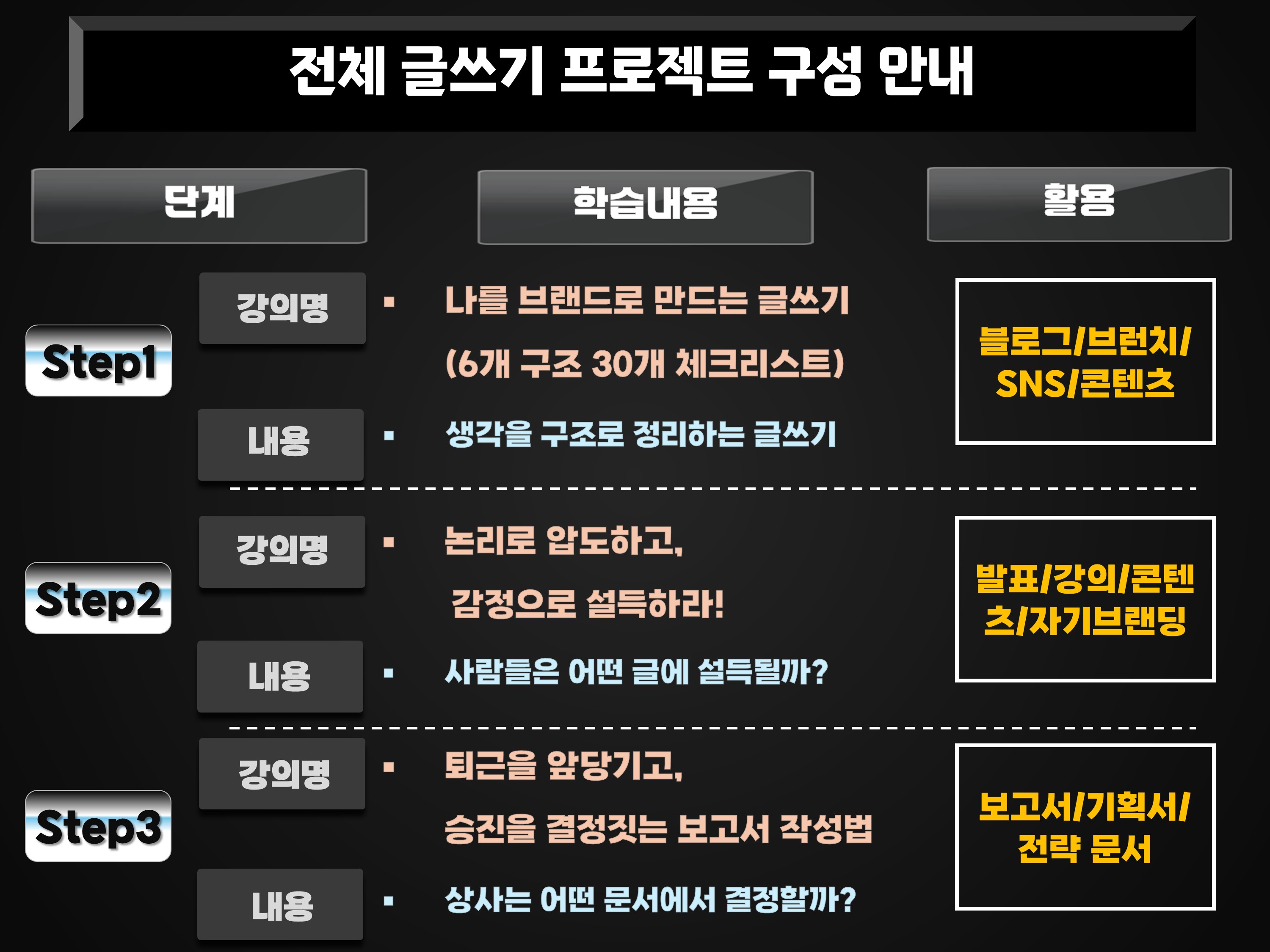
■ Overall Writing Project Composition Guide

It consists of a total of 3 stages

You can conveniently choose and listen to the structural writing courses based on the level of difficulty and scope of application.


■ Full Course Curriculum

☞ Report writing techniques that speed up your departure and determine your promotion 1 - Basics of Structure: https://inf.run/qLYAY

Report Writing Methods that Speed Up Your Clock-out and Determine Your Promotion 2 - Strategic Design: https://inf.run/Ddon1

Report Writing Techniques that Speed Up Your Departure and Determine Your Promotion 3 - Dissecting Decision Suspension Points: https://inf.run/hDWTz

Report Writing Methods that Speed Up Your Departure and Determine Your Promotion 4 - Designing a Decision-Forcing Structure: https://inf.run/VYQLK

Report Writing Methods that Speed Up Your Departure and Secure Your Promotion 5 - Removing Decision Obstacles: https://inf.run/yaaHy

Report Writing Methods that Speed Up Your Departure and Determine Your Promotion 6 - Assembling the Decision Request: https://inf.run/FQkRS

☞ Integrated Package

Report Writing Methods that Speed Up Your Departure and Secure Your Promotion - 1+2 Package: https://inf.run/wAVEw

Report Writing Methods that Speed Up Your Clock-out and Secure Your Promotion - Documents Written Quickly and Approved Instantly: https://inf.run/3tKYu

Report Writing Skills that Speed Up Your Clock-out and Determine Your Promotion - Integrated Package: https://inf.run/noL7D


👤 Instructor Introduction and Major Works

A career spanning 26 years in business and an author's background of planning and publishing 4 full-length novels

“A report is not a piece of writing to be read, but a map that drives action.”

I will teach you how to redesign a practitioner's report into a structure that is easy for superiors to judge, so it doesn't stop at 'good but on hold,' based on my 26 years of business experience and career as an author who has planned and published four novels.

♣ Major Published Works


♣ Major Retailers

- Survivors from Ruin

https://product.kyobobook.co.kr/detail/S000001931933

- Convenient Truth

https://product.kyobobook.co.kr/detail/S000001951523

- Blood Office

https://product.kyobobook.co.kr/detail/S000200051238

- The Foggy Forest and the Heart of Flame

https://ebook-product.kyobobook.co.kr/dig/epd/ebook/E000012385363

-Everything one can commit for the sake of love

https://www.yes24.com/product/goods/177313239

Recommended for
these people

Who is this course right for?

  • Those who write reports but have bosses or executives who delay making decisions.

  • Those who are exhausted by repeated revision requests

  • Working-level professional in charge of planning, strategy, and reporting

  • An office worker who wants to be recognized quickly

Hello
This is beath0015111

62

Learners

12

Reviews

1

Answers

4.7

Rating

15

Courses

I have handled strategic decision-making worth hundreds of billions of won at major corporations and private equity (PE) investment firms for 26 years,

At the same time, as an active author who has planned and published five full-length novels,

I am the only business storyteller in Korea equipped with both logical analytical skills and narrative writing abilities.

저자 소개 세로 260221.jpg


More

Reviews

Not enough reviews.
Please write a valuable review that helps everyone!

beath0015111's other courses

Check out other courses by the instructor!

Similar courses

Explore other courses in the same field!

Limited time deal

$1,402,685.00

44%

$93.50