
Learn Hangul (Korean) properly
usefulit
Learn the basic functions of Hancom Office Hangul (Hangul), which is most commonly used in practice.
Beginner
Hancom Office
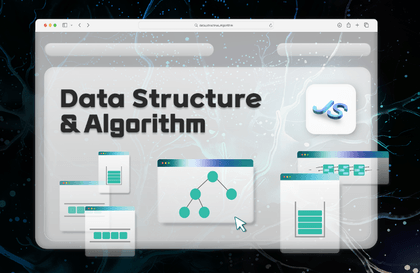
This course is a process of learning the basic theories of data structures by directly implementing them using JAVA programming. It is designed to go beyond simply learning theory, allowing you to gain a deeper understanding of the principles of data structures by implementing them with actual code. Learners will theoretically study core data structure concepts such as arrays, stacks, queues, lists, trees, and graphs, while simultaneously experiencing the actual operation process by implementing them in JAVA code. Through this, you can develop logical thinking and problem-solving skills rather than simple rote learning, and enjoy the synergistic effect of mastering both programming and data structures together. 👉 Upon completing this course, learners will master the basic concepts and structural characteristics of data structures, as well as the ability to implement and apply them in real-world development environments, building a foundation for designing more efficient and robust programs.
Based on the basic theories of data structures, learners can implement them in actual programs.
You can learn the basics of JAVA.

This course is a process of learning the basic theories of data structures by directly implementing them through JAVA programming. It is designed to go beyond simply learning theory, allowing you to gain a deeper understanding of the principles of data structures by implementing them with actual code.
Learners will theoretically study core data structure concepts such as arrays, stacks, queues, lists, trees, and graphs, while simultaneously implementing them in JAVA code to experience the actual operation process. Through this, you can develop logical thinking and problem-solving skills rather than simple rote learning, and enjoy the synergistic effect of mastering both programming and data structures together.
👉 Upon completing this course, learners will master the basic concepts and structural characteristics of data structures, as well as the ability to implement and apply them in real-world development environments, building a foundation for designing more efficient and robust programs.
In this section, you will understand the concept of data structures and cover the most fundamental lists and stacks.
Through the Introduction to Data Structures, we will clarify the concepts of why data structures are necessary and what role they play in programming.
Next, you will learn about Lists over four stages, implementing the differences between array-based lists and linked lists, as well as methods for insertion, deletion, and searching through code.
Finally, you will learn the principles and applications of the Stack and gain hands-on experience with the operation of the LIFO (Last-In-First-Out) structure.
👉 After completing this section, you will solidify your understanding of lists and stacks concepts and implementation skills.
In the second section, we cover expanded data structures and implement queues, trees, heaps, and graphs.
Learn the FIFO (First-In-First-Out) structure of Queues step-by-step, and practice implementing circular queues and linked queues.
In the Tree section, you will learn the concepts of nodes and hierarchical structures, and cover the insertion, deletion, and search processes of binary trees in depth across four stages.
Learn how to implement a priority queue through the Heap data structure and connect it with sorting algorithms.
Finally, you will learn about Graphs and implement the concepts of nodes and edges, graph representation methods (adjacency matrix, adjacency list), and traversal algorithms (BFS, DFS) through code.
👉 Through this section, learners will fully understand and be able to directly implement the four essential data structures (Queue, Tree, Heap, Graph) required for practical work and algorithmic problem-solving.
This course does not provide Q&A with the instructor
Weekly lesson plans are provided as PDF files.
Who is this course right for?
Any member who wishes to learn data structures required for programming
Any member who wishes to develop computational thinking skills

8,277,632
Learners
6,414
Reviews
4.6
Rating
308
Courses
I will help you grow through useful IT lectures.
All
16 lectures ∙ (6hr 2min)
Course Materials:
3. List (1)
25:21
4. List (2)
23:38
5. List (3)
18:47
6. List (4)
28:50
7. Stack
27:03
9. Queue (1)
20:19
10. Queue (2)
28:49
11. Tree (1)
29:44
12. Tree (2)
22:54
13. Tree (3)
26:21
14. Tree (4)
27:34
15. Heap
27:30
16. Graph
28:29
All
1 reviews
Check out other courses by the instructor!
Explore other courses in the same field!
$48.40