While tackling Nebula, a wargame designed to develop system hacking skills, I have included a complete translation and solutions for all challenges, including the setup of the practice environment from start to finish. Additionally, you can acquire the computer science knowledge required for each challenge.
First of all, the voice is good and the explanation is good. Haha
It's not hard to follow.
Since it's done through a war game, it's less burdensome and the decisive thing is fun.
5.0
rini9
100% enrolled
It was a good lecture.
5.0
whopdo
100% enrolled
I heard it well
What you will gain after the course
Mainly the ability and intuition for discovering system-related vulnerabilities.
Computer science knowledge related to each challenge.
Hacking as a hobby, hobbyist hacking. ※ "Hacking as a Hobby" content aims only for legal hacking to contribute to a safe information security ecosystem.
▶ After "Hacking as a Hobby #1," are you looking for a system hacking challenge to practice even more advanced skills?
▶ Do you want to develop source code (C language, etc.) analysis skills that will be helpful for reversing?
▶ Furthermore, do you want to challenge system-related challenges in hacking competitions?
그렇다면 여기서 도움을 받으실 수 있습니다.
Here, we will master the famous wargame, Nebula. Based on fully translated Korean materials, we will practice every challenge from start to finish.
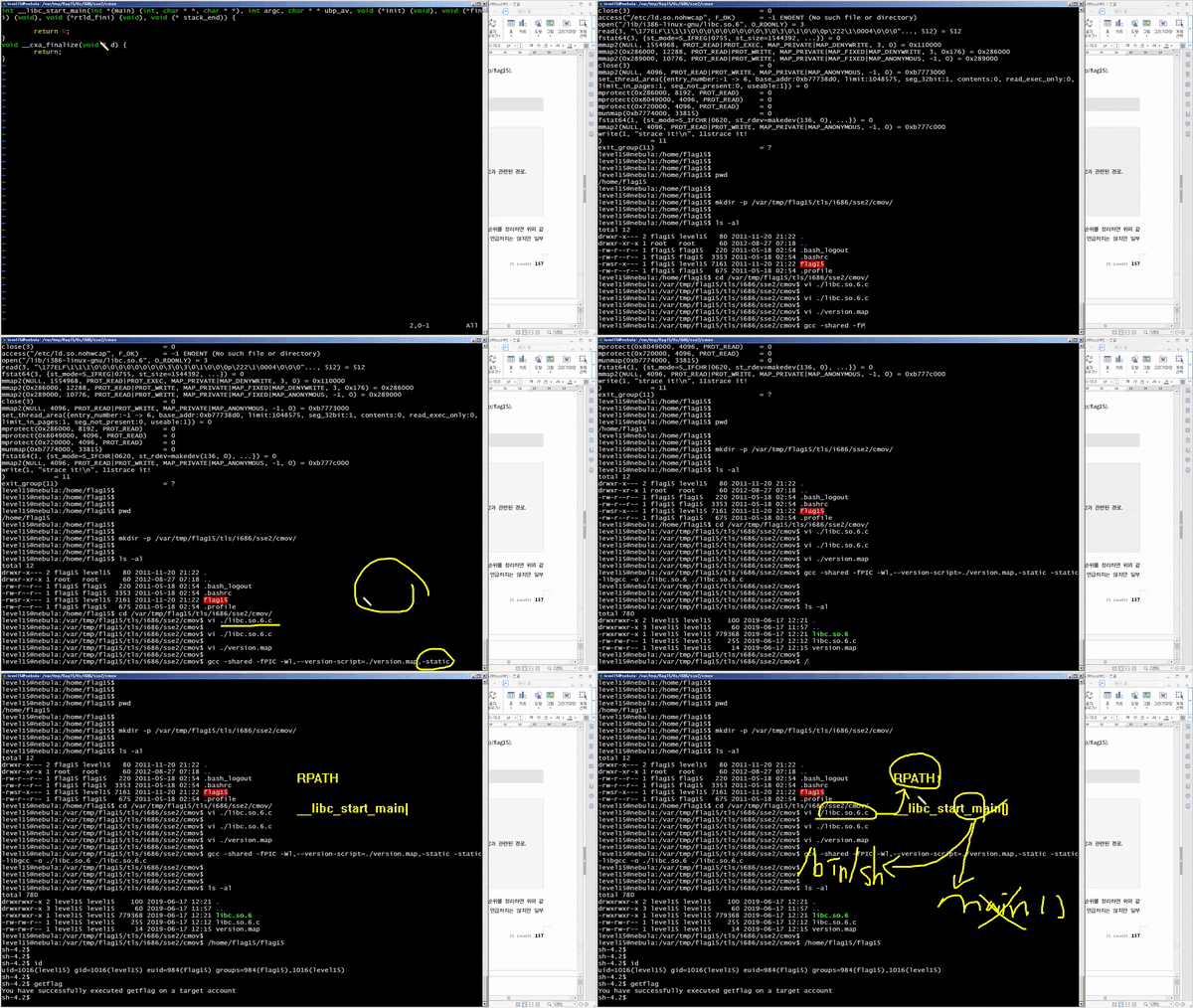
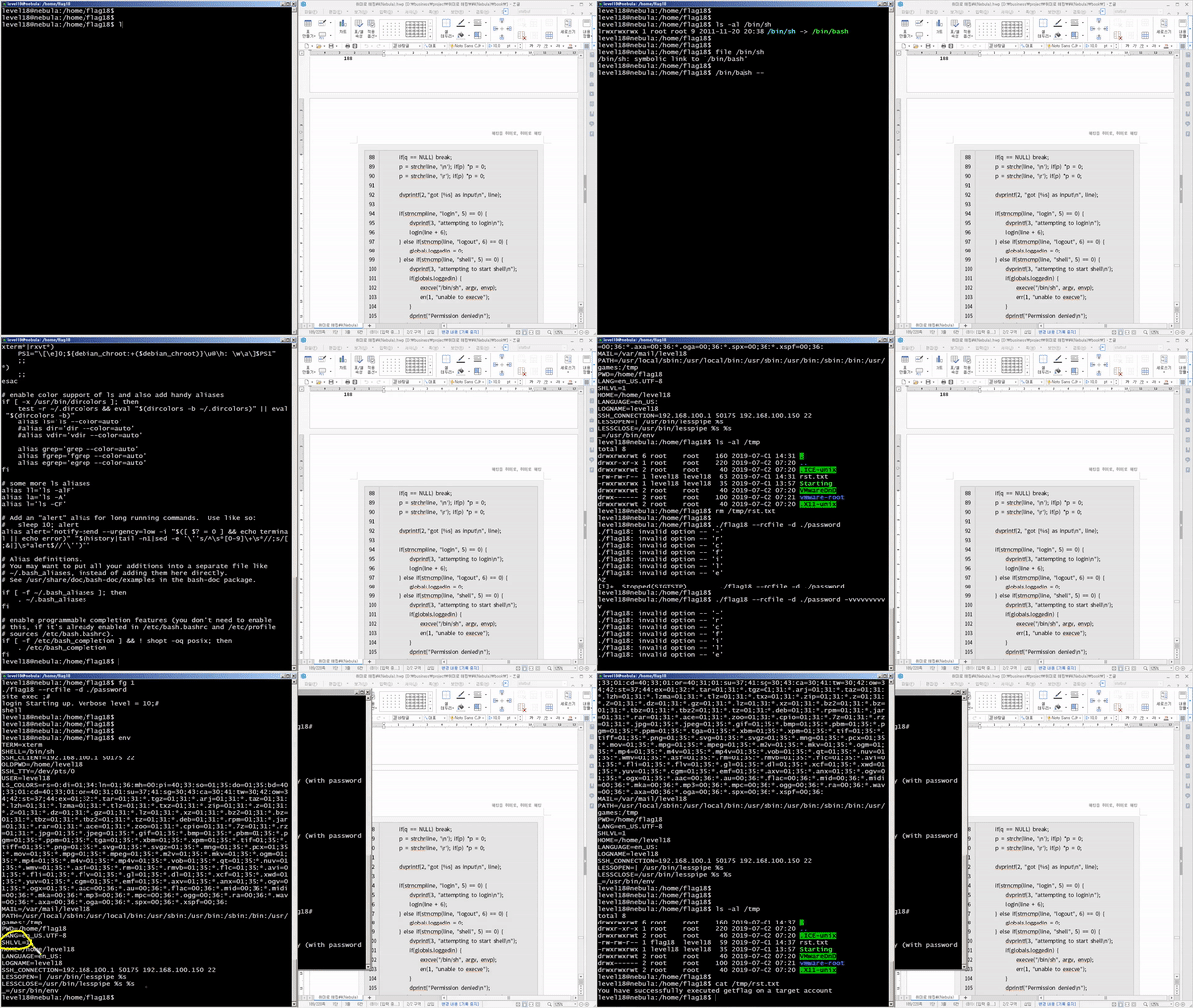
We will discover and attack vulnerabilities that can occur in Linux systems, which are widely used as servers, to escalate privileges step-by-step. Through this, you will realize that most vulnerabilities are caused by mistakes made by developers who are unaware of security. You will witness programs that become adversaries to each other due to race conditions. You will witness how clumsy data filtering becomes the beginning of program collapse. You will witness outsider interference occurring due to the misuse and abuse of special privileges. You will also witness specific functions being swapped for other functions due to poorly applied security knowledge.
By experiencing various situations, you will learn how to discover and remediate system-related security vulnerabilities. More specifically, it includes theory and practice on vulnerabilities related to privilege (general/special) settings, relative paths, environment variables, input filtering, schedulers, password hashes, code injection, plaintext communication, outdated open source, race conditions, variable initialization, library hooking, data encryption, file attributes, deserialization, privilege checking methods, and exception handling.
[Q1] I haven't taken "Hacking as a Hobby #1~3." Is it okay to start with this one? [Ans] It shouldn't be a problem as long as you have at least basic Linux system skills (connecting, compiling, navigating, text editing, etc.). If not, I recommend studying those separately or completing "Hacking as a Hobby #1," which is the most relevant course.
[Q2] What skills will I have after completing the course? [Ans] You will learn how to exploit various vulnerabilities that can occur in a Linux environment. You will be able to use more advanced skills regarding the vulnerabilities mentioned above. You can also use this knowledge to create more secure programs. Additionally, since it includes a lot of source code analysis, it will be helpful for future challenges in the field of reversing.
ㆍ Information Security Engineer
ㆍ Author of "Coding Everybody! Python"
ㆍ Author of "Hacking as a Hobby #N" (Book & Lectures)
ㆍ Information Security Officer at Hankuk University of Foreign Studies
ㆍ CERT Team Leader at Missile Strategy Command (Army OCS #59)
ㆍ B.S. in Computer Science and Engineering, Tech University of Korea (4.42 GPA)
First of all, the voice is good and the explanation is good. Haha
It's not hard to follow.
Since it's done through a war game, it's less burdensome and the decisive thing is fun.




















![[Easy for Non-Majors] Information Security Incidents: From Cause Analysis by Type to SolutionsCourse Thumbnail](https://cdn.inflearn.com/public/files/courses/342007/cover/ai/2/785d01a5-f55f-4807-b882-6dcbfe3d7f91.png?w=420)