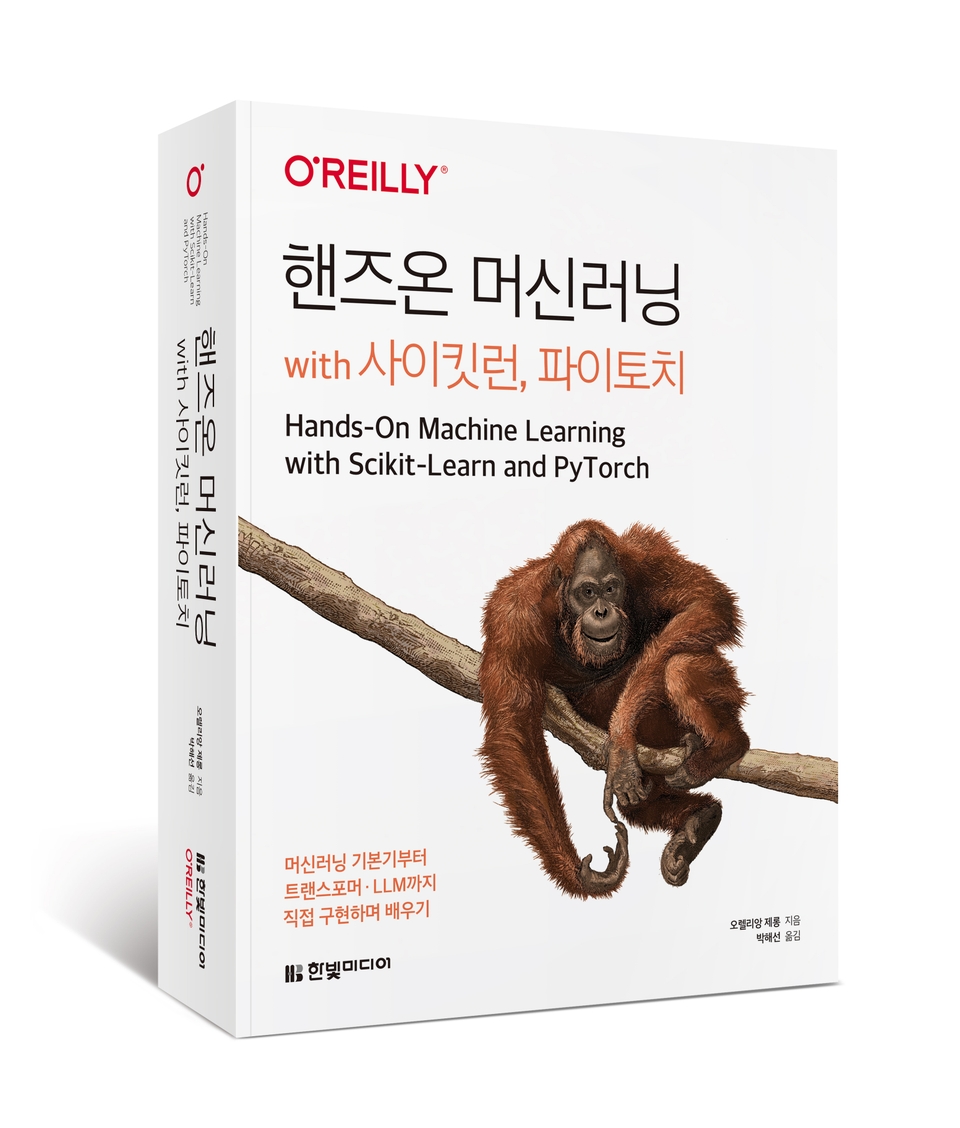
Explanation of the example code for <Hands-On Machine Learning with Scikit-Learn, PyTorch>
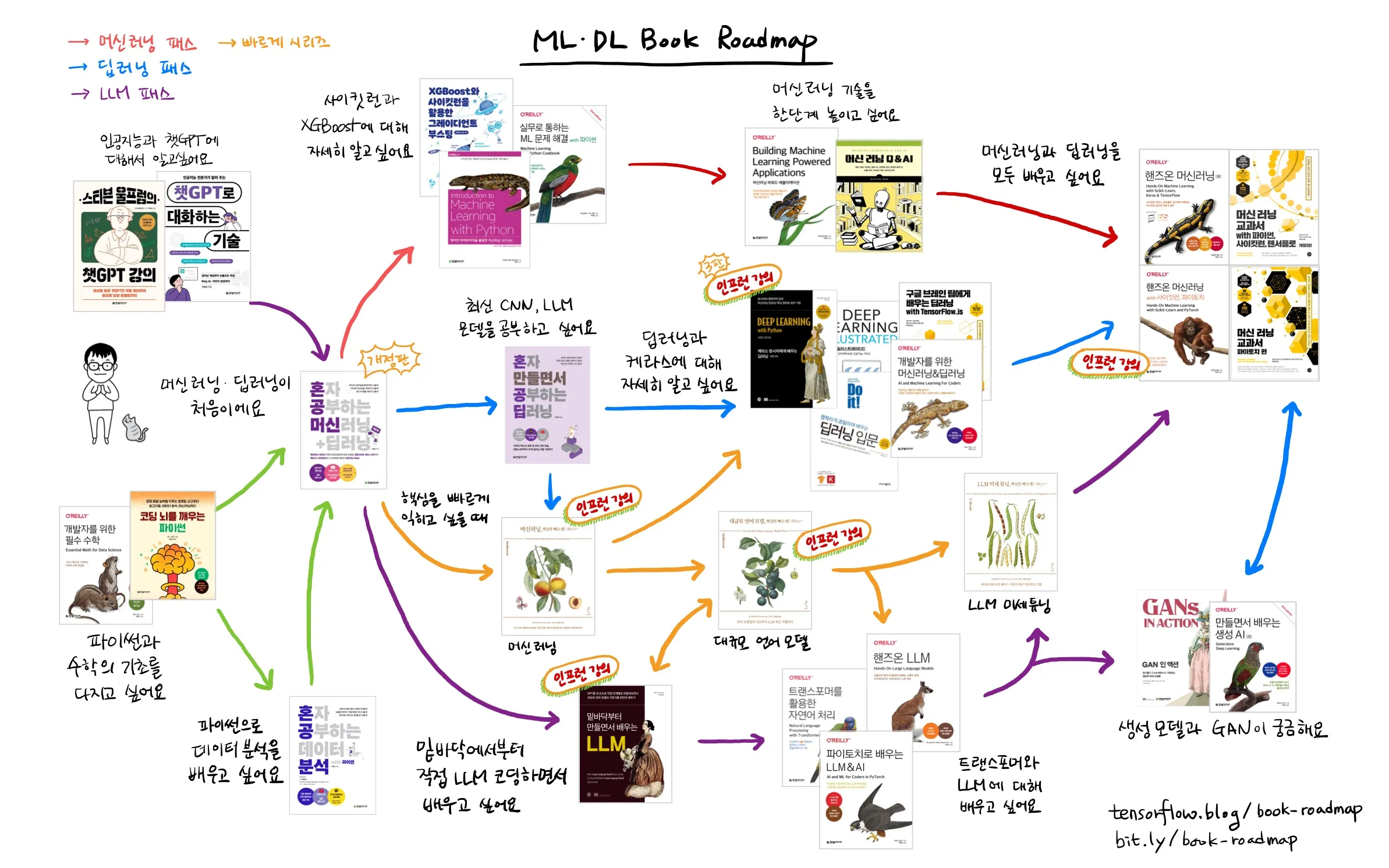
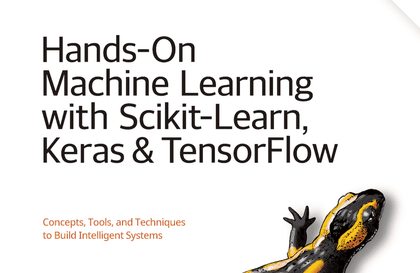
A focused learning program that systematically works through the latest machine learning bestsellers, covering everything from scikit-learn–based machine learning algorithms to deep learning with PyTorch, transformers, and large language models through hands-on practice. It balances theory and practical code to help you master the core of modern AI technology.
Implementing major machine learning algorithms, including regression, classification, and clustering, with scikit-learn
PyTorch-Based Neural Network Design and Understanding Transformer Architectures
An AI engineer who wants to deeply understand the principles of Transformers and LLMs}
Course release announcement
This course will be released sequentially starting November 2!
Discount news
<Hands-On Machine Learning with Scikit-Learn, PyTorch> Complete Reading Challenge (https://inf.run/5SDwX) and receive a free coupon for this course!
Book Introduction
Don't stop at using AI—understand how AI is made
Now that generative AI and LLMs have become part of everyday life, simply learning new tools is not enough to truly understand AI. Underneath it all, the fundamental principles of machine learning—preparing data, choosing models, training them, and evaluating them—remain firmly in place. With this book, learn the basic concepts of machine learning and end-to-end projects with scikit-learn, then implement neural networks yourself with PyTorch and gradually expand your understanding of deep learning principles. If you have read 『Hands-On Machine Learning (3rd Edition)』, the familiar fundamentals remain largely the same, but the content after deep learning has changed considerably. Learn neural networks again with a focus on PyTorch, and expand your learning to cover everything from transformers for natural language processing and chatbots to vision, multimodal systems, and model acceleration. Work directly with and fine-tune Hugging Face’s pretrained models and LLMs, then move on to autoencoders, GANs, diffusion models, and reinforcement learning through practical code and examples. In fact, this edition has been completely restructured around PyTorch throughout Part 2 and adds three new chapters on transformers. Rather than chasing one fragmentary piece of cutting-edge technology after another, if you want to start with the fundamentals of machine learning and understand how today’s AI technologies have evolved, this book will serve as a reliable guide. For readers just getting started, it provides a solid foundation; for readers who have already read the third edition, it offers a natural path to the next stage with PyTorch and the latest AI technologies, building on the fundamentals they have already learned.
Reviews
Experts who read it first recommend this book
"This book is the ultimate map for exploring the unknown world of machine learning. Always keep it within reach."
— Hae-Sun Park, Google AI/Cloud GDE
"This is a book that has trained a generation of machine learning engineers. This time, it covers PyTorch and will once again be the ultimate hands-on guide."
"It is an excellent introductory book for those who feel lost about how AI is created and makes its way into our hands. It will be a great guide, building knowledge step by step from the basics to the depths."
— Shin Jeong-gyu, CEO of Lablup and Google Developer Expert (AI·Cloud)
"It guides you step by step from basic concepts to the latest techniques with well-structured code and practical examples. You can learn by implementing them yourself with scikit-learn and PyTorch."
— Louis-François Bouchard, Co-founder and CTO of Towards AI
Although I majored in mechanical engineering, I have worked continuously reading and writing code since graduating. I am a Google AI/Cloud GDE. I run the TensorFlow blog (tensorflow.blog) and explore the fascinating boundary between software and science by writing and translating books about machine learning and deep learning.
I have written 『Deep Learning You Study by Building It Yourself』 (Hanbit Media, 2025), 『Self-Study Machine Learning + Deep Learning (Revised Edition)』 (Hanbit Media, 2025), 『Self-Study Data Analysis with Python』 (Hanbit Media, 2023), 『The Art of Conversing with ChatGPT』 (Hanbit Media, 2023), and 『Do it! Introduction to Deep Learning』 (Aegis Publishing, 2019).
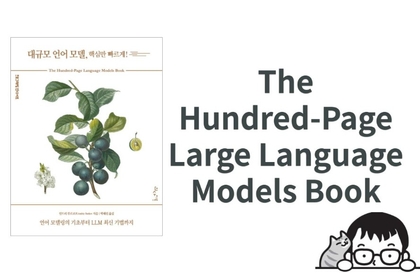
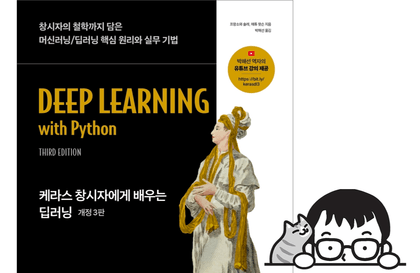
『Hands-On Machine Learning with Scikit-Learn and PyTorch』(Hanbit Media, 2026), 『Deep Learning from the Keras Creator (3rd Edition)』(Gilbut, 2026),『LLM Fine-Tuning, Fast and Focused!』(Insight, 2026), 『LLM & AI with PyTorch』(Hanbit Media, 2026), 『Large Language Models, Fast and Focused!』(Insight, 2025), 『Machine Learning, Fast and Focused!』(Insight, 2025), 『Learn LLMs by Building from Scratch』(Gilbut, 2025), 『Hands-On LLM』(Hanbit Media, 2025), 『Machine Learning Q & AI』(Gilbut, 2025), 『Mathematics for Developers』(Hanbit Media, 2024), 『Practical ML Problem Solving with Python』(Hanbit Media, 2024), 『Machine Learning Textbook: PyTorch Edition』(Gilbut, 2023), 『Stephen Wolfram's ChatGPT Course』(Hanbit Media, 2023), 『Hands-On Machine Learning, 3rd Edition』(Hanbit Media, 2023), 『Generative Deep Learning by Building, 2nd Edition』(Hanbit Media, 2023), 『Python That Awakens Your Coding Brain』(Hanbit Media, 2023), 『Natural Language Processing with Transformers』(Hanbit Media, 2022), 『Deep Learning from the Keras Creator, 2nd Edition』(Gilbut, 2022), 『Machine Learning&Deep Learning for Developers』(Hanbit Media, 2022), 『Gradient Boosting with XGBoost and Scikit-Learn』(Hanbit Media, 2022), 『Learn Deep Learning with the Google Brain Team with TensorFlow.js』(Gilbut, 2022), and 『Machine Learning with Python Machine Learning Libraries (2nd Revised Edition)』(Hanbit Media, 2022), among several dozen books translated into Korean.