I was a bit scared to watch because I wasn't prepared for the math, but it was great that you just picked out the summary for me!
5.0
Park Ju Yeong
38% enrolled
I now understand automatic differentiation, which I previously only knew abstractly!
5.0
HuaZ
38% enrolled
This is very helpful for understanding.
What you will gain after the course
History and Theory of Language Models
Early language modeling techniques such as BoW and word embeddings
The Structure of Recurrent Neural Networks (RNNs) and Training Language Models Using RNNs
Core components of a transformer (self-attention, multilayer perceptron, rotary position embedding, key-value caching)
Fine-Tuning Large Language Models and Various Token Sampling Strategies
Parameter-efficient fine-tuning methods: LoRA and prompt engineering
Discount news
<Deep Learning with Python, 3rd Edition> Full-Read Challenge(https://inf.run/DPba3), register to receive a 50% discount coupon for this course!
<Hands-On Machine Learning with Scikit-Learn and PyTorch> Complete Reading Challenge (https://inf.run/5SDwX), you will receive a 50% discount coupon for this course!
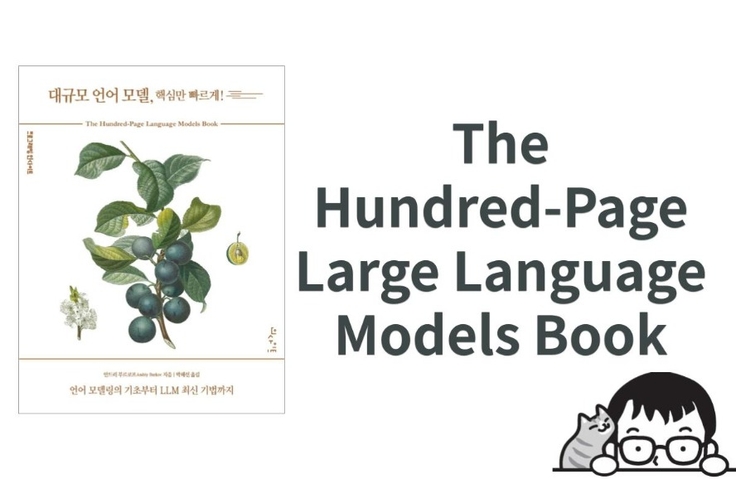
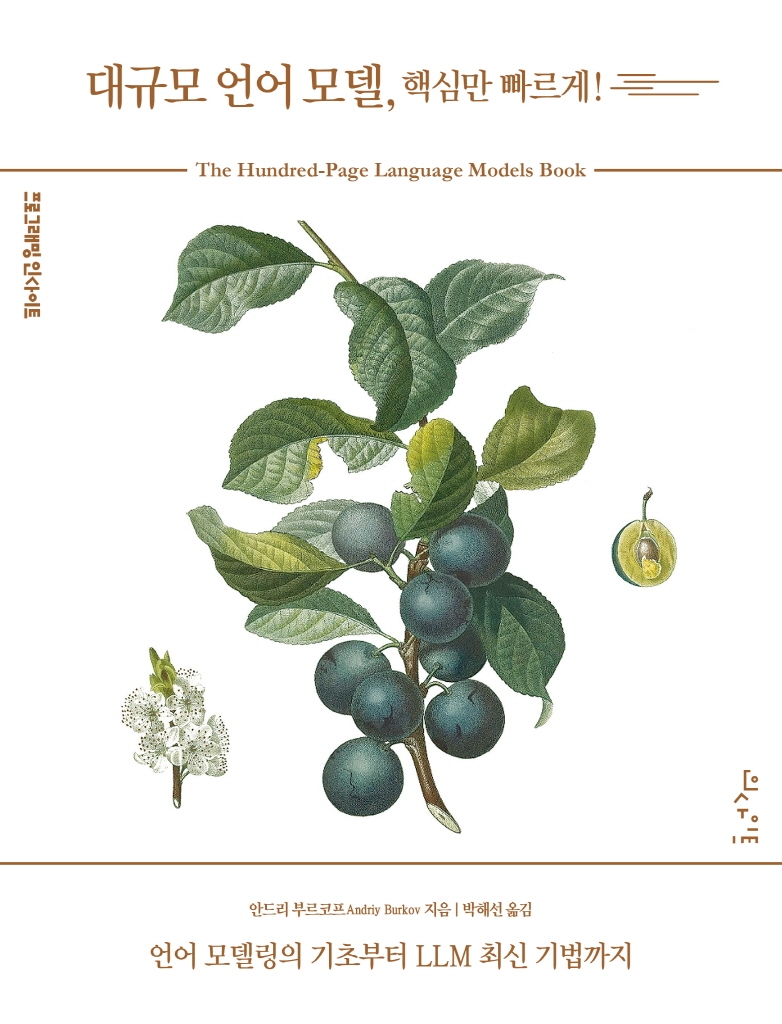
Book Introduction
Less complex theory, packed with only the essential core!
The Most Concise Guide to Learning Language Modeling
This book is a follow-up to Andriy Burkov’s bestseller 《The Hundred-Page Machine Learning Book》. Starting with the fundamentals of language modeling, it provides a concise yet thorough treatment of modern large language models (LLMs). Through this book, readers can systematically learn the mathematical foundations of modern machine learning and neural networks, implement counting in Python, build RNN-based language models, create a Transformer from scratch with PyTorch, and practice working with LLMs (instruction fine-tuning and prompt engineering).
Built around executable Python code and a Google Colab environment, this hands-on book allows anyone to follow along step by step and deepen their understanding. It explains how language models have evolved from simple n-gram statistics into a core technology of today’s AI, covering everything from count-based methods to the latest Transformer architectures while addressing both the underlying principles and their implementation. Each chapter builds progressively on the preceding material, with clear explanations, illustrations, and hands-on exercises that make even complex concepts easy to understand.
Praise for the Book
“This book clears up the conceptual confusion surrounding how machine learning actually works. It is a gem that presents machine learning with exceptional clarity.” - Vint Cerf (Internet pioneer and Turing Award winner)
“It is an excellent starting point for those taking their first steps into language modeling and seeking to advance toward the cutting edge.” - Tomas Mikolov (the developer of word2vec and FastText)
“Andrej paints the journey from the fundamentals of linear algebra to implementing transformers in more than 100 wonderful brushstrokes.” - Florian Douetteau (co-founder and CEO of Dataiku)
“One of the most comprehensive yet concise guides to gaining a deep understanding of how LLMs work internally.” - Jerry Liu (Co-founder and CEO of LlamaIndex)
“Adrian has an almost supernatural talent for reducing vast AI concepts to bite-sized pieces that make readers feel, ‘Now I get it!’” - Jorge Torres (CEO of MindsDB)
Although I majored in mechanical engineering, I have worked continuously reading and writing code since graduating. I am a Google AI/Cloud GDE. I run the TensorFlow blog (tensorflow.blog) and explore the fascinating boundary between software and science by writing and translating books about machine learning and deep learning.
I have written 『Deep Learning You Study by Building It Yourself』 (Hanbit Media, 2025), 『Self-Study Machine Learning + Deep Learning (Revised Edition)』 (Hanbit Media, 2025), 『Self-Study Data Analysis with Python』 (Hanbit Media, 2023), 『The Art of Conversing with ChatGPT』 (Hanbit Media, 2023), and 『Do it! Introduction to Deep Learning』 (Aegis Publishing, 2019).
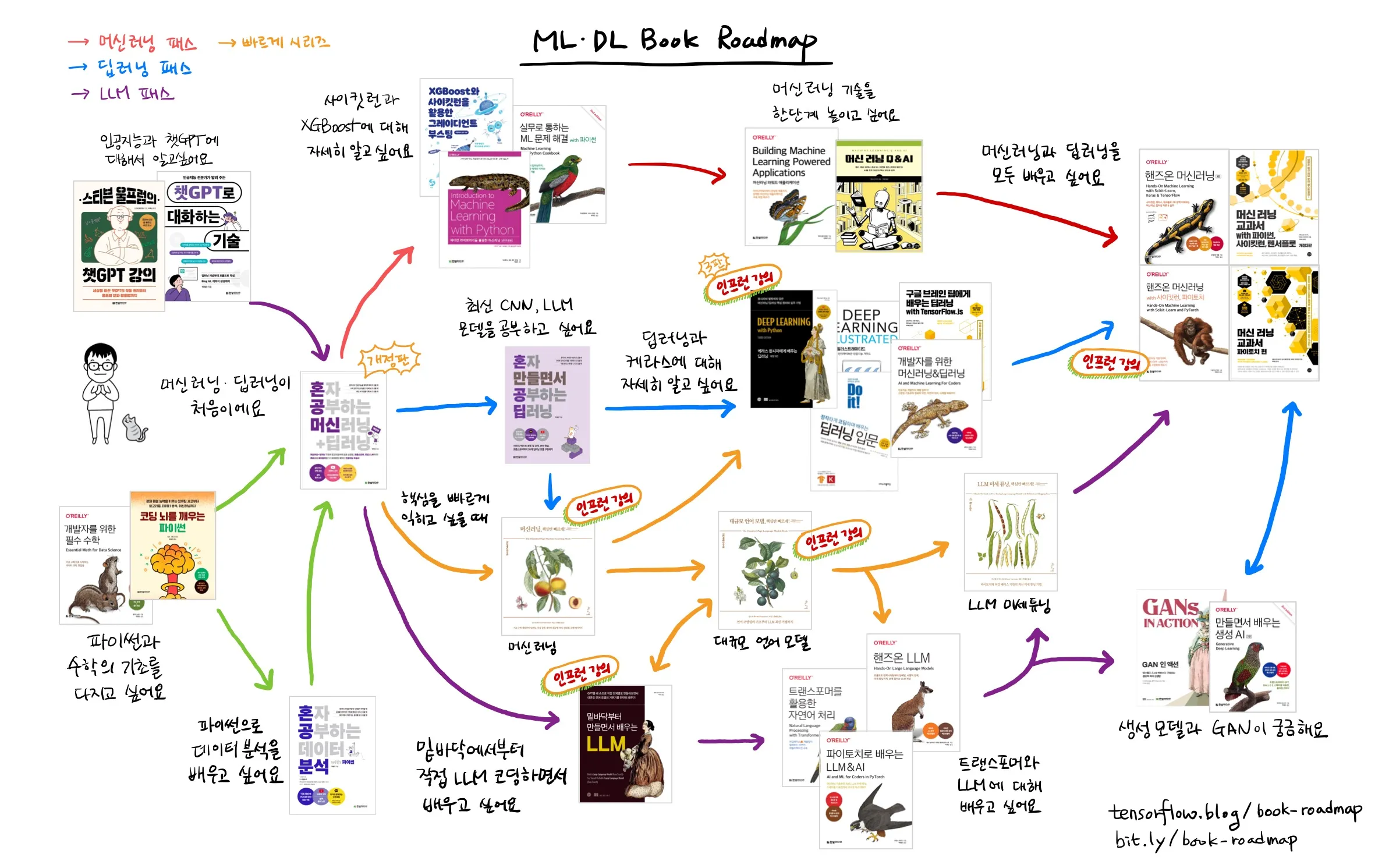
『Hands-On Machine Learning with Scikit-Learn and PyTorch』(Hanbit Media, 2026), 『Deep Learning from the Keras Creator (3rd Edition)』(Gilbut, 2026),『LLM Fine-Tuning, Fast and Focused!』(Insight, 2026), 『LLM & AI with PyTorch』(Hanbit Media, 2026), 『Large Language Models, Fast and Focused!』(Insight, 2025), 『Machine Learning, Fast and Focused!』(Insight, 2025), 『Learn LLMs by Building from Scratch』(Gilbut, 2025), 『Hands-On LLM』(Hanbit Media, 2025), 『Machine Learning Q & AI』(Gilbut, 2025), 『Mathematics for Developers』(Hanbit Media, 2024), 『Practical ML Problem Solving with Python』(Hanbit Media, 2024), 『Machine Learning Textbook: PyTorch Edition』(Gilbut, 2023), 『Stephen Wolfram's ChatGPT Course』(Hanbit Media, 2023), 『Hands-On Machine Learning, 3rd Edition』(Hanbit Media, 2023), 『Generative Deep Learning by Building, 2nd Edition』(Hanbit Media, 2023), 『Python That Awakens Your Coding Brain』(Hanbit Media, 2023), 『Natural Language Processing with Transformers』(Hanbit Media, 2022), 『Deep Learning from the Keras Creator, 2nd Edition』(Gilbut, 2022), 『Machine Learning&Deep Learning for Developers』(Hanbit Media, 2022), 『Gradient Boosting with XGBoost and Scikit-Learn』(Hanbit Media, 2022), 『Learn Deep Learning with the Google Brain Team with TensorFlow.js』(Gilbut, 2022), and 『Machine Learning with Python Machine Learning Libraries (2nd Revised Edition)』(Hanbit Media, 2022), among several dozen books translated into Korean.












![[PyTorch] Learn NLP easily and quicklyCourse Thumbnail](https://cdn.inflearn.com/public/courses/325056/course_cover/b66025dd-43f5-4a96-8627-202b9ba9e038/pytorch-nlp-eng.png?w=420)

![AI Reading Comprehension for Engineers [Beginner Edition] — 48 Lessons on Understanding Model Cards, API Documentation, and Research PapersCourse Thumbnail](https://cdn.inflearn.com/public/files/courses/343794/cover/01m01gk3f7dhe2fwesbwf63tz0?w=420)
