This course is for both beginners who have never been exposed to programming before and those who have some theoretical knowledge about Python. The main purpose of the course is to create interest and enjoyment in Python based on real projects. I hope that through this course, you will gain more ideas and have more fun with Python.
It's been a while since I took the course, but I'm just now leaving a review.
I got into coding through this course, and I'm currently studying JS and preparing for a job in front-end development.
I think that in order to make any programming content your own, you need to spend time thinking about the algorithmic and implementation aspects yourself. I really liked how Dr. Nam kept this in mind while teaching.
In particular, I think I've had a lot of fun with Python so far because he covers a wide range of applied areas rather than theoretical areas.
I think there are some people who hesitate to take an introductory course because there are more applications than theories, so I'd like to say one thing. Programming is practical. I think it should be a process of getting used to it, not a process of learning. Moreover, if you're new to Python and new to coding, I think you should study while enjoying the sense of accomplishment when the logic in your head is implemented into an actual program, not just the theory. (Generally, this is the biggest advantage expected from starting coding through Python, not a low-level language.)
Take this course. I highly recommend it.
5.0
홍태경
44% enrolled
One thing for sure is that if you watch this course over and over again, you will become more familiar with Python's patterns and if you do it consistently, you will become more confident that your skills will improve. It's been a month since I started Python and I still lack the skills to create or apply something, so I feel a lot of pressure from the lecture and have doubts about whether this is right. Nevertheless, I am doing it steadily little by little, thinking that if I do it like the purpose of this video, I will feel fun. I am sure that I will be better than I am now in a month. Thank you. It was worth the money.
5.0
귀여운 사슴
64% enrolled
I registered for this course a few years ago because I was curious about Python. I forgot about it, but now that I'm retired and have time, I'm listening to it again and it's really fun. I'm listening to it once at 2x speed, so I'm not sure if I understand it properly. However, I feel like I'm possessed by Dr. Nam's passionate lecture. This is the first time I've felt this much fun in my mid-60s.
I've never done this because I live a different life from an office job. So I don't know if I'll do it right or how far I'll go, but I want to try hard. Thank you, Dr. Nam.
What you will gain after the course
Python Programming
Introduction to Programming
Creating various programs
Create a bot
Other various programming uses
Do you want to learn programming?
Some people might want to learn programming and become developers, while others might simply think that learning how to do something fun would be fun. Everyone has different reasons and goals for wanting to learn programming. However, it's true that beginners often don't know what to learn and find it overwhelming.
Even non-developers know that Python is one of the easiest languages for beginners to learn and one of the most widely used by working developers for its convenience and productivity. However, for someone who has never programmed before, even this supposedly easy Python can feel daunting.
This course focuses on Python's fundamentals, from theory to actual program creation, for those with no prior Python knowledge. Many people, despite watching and listening to extensive material, feel like they've learned a lot by the end of the course, yet struggle to create even a single simple program. For these individuals, this course focuses on engaging and engaging programming, with a variety of examples and hands-on exercises. For beginners, the most important thing is not to focus on complex knowledge, but rather to gain a fundamental understanding of how fun and engaging programming can be .
We will create a variety of different types of programs using Python.
Preview of the practical programs covered in the course
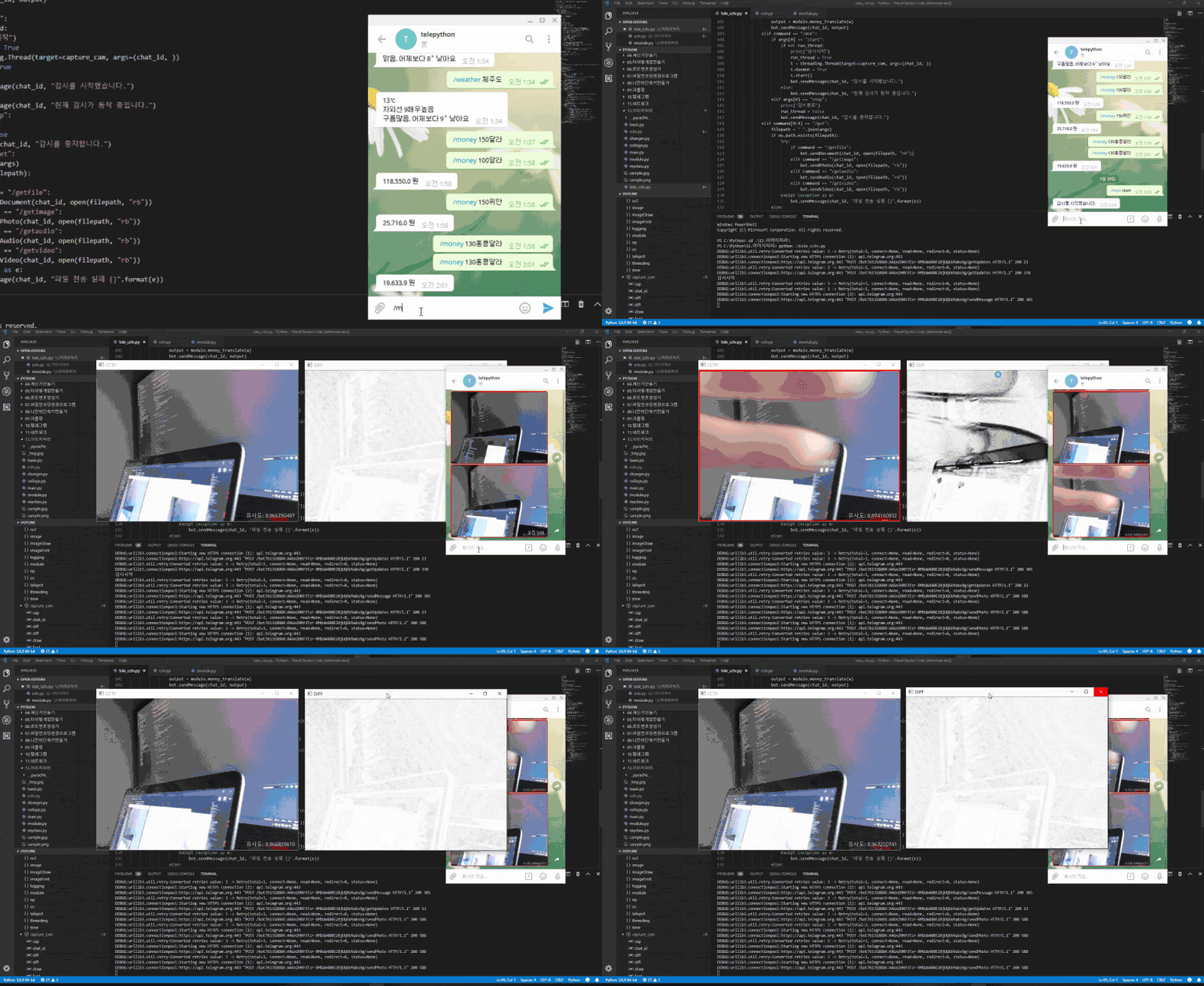
Adding CCTV functionality to your Telegram bot
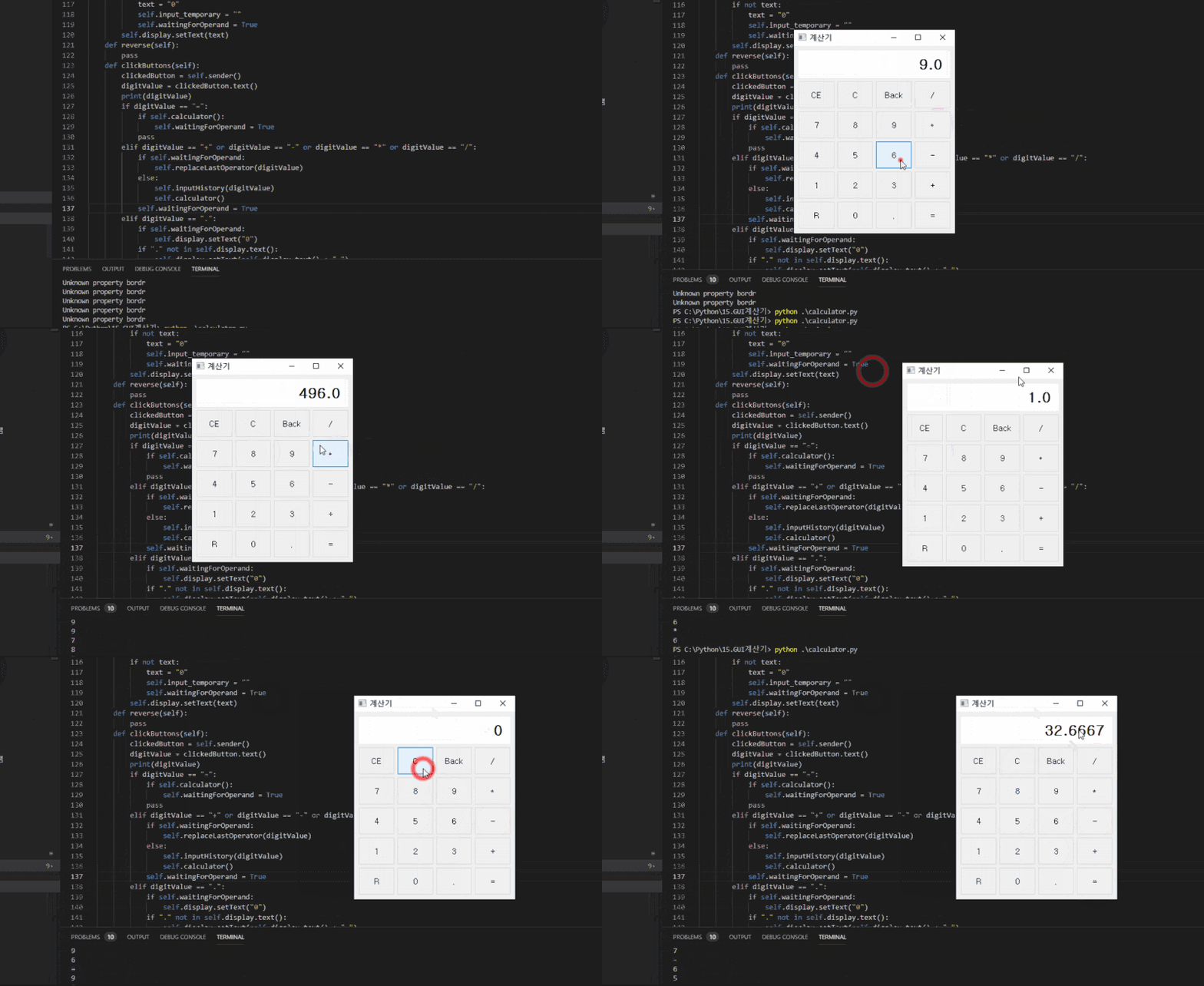
Implementing a GUI calculator (enabling both mouse and keyboard input)
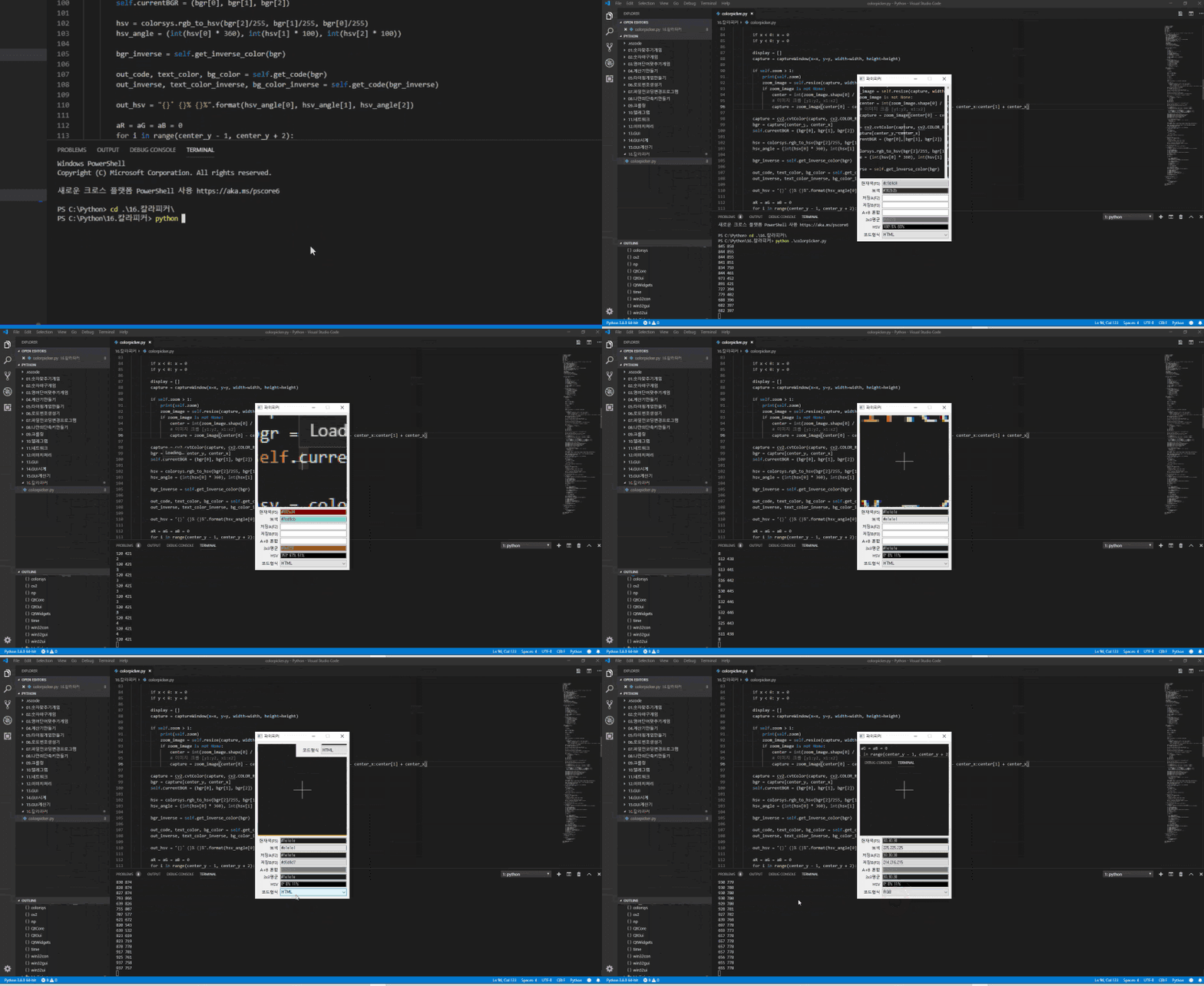
Implementing a GUI color picker
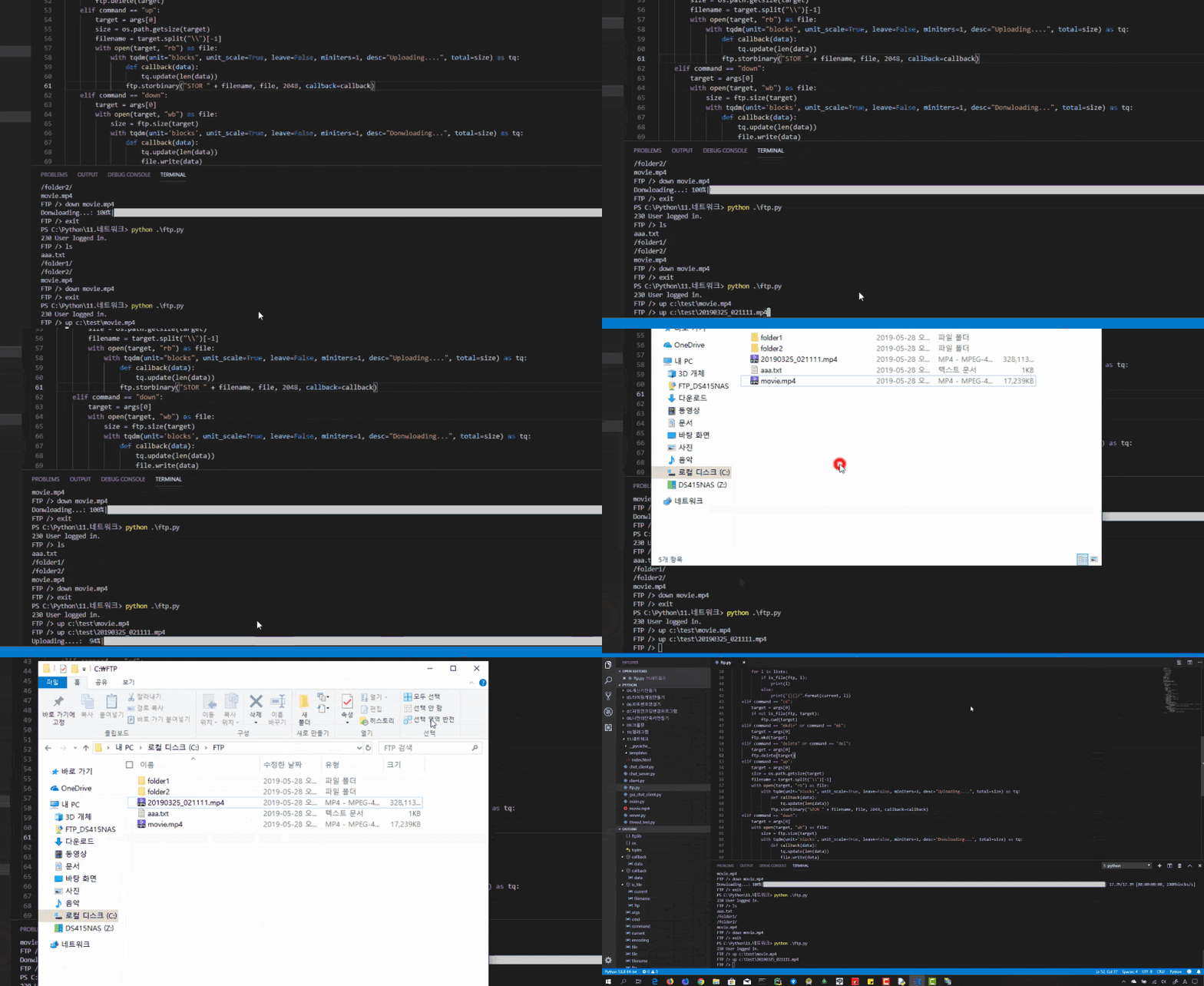
Implementing an FTP client (implementing FTP browsing/FTP upload/download)
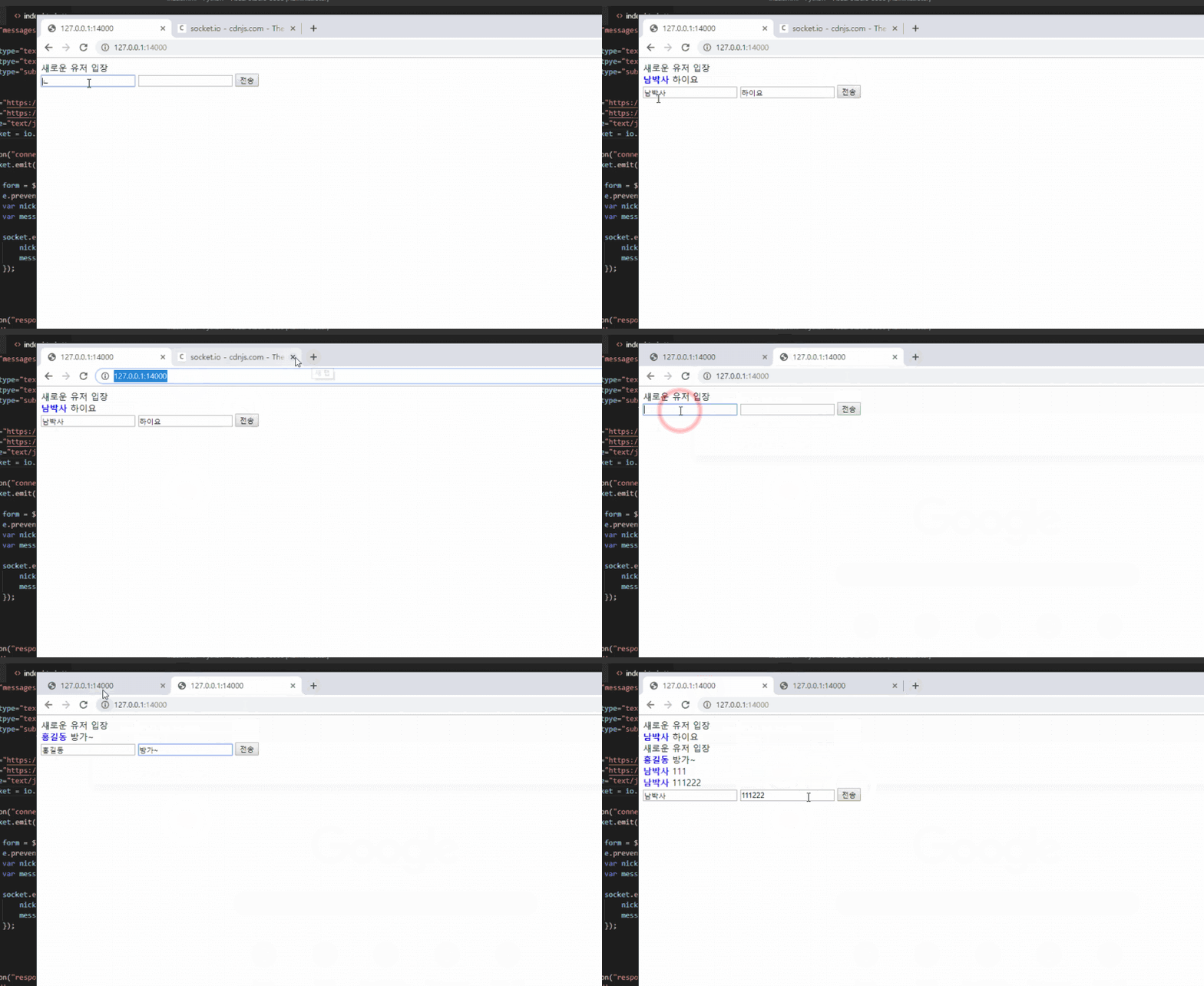
Implementing a Chat Server/Client (Web Version)
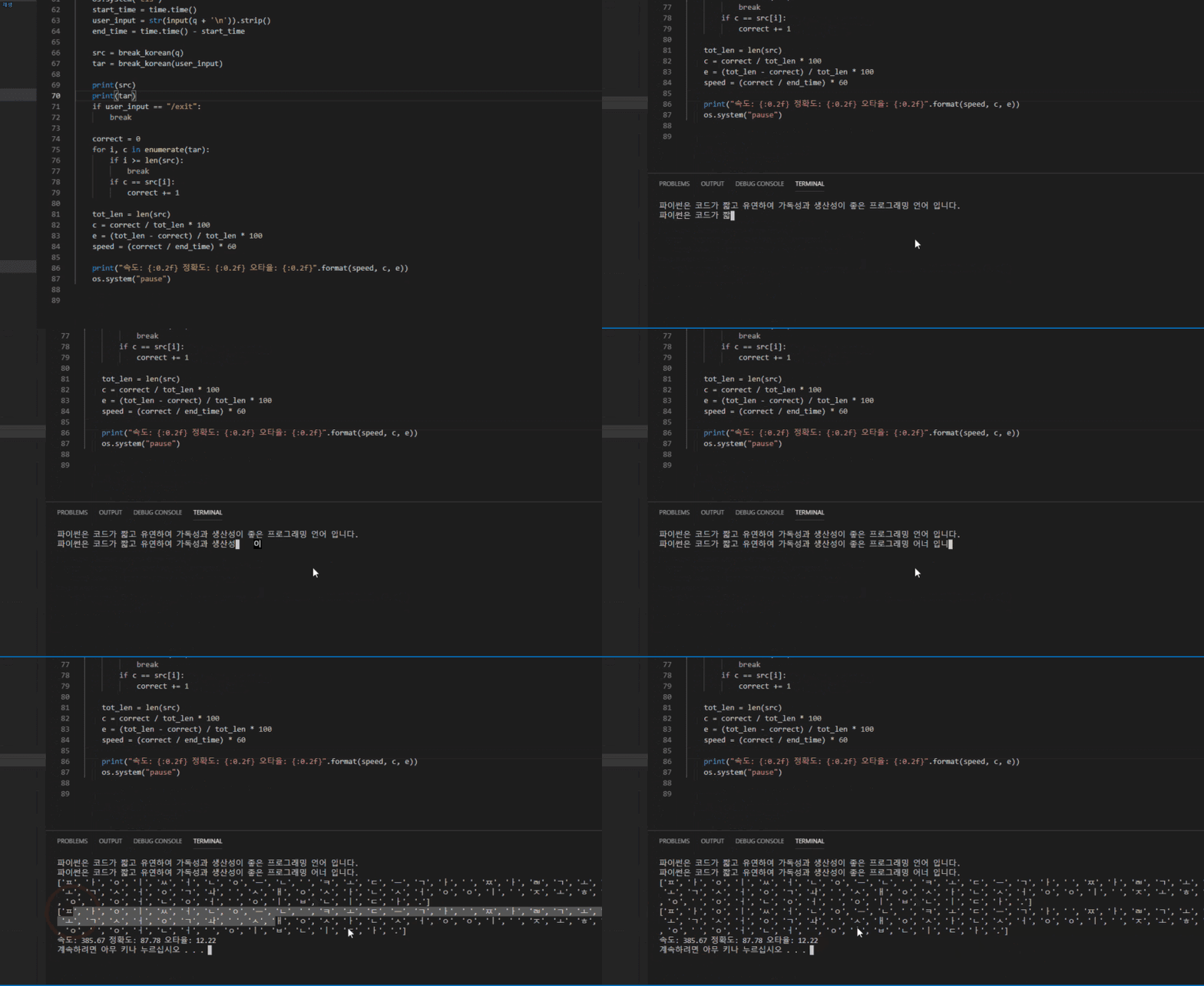
Creating a typing game like Hanmetaja (understanding Unicode and separating Korean initial, medial, and final consonants)
List of internship programs
Create a number matching game
Making a Number Baseball Game
English word matching game
Creating a Windows Calculator
Creating a typing game like Hanmetaja
Intelligent Lotto Number Generator
File encoding changer program
Create your own shortcuts
Crawling Naver real-time search terms
Crawling Naver movie ratings and saving them as an Excel file
Crawling Naver blog search results
Crawling Direct Data with Python
A game that guesses the meanings of the most frequently appearing English words on foreign news sites.
A program that notifies you via KakaoTalk when a hot deal is available.
Creating a Torrent Magnet Autosearcher
Creating a Telegram bot
Implementing a chat server/client
Creating a program to batch change image formats and sizes
Create video thumbnails on your computer
GUI clock
GUI calculator
GUI color picker
Recommended for these people
Who is this course right for?
People who dream of becoming developers or programmers
Someone who has a good idea and wants to make it happen
Someone who doesn't have a plan but just wants to try programming
People who are interested in big data analysis or artificial intelligence but lack the basics
Not a developer, but someone who would benefit from learning something
I feel so sorry for answering my questions so thoroughly and so easily. I feel like I don't need to go to school. I've taken about 70 percent of the course so far, and I think I can complete it without any problems.
For beginners, I think the Q&A board is very important because there are many parts that can be quickly learned if you just solve a few questions as they arise. Even though I try to explain it as easily as possible, it is not easy to understand something through writing, and even if you see the same explanation, each person perceives it differently, but I think Taeyoung-nim is very positive about it, so I am even more grateful.
I've seen a lot of Python courses, both free and paid, on Infraon and other educational sites, but I think this is the best. For the first time, I feel like I paid my money... It's not a complete course, but it's very satisfying for a novice like me. It's especially easy to read because you've edited it so well. Do you have any plans for the next course?
The theory is complete, and now it's time to create a practical program! This is a lecture that creates a fun thirst. It seems hard to find a lecture like this. There is a gap between easy and difficult. In between, it seems like a lecture that gives you the fun of acquiring skills on your own through books and questions! It's a lecture that gives you a great sense of accomplishment when you get it on your own. If you really want to learn programming sincerely, I recommend this lecture. I'll do my best until the end. Thank you~!
Thank you very, very much for the great course review. I really sympathize with what you said about the gap between easy and difficult, and I am deeply grateful that you said that you have to learn that gap on your own, as if you understood my heart.
As you said, the course cannot solve everything and cannot convey knowledge. If it simply provides a guide and draws interest and fun, I think that is a success. In the future, you may feel that gap more deeply in the field of practical programs. If you actively use the Q&A board for many questions you have in the future, I promise to sincerely help you solve those problems. Fighting!! Thank you.
I am a 35-year-old office worker preparing to become a developer.
I think this is a good lecture that allows me to experience creating at least the shape of a cloud, rather than just grasping at clouds while learning basic Python grammar.
But at the same time, I have a question for Dr. Nam.
Looking at the course reviews, it seems that other people feel the same way as I do.
From the perspective of a non-major who is new to development, what do you think is the most efficient way to grow into a skilled developer?
I haven't completed the course yet, but after completing about 60-70% of it, I feel that
I understand most of it well before using the library, but when I start seeing how to implement some functions by importing the library, I start to feel a sense of distance.
So, when studying from a beginner's perspective, is it better to follow the lecture while continuing to follow along even if I don't understand?
Or is it better to dig into the parts I don't understand and adjust my level in between to follow the lecture? I think I want to learn as quickly as possible because I am a little late in life. Of course, I shouldn't be impatient, but I wonder if there is an efficient method, so I am leaving a review and a question at the same time. Have a good day and I hope you have more great lectures in the future.
The question you asked is quite difficult, so I'll write a long answer. ^^
First of all, it can be really, really difficult for someone who has never coded in their life to study coding for the first time. Everyone has a different way of studying and understanding things. So, there is no right answer, and it's a very careful story to tell you what to do. I think that you don't succeed by reading the autobiographies of successful people and following their lives exactly. You have to change your own style to your own taste. This is my personal opinion, so please just refer to it. ^^
The lectures I gave actually cover a wide range of topics. The most important part of the lecture content is that if you understand all the Python grammar, the rest of the content is optional. When I was making the lectures, the most important thing I wanted to convey to beginners is that programming is fun! That's why I wanted them to think, "I want to make something too. Or, I can make something!" So, as you said, some codes are easy to understand, but some codes are not.
Whether you understand it or not, it is important to first follow the code and see the results. Of course, if you don't understand it, you won't be able to apply it later, so understanding it is important, but more importantly, finding what you enjoy and want to create is important. The ideas I come up with that way become weapons that can help me develop. I think it is much more important than listening to the lecture and understanding it first. It is not bad to understand it after becoming familiar with programming like this, and the most important thing is not to give up.
I think the most efficient way is to choose the most fun program that you can realistically create and write it from the beginning. Then, you will think about and think about what kind of logic the program you have in mind works, and you will know which field you need to study more deeply, and I recommend that you study one by one.
The commonality of people who do well on exams is that they find things that will appear on the exam and study efficiently, but people who do not do well on exams study the entire exam scope with equal weight. Of course, it would be nice to be smart and remember and understand everything, but most people, including me, do not. That is why, as I mentioned above, I keep emphasizing that you should start with the part that you really want to create. And if there are any parts of the course that you do not understand, you can actively utilize the Q&A bulletin board. ^^





![[Inflearn Award Bestseller] How to Become an AI Automation Expert Without Coding, The Complete n8n GuideCourse Thumbnail](https://cdn.inflearn.com/public/files/courses/337053/cover/01jrkjt8emye2z7j7846br3vkk?w=420)





![[Python Game Development] Minesweeper Creation That Even Beginners Can FollowCourse Thumbnail](https://cdn.inflearn.com/public/files/courses/337795/cover/01k38rm474bcf23g0rwx8cs2y1?w=420)

![[Level 2] Python Programming with Qt: QMLCourse Thumbnail](https://cdn.inflearn.com/public/courses/335346/cover/f8e06c2e-03bb-4e02-910d-965ee2e547b8/335346.png?w=420)