inflearn logo

Adding logical structure to your report! The development of logic! (The Dignity of Reports Part 2)

Understand the characteristics of documents (planning papers, proposals, reports, etc.) and learn the processes for logical content development along with techniques to enrich the content.

(4.5) 2 reviews

28 learners

Level Basic

Course period 6 months

Planning Document
Planning Document
Business Productivity
Planning Document
Planning Document
Business Productivity

What you will gain after the course

  • How to logically structure the content of a report

  • Logical table of contents development and structuring methods required for time reduction

  • Data research methods for ensuring report reliability

  • Idea generation techniques to enrich content

  • Tips for creating a report draft (How to write KEY messages)

The Dignity of Reports, Part Two
[Logic Development] for Perfect Document Writing😀

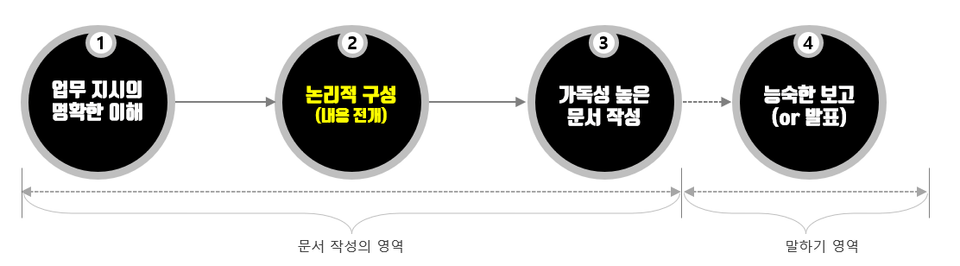
The process from document (planning papers, proposals, reports—hereafter referred to as reports) writing to reporting
largely consists of 4 stages.

  • First, accurately understand the work instructions given by the person assigning the task (supervisor), and

  • Second, organize the instructed content according to a logical flow (development, data collection, etc.), and

  • Third, express your thoughts on slides according to each logical structure (table of contents, etc.).

  • Finally, you proceed with the business report (or presentation) based on the work you have completed.

In other words, if a problem occurs in any one of the four processes mentioned above, your report will become a so-called 'rejected report'. That is, you will end up writing a report with low work productivity. Therefore, I have created a lecture called "The Class of a Report" by synthesizing the above contents.

  • PART 1. Understanding the Work

  • PART 2. Construction of Logic (Development of Content)

  • PART 3. Expression of Thoughts

  • PART 4. Reporting Techniques

💡 This lecture is the second story of The Class of Reports, 'PART 2: Logical Development'.

Features of this course

📌 Learn the procedures and detailed methods to ensure documents (planning papers, proposals, reports, etc.) are developed logically and rationally.

📌 Learn idea generation techniques for rich document content and strategic processes for each type of document.

📌 Learn the types and methods of data research to ensure the credibility of documents (planning papers, proposals, reports, etc.).

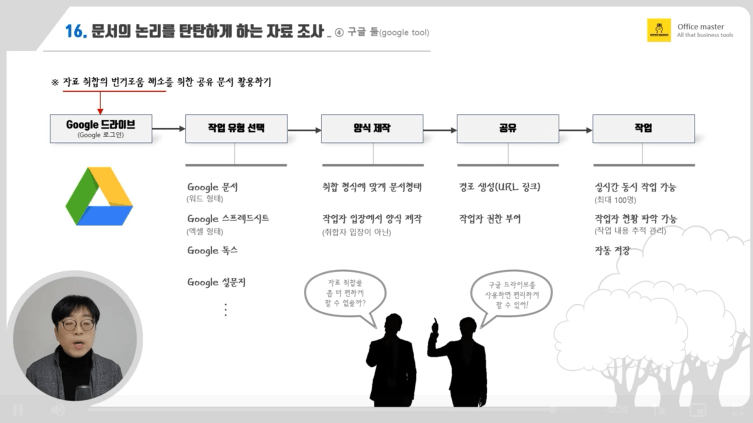
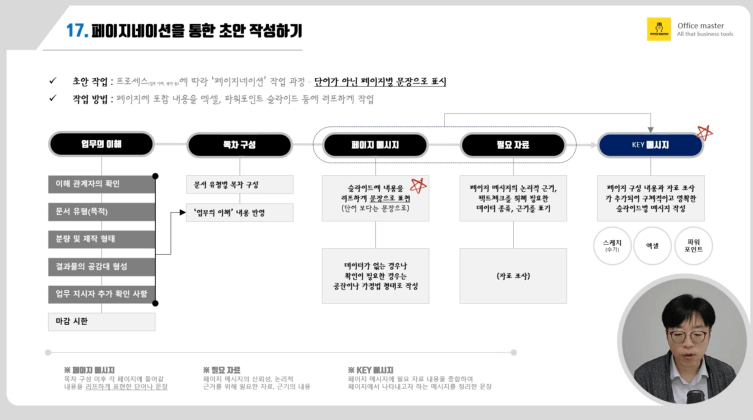
📌 Learn pagination tasks using KEY messages.

💡 Try introducing the key features and differentiators.

  • The lecture is divided into processes so that you can selectively take only the parts you lack among the skills required for document writing.

  • Focusing on essential content without any fluff, based on practical experience in planning/strategy/support and teaching expertise

Recommended for these people

Those who feel lost on how to structure the table of contents
when writing a document

Those who feel lost on how to structure
the content of a report

Those who don't know where to start
and just stare blankly at the monitor

💡 Additionally, I also recommend it to these people

  • Those who always lack work time because they find it difficult to structure the content of their reports

  • Those who want to build their report writing skills from the ground up

What you will learn

Characteristics of a document

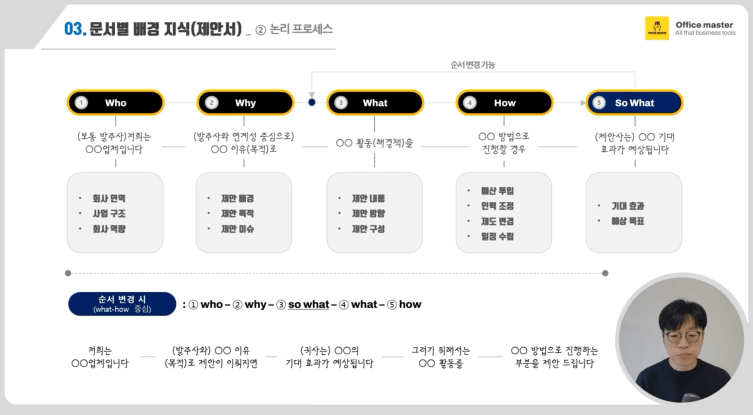
The logical flow of a document varies depending on the characteristics of each type (planning papers, proposals, reports). Therefore, we will select frequently used document types and learn how to develop information and structure the table of contents appropriately for each.

Techniques for Idea Generation

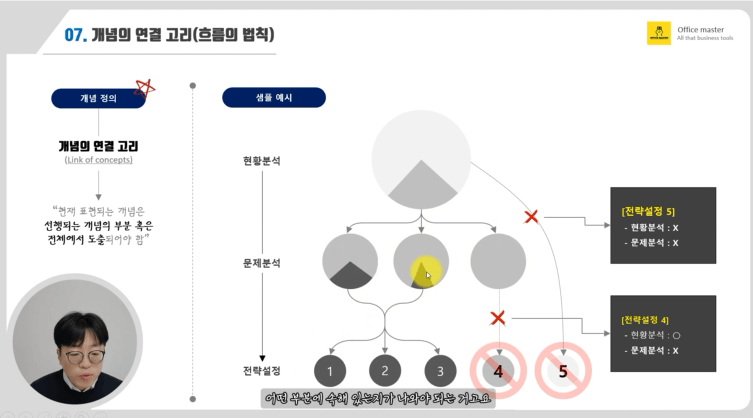
A good report must not only have a logical flow of information but also possess solid and rich content. To achieve this, you will learn how to apply the principles of logical information development, as well as techniques for idea generation and their practical applications.

Efficient Data Collection Methods

To support the claims made in a report, clear evidence (data) is required. This data generally falls into three types, and research methods vary depending on the characteristics of each. Through this lecture, you will learn about the types of data and methods for collecting them.

Implementing Pagination with Logical Progression

By learning the logical progression process, you can proceed with pagination, which is the foundational task of report writing. Pagination is the process of structuring the document's table of contents and determining what content and data will be included in the detailed pages corresponding to each section.

The person who created this course

  • Expert instructor in document writing (planning papers, proposals, reports)

  • Practical PowerPoint Instructor /

    Visualization EXCEL Instructor


  • Operating the YouTube channel [Office Master]

  • Author of <Praiseworthy Proposals Have a Different Algorithm>

💡 Other Experience

  • Worked in Strategic Business, Marketing Planning, CRM Planning, and Partnership Business departments at JoongAng Ilbo and JoongAng Ilbo Marketing Co., Ltd.

  • Independent Publishing Lecture (Independent Publishing After Work)

Frequently Asked Questions

💡 Frequently Asked Questions

  1. I am a beginner at writing documents (plans, proposals, reports, etc.). Can I still take the course?

    • Of course. It is possible. In fact, it is even better for those who are beginners at report writing or those who want to learn it properly. Since report writing is the process of creating a single document, a functional understanding of the writing process is necessary. We have structured the content systematically so that such details can be easily understood.

  2. Does it also include how to write documents?

    • No. This course teaches how to develop the logic of a report before the actual writing process. Additionally, you will learn background knowledge to strengthen the content of your report. Therefore, it covers only the stages leading up to document creation, rather than the actual writing method itself.

  3. Is the content of the other parts of this lecture difficult?

    • It is not difficult at all. The videos are kept short, around 5 to 10 minutes each, to maintain a quick pace. In other words, they are designed to be easy to follow. Additionally, the slide content is written in as much detail as possible so that even in environments where you cannot listen to the audio, you can fully understand the material just by looking at the slides.

  4. Additionally, do I need to take the other parts of "The Dignity of Reports"?

    • Not necessarily. You can selectively take any of the four parts of "The Dignity of Reports" based on the areas where you feel you need improvement. However, since those who struggle with reporting often face structural difficulties across multiple areas rather than just one, we recommend taking at least two or more parts.

Recommended for
these people

Who is this course right for?

  • Those who feel lost on how to structure a table of contents when writing a document

  • Those who feel lost on how to structure the content of their report

  • Those who have experienced struggling due to being pressed for time when writing a report

  • Those who stare intensely at their monitors just to organize their content

  • Those who want to build a solid foundation in report writing from the basics.

Hello
This is swingjazz

632

Learners

60

Reviews

1

Answers

4.7

Rating

6

Courses


"Solving complex business issues with the sharpest tool called AI."


Expertise in translating the language of business into the language of AI

Go

Lectures that simply list tool features cannot solve real-world problems. Based on the practical insights I have gained over 15 years at the forefront of strategic business and channel innovation, I propose the most realistic solutions that cut through the pain points faced by practitioners using AI technology.


Key Background and Expertise

  • Practical AI Coach: A veteran expert with over 15 years of hands-on industry and teaching experience

  • Current) CEO of Template Studio: A strategist who designs and systemizes the 'algorithms' of business documents

  • Current) Full-time instructor for Multicampus regular courses: An educator who drives the highest level of engagement in every session with a proven curriculum

  • Former) JoongAng Ilbo Strategic Business Team / Channel Innovation Team: Practical DNA from directly leading business planning and innovation processes


Public credibility proven by results

  • Author of: 『The Algorithm for Highly Praised Proposals is Different』 (Self-Up Book)

  • Satisfaction: Average student rating 4.9 / 5.0 (Based on practical work applicability)

  • Lecture References: Delivered lectures to over 25 major domestic corporations and public institutions, including Samsung Electronics, Woori Bank, Ericsson-LG, and Korea Asset Management Corporation (KAMCO).


Core Value

"Practitioners should focus on planning, while AI handles the repetition." Through AI workflows embedded with Template Studio's expertise, we will instill immediate innovation into your workplace.

More

Curriculum

All

17 lectures ∙ (2hr 10min)

Published: 
Last updated: 

Reviews

All

2 reviews

4.5

2 reviews

  • aircha님의 프로필 이미지
    aircha

    Reviews 24

    Average Rating 4.6

    4

    100% enrolled

    • lyi02261360님의 프로필 이미지
      lyi02261360

      Reviews 2

      Average Rating 5.0

      5

      100% enrolled

      swingjazz's other courses

      Check out other courses by the instructor!

      Similar courses

      Explore other courses in the same field!

      Limited time deal

      $38,500.00

      30%

      $42.90