
Learning Spark through Practice Part 1
nexthumans
Through this course, you will be able to immediately carry out corporate Apache Spark projects.
Basic
Apache Spark, Big Data, Machine Learning(ML)
🚀 Practical AI Anomaly Detection with Databricks! 💡 Stop using expensive and slow models! From large-scale data optimization to real-time deployment, complete an anomaly detection AI that can be used immediately in corporate practice.
72 learners
Level Intermediate
Course period 12 months
Reviews from Early Learners
5.0
나띵메로
I'm learning high-quality skills. This is a lecture that's completely worth the money. I only knew basic Python concepts like classes and inheritance superficially or could only apply them shallowly. (To the extent that I could interpret the code written by the instructor) Should I call it code refactoring...? It felt like watching a video visualization of the instructor's actual work process. I also realized that I need to learn how to utilize Python's basic built-in libraries more effectively. Especially these days, code interpretation and error handling have become relatively easier due to AI, so I'm studying with AI's help for difficult concepts or interpretations in between. Thank you for providing such a good lecture at this price.
5.0
강지은
Thank you for the great lecture.
5.0
Chansu Shin
I learned a lot. It was very helpful.
MLflow
MLOps
Databricks
Deep Learning
Computer Vision
Anomaly detection
Computer vision
Deep learning
Databricks
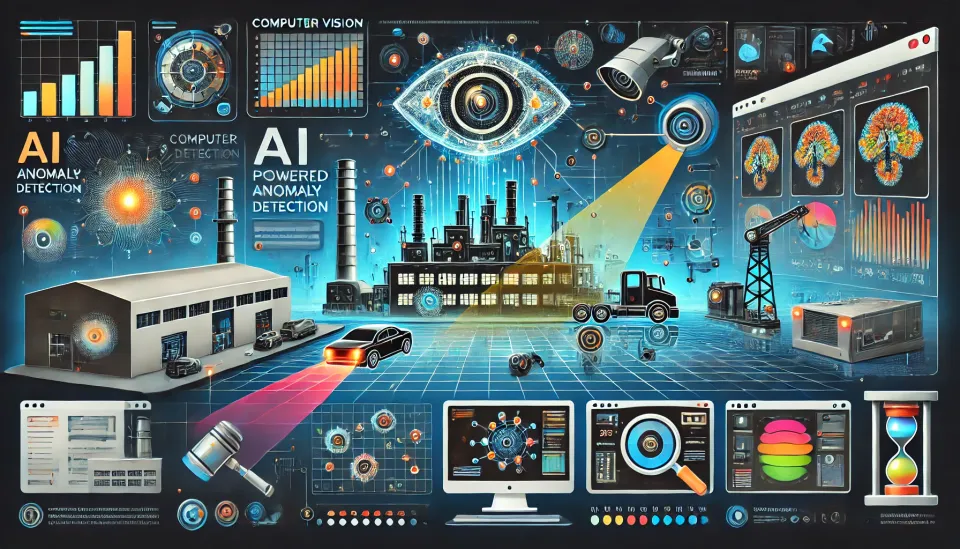
This course is a hands-on course that teaches you how to effectively perform computer vision-based anomaly detection, and covers everything from data processing for deep learning to model optimization and deployment .
In particular, it provides practical know-how on optimizing large-scale data and building and deploying anomaly detection models using Apache Spark & Databricks .
Beyond simple code writing techniques, you'll learn advanced optimization strategies and cost-saving techniques that you can leverage in real-world projects .
In this course, you will learn step-by-step the essential contents for real-world projects , including data collection, preprocessing, augmentation, model training and evaluation, model serving via REST API, and model version management .
In particular, you can acquire powerful skills that can be immediately applied in practice through optimization strategies that implement high performance at low cost in Databricks .
#Python, #Artificial Intelligence (AI), #Machine Learning, Deep Learning, #azure-databricks
Computer vision models detect anomalies and perform real-time data analysis in high-quality industrial environments
✔ AI/ML engineers who want to learn computer vision-based anomaly detection
✔ Developers who want to build anomaly detection systems in manufacturing, healthcare, security, etc.
✔ Those who want to learn optimized data processing techniques using Apache Spark & Databricks
✔ Anyone who wants to learn how to build anomaly detection models and deploy them as real-time APIs
🔹 Data Engineer & AI Engineer
→ Learn how to optimize every process from data collection, processing, learning, and distribution to run an efficient AI project.
🔹 Machine Learning & Deep Learning Developer
→ By learning MLflow-based experiment management, transfer learning, and model optimization techniques, you can develop more powerful and practical models.
🔹 AI/Data Startup Founder & Project Leader
→ Learn cost-saving and performance optimization know-how to efficiently utilize resources and maximize project ROI (return on investment).
🔹 Corporate Data & AI Manager
→ Learn Databricks & Spark optimization technologies to effectively process large-scale data and efficiently operate AI projects within your company.
#Python, #Artificial Intelligence (AI), #Machine Learning, Deep Learning, #azure-databricks
✅ Covers practical optimization techniques . Rather than simple theoretical lectures, it provides practical know-how to solve performance issues and cost problems that frequently occur in actual projects.
✅ You can learn cost-saving strategies using Spark & Databricks . You can learn how to implement high performance with low-cost resources and achieve great cost-saving effects in practice.
✅ From deep learning data preprocessing to model training, deployment, and REST API serving, all in one place ! Covers the entire process of data collection → storage → preprocessing → augmentation → training → deployment .
✅ Revealing optimization secrets that you can only learn in this lecture !
We will exclusively reveal optimization strategies and cost-saving know-how in Databricks and Spark environments that are not covered in other lectures.
✅ Optimizing the collection, storage, and preprocessing of large-scale image data
✅ Large-scale image processing using Apache Spark & Databricks
✅ Data loading & streaming processing techniques considering memory efficiency
✅ Main principles of Anomaly Detection
✅ Comparison of supervised learning vs unsupervised learning based anomaly detection models
✅ Salt and Pepper Patches, an abnormal pattern learning technique using Noise Injection
✅ Image processing using OpenCV and PIL
✅ Data preprocessing techniques such as image resizing, normalization, and channel conversion
✅ Automating large-scale image conversion using Spark UDF
✅ Transfer Learning Using the Hugging Face Pre-trained Model
✅ Comparison and application of anomaly detection models based on autoencoder, GAN, and CNN
✅ Model performance evaluation and experiment management using MLflow
✅ Performance measurement technique using F1-score and Precision-Recall Curve
✅ Building a real-time anomaly detection API using FastAPI
✅ Automated deployment with Databricks Model Serving
✅ REST API-based anomaly detection request and response processing
✅ Reduce costs and improve performance through Apache Spark optimization
✅ Parallel processing techniques in large-scale anomaly detection systems
✅ Model deployment and version management using MLflow & Databricks
#Python, #Artificial Intelligence (AI), #Machine Learning, Deep Learning, #azure-databricks
hello.
I have been working on various projects in the fields of AI, machine learning, and data engineering for over 10 years, and have gained in-depth experience in deep learning model optimization and large-scale data processing .
He is currently an adjunct professor at Korea University and the CEO of DC Solutions, where he carries out AI and data engineering projects for major domestic corporations and research institutes .
In addition, we have been conducting practical projects in various industrial fields such as Apache Spark, ML model development, MLOps construction, and medical AI research , and have been researching how to design and operate optimized AI and data processing systems .
Through working on numerous projects, I have realized that ‘data optimization’ is just as important as developing AI models .
In particular , in the process of training and deploying deep learning models, we often encounter problems of wasted computing resources due to inefficient data processing .
Most AI projects end up costing several times, or even dozens of times, more than initially planned .
If this is not addressed, projects often fail at enormous cost before they are even successful .
So, I actually planned this lecture by gathering together proven data optimization & deep learning model deployment strategies from companies and research institutes .
Beyond developing deep learning models, we want to share practical know-how on building faster and more powerful AI systems at a lower cost .
💡 As important as developing AI and machine learning models is optimizing and efficiently deploying data .
In many projects, the model works perfectly, but problems arise that make it difficult to actually service it due to inefficient data processing and high operational costs.
In this course, you will learn how to optimize large-scale data and deploy deep learning models faster and at lower cost using Apache Spark & Databricks .
✔ You will learn practical know-how to build high-performance AI systems while reducing costs .
✅ You can acquire practical capabilities to carry out AI/ML projects in companies and research institutes .
✅ Large-scale data optimization and processing is possible using Apache Spark & Databricks .
✅ You can learn the entire process of training, optimizing, and deploying deep learning models and apply it directly to your work.
✅ You can perform model training, experiment tracking, and version management using MLflow .
✅ You can learn the technology to deploy AI models through REST API and apply them to real-world services .
🔹 This is an intermediate to advanced level course .
🔹 Covers Apache Spark, data engineering, deep learning model training and deployment processes, focusing on practical application as well as theory .
🔹 Recommended for those who have basic knowledge of Python and machine learning concepts rather than complete beginners.
🔹 However! Since the lectures are structured so that you can learn step by step while practicing actual code , you can follow along even if you only know the basic concepts.
The hands-on environment for this course can run smoothly on the following operating systems.
✅ Windows 10/11 (64-bit)
✅ macOS (including Apple Silicon chips)
✅ Linux (Ubuntu 18.04 or later, CentOS, Debian, etc.)
※ In a Windows environment, you can also configure a Linux environment by utilizing WSL (Windows Subsystem for Linux) or Docker.
※ Since cloud-based training is included, you can proceed with just a web browser, regardless of the local OS.
Learning material formats provided (Jupyter Notebook, Python Scripts)
Codes related to the lecture content will be provided only to those who post inquiries on the bulletin board^^.
💻 If you know Python and basic machine learning concepts, this course will be easier to follow.
📌 However, since we explain the concepts in the lecture and proceed with practical training, you can follow along even if you lack basic knowledge.
📌 We will teach you how to install and set up the required development environment (Apache Spark, Databricks, MLflow, etc.) directly in the lecture.
Who is this course right for?
A developer interested in computer vision and AI
Data analysts and engineers in manufacturing, finance, and security
Developers interested in AI model serving and deployment
Someone who wants to apply AI projects in practice.
A data scientist looking to develop a deep learning-based anomaly detection model
Machine Learning Engineer
Experts interested in the potential real-world applications of the technology in manufacturing (defective product inspection), finance (fraud detection), and security (intrusion detection).
People looking to implement AI in fields that require anomaly detection, such as quality control, risk analysis, and security monitoring.
Anyone who wants to learn the entire process from data preparation to model training and API serving in a Databricks environment.
Developer with practical experience in model management and real-time deployment using MLflow
Learners who want to complete projects through actual coding practice, not just theory
Someone who wants to improve their problem-solving skills in real-world development scenarios.
Need to know before starting?
Python Basics
Spark Language Basics
191
Learners
19
Reviews
29
Answers
4.9
Rating
3
Courses
I am currently serving as a development lead and consultant for projects at major corporations, as listed below. I am still active in the field.^^
In addition, I am serving as an adjunct professor specializing in Artificial Intelligence at Korea University's graduate school.
My goal is to provide practical, hands-on programming skills that can be applied immediately in the field. I look forward to creating engaging and enjoyable classes with all of you.
Enterprise AI Architecture and Service Design
Machine learning service implementation
Backend service development
Building databases and developing services in various cloud environments, including Cloud (Azure) Databricks, ETL, and Fabric.
All
31 lectures ∙ (11hr 10min)
All
11 reviews
5.0
11 reviews
Reviews 5
∙
Average Rating 5.0
5
This is a field I've always been interested in, and I was very curious about how it's implemented in other domains or in practice, which was largely resolved. It was very interesting and seems like it will be very helpful for the project I'm planning to undertake. Additionally, while some issues were resolved through previous learning about other Data Bricks or Azure related parts, I'd like to share some points where more explanation in this course would have been beneficial. 1) Methods for connecting other APIs (Section 2, Examples of connecting ChatGPT or other tool APIs instead of Azure OpenAI in the practice environment) 2) Azure VM resource allocation (Sections 3, Section 6, Required for appropriate Databricks Compute settings & Cost Budget Management) 3) Code sharing (Although live coding is preferred, this is to prevent errors when using computing resources under a personal billing model)
I learned a good lesson from the course reviews. I will definitely keep it in mind.
Reviews 5
∙
Average Rating 5.0
Edited
Reviews 10
∙
Average Rating 5.0
5
The AI lecture utilizing Databricks seems unique, and I thank you for the excellent lecture. However, it would have been better if you had provided more overview explanations for each detailed unit. For example, it would have been even better if you had explained the functions of each menu in machine learning and supplemented how each code is utilized in which menu. Additionally, for those taking this lecture, Spark or Databricks is more of a focus, so there are likely many people who are interested in AI but lack knowledge. If you had supplemented this point as well, it would have been an even more excellent lecture.
Thank you for your sincere course feedback. I will strive to deliver even better lectures in the future!
Reviews 1
∙
Average Rating 5.0
Reviews 3
∙
Average Rating 3.7
Edited
5
I'm learning high-quality skills. This is a lecture that's completely worth the money. I only knew basic Python concepts like classes and inheritance superficially or could only apply them shallowly. (To the extent that I could interpret the code written by the instructor) Should I call it code refactoring...? It felt like watching a video visualization of the instructor's actual work process. I also realized that I need to learn how to utilize Python's basic built-in libraries more effectively. Especially these days, code interpretation and error handling have become relatively easier due to AI, so I'm studying with AI's help for difficult concepts or interpretations in between. Thank you for providing such a good lecture at this price.
Thanks for the uplifting review~ It feels like a wonderful gift. I will strive harder!
Check out other courses by the instructor!
Explore other courses in the same field!