


Java/Spring 테스트를 추가하고 싶은 개발자들의 오답노트
김우근
Spring에 테스트를 넣는 방법을 알려드립니다! 더 나아가 자연스러운 테스트를 할 수 있게 스프링 설계를 변경하는 방법을 배웁니다.

Basic
TDD, 소프트웨어 테스트, unittest
Now that you know a little about Spring and JPA, what should you study and how to grow in the future? Are you studying design patterns to study design and just memorizing the patterns? I'll help you!

Correcting Mistakes Frequently Made by Junior Developers
Correcting common mistakes junior developers make when using Spring
Correcting misconceptions about dependencies/entities, etc.
Concept organization required for practical use (MSA, ACL, etc.)
Infrastructure/Network Concepts Needed by Backend Developers
How to write object-oriented code in a Spring environment (TDA, etc.)
Are you a junior developer looking for ways to grow?
A notebook of mistakes for effective leveling up!

"What should I study now? What stack will help me learn?"
"Should I delve into infrastructure? Should I learn Spring Security?"
I'll help you avoid blindly buying books and studying just any technology or specific concept. Studying technology stacks like infrastructure (NoSQL, Message Queue, etc.) or Spring Security won't necessarily improve your development skills! This course focuses on practical, essential content, concisely explaining it in a short amount of time.

I'll help you correct common development mistakes made by junior developers, based on my experience reviewing code for many years!
Could you explain the difference between dependency injection and dependency inversion? Let me clear up some vague concepts I've memorized by rote.
I'll tell you why you need test code and why writing test code leads to good design.
Are you having trouble keeping up with the meeting? Let me summarize the concepts you need for practical work (MSA, ACL, etc.)

...by inverting the traditional dependency relationship whereby higher layers (policy decisions) depend on lower layers (details), the higher layers can become independent of the implementation of lower layers. (From Wikipedia, " Dependency Inversion Principle ")
So, what does this mean? 🙄 An encyclopedic question-and-answer explanation that doesn't make any sense is not the answer!
You need to know the exact concept so that you can explain it in your own words.
Over the years, I've met countless junior developers as mentors. And as I mentored them, I've often given them the same questions and answers. This led me to think it would be nice to have a dedicated course dedicated to this topic. This course is a compilation of common questions and answers I've received from junior developers as mentors .
The situation of most junior developers I've seen was like this.
But I don't know what the next step should be. 🤷♂️ Still, with my spare time... I need to learn something, so I study NoSQL, Message Queue, and RDB, which are the infrastructure technology stacks used by companies, or learn new languages that are trending these days. Of course, I did the same!

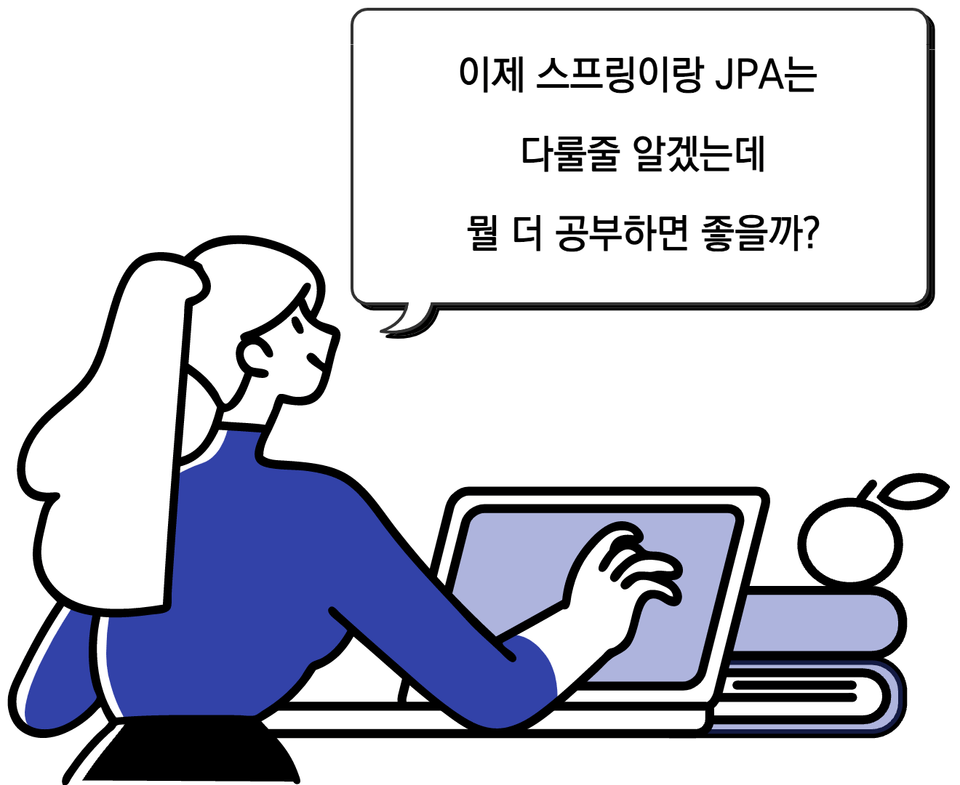
Are there concepts you know but struggle to explain? What is dependency inversion? What is an entity? What is a service? What's the difference between sequential and procedural programming? We'll help you understand these concepts, but explain them clearly.
Those damn TDD, DDD... they're great when you're learning them. I know they're fantastic theories, but how do you apply them in practice? More specifically, how do you apply TDD and DDD to the Spring Framework?
I've read many books and watched numerous seminars on TDD, but they mostly cover simple examples that are perfect for beginners. I'll show you how to apply it in practice .
If you're interested in design, have you ever tried to memorize design patterns in the hopes of learning more about them? Then, a thought suddenly arises: Are these example codes actually applicable in practice?
But as it turns out, what matters in design patterns isn't what the pattern looks like! It's understanding the dependencies and how you're weakening them !
After attending the lecture, I was able to understand the definitions, etymologies, and meanings of terms I'd casually used and terms I'd heard but couldn't quite pinpoint. While this knowledge might not be a problem for development, it did encourage me to think about the behavior and roles of objects and the meaning of each layer, cultivating a more OOP-like approach to coding. The lecture explained the concepts I'd personally considered, from a junior perspective, in an easy-to-understand manner, making it more engaging and comfortable to listen to. Like me, I imagine many new junior backend developers often feel lost, unsure of what they don't know or how much they need to know. This lecture provided valuable guidance, helping me understand what I needed to learn and what I was missing. (Lee*Gyu)
This lecture is a great resource, covering areas I'd never really considered. As a junior developer, I've been wondering if I'm growing properly by doing the same thing over and over again at work. This lecture helped me gain a sense of direction. (Shin*ho)
When you first join a company, you often worry about how to develop properly and how to minimize mistakes. This course addresses these concerns and provides excellent guidance for junior developers to develop correctly. Beyond practical knowledge, it also covers topics junior developers have likely encountered and wondered about at least once, such as, "How should I design an object-oriented architecture?", "How should I distinguish between DTOs, VOs, and Entities in practice?", and "Do I really need to write test code?" You'll also learn frequently used terminology, which I believe will be invaluable for adapting to real-world work. I highly recommend this course to both junior developers new to the field and those looking to grow. (Lee Chan)
As a developer, this course was incredibly helpful in helping me master the core concepts of object-oriented programming used in my field. Even difficult concepts were well-illustrated, making them easy to understand. Furthermore, the simple explanations helped me remember the concepts for a long time after just one listen. (Sim*Cheol)
Prospective students, do you know the difference between sequential and procedural programming? If you're curious, watch the free orientation video to find out what you'll learn.
Once you understand the concept clearly, you'll see much more! We'll thoroughly address questions you might have from a junior perspective .


Correcting common development mistakes made by junior developers
We'll cover common convention mistakes made when joining your first company, what objects are, and what you need to keep in mind when writing object-oriented code. And to understand good design, we'll explore dependencies.
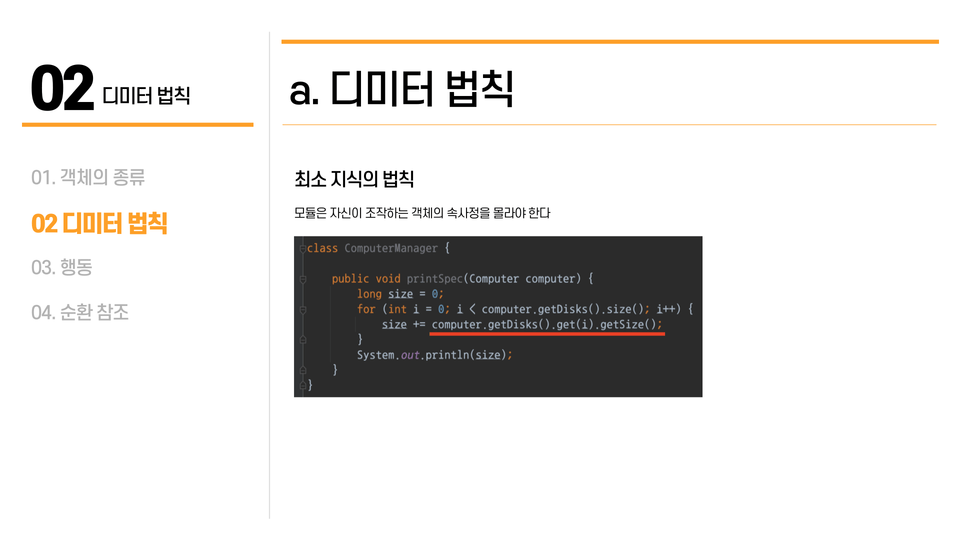
Using Spring in an OOP way
To learn how to use Spring in an OOP-like manner, let's examine a case where it fails to do so. We'll also explore what a service is essentially and how far each layer should be abstracted.
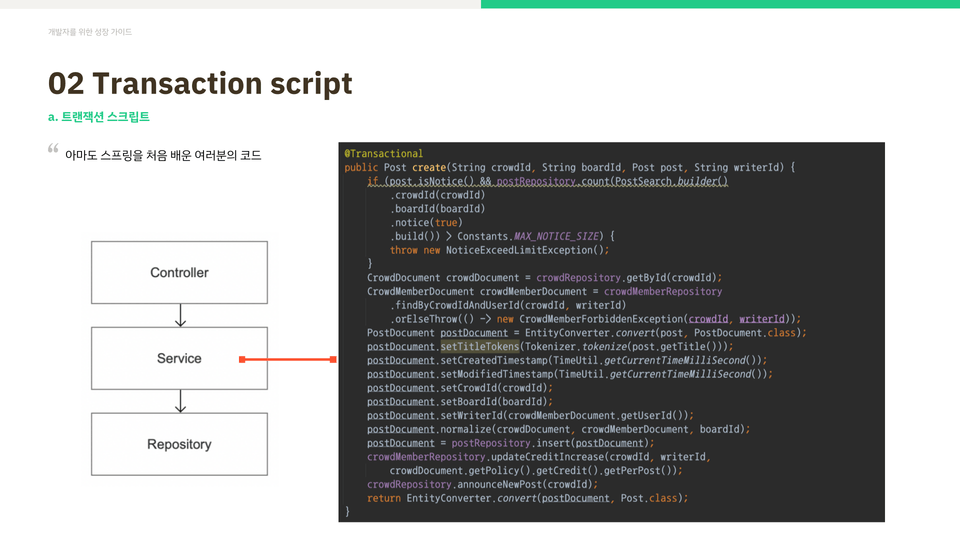
Why do we need to test?
People say you need test code, but you're not sure why writing test code leads to good design? Let me explain why testing is necessary from a more practical perspective. And I'll show you how to create natural-looking tests.
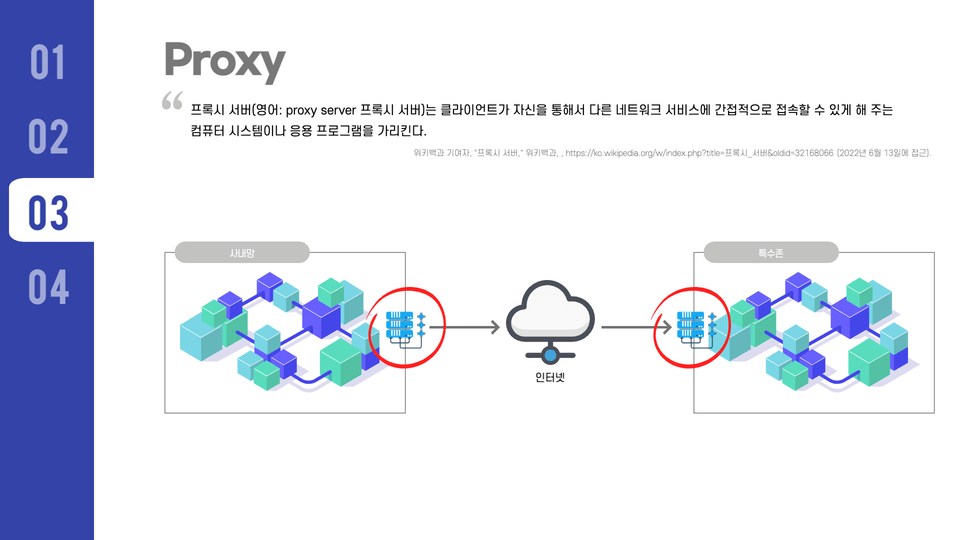
Organizing concepts needed for practical use
There's too much infrastructure knowledge surrounding Spring to get the job done right. When networking or infrastructure comes up in meetings, many people either struggle to understand the topic or just sit there blankly. Does that mean you need to open a textbook just to learn about infrastructure or networking? I'll summarize it for you, just to the level you need for practical work!

We provide approximately 20 PPTs, each containing approximately 15-20 pages, as learning materials for each class . Furthermore, no separate practice environment is required! The lectures are designed so you can study in just 20 minutes on the subway during your commute.
I currently work at Kakao, and because I love creating, I'm always working on something after work. There's a saying, "A dwarf standing on the shoulders of giants." While I'm just a small dwarf, I strive to pass on my knowledge so I can help the giants grow. Having mentored numerous junior developers, I believe I can help you grow as well.
Q. Is this a course that non-majors can also take?
This course assumes a basic understanding of computer science. However, since the required specialized knowledge is limited, you can easily take the course if you already have a basic understanding of Java, Spring, and JPA (the prerequisites), as well as the content below.
Q. You say you avoid detailed explanations of concepts, so what exactly are you trying to tell us?
I'll try to keep the concept explanations to a three-line summary. Of course, I'll explain the flow of complex concepts like MSA and OAuth. However, I won't delve into the specifics of OAuth's origins, background, and 1.0 and 2.0, as we'll likely be using 2.0 in practice anyway. And from a practitioner's perspective, they're more interested in what data is exchanged via API communication than in tokens and signatures.
I'll try to explain even the most minor terms that are difficult to ask about. For example, when I first joined the company, I didn't know the term CS " and was frustrated because I couldn't keep up with the meeting content. But what if you Google "CS"? It's not a single, unrelated term. It's really just 고객 문의 !
Q. There are many videos and blog posts explaining the concepts, so why should I take this course?
Yes, that's right. In fact, there are already so many great articles and videos on YouTube and blogs. However, it's far more common for junior developers to simply not know what they don't know. Perhaps you've just landed a job as a backend developer and find yourself stumped every time infrastructure or networking terms come up. So, you think, "Should I study infrastructure?" You buy a thick, expert-level book, completely oblivious to the content, and pore over it without understanding it. Isn't that incredibly inefficient?
This course can be considered a starter pack to help you grow quickly. Furthermore, many blog posts contain college-level content written on Tistory, so there are many instances of misconceptions. For example, some blog posts even explain that DTOs are objects used to store data in a database using DAOs!
Q. What makes this course unique?
Most lectures don't seem to cover design. This lecture provides the lecturer's own definition of good design.
I believe the reason there aren't many design-related lectures is because knowledge-sharing professionals are hesitant. As you know, there's no set answer to good design. However, lecturers need to objectively convey accurate knowledge, so they instinctively avoid topics with no set answer. That's why design-related lectures often go so far as to revisit SOLID and design patterns step by step. I'll explain my own definition of good design, so please share your thoughts.
Q. If you can't define what good design is, how can you teach it?
Yes, since I can't define good design, the definition I give in this lecture is simply my own personal definition. However, I believe all non-fiction books and lectures are simply a process of listening to others' opinions and accepting them if they logically resonate with you. Still, I've tried to present this as objectively as possible, so if you find it convincing, please accept it. If not, I encourage you to redefine good design on your own.
📢 Please check before taking the class!
Who is this course right for?
People who can't keep up with meetings because they don't know many concepts
Anyone interested in design
Those who have joined the company but don't know how to develop
For those of you who are wondering why we do tests
A person who has memorized the characteristics of springs mechanically
For those of you wondering if I'm handling springs correctly
New hires
Developers who want to grow
Need to know before starting?
Anyone who can understand Java code
Spring Basics (For those who know what Controller/Service/Repository are)
Anyone who has used JPA for a while

3,554
Learners
267
Reviews
47
Answers
4.9
Rating
2
Courses
현재 카카오에서 일하고 있고, 만드는 것을 좋아해서, 퇴근 후에도 항상 무언가를 개발하고 있습니다.
"거인의 어깨 위에 선 난쟁이"라는 말이 있습니다. 저 역시 한낱 작은 난쟁이일 뿐이지만, 올라탄 거인의 성장에 도움이 될 수 있도록 지식의 대물림을 위해 노력하고 있습니다. 다수의 주니어 개발자분들을 멘토링 한 경험이 있어서 여러분의 성장을 도와줄 수 있을 거예요.
깃허브 > https://github.com/kok202
블로그 > https://kok202.tistory.com
All
25 lectures ∙ (4hr 8min)
Course Materials:
1. Orientation
07:50
All
80 reviews
4.9
80 reviews

Reviews 5
∙
Average Rating 5.0
5
개발 실력의 추월 차선과 같은 강의입니다. 베테랑은 똑같은 작업을 하더라도, 더 깊은 지식과 넓은 시야로 다른 결과물을 만들어 냅니다. 저는 이것이 연차의 무서운 점이라고 생각합니다. 이 강의는 오랜 연차로 쌓을 수 있는 지식과 테크닉들을 전수해줍니다. 강사분의 개발에 대한 집요한 집착과 다양한 경험으로 쌓아낸 귀한 정보나 테크닉들을 저 같은 초보자들을 위해 친절히 소개해줍니다. 처음 봤을 때는 내내 놀라움으로 강의를 보았습니다. 모호하게 느껴지던 개념들을 이젠 말로 설명할 수 있게 되었고, 당장 시키는 대로 객체지향을 더 공부하며 적용하고, 리팩토링을 해보니 프로젝트의 구조가 더욱 깔끔해졌습니다. 처음 강의를 보았을 때는 아직 경험이 적어, 말씀주신 내용들을 다양하게 적용해보지는 못 했습니다. 이후, 새로운 프로젝트를 하며 이 강의가 떠올랐습니다. 강의를 다시 보며 알려주신 내용들을 적용해보니, 스스로 느끼기에 이전과는 비교할 수 없을 정도로 개선된 코드가 나왔고, 프로젝트 멘토님이나 팀원들이 다들 읽기 좋고 잘 짠 코드라고 칭찬해주었습니다. 이 강의는 시야를 넓혀주는 강의라고 생각합니다. 단순히 잘못된 점을 바로잡고, 고수의 노하우와 지식들을 전수 받을 수 있는 것을 넘어 어떤 선택을 할 때, 초보에겐 보이지 않는 다양한 선택지들을 알려주는 감사한 강의라고 생각합니다.

Reviews 24
∙
Average Rating 5.0

Reviews 21
∙
Average Rating 5.0
Reviews 4
∙
Average Rating 5.0
Reviews 11
∙
Average Rating 4.6
$46.20
Check out other courses by the instructor!
Explore other courses in the same field!


![[Java 실무 프로젝트 심화편] Spring Core + H2 기반 푸드 트럭 키오스크 시스템 제작Course Thumbnail](https://cdn.inflearn.com/public/files/courses/336594/cover/01k8hetsq20rg69zw5ve0q5729?f=avif&w=420)


![대기업 근무하며 경험한 Redis를 야무지게 사용하는 방법 [실습]Course Thumbnail](https://cdn.inflearn.com/public/courses/335185/cover/c3a4bec6-a4b9-44c9-ab81-f3418d8d6042/335185.jpg?f=avif&w=420)
