


The Essence of Embedded Systems - Basic Edition (Embedded Systems Essentials)

An introductory course to experience the entire flow of embedded development, from Linux installation to robot control. When starting with embedded systems, it can be overwhelming to know where to begin. This course is designed for those people, structured so you can experience the entire process—from a single PC to moving a robot—all at once. We cover everything from Linux installation, basic configuration, and Raspberry Pi preparation to reading schematics and datasheets, as well as hands-on practice with basic communication interfaces. The focus is on understanding the overall structure rather than deep technical complexity.

(5.0) 6 reviews

46 learners

Level Basic

Course period Unlimited

Raspberry Pi
Raspberry Pi
Embedded
Embedded
robot
robot
embedded-systems
embedded-systems
python3
python3
Raspberry Pi
Raspberry Pi
Embedded
Embedded
robot
robot
embedded-systems
embedded-systems
python3
python3

Reviews from Early Learners

Reviews from Early Learners

5.0

5.0

박규현

100% enrolled

While studying embedded systems on my own, I always felt it would be great to have important points or tips. I really appreciated how this lecture clearly explained everything step-by-step from the basic principles through the eyes of an industry professional. Also, I feel like we live in a world where AI is commonly used and knowledge is easily accessible; however, thanks to your systematic teaching of the fundamentals, I was able to reflect on the times I studied haphazardly and firmly solidify my previously lacking foundation.

5.0

두랄루돈

100% enrolled

I felt lost while studying embedded systems, but this course helped me a lot in understanding the overall flow. By personally practicing everything from Linux environment configuration to basic interfaces like GPIO, UART, and SPI, I was able to get a feel for how embedded systems operate. I liked that it wasn't just a "follow-along" practice, but allowed me to connect concepts with actual operations. I felt it was a perfect course for beginners to build a solid foundation.

5.0

리뱅reavang

100% enrolled

Embedded systems may seem easy to learn on the surface, but it is surprisingly rare to find cases where the fundamental principles are properly understood. Working in the field, I often see how this difference in "basic skills" eventually leads to a gap in overall expertise. As the title suggests, this lecture points out the "essence" of embedded systems very sharply and clearly. Since the instructor has a deep insight into the core topics, I felt that concepts that could feel complex and overwhelming were being systematically organized in my head. I highly recommend this to not only those who are just starting out in embedded systems but also to junior developers who want to solidify their foundations once again.

What you will gain after the course

  • I can independently configure the basic environment required for development, starting from Linux installation. (Including BIOS settings, OS installation, and basic development tool setup)

  • You can prepare and run a Raspberry Pi-based embedded development environment on your own.

  • I can understand basic hardware configurations by looking at schematics, datasheets, and breadboards.

  • You can distinguish the concepts and purposes of GPIO, UART, PWM, I2C, and SPI, and control them directly.

  • Understand the overall flow of embedded systems by directly operating a simple robot that controls sensors and motors.

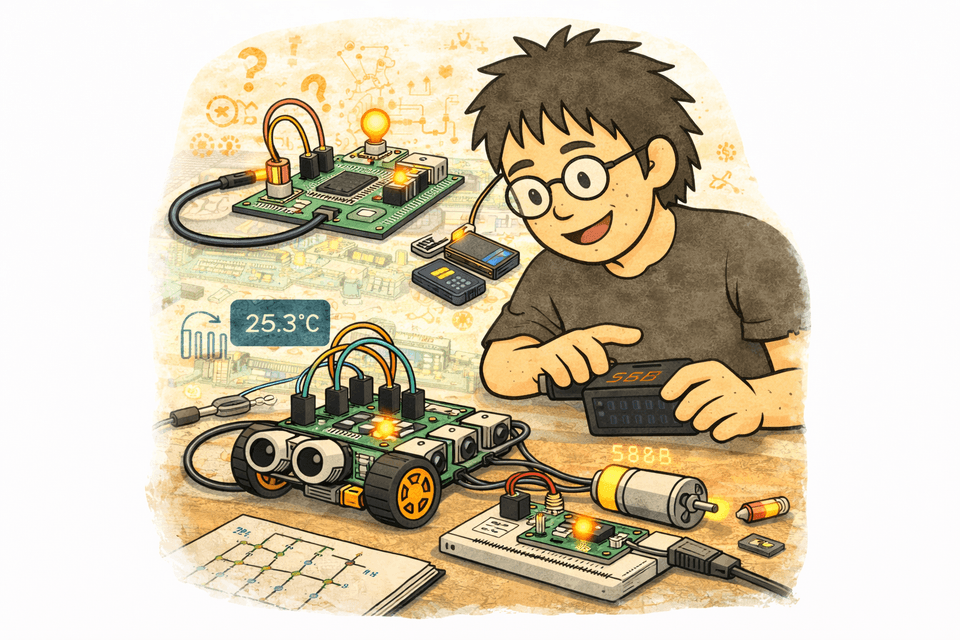
From Linux to Robots
Understanding Embedded Systems through Architecture

An experience of completing a whole system, beyond just code


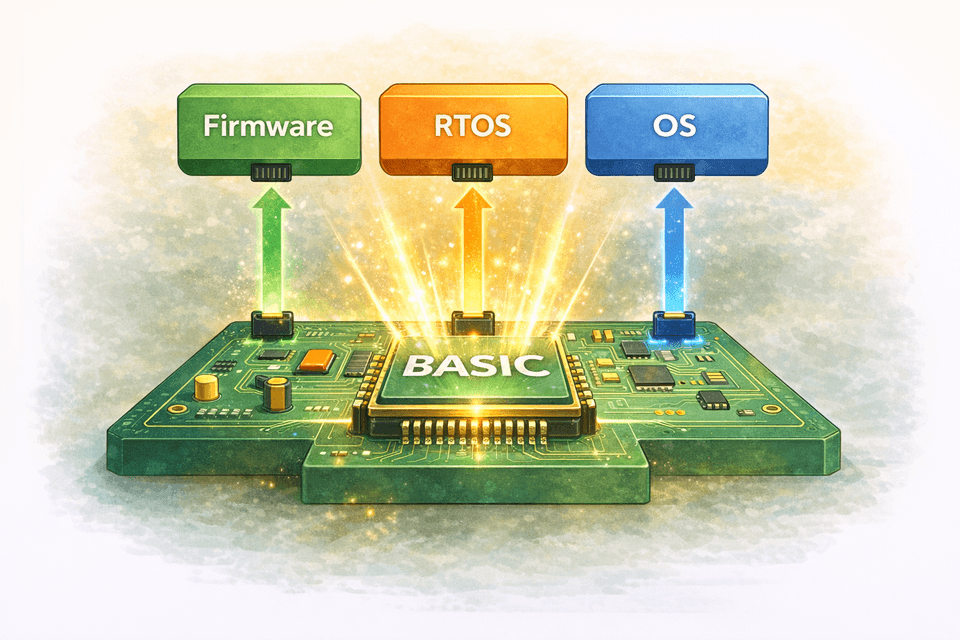
Firmware, RTOS, Embedded Linux...

Are you worried about which way to go
at so many crossroads? 🤔


But the essence of embedded development is one and the same.

'Computer Architecture understanding' and

'The principles of hardware control'


Understanding the essence is the fastest shortcut to growth.


Why you should take this course right now


Take one step closer to the essence of embedded systems.


check 1.

Experience through robot projects
'Real-world problems beyond the code'

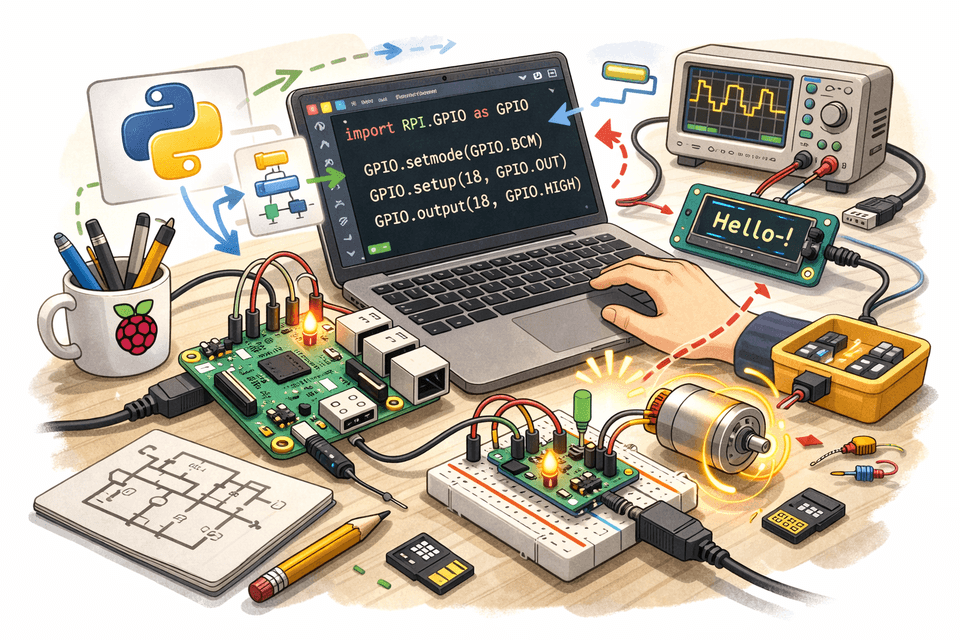
"The code is definitely correct, so why is the robot moving erratically?"
The moment the code on the screen meets real-world hardware, true development begins.

Through the experience of directly solving 'problems outside the code' such as unstable power, inaccurate sensor values, and minute mechanical errors, you can take a step closer to real-world practice.


check 2.

Essential Knowledge for Hardware Development:
Mastering the 5 Core Protocols

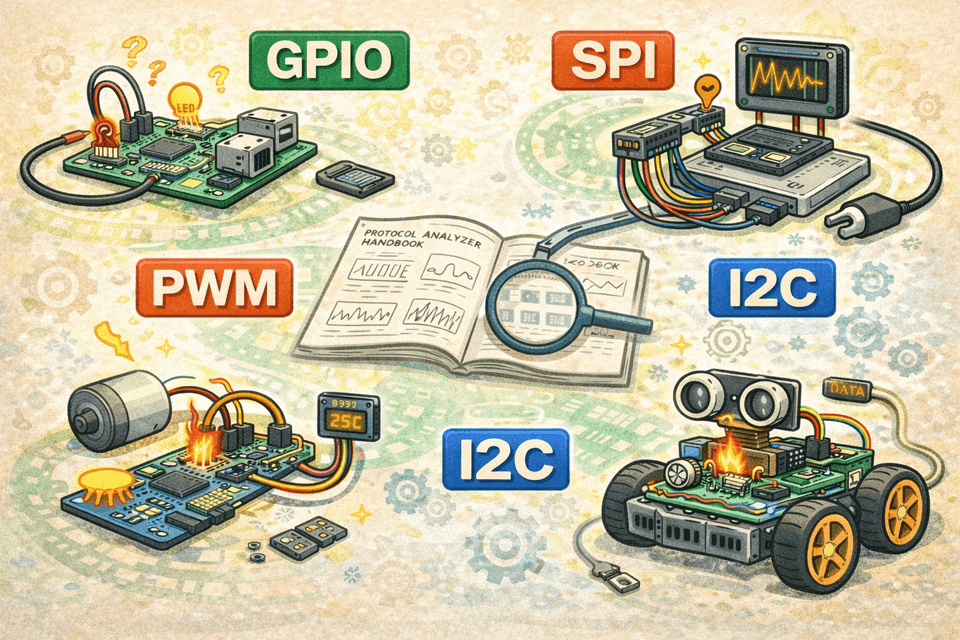
Have you ever felt overwhelmed standing before a 100-page datasheet for a sensor you've never seen before?

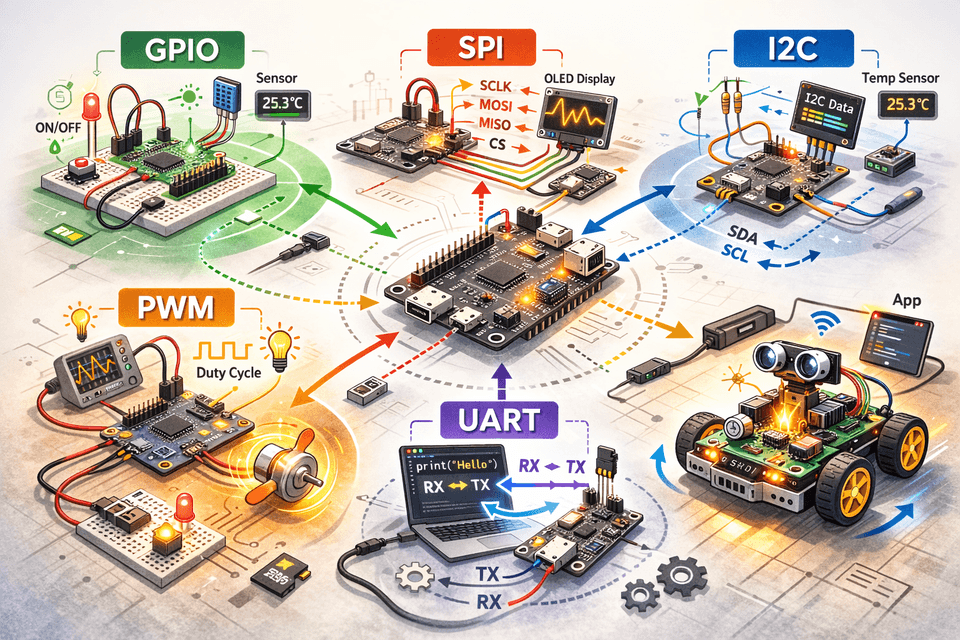
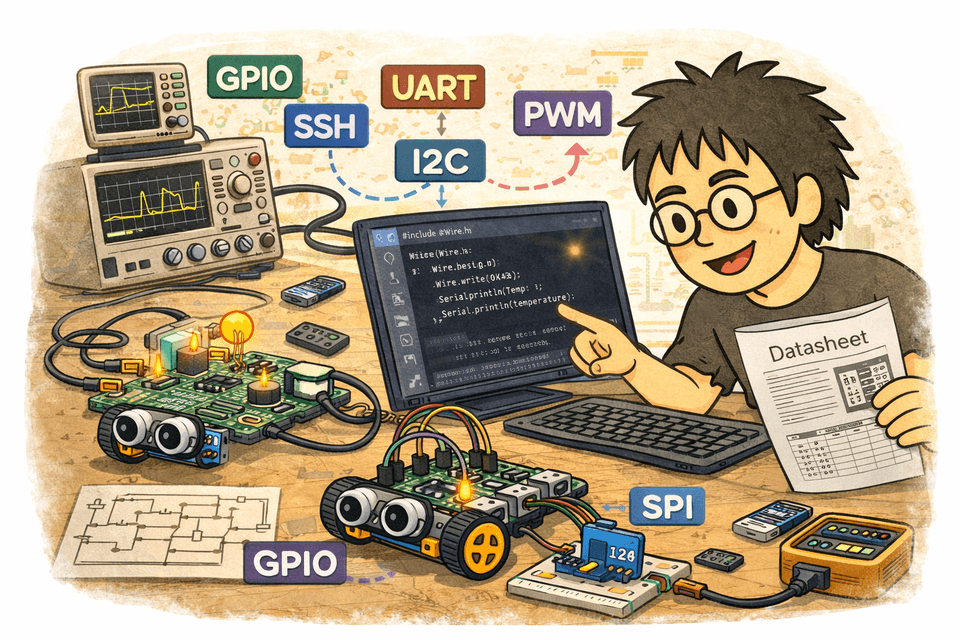
GPIO, UART, PWM, I2C, and SPI are the 'five standard languages' used to communicate with all components. This course dives deep into the operating principles of each protocol by directly analyzing their signals. Once you understand these principles, you will gain the power to analyze and control which parts of a datasheet to read and translate into code.


check 3.

Beyond the barriers of C
Experience embedded systems with Python

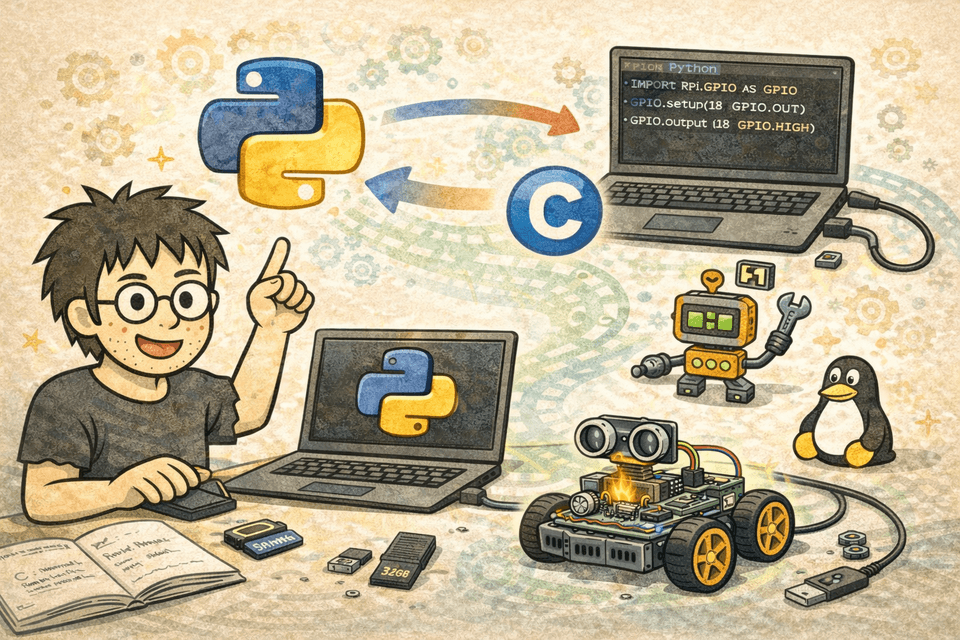
Are you missing out on the true fun of embedded development while struggling with C language pointers and memory issues?

This course intentionally chose Python. This is to temporarily set aside complex syntax and focus entirely on the "structure of software controlling hardware" itself. Once you understand the overall structure of the system first, you will be able to absorb C much faster when you encounter it later.


From Linux to Robots,
a curriculum completed through solid hands-on practice

Embedded System Overview and Learning Roadmap

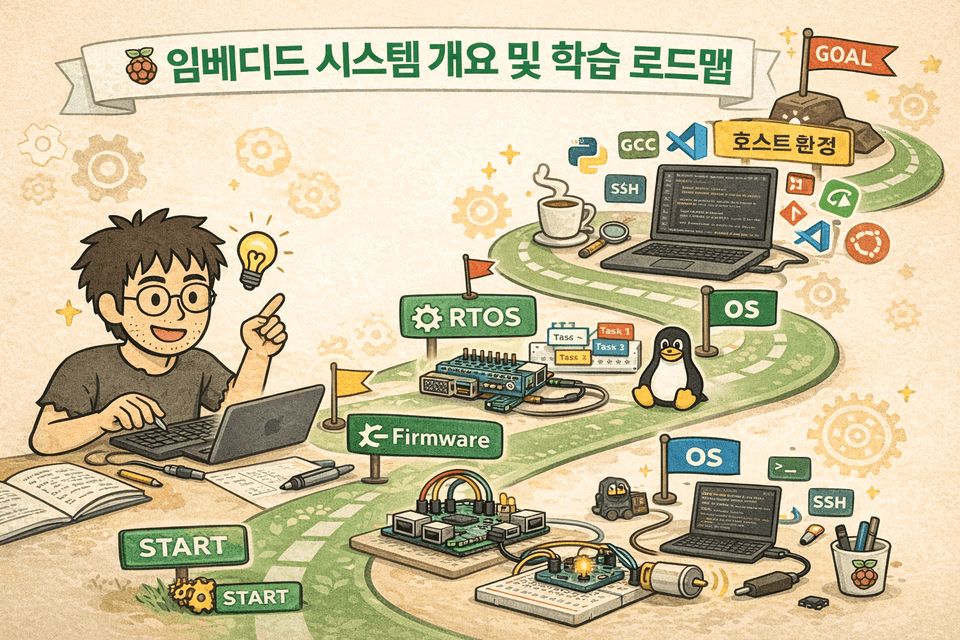
In this section, we analyze the high barriers to entry in embedded engineering and introduce the learning objectives and curriculum of the Junior Code Rescue Team (JCRT). We provide an overview of core areas in embedded software—including firmware, RTOS, general-purpose OS, and host environments—to help learners understand the overall development workflow.

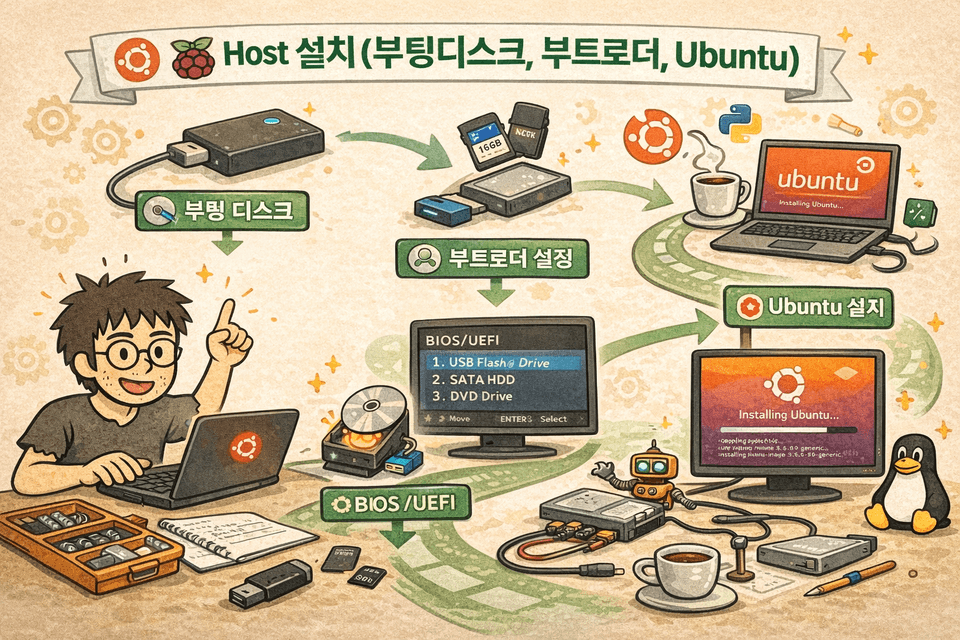
Host Installation (Boot Disk, Bootloader, Ubuntu)

In this section, we will proceed with the installation and configuration of Ubuntu as the basic environment for embedded development. From creating a boot disk and understanding bootloader concepts to installing Ubuntu and configuring basic packages, we will build a solid foundation for the first steps of development.

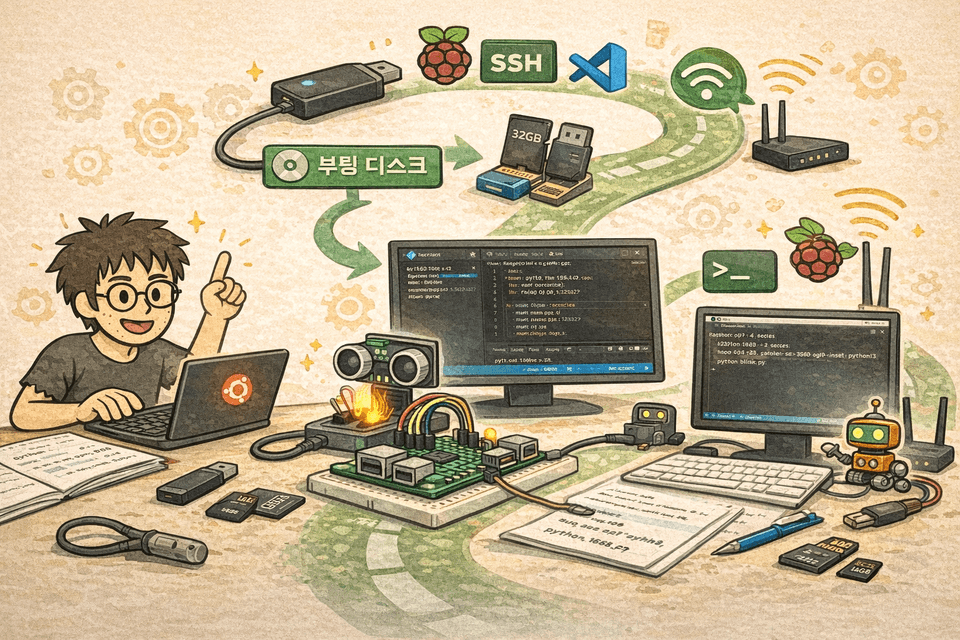
Raspberry Pi Development Environment Setup and Integration

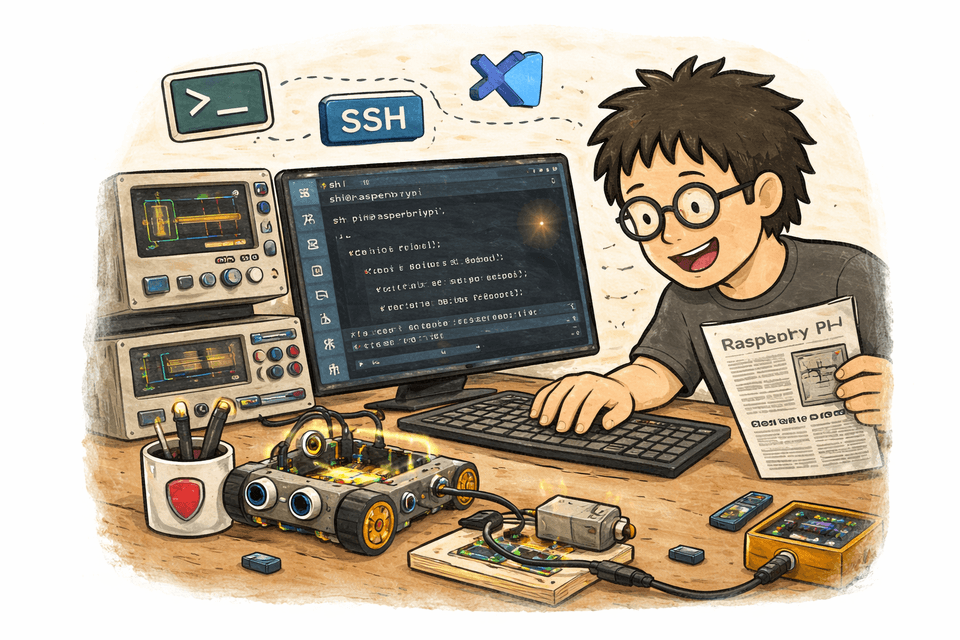
Understand the booting structure of Raspberry Pi and the role of the SD card, and create an SD card image for development in an Ubuntu environment. Efficiently configure the development environment between the host and target through remote access using SSH and VSCode integration.

Interfaces (GPIO, UART, PWM, I2C, SPI)

In this section, we will directly handle the low-speed hardware interfaces, which are the most fundamental components of embedded systems. We will proceed with step-by-step practical exercises, starting with input/output control via GPIO, followed by UART-based serial communication, LED control using PWM, and sensor communication based on I2C/SPI.

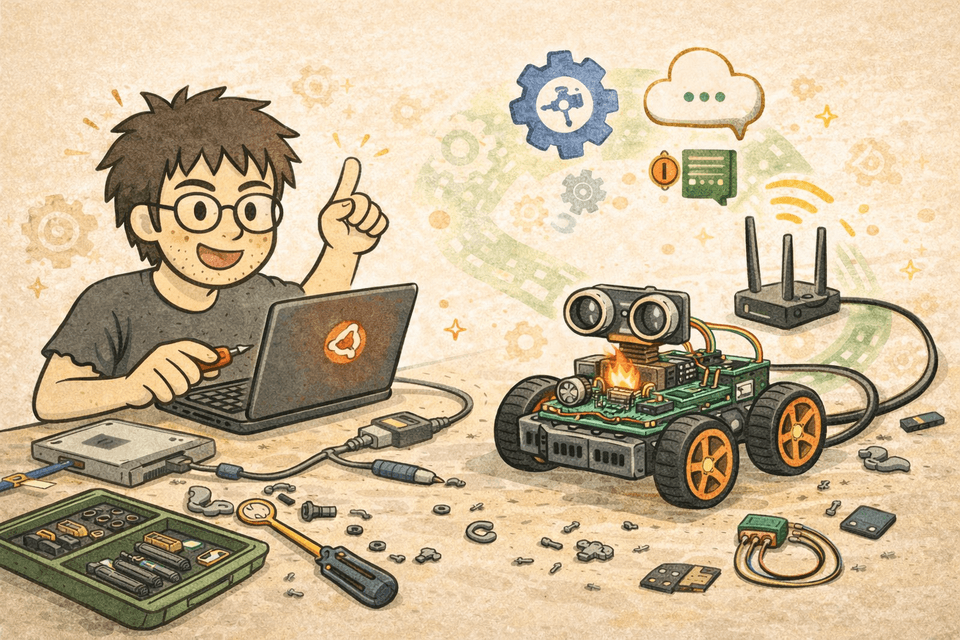
Robot Construction

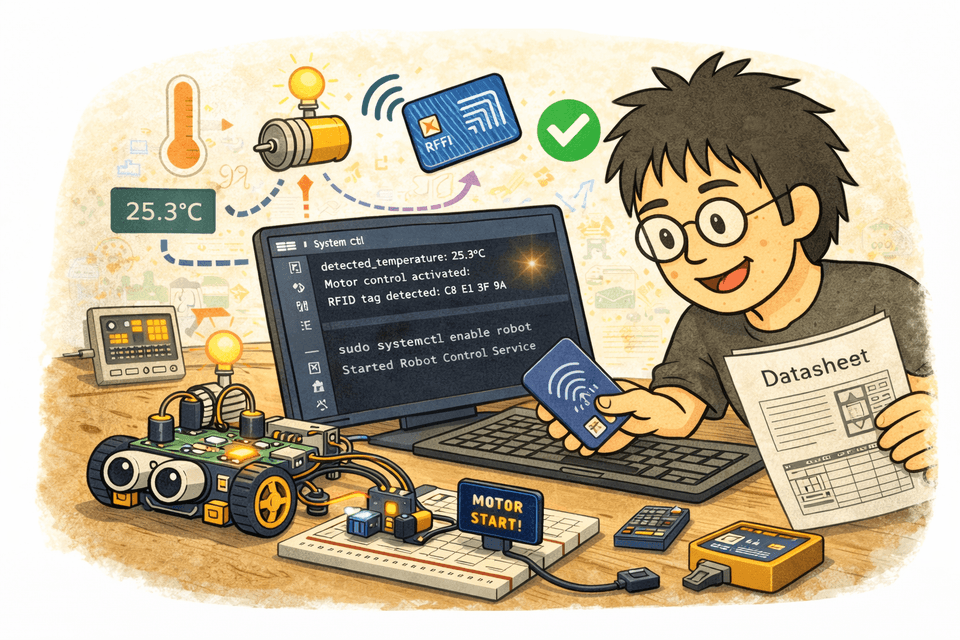
In this section, based on the interfaces and control technologies learned previously, you will build and operate an actual robot. By integrating each element—from sensor input and control logic implementation to motor driving and communication settings—into a single system, you will gain hands-on experience with the entire flow of embedded development.

Build it yourself, and drive it yourself!

Point 1. Complete the system from the basics

From Linux environment setup to circuit understanding,
GPIO, UART, PWM, I2C, and SPI control,
you will experience the entire process of assembling an actual robot and operating it with code.


Point 2. Replicate the actual development environment exactly

From Ubuntu installation and basic commands to
configuring a VSCode and SSH-based remote development environment,
you will set everything up exactly as it is done in the industry.


Point 3. Control HW with SW

Implement low-speed interfaces directly based on
circuit diagrams and datasheets.
You will come to understand the boundary between hardware and software.

Point 4. Automate the completed system

Integrate sensor processing, motor control, and RFID recognition logic, and configure an automatic execution environment by registering it as a
systemd service.

Are you feeling overwhelmed and unsure where to start with embedded development?
This course was created specifically for people like you.


✔️ Beginners starting embedded development for the first time

  • Those who want to experience the entire flow from Linux installation to robot control

  • Those who want to handle hardware directly by reading schematics and datasheets


  • Those who want to build a solid foundation by directly controlling GPIO, UART, PWM, I2C, and SPI.

✔️ Non-majors who want to work with both hardware and software

  • Those who want to create actual working results rather than just theory

  • Those who want to start in a PC environment and build their own Raspberry Pi-based embedded development environment.

  • Those who want to understand the operating principles of systems through sensor and motor control

✔️ Beginner developers who want to grow quickly through hands-on practice

  • Those who want to learn through actual code and results rather than complex theories

  • Those who want to gain experience in assembling and controlling things themselves

  • Those who want to grasp the overall structure of embedded development in a short period of time


The first step to understanding the structure of embedded systems,
The Essence of Embedded Systems - Basic Edition start here.

Notes before taking the course


Hands-on Environment

  • The practice sessions will be conducted based on the Raspberry Pi 4B+ model.

  • Please prepare a MicroSD card of 64GB or more and a power adapter.

  • The process will be conducted in an Ubuntu 24.04 LTS-based environment (actual PC or VM).

Prerequisites and Precautions

  • It is helpful to have experience using basic Linux commands.

  • Understanding basic Python 3 syntax will be helpful for learning.

  • It is helpful to have a basic understanding of hardware.

Learning Materials

  • All practice source codes and examples are provided through a public repository (Gitlab).
    You can continue to use them by modifying or expanding them yourself even after the practice sessions.

  • Reference datasheets and library documentation will be provided.


Recommended for
these people

Who is this course right for?

  • Beginners who want to start with embedded systems but feel overwhelmed and don't know where to begin.

  • Non-majors or beginners who have never personally handled Linux or hardware before.

  • A beginner developer who has only studied theory but hasn't actually built anything.

  • Those who want to quickly experience the overall structure of embedded development.

Need to know before starting?

  • This is a beginner-level course, and you should have a basic knowledge of Python.

  • No other prior knowledge is required. Anyone can take this course as long as they know how to use a computer.

  • It is okay if you have no experience with Linux, hardware, or programming. All necessary concepts will be explained from scratch in the lecture.

  • Basic PC experience (such as copying files, installing programs, etc.) is helpful.

Hello
This is jcrt

252

Learners

9

Reviews

5.0

Rating

2

Courses

I am an engineer with 14 years of experience, ranging from low-level development to system design.

I have carried out practical work focusing on BSP, Firmware, Bootloader, and Embedded Linux optimization.

  • Former) Intel Automotive, Senior Software Engineer (BSP)

  • Former) LG Electronics CTO, Senior Research Engineer (SW/BSP)

  • Current) Leader, Corini Rescue Team


Practical + Educational Experience

  • Over 6 years of experience in embedded systems lecturing and mentoring

  • Experience in creating technical interview questions and coding tests

  • Conducted numerous project and portfolio mentoring sessions


From low-level to AI,
we cover the structures that connect systems.

More

Co-instructor

Curriculum

All

84 lectures ∙ (10hr 54min)

Course Materials:

Lecture resources
Published: 
Last updated: 

Reviews

All

6 reviews

5.0

6 reviews

  • weedstar117774님의 프로필 이미지
    weedstar117774

    Reviews 1

    Average Rating 5.0

    5

    100% enrolled

    I felt lost while studying embedded systems, but this course helped me a lot in understanding the overall flow. By personally practicing everything from Linux environment configuration to basic interfaces like GPIO, UART, and SPI, I was able to get a feel for how embedded systems operate. I liked that it wasn't just a "follow-along" practice, but allowed me to connect concepts with actual operations. I felt it was a perfect course for beginners to build a solid foundation.

    • jcrt
      Instructor

      Thank you for your thoughtful review. I appreciate you noticing that the course was designed to help you understand embedded systems within the overall flow rather than as fragmented functions. I will continue to provide deeper content in a way that connects concepts with actual operations.

  • rbgusrns744526님의 프로필 이미지
    rbgusrns744526

    Reviews 1

    Average Rating 5.0

    5

    100% enrolled

    While studying embedded systems on my own, I always felt it would be great to have important points or tips. I really appreciated how this lecture clearly explained everything step-by-step from the basic principles through the eyes of an industry professional. Also, I feel like we live in a world where AI is commonly used and knowledge is easily accessible; however, thanks to your systematic teaching of the fundamentals, I was able to reflect on the times I studied haphazardly and firmly solidify my previously lacking foundation.

    • jcrt
      Instructor

      Hello. Thank you so much for your thoughtful course review. I empathize with the sense of helplessness you felt while studying on your own. This course was designed not just to list information, but with the goal of conveying how to actually think and approach problems in the field. I am truly glad that it was a time for you to reorganize the basic principles and understand the overall flow. I will continue to provide a curriculum focused on hands-on practice so that you can build a solid foundation. Thank you.

  • sjnam071656님의 프로필 이미지
    sjnam071656

    Reviews 1

    Average Rating 5.0

    5

    100% enrolled

    They taught the basics of embedded systems, which aren't easy to come across in school, in an easy-to-understand way, and building the practice robot was also fun.

    • jcrt
      Instructor

      Thank you for your thoughtful review. Embedded systems can feel difficult, but I believe it is a field that is fully accessible if you understand the basic principles step by step. Thank you for enjoying the robot practice sessions, and I look forward to seeing you in the advanced course with more in-depth content.

  • kimchilove8526님의 프로필 이미지
    kimchilove8526

    Reviews 1

    Average Rating 5.0

    Edited

    5

    100% enrolled

    It was a great help because it covered the basics easily and kindly, unlike my major classes which felt overwhelming due to the high barrier to entry in embedded systems.

    • jcrt
      Instructor

      I'm glad it was helpful. Embedded systems can feel like they have a high barrier to entry at first, but it is a field you can certainly master if you understand the basic principles step by step. I am also preparing advanced courses, so please look forward to them. :)

  • reavang2543님의 프로필 이미지
    reavang2543

    Reviews 1

    Average Rating 5.0

    5

    100% enrolled

    Embedded systems may seem easy to learn on the surface, but it is surprisingly rare to find cases where the fundamental principles are properly understood. Working in the field, I often see how this difference in "basic skills" eventually leads to a gap in overall expertise. As the title suggests, this lecture points out the "essence" of embedded systems very sharply and clearly. Since the instructor has a deep insight into the core topics, I felt that concepts that could feel complex and overwhelming were being systematically organized in my head. I highly recommend this to not only those who are just starting out in embedded systems but also to junior developers who want to solidify their foundations once again.

    • jcrt
      Instructor

      Thank you for your thoughtful review. As you mentioned, this course focuses on understanding why things work the way they do, rather than simply listing features. I will continue to reinforce the content with practical insights that can be applied directly in the field. ^^

Similar courses

Explore other courses in the same field!

Limited time deal

$53,900.00

30%

$59.40