Windows Debugging Tips
megayuchi
Let's learn Windows debugging techniques that no one tells you about.
Basic
debugging, debugger, windows-programming
This course covers the core of TCP/IP network programming required for online game development, with a practical, hands-on focus. You will learn step by step, starting with the basic principles of sockets and progressing through client-server architecture design to implementing a game framework using a self-developed network library. Topics covered: Basic network concepts and how TCP/IP works TCP programming using the Socket API Packet protocol design and implementation of transmission structures Development of a client/server-based game framework Optimization and practical tips needed for actual online game development Notes: The course is conducted on Windows using Visual Studio. Although it uses the standard bsd socket API, there are slight differences from Unix-based operating systems. IOCP and Overlapped I/O are not covered.
63 learners
Level Intermediate
Course period Unlimited


Reviews from Early Learners
5.0
영환
This is such an informative lecture. After watching it, I’m practicing by typing out each line of code from scratch and reviewing the parts I don’t understand well by rewatching the lecture. It’s been a great help. Thank you.
5.0
wolfclaw4
I hope all job seekers listen to this.
5.0
아데니아
The comprehensive lecture materials provided help me understand the content more deeply.
Understanding and Applications of TCP/IP
Socket programming
Network Programming
Online game server programming
Have you ever wondered how multiplayer games or MMOs with large numbers of players work? Have you ever wanted to add networking to a game you made yourself and support an online mode?
If so, this course can help you.
If you want to write code that simply sends and receives data over the internet, it is easy to implement using the socket API. However, code that merely sends and receives data is somewhat different from network programming in game development. This course goes beyond simply using APIs to explain how to write practical network code and apply it to online games based on the client/server model.
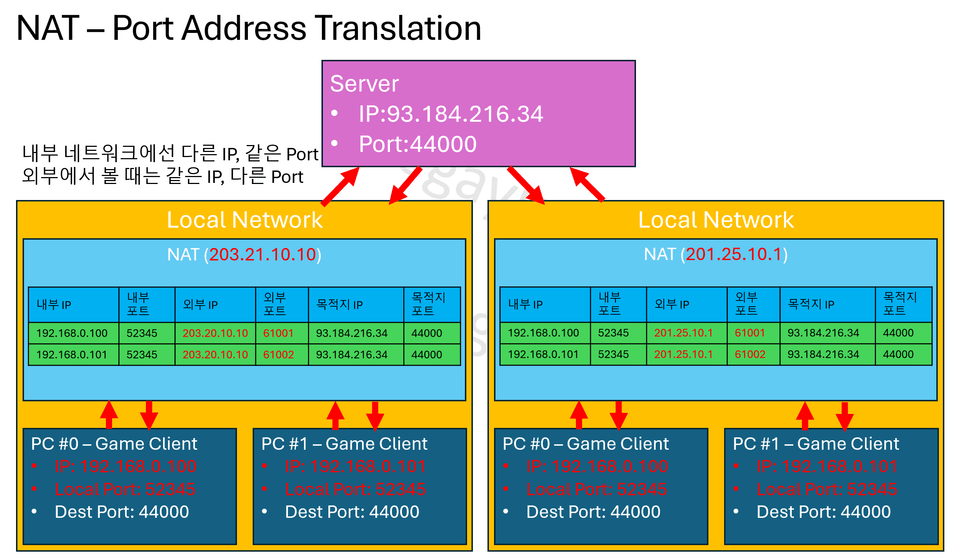
We introduce the OSI seven-layer model and the TCP/IP four-layer model and explain how these concepts are integrated into the internet.
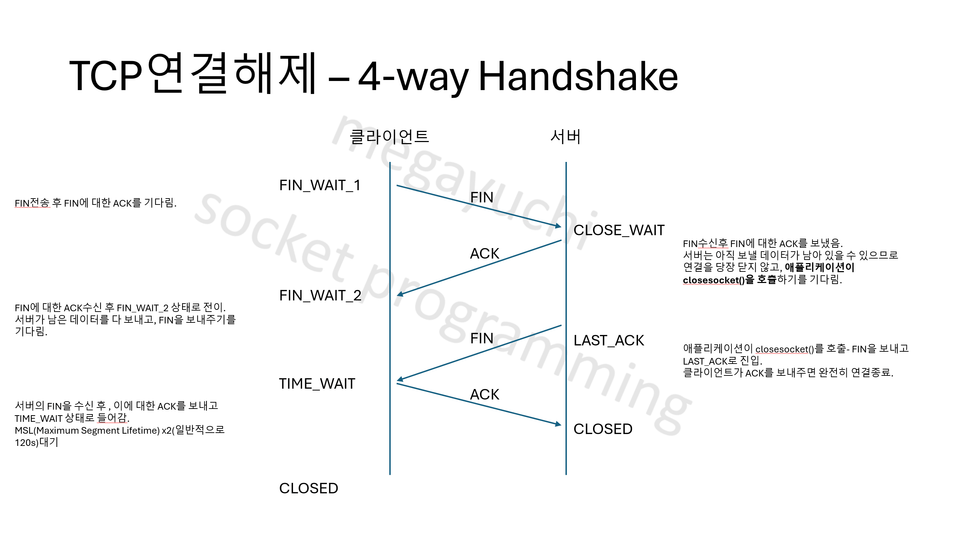
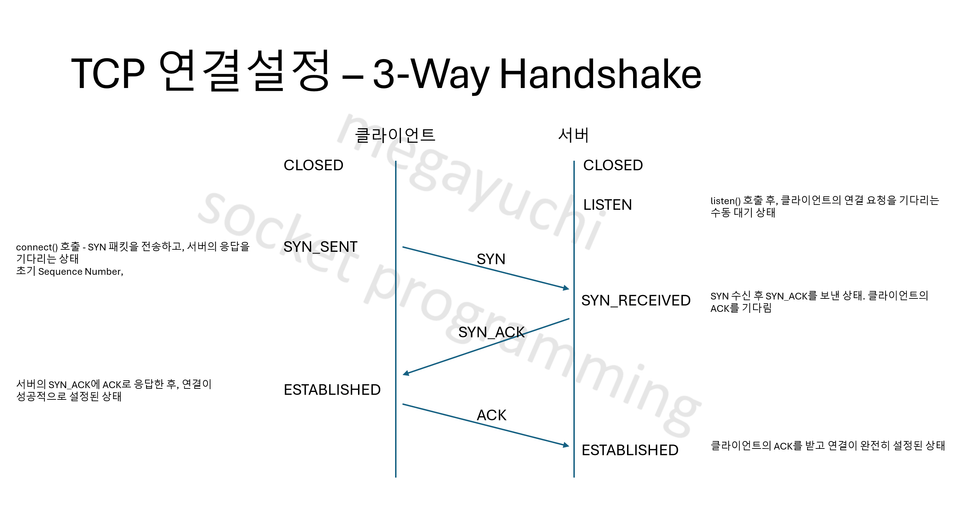
Learn the technical operating principles of TCP/IP, the main protocol suite that makes up the Internet. We explain the structure of TCP and IP headers, TCP sequence numbers and acknowledgment system, connection establishment using the three-way handshake, and connection termination using the four-way handshake.
We introduce Winsock, the socket API implementation for Windows.
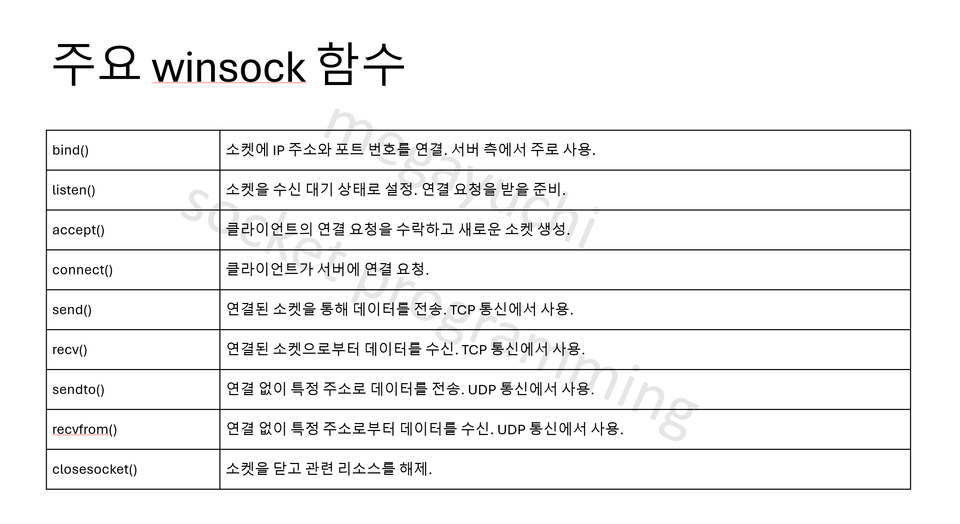
We explain the differences between Winsock and Unix-like socket APIs. We preview the functions and features primarily used in Winsock programming.
Write the initial client and server code using the APIs that receive connection requests and make connection requests.
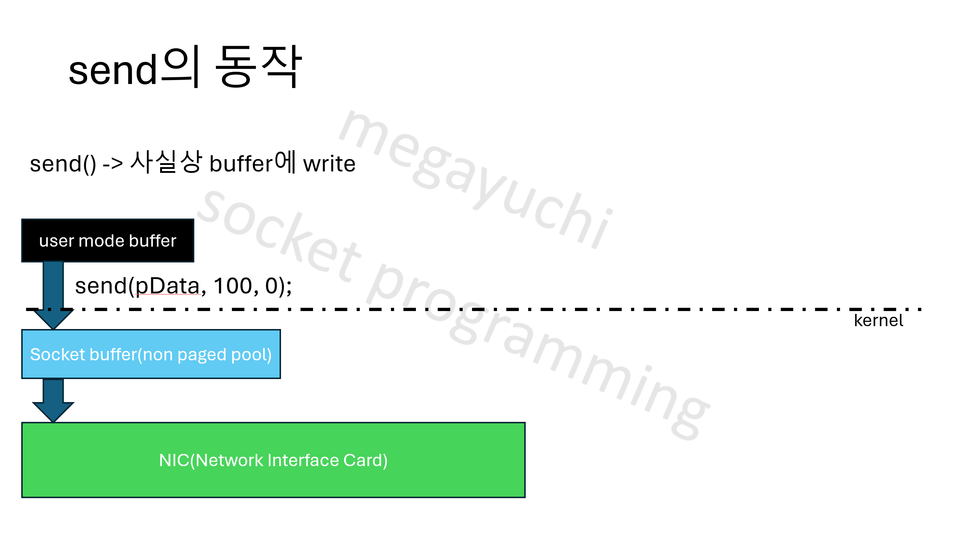
We actually exchange data using the send() and recv() functions. At this point, we will only cover blocking mode sockets.
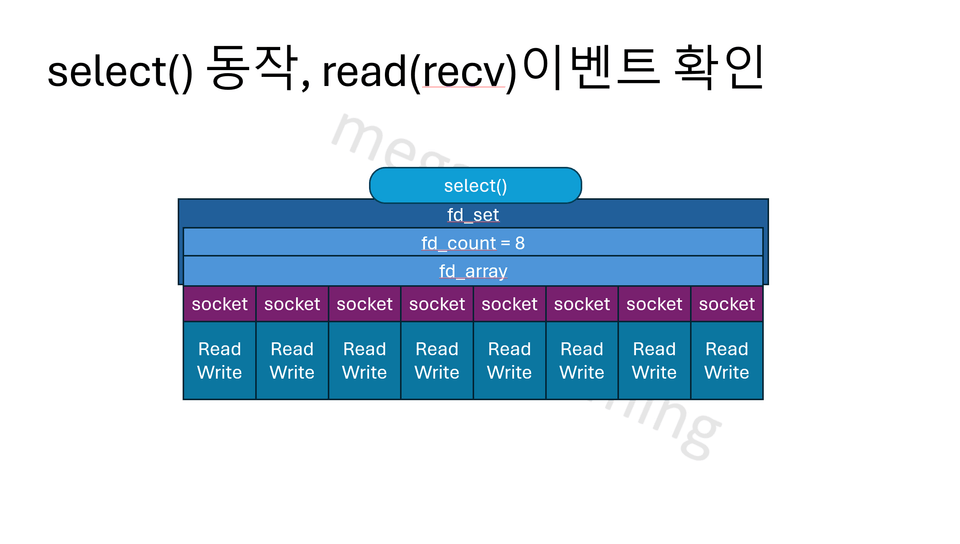
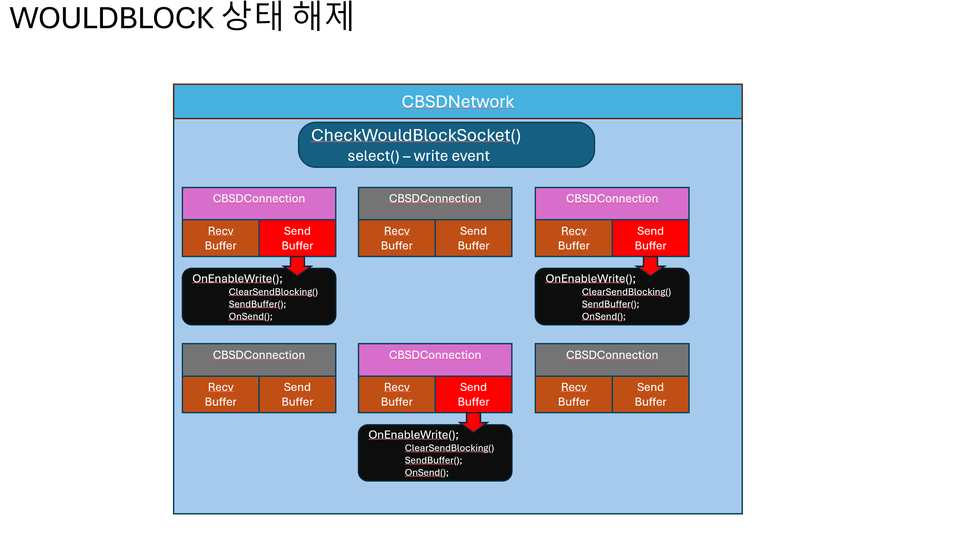
Blocking mode sockets are easy to use, but they are not suitable for real-time games. This section explains how to write network code that can be used in actual game programming with non-blocking sockets.
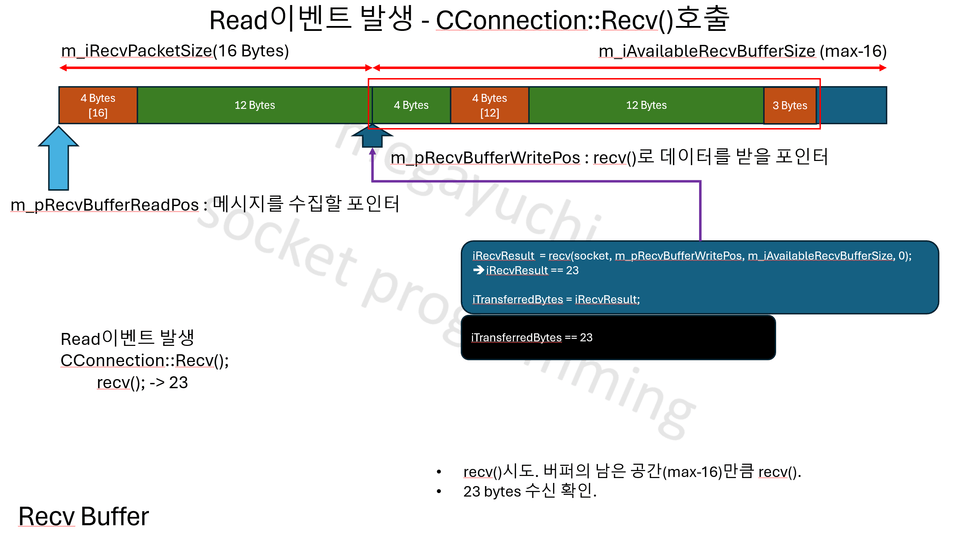
To handle exceptional situations, you cannot rely solely on the socket’s basic functionality. We will implement Recv-Buffer and Send-Buffer to prepare for exceptional situations that may occur due to the characteristics of TCP. This is a core feature in developing a full-fledged network library.
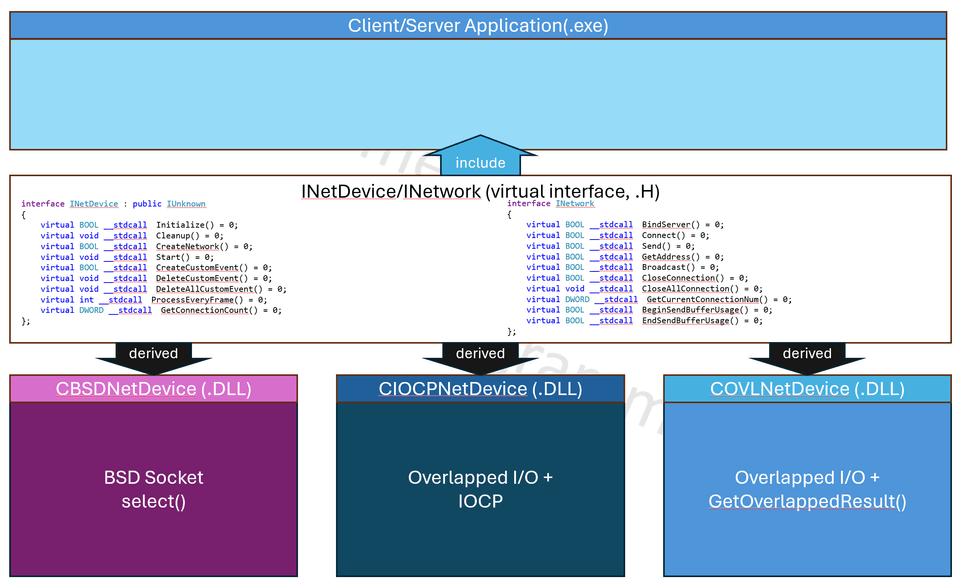
We will design and implement a network library that can be shared by both game servers and clients. This allows us to jump more than two levels from simply implementing send-and-receive functionality using the socket API to developing an actual product.
To move beyond simply copying and pasting code and achieve true modularization, the components must be isolated at the binary level. This introduces a method of separating the network library code into a DLL to clearly establish the boundary between the content layer and the network layer. This can be a great help in actual product development.
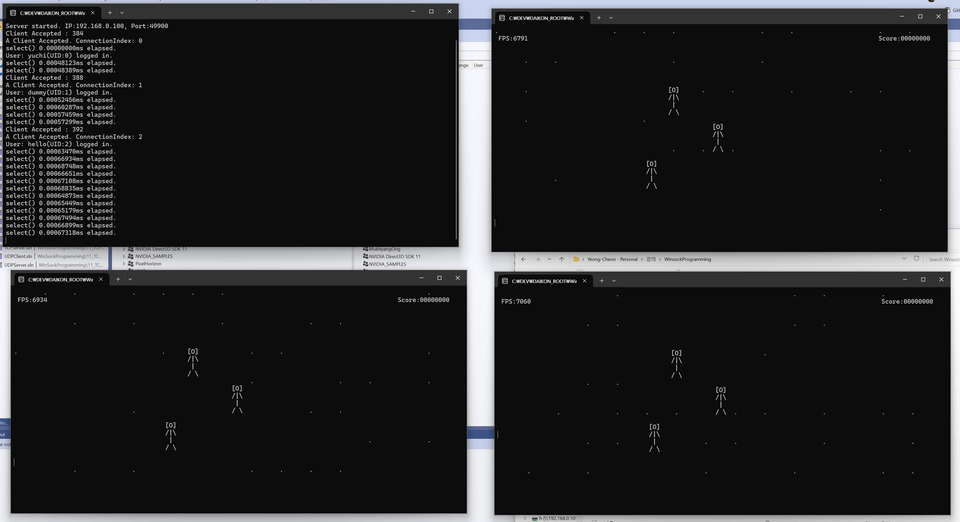
Although it is not a complete game, we will implement the essential elements for developing an online game. Using the network library created in the previous lecture, we will create a simple demo in which multiple clients connect to a server and synchronize movement.
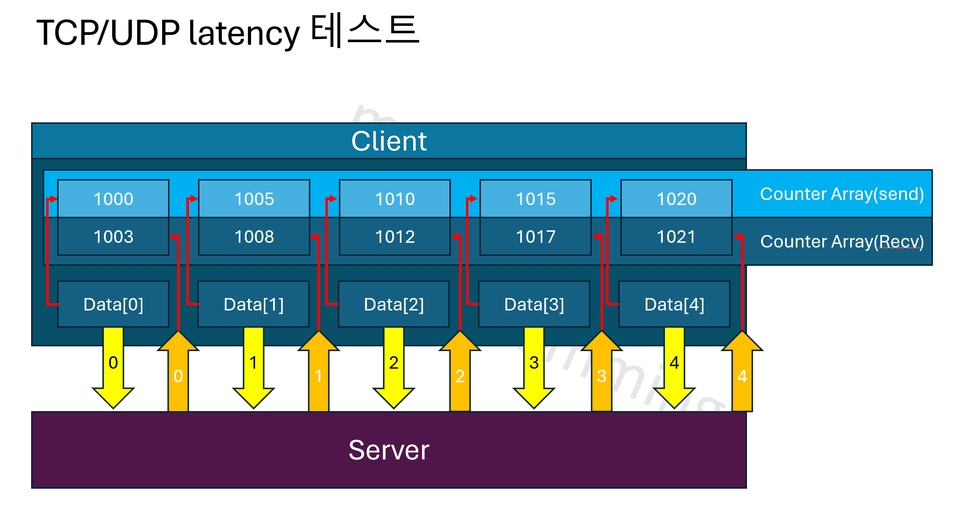
We introduce technologies for improving network bandwidth and server performance efficiency in online games. We also clear up some misconceptions about UDP vs. TCP.
Operating system and version (OS): Windows 10/11
Tool used: Visual Studio 2022
PDF provided
Source code provided via attached files
Required
C/C++
Basic Windows Programming
Recommended (The following courses may be helpful.)
Windows System Programming (https://inf.run/VciKC)
Windows Debugging Tips (https://inf.run/KH5J6)
The course uses the Winsock API in a Windows environment.
We cover common socket API techniques that can also be used on Unix-like systems, including Linux, but the hands-on practice environment is Windows + Visual Studio 2022.
Technologies such as Overlapped I/O and IOCP (I/O Completion Port), apart from the standard socket API, are not covered.
Who is this course right for?
A developer who wants to implement a game server/client network architecture directly
Those who want to learn core networking technologies such as TCP/IP and sockets through hands-on practice
Need to know before starting?
C/C++
windows programming
Inflearn Verified
Career Verified
3,441
Learners
117
Reviews
25
Answers
4.9
Rating
11
Courses
C++,x86/x64 ASM, DirectX9/11/12, Metal, OpenGL, CUDA, win32, winsock/bsd socket
D3D12프로그래밍 기초편 - https://inf.run/7gJhS
D3D12프로그래밍 기초플러스 - https://inf.run/itHDW
DirectX Raytracing 프로그래밍 - https://inf.run/cQqx7
Windows System 프로그래밍 - https://inf.run/AwfCv
Windows Debugging Tips - https://inf.run/zL7E4
Blog : https://megayuchi.com
Youtube : https://youtube.com/megayuchi
LinkedIn : https://www.linkedin.com/in/megayuchi/
All
11 lectures ∙ (11hr 56min)
Course Materials:
1. Network Basics Part 1
01:36:25
5. send() / recv()
48:18
6. non-blocking socket
01:10:09
7. Send-Buffer / Recv-Buffer
01:02:46
All
8 reviews
5.0
8 reviews
Reviews 7
∙
Average Rating 4.4
Reviews 4
∙
Average Rating 5.0
Reviews 1
∙
Average Rating 5.0
Reviews 1
∙
Average Rating 5.0
Reviews 9
∙
Average Rating 5.0
Check out other courses by the instructor!
Explore other courses in the same field!
$152.90