This lecture will teach you the basic commands required for performance analysis of Linux servers, how to use the tcpdump command to solve network problems, and troubleshooting methods based on cases. Through this lecture, you will be able to solve various performance problems that occur on Linux servers.
I registered for the course and finished it right away.
Since it was the Linux commands I normally use, I easily skipped over the part about understanding the commands,
and it would have been better if there had been explanations of the options that are frequently used in practice (I think there were only some)
I liked that the actual failure case analysis content was able to establish the methodology once again
Thank you for the great lecture!
5.0
마블링
32% enrolled
This is very helpful. Things that were once vague are starting to become clearer.
5.0
문채우
100% enrolled
This was very helpful for diagnosing the server status. Thank you.
What you will gain after the course
Commands for Linux Performance Analysis
Key concepts that make up Linux from a performance perspective
Process, Results Interpretation, and Troubleshooting for Linux Performance Analysis
Difficult and complex Linux performance analysis? We will explain it in an easy-to-understand way with commands and examples.
In “Getting Started with Linux Performance Analysis”
How can I analyze Linux performance?
✅ Learn the basics for analyzing performance and network issues on Linux servers.
✅ Develop problem-solving skills by focusing on various performance and network issues that actually occurred on Linux servers.
This article covers Linux performance analysis, which is essential for those who develop servers or develop and operate services in a Linux environment.
It is especially helpful for these people:
Systems engineer or cloud engineer with operational ownership of Linux servers
Backend/server engineer who develops and operates services in a Linux environment
Engineers struggling with persistent performance and network issues on their Linux servers
The process of Linux performance analysis is vast and complex. Therefore, even when performance or network-related issues arise on a Linux server, it can be difficult to determine the best course of action. We have designed this lecture to help those who have experienced these difficulties find a direction to solve their problems .
The most frequently occurring issues in practice Let's take a closer look.
01
Six Basic Commands for Performance Analysis
02
Network troubleshooting tool tcpdump
03
Real-world performance analysis and troubleshooting examples
Key commands for performance analysis
Learn the essential knowledge you need to know for Linux performance analysis in an easy-to-understand way based on actual commands used for performance analysis.
Learn what Load Average is, why it's important, and how to interpret it using the uptime command.
We will examine OOME and Syn Flooding among kernel messages using the dmesg command and learn how they affect performance.
Let's examine system memory usage using the free command. Learn why the output is divided into "free" and "available" and what swap means.
Let's take a look at the system's disk usage using the df command.
Learn how to analyze your system's CPU usage and the status of processes using the top command.
Learn how to interpret your system's network connection information and the status of sockets using the netstat command.
Network Problem Analysis tcpdump Command
Learn about the tcpdump command to analyze and troubleshoot network problems.
Let's see what tcpdump can tell us.
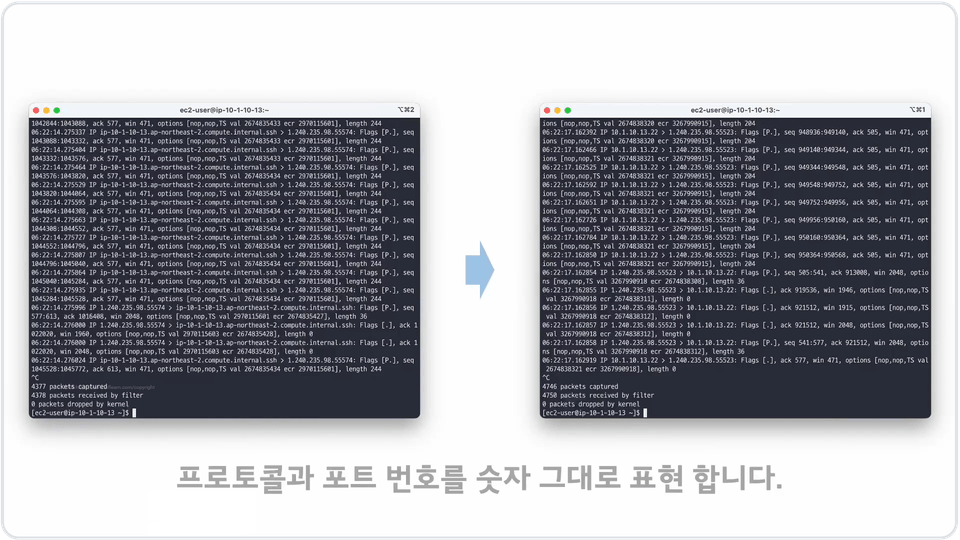
Learn how to generate packet dumps.
Let's look at how to analyze packet dumps using WireShark.
Real-world performance analysis and troubleshooting examples
We'll explore how to identify and resolve issues through real-world performance analysis and troubleshooting examples.
Here are five real-world performance examples.
Learn how to track and address performance issues in Linux, based on analysis and resolution of actual problems that occurred.
You can take your foundational knowledge for solving problems in practice to the next level.
I will share my Linux performance analysis know-how gained from my work experience.
I wrote the book, " Linux Kernel Stories for DevOps and SE ." I currently work as an SRE at Carrot Market, sharing my diverse knowledge through Brunch and Tistory . I hope this course will help you take a step closer to Linux performance analysis. 🙂
Q&A 💬
Q. Can I take the course even if I don't know anything about Linux?
This course does not cover the basics of Linux installation and operation. It is primarily designed for those who have experience developing and operating services in a Linux environment or operating Linux servers.
Q. How much Linux operating experience is required?
You must be able to remotely access a Linux server, be familiar with basic commands for operation, and have experience installing packages or applications for service operation.
Q. Is there anything I need to prepare before attending the lecture?
It would be good to have at least one Linux server that you can connect to so that you can enter the commands covered in the lecture and view the output results.
💾 Please check before taking the class
If it's a Linux server, any environment is fine, including physical servers and AWC EC2.
We provide PDF study materials.
Basic operational experience with Linux servers is required for learning.
Recommended for these people
Who is this course right for?
Anyone who operates a server in a Linux environment
Those who develop and operate services in a Linux environment
Need to know before starting?
Basic Linux usage (SSH connection method, basic commands)
I registered for the course and finished it right away.
Since it was the Linux commands I normally use, I easily skipped over the part about understanding the commands,
and it would have been better if there had been explanations of the options that are frequently used in practice (I think there were only some)
I liked that the actual failure case analysis content was able to establish the methodology once again
Thank you for the great lecture!















![Docker and Modern Server Technologies for Full-Stack (Linux, nginx, AWS, HTTPS, to Deployment) [Full-Stack Part 3]Course Thumbnail](https://cdn.inflearn.com/public/courses/326771/cover/bc862b4d-abe6-4d80-a826-3a5324a9f998/326771-eng.png?w=420)