
Robot Control Taught by an Industry Professional: From Simulation to Real Robot (SO-ARM101) Control

Master everything from implementing kinematics and dynamics theories with custom code—no open-source libraries—to multi-joint manipulator communication interfaces.

1 learners are taking this course

Level Intermediate

Course period Unlimited

robotics
robotics
robot
robot
kinematics
kinematics
inverse-kinematics
inverse-kinematics
manipulators
manipulators
robotics
robotics
robot
robot
kinematics
kinematics
inverse-kinematics
inverse-kinematics
manipulators
manipulators

What you will gain after the course

  • Implementation of an open-source Zero-based multi-joint control algorithm

  • High-performance torque control using model-based dynamics

  • Communication interface technology for porting simulation code to hardware

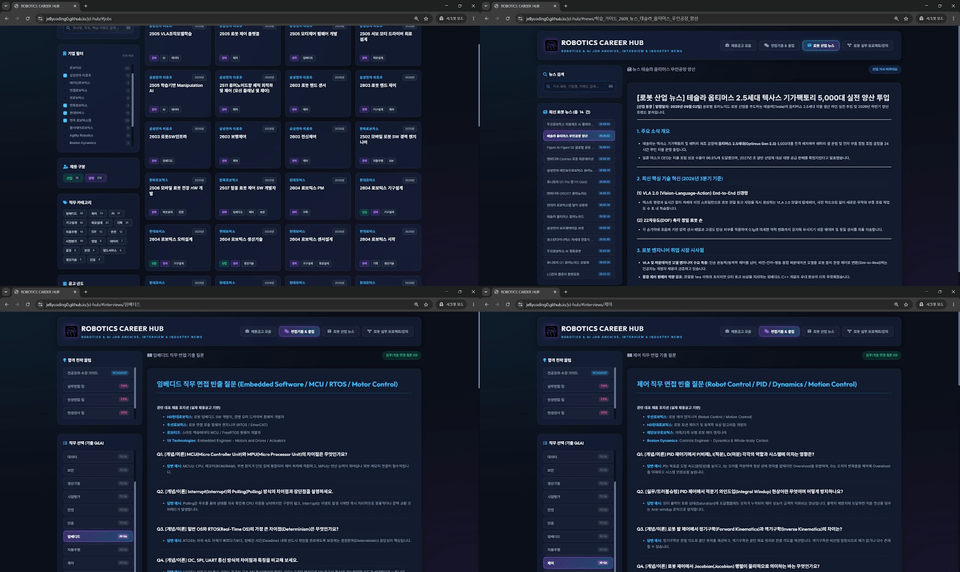
  • Understand employment and career transition trends at a glance with this collection of the latest job descriptions (JD) for robotics control positions both domestically and abroad.

Robot Control Taught by an Industry Professional: From Simulation to Real Robot (SO-ARM101) Control

Master everything from implementing kinematics and dynamics theories with custom code—no open-source libraries—to multi-joint manipulator communication interfaces.

Recommended for these people

Job seekers or undergraduate students who want to get a job in robotics control/SW but feel their portfolio is lacking.

A junior developer who felt frustrated about how the robot control engine actually works behind the library.

Those who want to go beyond on-screen simulations and directly control actual robot hardware with their own code.


After completing the course

  • Building a Multi-Joint Control Engine Based on Open Source Zero

    • Implement FK, numerical IK, and Jacobian algorithms for a 5-DOF manipulator from scratch using only NumPy matrix operations, without the help of external robot libraries.

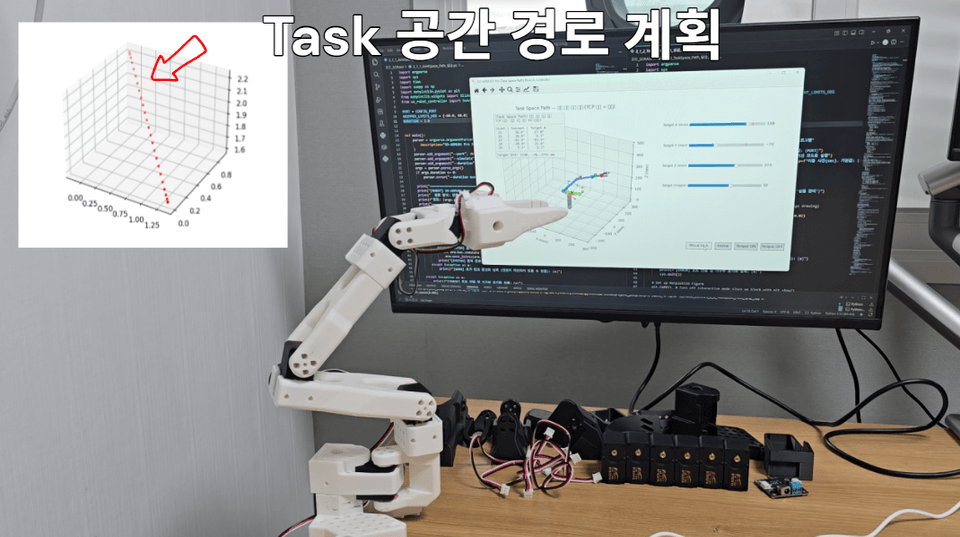
  • Perfect linear and circular motion planning within the Task Space

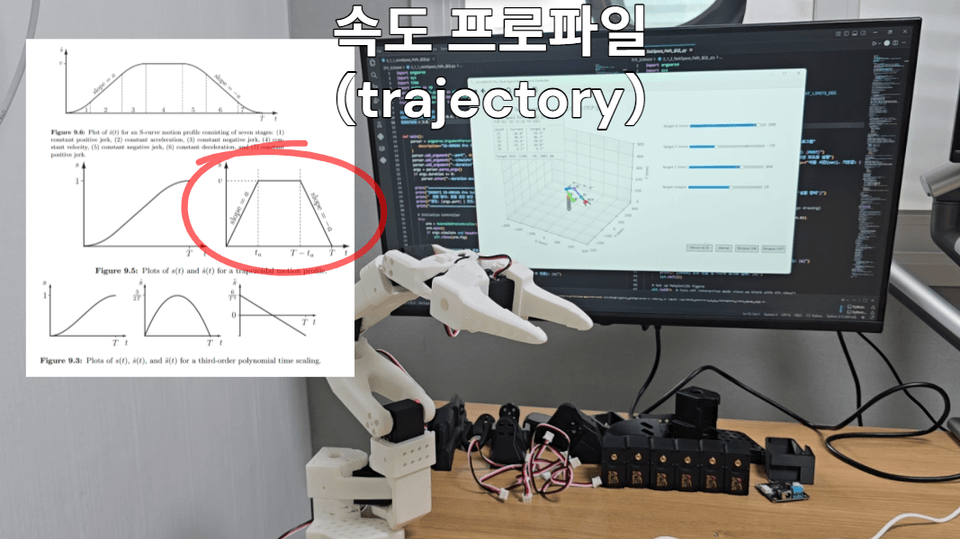
    • By solving IK in real-time during every loop, it generates straight paths as precise as if drawn with a ruler and controls acceleration using a trapezoidal velocity profile to ensure jerk-free movement.

  • High-performance torque control using model-based dynamics

    • By coding Recursive Newton-Euler Algorithm (RNEA) inverse dynamics, you will master gravity compensation, which makes the robot feel weightless, and Computed Torque Control (CTC) to overcome disturbances.

  • Communication interface technology for porting simulation code to hardware

    • You will learn the practical process of driving the actual SO-ARM101 robot by establishing motor protocol packet communication while maintaining the algorithm structure verified in the simulator.

Features of this course

Introduce the core features and key differentiators.

  • 'Real, vivid tips from working engineers' that you won't find in books

    • An incumbent robot developer from a major corporation shares techniques for handling singularity zones encountered in the actual field, as well as know-how for tuning numerical differentiation.

  • A 100% live coding build-up where all code is organically assembled

    • The FK code you implemented becomes the planning engine and combines with the dynamic model to become a CTC controller. Implement architectural code that connects like Lego blocks.

  • Simulation Environment Support

    • Even without the actual robot (SO-ARM101), you can build a simulation practice environment to 100% experience the essence of model-based control without hardware.

  • Perfect preparation for frequently asked questions in practical robot job interviews

    • Convergence conditions for Numerical IK, the physical meaning of the Jacobian, the RNEA algorithm, and the difference between Task Space and Joint Space control—you will naturally internalize the answers that can satisfy practical interviewers.

화면 캡처 2026-07-05 232649

task_space_planning

trajectory_profile


The person who created this course

  • "Real know-how gained from grinding and struggling through everything from low-level HW to SW"


    Hello, I am a robotics developer currently working at a global corporation.

    Having worked in the robotics industry for several years, I have experienced everything from the bottom level of hardware to embedded systems and the upper layers of software.

    I am organizing the know-how I have fiercely accumulated in the field, and

    I am creating this course to share my knowledge and earn some side income at the same time.

    If you have any questions about the lecture, please feel free to leave a comment at any time.

    I will help you gain as much as possible so that you feel the cost of the lecture is well worth it!

Do you have any questions?

  • Q. Do I have to purchase the robot hardware (SO-ARM101)?

    • A. No, it is optional. More than 90% of the course curriculum is designed so that you can fully practice without hardware using Matplotlib 3D visualization widgets and the MuJoCo physics simulator. You do not need to purchase expensive hardware first just to verify the algorithms.

  • Q. Is it difficult to take the course if I don't know ROS (Robot Operating System) or MoveIt?

    • A. In fact, it is even better for those who do not know them. This course is not about teaching how to use APIs of existing frameworks, but rather a course where you directly code the 'core of robot control mathematics' hidden deep within those frameworks. Even if you don't know ROS, as long as you have a basic understanding of Python, you can build a control engine from the ground up.

  • Q. How does this help with job interviews or actual hardware development?

    • A. The candidates that interviewers find most disappointing are those who have "only barely managed to manipulate packages they imported." By completing this course, you will perfectly understand the numerical significance of damping for singularity avoidance and the forward/backward loop calculation structures of RNEA dynamics. This will allow you to leave a strong impression as a "sincere talent who truly grasps the fundamental principles of robotics."

Notes Before Taking the Course

Practice Environment

  • Computer: Since the focus is on Python operations and light physics simulations, you may use any environment such as Windows, Mac, or Linux. (Python 3.10 or higher recommended)

  • Required Libraries: numpy, matplotlib, mujoco, mujoco-viewer (We will guide you through the step-by-step installation and troubleshooting during the environment setup session at the beginning of the course.)

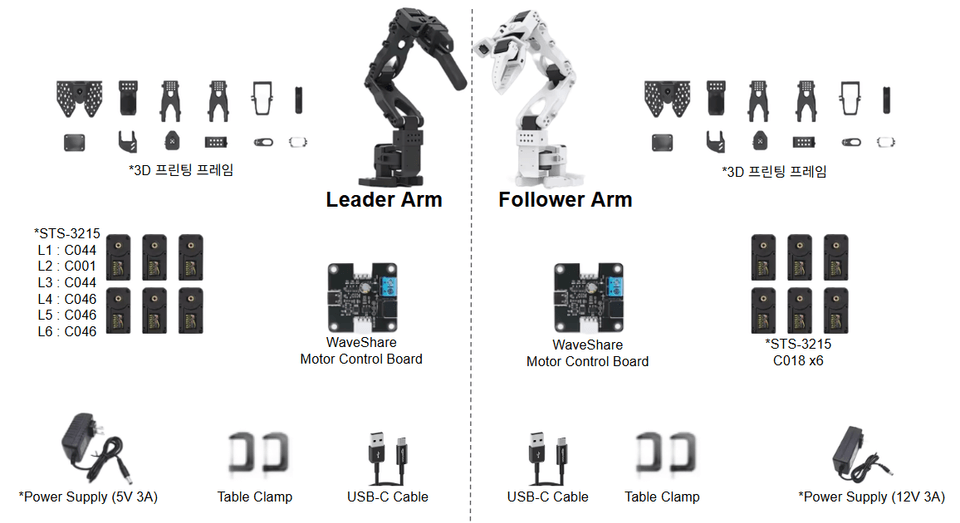
  • Physical Equipment: SO-ARM101 (Recommended only for those who wish to personally operate Chapter 5, the hardware porting step; it is not mandatory.)

Prerequisite Knowledge and Important Notes

  • Prerequisite Knowledge: * Basic Python syntax (loops, conditionals, function definitions, experience with basic classes and objects)

    • Basic college mathematics knowledge (Your learning speed will double if you refresh yourself on matrix multiplication, the concept of inverse matrices, and very basic concepts of calculus.)

  • What you don't need to know:

    • Prior knowledge of complex motor driver circuit design or embedded C firmware is not required at all. The communication packet interface concepts needed for the actual hardware integration stage (Chapter 5) will be explained step-by-step from the basics, tailored to a Python-friendly level.

Recommended for
these people

Who is this course right for?

  • Job seekers or undergraduate students who want to get a job in robotics control/SW but feel their portfolio is lacking.

  • A junior developer who felt frustrated about how the robot control engine actually works behind the library.

  • Those who want to go beyond on-screen simulations and directly control actual robot hardware with their own code.

Need to know before starting?

  • Basic Python syntax (experience with loops, conditional statements, function definitions, and basic use of classes and objects)

  • Basic college mathematics knowledge (Your learning speed will double if you refresh yourself on matrix multiplication, the concept of inverse matrices, and very basic concepts of calculus.)

  • The concepts of communication packet interfaces required for the actual hardware integration stage will be provided through lectures and course materials.

Hello
This is jelly

Career Verified

Hello, I am a robotics developer currently working at a global corporation.

Having worked in the robotics industry for several years, I have experienced everything from the bottom-level hardware to embedded systems and high-level software.


I am organizing the know-how I have fiercely accumulated in the field, and

I am creating this course to share my knowledge and earn some side income at the same time.


If you have any questions about the lecture, please feel free to leave a comment at any time.

I will help you gain so much that you'll feel the cost of the lecture was well worth it!

More
Published: 
Last updated: 

Reviews

Not enough reviews.
Please write a valuable review that helps everyone!

Similar courses

Explore other courses in the same field!

Limited time deal

$84,700.00

30%

$93.50