inflearn logo

Roadmap to 10,000 Wishlists: Everything About Indie Game Marketing

From announcing your game to turning interest into wishlists and purchases, this 17-lesson course covers indie game marketing. Learn the principles behind creating a promotional plan for your game by connecting your Steam store page, pitches to media and creators, social media and communities, and post-launch data analysis.

5 learners are taking this course

Level Basic

Course period Unlimited

Marketing Theory
Marketing Theory
Contents Marketing
Contents Marketing
Marketing Theory
Marketing Theory
Contents Marketing
Contents Marketing

What you will gain after the course

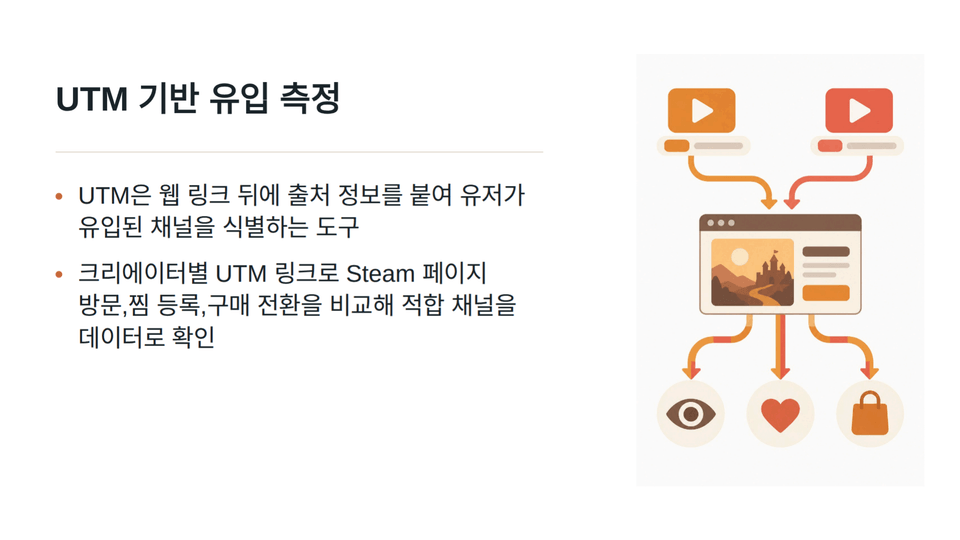
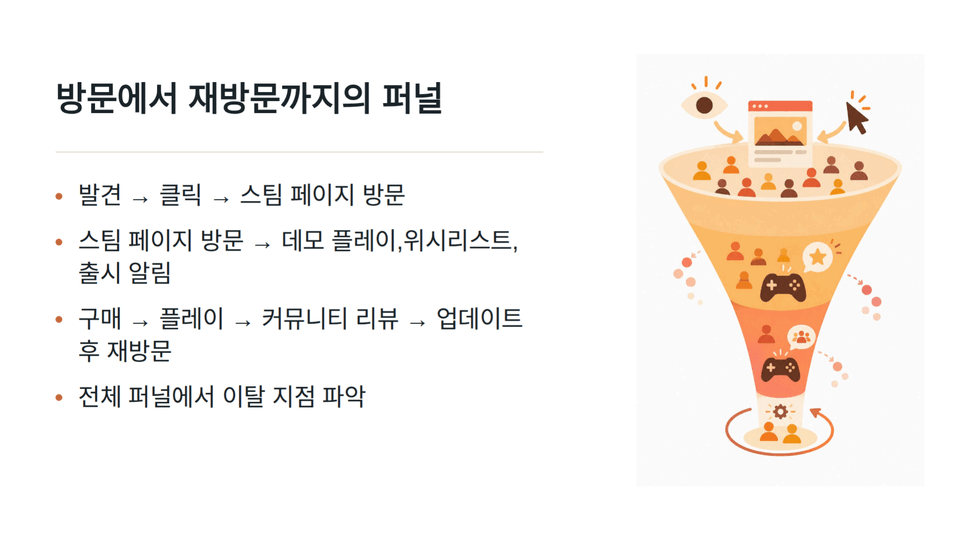
  • You can break down the journey of players who discovered the game into visits to the store, wishlisting, and purchases.

  • You can review whether the capsule art, screenshots, and store page convey the game’s genre and appeal.

  • You can explain how to select media outlets and creators that fit your game and prepare press kits and tailored pitches.

  • You can understand content planning principles that connect short-form content, devlogs, and community activities with Steam traffic.

  • You can prioritize the 90-day marketing plan by considering the festival and launch schedules, as well as post-launch data.


Views are adding up, so why have wishlists stopped growing?

Promoting your game doesn’t end with exposure.
You need to design your store page, media, creators, content, and post-launch data as one connected flow so that players who discover your game visit the store and go on to wishlist and purchase it.


I review the capsule art and screenshots to make sure my game’s genre and appeal are conveyed effectively on the store’s first screen.

Find media outlets and creators that fit my game, prepare a press kit and tailored pitches, and connect Steam key distribution with traffic results.

We structure short-form content, devlogs, and community activities to drive traffic to Steam, then examine everything from festivals through the first 30 days of post-launch data to create a 90-day action plan.

It’s natural to have felt overwhelmed about where to start promoting your game.
By breaking down the steps from discovery to purchase, you can create your own promotional priorities and action plan tailored to your game.


From game discovery to store visits and wishlists,
learn how to design indie game marketing that connects
store pages, media pitches, and social media traffic.

Turn overwhelming promotion into a flow that leads to purchases, and
create my game's 90-day launch plan yourself.

By the end of this course, you will be able to


You can connect game discovery to wishlist conversion.

  • You can break down the process into stages: a player first discovers the game, visits the store page, adds it to their wishlist, and eventually makes a purchase. Even when views are high but store visits are low, or when there are many visitors but few new wishlists, you can directly diagnose where the bottleneck lies and determine how to improve it.


✔️

How to turn interest that stops at views into Steam wishlists and purchases

Design your indie game promotion journey from discovery to post-launch analysis

After a game is discovered, we break down the journey from visiting the store page to adding the game to a wishlist and making a purchase, then build a store page that communicates its genre and appeal through capsule art and screenshots.
We connect media and creator pitches, social media and community management, festivals, and post-launch data analysis to create a practical 90-day plan for execution.

Hands-on promotion practice connecting Steam and creator channels

From preparing your Steam store page and Next Fest to creating a press kit, pitching to the media, crafting tailored proposals for creators, and distributing keys, you will practice based on real-world promotional scenarios.
You will analyze hooks and conversions in short-form content and design a content flow that drives traffic from Reddit, Itch.io, Discord, and the Steam Community by repurposing devlogs.

Promotional materials and an execution plan you can apply directly to your game

Based on the press kit composition criteria, media and creator selection criteria, content planning principles, and traffic performance metrics covered in the course, you can organize a promotional plan for each game.
By incorporating data analysis from the first 30 days after launch, along with festival, bundle, and update schedules, you will complete a 90-day marketing action plan with clear priorities.


📚

A four-step roadmap connecting discovery to purchase through execution

Section 1

From discovery to store visits and wishlists

Design a marketing funnel that takes players from discovering an indie game to visiting its Steam store page, then adding it to their wishlist and making a purchase. Learn how to effectively communicate the game’s genre and appeal through capsule art, screenshots, store page layout, and preparation for Next Fest.


Section 2

Promoting Your Game to Media and Creators

Learn how to prepare a press kit and promotional materials, research media outlets and creators suited to your game, and write tailored pitches. You will systematically learn creator selection criteria, outreach methods, Steam key distribution, and how to measure traffic performance.


Section 3

Social Media Content and Community Management

Learn content strategies that use social media, short-form videos, and devlogs to turn interest in your game into Steam traffic and wishlist conversions. Explore ways to increase player engagement and repurpose content across Reddit, itch.io, Discord, and the Steam Community.


Section 4

Release Schedule and Data-Driven 90-Day Plan

Learn marketing strategies and performance measurement methods that leverage game festivals and awards, bundle sales, and updates around the time of release. Analyze data from the first 30 days after launch to derive improvements, and establish a 90-day action plan based on priorities.


We can help solve the concerns of people like this!


📌

Solo developers preparing for a Steam release

Those who have finished developing their game but don't know where to start promoting it
Those who want to review how to arrange capsule images and screenshots so that the genre and appeal come across, and create a pre-launch plan that turns store visits into wishlists

📌

A planner on a small indie game team

Those who consistently post on social media but do not see views and likes translate into Steam visits or wishlist growth
Those who want to prioritize by tracking the traffic sources and conversions for each type of content, instead of managing short-form content, development logs, and community activities separately

📌

Junior marketers responsible for promoting games

Those who need to prepare materials to send to gaming media and creators but lack criteria for building a target list and the skills to write tailored proposals
Those who want to connect press kit creation, Steam key distribution, festival participation, and 30-day post-launch data analysis into a 90-day action plan

Notes Before Taking the Course

  • This course was produced using high-quality AI voice technology.

Prerequisites and Important Notes

  • No prior programming knowledge is required.

  • It would be good to have the game's basic information and release plans.


Learning materials

  • The lecture slide PDF is provided as reference material.


Recommended for
these people

Who is this course right for?

  • Solo developers and small indie teams wondering where to start promoting their game ahead of its Steam release

  • For those who want to review their content and traffic sources because views and likes aren’t leading to store visits or wishlist additions.

  • Game designers and marketers who want to systematically prepare press kits, media pitches, and creator proposals

Need to know before starting?

  • A basic understanding of indie game development and Steam store pages would be helpful.

  • If you have a game you want to promote or are planning, it will be easier to connect the lecture content to your own situation.

Hello
This is machinetutor

1,192

Learners

59

Reviews

1

Answers

4.7

Rating

11

Courses

I am an active developer with extensive practical experience in game development. I have participated in developing commercial games across various platforms, including PC, online, mobile, console, and VR. My lectures are produced using AI voices. That is why I am Machine Tutor.

Reviews

Not enough reviews.
Please write a valuable review that helps everyone!

machinetutor's other courses

Check out other courses by the instructor!

Similar courses

Explore other courses in the same field!

Limited time deal

$13.20

50%

$26.40