![[PyTorch] Learn Deep Learning Easily and QuicklyCourse Thumbnail](https://cdn.inflearn.com/public/courses/324742/course_cover/96781b94-7bae-47f8-ab6f-42821f26f042/coco-pytorch.png?w=420)
[PyTorch] Learn Deep Learning Easily and Quickly
coco
Learn MLP, CNN, and RNN, the basic framework of deep learning, quickly and easily.

Intermediate
Deep Learning(DL), Artificial Neural Network, PyTorch
Learn about GAN (Generative Adversarial Networks) in an easy and accurate way.
260 learners
Level Intermediate
Course period Unlimited
Reviews from Early Learners
5.0
정용기
I think you have explained a lot of content well, from basic formal proofs to practical exercises, in a short period of time.
5.0
rifampicin
It's a good lecture.
5.0
aidatacommons
The lecture was conducted quickly and clearly so that I could understand the overall intuition of GAN.
Concept and generation principle of GAN
DCGAN,LSGAN,CycleGAN
Applications and Development Directions of GAN
It occupies a paradigm of deep learning.
Learn about GANs! 🙆🏻♂
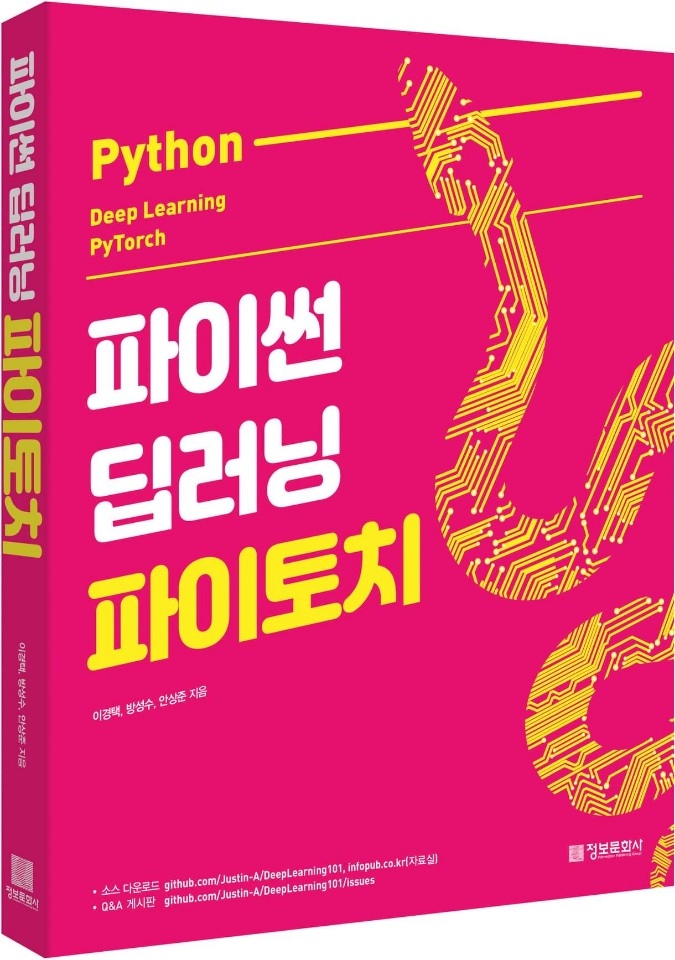
I organized the lectures given at Inflearn and published them in a book titled 'Python Deep Learning PyTorch'.
Thank you for your interest : )
(Inflearn lectures have been updated as of 2020.10.06. We will continue to update the lectures.)
Most of the artificial intelligence we talk about these days utilizes deep learning models. General machine learning or deep learning models ended with classification and regression. However, the emergence of GAN brought about a paradigm shift that is so great that it is no exaggeration to say that it has advanced the development of artificial intelligence by one step.
Going beyond classifying and predicting data to generating it was unimaginable at the time (4-5 years ago). The emergence of GANs, along with reinforcement learning (the basic principle of AlphaGo), has made them an indispensable field in artificial intelligence.
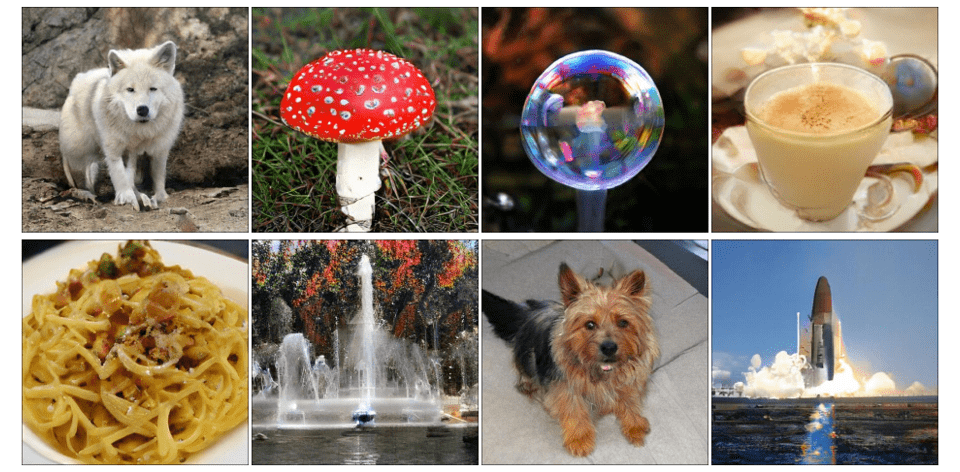
The image below is a fake image that does not actually exist in this world, created by the best performing GAN from a year ago. Now, more advanced models have emerged.
This lecture will explain the exact concept and learning principles of GAN step by step, and also talk about the shortcomings and future development directions of GAN.
We cover the concept and learning principles of GAN.
Rather than simply explaining the concepts, we explain the proper learning principles and provide mathematical proofs.
We will explain the learning process and method, the shortcomings of GAN when it first came out, and the future direction of GAN.
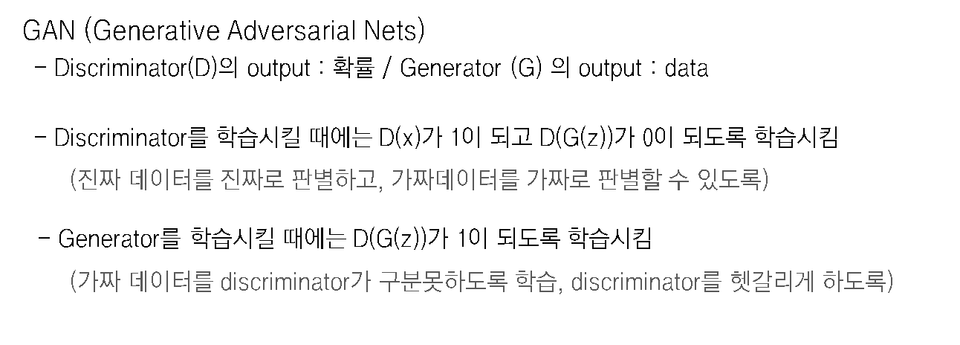
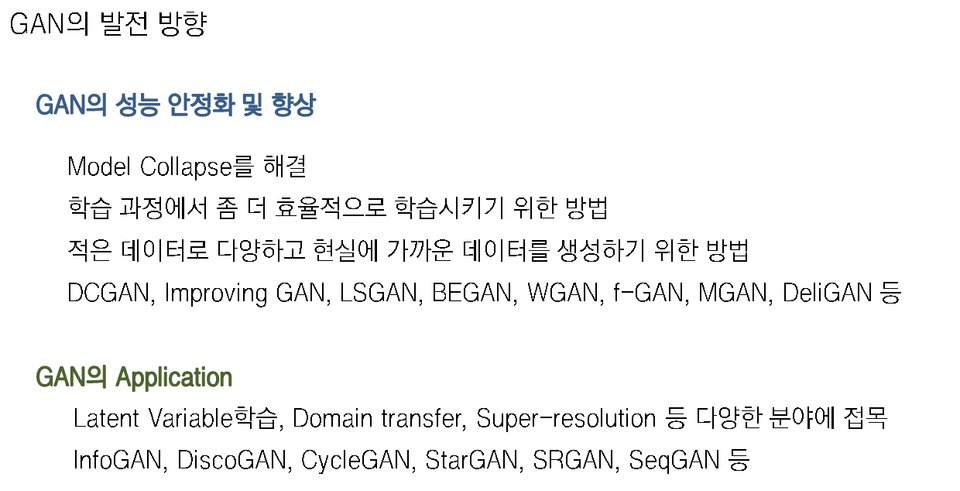
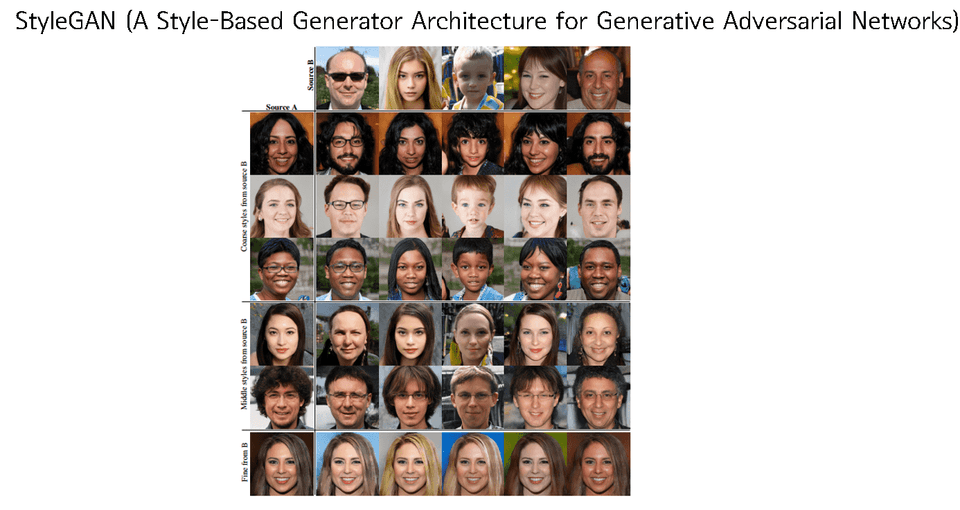
Since the advent of Vanilla GAN, GANs have been evolving at an incredibly rapid pace.
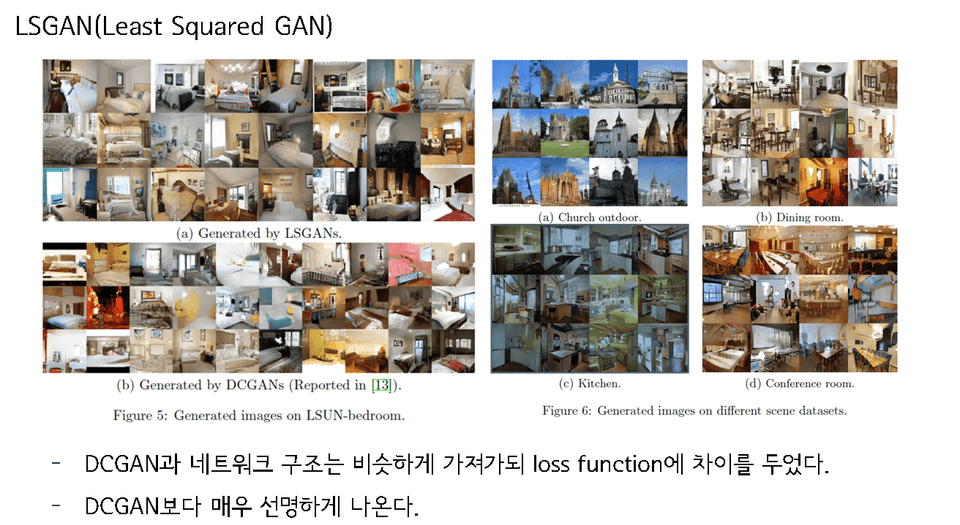
First, DCGAN, which applied the principles of GAN to CNN, was introduced, and then LSGAN, which only slightly modified the loss, appeared, and various GANs are being introduced.
The picture below shows a performance comparison between DCGAN and LSGAN.
[Beyond generating data] Using the generative principle of GAN, it has begun to develop into various fields. Among them, the representative model is CycleGAN, a style transfer model. It can change a picture into a photo or a photo into a painting, change day and night, and change seasons.
The GAN model that swaps the two domains of an image like this is CycleGAN. This CycleGAN has become the basic baseline model of GANs that utilize style transfer.
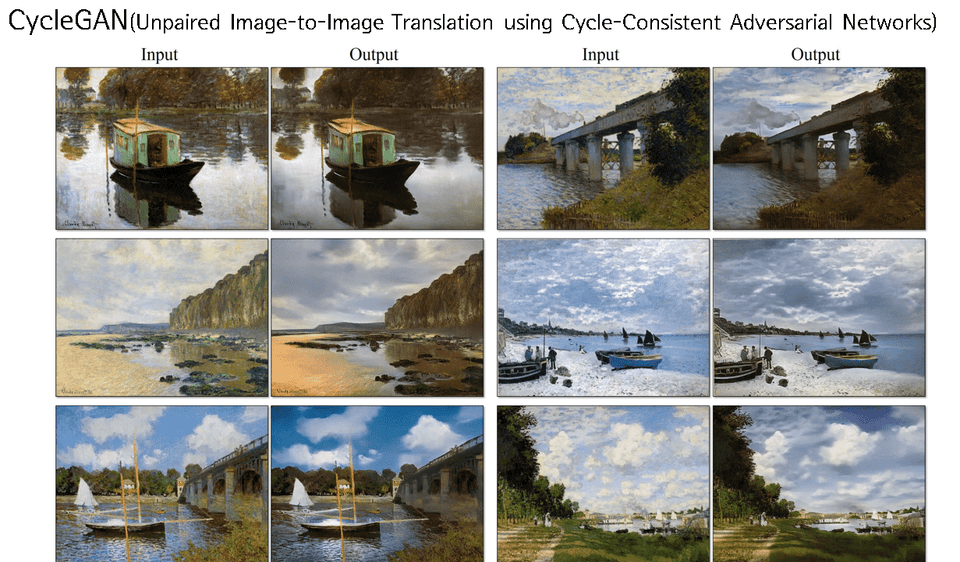
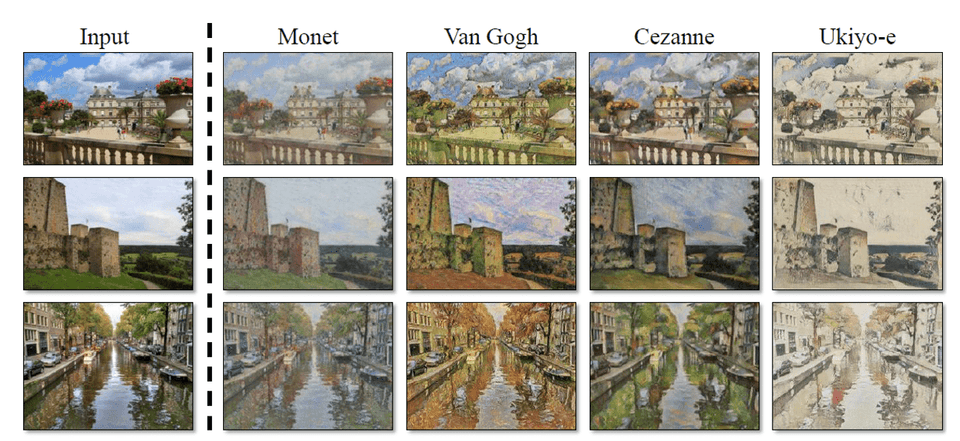
CycleGAN has been applied and developed as shown in the figure below. In addition to this model, it has been developed into various networks.
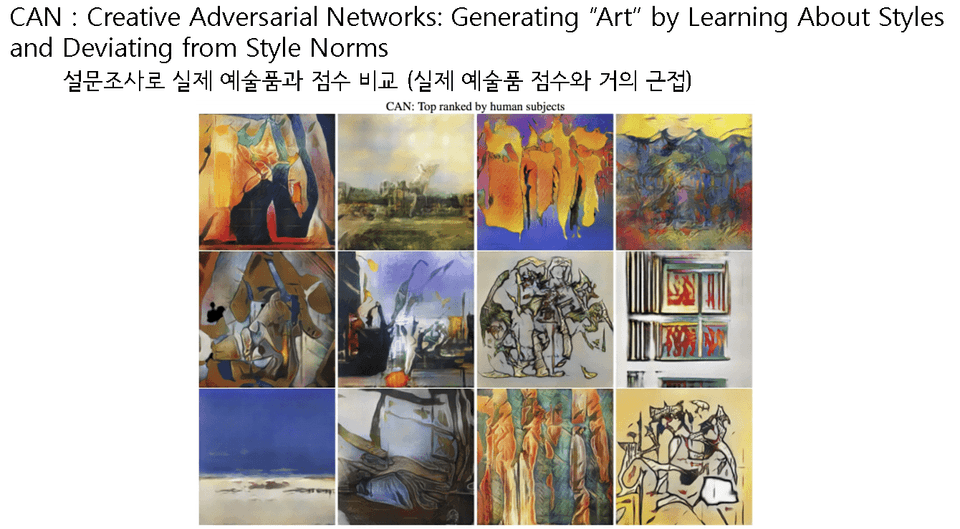
Generating data doesn't create anything new because it's ultimately generated from within the training data. That's why it's far from being art. Because if you generate from within the training data, it's just 'imitation'.
The CAN model slightly changes the learning principle of GAN to generate artwork. It is said that it obtained scores similar to those of real artworks by surveying humans.
Besides, GANs are developing in a variety of fields.
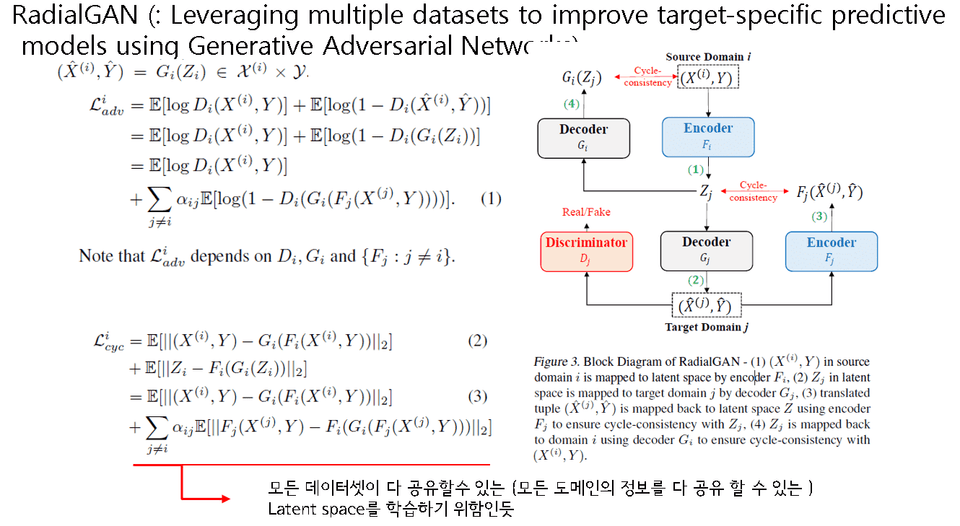
Here is a brief introduction to various GANs, including Radial GAN for generating structured data for machine learning rather than images, DeliGAN, a model for how to generate diverse and high-quality images in situations where training data is limited, MGAN, which combines multiple GAN models, and SRGAN, which converts low-quality images into high-quality images.
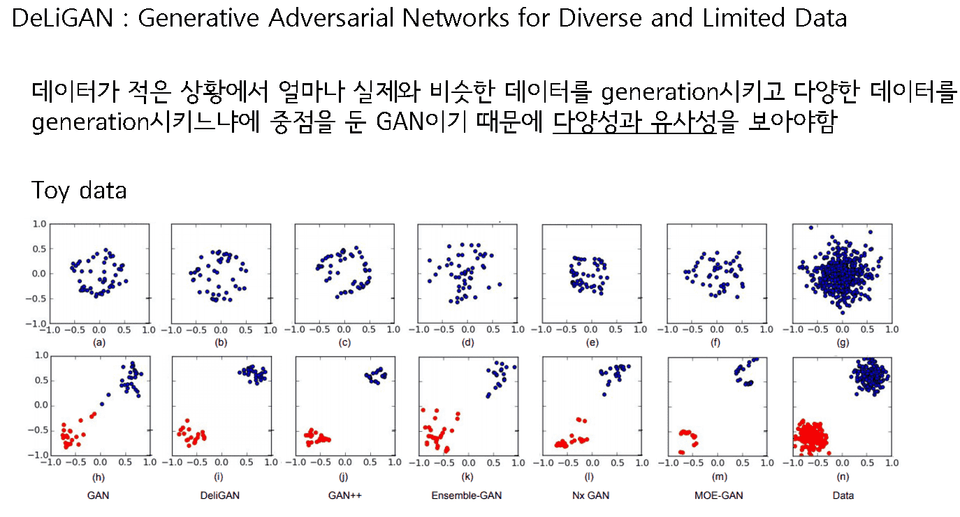
Practice material link: https://github.com/LeeGyeongTak/torchgan
This lecture is a follow-up lecture to [PyTorch] Easy and Fast Deep Learning .
The lecture assumes that you have knowledge of the basics of deep learning.
Who is this course right for?
If you want to study deep learning properly
For those who are new to GAN
Someone who has just studied CNN, RNN
Need to know before starting?
Python/Pytorch Basics
Basic knowledge of deep learning

8,488
Learners
522
Reviews
136
Answers
4.4
Rating
20
Courses
I am an unemployed scholar who majored in statistics as an undergraduate, earned a PhD in industrial engineering (artificial intelligence), and is still studying.
Awards ㆍ 6th Big Contest: Game User Churn Algorithm Development / NCSOFT Award (2018) ㆍ 5th Big Contest: Loan Delinquency Prediction Algorithm Development / Korea Association for ICT Promotion
Awards
ㆍ 6th Big Contest Game User Churn Prediction Algorithm Development / NCSOFT Award (2018)
ㆍ 5th Big Contest Loan Defaulter Prediction Algorithm Development / Korea Association for ICT Promotion (KAIT) Award (2017)
ㆍ 2016 Weather Big Data Contest / Korea Institute of Geoscience and Mineral Resources President's Award (2016)
ㆍ 4th Big Contest: Development of Insurance Fraud Prediction Algorithm / Finalist (2016)
ㆍ 3rd Big Contest Baseball Game Prediction Algorithm Development / Minister of Science, ICT and Future Planning Award (2015)
* blog : https://bluediary8.tistory.com
My primary research areas are data science, reinforcement learning, and deep learning.
I am currently doing crawling and text mining as a hobby :)
I developed an app called Marong that uses crawling to collect and display only popular community posts,
I also created a restaurant recommendation app by collecting lists of famous restaurants and blog posts from across the country :) (it failed miserably..)
I am currently a PhD student researching artificial intelligence.
I even developed a restaurant recommendation app by collecting blog posts and lists of top-rated restaurants across the country :) (though it failed miserably...) Now, I am a PhD student researching artificial intelligence.
I even developed a restaurant recommendation app by collecting lists of famous restaurants and blogs from all over the country :) (It failed miserably...) Now, I am a PhD student researching artificial intelligence.
I even developed a restaurant recommendation app by collecting lists of famous restaurants and blogs from all over the country :) (It failed miserably...) Now, I am a PhD student researching artificial intelligence.
I even developed a restaurant recommendation app by collecting lists of famous restaurants and blogs from all over the country :) (It failed miserably...) Now, I am a PhD student researching artificial intelligence.
All
15 lectures ∙ (3hr 23min)
Course Materials:
All
15 reviews
3.7
15 reviews

Reviews 46
∙
Average Rating 5.0
Reviews 9
∙
Average Rating 5.0
Reviews 2
∙
Average Rating 5.0
Reviews 2
∙
Average Rating 5.0
Reviews 3
∙
Average Rating 4.0
4
I am a student who is trying to get started with GAN for the first time. It is easy to understand because it only explains the important core of major papers. It is a lecture that I would recommend to beginners like me. However, I will take off one star because I think the lecture chapters are few compared to the price.
Check out other courses by the instructor!
Explore other courses in the same field!
![[PyTorch] Learn NLP easily and quicklyCourse Thumbnail](https://cdn.inflearn.com/public/courses/325056/course_cover/b66025dd-43f5-4a96-8627-202b9ba9e038/pytorch-nlp-eng.png?w=420)





![[R] Basics of Statistics for Machine LearningCourse Thumbnail](https://cdn.inflearn.com/public/courses/325155/course_cover/d8120723-26f7-4fcc-a25c-a99eef4ea0f6/machine-learning-statistics-r-eng.png?w=420)
![[R] Data Collection and Management for All KOSPI/KOSDAQ StocksCourse Thumbnail](https://cdn.inflearn.com/public/courses/324972/course_cover/36468a43-de3b-461b-af55-f3c7b0e51637/kospi-kosdaq-data-eng-1.png?w=420)

![Deep Learning and PyTorch Bootcamp for Beginners (Easy! From Basics to ChatGPT's Core Transformer) [Data Analysis/Science Part 3]Course Thumbnail](https://cdn.inflearn.com/public/courses/329540/cover/1be7b8cb-800f-48cb-a30c-b7d78996c075/329540-eng.png?w=420)
![[ICT Archive] Big Data Core and Business ModelsCourse Thumbnail](https://cdn.inflearn.com/public/files/courses/338811/cover/01k44rs7zkwq0ehc8vqsy2mdtb?w=420)


![[7-Day Complete] Pass MS AI-900 Certification in One GoCourse Thumbnail](https://cdn.inflearn.com/public/files/courses/338854/cover/01k4caartf5v7x2e574pq0wnp8?w=420)