
inflearn logo

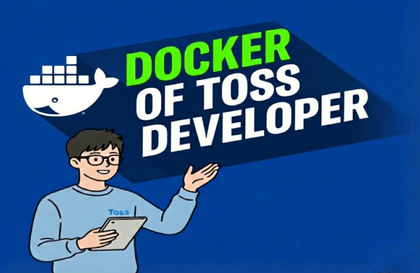
Kubernetes for Toss Developers Operating Financial Infrastructure

It was created to solve the "overwhelming problem of not knowing where or how to start with Kubernetes." Based on hands-on experience operating financial infrastructure, it is designed to help you understand the actual build and operation flow rather than just simple theory. Through a learning process that covers the relationship with Docker, YAML, Pods, Deployments, and Services, learners will master Kubernetes not just as a "concept," but as a "usable skill."

54 learners are taking this course

Level Beginner

Course period Unlimited

k8s
k8s
Kubernetes
Kubernetes
Docker
Docker
infrastructure
infrastructure
MSA
MSA
k8s
k8s
Kubernetes
Kubernetes
Docker
Docker
infrastructure
infrastructure
MSA
MSA

What you will gain after the course

  • Practical operational skills for core Kubernetes objects (Pod/Deployment/Service)

  • The ability to personally build environments ranging from local setups to production-level systems.
  • Understanding of YAML-based declarative configuration and self-configuration capabilities

  • Docker → Kubernetes Transition Flow

  • Understanding Incident Response and Self-healing Architectures

  • Container-based infrastructure architecture design capabilities

Toss, a financial platform using Kubernetes... A developer tells you firsthand.

  • The content below is an actual conversation.

😁 Toss Developer : Finally... I have some free time. This company is seriously so busy ㅠㅠ

😁Kakao Interviewer : Long time no see lol. You looked super busy lately, but it seems you finally have some free time now.

😄 Naver Interviewer : Oh, nice to meet you for the first time. It's a pleasure!

😁 Toss Developer : Nice to meet you too!! I've been so busy lately that I had no idea what was going on in this room.

😄Hong : Lol, you were so busy that I've been filming lectures with other people; I've just been doing what I always do.

😁 Toss Developer : You're always just working, lol. I have some free time for once, so do you want to try filming something new?

😄Hong : I'm down, but are you sure you don't need a break?? What do you want to do?

😁 Toss Developer : How about Kubernetes?? In this room, we've mostly covered services in the application domain, so I think it could provide a broader perspective. I actually use it quite a bit myself.

😄 Naver Interviewer : That sounds great! In fact, these days companies are mainly looking for developers who have experience with Kubernetes, and since most job postings require that, I think it will be very helpful.

😁 Toss Developer : Exactly!! Whenever I see job notification alerts, they always require Kubernetes... I wonder how many backend developers actually use this a lot ㅠㅠ It feels a bit too much.

😄Hong : Lol, yeah, I feel like I see job postings requiring Kubernetes almost every single day... Let's try building one ourselves.

⎈ Is it enough for a backend developer to just write application code??

What kind of development are you doing in the field?? Do you simply write code?? Depending on your work environment, there will be cases where you directly build the infrastructure environment, and there will be cases where you simply write code. But when thinking about your career, is simply writing code the right path in the long run?

The answer to this question lies right here in this course. Learn about Kubernetes by discovering how to maintain and manage multiple services through lightweight platforms, as well as methods for resource management and grouping, all through this course.

This is not a course that only covers theory. I hope you take the time to learn how to directly use and implement the Kubernetes platform through various actual source codes.🚀

🐳 Why Kubernetes!!

Kubernetes is a container orchestration platform for automatically deploying, scaling, and operating containerized applications. Beyond simply running containers, the core of Kubernetes is designed to handle everything from deployment strategies and disaster recovery to traffic distribution and resource management within a single platform.

Kubernetes has the following features.

  • Self-healing

    • Even if a problem occurs with a container or node, Kubernetes detects it and automatically restores it.

  • Auto Scaling

    • It automatically scales applications up as traffic increases and scales them down when they are no longer needed.

  • Service Discovery & Load Balancing

    • It reliably handles communication between services and traffic distribution without the need for complex network configurations.

  • Declarative Configuration

    • Instead of defining "how," you simply define "what state you want it to be in," and Kubernetes maintains that state.

  • Cloud Native & Multi-Cloud

    • It is not dependent on a specific cloud or environment, and can be operated in the same way from on-premises to public clouds.

The official documentation describes Kubernetes as follows.

Kubernetes is an open source container orchestration engine for automating deployment, scaling, and management of containerized applications. The open source project is hosted by the Cloud Native Computing Foundation (CNCF).

( Kubernetes is an open source container orchestration engine for automating deployment, scaling, and management of containerized applications. This open source project is hosted by the Cloud Native Computing Foundation (CNCF).)

Modern backend systems are no longer structured as a single server or a single application. Numerous microservices communicate with each other, traffic is unpredictable, and failures can occur at any time. Through this course, I hope you will understand Kubernetes not just as a "tool," but as an infrastructure platform responsible for actual operations, and gain hands-on experience using Kubernetes that can be immediately applied in the field by configuring and operating it yourself from local environments to production levels. 🚀

🍡 A sneak peek at the actual course content

Rolling Update using Deployment

k8s, Kubernetes, Docker, infrastructure, MSA

Log collection using Prometheus and Grafana

Public Repository Deployment Automation using ArgoCD

🚀 What do actual job postings really require??

Nol Universe Backend Developer

Megazone Cloud Backend Developer

Smilegate Developer

Kakao Backend Developer

Features of this course

📌 A basic Kubernetes lecture by a Toss developer who operates and develops financial infrastructure

  • It is rare to find a course structured together with current developers. By working with me as the presenter and a developer from Toss, you will be able to learn the basic framework of Kubernetes and additional service configurations. Through this, I have prepared content that allows for broad, practice-oriented learning.


📌 Curriculum consisting of over 90% hands-on practice

  • Infrastructure configuration is a great topic to cover theoretically. However, there is a clear difference between a lecture that only covers theory and a method where you actually implement and verify it yourself. Since almost all of the time is composed of hands-on practice, the curriculum was filmed to be even more effective.


📌 If a junior knows this, they are a skilled junior... if a senior knows this, they are a capable senior. Kubernetes for this purpose

  • Do you simply think, "I configured the infrastructure through AWS!"? In modern infrastructure construction, you cannot talk about it without mentioning Kubernetes. What if a junior knows this much? And what if a senior doesn't know this? This is an opportunity for you to build your own career.


🤭 The career profile of the Toss developer who helped prepare this lecture


Instructor Profile

I am an 8th-year backend server developer currently working at Toss.

I majored in Computer Science at a regional university, and while my main stack is Java & Spring, I also have a strong interest in low-level languages. I met Hong at a conference and we stayed in touch, which eventually led us to collaborate on filming this lecture and working together.

[Current] Toss Server Developer

[Former] KT Server Engineer

[Former] Nexon Platform Server Developer

Notes

Practice Environment

  • OS

    • Apple M3 Air

    • Docker version 28.0.0, build f9ced58158

I am running an open group chat to help you prepare for your career. We look forward to your interest!

Recommended for
these people

Who is this course right for?

  • Developers who need to use Kubernetes but feel overwhelmed and don't know where to start

  • Practitioners who have experience with Docker but stopped at the Kubernetes stage

  • Backend developers who lack confidence in deployment and operations due to a lack of infrastructure knowledge

  • A junior developer who keeps repeating feature development without understanding the MSA environment

  • Developers who need practical Kubernetes experience to prepare for a job change or interviews

Hello
This is Hong

Inflearn Verified

Career Verified

8,775

Learners

562

Reviews

156

Answers

4.7

Rating

30

Courses

Introduction

I started studying development after finding an interest in it while idling at home, and I am currently in charge of platform server development in Pangyo. I am continuing my activities as a knowledge sharer because I want to provide you with the methods I used to study, as well as various problems and solutions you may encounter in practice.


These lectures are not created solely through my own knowledge. Every lecture is made possible by the people who work together with me.


Knowledge Sharer Career

[Former] Sandbox IP-related blockchain developer

[Former] Metaverse Backend Developer

[Current] A seasoned server developer based in Pangyo


Interview History

Other Inquiries

  • unduck2022@gmail.com

More

Curriculum

All

29 lectures ∙ (7hr 44min)

Course Materials:

Lecture resources
Published: 
Last updated: 

Reviews

Not enough reviews.
Please write a valuable review that helps everyone!

Hong's other courses

Check out other courses by the instructor!

Similar courses

Explore other courses in the same field!

Limited time deal

$44,000.00

60%

$84.70