




First Steps in System Design with LLM: Designing Operational AI Service (RAG·AI Agent) Architectures

How does the architecture change when an LLM is integrated into an existing backend? This is an introductory system design course that goes beyond simple LLM API calls to help you understand core AI service components such as Model Routers, LLM Gateways, and Vector DBs, and step-by-step design an operational AI service architecture including RAG and AI Agents. It is designed to help those who want to create their own LLM-based AI services quickly master the design workflow.

12 learners are taking this course

Level Basic

Course period Unlimited

Architecture
Architecture
software-design
software-design
system-design
system-design
LLM
LLM
RAG
RAG
Architecture
Architecture
software-design
software-design
system-design
system-design
LLM
LLM
RAG
RAG

What you will gain after the course

  • Ability to design system architectures based on LLM, RAG, and AI Agents

  • Understanding the core components of LLM services (Model Router, LLM Gateway, Vector DB, Retriever, etc.)

  • Understanding design trade-offs considering the performance, scalability, and reliability of AI services

The start of growing into an AI engineer who knows how to design operable AI services 🚀


"I want to create a service using LLM, but how should I design it?🤔"


With the emergence of LLMs, we have entered an era where anyone can apply AI features to their services.

Now, you can quickly create various AI services simply by connecting LLM APIs such as ChatGPT and Claude.

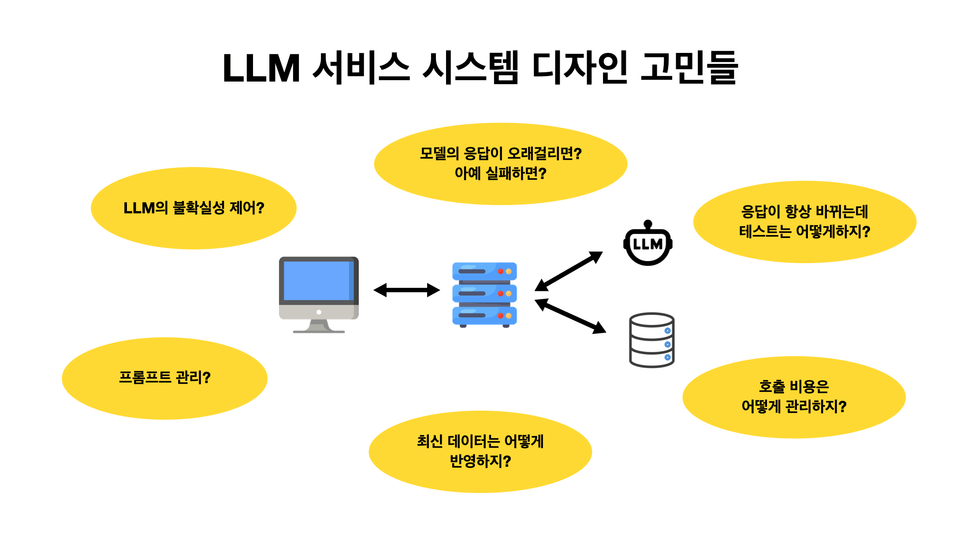
However, beyond simply calling the LLM API, new concerns arise once you start building an AI service that is actually operational.

  • Which model should I choose? How should I route between multiple models?


  • How should conversation history and context be managed?

  • When is RAG necessary, and how should it be designed?

  • What components make up an AI Agent, and what should be considered when designing one?

  • How can we improve cost, response speed, and quality?


As LLM becomes a new system component, the system architecture of AI services is also evolving into a form different from traditional backend systems.

This lecture is a system design course where you will learn how to design services utilizing LLMs into stable, scalable, and operational systems.

You will understand the roles of core components such as Model Router, LLM Gateway, Conversation Manager, and Vector DB, and master the overall design flow of operational AI systems by exploring RAG and AI Agent architectures together.

This course is not about developing AI models directly or learning how to use specific AI frameworks. It is a course focused on learning how to design AI systems from the perspective of an engineer who applies and operates AI in actual services.

AI models and frameworks evolve rapidly and change constantly, but the principles of designing a good system do not change easily.

Through this course, let's learn the fundamental principles of AI service system design and establish the criteria to design and judge AI system architectures that fit any situation, even as new technologies emerge.

#LLM #AISystems #SystemDesign #RAG #AIAgent


🎉 Open Celebration Early Bird 50% Discount in Progress 🎉

To celebrate the launch of the new course, an early bird discount will be available for one month from August 15th to September 13th! 🚀

The previous lecture 「First Steps in System Design」 is also on sale for 20% off for two weeks, so if you've been interested in system design and AI service architecture, take this opportunity to start them together! 📚✨

🌟 Key Course Differentiators


📌 1. Design systems from the perspective of an AI engineer.

This course is not about learning how to write good prompts or how to use specific AI frameworks.

From the perspective of a backend/AI engineer building real-world services, you will learn how to design an operable AI system architecture.


📌 2. Connect all the core components required in a production environment.

Rather than learning core components used in actual AI services—such as Model Router, LLM Gateway, Conversation Manager, Vector DB, RAG, and AI Agent—separately, you will understand from an architectural perspective how they are connected and operate together within a single system.


📌 3. Learn design principles that remain valid even as technology changes.

AI models and frameworks continue to change, but the principles of designing a good system do not change easily.

Rather than focusing on how to use specific technologies, this course focuses on developing a mindset that allows you to independently design and evaluate AI system architectures suited to any situation, even as new technologies emerge.

✏ Learn the flow of LLM service system design

Section 1. Why should we learn system design using LLMs?

  • We will explore the evolving AI service development environment brought about by the emergence of LLMs, and why it is necessary to understand them from a system design perspective rather than simply using them.

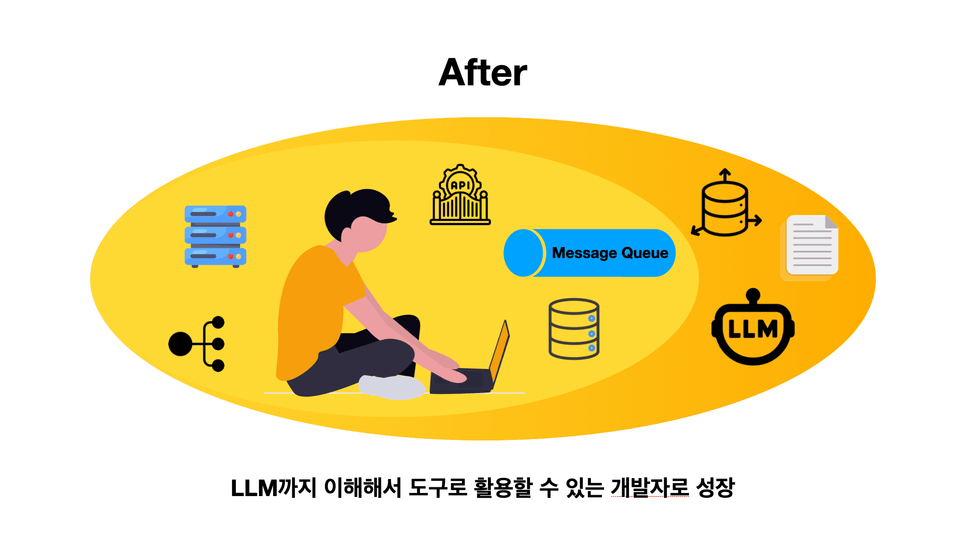
  • We will examine the changing role of developers following the advancement of AI and learn how design methods and considerations evolve as LLM is added as a new component to existing system architectures.


Section 2. Understanding LLM System Design

  • We will explore what kinds of services can be created and various use cases by utilizing the new system component known as LLM.

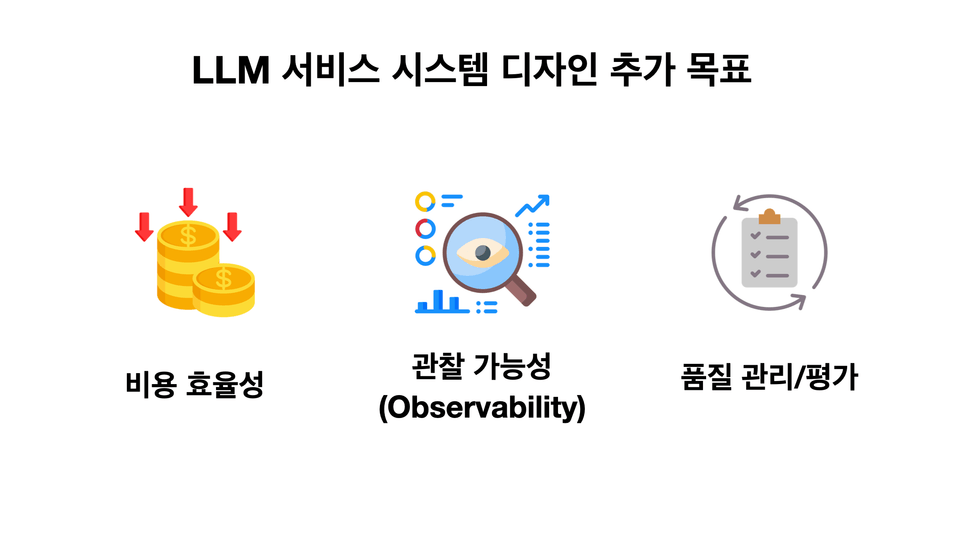
  • Understand how the core goals of traditional backend system design—reliability, availability, performance, and scalability—change in LLM-based systems, and explore additional considerations unique to LLM services.

  • Additionally, you will understand the core technological trends centered on the Transformer architecture to see how LLMs have evolved, and build the fundamental knowledge for designing LLM-based systems.

Section 3. Basic Architecture for LLM Utilization

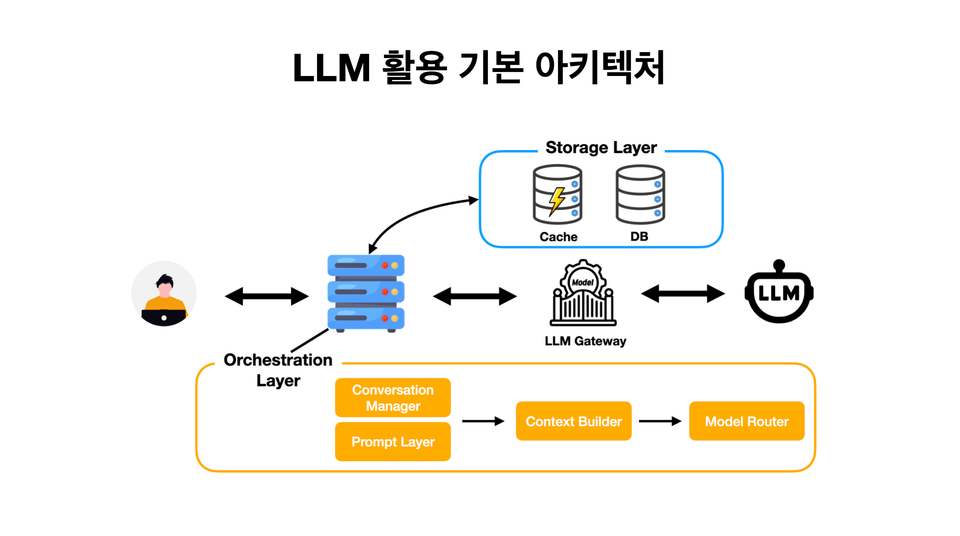
  • We will examine the most basic service architectures for utilizing LLMs and understand the components required to build operational AI services that go beyond simple LLM API calls.

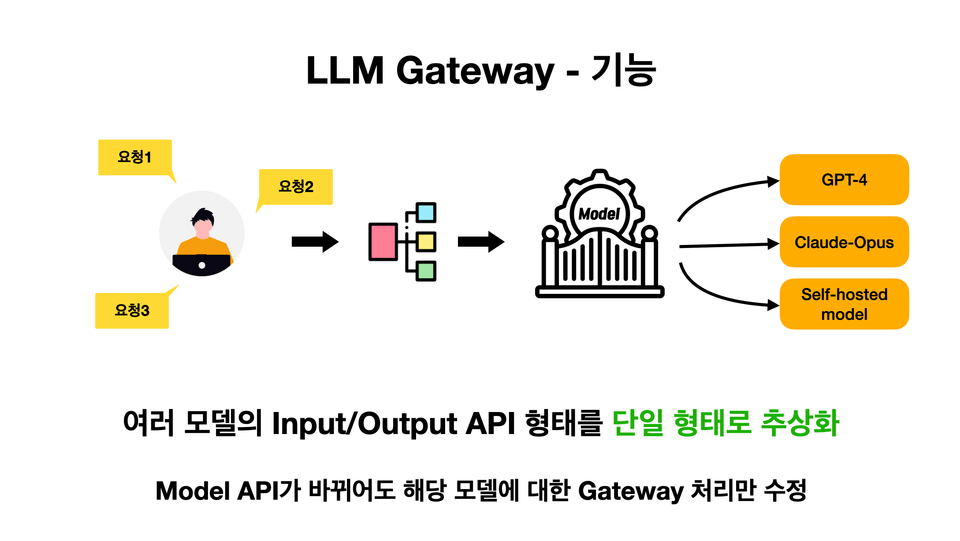
  • Prompt engineering, model selection and serving strategies, LLM Router & Gateway, and Conversation Manager for managing dialogue history—you will learn why these core components of LLM-based services are necessary and in which situations they are utilized.


Section 4. RAG Architecture

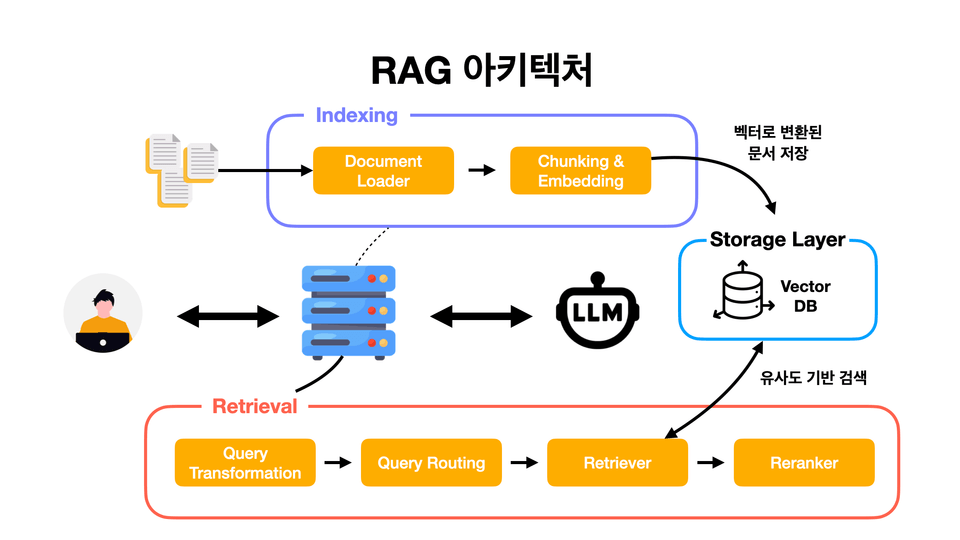
  • Going one step further from the basic architecture for utilizing LLMs, we will understand the RAG architecture designed to reduce LLM hallucination issues and leverage a service's own data.

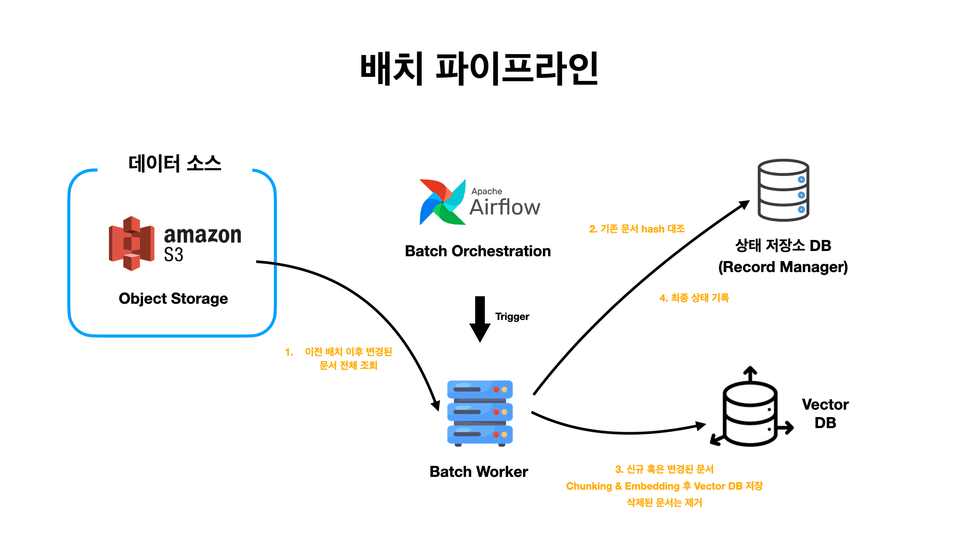
  • Learn the operating principles of Embeddings and Vector DBs, and examine the entire RAG system data pipeline, from document collection to preprocessing, chunking, indexing, and retrieval.

  • Additionally, you will learn RAG design methods that must be considered in actual production environments, such as incremental indexing for efficiently processing large-scale documents, and Hybrid Retriever and Reranker for improving search quality.

Section 5. AI Agent Architecture (To be released in October)

  • Understand the structure of AI Agent systems, where the LLM goes beyond RAG to make its own judgments, select necessary tools, and perform multiple tasks.

  • We will examine the roles of the core components that make up an Agent: Planning, Tool Calling, Memory, and Agent Runtime.

  • Learn about applied architectures, such as the Agentic RAG architecture that combines RAG and Agents.


Section 6. LLM-based AI Service Operation and Optimization (To be released in December)

  • Learn about monitoring, security, evaluation, and performance improvement methods required to provide stable LLM services in actual production environments.

  • Understand how to measure and improve the quality and cost of LLM services, and learn the key elements required in the operational stage, such as Prompt/Response Logging, Evaluation, and Guardrail.

  • Optimizing response speed and cost, we will explore the process of completing an operational AI service by learning system design methods.

🙋 Recommended Audience

I want to create a service using LLM, but I'm at a loss as to where to start the design

Those who want to learn the overall architecture and design flow of an operational AI service, going beyond simply calling LLM APIs.

I want to apply LLM to my company projects or tasks.


Developers who want to design AI system architectures that can be applied in practice, such as internal task automation, adding AI features, or developing AI services.

I want to grow as an AI Engineer or AI service developer.


Those who want to develop a mindset for designing AI services independently while considering performance, cost, quality, and scalability

Notes before taking the course

📚 Learning Materials

  • Lecture slide PDFs are provided. (Approx. 220 pages (+more to be added))

📖 Prerequisite Knowledge and Important Notes

  • This course is a theory-centered lecture on designing system architectures for LLM-based AI services.

    Therefore, it does not cover how to use specific frameworks like LangChain, LlamaIndex, or Spring AI, nor does it include hands-on code implementation.

  • It will be easier to follow if you have basic backend development experience, and knowing the following content will be helpful for your learning.

    • Basic operating principles of HTTP and REST APIs

    • Development experience using databases (RDB or NoSQL)

    • Experience in web service or backend development

    • Experience using LLMs such as ChatGPT and Claude, or experience making simple LLM API calls

  • Expertise in LLM or experience in AI model development is not required. Since we explain everything step-by-step, from the basic concepts of LLM to how AI services operate, even developers without much AI experience can understand and follow the overall flow of AI system design.


Recommended for
these people

Who is this course right for?

  • Developers who want to personally design a stable architecture for LLM-based AI services

  • A job seeker who wants to work on an LLM-based project

  • Working developers who want to apply LLMs to company tasks, such as workflow automation or improving internal platforms.

  • A backend developer who needs to add an LLM to an existing backend system

Need to know before starting?

  • Understanding of basic backend architecture (basic operating principles of the backend, such as HTTP, RESTful APIs, web servers, DBs, etc.)

  • Basic interest and experience in LLM (It is good if you have experience calling LLM APIs like ChatGPT or Claude at least once, or have experience writing prompts)

Hello
This is mindlantern

Career Verified

709

Learners

52

Reviews

7

Answers

5.0

Rating

2

Courses

Hello, I am developer Seongjang Lantern.
I am currently working at a major IT company in Korea, and I dream of a world where anyone can become a developer and create what they imagine.

I want to share real-world challenges and technologies used in the field in a way that even beginners can easily understand.
As someone who loves the process of learning and growing, I hope those who take my courses can also experience the joy of growing together.

Email: mindlantern.studio@gmail.com

More

Curriculum

All

25 lectures ∙ (4hr 20min)

Course Materials:

Lecture resources
Published: 
Last updated: 

Reviews

Not enough reviews.
Please write a valuable review that helps everyone!

Similar courses

Explore other courses in the same field!

Limited time deal

$33.00

50%

$66.00