

inflearn logo

Distributed Transactions Through Code (feat. AI Agent)

Drawing from my own experience of feeling despondent when trying to implement practical code during my first MSA transition—despite knowing the theory—I will help you grow into a developer who guarantees perfect data consistency amidst any system failure by directly rolling back daunting compensation logic through 9-step practical patterns and AI Agent coding.

13 learners are taking this course

Level Intermediate

Course period Unlimited

AI
AI
AI Agent
AI Agent
Docker
Docker
transaction
transaction
MSA
MSA
AI
AI
AI Agent
AI Agent
Docker
Docker
transaction
transaction
MSA
MSA

What you will gain after the course

  • Java-based Distributed Transaction Theory

  • Practical Saga (Orchestration & Choreography) Patterns

  • Implementing the TCC (Try-Confirm-Cancel) Pattern

  • Applying the Transactional Outbox Pattern

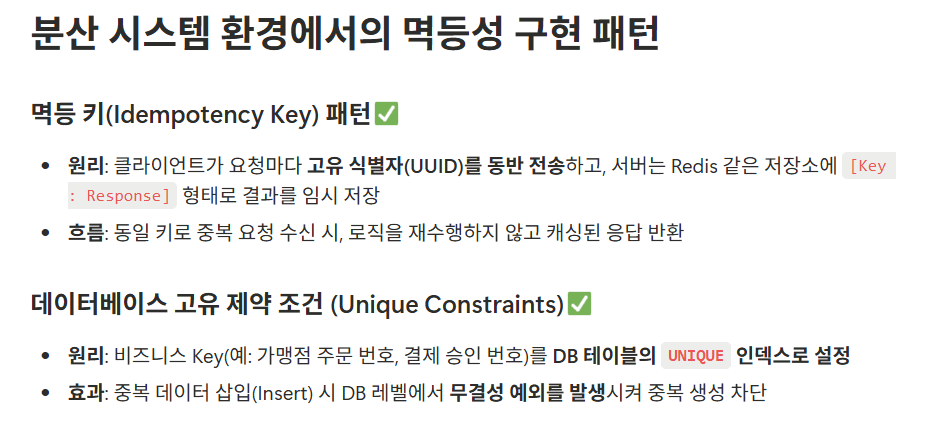
  • Idempotency & Resilience Design

  • Implementation of reward logic using AI Agents

Can you maintain data consistency even after a purchase failure?

The difference between a developer who only knows the theory and one who can handle incidents
lies in personally implementing the compensation logic that rolls back failed payments through code.
Starting from a monolithic architecture and transitioning to a distributed environment, you will complete a workflow that maintains consistency through nine stages of practical patterns.

Experience a hands-on session with not a single line of code written by utilizing AI Agents. 🧑‍🔬

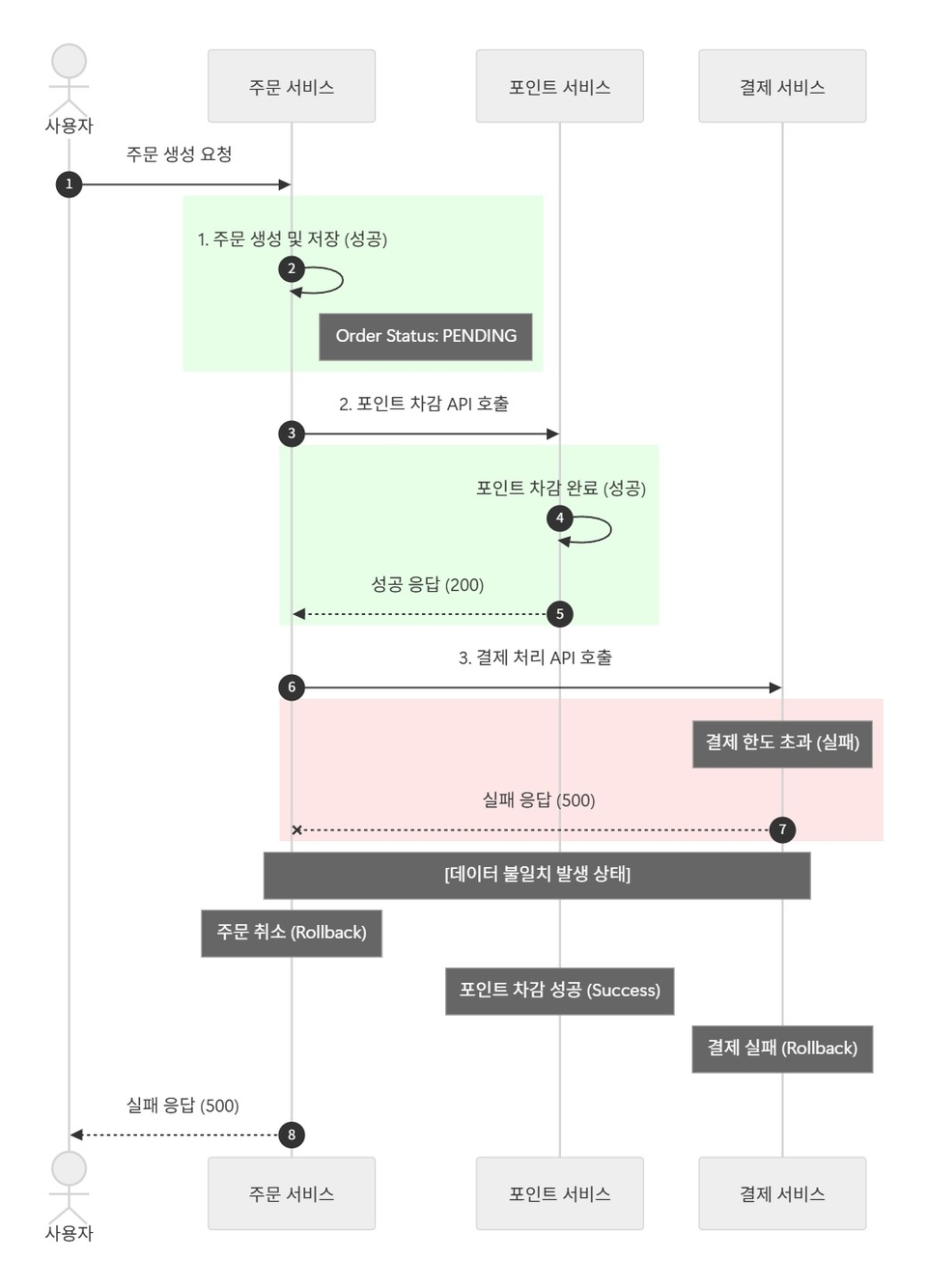
When the order service is completed but the payment service fails, leading to data inconsistency, we don't just stop at finding the cause—we resolve it by applying the Saga pattern.

Situations where data becomes more tangled with each retry after a compensation logic failure; apply idempotency to safely control results even when the same request is repeated.

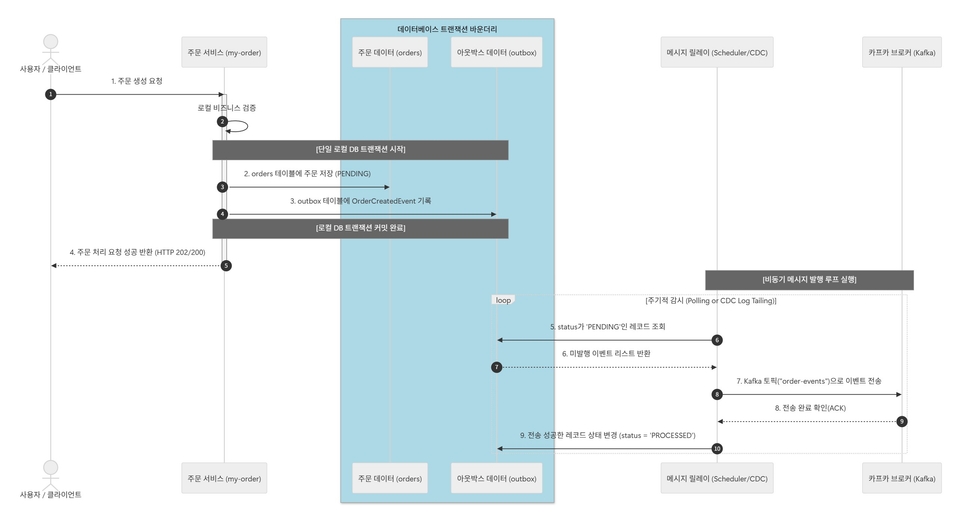
In situations where a failure occurs before a message between services is stored, causing the event to disappear, we design data changes and event publishing together using the Transactional Outbox pattern.

It is natural to feel overwhelmed by distributed transactions. Now, use an AI Agent to directly implement TCC, Orchestration and Choreography Saga, Transactional Outbox, and resilience design.
Advance into a developer who can explain exactly where a failure occurred and how to roll it back, even when errors arise.

From the principles of distributed transactions
to the implementation of Try-Confirm-Cancel and Saga,
maintain consistency amidst failures through idempotency and resilience.

Complete the rollbacks for payments and seat reservations yourself to grow into a
backend developer who remains unshaken even by failures.

By the end of this course, you will

You will be able to directly track and recover data inconsistencies in a distributed environment.

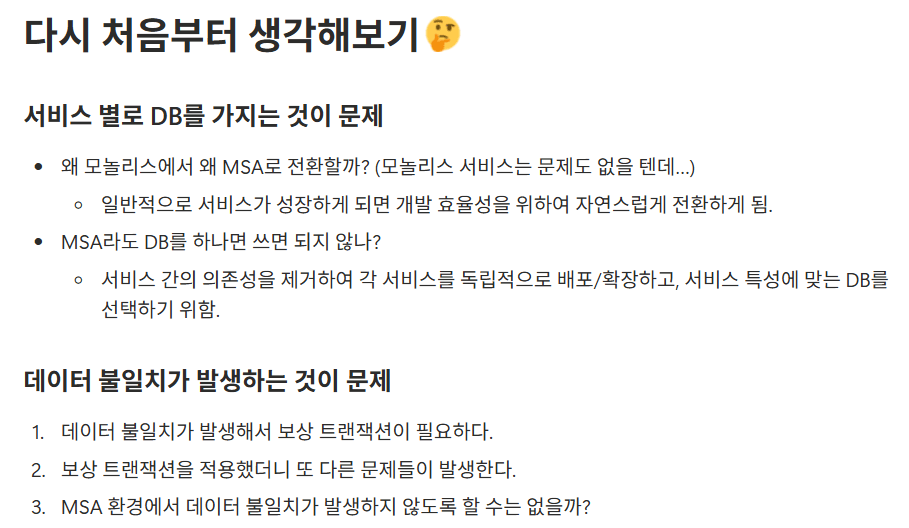
  • You will observe the step-by-step process of transitioning from a monolithic architecture to MSA and reproduce through code why situations occur where payments are completed but no seats remain, or orders fail but points are deducted. By connecting failure points with data flows, you will be able to identify the causes on your own.


😎😎😎

How to implement distributed transactions that maintain data consistency even when failures occur

From Monolithic to MSA
Designing and Completing Compensation Flows Yourself 🛠️

We will examine why data inconsistencies occur when orders and payments, which were previously handled as a single transaction, are split by service, and implement the operation of compensation transactions step-by-step using an AI Agent.
By comparing TCC, orchestration, and choreography methods, you will directly complete the flow of undoing failed tasks and restoring consistency.

⚡Practice reproducing and correcting double payment and idempotency issues

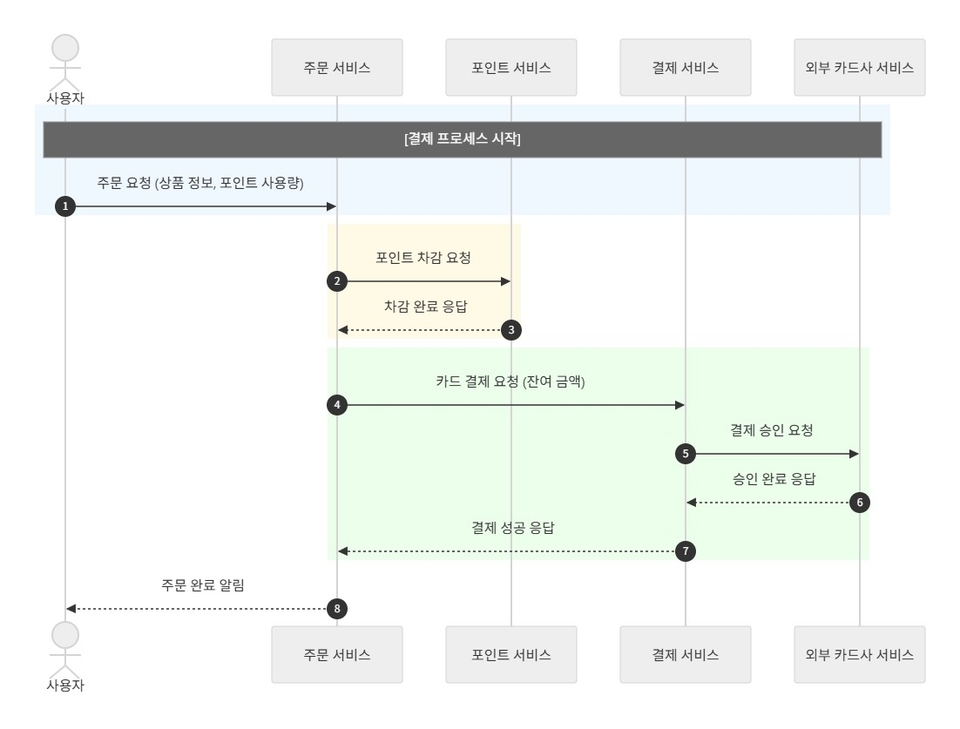
After transitioning a monolithic structure to MSA, you will reproduce payment and compensation failure scenarios and verify the processing results of TCC and Saga patterns in a Docker environment.
By applying event flows using Kafka, transaction outboxes, idempotency processing, and circuit breakers, you will create code that withstands repeated requests and service failures.

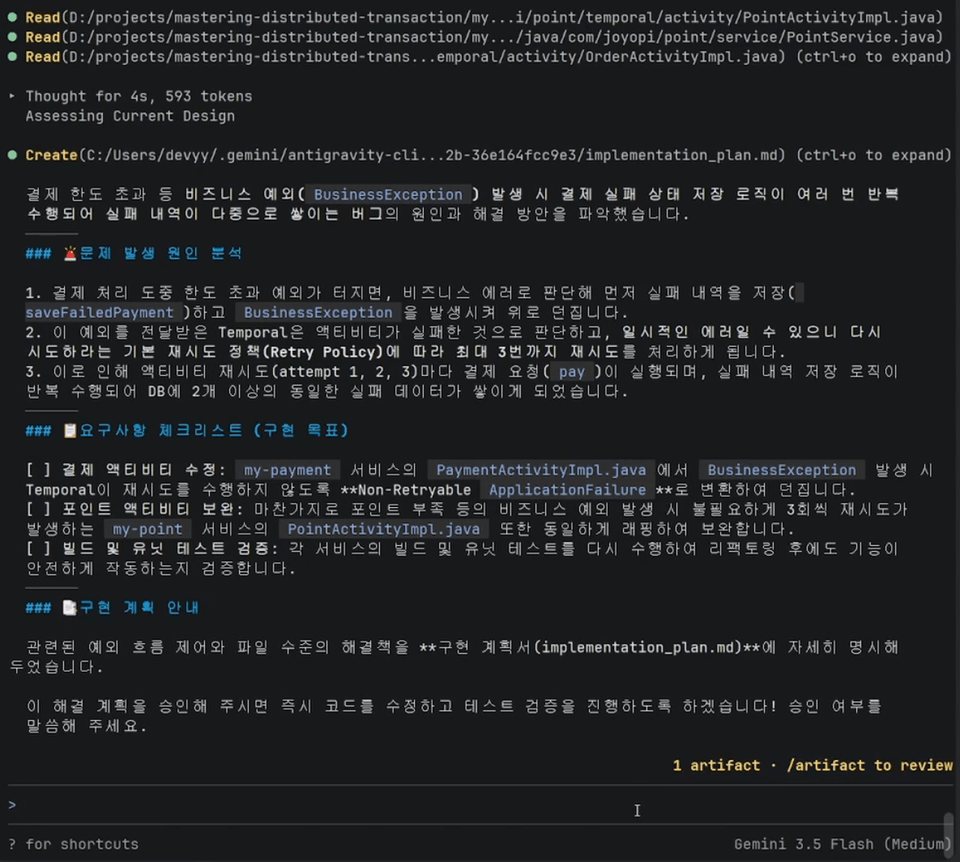
🔥 Hands-on practice using AI Agents without writing a single line of code yourself

From basic project setup to Saga compensation logic, Transactional Outbox, idempotency handling, and resilience design, you can follow along step-by-step using an AI Agent without writing a single line of the code covered in the lecture yourself.
You will verify the operation results and failure scenarios for each stage, connecting them to a practical workflow of implementing and improving compensation logic.


📚

Implement it yourself in nine steps, from monolith to resilience design

Section 1

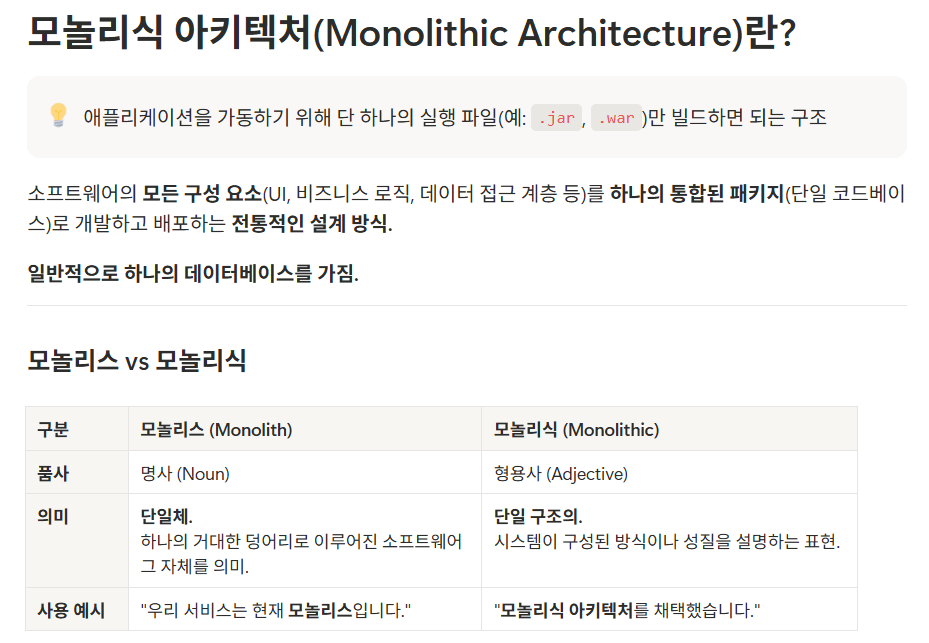
Implementing Monolithic Architecture

Implement business workflows such as ordering and payment as a single local transaction within a monolithic application structure. Understand the operating principles of monolithic transactions by checking the basic project settings and execution results.


Section 2

Transition to Microservice Architecture

Separate the monolithic application into multiple microservices and implement the call structure between services. Verify the data consistency issues that arise when transactions are separated in a distributed environment through code and execution results.


Section 3

Implementing Compensating Transactions

Implement a compensation transaction to roll back completed tasks in the event of a distributed transaction failure. Verify the compensation logic and execution flow for each service through code, and learn how to ensure data consistency based on compensation.


Section 4

Implementing the TCC Pattern

Learn the principles and implementation methods of the TCC pattern, which separates transactions into Try, Confirm, and Cancel stages. Compare the differences between Two-Phase Commit (2PC) and TCC, and analyze their application scenarios along with their pros and cons in a distributed environment.


Section 5

Implementing Saga Orchestration

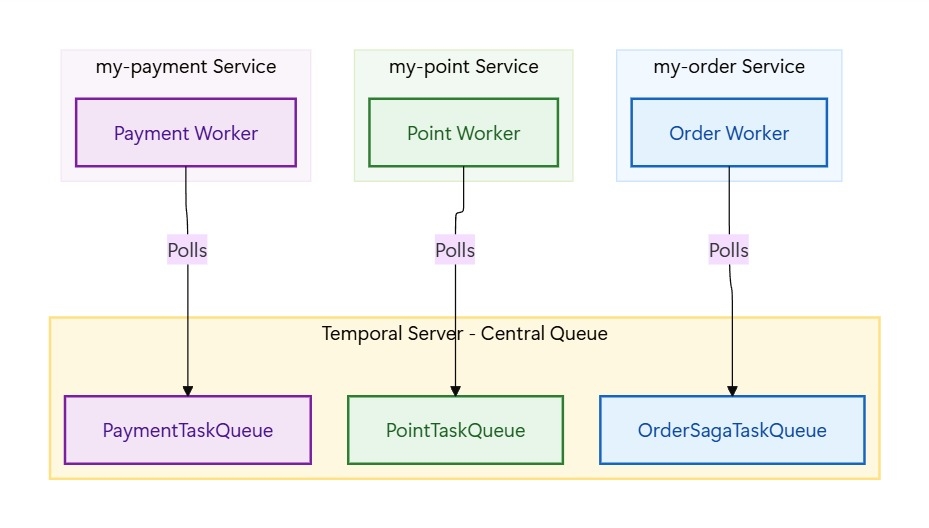
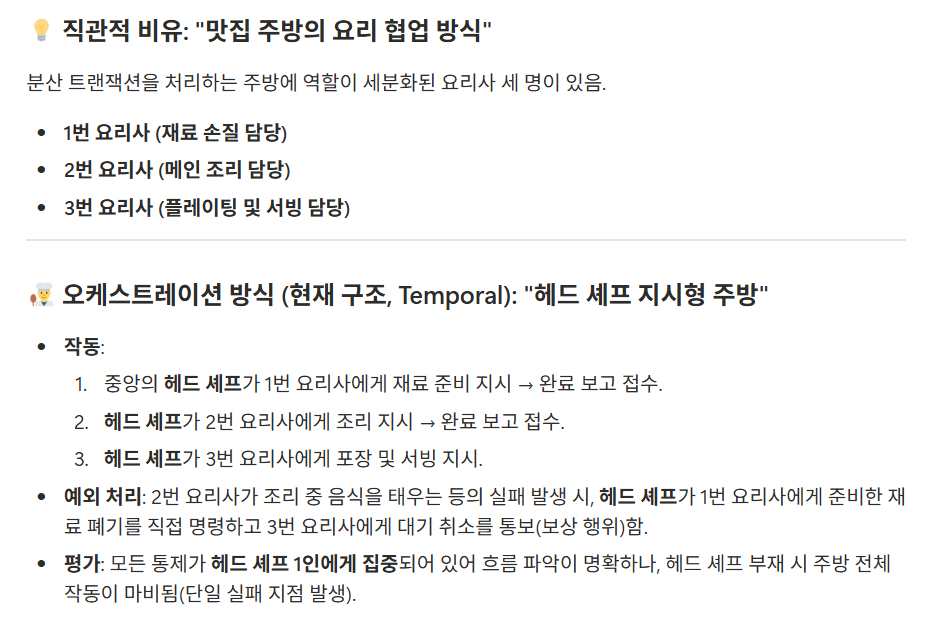
Implement the operating principles of the Saga orchestration method and the compensation flow using a central orchestrator. Design a failure response structure, covering compensation failure scenarios, code improvements, and the concepts of durable workflow tools.


Section 6

Implementing Saga Choreography

Implement a choreography-based Saga where each service autonomously performs the next task or a compensatory action based on inter-service events. Verify the flow utilizing a message broker, and compare the structural differences and selection criteria against the orchestration approach.


Section 7

Implementing the Transactional Outbox Pattern

Learn the Transactional Outbox pattern, which prevents inconsistencies between data changes and event publishing. Implement a method where events are stored within a database transaction and then published securely.


Section 8

Guaranteeing Idempotency

Design for idempotency to ensure that the result remains the same even if the same request or event is processed multiple times. Implement processing logic to reproduce idempotency issues and prevent failures such as duplicate payments.


Section 9

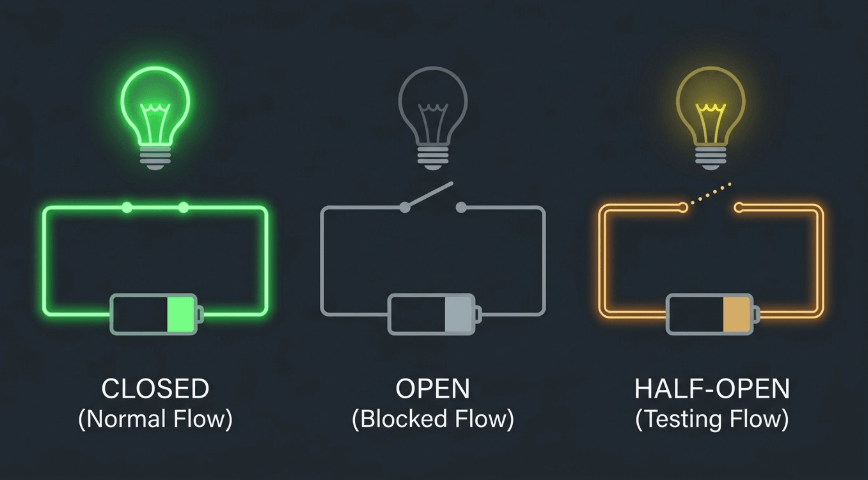
Resilience Design and Circuit Breakers

Learn the concepts and design principles of resilience to gracefully absorb distributed system failures. Apply a circuit breaker and verify through code and execution results how service calls are isolated and recovered during failure scenarios.


We can solve the concerns
of people like this! 💡

📌

Junior Backend Developer

Those who are experiencing issues where orders and payments, which were processed normally in a single application, remain in different states after service separation.
Those who want to divide a monolithic structure into MSA and directly implement compensation logic to roll back failed tasks.

📌

Intermediate developers in charge of MSA migration

Those who need to resolve issues where an order is completed but payment is duplicated or a seat is resold.
Those who want to apply Orchestration and Choreography-based Saga, TCC, and Transactional Outbox patterns to actual service flows.

📌

Backend developers preparing for distributed system design

Those who have learned distributed transaction theories and patterns but haven't been able to connect them to failure reproduction, idempotency, retries, and circuit breaker implementation.
Those who want to use AI agents to complete compensation transactions and resilient processing flows through code.


Notes before taking the course


Hands-on Environment

  • We actively utilize AI Agents and Docker.

  • The course uses Gemini and Antigravity, but you may use any AI Agent.

Prerequisite Knowledge and Precautions

  • Basic knowledge of Java, Spring Boot, REST API, and databases is required.

  • It will be easier if you are familiar with distributed environment (MSA) structures.

  • This course is suitable for beginner and intermediate developers.

  • You will write the code yourself by following the examples.

Learning Materials

  • We share Notion lecture materials that can be updated in real-time.

  • We share a GitHub repository with branches divided by steps.


Recommended for
these people

Who is this course right for?

  • Intermediate developers who want to go beyond Saga and TCC patterns to build practical coding skills.

  • A developer suffering from data consistency issues after migrating to MSA

  • A developer who wants to fundamentally resolve critical issues such as double payments and ghost seats.

Need to know before starting?

  • Spring Boot & Java/Kotlin Fundamentals

  • RDBMS & SQL Basic Knowledge

  • Docker / Docker Compose Basics

  • HTTP Communication and Network Basics

  • Willingness to utilize AI Agent tools

Hello
This is joyopi

Career Verified

135

Learners

10

Reviews

1

Answers

5.0

Rating

2

Courses

(Current) AhnLab Backend Developer

Curriculum

All

38 lectures ∙ (7hr 22min)

Published: 
Last updated: 

Reviews

Not enough reviews.
Please write a valuable review that helps everyone!

Similar courses

Explore other courses in the same field!

Limited time deal

$57,750.00

30%

$63.80