Yoon Jae-seong's Beginning C Language
softcampus
Free
Beginner / C
4.7
(57)
2,900+
Introduction to C language, the foundation language for software development

Beginner
C

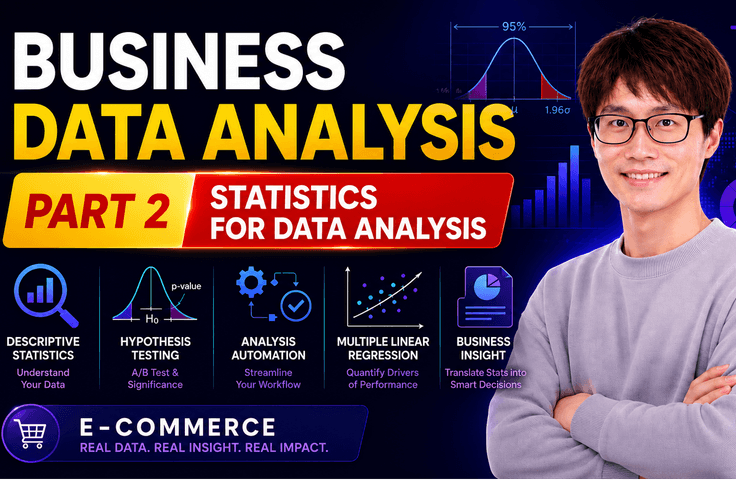
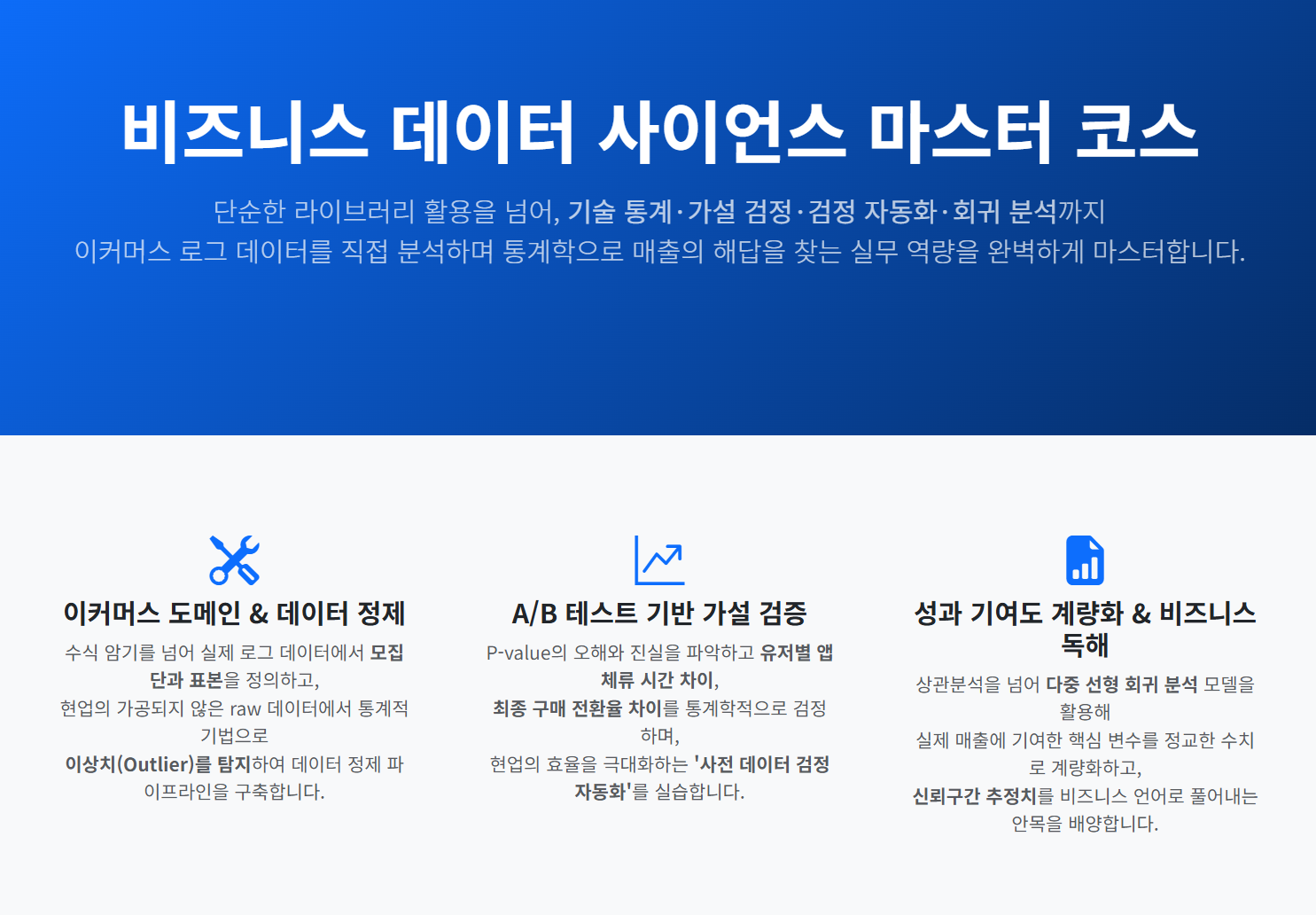
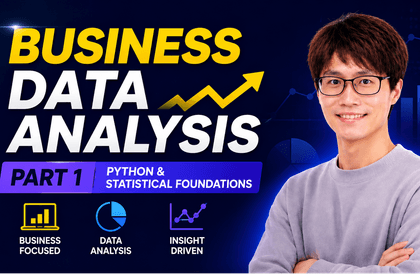
: "From environment setup to practical business projects, a data science journey to find answers for e-commerce sales through statistics (Total 38 lectures)"
Beyond simply learning how to use analysis tools, you will learn how to process log data from actual e-commerce operations using statistical methods. After building a solid foundation in core theories—from setting up the development environment to descriptive statistics, probability distributions, and hypothesis testing—you will move on to practical projects: comparing user app dwell time and purchase conversion rates, and quantifying performance contribution through multiple linear regression analysis! You will systematically master the core competency of a data scientist—'data-driven decision-making and analysis automation capabilities'—through hands-on business projects.
Key points unique to this lecture
* Descriptive statistics tailored to the e-commerce domain: This is not about simply memorizing formulas. Starting from how to define actual populations and samples in e-commerce log data, you will develop the insight to detect outliers in raw industry data and interpret data patterns from a business perspective.
* Mastering Hypothesis Testing, the Foundation of A/B Testing: Build a solid foundation of hypothesis testing principles, from common misconceptions and truths about P-values to Type I and Type II errors. Through this, you will perfectly master the most frequently used testing techniques in the field, such as testing differences in app dwell time by user and differences in final purchase conversion rates.
* Analysis Automation Practice to Maximize On-site Efficiency: To ensure you don't get exhausted by repetitive analysis processes, we conduct hands-on practice in building a pipeline that automatically performs the 'pre-data testing' process after establishing null and alternative hypotheses, elevating practical productivity to the next level.
* Quantifying Performance Through Multiple Linear Regression: Go beyond correlation analysis and delve deep into causal relationships. Develop data science capabilities to precisely quantify the key factors contributing to actual sales and performance among various business variables using multiple linear regression models.
* Cultivating Business Literacy in Statistics: We go beyond simple statistical software outputs or numerical calculations. You will acquire the leadership capability to accurately estimate confidence intervals based on analysis results and clearly translate them into business language that actual decision-makers can understand.
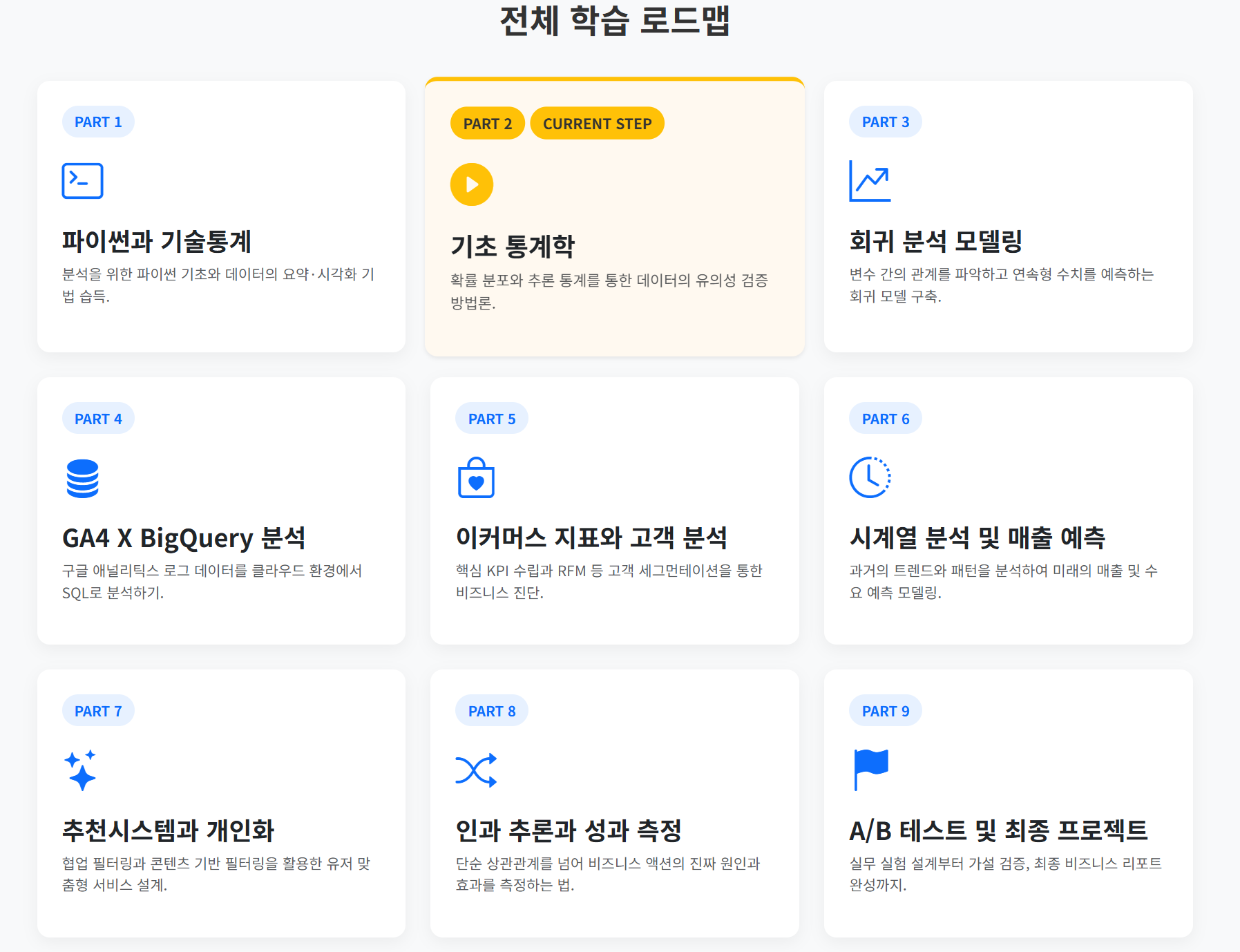
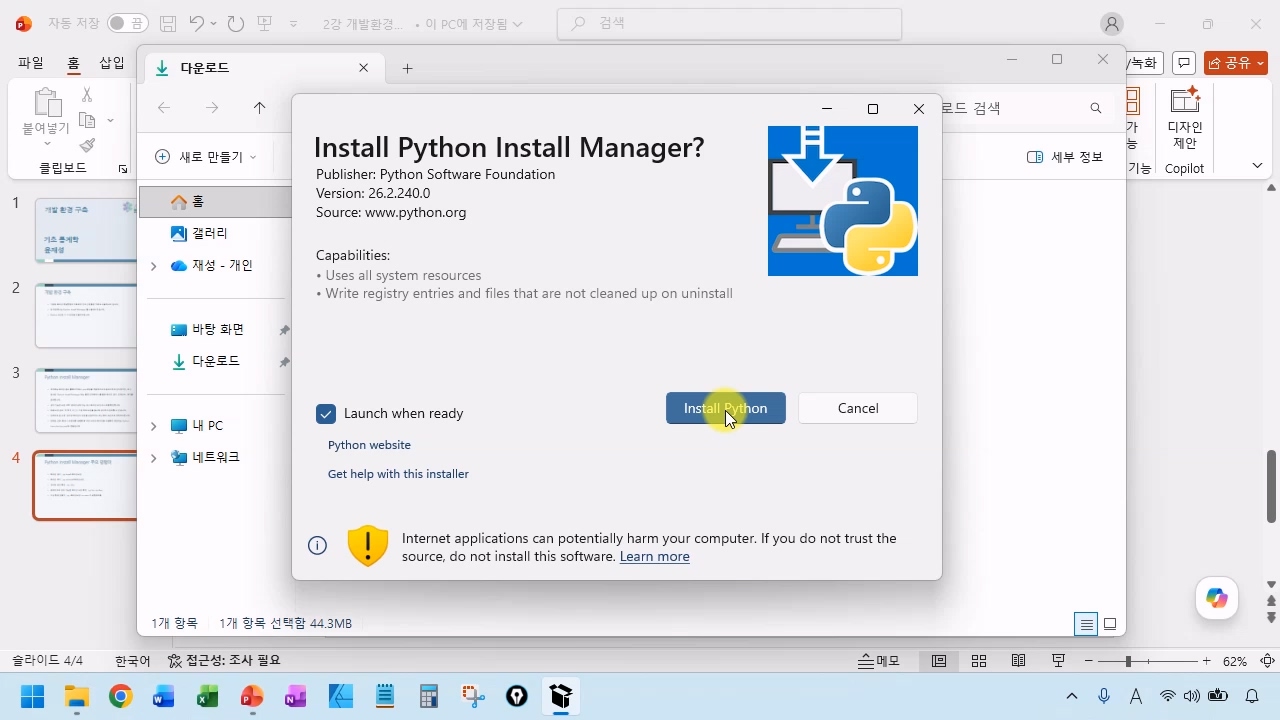
Before diving into the actual analysis, you will understand the overall roadmap of data science and perfectly set up the Python development environment and essential libraries for efficient statistical analysis and data handling.
Key Learning: Course roadmap and overview, analysis environment setup, essential library installation and operation check
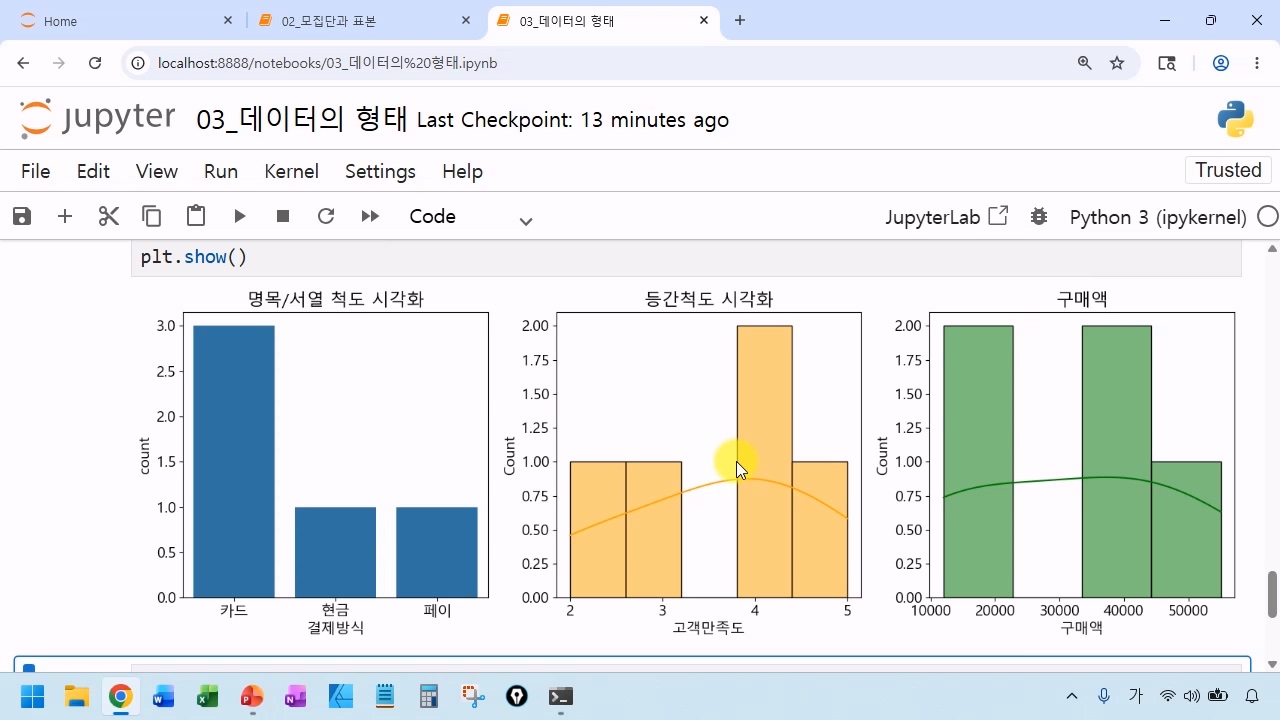
Learn the overview of statistics, which serves as the backbone of data science, and the concepts of population and sample. In particular, you will learn how to precisely define the population and sample that fit actual analytical purposes within raw e-commerce log data.
Core Skills: Overview of Descriptive Statistics, Relationship between Population and Sample, Identifying Numerical/Categorical Data Types, Defining Samples based on E-commerce Logs
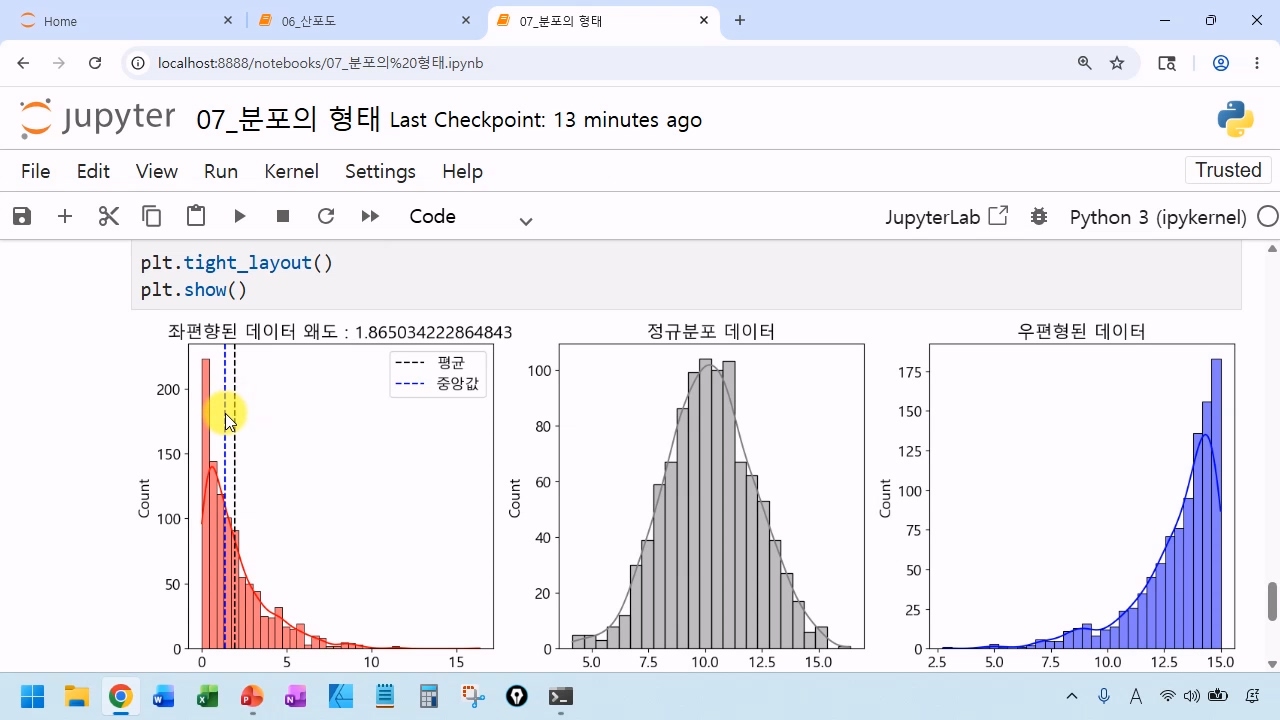
Learn about central tendency and dispersion to summarize data characteristics and understand the shape of data distributions. Master the core logic for statistically detecting outliers that reduce analysis reliability within vast amounts of structured data.
Core Skills: Mean, Median, Mode (Central Tendency), Variance, Standard Deviation (Dispersion), Skewness, Kurtosis (Distribution Shape), Outlier Detection Techniques
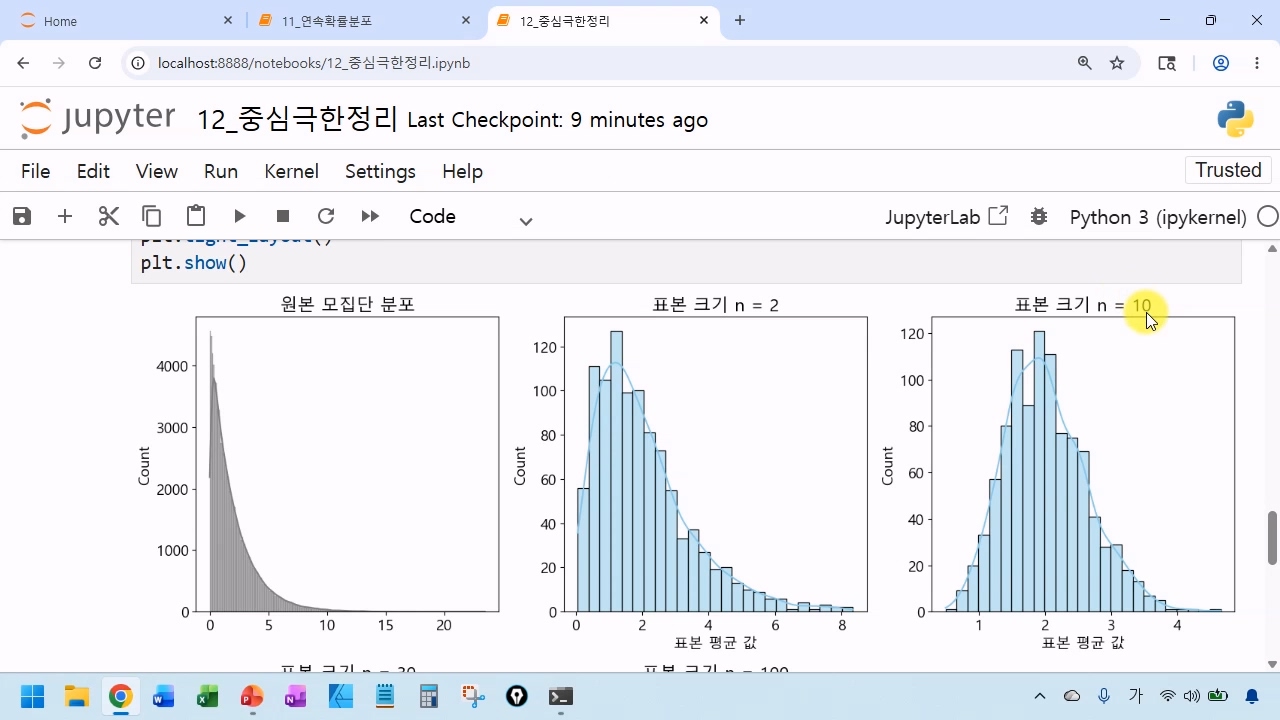
Establish the concept of probability, which serves as the foundation of inferential statistics, and understand the difference between discrete and continuous probability distributions. Clearly master the 'Central Limit Theorem,' a core theory of data science that defines the distribution of sample statistics.
Key Learning: Basic concepts of probability, discrete/continuous probability distributions, and the core milestone of data analysis, the 'Central Limit Theorem'
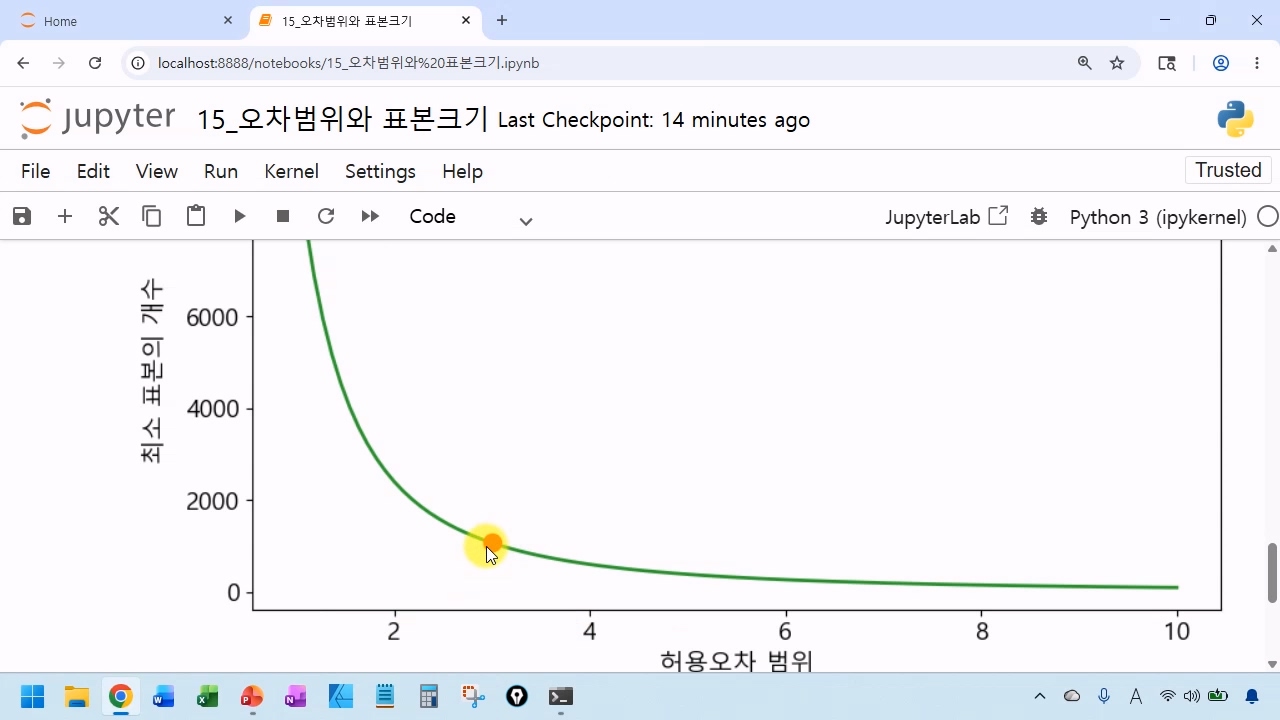
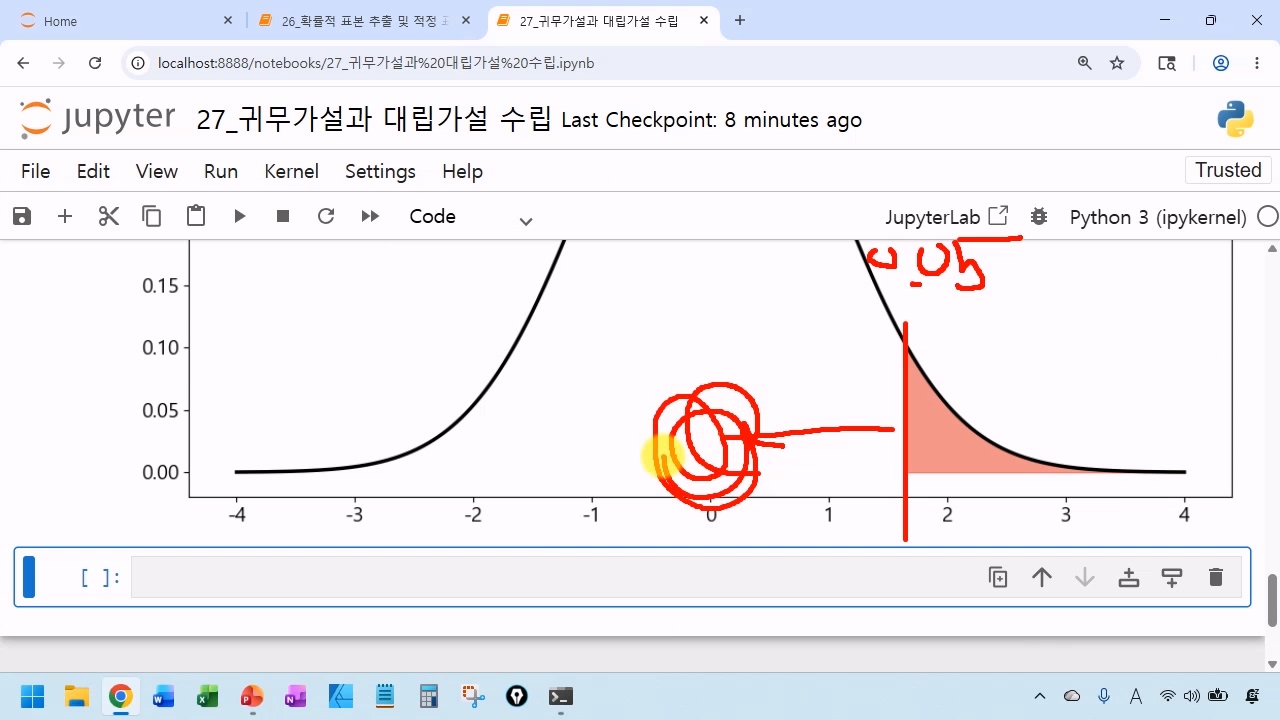
You will learn point estimation and interval estimation (calculating confidence intervals and margins of error) to predict a population through samples. You will grasp the true meaning of P-value, which is most easily misused in practical data analysis, and establish the mathematical and business principles of hypothesis testing to minimize Type I and Type II errors.
Core Skills: Calculating confidence intervals and optimal sample sizes, guide to establishing null/alternative hypotheses, how to interpret P-values, Type I and Type II errors
Processing Logic
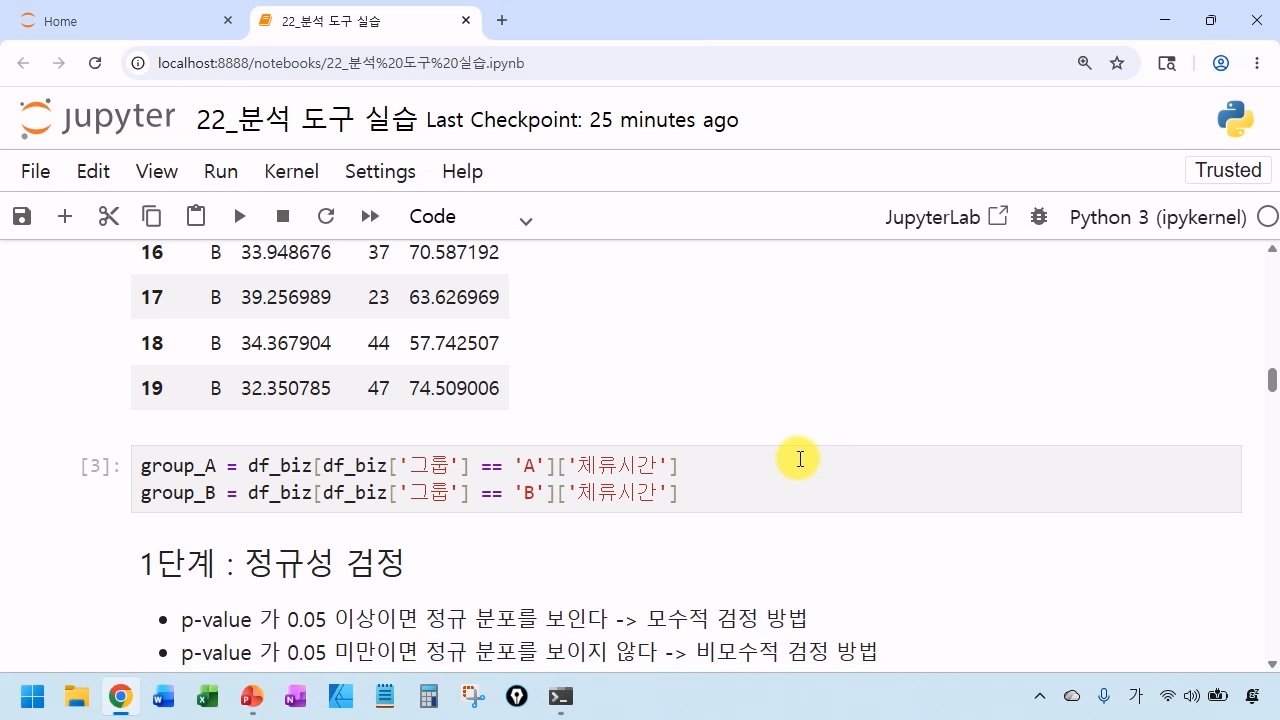
Learn the theories of core statistical testing techniques (t-test, ANOVA, Chi-square test, etc.) used according to the type and purpose of data, as well as correlation analysis and linear regression analysis to identify relationships between variables. Afterwards, you will conduct hands-on practice to implement these directly using Python data analysis tools.
Core Skills: Key statistical testing techniques by objective, correlation analysis algorithms, simple linear regression analysis, and hands-on practice using Python analysis tools
We are starting an e-commerce data analysis project that reflects real-world business concerns. We will load and refine raw, large-scale log data and build a 'pre-data verification automation' pipeline that validates the basic assumptions of the data before performing statistical analysis.
Key Learning: Understanding business background and loading log data, descriptive statistics-based data cleaning, probabilistic sampling and size estimation, and programming for pre-data validation process automation
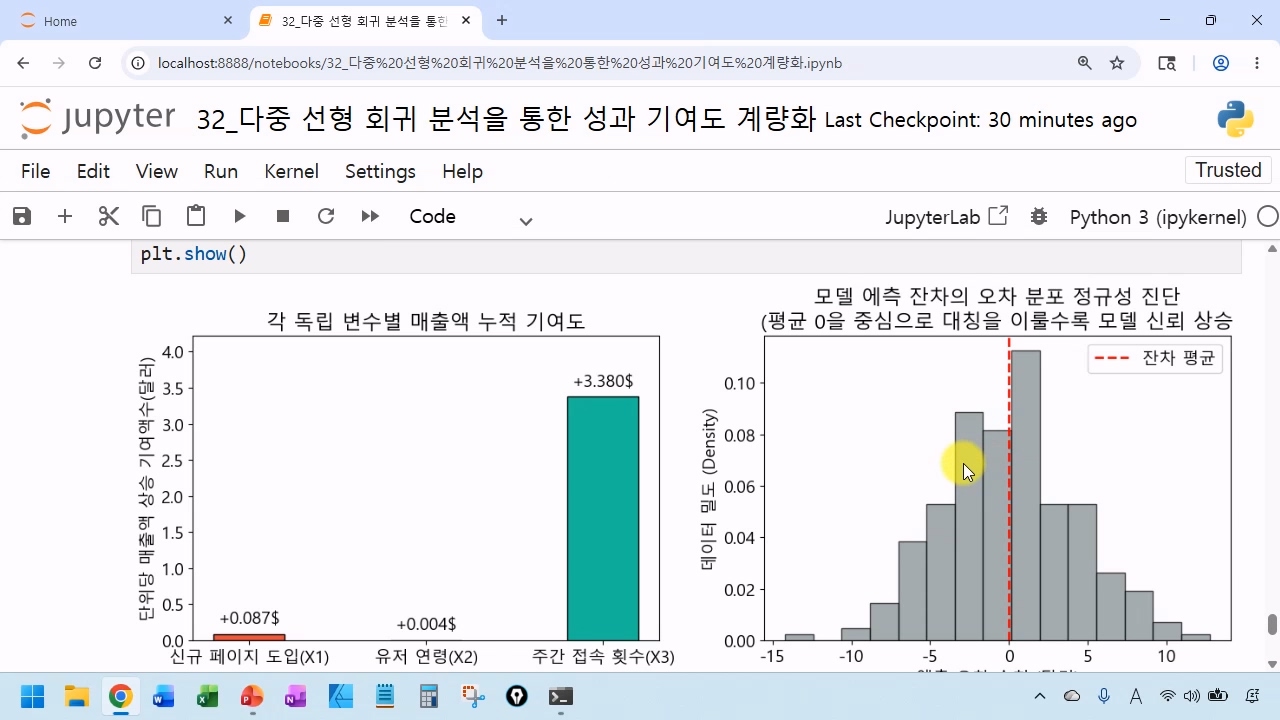
Based on the previously refined actual user data, we statistically verify (A/B test) the 'difference in app dwell time' and 'difference in final purchase conversion rate.' Furthermore, through multiple linear regression analysis, we precisely quantify the key variables that contributed to actual sales and performance and estimate business confidence intervals.
Key Learning: Testing differences in app dwell time by user, testing differences in final purchase conversion rates, business interpretation of P-values and confidence intervals, and calculating performance contribution based on multiple linear regression models
Development Experience
• Developed and launched SKT "Island Adventure" mobile content
• Developed and launched KT "Quiz Soccer" mobile content
• Launched SK "Mobile Real Estate Agent"
• Developed iPhone "Hanja-tong" app
• Developed iPhone "Health Training" app
• Developed KT/SK Japanese Namco "Tales of Commons" content
• Developed KT mini-games (Yageum Yageum Land Grab, Aladdin's Magic Lamp, Mystery Block Detective Agency, BUZZ and BUZZ)
Teaching Experience
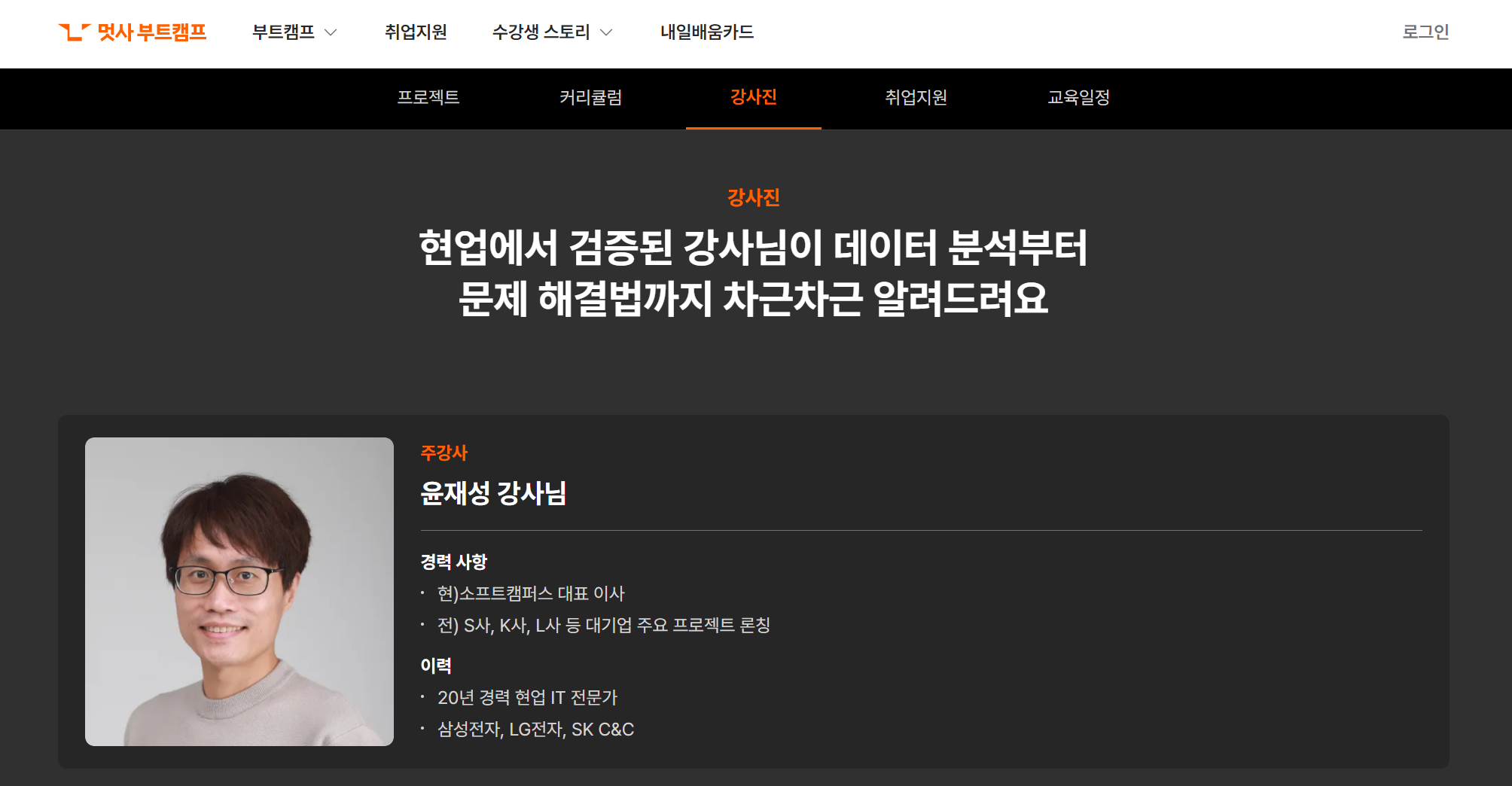
I am a veteran instructor with 19 years of experience in teaching and development, catering to current employees of famous domestic companies and job seekers at institutions such as Samsung Multi Campus, Busan IT Industry Promotion Agency, Jeonju IT & Cultural Industry Promotion Agency, Incheon IT Industry Promotion Agency, Korea Radio Promotion Association, SK C&C, T Academy, Korea Institute for Robot Industry Advancement, Daejeon ETRI, Samsung Electronics, nica Education Center, Korea Productivity Center, Hanwha S&C, Samsung Electronics, LG Electronics, and SK C&C.
Teaching Fields
I teach in fields such as Java, Android, Frameworks, Databases, UML, iPhone, Big Data processing and analysis, Python, IoT, data analysis using R/Python, Deep Learning, Machine Learning AI, and Spark. I structure my lectures to explain concepts as easily as possible by incorporating my diverse experiences, and I create examples to help students apply them in practice. Since this is not an offline class, please use the Q&A for anything you don't understand.



![[NetMiner 4] Two-Mode Network AnalysisCourse Thumbnail](https://cdn.inflearn.com/public/files/courses/343972/cover/01m1bfqm50gwh0b8qmb4qazytx?w=420)



![[Side Projects After Work] Big Data Analysis Engineer Practical Exam (Task Types 1, 2, and 3)Course Thumbnail](https://cdn.inflearn.com/public/courses/329972/cover/dcfb28fd-48c1-4bb1-ab31-d59eac874194/329972-original.png?w=420)

![[AI Cheat Key] AI Visualization That Brings Even Ordinary Data to LifeCourse Thumbnail](https://cdn.inflearn.com/public/files/courses/343878/cover/ai/0/42d53095-3ec0-4a89-a2f8-0276650c210a.png?w=420)