Complete in 6 weeks! 4 strategies to differentiate your backend resume - How to stand out among identical resumes

In a world where every resume looks the same, "differentiation" is what gets you hired. Over the course of 6 weeks, learn 4 practical resume strategies delivered directly by an active backend professional.

(5.0) 206 reviews

764 learners

Level Basic

Course period Unlimited

Resume
Resume
Spring
Spring
Java
Java
MySQL
MySQL
Redis
Redis
Resume
Resume
Spring
Spring
Java
Java
MySQL
MySQL
Redis
Redis

Reviews from Early Learners

5.0

5.0

신영인

100% enrolled

Thank you so much for this excellent course! This is a course I simply had to leave a review for! As you go through the lectures, you can really feel how much care went into everything from the structure to the analogies and examples. I'm a self-taught developer currently running a service on my own. I had no idea what I was lacking or what I needed to learn more about, when I came across DingCodingCo's videos on YouTube and started considering taking the course. I hesitated a lot before purchasing. Since I was already working in the field, I was worried it might all be things I already knew. But as I listened to the lectures, I actually came to think it was really the right decision. It felt like DingCodingCo was putting names to the issues I'd encountered in my work and the processes I'd gone through solving them on my own. The parts I knew and didn't know became clearly defined, and as a result, I came to understand well what I need to pay more attention to and study. I also got many ideas about what to improve in my service! I think this is a course worth taking even if you're not a job seeker, as long as you're running a service! Thank you so much for this great course!

5.0

고양이

100% enrolled

As a backend developer, I had been feeling that when updating my resume, it's important to show specific competencies connected to practical experience rather than simply listing technologies. This course was a great help in supplementing those areas. Thanks to the real-world cases and project-based explanations covered in the course, instead of simply writing "Java backend capable" on my resume, I was able to more clearly include how I actually utilized it in real situations and what problems I can solve. In particular, I was able to gain specific examples and thought processes that can be used during interviews, so I think this is a course that provided a clear direction for the overall job preparation process.

5.0

심야공방

30% enrolled

Simple. Without even an introduction like "Here's what you can learn," it dives straight into the practical aspects of what to write on a resume to make interviewers nod in approval. I work as a backend developer for member/authentication services. Since I mostly deal with hardware and infrastructure directly in on-premise environments, I used to skip courses with 'cloud-based practicals,' thinking, "This is different from my environment." This course also has a part dealing with AWS EC2 and RDS using Terraform, but oddly, I didn't feel any resistance. This is thanks to the way Terraform was introduced simply, almost like a bash script, focusing on "why use this" and "how to collect performance improvement metrics through this." The flow of the lecture itself is organized as: 'Why is it needed → How to configure it → What's needed to prove it with numbers' This structure means it's not just a simple infrastructure practical, but it allows you to write something like "derived improvement plans based on performance metrics" in a single line on your resume. I actually operate an authentication system in an on-premise rack environment full of physical servers. It's an environment where there are physical units for Web01, Web02, ARS, Staging, and DB backup equipment. Even in such an environment, the Prometheus, Grafana, CloudWatch metric design, and load testing → improvement cycle explained in this course were directly applicable. Whether it was cloud or on-premise didn't matter in this course. At first, I thought the Week 3 index optimization lecture would be at the level of basic DB fundamentals. But it actually corrects your perspective on reading execution plans and tracing bottlenecks. It clarifies the meaning of Covering Index, not just at the level of "it's fast," but precisely points out its location in the overall tuning strategy and I/O cost reduction. I also had an experience tuning an identity verification history API where I simply tried to shorten the query length. Following the lecture, I was immediately able to catch on, "Ah, this was a case where the range index condition wasn't applied." That kind of intuition can only be gained from a lecture that explains things centered around cases. I am also looking forward to the subsequent lectures on transactions, lock strategies, and code optimization. This course doesn't just deliver practical knowledge. It is the only course that guides you on "how to write that experience on your resume." So, I changed items that I used to just write like "Automated settlement batch process and improved statistical processing system" on my resume, to reflect the quantitative performance expression, problem-solving oriented structure, and flow demonstrating the meaning of structural transformation I learned in the course, as follows: - Due to the Oracle procedure + Excel-based statistical system, monthly average of 14 million rows of self-authentication transaction data required manual processing taking over 2 hours, with constant risk of work conflicts and human error. - Built an E2E automated batch system based on Spring Scheduled + Crontab. - Prevented parallel execution conflicts and made execution cycles flexible with Crontab. - Included automation of report generation based on Apache POI + automatic sending to administrator email. - Processing time reduced from 2 hours → 15 minutes (88% reduction), maintained 0% settlement error rate, and improved speed of decision-making for related departments with automated reports. Since then, I have gained a standard for judging which structures are stable in practice and which designs are advantageous for maintenance. This standard is immediately integrating into my resume and way of thinking. It's not just a skill upgrade, but a change in the ability to articulate my competence. This course is 'a course that enables me to talk about what I did as a backend developer.' Even if it's not cloud, even if it's not the latest technology, It is a must-take course for any developer who wants to change the sentences on their resume.

What you will gain after the course

  • Essential Backend Problem-Solving Experience

  • Spring Application Optimization

  • Experience with index and transaction issue scenarios

  • Redis Basics and Troubleshooting Experience

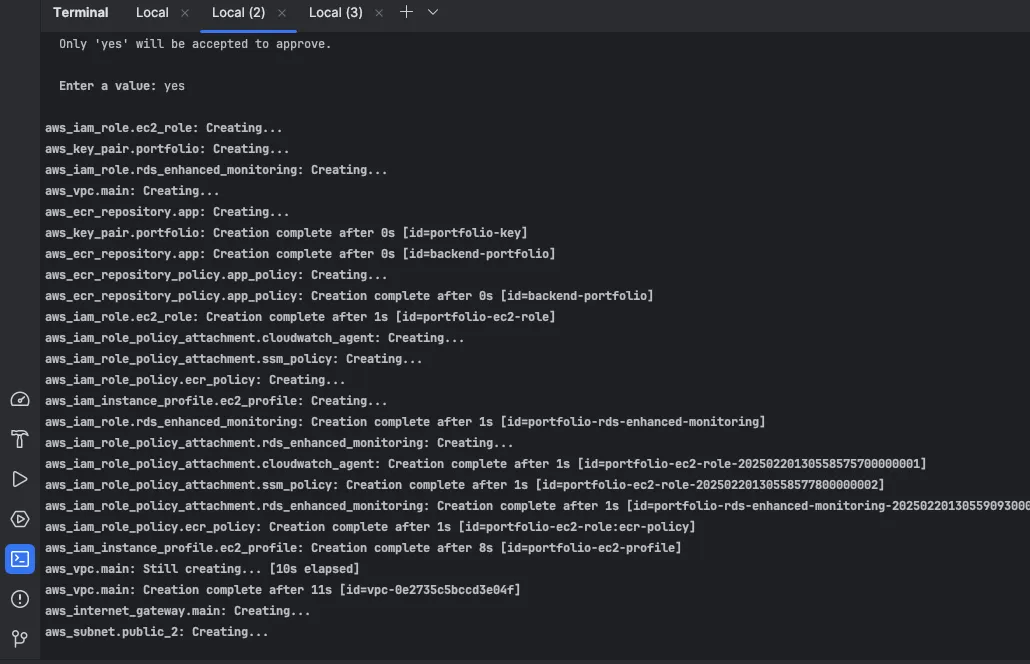
  • From monitoring concepts to actual AWS setup

Java, Spring, MySQL....

You've learned all of this, so why does your resume keep getting rejected?

It is because you haven't been able to include core backend developer skills such as DB indexing, transactions, server optimization, and Redis in your resume
as actual problem-solving experiences.


In that case, can you answer the following questions with confidence?

DB Indexing: How did you shorten slow queries, and can you demonstrate the results with numerical data?

Transactions: How did you resolve concurrency issues or bottleneck problems?

Server Optimization: What was the specific process for achieving high performance with limited resources?

Redis: Do you have experience drastically improving processing speeds by utilizing cache?


If you cannot provide clear answers to these four questions,

In just 6 weeks of lectures, gain real-world problem-solving experience and
learn how to properly incorporate that process into your resume.


Even before entering the interview room,
only candidates who have sufficiently answered these in their resumes can pass the document screening and the interview.
Now, become a competitive backend developer who clearly demonstrates “Problem → Solution → Result”!

A collection of real reviews from those who passed after taking the course

2026/03/08
Toss, Daangn, Buzzvil, Channel Corp, Ohouse resume screening passed by ***님

2026/01/03 Hyundai AutoEver Server Developer Final Acceptance
Toss, Korean Air, Hyundai Capital, ConnectWave, ESTsoft, AhnLab Document Screening Passed by ***

2025/10/04 Toss Bank Server Developer Document Screening Passed ***님

2025/11/14 Musinsa Senior Server Developer Final Acceptance Lee**


2025/05/24 Resume Screening Passed, Jung**

2025/07/31 Final acceptance at 3 companies, Mr./Ms. Ohxx

Actual students' performance improvement results (2025. 9. 28)

Mission submissions through the challenge (over 100)

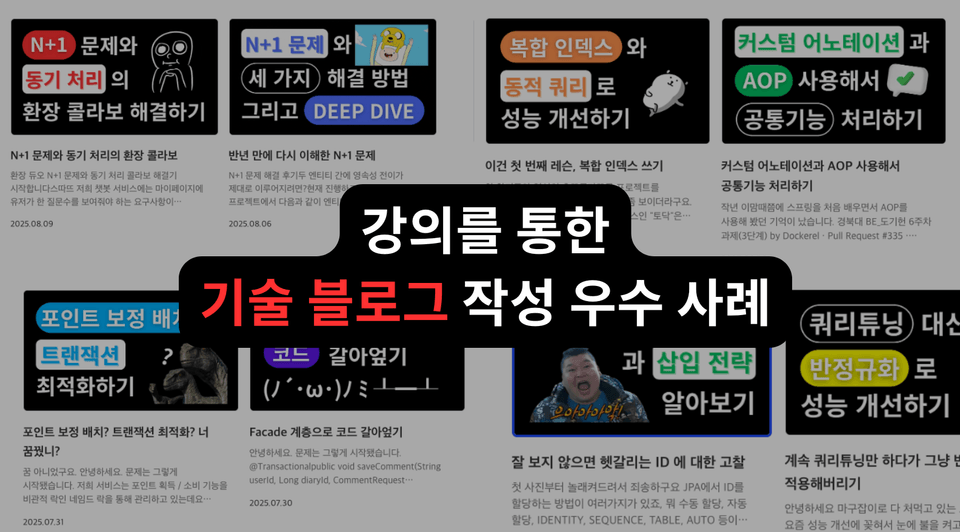
Actual student's tech blog best practices

Link to Do Gi-heon's technical blog (https://dockerel.tistory.com)

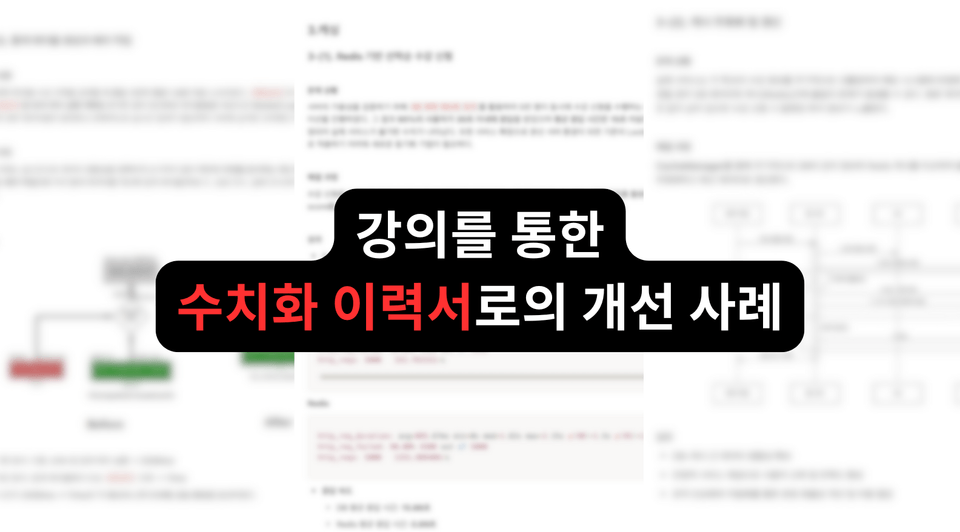
Actual student's resume improvement cases

Mr. Lee x-won


✅ Here is what you will learn.

Backend concepts understood through real-life examples

  • Meal kit Docker and hiring process filter overhead

  • Adult Cartoons and the Library Librarian Optimizer

  • Optimistic and Pessimistic Locking of a Toilet Bowl

  • Metaphors and explanations that are impossible to forget once you've heard them


A kind lecture for beginners

  • Explaining starting from why we need to learn this

  • Example code and test code provided for all concepts

  • Explaining everything from the basics to code automation, CI/CD, and real-world deployment workflows.

  • 946 pages of textbook materials provided

Preparing for Practical Interviews

  • Preparing for DB index B-Tree structures and covering indexes

  • Transaction isolation levels, MVCC, and event publishing preparation

  • Server optimization, JPA and N+1 problem, and bulk operation preparation

  • Preparing for Redis TTL strategies and cache invalidation strategies

A practical configuration that can be applied immediately to your project

  • Not just simple conceptual learning, but based on real-world problem-solving cases

  • Structured based on performance issues encountered in real-world domains


  • Can be used immediately on resumes through before-and-after improvement figures


Developed over 178 days, 946 pages of course material, and a total of 12,665 lines of code.

I have analyzed hundreds of successful resumes so far.
Those resumes clearly had common characteristics.
Specifically, they contained specific experiences of solving problems and proved the results with numbers.
However, the advice to "quantify your achievements" feels too abstract to grasp, doesn't it? I felt the same way.


So I organized it in detail and turned it into a course.
It took 178 days to develop, with 946 pages of materials, 32 hours of raw footage, and 12,665 lines of code.
I structured the content systematically to save you time and ensure the most efficient learning experience possible.
I transformed these results into a fully subtitled video course after two rounds of meticulous review.
You can gain all of this in just 20 hours.


This course is not just about simple theory. It is structured to help you apply it to your projects and create a truly competitive resume, covering everything from problem discovery → problem-solving experience → quantifying results for your resume.
I will transform your resume from a simple introduction into a competitive weapon.

✨ Features of this course

📌 For Beginners

The first student of this course was a developer from a non-major bootcamp background.
Therefore, every concept explained starts with ""Why are we learning this?"".

  • Docker, AWS, Redis

  • Isolation Level, MVCC, Query Plan, Deadlock, Phantom Read, Gap Lock

  • Transaction Propagation, Thread Pool, Cache Avalanche …

We explain these concepts using analogies, practical code, and test code so that even “those hearing them for the first time” can understand.

We don't just provide simple definitions; we explain why these technologies emerged to solve specific problems.

Go to Developer Job Search RPG


📌 We organize the "quantification experience" from start to finish using a template.

"Quantify your resume!" is something you've likely heard many times,
but in most cases, people don't actually know how to write it.

That is why in this lecture,

A. Problem Situation → B. Solution → C. Improvement Metrics

I have designed this so that you can repeatedly learn this flow in a template format.

In this course, you can learn persuasive sentence structures based on numerical data.

Real-life resume problem-solving cases explained in the lecture


📌 I structured it so that you won't be left wondering, "So, what am I supposed to do?"

Lectures that just throw concepts at you and end there,
lectures where you can't even tell how they connect to real-world practice...
I hated those kinds of lectures the most.


This course connects concepts → problem scenarios → practical application.
It’s not just a simple explanation;
it helps you understand it “to the point where you can explain it to anyone, and how.”


In fact, even major companies (one of Naver, Kakao, Line, Coupang, Baemin, Danggeun, or Toss)
had 80% of the questions from their technical interview lectures covered by this one course.
This is proof that actual companies look for problem-solving cases.


📌 I've already taken care of all the minor settings.

  • Complex AWS configuration

  • Repetitive codebase

  • Deployment environment setup


I've taken care of all the tedious work.
Just take the insights with you.

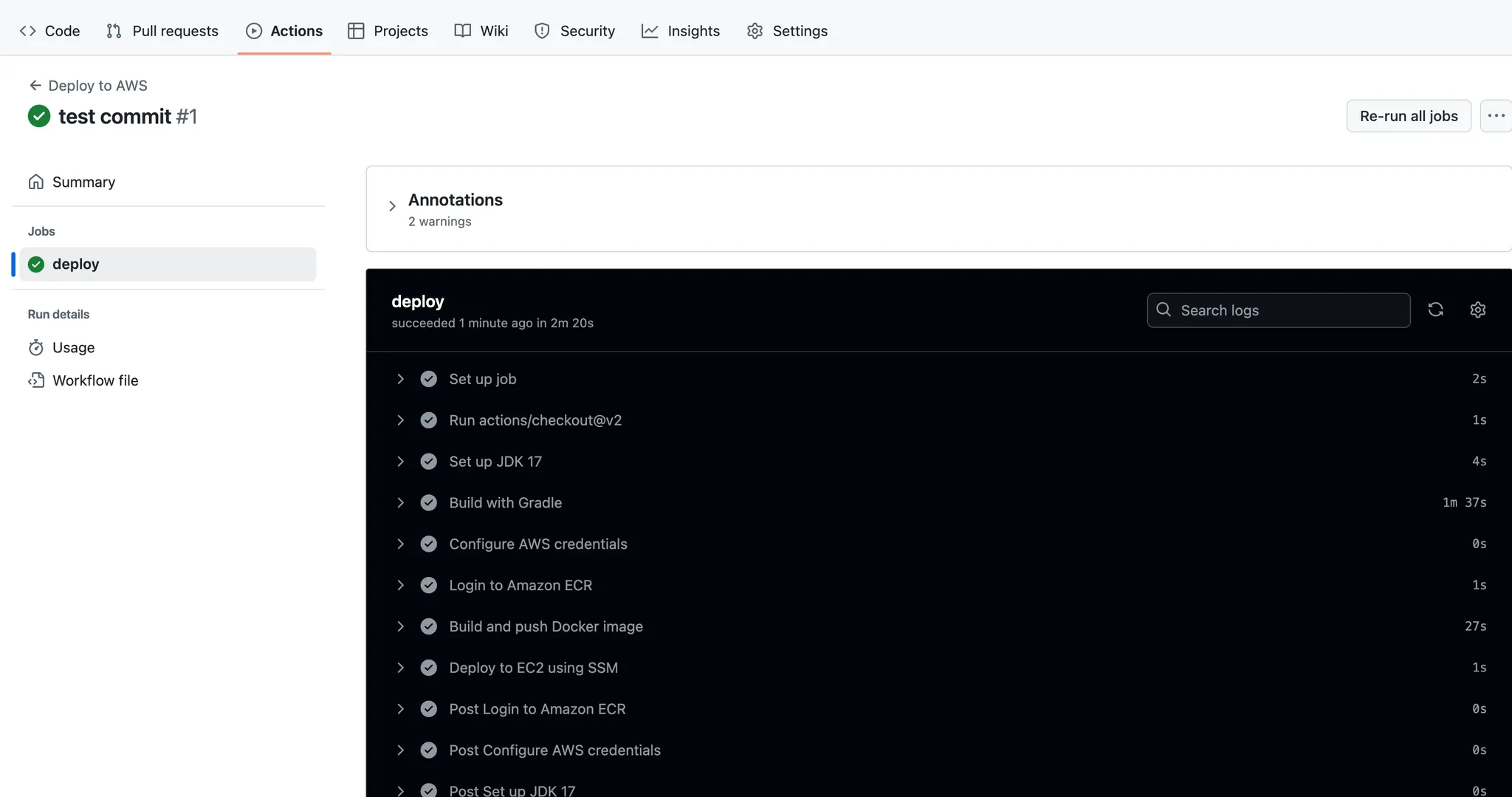
Github Actions CI/CD automation setup

Automated AWS Infrastructure Setup

📌 Missions and feedback, all ready.

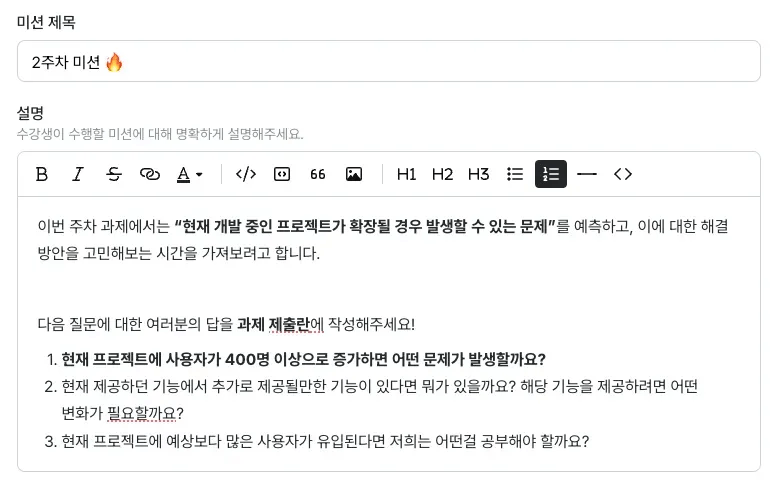
Each week, a mission to directly apply what you've learned to your own project will be assigned.

This course does not stop at simply learning theoretical concepts, but is a
process designed to develop practical skills by actually applying them to your own projects.

Additionally, regarding the missions you submit,
I will personally review the results and provide specific feedback.

This curriculum has been thoroughly prepared so that you can incorporate the concepts you've learned into actual projects and develop your practical skills.

Instead of a lecture where you simply listen,
take away an experience of applying it yourself, receiving feedback, and growing.


->

The mission and feedback features have been changed to be provided in the Challenge Lecture (Updated as of 2025.8.26 )
Please note that we will provide a way for those who have previously registered for the course to be incorporated into the Challenge Lecture.

Recommended for these people

I've tried writing a backend resume, but I don't know where I'm getting rejected.
✔ Those who have listed their skills but don't feel they are competitive
✔ Those who don't know the difference between a passing resume and their own

I have a portfolio, but I don't know how to structure the sentences.
✔ Those who only write a list of features like "Implemented Login API"
✔ Those who want to incorporate actual problem-solving experiences into their resume

I want to improve my resume while preparing for interviews at the same time.
✔ Those who want to prepare for technical interviews based on their resume content
✔ Those who want to apply Transactions, Indexes, and Redis
to their own projects

🥳🥳🥳 Real Student Reviews 🥳🥳🥳

Developer Job Search RPG Student Hyun-woo's Review

⛔ ️Precaution 1: Taking this course does not guarantee 100% employment.

I cannot say that you will unconditionally get hired at Naver, Kakao, Line, Coupang, Baemin, or Danggeun just by taking this course.
As time passes, more students will see the problem-solving cases I've prepared,
and as a result, it may become difficult to differentiate yourself simply by copying those cases.

That is why I will not make exaggerated promises like "anyone is guaranteed to pass."

However, there is something you can definitely take away from this lecture.

That is, the power to discover problem situations on your own and organize those resolution experiences persuasively.
This is not a passive lecture that simply feeds you specific keywords.
We focused on the process of creating a resume that proves you are a 'developer who knows how to solve problems.'

Through this course, I hope you will move forward as a developer who thinks independently and grows.


⛔ Caution 2: This course does not explain every single technology.

This course is not an encyclopedic lecture that explains every technology from A to Z.
It focuses on accurately understanding the core concepts needed for problem-solving and
how to apply them in real-world domain situations.

For example, it does not explain every feature of AWS. Nor does it cover Docker from start to finish.

However, the core topics of this lecture—
DB Index / Transaction / Server Optimization / Redis—
are covered in enough depth to even prepare you for interview questions.

In other words, this course is a practical, hands-on lecture that focuses on solving problems encountered in real-world projects and
incorporating those experiences into your resume.
If you require a deeper exploration of the technology, you will need to expand your studies separately afterward.
I will accompany you only up to that starting point.


⛔ Caution 3: This course is not cheap.

The cost of the lecture is not small. I am aware that it can be quite a burden for job seekers.
That is why I have filled the content with a sense of responsibility.
I have agonized over which specific topics are most necessary for back-end developers at this point in time.
Based on successful resumes and actual questions from technical interviews, I have carefully considered how to create a persuasive resume.

I have designed this to help you reduce the trial and error that could take months on your own, and
to establish a clear direction with a single investment.

This lecture is a guide based on 'passing experience' rather than just knowledge,
and is a practical course designed to help you actually revise your resume and prepare for interviews.

I would appreciate it if you could think of this not as ‘simply taking a lecture,’ but as
‘an investment in properly designing your career.’

I have prepared everything to ensure I meet those expectations.

🎁 EVENT 1 🎁


There are special benefits provided only to those who take the course.

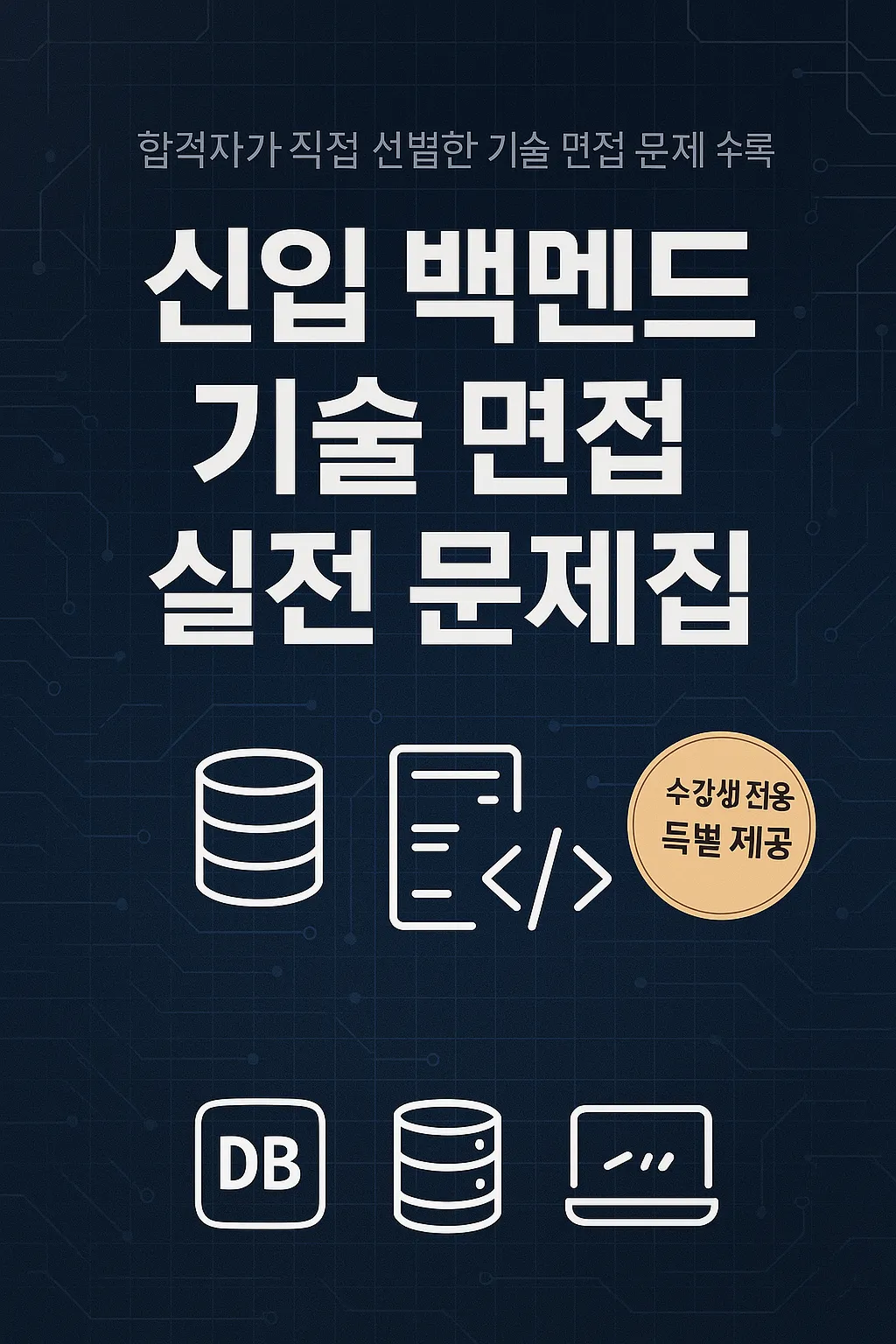
We have collected technical interview questions that were actually asked at major corporations.


You can think of this as a special workbook prepared for those who have passed the resume screening to prepare for technical interviews.
This workbook will be continuously updated, so you'll be able to prepare for interviews according to the latest trends!!

(This workbook is provided as a link in Notion format!)


I will provide this workbook to those who write a course review!

Verify your course review in the community to receive it!

(I have included the verification method in the very last lecture __)


That's not all

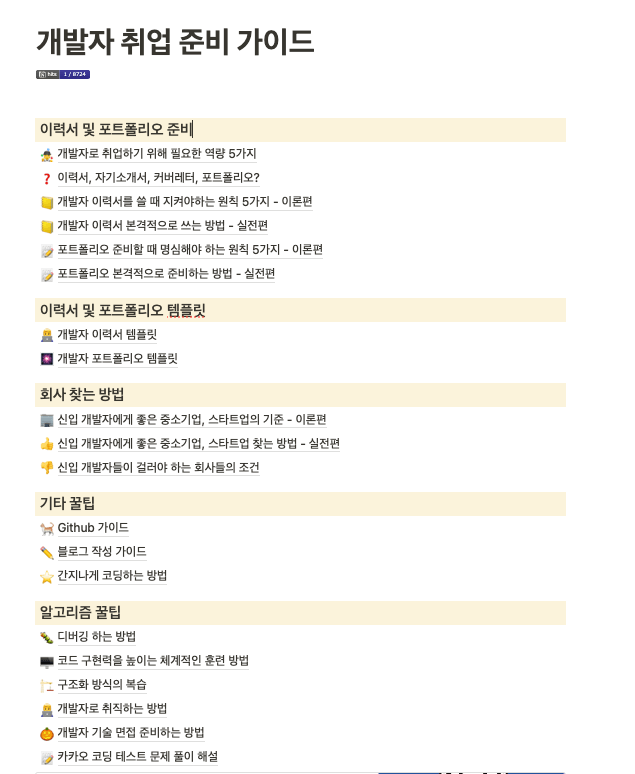
We are even providing a developer job preparation guide (resumes, portfolios, etc.)!


🎁 EVENT 2 🎁

After completing the course, the first 10 people who pass the document screening, please share your course review + document screening success story in the Open Chat Room!

As a token of our gratitude, we are giving away Starbucks gifticons.


🎁 EVENT 3 🎁

via KakaoTalk Plus Friend

🎟 We will provide you with a discount coupon 🎟
(Mobile access available, 15% discount, cannot be combined with other offers)

Click the link


🎁 EVENT 4 🎁

Get a 3-month free trial of IntelliJ IDE!

To support your development studies, I have prepared special benefits through a collaboration with JetBrains.
You can use IntelliJ for free for 3 months using the promotion code below!


Promotion Code: HYUNJOONPARKxJB
Benefit Details: JetBrains Single IDE (e.g., IntelliJ, PyCharm, WebStorm, etc.) 3-month free trial
Expiration Date: ~ Until May 13, 2027
How to Use😀

1. Access the official JetBrains coupon registration page

2. Enter the code and select the desired IDE

3. Check the license issued via email


Precautions:
This code is only available for new users who are using JetBrains for the first time.
(Only those who have no history of using a paid JetBrains license before can register)
(You can do this indefinitely by creating a new Google email account)

2025.05.01 Update

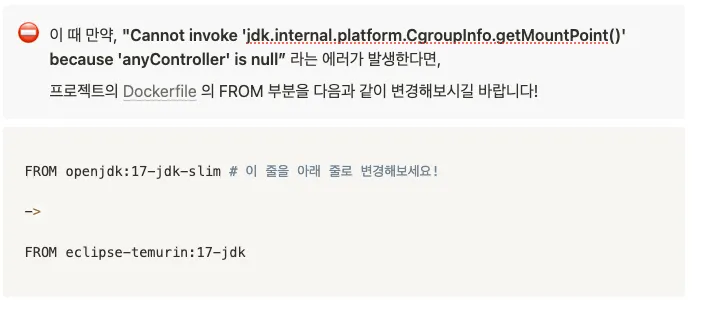
Added a guide for cases where the Docker Image is corrupted feat. Anfield


2025.05.05 Update

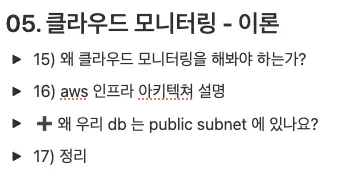
Added a section on "Why is our DB in a public subnet?" feat. Hi

2025.05.11 Update

Added JMH plugin installation instructions feat. kongminoo


2025.06.02 Update

Added explanation of index data flow feat. Mogging


2025.06.07 Update

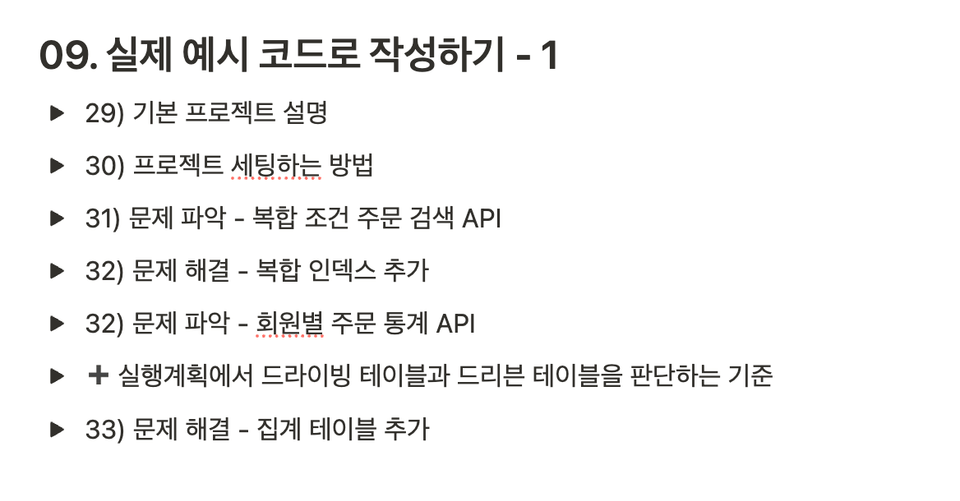
Added explanation of the criteria for determining the driving table and driven table in the execution plan feat. cho766

2025.12.11 Update

2-7 Added Q&A regarding Spring configuration feat. Chunsiki

2026.01.03 Update

6-12. Changes to Redis SETNX content feat.happyrichman

The person who created this course

Sharing the behind-the-scenes story of reaching the final interviews at Coupang and Yanolja - A 6th-year developer's 24-company job-hopping story [ep 5]

Dingco Dingco (Main Instructor)

  • 2021 ~ 2022: S Coding Club Algorithm (data-structure) Tutor

  • 2022 ~ : Operating the coding YouTube channel Dingco Dingco (Featuring various content related to developer employment)

  • 2022 ~ 2023 : Viva Republica Server Developer


  • Never giving up on students 🦈

  • Operating a developer career-cracking community and organizing offline meetups


Dungka (Assistant Instructor)

  • Developer at Naver, Kakao, Line, Coupang, Baemin, Danggeun, or Toss


Things to note before taking the course

If!! you are having even the slightest second thoughts before signing up for the course.

Is this the right course for me to take right now? If you are having such thoughts, please feel free to contact us anytime via the KakaoTalk Channel!

😍 I will do my best to answer your questions 😍

Hands-on Environment

  • We use IntelliJ. The Community (free) version is perfectly fine.

  • Windows or Mac, it doesn't matter! We provide installation methods for each operating system.


Learning Materials

  • Everything will be shared via Notion and PDF!

  • We will share the project code!

Prerequisites and Important Notes

Recommended for
these people

Who is this course right for?

  • Bootcamp graduate

  • Experienced in Spring backend

Need to know before starting?

  • Backend

  • Spring

Hello
This is dingcodingco

Inflearn Verified

Career Verified

18,118

Learners

1,856

Reviews

346

Answers

4.9

Rating

21

Courses

Free 15% discount coupon link!

🚀 Toss, POSTECH alumnus | Current Backend Developer (+9 years)
🎥20k YouTuber | Development Content Creator
📚 Inflearn Instructor | Over 18,000+ cumulative students
👥 Operating a developer career community (8,000+)
🧩 Contributor to various open-source projects (Gradle, Spring AI, etc.)
📝 Passed 38 document screenings and experienced 100+ resume reviews on Kmong (5.0 rating)

I deliver vivid, real-world industry information in an easy and deductively understandable way.
Tôi truyền đạt những thông tin thực tế sống động từ ngành công nghiệp một cách dễ hiểu và có tính diễn dịch.

Inflearn Interview Link!

More

Curriculum

All

80 lectures ∙ (22hr 28min)

Published: 
Last updated: 

Reviews

All

206 reviews

5.0

206 reviews

  • strongkmh님의 프로필 이미지
    strongkmh

    Reviews 3

    Average Rating 5.0

    5

    14% enrolled

    As mentioned in the intro, it's not just about injecting knowledge, but explaining well from the perspective of "why" - why it's needed, and what content makes a backend developer's resume attractive. Actually, if it were just explaining up to this point, I wouldn't think there's a need to take the course, but since we even get to practice firsthand how to create content for a resume (how to quantify it), I think I can apply it when refactoring previous projects or developing new projects in the future. Thank you for creating this course, especially with the difficult job market situation!

    • dianaheo님의 프로필 이미지
      dianaheo

      Reviews 1

      Average Rating 5.0

      5

      5% enrolled

      I got to know you, Dingcodingko, from Threads, moved to YouTube, and was so drawn to your incredible teaching skills that I ended up purchasing your course on Inflearn. I am a junior developer who is preparing for employment. The job market is very difficult these days, and consequently, the requirements for new graduates are increasingly high, leading to a lot of concerns as I prepare my resume and portfolio (projects). I am confident that this lecture will be able to address those concerns. Thank you for creating such good content and lectures, and I will always support you!!!

      • polynomeer님의 프로필 이미지
        polynomeer

        Reviews 28

        Average Rating 4.9

        Edited

        5

        36% enrolled

        This is the most interesting and immersive lecture I've ever taken. The lecture is well-structured, making me feel how much preparation was put into it. Thank you so much for providing this lecture, which is like a welcome rain in a drought before my technical interview! 🙇‍♂️

        • almondshin님의 프로필 이미지
          almondshin

          Reviews 2

          Average Rating 5.0

          5

          30% enrolled

          Simple. Without even an introduction like "Here's what you can learn," it dives straight into the practical aspects of what to write on a resume to make interviewers nod in approval. I work as a backend developer for member/authentication services. Since I mostly deal with hardware and infrastructure directly in on-premise environments, I used to skip courses with 'cloud-based practicals,' thinking, "This is different from my environment." This course also has a part dealing with AWS EC2 and RDS using Terraform, but oddly, I didn't feel any resistance. This is thanks to the way Terraform was introduced simply, almost like a bash script, focusing on "why use this" and "how to collect performance improvement metrics through this." The flow of the lecture itself is organized as: 'Why is it needed → How to configure it → What's needed to prove it with numbers' This structure means it's not just a simple infrastructure practical, but it allows you to write something like "derived improvement plans based on performance metrics" in a single line on your resume. I actually operate an authentication system in an on-premise rack environment full of physical servers. It's an environment where there are physical units for Web01, Web02, ARS, Staging, and DB backup equipment. Even in such an environment, the Prometheus, Grafana, CloudWatch metric design, and load testing → improvement cycle explained in this course were directly applicable. Whether it was cloud or on-premise didn't matter in this course. At first, I thought the Week 3 index optimization lecture would be at the level of basic DB fundamentals. But it actually corrects your perspective on reading execution plans and tracing bottlenecks. It clarifies the meaning of Covering Index, not just at the level of "it's fast," but precisely points out its location in the overall tuning strategy and I/O cost reduction. I also had an experience tuning an identity verification history API where I simply tried to shorten the query length. Following the lecture, I was immediately able to catch on, "Ah, this was a case where the range index condition wasn't applied." That kind of intuition can only be gained from a lecture that explains things centered around cases. I am also looking forward to the subsequent lectures on transactions, lock strategies, and code optimization. This course doesn't just deliver practical knowledge. It is the only course that guides you on "how to write that experience on your resume." So, I changed items that I used to just write like "Automated settlement batch process and improved statistical processing system" on my resume, to reflect the quantitative performance expression, problem-solving oriented structure, and flow demonstrating the meaning of structural transformation I learned in the course, as follows: - Due to the Oracle procedure + Excel-based statistical system, monthly average of 14 million rows of self-authentication transaction data required manual processing taking over 2 hours, with constant risk of work conflicts and human error. - Built an E2E automated batch system based on Spring Scheduled + Crontab. - Prevented parallel execution conflicts and made execution cycles flexible with Crontab. - Included automation of report generation based on Apache POI + automatic sending to administrator email. - Processing time reduced from 2 hours → 15 minutes (88% reduction), maintained 0% settlement error rate, and improved speed of decision-making for related departments with automated reports. Since then, I have gained a standard for judging which structures are stable in practice and which designs are advantageous for maintenance. This standard is immediately integrating into my resume and way of thinking. It's not just a skill upgrade, but a change in the ability to articulate my competence. This course is 'a course that enables me to talk about what I did as a backend developer.' Even if it's not cloud, even if it's not the latest technology, It is a must-take course for any developer who wants to change the sentences on their resume.

          • tklr0731님의 프로필 이미지
            tklr0731

            Reviews 1

            Average Rating 5.0

            5

            41% enrolled

            This lecture was like a sweet rain for me, as I had only ever focused on studying development and didn't know how to write a resume. My previous resume was just a simple list of stacks, project experiences, and tasks I contributed to. I wasn't satisfied with it, and although I found information saying it's good to include metrics and problem-solving processes, I felt lost because I didn't know how to actually do it. At that moment, this lecture quenched my thirst. It didn't just say "do it this way"; it clearly explained why it's necessary, what methods to use, and what kind of results can be achieved in an easy-to-understand way. Thank you!

            dingcodingco's other courses

            Check out other courses by the instructor!

            Similar courses

            Explore other courses in the same field!