- It "works" because it was made by copy-pasting.
- "What is JPA?" leaves them speechless.
- They cannot explain why they wrote the code that way.
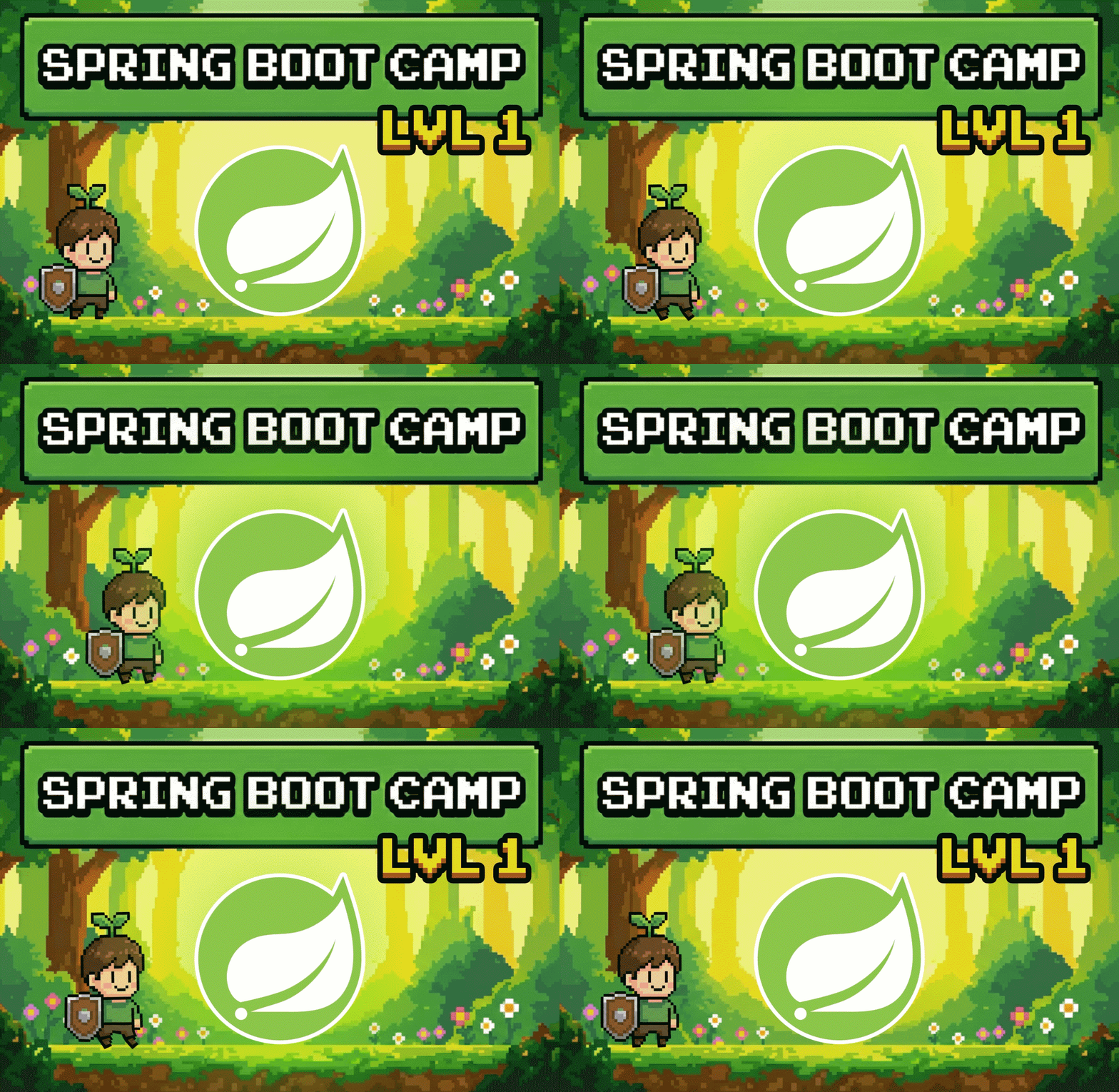
Spring Boot that you can explain in interviews
Pain → Salvation learning method · Lv.1 Introduction
🌱 True beginners · OK if you only know Java if/for statements
An Introduction to Backend Development: Answering Through Experience
It works if you just follow along.
But interviewers will ask “why.”
Projects built by copy-pasting will crumble in interviews. Through the "Pain → Salvation" learning method—where you first experience the struggles of pure Java before realizing the greatness of Spring Boot—you will become a developer capable of explaining the underlying principles.
My First Web Server
30 lines of pure Java
7 lines of Spring Boot
Target Audience
Beginners who know Java basics but find "servers" vague
Methodology
Pain → Salvation — 6 sessions, 42 lectures to experience and realize firsthand
Result
Explaining the 'why' behind JPA, Transactions, and DI
Why can't they explain why?
Most courses only teach you 'how'.
"For JPA, just use save()," "For transactions, just add @Transactional." If you follow along, it works. But interviewers ask, "Why do you use it?"
사용법만 알아요
It stops at "just call save()".
"왜"를 몰라요
They cannot answer why they use JPA or why they use the 3-tier architecture.
겪어본 적이 없어요
Since they have never tried it without JPA, they don't know how to be grateful for it.
This course intentionally inflicts pain first. Only those who have manually written 50 lines of SQL without JPA can explain why JPA is necessary.
The end of copy-pasting and following along
It works if you just follow along and type it out. But you'll fall apart in the interview.
If you just follow along with YouTube videos, you can build a portfolio. Let's take a look at a common path to rejection.
1
Turn on the lecture and type along with @GetMapping
2
"Oh, it works!" Portfolio completed
3
Interviewer: "What is JPA?" "Um… well…"
4
Failed because I couldn't explain the copy-pasted project 😵
Pain → Salvation
Only when you experience it yourself can you see its greatness.
You shouldn't start by learning what's convenient. You must experience the inconvenience first. After suffering through 30 lines of pure Java, when you see 7 lines of Spring Boot — you'll realize, "Ah, so this is why we use it."
웹 서버
I typed out the HTTP response manually as a string.
After that pain, I truly feel the greatness of Spring Boot's 7 lines.
DB 저장
I manually wrote 50 lines of SQL + RowMapper.
I deeply understand why a single line of JPA save() is such a revolution.
객체 관리
"Why is an object I didn't even create running?"
Proxy, DI, and Spring Beans reveal the secret behind the magic.
구조
A single Controller takes on all the work.
Explains the reason for a clean structure through 3-layer separation. lại tạo nên một cấu trúc gọn gàng.
🍽️ Restaurant Analogy
Backend concepts, explained so you'll never forget them once you've heard them.
3-Layer Architecture, Transactions, Proxy, DI, Repository, Exception Validation — I will show you "what and why" at a glance using a restaurant analogy instead of just code.
3계층
"Why do you separate Controller·Service·Repository?"
I answer that roles are divided like a clerk, manager, and warehouse keeper.
트랜잭션
"Why are transactions necessary?"
It is explained as either everything works or nothing works, just like a burger set., hoặc là được tất cả hoặc là không được gì cả.
프록시
"How does @Transactional work?"
Explain that the manager (proxy) handles it instead. sẽ thay mặt xử lý.
DI
"How is @Autowired injected?"
Answer that it is delivered like taking it out of the parts warehouse.
Repository
"How does it run when there isn't even an implementation?"
I understand that SimpleJpaRepository (the chef) creates it instead.
예외검증
"Where do you handle exceptions and validation?"
Explained through the Gatekeeper (Validation) and the Manager (Global Exception).
Before / After
It's the same project, but the interview answers vary.
- I have personally experienced the hell of 50-line SQL queries.
- It starts with, "I tried doing it with JdbcTemplate..."
- Explains JPA, transactions, and DI, including the "why."
Backend Developer Roadmap
This course is the starting point, Lv.1.
It doesn't end with just one lecture. We will go from introduction to practice together with a step-by-step roadmap.
Lv.0
데이터베이스 핵심 개념
Build a solid foundation before starting Spring.
Lv.1
Spring Boot 입문 (이 강의)
Build APIs with Spring and prepare for interviews.
Lv.2
현업 개발자의 JPA 완전 정복
From persistence contexts to practical patterns.
Lv.3
6주 완성 백엔드 이력서 돋보이는 법 ↗
Once you have equipped yourself with practical weapons, it's time to differentiate your resume and pass the document screening.
By any chance
Has this ever happened to you?
Have you ever been at a loss for words when asked, "What is JPA?"
Have you ever felt flustered because you couldn't explain a project you made by copying and pasting?
Curriculum
6 periods, 42 lectures · From web basics to real-world projects.
Web Basics → First Web Server (Pain → Salvation) → DB·JPA → Proxy·DI → 3-Tier Architecture·Transactions → Real-world Project. Click on a section to view the detailed table of contents.
섹션 1. 🌐 1교시 · 웹의 기초, 서버와 대화하는 법
- 1🎯 OT: What can I do after 6 sessions?
- 2🌐 The Difference Between the Internet and the Web: KakaoTalk vs. YouTube
- 3🍽️ Client and Server: Customer and Restaurant
- 4📨 HTTP: The common language used by the entire world
- 5📦 JSON: The standard container for holding data
섹션 2. 🚀 2교시 · 첫 웹 서버, 순수 자바의 고통 → 구원
- 6🚀 Experiencing the terrible pain of pure Java (30 lines)
- 7🌱 Creating a Spring Boot Project: 3 Seconds, Just Like Instant Ramen
- 8🎯 Hello World API: Complete a server in 7 lines
- 9📤 JSON Response: Java Objects Transforming into JSON
- 10🎯 Receiving dynamic requests with Path Variables
섹션 3. 💾 3교시 · DB, JdbcTemplate 지옥 → JPA 한 줄
- 11💾 Memory Storage: The Fatal Limitations of HashMap
- 12🗄️ DB Concepts: Installing a Permanent Storage Refrigerator
- 13😭 JdbcTemplate: Experiencing SQL String Hell
- 14✨ JPA: Finish in one line with save() without SQL
- 15🎮 Repository: A control panel that works without writing code
섹션 4. 🎭 4교시 · 마법의 정체, 프록시·DI·스프링 빈
- 16🎭 What is a Proxy?
- 17🏭 Auto-Proxy: The factory that churns out managers
- 18📦 ApplicationContext and Spring Beans
- 19🚀 Dependency Injection (DI): Baedal Minjok
- 20👨🍳 The Chef Behind the Kiosk: SimpleJpaRepository
섹션 5. 🏗️ 5교시 · 3계층 아키텍처와 트랜잭션
- 21🏗️ 3-Layer: Separation of Roles - Clerk, Manager, and Refrigerator
- 22💡 It's a hassle, so why divide them? Reasons for Layered Architecture
- 23🛡️ Transaction: All or Nothing
- 24✅ @Transactional: The miracle of a single sticker
- 25🕵️ How @Transactional Works
섹션 6. 🎓 6교시 · 실전, 예외·검증·프로젝트 완성
- 26🚨 Exception Handling: Turning 500 into 404·400
- 27🛡️ Global Exception: Restaurant Manager
- 28👮 Validation: The gatekeeper guarding the entrance + @Valid
- 29📄 Paging: Ban findAll(), safe even with 1 million records
- 30🚀 Hands-on Project: Completing User-Todo CRUD
Recommended for
If you followed along and typed it out, but can't explain it.
Who this is for
🙋
Those who know Java if·for statements but find building a "server" vague.
😵
Those who followed along with YouTube tutorials but cannot explain the concepts during an interview
🧑💻
Those who don't understand the principles behind a project created by copy-pasting
🎯
Those who want to prepare for interviews and gain practical experience at the same time
Those who need to align their expectations
- Experienced professionals who are already proficient in using Spring in the field
- Those who are seeing Java syntax (if·for) for the very first time
- Those who only want deep dives into JPA internals and performance tuning (That's Lv.2)
Notes before taking the course
Introductory — You can start as long as you have basic Java knowledge.
01
Experience using Java if and for statements (It's okay if you don't know Spring Boot).
02
Experience handling MySQL CRUD at least once.
03
IntelliJ Community (Free) is enough — works on both Windows and Mac, installation guides provided for each OS.
What you will be able to do after the course
By the end of this course, you will be able to do these four things.
You can create an API server yourself with Spring Boot and explain its operating principles.
After experiencing the pain of JdbcTemplate, I explain why a single line of JPA's save() is a revolution.
Understand "why the code works" through proxies, DI, and Spring Beans.
Complete practical CRUD with 3-tier architecture, transactions, exceptions, and validation.
Why this course
Taught directly by an active developer who has reached the final interview stages at Coupang and Yanolja.
A 6-year developer who reached the final interview stages at Coupang and Yanolja, and an instructor with a story of transitioning through 24 companies, teaches you directly.
Former Viva Republica (Toss) Server Developer — Explaining the "why" from a field-proven perspective.
This is not a lecture that ends with just teaching you the "how"; it connects everything from concepts to hands-on experience and even interview answers.
We support students until the very end by operating a developer career success community (KakaoTalk and Discord).

Student Benefits
If you leave a course review, you will receive 18 Spring Boot interview questions.
🎁 Special Benefits for Students
We have organized the course content into the [Lv1] 18 Spring Boot Interview Questions workbook (Notion link).
Core questions and model answers for immediate use in interviews — This is a Notion workbook for hands-on practice.
18 Selected Interview Questions
Notion Workbook
Course Review First 100 People
How to receive — Please verify your course review in the community. The verification method is detailed in the very last lecture of the curriculum, 🎁 EVENT 🎁 How to verify your course review.
🎟 EVENT 2 — If you submit the Google Form via the provided link, you will receive a 15% discount coupon.
💻 EVENT 3 — JetBrains Collaboration Benefit: IntelliJ 3-month free trial (Promotion code HYUNJOONPARKxJB, for new JetBrains users). Please check the community announcement for the expiration date.
💬 KakaoTalk Channel Benefits
If you add the Dingco Dingco KakaoTalk channel, you will receive a 15% discount coupon.
💻 Scan QR on PC
📱 채널 추가하고 쿠폰 받기 →
On mobile, just one tap and you're there
※ Discounts cannot be combined
FAQ
Expand and check only the parts you are curious about.
Spring Boot를 하나도 몰라도 되나요?
Yes. You only need to know basic Java, such as if statements and for loops. You don't need to know Spring Boot. Starting from "why we are learning this," I will explain every concept step-by-step.
따라하기 강의랑 뭐가 다른가요?
This course intentionally makes you suffer. You will experience the greatness of Spring Boot's 7 lines and JPA's single save() line only after writing 30 lines of a web server in pure Java and enduring the 50-line SQL hell of JdbcTemplate. This experience will enable you to give interview answers that start with, "I've actually experienced it myself."
실습 환경은 어떻게 되나요?
IntelliJ is used. The Community (free) version is sufficient, and it works on both Windows and Mac. Installation methods for each operating system are provided, and learning materials (Notion, PDF) and project code are shared.
이 강의만 들으면 백엔드 개발자가 되나요?
This course is Lv.1 (Introductory) of the Backend Developer Roadmap. It follows the sequence: Lv.0 DB Basics → Lv.1 Spring Boot Introduction (this course) → Lv.2 JPA Mastery → Lv.3 Deployment → Lv.5–6 Architecture & Practice.
Don't just type along; experience it for yourself and explain it.
If you only learn the "how," you will get stuck at the "why" during interviews. You must experience the pain of 30 lines of pure Java to see the greatness of 7 lines of Spring Boot. This experience creates answers that start with, "In my own experience..."


This would be great for people who are new to Spring Boot, just learned Java, or learned it a long time ago. Also, Dingcodingco explains really well so it's easy to understand.
It was great to be able to learn about Proxy and DI in detail.
I ended up taking this course almost by force (?) because my company suddenly started using Spring, but looking back, I don't know what I would have done if I hadn't taken it. I wasn't a complete beginner to backend development, as I had experience with NestJS, so I was worried that Spring might feel too heavy or frustrating. However, those worries were completely shattered from the very first lecture. The flow—from Spring's philosophy to its architecture and why it was designed this way—was so smooth that I lost count of how many "Aha!" moments I had. It doesn't just list syntax; it builds the practical intuition and fundamentals needed in the field. Even coming from a NestJS background, it was great to understand Spring by comparing the two. I can confidently say that for those new to Spring, as well as those like me who have experience with other frameworks but have never properly learned Spring, this single course will completely wash away any vague fears you have. It's hard to find a better course than this for solidifying your fundamentals.
I had fun learning the concept through various examples. It was an enjoyable way to learn about things I had misunderstood or didn't know before.





![[From JSP to Spring Boot] The Unwavering Path to SpringBootCourse Thumbnail](https://cdn.inflearn.com/public/files/courses/334897/cover/01k2j21p3rz09cqh5s0frefaa5?w=420)

![[Season 1] Spring AI in Practice: Developing a Premium Reservation AI AgentCourse Thumbnail](https://cdn.inflearn.com/public/files/courses/339732/cover/01kb2qr7zw5gf0724jvv4rndns?w=420)

![[Season 2] Spring AI in Practice: Developing Multi-AI Agent SystemsCourse Thumbnail](https://cdn.inflearn.com/public/files/courses/339915/cover/01kbqgcec3hb576vxxdf9ch76y?w=420)