A hands-on lecture for those learning networking for the first time
Packet Tracer-based network practice lecture
Recommended as a course to take before starting serious study for network certifications such as CCNA/CCNP.
💰 General course purchasing method vs. This course's purchasing method
😥
General Lectures
- Purchase Basic Lecture
- Separate purchase for updated lectures
- Separate purchase of additional practice lectures
- Costs increase with every technological change
- Restricted review once the enrollment period ends
🚀
Netguyver's Lectures
- Take the basic course with a one-time purchase
- Free access to additional update lectures
- Free provision of supplementary practice and problem content
- Lecture updates to keep pace with technological changes
- Unlimited course period for repeated review
As the course is updated, more content is provided, and the learning value for students increases.
This is the first lecture in the “Network Mastery” roadmap.
You will learn step-by-step, from the essential network foundation concepts you must know before studying for the CCNA
to hands-on configuration and verification using Cisco Packet Tracer.
🚀 What you can gain from this course
- Understanding essential network theories such as the OSI 7-layer model, TCP/IP, IP addressing, and subnetting
- Learn the flow of how PCs, switches, and routers actually communicate with each other.
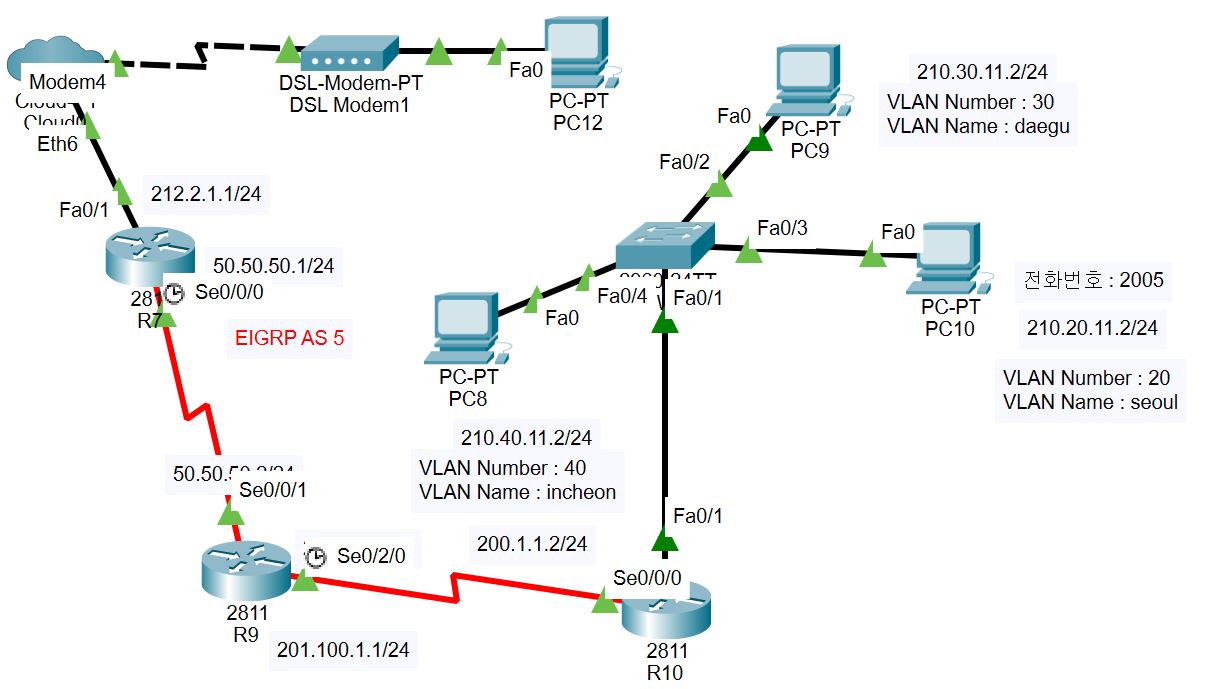
- Network configuration and verification practice using Cisco Packet Tracer
- Understanding the principles of "why it works this way" rather than simply memorizing commands
- Acquiring the foundational knowledge necessary for CCNA study, entry-level network engineer positions, and strengthening basic IT competencies
- Learn future supplementary lectures and updated content for free
🤔 Why should you learn networking?
Most IT services, including cloud, security, server, development, infrastructure, IoT, and AI systems, operate on top of a network.
Therefore, if you work or study in the IT field, understanding networks is not an option but a fundamental competency that you must possess.
By understanding networks, you can judge for yourself "why communication is working," "why a failure is occurring," and "where you need to check."
♾️ Why is the enrollment period unlimited?
Networking is not a field where you can just listen once and be done. You often need to understand the concepts first, then repeat the hands-on practice, and later review them again during actual work or while studying for certifications.
Since this course offers lifetime access, you can revisit and study the material whenever needed.
Additionally, if the course content is updated, you can access the new material at no extra cost.
Updates may include supplements to network technology, additional hands-on exercises, proficiency test questions, and troubleshooting examples.
💡 Course Features
1. Explains essential network theories in an easy-to-understand manner.
It explains core concepts essential for understanding networks—such as the OSI 7-layer model, TCP/IP, IP addressing, subnetting, LAN, and routing—in a step-by-step manner so that even beginners can understand them.
2. Configure and verify directly using Packet Tracer.
It doesn't end with just listening to explanations; you will use Cisco Packet Tracer to manually place PCs, switches, and routers, configure IP addresses, and verify that communication is working correctly.
3. You can build a solid foundation before pursuing network certifications such as CCNA/CCNP.
It helps build a foundation before studying for various network certifications to prove your skills, thereby assisting in
provides help.
4. It is structured in the order necessary for beginners and new engineers.
The learning flow is designed to help non-majors learning networking for the first time, those preparing for CCNA studies, and new network engineers naturally progress from basic concepts to hands-on practice.
🙋 Recommended for these people
- Non-majors learning networking for the first time
- Those who want to organize basic concepts before starting to study for certifications such as CCNA/CCNP
- Those who are still confused by the OSI 7 layers, TCP/IP, IP addresses, and subnetting
- Those who want to know how switches and routers actually operate
- Those who want to configure a network themselves using Packet Tracer
- Those who want to systematically build their fundamental skills as a new network engineer
- Those who have learned the theory but have not yet clearly organized the actual flow of communication
❓ Frequently Asked Questions Q&A
Q1. Do I need to purchase a new course again as network technology evolves?
No. Once you purchase this course, you will be able to access any additional supplementary lectures and updated content for free. In other words, current buyers can continue learning without any extra cost even as the course content expands in the future.
Q2. Can non-majors take this course?
Yes. The course explains everything step-by-step, starting from basic concepts, so that even those learning networking for the first time can understand.
Difficult terms are structured to be easily understood through real-world communication examples and Packet Tracer practice.
Q3. Which program will be used for the practice sessions?
We use Packet Tracer provided by Cisco Systems.
The course includes instructions on how to install the program and register as a user, so even first-time users can start the hands-on practice.
Q4. Is it helpful to take this course before studying for the CCNA?
Yes. It is great to use as a foundational course before studying for the CCNA, as it allows you to first organize concepts that people often struggle with, such as the OSI 7 Layer, TCP/IP, IP addresses, subnetting, and the roles of switches and routers.
🎯 Conclusion
This course is not just about purchasing the "current lecture videos."
It is a long-term learning pass that includes all future learning content to be added.
📢 Notes
- The Packet Tracer program supports Windows and macOS.
- Answers to questions will be provided collectively every Saturday.
- Unauthorized distribution, reproduction, or public posting of class content and materials is prohibited.
- Prices may increase depending on the addition of lecture content, an increase in the number of students, or changes in operational policies.