강의

멘토링

커뮤니티

AI Technology

/

Deep Learning & Machine Learning

Deep Learning Next Generation Innovation Technology - Introduction to Physical Information Neural Networks and Pytorch Practice

This is a lecture that studies the physical information neural network, one of the next-generation innovative technologies of deep learning, and implements it directly using Pytorch. Let's learn the next-generation innovative technology of artificial intelligence with me!

(4.8) 17 reviews

175 learners

  • dlbro
3시간 만에 완강할 수 있는 강의 ⏰
딥러닝모델
PyTorch
Deep Learning(DL)
Machine Learning(ML)
Artificial Neural Network

Reviews from Early Learners

What you will gain after the course

  • The concept of physical information neural network, the next-generation innovative technology in artificial intelligence

  • Building a Physical Information Neural Network Using PyTorch

Emerging next-generation deep learning models
Physical Information Neural Network (PINN)

Deep learning models that integrate the laws of physics are emerging as a new key to AI problem-solving. Jensen Huang, CEO of NVIDIA, emphasized the potential of AI, stating that the next wave of AI will be one that learns about the physical world . Among these models, the most notable is the Physical Information Neural Network (PINN) .


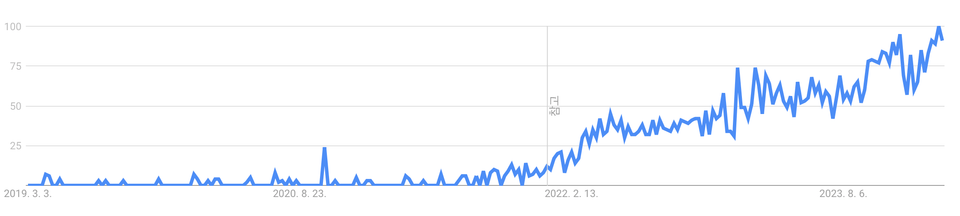
[Google Trends] Soaring Interest in Physics-Informed Neural Networks


Physics-informed neural networks (PNNs) are artificial neural networks built by learning from physical information. Combining the performance of neural networks with the power of physical information, they enable the accurate construction of complex systems even with limited data, and are considered a next-generation innovation in the industrial sector.

NVIDIA , a leader in artificial intelligence (AI) computing, has also launched its AI framework, Modulus, introducing physics-based machine learning models as a groundbreaking technology . Many companies, including NVIDIA, Amazon, Philips, ExxonMobil, SpaceX, BMW, and Siemens, are investing in and developing physics-based neural networks, and expect physics-based machine learning models to drive next-generation innovation across industries.

Why Physical Information Neural Networks?

(1) Solving various challenges

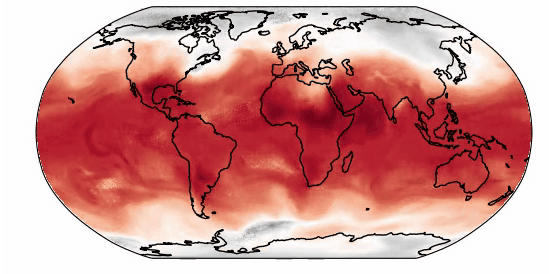
Physical information neural networks, which integrate the laws of physics into deep learning, are solving various challenges previously intractable to deep learning and expanding the range of industries applying deep learning . Recently, they have been adopted in fields such as medicine (new drug development), the environment (climate prediction), and architecture (structural design), attracting attention as an attractive technology.

Nvidia's Modulus

(2) Less data usage

Supervised learning, the fundamental learning method for artificial neural networks, typically requires massive amounts of data. On the other hand, physics-based learning, which makes predictions based on physical laws, can build accurate models without data or with only a small amount of data .

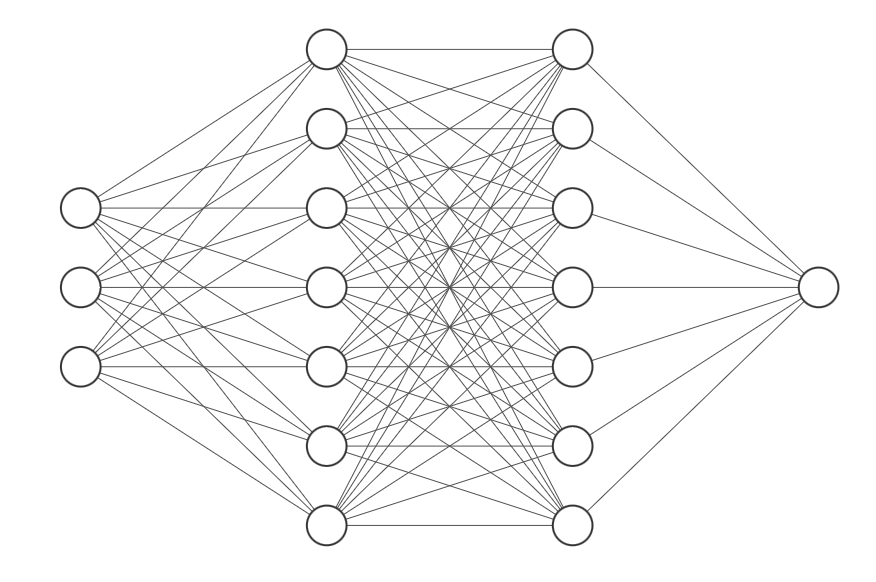
Physical information neural network

(3) Establishing a system that combines transparency and efficiency.

Physical neural networks can be integrated with various technologies to enhance accuracy in various fields and significantly improve computational speed compared to existing methods . Furthermore, because the model's predictions and decision-making processes are based on the laws of physics, they can help address the "black box" problem inherent in deep learning .

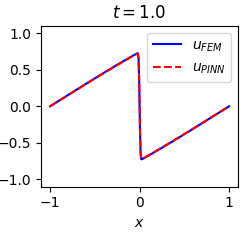
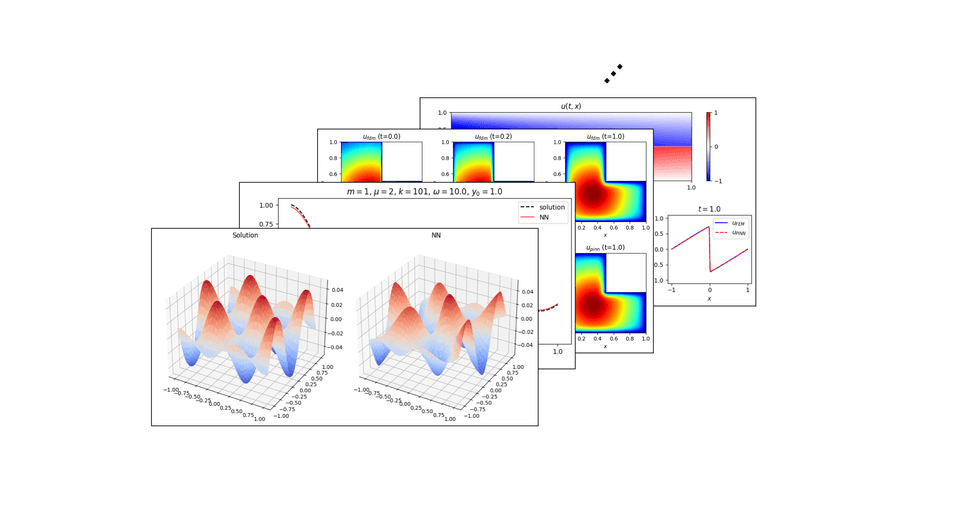
FEM vs PINN

From theory to implementation
Contains the basics of physical information neural networks

In this lecture, after learning the concepts, we will implement models for various problems.

To prevent math from becoming a barrier, we cover the concept of differentiation first.
Introduces the concept of physical information neural networks and the learning principles of neural networks.
You can implement a physical information neural network yourself through 6 exercises.


Things to note before taking the course

Practice environment

  • The hands-on training takes place on Google Colaboratory, which requires no separate installation . A free Google account is required, and failure to use Colaboratory may result in disruption to the training.

Learning Materials

  • All slides and code used in the class are provided.

  • Implement the model using Pytorch.

Player Knowledge and Precautions

  • Some basic knowledge of deep learning, such as supervised learning and gradient descent, is required.

  • This course covers a wide range of mathematical topics, including differential equations and numerical analysis. However, it's structured so that even those without prior knowledge of differential calculus can easily follow along.

  • This is a question-based course. Questions about the class are always welcome. :)

Recommended for
these people

Who is this course right for?

  • Those preparing for universities/graduate schools related to artificial intelligence

  • Anyone who wants to follow the future of artificial intelligence

  • Anyone who wants to experience the next-generation deep learning innovation technology

Need to know before starting?

  • Passion to do

  • Deep Learning Basics

  • Basic knowledge of Python

Hello
This is

5,058

Learners

388

Reviews

261

Answers

4.7

Rating

7

Courses

안녕하세요.

딥러닝/머신러닝 관련 유튜브를 운영하는 딥러닝 호형입니다.

수학/데이터 분석을 전공하고 다수의 딥러닝 프로젝트를 완료하고 수행하고 있습니다.


머신러닝, 고급 머신러닝, 딥러닝, 최적화 이론, 강화 학습 등의 인공지능 내용과 선형 대수학, 미적분, 확률과 통계, 해석학, 수치해석 등의 수학 내용까지 여러분들과 공유할 수 있는 지식을 가지고 있습니다. 


모두 만나서 반갑습니다!


* 관련 이력

현) SCI(E) 논문, 국제 학회 발표 다수

현) 인공지능 관련 대학교 자문 다수

전) K기업 전임 연구원 - 데이터 분석 및 시뮬레이션: 신제품 개발, 성능 향상, 신기술 적용

"딥러닝을 위한 파이토치 입문" 저서 (세종도서 학술부문 2022 우수도서로 선정)


Curriculum

All

19 lectures ∙ (2hr 22min)

Course Materials:

Lecture resources
Published: 
Last updated: 

Reviews

All

17 reviews

4.8

17 reviews

  • aquarid22님의 프로필 이미지
    aquarid22

    Reviews 12

    Average Rating 5.0

    5

    74% enrolled

    I was very curious about PINN after hearing about keywords in the field, but there weren't many related materials, and there weren't any Korean courses that explained it systematically. However, I found a lecture that explains the key points in a short period of time so that I could easily understand the concepts. If you open an advanced additional PINN lecture that covers more complex real-world problems, I will 100% take it. ㅎㅎ Even if you search for PINN YouTube, etc., most of the case studies are about simple physics problems that would appear on undergraduate mechanical engineering exams, so they can't be applied to the field. For example, if you solve cases of real-world problems such as 3D CFD problems, weather forecast image prediction, and collisions or behaviors of 3D mechanical systems at the code level in an advanced lecture, it would be very helpful for applying to the field. Of course, I highly recommend the current lecture as well. ^^

    • dlbro
      Instructor

      Thank you so much for your review. If you have any questions, please feel free to ask!!

    • Advanced course: Batteries/lifespan? Create one? Code focus preferred.

  • icarus01180867님의 프로필 이미지
    icarus01180867

    Reviews 1

    Average Rating 5.0

    5

    32% enrolled

    It's scary and difficult, but it's good that someone is explaining it like this. There aren't many lectures like this in Korea. Haha.

    • dlbro
      Instructor

      I had a lot of trouble adjusting the difficulty, so I'm grateful for your praise. Study hard and feel free to ask questions anytime!

  • info0966님의 프로필 이미지
    info0966

    Reviews 1

    Average Rating 5.0

    5

    32% enrolled

    • 지도카노님의 프로필 이미지
      지도카노

      Reviews 1

      Average Rating 4.0

      4

      32% enrolled

      • monostylegc7749님의 프로필 이미지
        monostylegc7749

        Reviews 5

        Average Rating 5.0

        5

        32% enrolled

        $55.00

        dlbro's other courses

        Check out other courses by the instructor!

        Similar courses

        Explore other courses in the same field!