Microservice Implementation (with EDA, Hexagonal, DDD)
han jeong heon
Shows a microservice development process that applies Domain-Driven Design, Hexagonal Architecture, and Event-Driven Architecture.

Intermediate
MSA, DDD, hexagonal-architecture



If you want to learn the core of DDD for sure!
😥
I understand the general concept of MSA , but I have no idea how to actually split it into microservices and design it, and it's just difficult.
🙄
Don't microservices just need to have a public REST API? What other design is needed?
😵
Asynchronous event communication seems to be used a lot... What kind of business cases are they used for? How do you design and distinguish between synchronous and asynchronous communication?
What is important in order to independently deploy and change microservices in an MSA structure? It is to identify microservices that are functionally cohesive and have few dependencies on other services . In addition, the internal structure of microservices must be flexible to technological changes, allowing for agile response to business changes.
For this purpose, domain-driven design (DDD) techniques are mainly used for microservice design, and hexagonal architecture is mainly used for internal architecture. In this lecture, we will explain how to design microservices with a cohesive and flexible structure based on domain-driven design and hexagonal architecture.
Domain Driven Design
(Domain-Driven Design, DDD)
A development methodology that builds software architecture around business strategy and domain patterns.
Hexagonal architecture
(Hexagonal Architecture)
An architectural pattern that manages the flow of dependencies from domain-centric sources to outside sources.

In microservice design
I want to use event storming
Technology/Design Leader

Microservice design criteria and
Thinking about how to
Microservice Developer

Domain Driven Design (DDD) and
Interested in implementing
Backend Developer
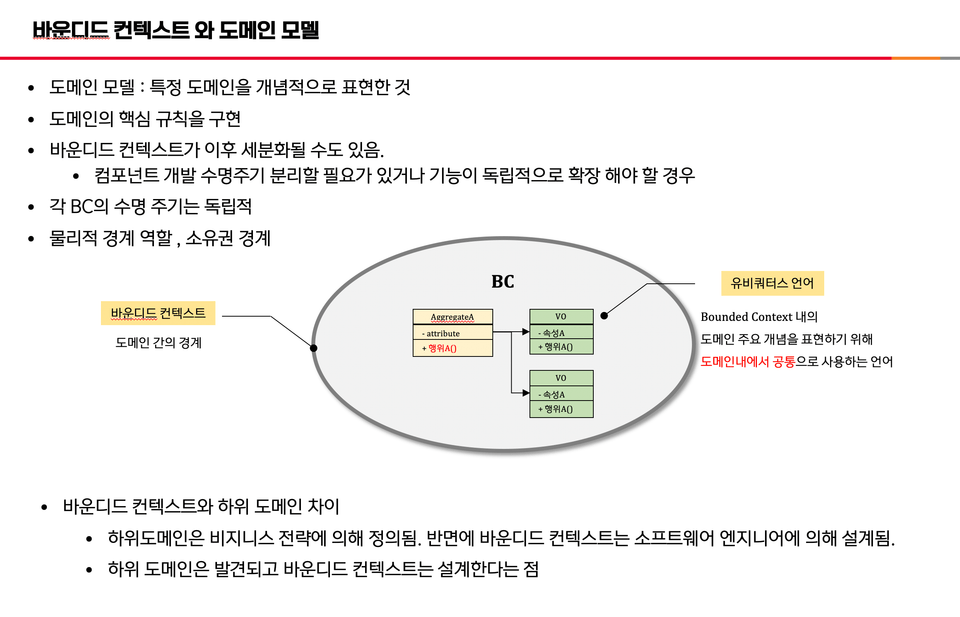
Domain-Driven Design - Learn about several concepts of strategic design: domain models, subdomains, ubiquitous language, and bounded contexts.
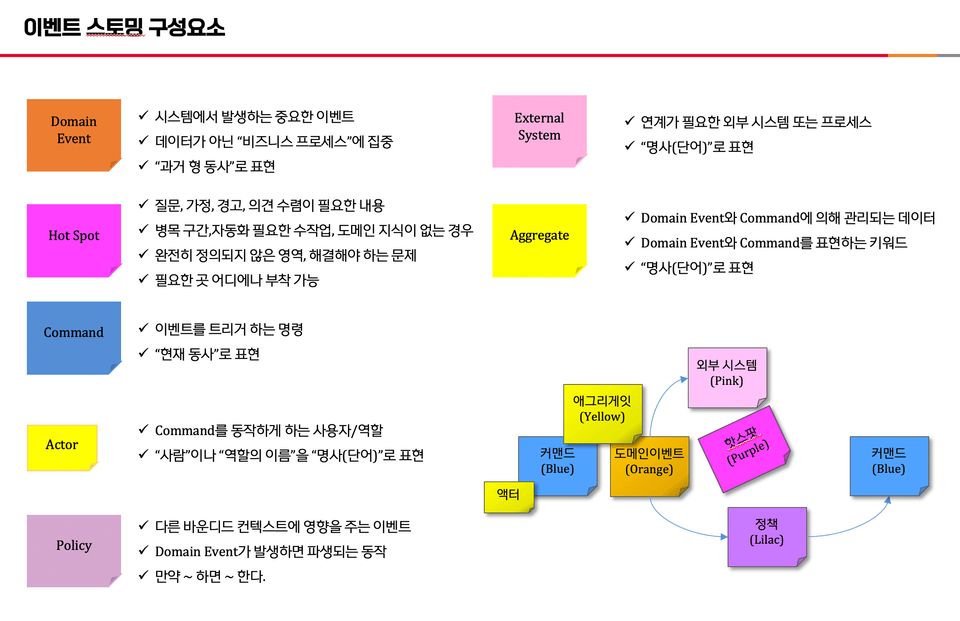
We will explain the Event Storming Workshop, the easiest and simplest microservice derivation technique.
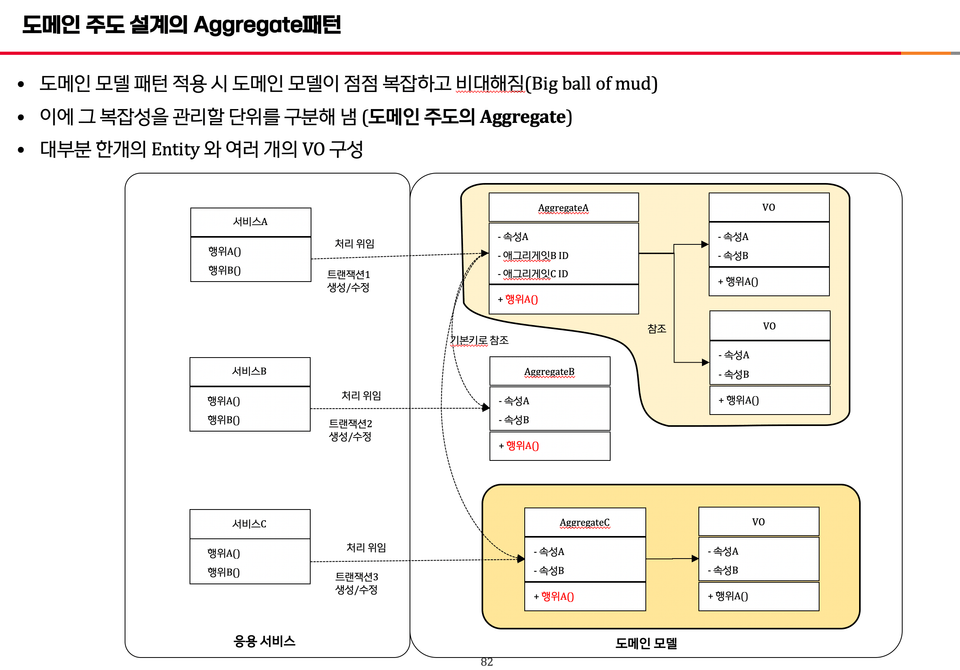
We'll explore several patterns for designing business logic inside microservices (transaction scripts, active records, domain models, etc.) and what choices to make.
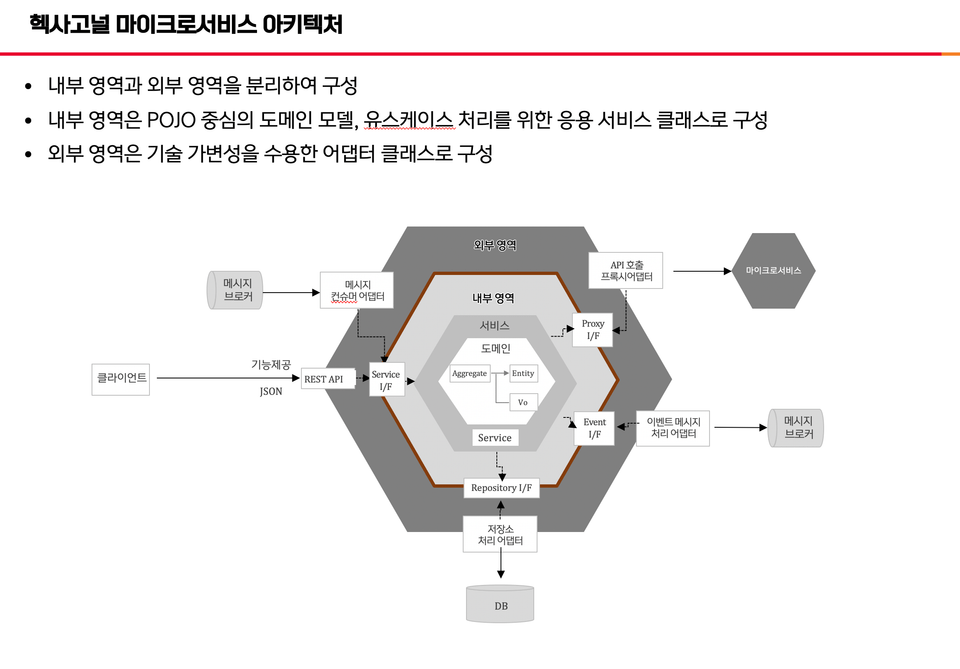
Let's think about the desirable internal structure of microservices through comparison with the limitations of the traditional layered architecture and the features of the hexagonal and clean architectures.
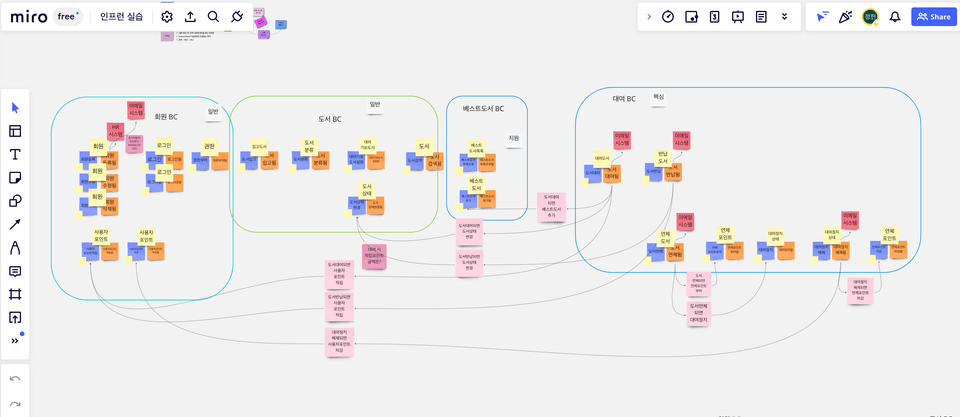
We will conduct an event storming workshop using the online tool Miro on the topic of book lending system.
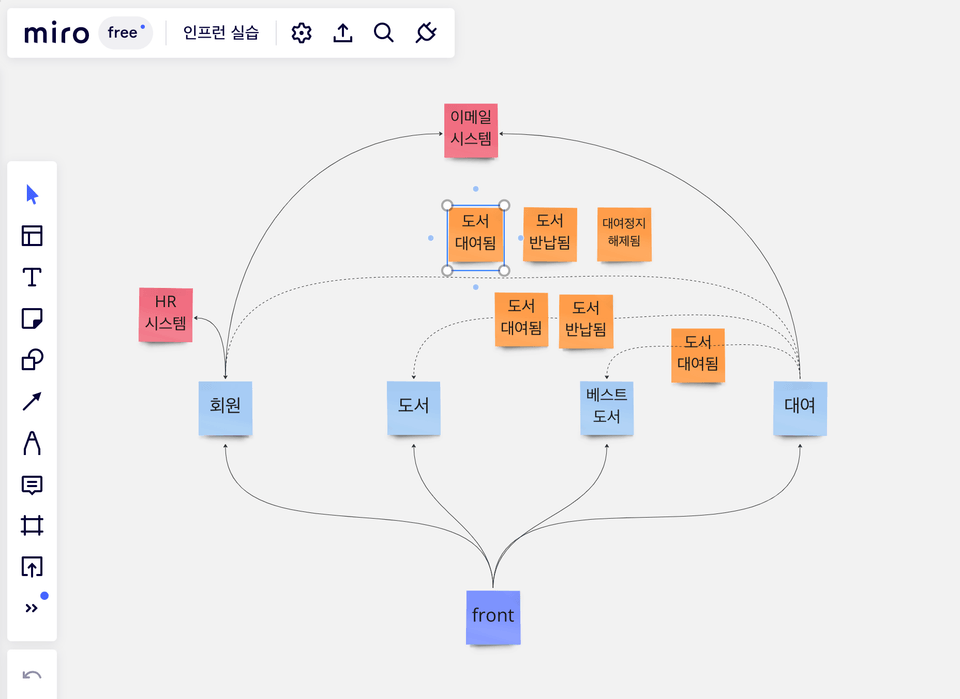
Define relationships in the bounded context identified through event storming and define candidate microservices.
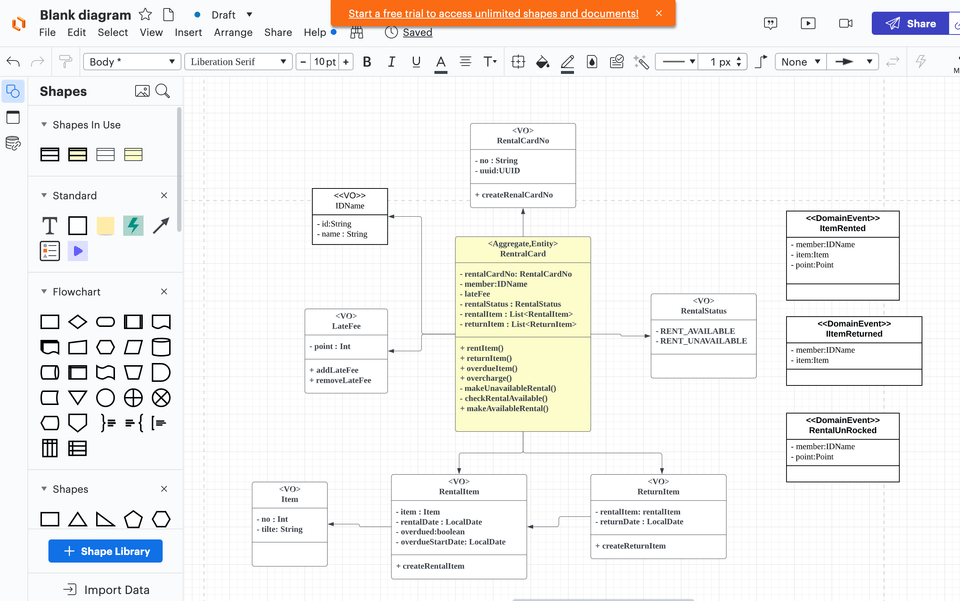
Let's design the heart domain model of a microservice using the tactical design tools of domain-driven design.

Q&A 💬
Q. Do you cover both theory and practice in class?
The first half of this course covers theory, and the second half covers practice. It is designed to help you understand the general concepts and then understand how the techniques are used through practice.
Q. Can job seekers without work experience or non-majors also take the course?
Even if you don't have cloud experience, it's an approachable level for developers with actual legacy experience. However, if you don't have practical experience, you may have difficulty with terminology, etc. However, even if you're not a major, if you have experience completing a boot camp, you should be able to take the course without difficulty.
Q. What level of content is covered in the class?
This lecture will cover the overall theory of microservices for domain-driven design, derive microservices through real-world business examples, and design their internals. Implementation is being prepared as a separate course.

Current domestic SI company software engineer (SA, AA)
Led development methodologies and design methods for numerous large-scale next-generation projects
Lectured on Cloud and SW subjects at Myongji University and Seoul National University of Science and Technology
Lectured on MSA courses at SK C&C, Korea Information Technology Research Institute (KITRI), and LG Electronics
Mentoring for MSA courses at Multicampus, Korean Standards Association, and Korea Management Association; mentoring for the web development course at Spharos Academy.
Areas of Expertise: Development Methodologies, Software Architecture/Design/Development Techniques
2022, Wikibooks "Microservices Development Starting with Domain-Driven Design", Author
Developed and lectured the "Microservice Design and Implementation" course for K-MOOC, National Institute for Lifelong Education.








![[Java Advanced Practical Project] Spring Core + H2 Based Food Truck Kiosk System DevelopmentCourse Thumbnail](https://cdn.inflearn.com/public/files/courses/336594/cover/01k8hetsq20rg69zw5ve0q5729?w=420)