Learn Terraform Basics with the Terraform Associate Exam
JeongSuk Lee
$42.90
Basic / Terraform
2.7
(3)
Learn the theory and practice of Terraform based on the HashiCorp Certified: Terraform Associate (003) exam content.

Basic
Terraform

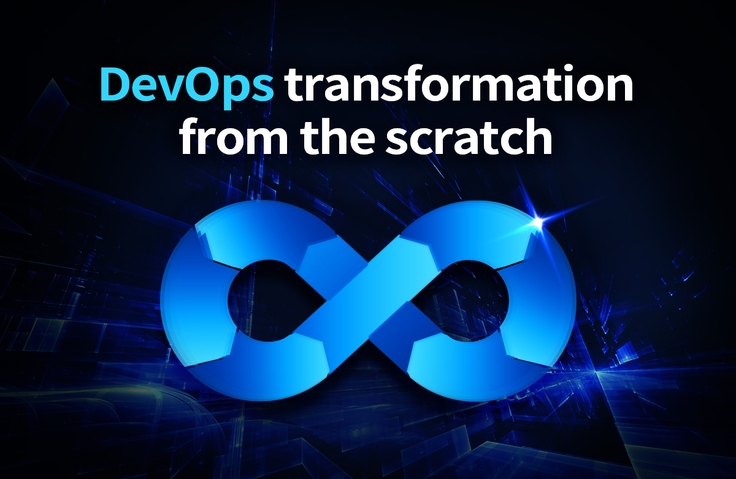
DevOps from start to finish!
We'll give you the key points for practical implementation.
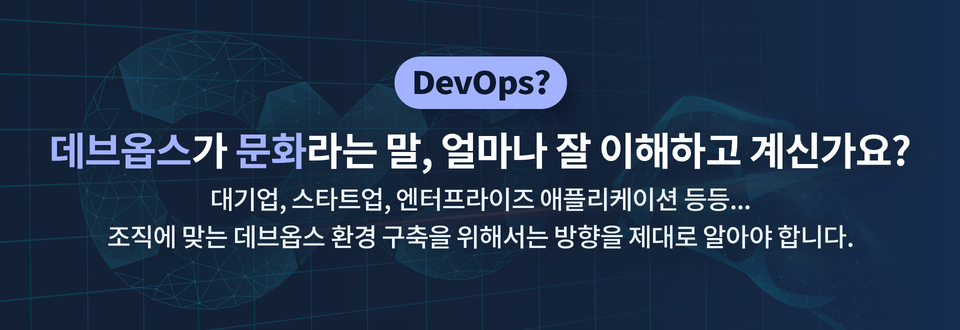
Point 1
If you don't apply the DevOps environment in your field,
Transferring unknown practical know-how
Point 2
Recommended for engineers with 5 years of experience or more!
A compilation of DevOps experiences from a former AWS consultant
Former AWS Consultant, now working for one of Australia's top 4 banks!
Full stack developer, accumulated experience in the finance/securities industry, etc.
The lecture incorporates the experiences of working DevOps engineers .
As a DevOps engineer/consultant, I have heard about various concerns of various organizations regarding DevOps. What do you think DevOps is? What do you understand about DevOps as a culture? Can we say that DevOps is established when a specific tool is introduced as a technology?
The biggest goal of this lecture is to establish the concept that 'DevOps is no longer a set of tools' . From the perspective of People, Process, and Technology, which can be called the three major elements of DevOps, I will provide you with the perspectives necessary to actually apply DevOps to our organization.
• • •
We examine the meaning of DevOps as a culture through the Continuous Delivery Pipeline (CDP), and (1) present the technologies required for each step when defining this pipeline process, and (2) an evaluation scale for the level of implementation required to achieve a satisfactory level.
We will also explain how to analyze what processes our organization consists of from development to operation within CI/CD, who is in charge of each step, how much time it takes, and what should be automated using a process analysis technique called Value-Stream Mapping.

I hear a lot about DevOps, but I'm not sure how to apply it to my organization.
I introduced a CI/CD tool to implement DevOps, but I don't know how it will actually help the organization.
How exactly does our organization flow from development to operation? Is it possible to analyze this process ?
📖 This course is suitable for those with more than 5 years of experience in the IT field .
The DevOps Classic! Core Features 4-Step ✅
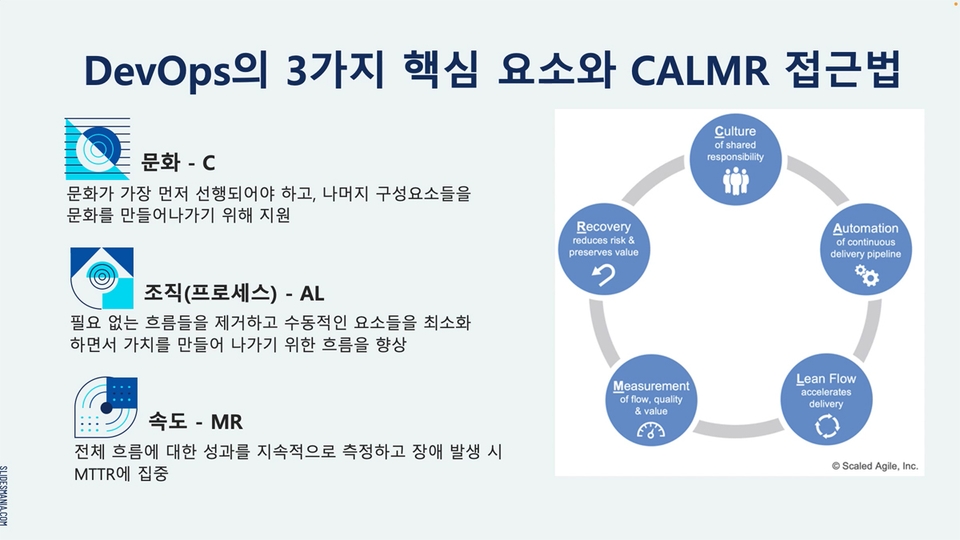
Know your organization to see DevOps
Unlike other DevOps lectures, there are many stories that deal with People and Process. We will tell you how to improve the process not only from a technical perspective but also from an organizational perspective.
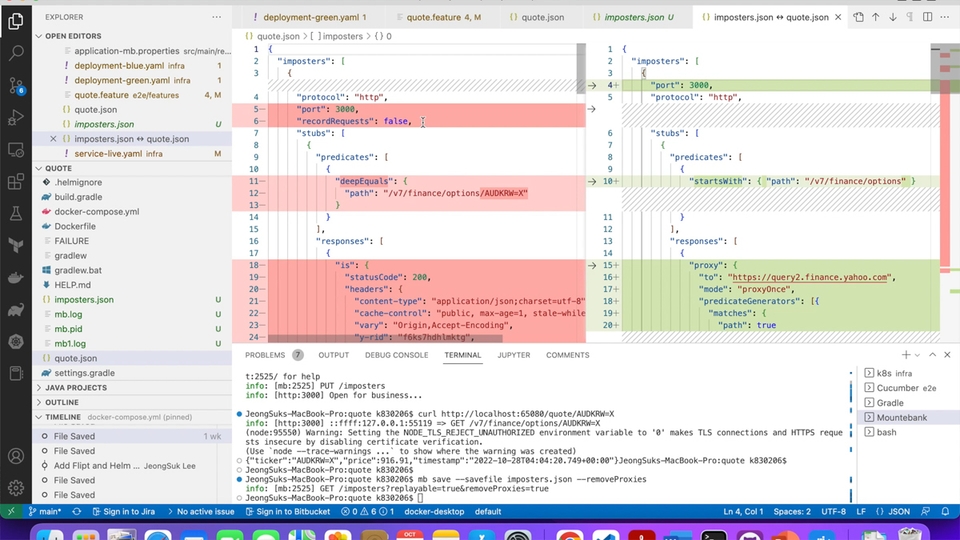
Up to rare mid-to-high level technology
While CI/CD and Containerization are usually covered in the DevOps technology stack, in this lecture, you will experience technologies related to Automated Testing, Policy as Code, and Application Telemetry.
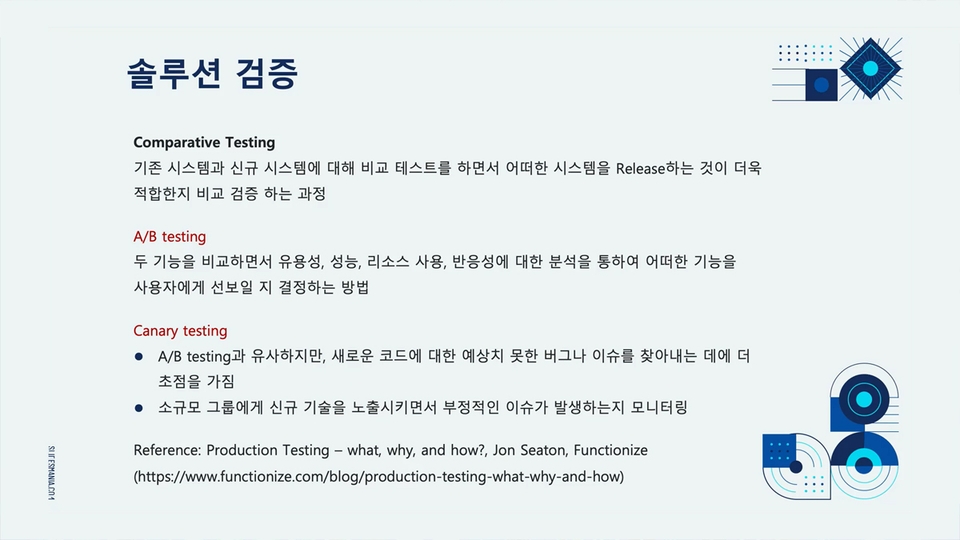
Guidelines for Evaluation
We introduce a method to evaluate the status of DevOps in your organization based on 16 activities. We also provide an approach to understanding IT processes, common misconceptions, and signals.
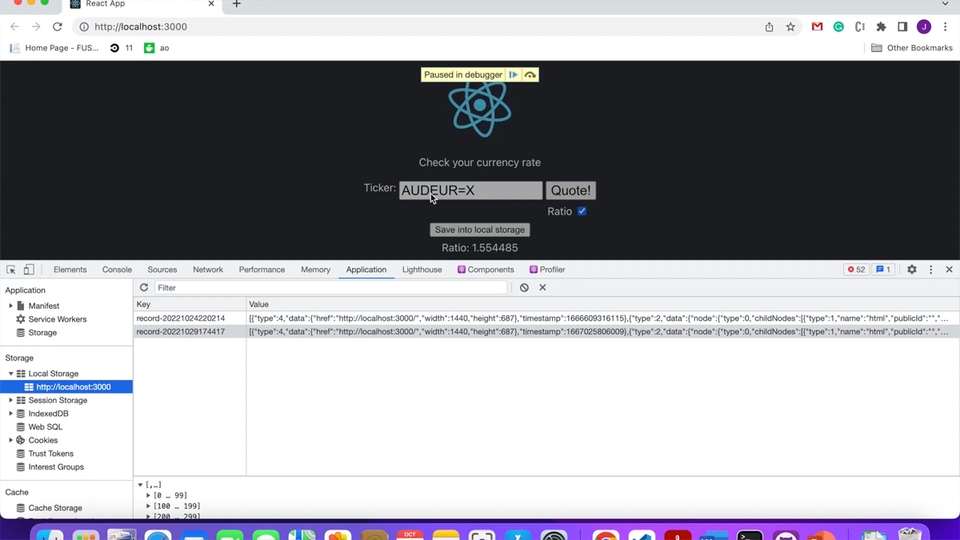
I think about future learning
When introducing DevOps-related technologies in the field, you will be introduced to how to build on an open source basis and be able to explain why this technology is necessary from a business perspective. (If there is more demand in the future, we recommend that you consider SaaS or Managed Service.)
💡 I hope that through this lecture, I can provide guidelines to solve various concerns about DevOps . I expect that it will be especially helpful for those who have doubts about whether we are actually doing DevOps.
1. What is DevOps?
2. What is the status of our company’s IT organization?
3. Where to start with IT process changes?
4. The first stage of CDP, Continuous Exploration
5. Continuous Integration, Solution Configuration - Develop & Build
6. Continuous Integration, Solution Configuration - Test End-to-end & Stage
7. Continuous Deployment - Deploy & Verify
8. Continuous Delivery - Monitor & Respond
9. Release on Demand
10. Time to say Goodbye
Github Repositories
💾 Open source solutions in the technology domain
I am a Digital Nomad IT Engineer who has been working as a Full-stack Developer, DevOps Engineer/Consultant in Korea, Australia, and the UK for about 15 years. I am constantly studying new topics to optimize the operation of IT organizations , and I have a dream of living as an Engineer until I retire. Currently, I am working as a DevOps in the Developer Experience team of a bank in Melbourne, Australia.
Q. Why do you recommend this course to those in their 5th year or more ?
I think the point where you start to think about the overall development/operation process is around the 5th year. Basic technical processes such as how to create a container image or how to build CI/CD are not covered in this course. The potential purpose of this lecture is to suggest a direction that those who have been in IT for 5 years or more with a lot of curiosity can approach their concerns in this way.
Q. DevOps is commonly known as a culture that spreads based on Agile, but our organization still operates with Waterfall ?
DevOps is based on agile, but various efforts are being made to apply DevOps even in places where agile-based organizational operations are not in place.
In this lecture, we introduce Value Stream Mapping (VSM), which is widely used not only in modern DevOps but also in traditional waterfall-type organizations, thereby providing a device to reduce the gap between the ideal and reality.
Q. Is there anything I need to prepare before attending the lecture?
This course is designed for intermediate/advanced engineers. Therefore, if you are a beginner engineer, I recommend that you take this course after listening to other courses on DevOps that you can see on Inflearn. Parts such as Shell Script, Kubernetes, Terrafotm, and Flyway go straight into the application process without separate basic explanation, so prior knowledge of these is required.
+) Intermediate and advanced technicians may need a cup of coffee to keep them awake.



![[DevOps Basics 3] Building CI Properly with GitHub ActionsCourse Thumbnail](https://cdn.inflearn.com/public/courses/330205/cover/1fb88cde-cf81-4402-bd78-67246dd4010f/330205-eng.jpg?w=420)
![[DevOps Classic 2] Integrated Logging through Building Log Analysis Technology in MSA EnvironmentCourse Thumbnail](https://cdn.inflearn.com/public/courses/330178/cover/874af780-6138-4232-a722-fce2a079b60d/330178-eng.jpg?w=420)

![[DevOps Basics 1] Monolith to Microservice Conversion with Spring/Python/Node.js and Strangler Fig PatternCourse Thumbnail](https://cdn.inflearn.com/public/courses/329980/cover/7687ff1a-6346-4e04-b2be-ceac51d6a1cc/329980-eng.jpg?w=420)