Special Lecture on Information Security and Personal Information Protection
caliber50
This is a free special lecture that can help you strengthen your information security and personal information protection capabilities.

Beginner
Hacking as a hobby, hobbyist hacking.
※ The "Hacking as a Hobby" content aims only for legal hacking to contribute to a safe information security ecosystem.
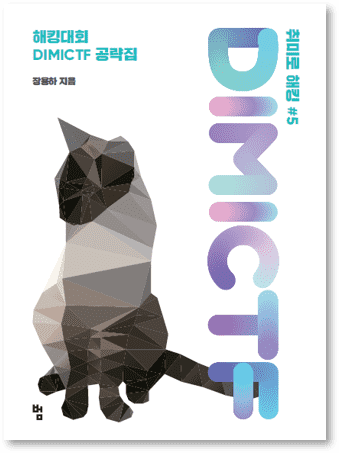
< To view the course content as a book: Paperback/E-book (Link) >
Here, we will master the DIMICTF Preliminary Challenges held in 2019 (it was announced that the preliminaries were more difficult than the finals). We will practice every challenge from beginning to end.
DIMICTF is a domestic hacking competition sponsored by the Ministry of Science and ICT and the Korea Information Technology Research Institute, and hosted and organized by
Korea Digital Media High School.
If you master all the contents of this course, you will be able to solve challenges that even the first-place winning team could not clear, and as your skills improve, you will be able to challenge even higher-difficulty hacking competitions in the future.
We cover a total of four representative areas of hacking competitions. These are divided into: the Pwnable area, which falls under system hacking and primarily aims for privilege escalation; the Reversing area, where you disassemble software to find hidden key information like a treasure hunt; the Web area, where you extract key information by bypassing weak security procedures on websites; and the Misc area, where a sense for vulnerability discovery is more important than specific knowledge.
You will explore various activities together, such as finding Easter eggs hidden by developers, finding ways to upload files with extensions that are blocked, crafting exploit codes stitch by stitch in machine language, triggering unplanned functions by invading inaccessible memory areas, restoring obfuscated software to its original state, and revealing hidden functions by injecting combinations of special characters into user interaction points like login pages.
By practicing through various challenges that include the contents mentioned above, you will learn how to discover and remediate vulnerabilities. Specifically, it includes theory and practice regarding bugs and vulnerabilities related to the keywords mentioned in the image below.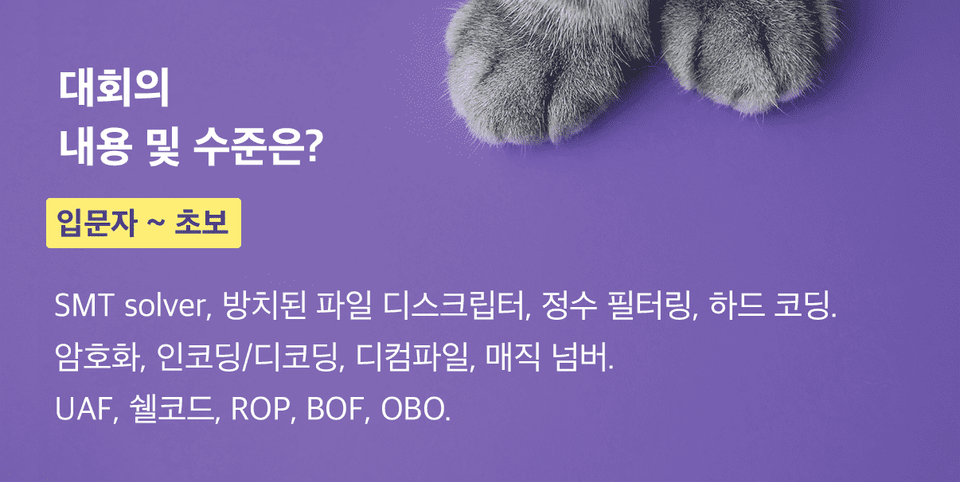
For effective learning, we provide a virtual image that recreates the actual competition environment. This allows you to practice as if you were participating in the competition. Additionally, we cover how to install and use various tools. The tools used include Ghidra, GDB-PEDA, JD-GUI, Checksec, Uncompyle6, and more.
The lectures focus on explaining both phenomena and principles to minimize the need for independent study; however, if you have any questions, please use the Q&A board at the Naver Cafe "Hacking as a Hobby (Link)".
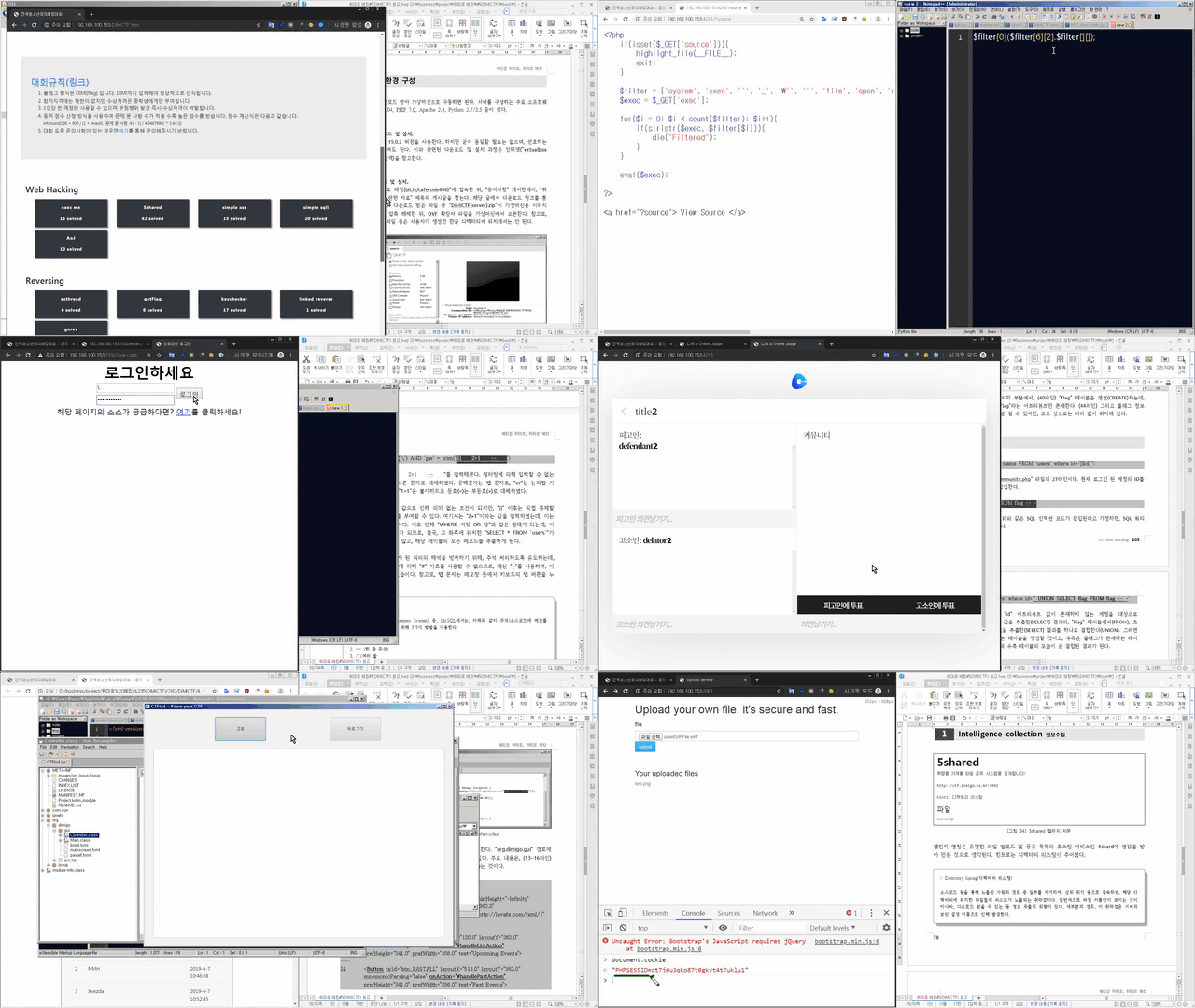
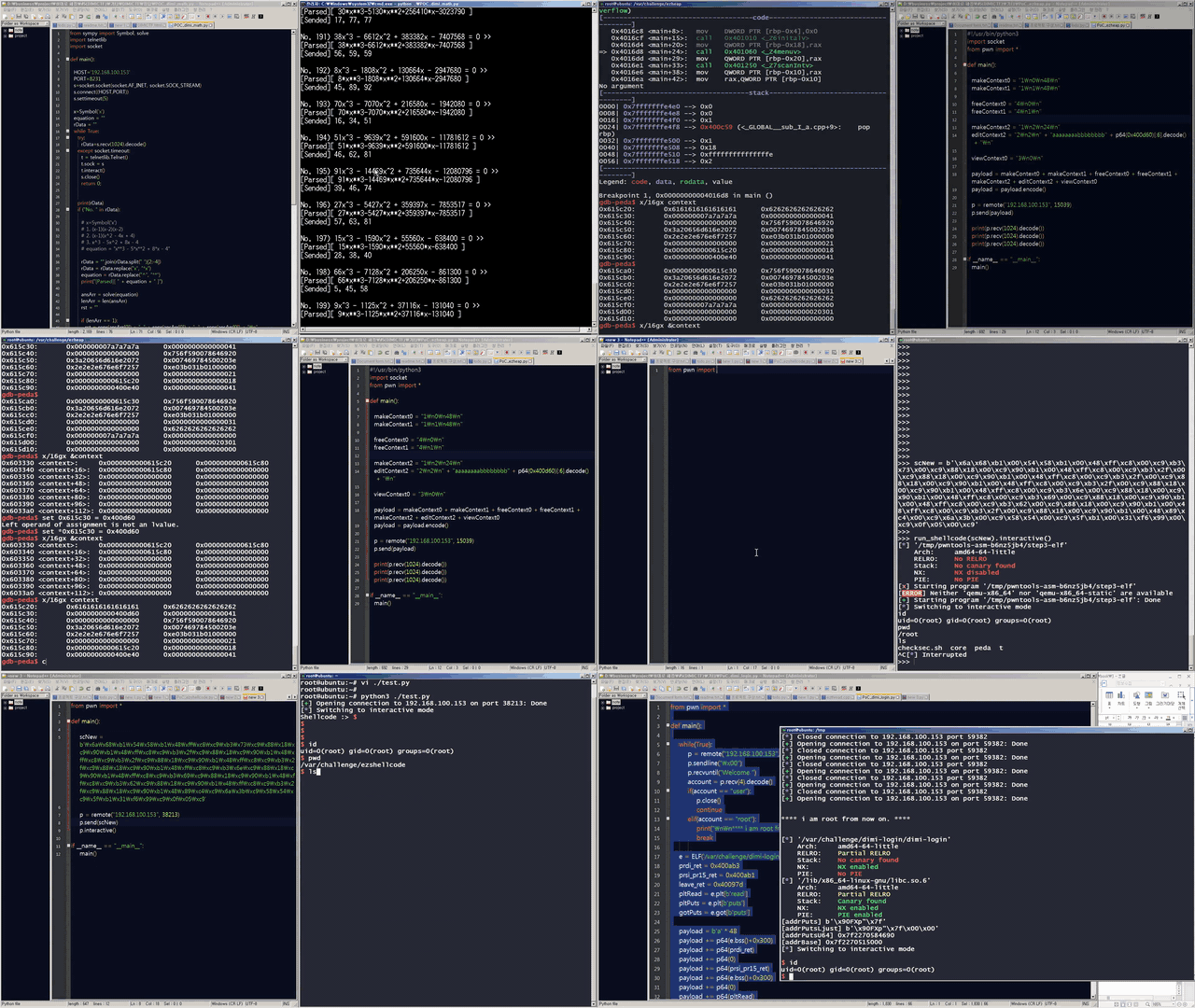
Please refer to the prologue video for other details. The video includes answers to the following questions:
▶ What is the effective learning method?
▶ How is the lecture conducted?
▶ What is the relationship with "Hacking as a Hobby #1~4"?
▶ What are the differences from other courses?







![[Easy for Non-Majors] Information Security Incidents: From Cause Analysis by Type to SolutionsCourse Thumbnail](https://cdn.inflearn.com/public/files/courses/342007/cover/ai/2/785d01a5-f55f-4807-b882-6dcbfe3d7f91.png?w=420)
![[OT Security-Common] Understanding the AI Era through Manufacturing Security Field CasesCourse Thumbnail](https://cdn.inflearn.com/public/files/courses/341942/cover/ai/0/a992253a-0431-4396-9212-69d5390e6c2d.png?w=420)