Me too! I can do AI with Spring (Inflearn Part 1)
bitcocom
Developing AI Applications with Spring Boot and Spring AI: Mastering OpenAI for Real-World Solutions
Basic
Java, Spring, Spring Boot
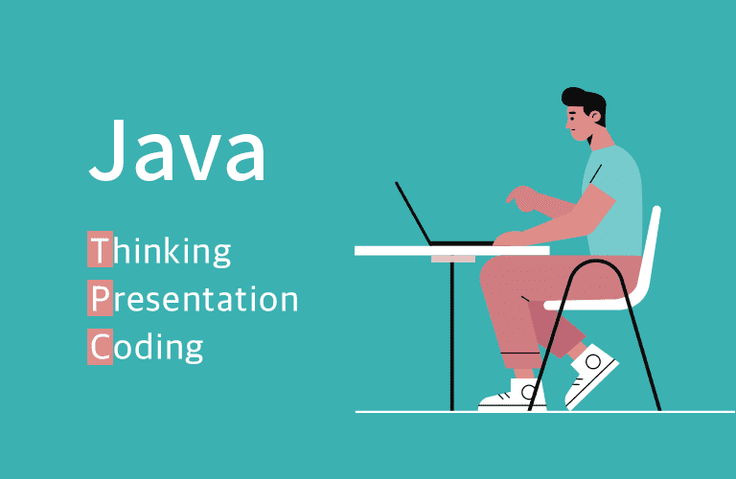
Through training in thinking, expressing, and coding, you can easily understand and approach Java programming. You can understand the relationship between programming elements and gain confidence in future Java API utilization and projects through precise concept organization of object-oriented programming.

Reviews from Early Learners
5.0
lwmwpark3523
I am a developer who has been developing for more than 2 years. First of all, when I first took the Java class, I remember it being very difficult. However, I was able to broaden my understanding of Java by continuously looking at the Java source code on site and also by taking the first lecture of TPC. Hmm... I will tell you a different story from the course review. To be honest, I paid for this course in November of last year, but I ended up taking it late, a year later. At first, I didn't know how to take the online lecture, so I was lost a lot, and because I was busy, I ended up completing the course after a year. There was a gap of more than 6 months in the middle where I didn't take the lecture. However, since October of this year, I have been trying to take the lecture consistently because I had time, and that is probably why I ended up completing the course. Some of you who are reading this article may be new to development, and there may be many seniors who are more experienced than me. If you want to listen to the lecture more effectively, I recommend doing the class, object, inheritance, and interface examples from the Java book. However, if you have too little time and get busy in the middle, it seems like it gets lost. So, if you follow the examples in the lecture, I think you will understand 70-80%. Also, if you create a separate git account - if you have already created one and are committing and merging the lecture content, it doesn't matter - if you leave comments about things you need to know and things you didn't know and commit and merge them, it will be easier to find them later. You can find what you did by just following the merge history in git. If you don't have a git account, it would be good to create a separate git account and always merge the TPC practice sources. Lastly, there may be some people like me who want to give up on the lecture because they are busy or find it difficult. Computer language is not something that people can understand right away when they first hear it. If you stop listening to the lecture because something comes up in the middle, you will forget the content. If you are reading this article and you don't understand the content you heard before, it would be right to listen to it again, but if not, I think it is important to review the PPT materials and practice sources sufficiently and progress. I wrote it without any order, so it became long. Even someone like me who had a long gap in attending lectures(?) completed the lecture. If you also listen to this lecture - it is the same as any online lecture - with consistency and earnestness, you will see yourself standing at the top of the mountain called completion. I hope you all will not forget the original intention when you paid for the lecture and complete the lecture. I will now go listen to the second lecture of TPC. Thank you for reading the long text.
5.0
김동건
From the knowledge of Java that I usually had, I think I got closer to the flow of Java and object orientation through this lecture, studying Java based on memory. It's fun~~
5.0
머피
I am receiving government support to become a developer. I learned a lot about Java grammar, JSP/Servlet, Spring, MyBatis, etc., but I always felt a lack of basic knowledge about Java whenever I learned something new, so I decided to take the course. If I had just learned information by being injected at the academy, through the javaTPC lecture, I was able to connect the dots about why Java is an object-oriented language and how classes are used. In particular, I had difficulty understanding the implementation of polymorphism through interfaces in Spring due to a lack of basic knowledge, but this lecture was especially helpful in helping me learn about its specific uses. I think there are quite a few students receiving government support who have trouble organizing Java concepts while taking the course. I think this is a lecture that I would strongly recommend to those people.
A fast programming approach
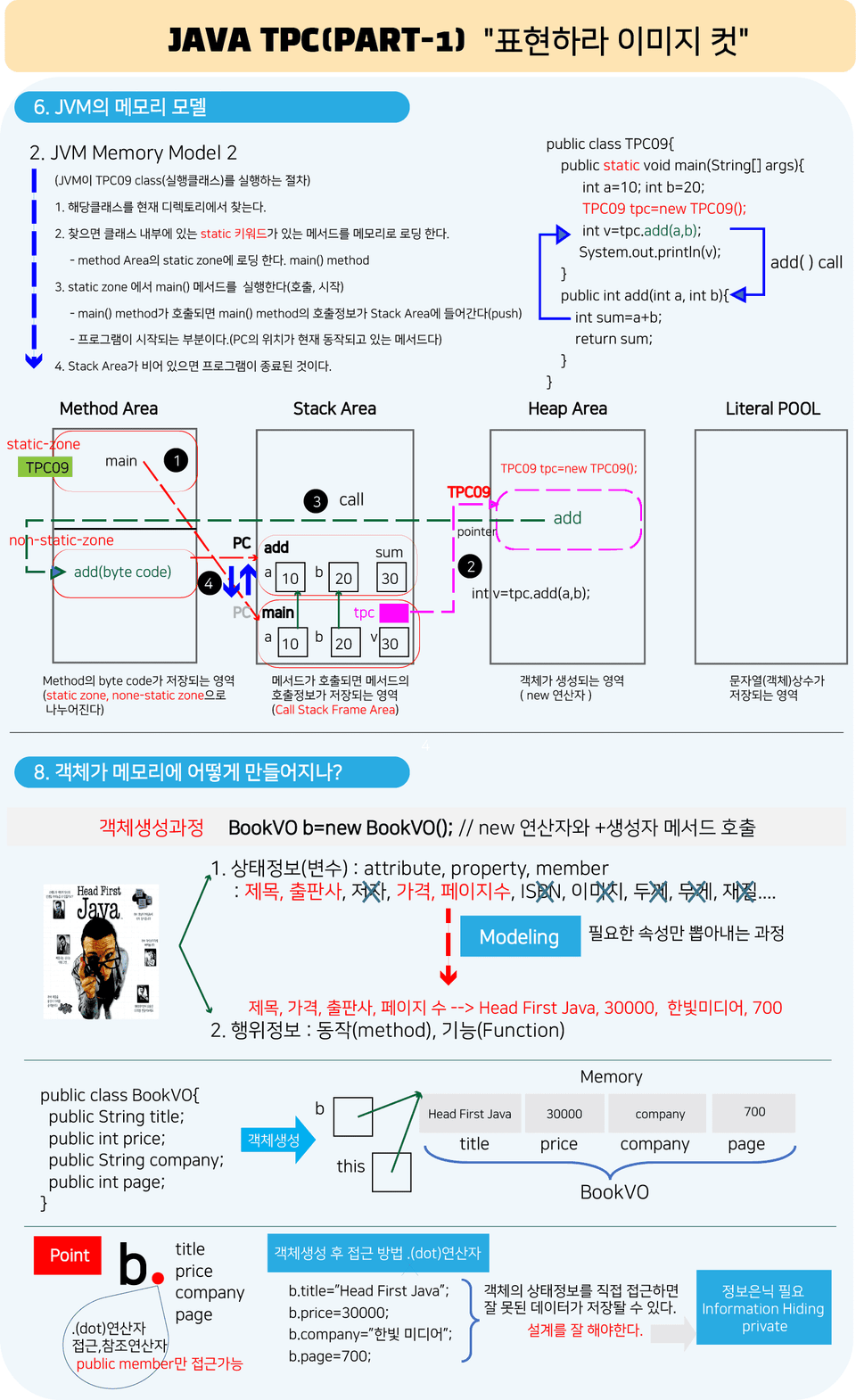
Understanding the memory structure
Understanding Object-Oriented Programming
Designing a class
Programming with polymorphism
Understanding abstract classes and interfaces
Interface-based programming
📜 Course Overview
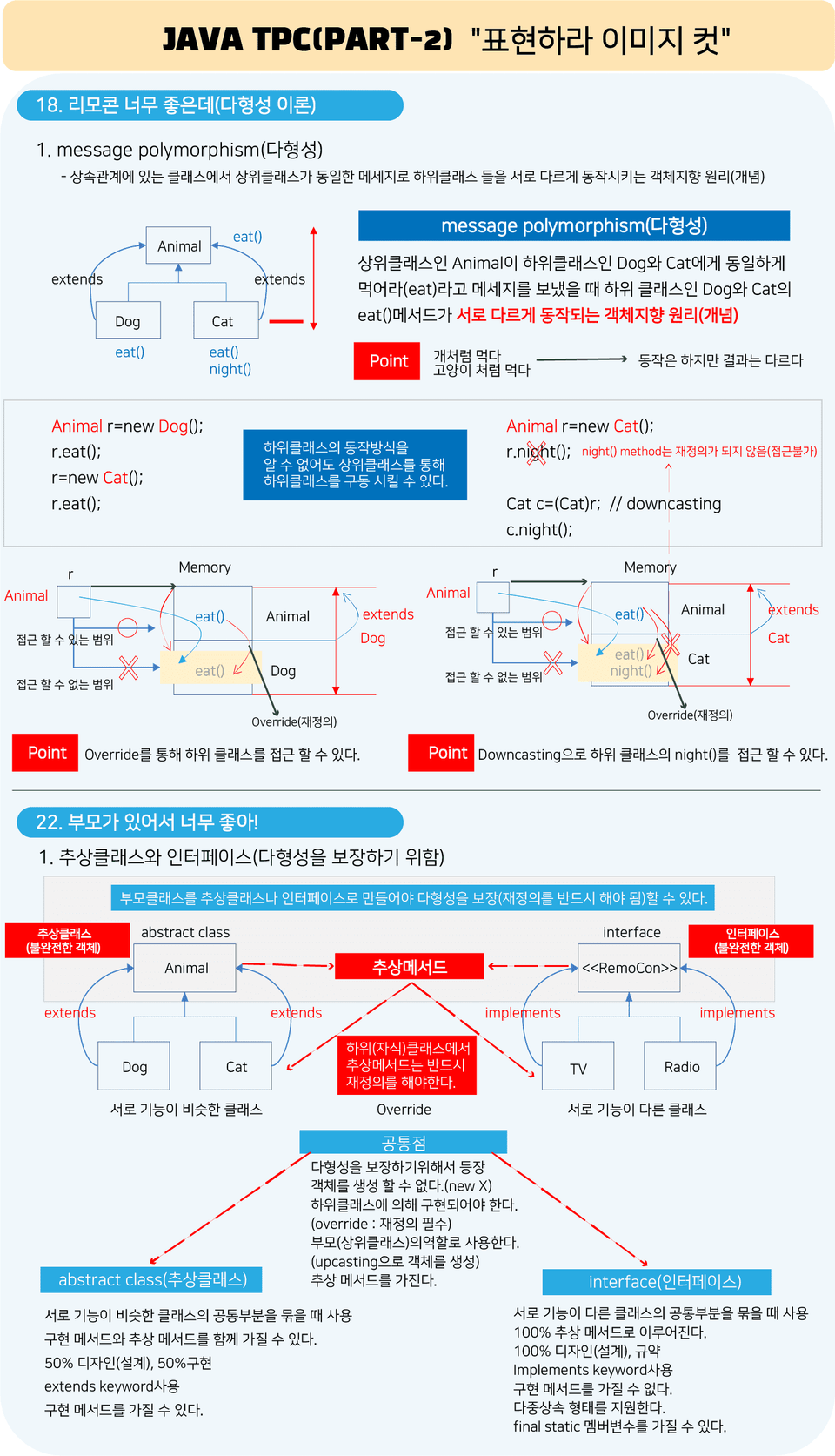
Many programs, including Java, C++, C#, Python, and Node.js, are built on object-oriented programming (OOP) and are developed based on this framework. Understanding classes, the core of OOP, and how to design and utilize them is the most important first step toward understanding OOP.
I've often seen people struggling with object-oriented programming techniques like inheritance and polymorphism when they first start programming. Once you understand object-oriented programming, it becomes incredibly easy. Having taught Java in the field for many years, I've designed this course to show you the fastest way to learn object-oriented programming using Java.
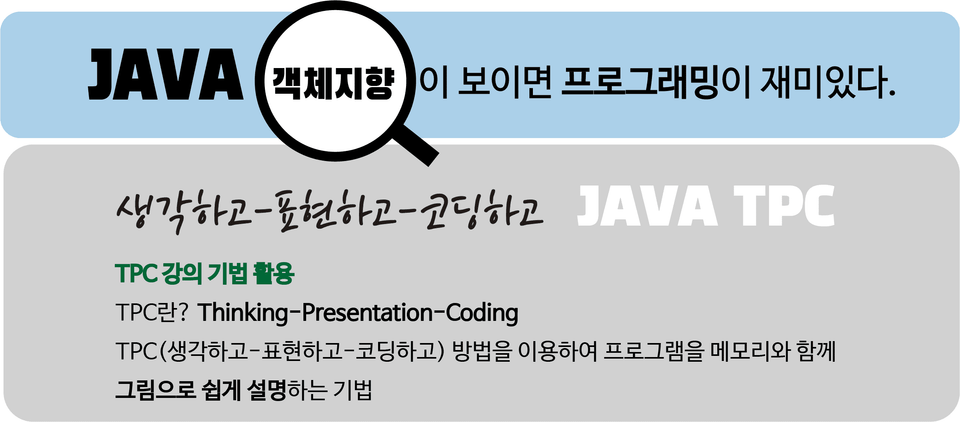
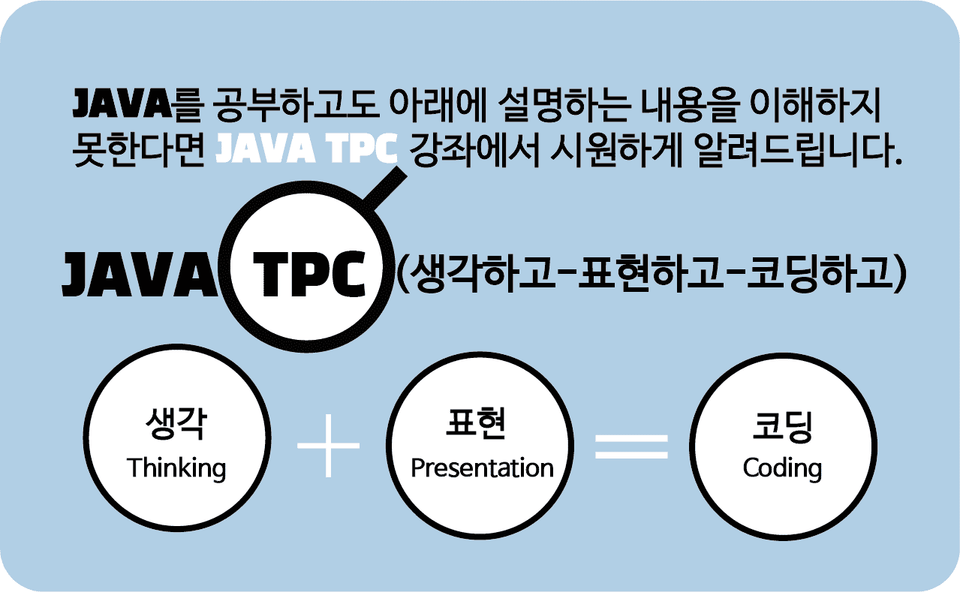
I am confident that if you continue to train yourself to think first (Thinking) -> express your thoughts in a drawing (Presentation) -> translate the drawing into code (Coding), you will be able to easily understand any program and make it your own.
The important thing is that programming involves many interrelated elements. By understanding these relationships, I hope you'll understand why programming is so fun and why you'll want to keep learning.
🥇 Course Objectives
The goal is to make object-oriented programming fun by understanding relationships , frameworks , and memory .
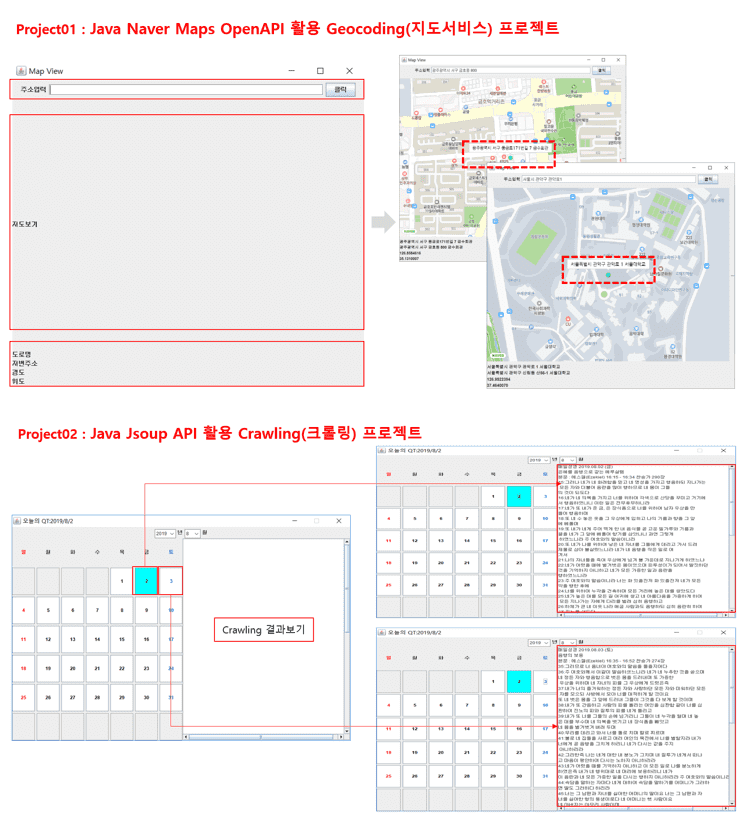
Java TPC Practical Project (Using Java API) "Practical Project Lecture OPEN"
❶ Java Geocoding (Extract latitude and longitude when an address is entered and display it on a map)
❷ Java Crawling (Crawling web pages using Jsoup)
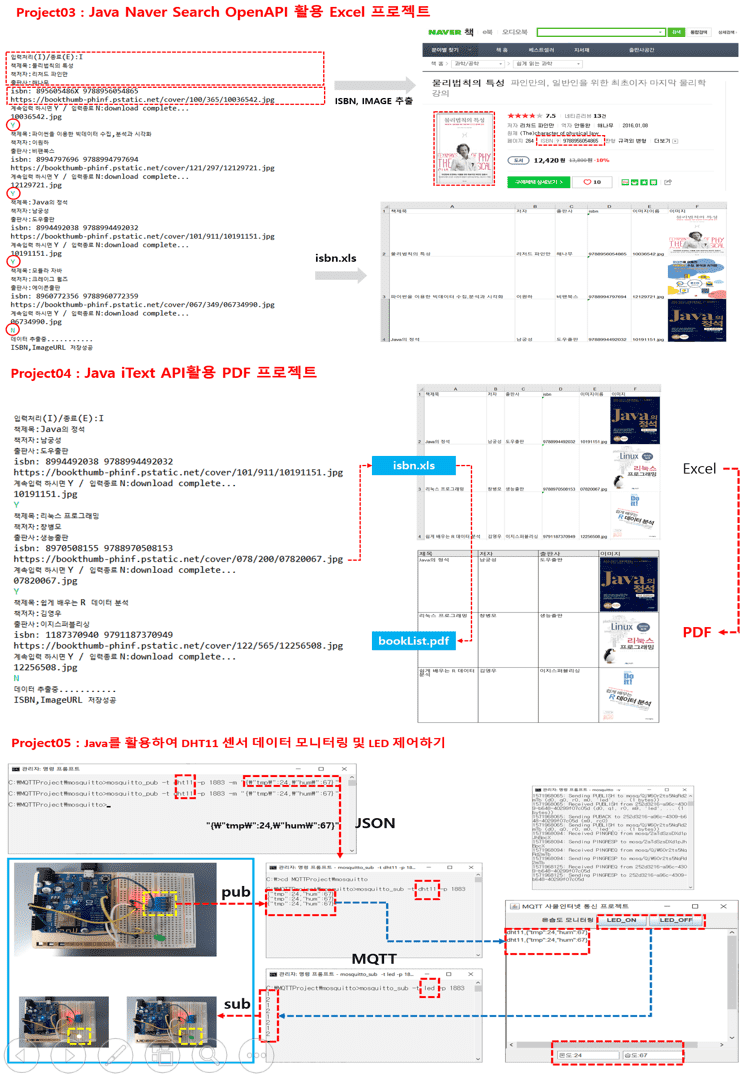
❸ Java Excel Handling (Extracting book information (ISBN, Image) using book information)
❹ Java PDF Handling (Creating PDF files using iText (tables, images))
❺ Creating a Java MQTT Client (Monitoring and Controlling Temperature and Humidity)
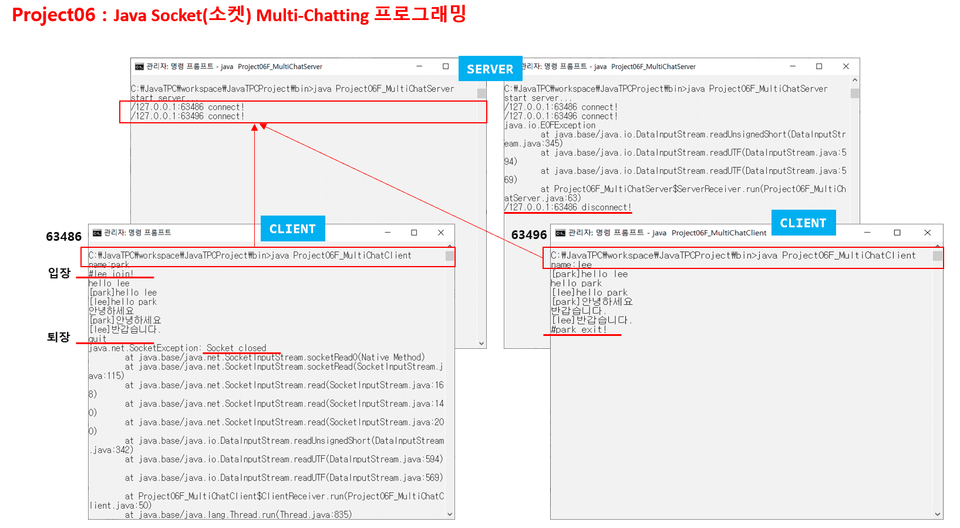
❻ Java Socket Multi-Chatting Programming
Java TPC [PART 1, 2]
After registering for the course, lecture materials (PDF) and source code will be provided.
Who is this course right for?
People who need to understand object-oriented concepts
Anyone who needs a clear understanding of the class
Anyone who wants to utilize the concept of polymorphism
People who want to use various APIs
People who want to handle JSON and XML data
People who want to try a project using Open API
Need to know before starting?
Programming Basics Grammar
8,545
Learners
650
Reviews
670
Answers
4.9
Rating
14
Courses
Hello, I am instructor Park Mae-il.
I run a SW Education Center and provide consulting and outsourced SW training for universities, government offices, and corporations.
📄 Key Teaching Experience and more
- Goorm Specialized High School Major Camp Lectures (Full Stack Course)
- Industry-Academic Cooperation Teacher at Software Meister High School
- Gwangju Artificial Intelligence Academy Lectures
- Fast Campus Backend Bootcamp Lectures
- Director of Education and Lecturer at Smart Human Resources Development Center
- KEPCO (Korea Electric Power Corporation) In-House Coding Commissioned Training
- Hanyang University ERICA Online Lectures
- Management of Bit Software Education Center (Overseas Employment, Government-funded Training)
- SW Recruitment Training Project (Ministry of Science, ICT and Future Planning)
- Vocational Skills Development Training Teacher for AI, IT Development, etc.
* Education Inquiries and Partnerships (KakaoTalk Channel)
🎤 Online Educational Content Provider
Inflearn: Java, DB, MVC, Spring, Spring AI & Agent, IoT
Fast Campus: Java, Spring Boot
email : bitcocom@empas.com
All
50 lectures ∙ (17hr 44min)
24. Override
14:31
All
240 reviews
4.9
240 reviews
Reviews 2
∙
Average Rating 5.0
5
I am a developer who has been developing for more than 2 years. First of all, when I first took the Java class, I remember it being very difficult. However, I was able to broaden my understanding of Java by continuously looking at the Java source code on site and also by taking the first lecture of TPC. Hmm... I will tell you a different story from the course review. To be honest, I paid for this course in November of last year, but I ended up taking it late, a year later. At first, I didn't know how to take the online lecture, so I was lost a lot, and because I was busy, I ended up completing the course after a year. There was a gap of more than 6 months in the middle where I didn't take the lecture. However, since October of this year, I have been trying to take the lecture consistently because I had time, and that is probably why I ended up completing the course. Some of you who are reading this article may be new to development, and there may be many seniors who are more experienced than me. If you want to listen to the lecture more effectively, I recommend doing the class, object, inheritance, and interface examples from the Java book. However, if you have too little time and get busy in the middle, it seems like it gets lost. So, if you follow the examples in the lecture, I think you will understand 70-80%. Also, if you create a separate git account - if you have already created one and are committing and merging the lecture content, it doesn't matter - if you leave comments about things you need to know and things you didn't know and commit and merge them, it will be easier to find them later. You can find what you did by just following the merge history in git. If you don't have a git account, it would be good to create a separate git account and always merge the TPC practice sources. Lastly, there may be some people like me who want to give up on the lecture because they are busy or find it difficult. Computer language is not something that people can understand right away when they first hear it. If you stop listening to the lecture because something comes up in the middle, you will forget the content. If you are reading this article and you don't understand the content you heard before, it would be right to listen to it again, but if not, I think it is important to review the PPT materials and practice sources sufficiently and progress. I wrote it without any order, so it became long. Even someone like me who had a long gap in attending lectures(?) completed the lecture. If you also listen to this lecture - it is the same as any online lecture - with consistency and earnestness, you will see yourself standing at the top of the mountain called completion. I hope you all will not forget the original intention when you paid for the lecture and complete the lecture. I will now go listen to the second lecture of TPC. Thank you for reading the long text.
Thank you for your honest and warm review. I think it is really difficult to develop yourself while developing in the field. I also took online classes, but I couldn't finish them with various excuses.ㅎ I will not take excuses for granted, and I will persistently finish the video lectures with a positive mindset that I can do it if I can. I will plan my schedule well and run forward, looking forward to the joy that will follow after completing the class. Thank you.^^
Reviews 4
∙
Average Rating 5.0
5
From the knowledge of Java that I usually had, I think I got closer to the flow of Java and object orientation through this lecture, studying Java based on memory. It's fun~~
Thank you for your first reply. ^^ There are many parts of object-oriented programming that are abstract and difficult for beginners to apply, and I've seen many cases where it ends with theory, so I prepared the lecture so that you can approach and utilize object-oriented programming as familiarly as possible based on Java. Thank you for helping me.~
Reviews 2
∙
Average Rating 5.0
5
I am receiving government support to become a developer. I learned a lot about Java grammar, JSP/Servlet, Spring, MyBatis, etc., but I always felt a lack of basic knowledge about Java whenever I learned something new, so I decided to take the course. If I had just learned information by being injected at the academy, through the javaTPC lecture, I was able to connect the dots about why Java is an object-oriented language and how classes are used. In particular, I had difficulty understanding the implementation of polymorphism through interfaces in Spring due to a lack of basic knowledge, but this lecture was especially helpful in helping me learn about its specific uses. I think there are quite a few students receiving government support who have trouble organizing Java concepts while taking the course. I think this is a lecture that I would strongly recommend to those people.
Yes, thank you for your strong recommendation. Like Mr. Murphy, I have also attended academies and had many experiences like that, so I have acquired various know-hows and prepared the lectures to make them easier to approach. There is not much difference from other lectures, but I think you will find it interesting if you understand the linkage of object-oriented concepts. I am also rewarded that the parts that I did not understand have been resolved even a little. I will cheer you on with even more fighting~~
Reviews 3
∙
Average Rating 5.0
5
It's a lecture with a different teaching style. And the different teaching style doesn't seem bad..? I feel like I don't hate the voice of the knowledge sharer, which is becoming more and more familiar..?
Haha thank you. If you felt a difference, you are slowly getting into the fun of Java~~ I hope this will be a fun and in-depth object-oriented lecture.
Reviews 4
∙
Average Rating 5.0
5
I'm a web developer.. This is the first time someone has taught Java like this. It's so much fun to see someone explain it like this instead of just boringly listing the concepts in chapter 1, 2, 3. You explain so well... It's so helpful that I want to make it a part of our company's Java training. I'll definitely finish it. Thank you!!
Yes, I'm glad that it helped you. I'm not good at online lectures because I speak a little bit of dialect. If your company needs Java training, you're always welcome. Please make sure to finish it.
$22.00
Check out other courses by the instructor!
Explore other courses in the same field!