




ウンジョン先生と一緒にJavaの基礎からマスターする (Do it Javaプログラミング入門) - Part 2(マスター編)
eunjong
Javaの多様な機能を活用して実務に適用できるようにマスターする時間です^^ アルゴリズム問題まで一緒に解いて完璧に私のものにしましょう。 Part2でもウンジョンサムが一緒です。

초급
Java, oop, Algorithm
You can learn design patterns to implement flexible and scalable object-oriented programming. Learn various patterns that can be used in the real world and apply them to your projects and code refactoring.

Design Patterns
Object-oriented programming
refactoring
java
Kakao internal developer training course!
Learn only carefully selected design patterns 🤓
Why are many systems being developed in object-oriented programming languages? It is to make it more efficient to expand functions, change requirements, and maintain systems or solutions after they are developed. In order for these changes to be easy, proper object-oriented design must be done from the design stage. Learning design patterns will help you understand and apply various solutions for design.
If the same solution can be applied to a problem that occurs repeatedly, this design is called a pattern. Design patterns are a field in which the first four scholars, GoF, analyzed several existing systems and software and organized the direction of the most reasonable solution for each problem . Therefore, design patterns are not rules or grammar. Also, they are not limited to languages and can be applied to any object-oriented language.
Developers also use frameworks and good methodologies to develop flexible and maintainable programs. Design patterns are already applied to many frameworks . Learning about the patterns themselves is meaningful, but if you design an efficient solution to solve a problem, you can create your own patterns.

This lecture is used as a video for training internal developers at Kakao . It was created to help those who know Java grammar but have difficulty with object-oriented design using classes learn through design patterns. There are 23 patterns introduced by GoF, but in this lecture, we will introduce only 16 patterns that are actually used a lot in the field and useful in practice . Please study only the patterns that are widely used and applied in other frameworks and libraries! Studying this will also help you understand the framework later.

For those who don't know how to do object-oriented programming

Developer job seekers or new or junior developers

Anyone who wants to experience OOP development using Java

For those who want to understand design principles before studying the framework
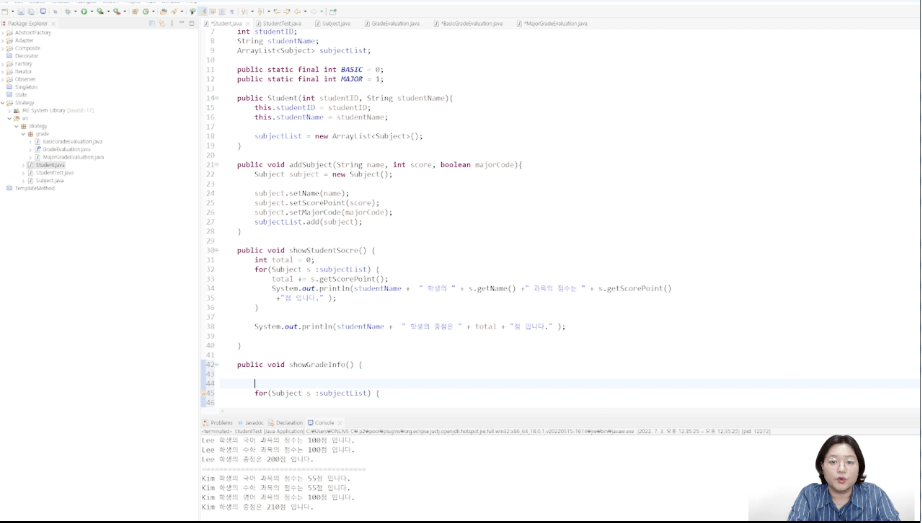
- Learning example of Strategy pattern
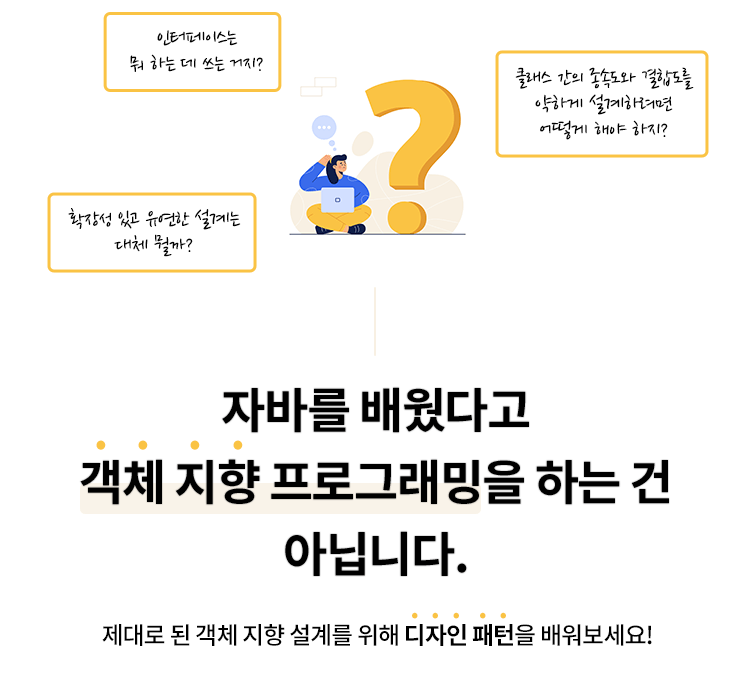
1. What is the problem?
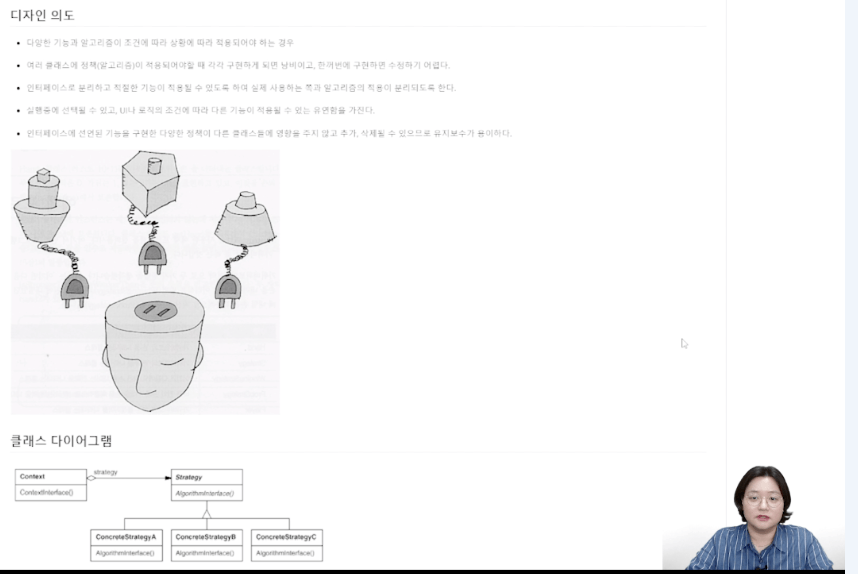
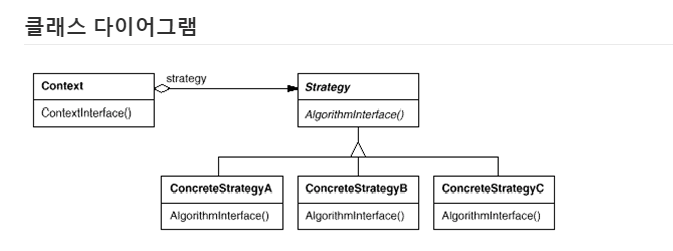
2. Understanding patterns through class diagrams
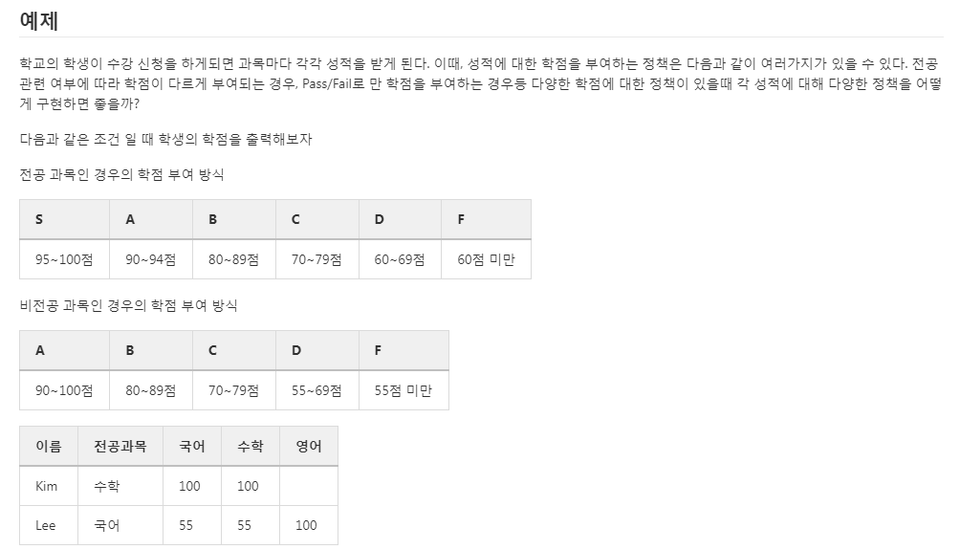
3. Applying patterns and refactoring through realistic examples
📢 Please check before taking the class!
*This is feedback on external mentoring that the knowledge sharer went through in the same process.
"I was able to learn effective patterns that are mainly used, from the singleton pattern to the adapter pattern. By understanding the characteristics of each pattern and the cooperative relationship between objects, I was able to better understand the Spring Framework that I will learn later."
Innovation Academy - Kang*su
"Before I started studying, I had a hard time understanding the patterns even when I read the book description and looked at the UML. As I was studying, after about 2-3 weeks, I mainly thought that design patterns were a methodology to use abstraction and interfaces well. However, as I continued studying, I began to understand why these patterns had to come out, and I was able to proceed with the study. After the study, I was surprised at how well I understood each pattern."
Innovation Academy - Lee*
"I applied for the study group after learning Java for the first time. The study group was conducted by refactoring code and solving assignments using various design patterns such as the bridge pattern, factory method pattern, and observer pattern every week. I was able to understand the parts that were difficult when studying design patterns on my own through assignments and study groups in a fun way."
Innovation Academy - Kim*Yeon
"This design pattern study was more fun than the last Java study! In particular, I remember the factory pattern, strategy pattern, and observer pattern well. I think I was able to experience, even if just a little, the tremendous power of ease of maintenance through design patterns. I am currently working on a project using Spring, and I hope to be able to write slightly better code by applying what I learned through this study."
Innovation Academy - Jo*jin
1. What is a design pattern? What is refactoring?
2. Patterns for creating objects
3. Make it more flexible by separating the algorithm skeleton or function and implementation.
4. Identify
5. Make it flexible by expressing the state as a class
6. Make the complex simple
7. Patterns that move around the structure
8. How to control access
9. Compatibility
10. Command as an object
11. Smart life with design patterns
Q. Can I get started without knowing Java? Or do I need to be a beginner?
Even if you don't know Java, you can take the course if you know other OOP languages. However, if you have no basic knowledge at all, there is a free introductory Java course on Inflearn. I recommend you take that course first.
Q. I studied other object-oriented languages (C++, C#) . Can I still take the course?
Most OOP languages are designed with similar concepts. Therefore, if you have already learned an object-oriented language, taking this course will allow you to learn Java and object-oriented design at the same time, killing two birds with one stone.
Q. What are the benefits of learning design patterns?
Design patterns are neither grammar nor rules. However, they identify problems and provide the best design method for the problem. By learning this process along with code, you can implement various applications and extensions when designing a new program. By learning well-made patterns, you can implement better designs.
Q. Can this be applied in practice?
Many of the frameworks and programs we use in practice already have design patterns applied to various parts. Therefore, learning design patterns will be very helpful in understanding existing code. It will also be helpful in many ways in helping students write more efficient code in the future.
I majored in computer engineering at Dongguk University and received a master's degree in computer engineering from Seoul National University. While working at the company, I worked on numerous development projects in languages such as Java, C, and C++, and gave lectures on Java, web, data structures and algorithms, mobile, and design patterns at Bit Computer and T Academy.
I taught programming classes for non-majors at Kookmin University and Kyunghee University, and taught Java programming and programming practice classes as a part-time professor at NHN NEXT. I worked as a developer for 10 years, so I know what's needed in the field, and I also taught for another 10 years, so I understand the minds of beginners.
My current main interest is to help people from all walks of life, from elementary school students to adults, to become interested in and study the wonderful world of programming. I am currently a mentor at Innovation Academy (42 Seoul).
Who is this course right for?
People who are new to Java
People who want to learn object-oriented programming in another language and also learn the Java language
Those who have experience in Java projects
Those who want to learn object-oriented programming with design patterns
Need to know before starting?
java
Object-oriented programming language

1,601
Learners
64
Reviews
83
Answers
4.8
Rating
3
Courses
동국대학교에서 컴퓨터 공학을 전공하고 서울대학교 대학원에서 컴퓨터 공학 석사 학위를 받았습니다. 회사를 다닐 때는 자바, C, C++ 등 언어로 다수의 개발 프로젝트를 진행하였고, 비트 컴퓨터, T 아카데미에서 자바, 웹, 자료구조와 알고리즘, 모바일, 디자인 패턴 분야 등의 강의를 진행하였습니다.
국민대와 경희대에서 비전공자를 대상으로 하는 프로그래밍 강의를 하였으며, NHN NEXT에서 겸직 교수로 자바 프로그래밍과 프로그래밍 연습 강의를 진행했습니다. 10년은 개발자로 일했기에 실무에서 필요한 내용을 잘 알고, 또 다른 10년은 강의를 하며 초보자의 마음까지 잘 알게 되었습니다.
요즘 최대 관심사는 초등학생부터 어른까지 각계각층의 사람들이 멋진 프로그래밍 세계에 관심을 가지고 공부할 수 있도록 도와주는 것입니다. 현재는 이노베이션 아카데미(42서울)의 멘토로 있답니다.
이노베이션 아카데미(42 SEOUL) 멘토
'Do It 자바 프로그래밍 입문' 저자(이지스퍼블리싱)
패스트캠퍼스, 인프런의 인기 자바 프로그래밍 강의 제작자
NHN NEXT 겸직교수, 비트교육센터, TAcademy 강사
스펙트라 개발 팀장
현대정보기술
서울대학교 컴퓨터공학부 석사
동국대학교 컴퓨터공학과 학사
Do it 자바프로그래밍 입문 저자
http://www.yes24.com/Product/Goods/62281686
Do it 자바 프로그래밍 입문 강의 (인프런)
자바 기초부터 마스터하기 with 은종쌤 (Do it 자바 프로그래밍 입문) - Part 1(기초편)
은종쌤의 프로그래밍 강의 (유튜브)
https://www.youtube.com/channel/UCTBVYQc1ZVDbAZcm1J_pniA
All
20 lectures ∙ (6hr 34min)
All
8 reviews
4.6
8 reviews

Reviews 5
∙
Average Rating 3.8
4
教案はありませんか? 画面に表示される文字が小さすぎます。
Fatory Method 講義 下部の講義ノートに gitlab アドレスに講義資料があります。講義紹介にお知らせしました。ありがとうございます^^
Reviews 7
∙
Average Rating 4.3
4
6時間ほどの短い講義時間の中でデザインパターンについてよく理解できました:) ただ残念な部分があれば 1. 音量が小さい 2. 画質がちょっと残念でした。
よろしくお願いいたします。 ありがとうございます。
コードが少しぼやけているため、この部分だけが改善されれば良いと思います:)
Reviews 18
∙
Average Rating 5.0
$59.40
Check out other courses by the instructor!
Explore other courses in the same field!


![iOS アプリ収益化のためのスタート、Swift文法マスター [初級、中級、上級]강의 썸네일](https://cdn.inflearn.com/public/files/courses/338375/cover/01k4z0gcg20pmkbh40vz2xtv5c?f=avif&w=420)


