It was really helpful listening to Part 1, but this time the project class volume has increased, so it's even better. I'm learning a lot~
5.0
dgh12
100% enrolled
This time, I took the course along with Part 1.
When it comes to optimization, I often searched Google and got frustrated because I didn't understand it, but the rich examples and kind explanations helped me a lot.
Thank you for releasing a good course, and I will definitely listen to the next series if it comes out^^
5.0
jhkim
76% enrolled
Thank you for the great lecture. However, I think it would be better if you could make the source screen bigger when you teach the next series. Thank you.
What you will gain after the course
How to Analyze the Performance of a Web Service
Various Web Performance Optimization Techniques
How a browser works
How to use Chrome devtools
How to use React devtools
Front-end performance optimization
To grow into a capable FE developer Real-world! Optimizing Web Frontend Performance.
Running in the last part Check out the vivid class reviews!
You can see more course reviews on the course page. (Click)
What about this lecture?
Inflearn is the best! Practical Web Performance Optimization Series 🎲
This course teaches you analysis and optimization techniques for web services through various examples. Unlike the typical irresponsible optimization lectures that only teach theories, You can learn analysis and optimization directly through real-world examples . This is Korea's first performance optimization X-axis lecture !
Top 10% Frontend Towards the developers.
It's been quite some time since the field called front-end emerged, Few front-end developers know much about web performance optimization.
In this reality, Learn web performance optimization techniques to become a top front-end talent . It's your choice whether you want to be just another employee who simply publishes.
Pre-lecture Check it out.
Learning Contents
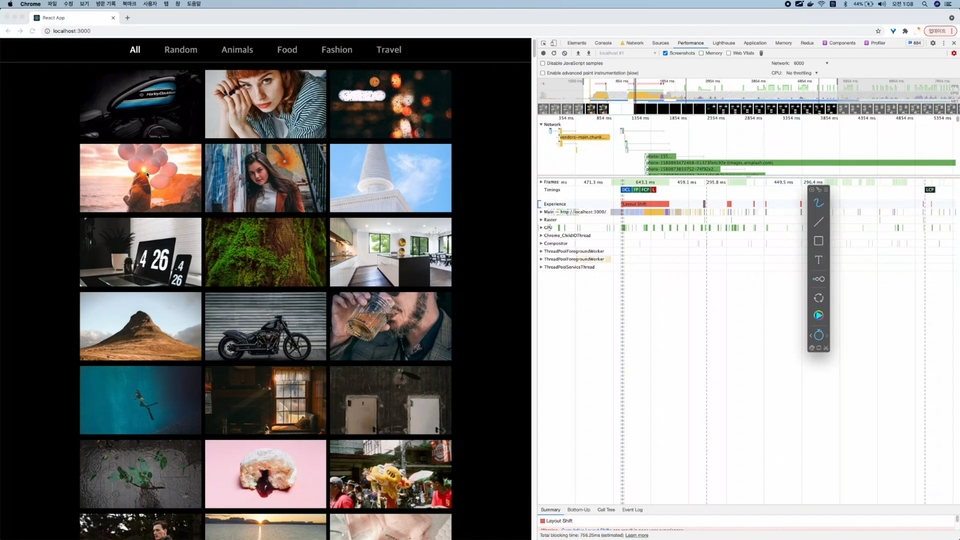
Analysis using the Performance panel
Analysis using Lighthouse panels
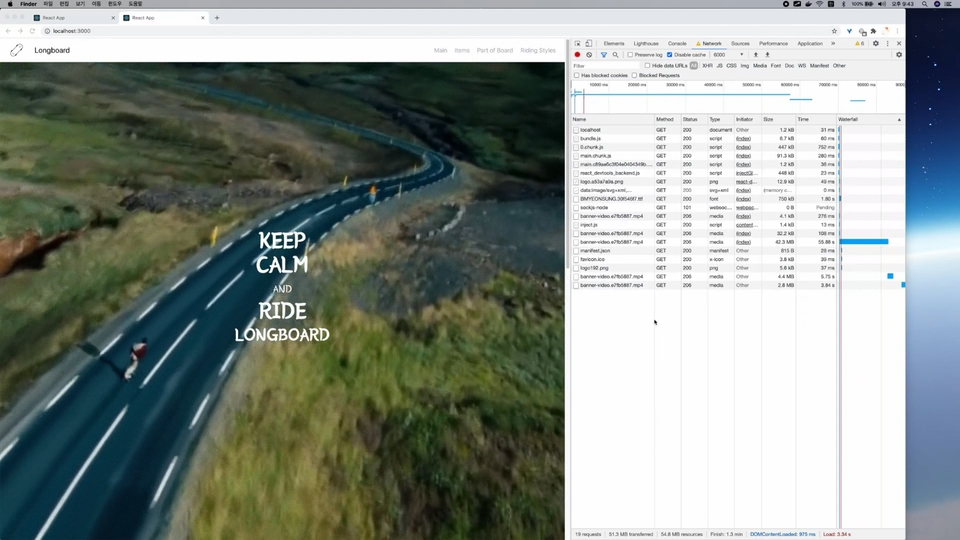
Analysis using the Network panel
Analysis using the Coverage panel
How to use React Developer Tools
How to use Redux DevTools
Lazy loading of images
Image size optimization
Optimize video size
Font optimization
Cache Optimization
How to remove unnecessary CSS
How to avoid layout shift
Fixing UseSelector rendering issues
Optimizing rendering with Redux Reselect
Optimization using memoization
Improve bottleneck function logic
Preview the class
Please check the learning target!
This course is suitable for those with experience in front-end web development. In particular, if you have experience using React, you will be able to learn more easily.
Created this course Introducing the knowledge sharer.
Fluid bacteria
(Current) Hatch Labs Frontend Developer
(Former) Line Financial Front-end Developer
Samsung SSAFY, Programmers, etc. Front-end development lectures
Web Performance Optimization Projects and Lecture Production
Contribution to Microsoft Software Issue 393 (JS Topic) and Issue 392 (Blockchain Topic)
I created this course after thinking about the fundamentals of 'how' to learn performance optimization . After looking back on my previous experience analyzing and optimizing the performance of various web services, I thought that rather than just teaching you a lot of theory, if you analyze and practice example services yourself, you will be able to learn web performance optimization more clearly.
In fact, performance optimization can vary depending on the situation, and there are various methods, but I have gathered the core ones, and it is not just an optimization technique, but also the operating principles of browsers and performance analysis methods , so please study hard and learn the bones and flesh of web front-end development. Questions are always welcome.
Expected Questions Q&A.
Q. How difficult is the lecture?
Basic knowledge of the web is required. However, since the performance optimization part is explained in detail from the basics, even those who are new to performance optimization can understand it.
Q. What programs (or tools) do you use in this course?
I mainly use Chrome's developer tools (devtools). In addition, I use additional libraries as needed. Since I provide instructions and simple explanations, you won't have any difficulty learning.
Q. Are there any special advantages to this course?
Learning web performance optimization is difficult because there are no proper materials and most of them are fragmentary theories. However, in this lecture, we have prepared several web services where you can learn and practice by collecting such fragmentary optimization techniques. Therefore, you can learn in detail how to analyze the service, what to base it on, and what optimization techniques to apply.
Recommended for these people
Who is this course right for?
Developers interested in optimizing web performance
Developers who want to create faster, lighter web services
Developers who want to make better use of Chrome devtools
Web Frontend Developer Who Wants to Be Competitive
Thank you for the great lecture. However, I think it would be better if you could make the source screen bigger when you teach the next series. Thank you.
Hello, jhkim. I apologize for not being able to enlarge the source code screen. 😭 I will come back with a more readable screen in the next lecture! Thank you for your interest in the lecture!
It's a good lecture. However, I think it would be better if you paid a little more attention to variable names.
ex) state.category.category These are a bit confusing.
This time, I took the course along with Part 1.
When it comes to optimization, I often searched Google and got frustrated because I didn't understand it, but the rich examples and kind explanations helped me a lot.
Thank you for releasing a good course, and I will definitely listen to the next series if it comes out^^









![[VOD] 6-Week Complete! High-Concentration Vibe Coding for Development Practice (Cursor AI, Figma)Course Thumbnail](https://cdn.inflearn.com/public/files/courses/338156/cover/01k4c77bftwd8ec4k0yakavbrc?w=420)




![# [Electron #1] Building a Timer App with Electron + React (With Zustand)Course Thumbnail](https://cdn.inflearn.com/public/files/courses/336817/cover/01jwx9ttbwnetdsbt5qrxgxb3x?w=420)
![[PROKIT] Vibe Coding/Frontend Practice Workbook: Building a Timer AppCourse Thumbnail](https://cdn.inflearn.com/public/files/courses/339612/cover/01ke6d974hx4y1esmd9p80w7cx?w=420)