


Memorize and finish the core network theory - Basics
nullnull8537
From TCP/IP to HTTP! This lecture is for those who lack basic network theory and want to understand major theories by memorizing them. You can do it!
입문
Network, Protocol
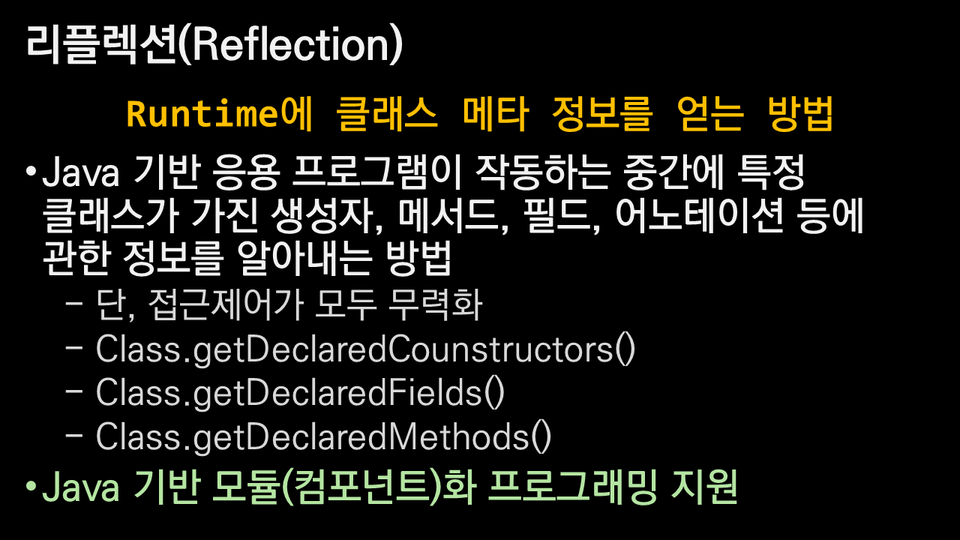
Based on an understanding of Reflection and Annotations, it helps you clearly understand how the Spring framework operates!
452 learners
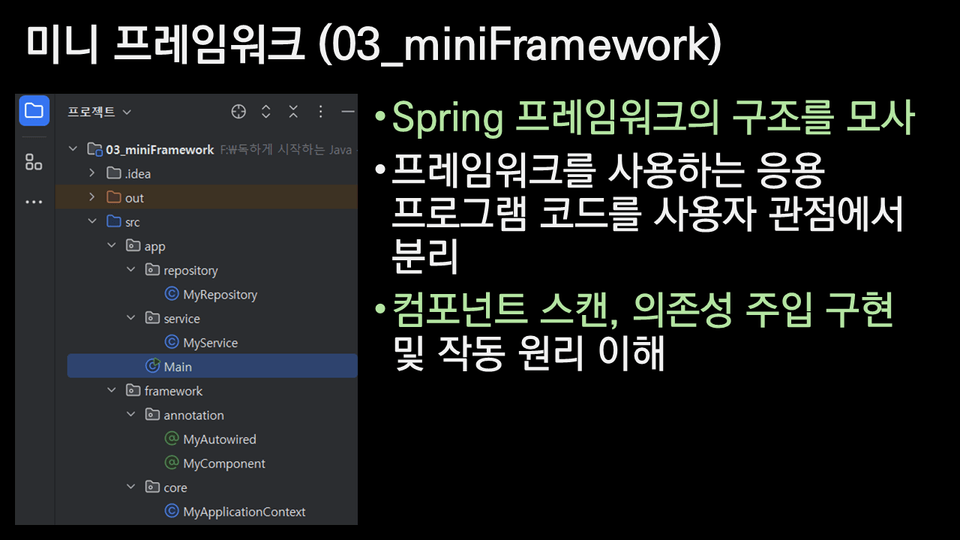
Mini framework to peek inside Spring.
Structure Design Using Java Reflection and Dynamic Generation
Understanding and Use of Annotation
A solid choice for those looking to become Spring-based backend developers!
A developer's competitive edge lies solely in their skills. This course will help you secure a distinct competitive edge!
You can utilize the default annotations, as well as develop your own custom annotations. You can also combine it with Reflection to develop your own unique framework .
Before learning the extensive Spring framework, you can gain a clear understanding of core concepts such as dependency injection by analyzing small framework code that applies similar principles.
Just following the code is boring
A beginner programmer who feels like nothing is left in his head
As a backend developer
Job seekers who want to get a job
Because it is a widely used language
I learned it but I don't know the essence
Junior developer with 1-2 years of experience
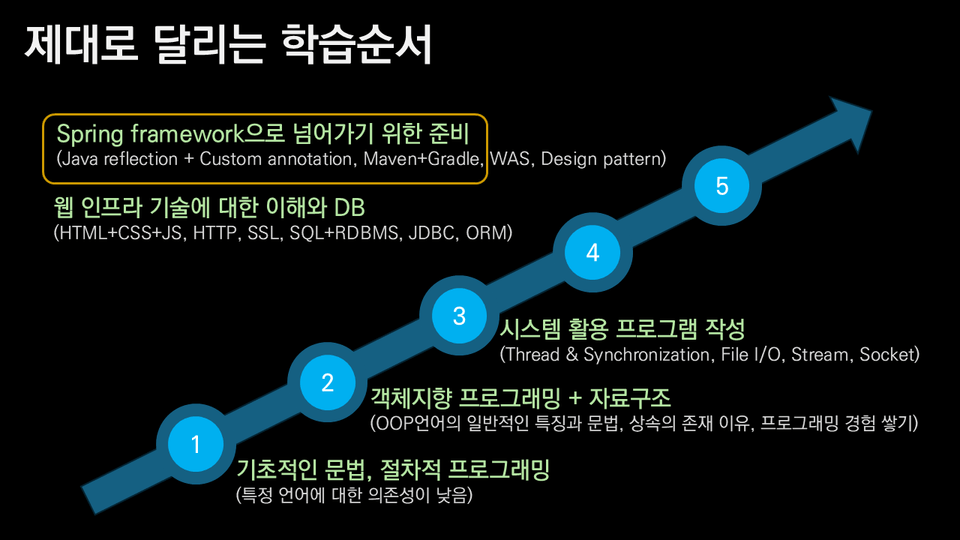
The Java series, which starts with a strong focus, consists of four parts.
Separate lectures 1 and 2 are good lectures to take together to grow as a Spring backend developer 🙂
Part 1: Basic Grammar, Procedural Programming
Part 2: Object-Oriented Programming + Data Structures
Part 3: Writing a System Utilization Program
Part 4: Preparing to Move to the Spring Framework
Separate 1: Understanding of web infrastructure technologies and DB
Separate 2: SQL Advanced
Part 4 covers annotations and reflection, and how to leverage them to develop your own framework . While not extensive, it provides a concrete, code-level understanding of essential concepts before learning the Spring Framework.
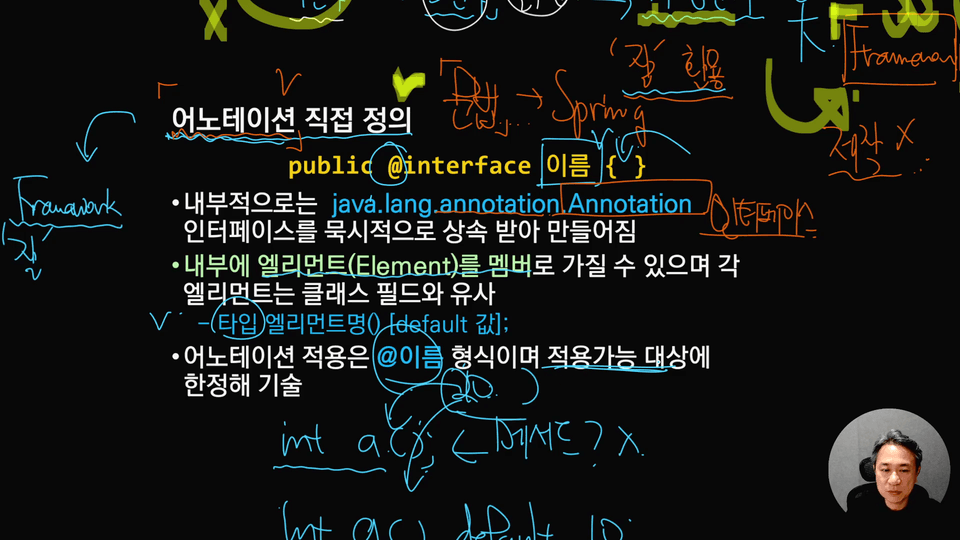
You can learn the exact meaning and role of basic annotations and utilize them, and furthermore, learn how to create and utilize your own annotations.
You will gain an understanding of modular programming as well as the concepts and applications of reflection.
You'll learn how to develop your own framework by leveraging objects as unit modules in a Java environment. This will solidify your understanding of how the Spring Framework works.
You can learn how to use basic annotations such as @Override and @Deprecated .
You can develop your own custom annotations by utilizing meta-annotations such as @Target and @Retention .
You can implement your own framework by combining reflection and annotations .
You can learn how to dynamically load classes (ClassLoader class) using reflection techniques.
You can learn the principles of modular programming , which develops software by assembling Java classes into single unit modules.
If you are new to Spring, you can clearly understand the true meaning of Dependency Injection at the code level, which can be confusing.
You can implement annotations like @Component and @Autowired yourself and see how they are utilized at the framework level.
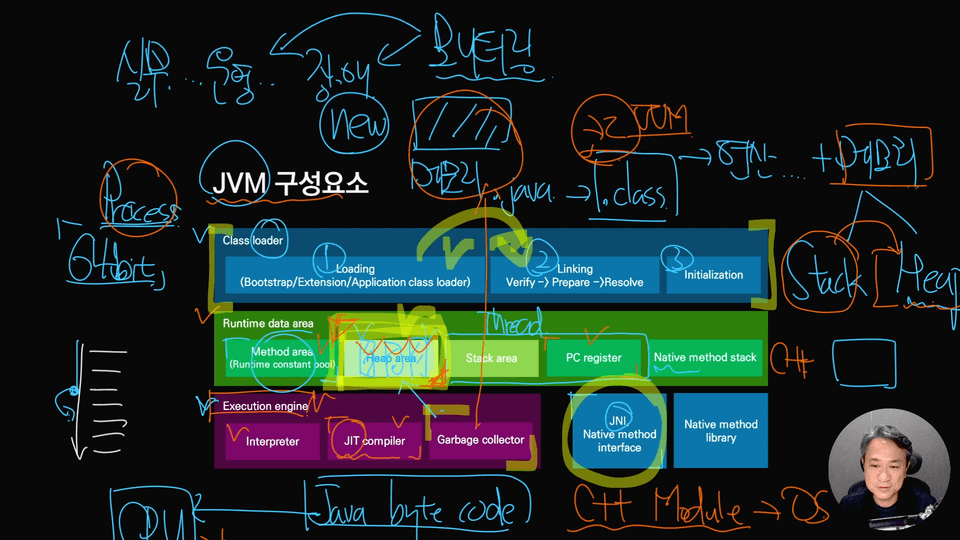
All class content is based on PPT materials, but the explanations continue as if writing on a whiteboard .
This allows students to comprehensively understand the flow of the structure and the reasons behind its creation, rather than just seeing a single, finished result.
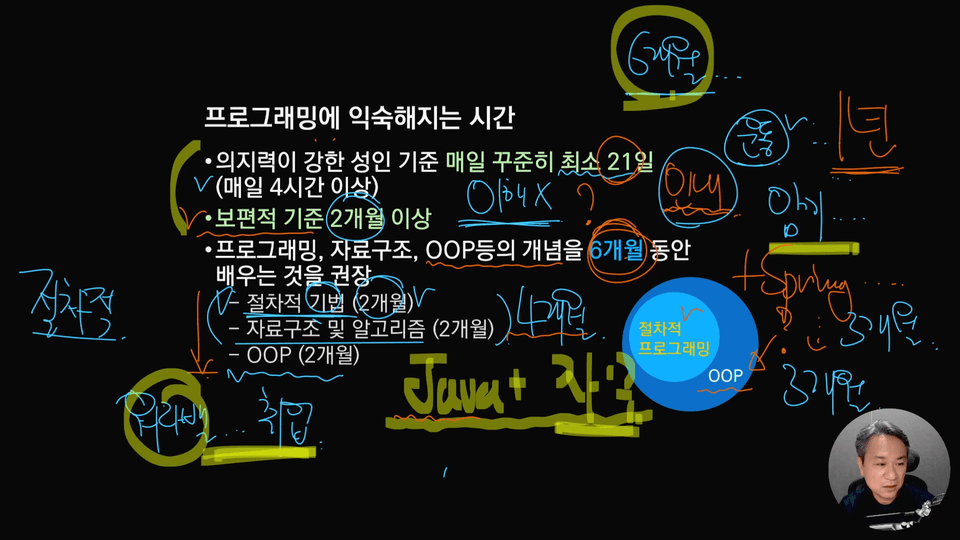
Before learning full-fledged Java programming , we would like to make it clear that this course is aimed at employment .
Based on the instructor's extensive teaching experience , we provide a clear learning roadmap and required time .
We encourage you to establish an appropriate study allocation and schedule from the beginning to avoid wasting time on poor choices.
Operating System and Version (OS): Windows 11
Tools used: IntelliJ IDEA (Community Edition)
PC specifications: Windows 11 OS and IntelliJ can run without any problems
PPT materials used in class (provided as PDF files)
Complete examples and answers to essential practice problems (provided as a zip file)
Java: Part 1-2: A Solid Foundation
(※ Assuming you know all about basic grammar and OOP)
Generic
Who is this course right for?
Someone who's already learned Java, preparing for Spring framework.
For those interested in how Reflection and Annotation are used in Spring Framework
Need to know before starting?
Anyone who knows Java's basic syntax
45,608
Learners
2,533
Reviews
1,143
Answers
4.9
Rating
25
Courses
All
18 lectures ∙ (3hr 6min)
Course Materials:
All
13 reviews
5.0
13 reviews
Reviews 5
∙
Average Rating 5.0
Reviews 326
∙
Average Rating 5.0
5
I was looking for Java-related lectures focused on structure and principles, so thank you :)
Thank you for the good evaluation and feedback. Although it's a short lecture, I expect that if you understand this video and web service structure, Spring itself won't be too difficult. :)
Reviews 9
∙
Average Rating 5.0
5
I've watched many lectures about Spring, but there were few lectures that explained how its internals actually work. Through this lecture, I clearly learned how reflection implements this, and I feel like the gaps in my knowledge about Spring have been filled.
Thank you for the good evaluation and feedback. As you mentioned in your feedback, Spring's structure and principles are simpler than expected. However, it seems unfortunate that the focus is placed on quickly implementing specific features like bulletin boards, setting aside those fundamental aspects. This course was created to address such issues, and fortunately, it seems the educational objectives have been clearly achieved. :)
Reviews 12
∙
Average Rating 5.0
Reviews 6
∙
Average Rating 5.0
$26.40
Check out other courses by the instructor!
Explore other courses in the same field!