

[Part 1] AI Application Control Techniques Through Spring AI Case Studies: Managing Cost, Quality, Risk, and Flow
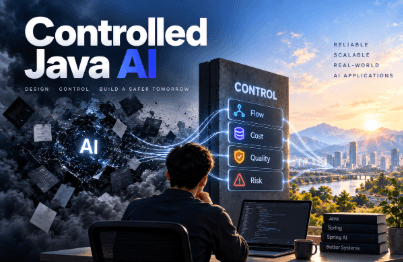
If you’ve implemented AI features with Spring AI, it’s time to think about how to observe how AI behaves and control its costs, quality, risks, and workflows. Simply calling an LLM, connecting RAG, and receiving structured responses isn’t enough to make an AI application reliable. In a real application, you also need to consider how each request was handled, how much context you’re providing to the model, how much you can trust the generated results, and how to limit risky recommendations. In this course, we use a Spring AI–based Incident Responder application as a consistent example. Starting from a baseline that works but isn’t yet sufficiently controlled, we observe actual execution results, identify problems, add control points to the code, and compare the results before and after the improvements. Along the way, you’ll learn more than just how to use another AI feature. You’ll develop a design perspective on how to observe, constrain, and validate probabilistic AI within Java/Spring applications.
3 learners are taking this course
Level Basic
Course period Unlimited
Want to know what questions other learners frequently ask?
