



Diving into Next.js: From a "Developer Who Can Use It" to a "Developer Who Understands It"

I will help you gain the deep understanding and unique perspective needed in the AI era, from technical interviews to practical system design, by diving into the source code together. Grow from a developer who has simply "used" Next.js into an expert who "understands" why it is used that way.

(4.7) 20 reviews

275 learners

Level Intermediate

Course period Unlimited

Next.js
Next.js
React
React
TypeScript
TypeScript
Next.js
Next.js
React
React
TypeScript
TypeScript

Reviews from Early Learners

Reviews from Early Learners

4.7

5.0

jihunkim625

100% enrolled

I've been working on several projects using Next.js so far, but I always wondered if my understanding of the framework I was using was insufficient. However, after taking this course, I feel like I've gained a clear understanding of why one should use Next.js, a React-based framework. In particular, there were many parts of the concepts of server routing and server components that I couldn't understand even by looking at the official documentation, but I was able to learn those parts through actual example code and understand them easily through the instructor's highly intuitive explanations. I used to feel like I was only superficially implementing features while working on projects. However, now, when implementing any feature, I can also consider, 'Why is this approach a better choice?' and 'What are the pros and cons of this structure?'. Thanks to this, my fear of Next.js has also disappeared, and furthermore, I've gained confidence that I can easily absorb new features no matter what version appears. This course is highly recommended for those who want to understand the fundamental principles and design intentions, not just superficial usage. I am confident that this course I took can be a turning point for developers who want to properly understand Next.js.

5.0

냠냠굿

31% enrolled

This is not your average introductory course that just teaches you how to write code. It delves deeply into the philosophical background and technical implementation methods of Next.js routing, data fetching, and rendering. In particular, topics such as 'How is Next.js routing implemented?' and 'Why did the params of Dynamic Route change to a promise?' help you understand 'why' it was designed that way, not just how to use it. This is the only lecture that has clearly helped me understand the essence and optimization points of Server Components, as I was only using CSR with 'use client' in practice. I feel like I can finally use Next.js properly. I'm really looking forward to the next lecture!

5.0

dlawnsdlekd

20% enrolled

This is an excellent course. I've never seen a course this in-depth on Inflearn before. I could understand why Next.js was designed this way. Just trying things out without meaningful study doesn't stick in your memory even after a short time. Learning *why* it was designed this way helps it stick in your memory for a long time. It also naturally helps with interview prep. As someone who wasted a lot of money on follow-along project courses, I highly recommend this in-depth course.

What you will gain after the course

  • The working principles of Next.js frequently asked in technical interviews

  • Design principles that can be applied immediately to practical work

  • The core philosophy and technical essence of Next.js that remain valid in the AI era

  • Your own criteria and perspectives for better selecting and utilizing frameworks.

(This is a collection of previously uploaded YouTube videos (currently private) and new videos (7 total) bundled into a course.
Please only sign up if you wish to own them. 🙏)

This is a lecture that helps you explain 'why' you use Next.js, rather than just 'how'.

Recommended for these people

👨‍💻 Developers who have used Next.js but want to understand it properly

Those who use it familiarly but are curious about the internal working principles

🎙 Those who always give vague explanations during technical interviews

Those who understand the concepts but find it difficult to provide structured answers when asked questions.

🧭 Practitioners who feel uncertain about technology selection criteria in the AI era

Those who want to see through the essence of technology without being swept away by trends

🎯 After taking this course

  • Beyond just using the core concepts of Next.js (routing, rendering, error handling, etc.), you will be able to explain why they were designed that way.

  • You will develop the ability to answer frequently asked technical interview questions clearly and logically in your own words.

  • You can establish practical design standards based on the framework's philosophy and operating principles that couldn't be obtained through official documentation or tutorials alone.

  • You will grow from a "developer who simply follows structures made by others" into a "developer who can judge and explain structures based on their own standards."

  • Even amidst the changing trends of frontend technology, you will gain the confidence to establish your own perspective and criteria for evaluating technology.

Key strengths of this course

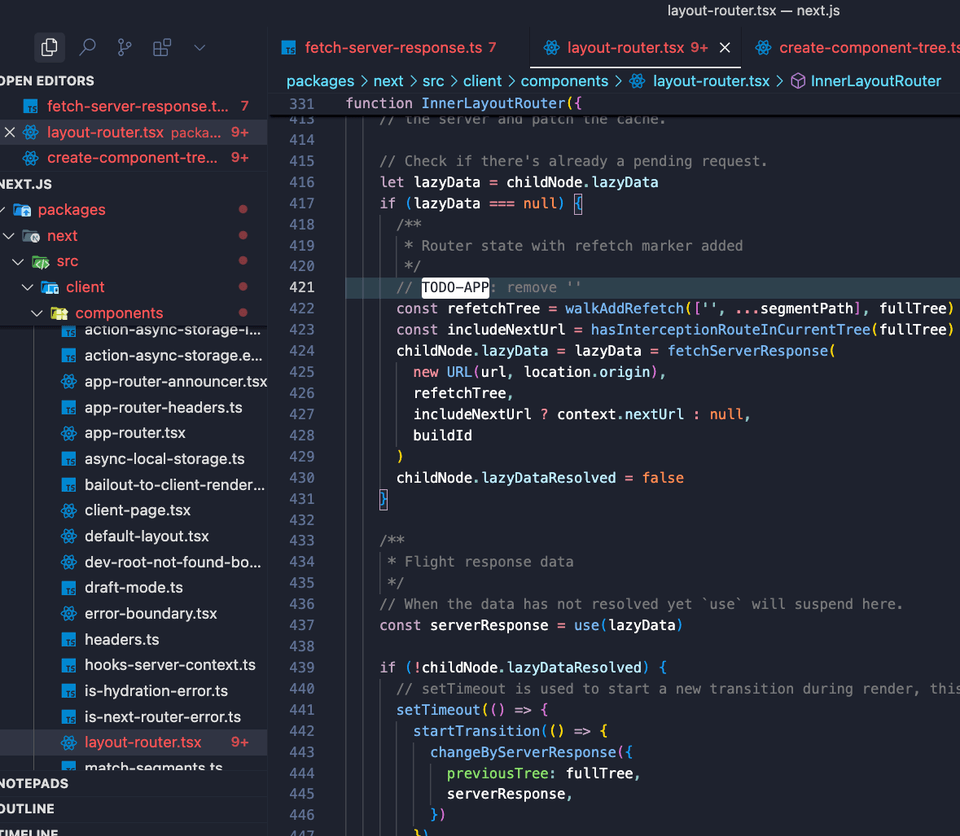
We analyze the principles of operation by diving into the source code.

We explain the operating principles by analyzing the internal source code of Next.js. Through this, you will understand how the features you have been using work internally.

Going beyond official documentation, we cover the design philosophy.

We will follow the features in the official documentation in order, examining the background and design philosophy to understand why each feature was introduced and what problems it was intended to solve.

What you will learn

We follow the order of the official documentation and study the background and operating principles of each feature through in-depth questions.

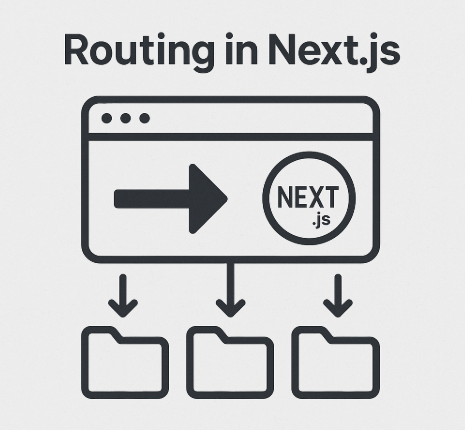
Section (1) Routing

Is Next.js routing simply a function of dividing folders?
In this section, we explore the philosophy of folder-based routing, the structure of the App Router, template.tsx, layout.tsx, <Link />, and its operating principles to deeply investigate the essence and design intent of Next.js routing.

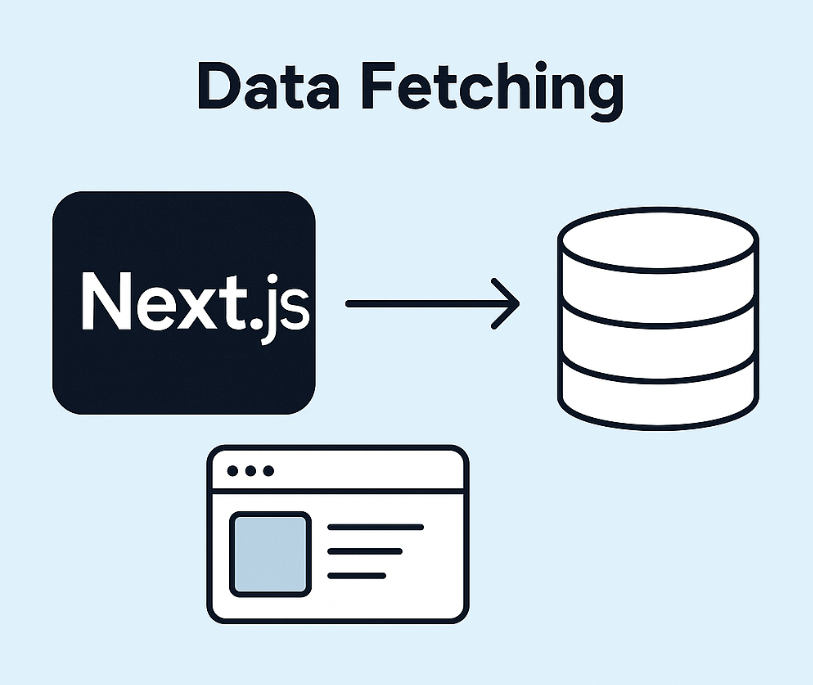
Section (2) Data fetching

In Next.js data fetching, is it enough to only care about where fetch() is located?
In this section, we will explore the background of the emergence of server-centric fetch, the limitations of parallel processing, the connection with Server Components, and Server Actions to understand the direction of data flow proposed by Next.js and the reasons behind it.

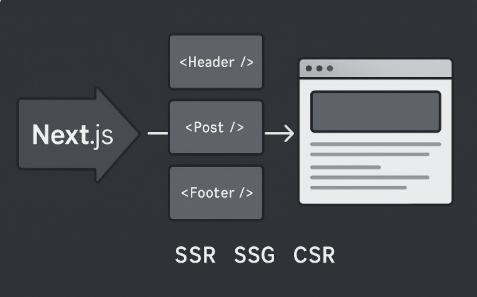
Section (3) Rendering

CSR, SSR, SSG, ISR, and even Streaming... As the number of rendering methods increases, it seems easy to get confused about "what the right answer is."
In this section, we will summarize the background behind the emergence of Next.js rendering strategies,
and how each method can be utilized in actual projects.

Do you have any questions?

Q. Can developers who are new to Next.js also take this course?

This course is intended for intermediate or higher-level working frontend developers. It is best suited for those who have used Next.js once or twice and have moved beyond simple usage to contemplate 'why it should be used this way.'

Q. Does this also help with technical interview preparation?

Of course! You will develop the ability to explain common technical interview questions with greater depth than official documentation, based on actual code and structures.

Q. Can I apply this to my work immediately?

Each episode was produced in a format that answers questions encountered in practice. Through this, it provides perspectives and philosophies that can establish criteria for judgment when designing structures or considering component configurations. khi thiết kế cấu trúc hoặc cân nhắc việc xây dựng các component.

Q. Do we do hands-on coding practice in the lecture?

This course focuses on understanding operating principles and design philosophies rather than being a tutorial where you follow along with code to implement features. Therefore, example code is provided to assist with this understanding.

The purpose of providing example code is to deeply understand concepts and structures and apply them to practical work, rather than focusing on hands-on implementation.

Q. Is this a course about App Router? Does it also include Pages Router?

The main content is centered around the App Router, and it covers in depth the philosophy behind the changes in routing structure, the differences, and why those changes were made.
If you have experience using the Pages Router, it will be a great help in transitioning to the App Router.

Notes before taking the course

Practice Environment

  • Node.js and Browser

  • #Next.js #React #Typescript


Questions and Answers

  • https://discord.gg/fpCrBJWCtz :

    This is a channel where Product Engineers, who not only ask questions about the lecture but also enjoy exploring technology deeply and discussing it with peers to develop their own perspectives, gather to study and answer all questions regarding Next.js together :)

Recommended for
these people

Who is this course right for?

  • Those who have been using Next.js but find themselves speechless during technical interviews.

  • Those who want to grow from a 'developer who just uses it' into an 'expert who uses it with deep understanding'

  • Those who want to analyze the Next.js source code but feel overwhelmed and don't know where to start

  • Those who want to build the essential competitiveness of a frontend engineer in the AI era

Hello
This is Boaz

275

Learners

20

Reviews

19

Answers

4.7

Rating

1

Course

Hello. I'm Boaz.
I'm an 8th-year frontend engineer who has experienced various startups through four career moves and recently left LINE.

While using Next.js across various projects, I went through a lot of trial and error.
Especially when considering better structures for practical application, questions like “Why should it be configured this way?” and “Is this a situation where I can use this feature?” poured in. From that point on, I realized that 'understanding the background and operating principles' is more important than simple usage.

The goal of this course is not simply to make you "able to use" Next.js.
It was created for those who want to explore questions like “Why was it designed this way?” and “What criteria should be used for decision-making in practice?” together.

For those of you who, like my past self, don't want to stop at simply knowing how to use it, I hope this lecture serves as a compass that provides organized perspectives and standards 😄

More

Curriculum

All

31 lectures ∙ (9hr 51min)

Published: 
Last updated: 

Reviews

All

20 reviews

4.7

20 reviews

  • jihunkim6251444님의 프로필 이미지
    jihunkim6251444

    Reviews 1

    Average Rating 5.0

    5

    100% enrolled

    I've been working on several projects using Next.js so far, but I always wondered if my understanding of the framework I was using was insufficient. However, after taking this course, I feel like I've gained a clear understanding of why one should use Next.js, a React-based framework. In particular, there were many parts of the concepts of server routing and server components that I couldn't understand even by looking at the official documentation, but I was able to learn those parts through actual example code and understand them easily through the instructor's highly intuitive explanations. I used to feel like I was only superficially implementing features while working on projects. However, now, when implementing any feature, I can also consider, 'Why is this approach a better choice?' and 'What are the pros and cons of this structure?'. Thanks to this, my fear of Next.js has also disappeared, and furthermore, I've gained confidence that I can easily absorb new features no matter what version appears. This course is highly recommended for those who want to understand the fundamental principles and design intentions, not just superficial usage. I am confident that this course I took can be a turning point for developers who want to properly understand Next.js.

    • dlawnsdlekd7259님의 프로필 이미지
      dlawnsdlekd7259

      Reviews 1

      Average Rating 5.0

      5

      20% enrolled

      This is an excellent course. I've never seen a course this in-depth on Inflearn before. I could understand why Next.js was designed this way. Just trying things out without meaningful study doesn't stick in your memory even after a short time. Learning *why* it was designed this way helps it stick in your memory for a long time. It also naturally helps with interview prep. As someone who wasted a lot of money on follow-along project courses, I highly recommend this in-depth course.

      • hwang61559217님의 프로필 이미지
        hwang61559217

        Reviews 3

        Average Rating 5.0

        5

        97% enrolled

        • near님의 프로필 이미지
          near

          Reviews 25

          Average Rating 5.0

          5

          10% enrolled

          This course helped me upgrade from simply using Next.js to truly understanding its principles. Technology is constantly and rapidly changing, but understanding the fundamental principles makes it easy to adapt to changes. I recommend this to anyone who is using Next.js but has questions like, "Why is this structure necessary?" Thank you for the great course! 🥰

          • nyamnyamgood님의 프로필 이미지
            nyamnyamgood

            Reviews 14

            Average Rating 5.0

            5

            31% enrolled

            This is not your average introductory course that just teaches you how to write code. It delves deeply into the philosophical background and technical implementation methods of Next.js routing, data fetching, and rendering. In particular, topics such as 'How is Next.js routing implemented?' and 'Why did the params of Dynamic Route change to a promise?' help you understand 'why' it was designed that way, not just how to use it. This is the only lecture that has clearly helped me understand the essence and optimization points of Server Components, as I was only using CSR with 'use client' in practice. I feel like I can finally use Next.js properly. I'm really looking forward to the next lecture!

            Similar courses

            Explore other courses in the same field!

            $118.80