inflearn logo
inflearn logo

From MVP to Deployment and Monetization! Next.js × LLM API Practical Series

While LLMs are currently transforming the development environment, what truly matters is not just "writing code on your behalf" but integrating them as features into a service. This course provides a step-by-step guide to implementing a lightweight yet polished Tarot reading service using Next.js and the OpenAI API. In the first stage, we will build an MVP that works without a backend, connecting the user input flow (questions/threads/card selection) to result generation. In subsequent stages, we will expand the functionality by building a backend, implementing general login and OAuth, adding community features, and creating a reading dashboard. Finally, we will conclude by deploying to AWS and integrating Google AdSense to complete a service ready for actual operation. Additionally, we will cover understanding pricing structures and cost optimization strategies to ensure that LLM API usage costs do not become a burden.

37 learners are taking this course

Level Basic

Course period Unlimited

AWS
AWS
Google Ads
Google Ads
Next.js
Next.js
NestJS
NestJS
Generative AI
Generative AI
AWS
AWS
Google Ads
Google Ads
Next.js
Next.js
NestJS
NestJS
Generative AI
Generative AI

What you will gain after the course

  • Understand the flow of directly implementing an MVP in the form of an actual service using Next.js

  • Practice how to integrate an LLM API as part of a feature.

  • Hands-on deployment experience, including AWS deployment.

  • Understand the monetization flow through Google AdSense integration

  • Gained a perspective on cost optimization (token/model/caching/request strategies), which is essential when using LLMs.

🤗 Student Reviews

YouTube Channel DXers-Edu (formerly Seotamong)

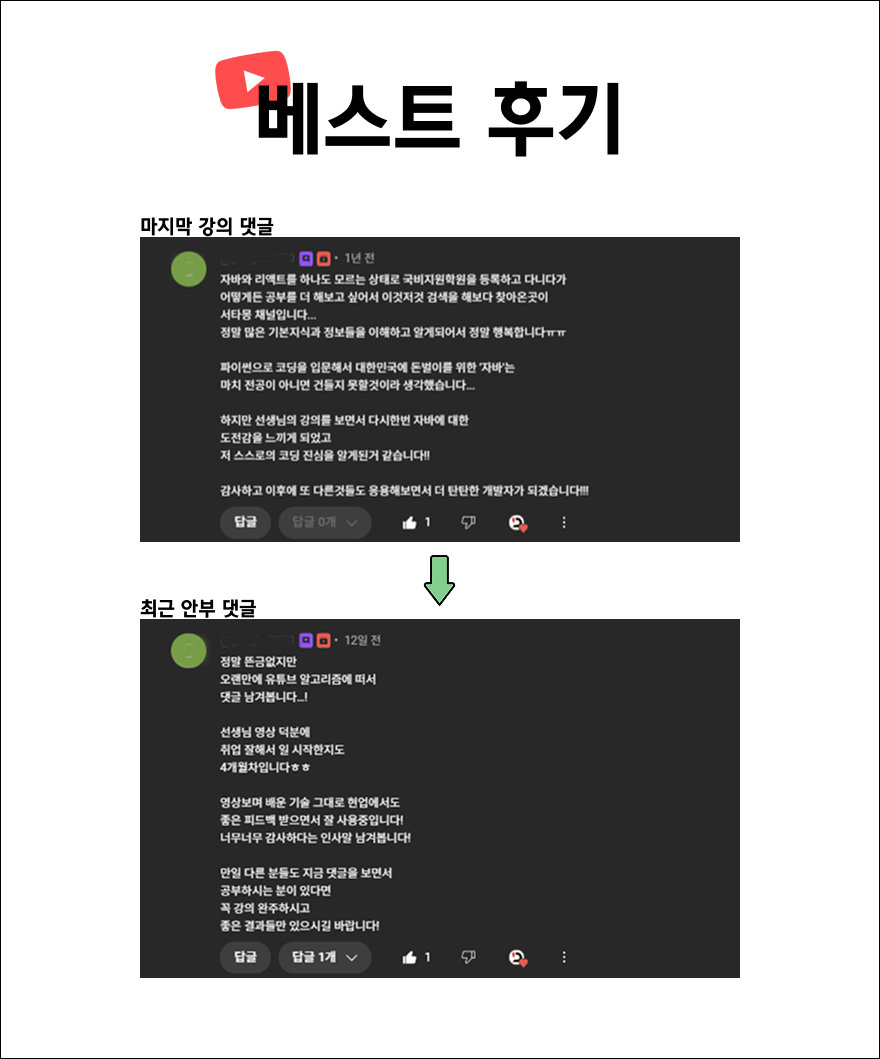
Best Reviews from the YouTube Channel

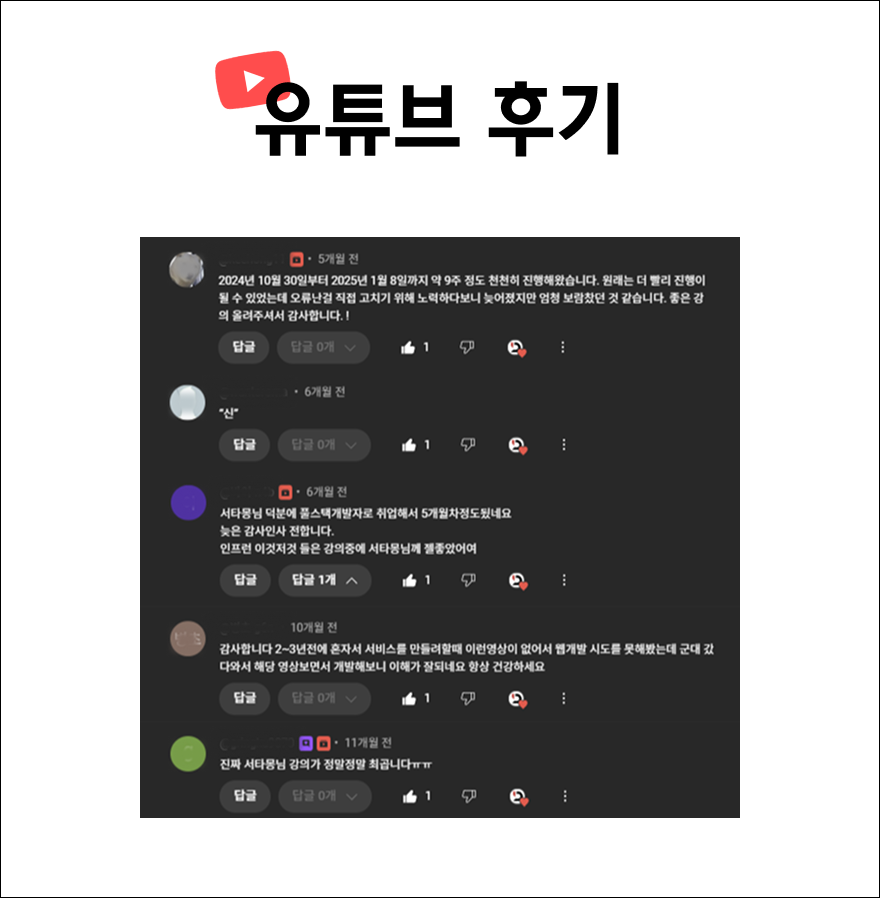
YouTube Channel Reviews

🤔 In the AI era, what should developers do to survive??

You know how to build websites with Next.js, but these days, just "knowing how to build websites" feels somewhat uneasy.
As LLMs like ChatGPT get better at writing code, it also feels like the role of the developer is shrinking.

However, in reality, people who know how to integrate LLM APIs into product features to build and operate actual services are becoming more powerful than those who simply "write code quickly."

You've tried using the OpenAI API, but you're not sure what kind of architecture is needed to integrate it naturally as a 'product feature'...
You thought writing good prompts was all it took, but once you actually start building, real-world issues like login, storage, dashboards, operations, and costs immediately pop up.

"It looks so simple on YouTube or blogs... but is this really a method that works in the AI era?!"
For those of you thinking this, DXers has prepared this for you.

This course is a practical guide where you will build a tarot reading web service using Next.js + OpenAI API,
learning step-by-step the "ability to implement LLMs as product features (AI utilization, AX perspective)"—a core competency required for developers to survive in the AI era.

In the first stage, you will quickly build an MVP that is possible even without a backend,
and in the following stages, you will gradually expand the service for actual operation.
In other words, rather than a simple list of features, you will build practical experience by following the actual "process of a service growing."

  • MVP Core Flow: Question → Select Thread → Select Card → Generate Reading (Next.js + OpenAI API)

  • Login: Standard Login + OAuth

  • Backend Expansion: Adding storage/retrieval/operational structures with NestJS as the features grow.

  • Community Features: Creating a structure where content accumulates and user flow is generated

  • Tarot Reading Dashboard: Configuration from the perspective of user records/statistics/management

  • Deployment: Covering AWS deployment/operation flows based on real-world services

  • Monetization: Creating a revenue structure by integrating Google Ads (Google AdSense)

  • Cost Optimization (Important!): Summary of how to reduce LLM API call costs from an operational perspective

Instead of a simple list of features, this course is structured step-by-step so that anyone can easily understand, following the "process of a service growing"
to build practical skills needed in the AI era.

AWS, Google Ads, Next.js, NestJS, OpenAI API, AI Utilization (AX) → You will learn the workflow of moving beyond "feature implementation" to completing an "operable product."

💡 Highly recommended for these people!

Those who have used ChatGPT/OpenAI API but feel lost on "how to turn it into a service"
✅ Those who have built websites with Next.js but want to naturally integrate LLM features into a product
✅ Those who want to complete their portfolio in a deployable form rather than just a "demo"
✅ Those who want to experience the practical workflow all at once, from OAuth/Login/Community/Dashboard to Deployment
✅ Those who are worried about LLM API costs and want to learn design that includes cost optimization

📝 Lecture Method

1⃣ Step-by-step sequential upload (following the actual service growth flow)

The lecture does not show everything at once, but instead starts with a small MVP and expands incrementally.

  • Step 1. Front-end MVP

  • Step 2. Connecting the Backend (Authentication/Login/The Start of Operations)

  • Step 3. Community Features (Adding user engagement elements)

  • Step 4. Dashboard (Management/Inquiry UX)

  • Step 6. AWS Deployment (Moving to a real production environment)

  • Step 7. Monetization (AdSense Integration)

  • Step 8. LLM Cost Optimization (Important)

2⃣ Focusing on the method of "integrating LLM as a product feature"

The core of this lecture is not about a demo that ends with a few lines of prompts, but about properly creating the workflow necessary to turn an LLM into a functional feature of a service.

  • How to structure user input to pass it to the LLM

  • how to ensure results are received reliably in a specific format

  • How to connect the results to the screen, storage, or dashboard

  • Where to cut costs so that API expenses do not grow too large

You will naturally internalize this through the step-by-step implementation of features.

3⃣ Not just "typing along," but in a practically applicable form

Each step does not simply show the results, but also explains the following.

  • Why this feature is necessary at this stage

  • In a real service, what kind of problems arise (operations/security/cost)

  • What to consider when expanding to the next stage

So, after following the lecture, you will be able to create services for other topics as well by reusing the same structure, not just for tarot services.

4️⃣ Minimal preparation, get straight to the point

Videos such as environment setup (Node installation/IDE installation) are not included; as long as Node and Git are ready, we will start directly from project creation. We will reduce unnecessary preparation time and focus on the "core process of building a service."

🎯 Learning Objectives

  • Acquire product design sense for integrating LLM as a "feature": You will go beyond simply writing good prompts and learn to design product feature structures that span from user input to LLM calls, result processing, and UI updates.

  • The ability to quickly build an MVP with Next.js and expand it into a full service: You will experience the workflow of first completing an MVP that works without a backend, and then expanding it into a service structure capable of storage and retrieval by attaching a backend when necessary.

  • Implementation of real-world user flows, including authentication/login (General + OAuth): Understand the core elements you will inevitably encounter in practice, such as
    sign-up, login, sessions (or tokens), and permissions, and gain the ability to apply general login and social login (OAuth) flows to your service.

  • Feature Configuration from an Operational Perspective: Implementing a Community + Reading Dashboard: We cover the elements necessary to create a "service where users stay" rather than just one-off features. You will be able to build a structure where data is accumulated, managed, and viewed through the community and dashboard.

  • Completion of an 'operable service' including deployment, monetization, and cost optimization: Make it publicly accessible through AWS deployment and connect it to a monetization flow with Google AdSense. Additionally, you will establish optimization standards such as token management, model selection, request design, and caching to reduce LLM API usage costs.

🏆 After completing this course

  • You will develop the criteria for designing AI features as a service.

  • You will develop the development sense to build small and scale up when necessary.

  • You will experience a "realistic completion" that considers deployment and operations.

  • You will develop design habits that control LLM costs.

  • You can establish a service flow that leads all the way to monetization.

🍡 Preview

🔎 Instructor Introduction

I am Jihoon Seo, the CEO of DXers, and I'll be with you here on Inflearn. Jihoon Seo.
I have 3 years of experience as a government-funded education instructor and 2 years and 6 months of practical development experience, and during that time, H Motors and various other large enterprise projects, I have been in charge of building and operating large-scale systems.

While working as a government-funded offline instructor, I was unable to deliver the style of teaching I desired—specifically, practice-oriented and practical-focused lectures. There were various reasons for this, but primarily, I had to follow a fixed curriculum (typically centered around Java) and, being affiliated with a specific organization, I found myself teaching for the benefit of the organization rather than the students. Since this did not align with my teaching philosophy, I decided to transition to online lectures to provide high-value content at an affordable price, creating courses truly designed for the students.

🔔Things to note before taking the course

Hands-on Environment

  • Operating System and Version (OS): All OS types including Windows, macOS, and Linux are supported.

  • Tools used: Node.js, Git

  • PC Specifications: A basic specification PC with internet access

Learning Materials

  • Format of provided learning materials: PDF, Notion, etc.

  • Quantity and Volume: Learning materials provided for each lecture

Recommended for
these people

Who is this course right for?

  • Those who want to properly build at least one service using Next.js

  • Those who want to use the ChatGPT/OpenAI API as a 'service feature' rather than for 'writing code'

  • Those who are preparing for employment but want to create their own monetizable projects or services due to market instability.

  • Those who want to experience a practical roadmap all at once, from OAuth, login, and community features to dashboards, deployment, and monetization.

  • Those who have never reached the "completion" stage of a side project and want to go all the way through to deployment and operation.

Need to know before starting?

  • Node.js can be installed and executed

  • Basic Git Usage

  • JavaScript Basic Syntax

  • React Basics

  • TypeScript experience

Hello
This is dxers

94

Learners

3

Reviews

4

Answers

5.0

Rating

3

Courses

Hello, I am Jihoon Seo, an instructor at DXers who will be joining you here on Inflearn.
I have 3 years of experience as a government-funded vocational training instructor and 2 years and 6 months of practical development experience. During that time, I have been responsible for building and operating large-scale systems for various major corporations, including H Motor Company.

🎥YouTube: https://www.youtube.com/@dxers-edu

📰Blog: https://blog.naver.com/coinmong24


📚 Experience

Government-funded offline training for 3 years:

Lecturing on overall web development, including Java, Spring Boot, and React.js, tailored to the learner's level.

Participated in national business projects related to energy data analysis and prediction, and a large-scale project for H Motors for 2 years and 6 months:

Machine learning-based data analysis and prediction using Python Scikit-learn, TensorFlow, etc.

Design and implementation of TypeScript-based backend (Node Express/NestJS) systems

React.js, Next.js, Electron.js, Tauri frontend development

AWS, Azure, Docker, Kubernetes environment setup and CI/CD pipeline configuration


💻 Technical Stack

Languages & Frameworks: Java, JavaScript, TypeScript, Spring Boot, React.js, Next.js, Node.js(Express, NestJS), ElectronJS, React Native, Rust, Tauri, Python(Scikit-lean, TensorFlow, Pandas)

Database: MySQL, OracleDB, MongoDB, PostgreSQL, Redis

Cloud & Infrastructure: AWS (Amazon EC2, S3, RDS, etc.), Azure, Docker, Kubernetes, Jenkins, Vault, Kafka

Collaboration Tools: Git, GitHub, Bitbucket, Slack, Jira, Confluence


🎯 Teaching Philosophy

During my time as an instructor for government-funded offline programs, I was unable to deliver the style of teaching I desired (practice-oriented, practical-focused lectures). There were various reasons, but because I had to follow a fixed curriculum (typically Java-centered) and was affiliated with a specific organization, I ended up teaching for the benefit of the organization rather than for the students. Since this did not align with my teaching philosophy, I transitioned to online lectures to create courses for the students by providing high-value content at an affordable price.

Above all, I aim to provide high-value lectures at an affordable price. I learned IT development through self-study (online courses). I want to prove that it is not absolutely necessary to spend a lot of money on in-person learning.

I support your dreams and challenges.

More

Reviews

Not enough reviews.
Please write a valuable review that helps everyone!

Similar courses

Explore other courses in the same field!

Limited time deal ends in 5 days

$530.00

62%

$8.80