
inflearn logo

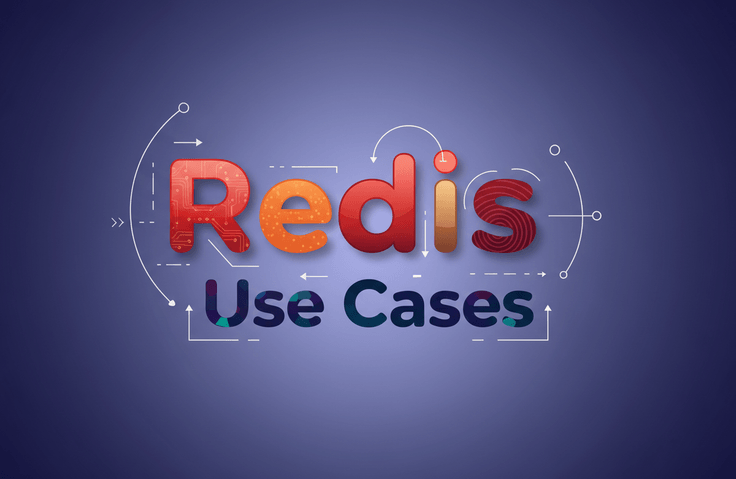
Mastering Real-World Redis with Spring Boot 11

Understand Redis not merely as a simple cache, but as an in-memory data structure server. Using the second-hand trading service 'Redis Mart' as your guide, you will learn 11 practical patterns, including caching, sessions, ranking, distributed locks, real-time chat, event streams, and geolocation. Embrace the design framework 'The fast path is Redis, the truth is in the DB' to establish clear criteria for storage selection, and gain a conceptual mastery of the principles and pitfalls of concurrency and real-time processing in distributed environments.

4 learners are taking this course

Level Intermediate

Course period Unlimited

Spring Boot
Spring Boot
Redis
Redis
system-design
system-design
cache
cache
Spring Boot
Spring Boot
Redis
Redis
system-design
system-design
cache
cache

What you will gain after the course

  • 11 Practical Usage Patterns for Redis and Design Decision Criteria by Data Structure

  • Operating Principles of Distributed Locks, Pub/Sub, and Streams, and How to Handle Real-World Pitfalls

  • Framework for Selecting Between Redis and Database Storage, and Operational Monitoring Criteria

🤔 "Redis, where else do we use it besides caching?"

When you first encounter Redis, most people start with caching. After adding just one @Cacheable to speed up queries, it's easy to stop right there.

However, in practice, Redis handles a lot more. It enables multiple servers to share login sessions, counts real-time views and likes, calculates popular product rankings on the fly, prevents the issue of two users purchasing the last item in stock simultaneously, broadcasts real-time chats and notifications across multiple servers, and finds listings within a 3km radius.

The problem is that you constantly hit a wall when asking, "So what should I use for this feature?" Which data structure is the right fit, what to store in Redis and what to keep in the DB—this course helps you establish the exact criteria for making those decisions.

📌 How this course is structured (Please read carefully)

This is a concept-focused lecture. There are no hands-on exercises where you type along with the code.

Now that AI coding has become commonplace, conceptual understanding—the ability to grasp the overall system and technologies and make the right choices—is far more important than the ability to write detailed code by hand. This course focuses on these concepts, principles, and criteria for judgment.

We provide well-organized lecture materials, and we deliver the lecture using slide images created based on those materials. Code is not treated as "something to type out directly" but rather as "reading material to visually understand the principles".

✨ Why This Lecture Is Special

🗺️ 1. Master all 11 topics through a single unifying principle

🃏 "Take the fast path with Redis, leave the truth in the DB." This single sentence permeates every example from Lecture 1 to the final lecture. Instead of a course where you simply memorize commands one by one, it instills a design mindset that prompts you to ask yourself "Is this the fast path or the truth, and which data structure is the right fit?" when faced with new requirements.

🎯 2. Lay out the scattered features on a single map of 'RedisMart'

🃏 Rather than treating caching, sessions, ranking, distributed locks, chat, and geolocation as isolated concepts, this approach maps out exactly where and why each is used within a single location-based used goods trading service, 'RedisMart'. The fragmented knowledge you once had is now connected into a single, cohesive picture.

🛡️ 3. It even tells you "when not to use it"

🃏 Distributed locks should be a last resort, so first consider atomic operations and constraints; don't build locks from scratch, use the proven Redisson instead; and avoid storing sessions and caches in the same instance to prevent eviction issues — by highlighting these practical judgments and pitfalls at the conceptual level, it prevents naive implementations.

🤖 4. Develop skills tailored for the AI coding era

Even in an era where AI writes Redis code for us, "why this code was written this way and whether it's the right choice" is what humans must judge. This course cultivates that sense of judgment.

🎓 What You'll Be Able to Do After Completing This Course

  • You will be able to understand Redis not just as a simple cache, but as an in-memory data structure server.

  • You will be able to identify the right data structures for 11 use cases including caching, sessions, counters, rankings, distributed locks, Pub/Sub, job queues, Streams, and GEO.

  • You can independently decide what to store in Redis and what to keep in the database.

  • You can explain the principles, pitfalls, and alternatives of distributed locks to prevent concurrency issues.

  • You will be able to grasp the big picture of real-time chat, notifications, and event streams, and how they operate across multiple servers.

  • You will be equipped with operational decision criteria covering persistence, eviction, monitoring, and cache hit rates.

👥 Recommended for:

  • ⭐ Backend developers with a solid foundation in Java and Spring Boot who previously thought of Redis as just a simple cache

  • ⭐ Developers who need the big picture and decision-making criteria for when and how to use Redis

  • Junior to mid-level developers who need to explain Redis usage patterns in design meetings or technical interviews.

  • Developers who can write code using AI but feel they lack the criteria for making architectural decisions.

Prerequisites: Basic knowledge of Java and Spring Boot, along with a fundamental understanding of MySQL and JPA, is sufficient. No hands-on coding experience is required.

🚀 If you're only using 1/10th of Redis

If you only know Redis as a "fast cache", then you are only using one-tenth of Redis.

By the end of this lecture, you will no longer be someone who simply memorizes commands, but a developer who can ask "is this the fast way or the true way" when faced with new requirements and choose the right data structure.

Recommended for
these people

Who is this course right for?

  • Backend developer with experience in Java and Spring Boot, but who has only utilized Redis as a cache.

  • Junior developers who need the big picture of Redis usage patterns and architectural decision criteria.

  • Developers looking to enhance their technology selection and design review skills in the era of AI coding

Need to know before starting?

  • Understanding the Basic Syntax of the Java Programming Language and Object-Oriented Concepts

  • Experience with the fundamental architecture of the Spring Boot framework and RESTful API development

  • Basic knowledge of JPA or database integration and an understanding of SQL.

Hello
This is oncoding

631

Learners

13

Reviews

20

Answers

4.3

Rating

6

Courses

Curriculum

All

20 lectures ∙ (5hr 40min)

Course Materials:

Lecture resources
Published: 
Last updated: 

Reviews

Not enough reviews.
Please write a valuable review that helps everyone!

oncoding's other courses

Check out other courses by the instructor!

Similar courses

Explore other courses in the same field!

Limited time deal

$13.20

25%

$17.60